













The Rise of the Restaurant Gurus
Restaurant and food consultants are increasingly crucial for a sector that experiences almost similar success and failure rates.
By Suman Tarafdar
Spending leisure time, catching up with friends, even getting meetings and work done at restaurants, established and new, seems arguably the absolute top hobby of Gen Z, in my rather anecdotal research.
Add to it India’s growing economic clout, which ensures increasingly higher disposable incomes in the hands of a substantial part of its residents, and it is no surprise that the restaurant sector has ballooned in the last decade or so. It is gathering pace even now. However, it also has the highest turnover, with restaurants shutting down almost as fast as they open.
Valued at $80 billion in 2024, India’s food services sector is expected to zoom to $144-152 billion by 2030, according to a report by Redseer Strategy Consultants. Across segments, India is estimated to have over 500,000 restaurants. In 2024, industry insiders estimated about 2,000 new restaurant openings each month in India, though this is tempered by a significant closure rate—the National Restaurant Association of India citing a 30-35% closure rate. According to Mordor Intelligence’s projections, the café and bar market is estimated to be worth a notable $17.54 billion in India in 2024¸ and is expected to clock a CAGR of 8.33% through 2024 to 2029.
Secret sauce
What emerges very quickly in conversations with people from the food and beverage industry is the number of clients looking for help as they contemplate opening a restaurant. “This industry requires consultants for two major factors,” says Anthony Philip S, Founder, Table and Fork. “One, of course, is the business point of view, and the other is the food and beverage. It is not just newcomers; maybe the existing players are trying to enhance their menus, so they require consultants and expert advice.”
Consultants in the restaurant and food space have emerged in the last 15 odd years, a time frame that coincidentally syncs with the fastest rate of economic growth for the country. One of the earliest was Secret Ingredient, now one of India’s leading food and beverage consultants. It was conceptualised around 2010, as a space to provide proper professional, ethical and scientific ways to help the sector, points out Sid Mathur, Founder and Director.
“At that time, there was no sort of deep thinking as a category and somebody who could sort of even handhold a client, and there was nothing like it,” recollects Mathur. “There were a lot of chef consultants. Although they are fantastic, they are focused more on the menu, just one part of the business. Whereas when we started, we felt that there was so much more to a commercial success of a brand, from the research, the concept, the look and feel, the experience, the way people are interacting with your brand, what you are doing right, what you are doing wrong, and service. So, keeping all of that in mind and from our perspective, we had the experience of the sector. We had opened good restaurants. We had also seen the bad. With all that information, with all that data and with all that experience, it just became easier for us to work on projects. As we worked on more and more projects across industries, across clients, across different formats, that knowledge base became so solid that today we have done 70 cloud kitchens, 50 hotel projects and 100 restaurants.”
‘Have Money, Want Restaurant’. Consultants say they encounter this attitude more often than not. “I think a lot of people in India are quite clueless about what they want,” points out Goa-based chef Gracian De Souza. “They typically want to do cookie-cutter models. So they see something working somewhere, and they will come and tell you, 'Let's just copy the guy.' The reality is that very few people are willing to put in some time and effort into market research and in finding the right people. I always tell my clients that the easiest part is to open a restaurant. Right. The hardest part is running it.”
Much like restaurants, bars, too, are onboarding consultants to create an experience that makes them stand apart.
For bar consultant Pankaj Balachandran, Founder and CEO, Countertop India and Co-founder - The LAB, Boilermaker and Mr. Jerry's Cocktails, the scenario hasevolved in the last 10 years. “I have seen that it has changed the landscape completely. When we got into the business of consulting for bars, we wanted to build bars which were places that we could go and drink at. There were not many bars doing the quality style of drinks service, or hospitality that guests desired. So we got into the business of building bars.”
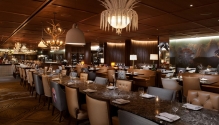
Olive has effectively been the signature restaurant for AD Singh's restaurant empire.
Balachandran says that a major game changer was COVID, as “it was very, very important for the industry to propel through. A lot many people were looking at drinking at home as well as going out, experimenting and trying out new things. Consumers have evolved. Now, instead of travelling to venues for sightseeing, more and more consumers are trying out bars and restaurants. A Michelin dining experience or a 50 Best Bar experience has become a part and parcel of everyone's itinerary nowadays.” And thus the need to up the game, seeking professional help to stand out in an increasingly crowded market.
“We usually share an interview docket for them (clients) to fill and share with us before we even decide to take up the project,” explains Balachandran. “We ask a lot about the design and the layout, because drinks are the least common denominator for us when it comes to setting up the bar. If a drink is not working out, we can always change it. But we have to ensure that the hardware is solid. E.g. the workstation, the layout, the workflow, all of these definitions, these questions have to be answered in depth and clarity. There is no ideal size or layout. If it is a cocktail bar, you know who you are catering to. If it has 120 covers, then it has to have two stations, five refrigeration units, and one freezer unit, definitely inside the bar. If it’s a high-volume bar, it changes.”
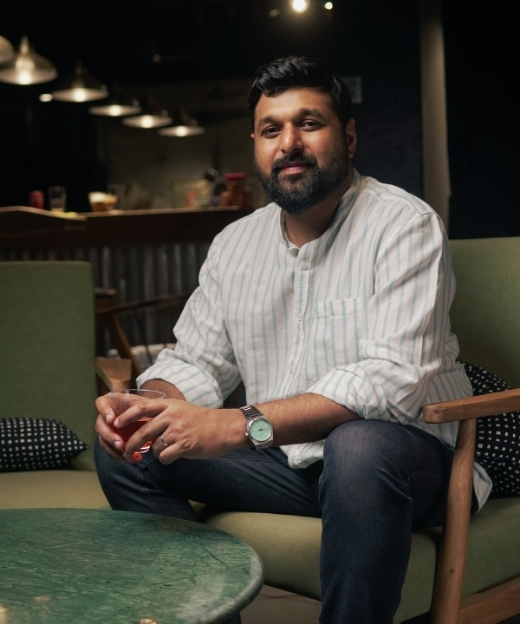
Pankaj Balachandran, Founder and CEO, Countertop India; Co-founder - The LAB, Boilermaker, and Mr. Jerry's Cocktails.
When we got into the business of consulting for bars, we wanted to build bars which were places that we could go and drink at. Not many bars were doing the quality style of drinks service, or hospitality that guests desired.
Pankaj Balachandran
Founder and CEO, Countertop India

Managing expectations is another aspect. “One of the things that people ask today is, ‘I want to open a bar that makes it to the ‘50 Best Bars’, which is a completely wrong way of approaching the business,” points out Balachandran. “The biggest challenge is to tell them that first, open a bar, run it successfully, and awards will come to you. You can't pay for it. Right. You have to make it happen.”

Kula Naidu, Director, Secret Ingredient.
We encounter clients who want to enter the restaurant business for all sorts of reasons... For some people it's no longer about RoI—Return on Investment—but RoE: Return on Emotion, or worse, Return on Ego.
Kula Naidu
Director, Secret Ingredient
De Souza suggests four key parameters for any prospective client looking to open a restaurant—a good concept note, a strong F&B philosophy backed by a team that can execute that philosophy and—in today's day and age—a marketing team that can market the philosophy. “The first thing I tell my clients is that you have got to create your own identity. You have to understand why people are coming to you. That answer comes from market research. You cannot copy paste models and think that, oh, because they are doing well, I will also do well; that doesn't exist anymore.” According to him, the greatest help first-time clients require is with staffing and consistency.
“I think India is very diverse. There's a big difference in the consumer market when it comes to restaurants between the north, south, west and east. What necessarily works in Delhi does not work in Mumbai and vice versa. What works in Mumbai does not work in Bengaluru. If you are playing safe with a bar format or a coffee format, then that’s fine; India is an evolving young market, so everyone wants to go out and drink coffee. Everyone must go to a bar and have a drink. But a serious food programme in a restaurant, I see very few successes. You cannot make a menu and say, I'm going to circulate this menu pan India, and believe it's going to work everywhere. There will be a lot of tweaks that will have to be made based on the location that you are in. Generally, as Indians, we are a bit closed. I think Mumbai is the one place where you can go out, be original. I see that same acceptability in some pockets of Bengaluru as well.”
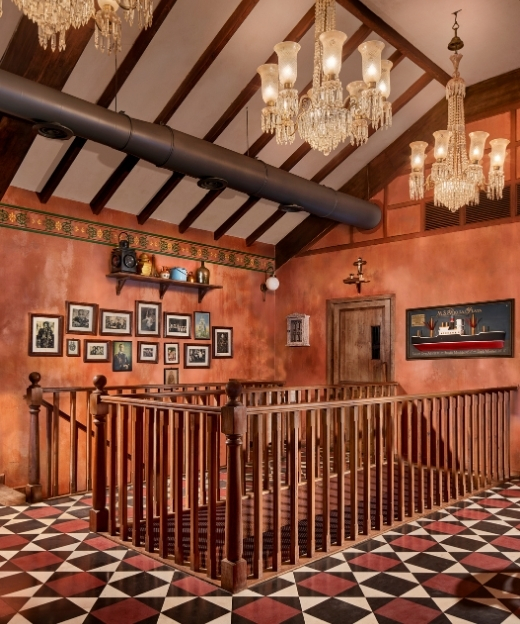
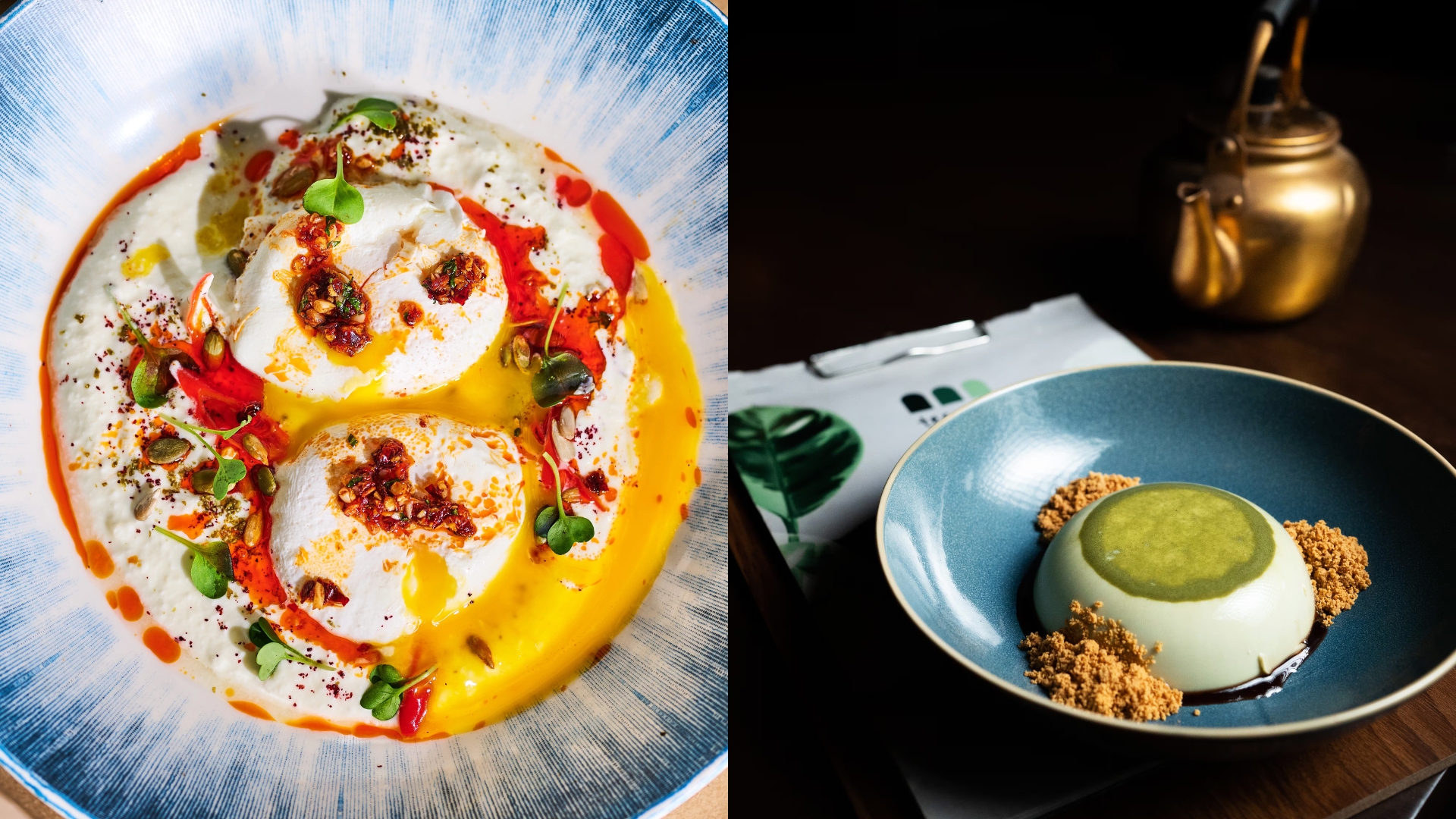
Bar Tesouro, which no longer exists, once married Goan joie de vivre with modern innovation.
Future proof
Even the most cursory glance reveals that restaurants, cafés and bars have upped their game considerably in the last few years—a combination of greater awareness, especially of global trends, better availability of ingredients, and of course, rising disposable incomes combined with a desire to experiment. Kula Naidu, Director, Secret Ingredient, explains that over the years, the process has become easier for them. “When we meet a client, we are also armed with the benefit of having done such a variety of applications in the food industry that it becomes easy for us to understand the project, understand the client. The idea, at the end of it, was just to do a good job and stand by the client. We never said we are your consultants, we said we are a part, an extension of your team.”
Naidu cautions that it can be tough. “Restaurants are unforgiving; the turnover rate is very high; it is actually much worse now. Customers have become more savvy and demanding. Now you cannot just have an average restaurant and expect it to last. Rents are going up, salaries are going up, staff are difficult to find, and retention is an issue. As a consequence, we are seeing a lot of turnover.”
De Souza gets granular dissecting the planning process, pointing to common pitfalls. “I would say don't open a large format restaurant, open a small format. If you start with a 300-cover French or Japanese cuisine restaurant, it is not going to work. You may get there may be in the year five. Start with a 40 to 50-cover restaurant. For a fine dining or even a casual space which concentrates on the cuisine, I think going above a certain cover limit is pretty difficult. It's not about 50 covers; you can get 50 times five in a day. So it means you need 250 people every single day for your restaurant to be profitable. If you want to push the envelope, do something very traditional, be innovative, an entrepreneur has to have very deep pockets to sustain the losses over a period of time. I have seen the best businessmen just say it's a business. At the end of the day, if it's not profitable, then we need to shut down. So I think the smart move is to kind of bootstrap and make sure that you're not spending where spending is not required.”
He points to Cavern, his project in Coimbatore, which serves South Indian inspired bar food, put together in a fun way. “But Coimbatore, being Coimbatore, is not seeing the light of day in terms of where the menu is and where it could be because it's a small town, and probably doesn't attract the right audience.”
When advising clients, Naidu and Mathur emphasise that financial viability must be the top priority. “We encounter clients who want to enter the restaurant business for all sorts of reasons,” says Naidu. “Often, they’re not in it for the right reasons. Some come from considerable or even generational wealth, and their children want to start something of their own, believing that opening a restaurant will be glamorous, and a fun way to entertain friends. But we make it clear from the outset: this is a business, not a social hobby. If you're not treating it like a business—if you're not closely monitoring rent, keeping salaries within sustainable limits—you’re setting yourself up for disappointment. As Sid aptly put it the other day, for some people it's no longer about RoI—Return on Investment—but RoE: Return on Emotion, or worse, Return on Ego.”
All of them agree that having a viable, well-thought-out plan is far less common than one might assume. “Research is one of the things we approach very differently at Secret Ingredient,” says Mathur. “We invest time in truly understanding the landscape—who your target demographic is, what the pricing benchmarks are, what trends are shaping the market, and most importantly, who your guest is. What’s their personality, their preferences? We bring all of that together to create a well-balanced, strategically aligned concept.”
Consultants are unanimous in suggesting that running any food and beverage establishment requires commitment, especially in terms of time. Philip points to United Coffee House, founded in 1942 by Lala Hans Raj Kalra, which is now handled by the third generation in the form of Akash Kalra. “He handles day-to-day operations. He comes early in the morning, goes late at night, and is a very good example of how to make a restaurant succeed.”
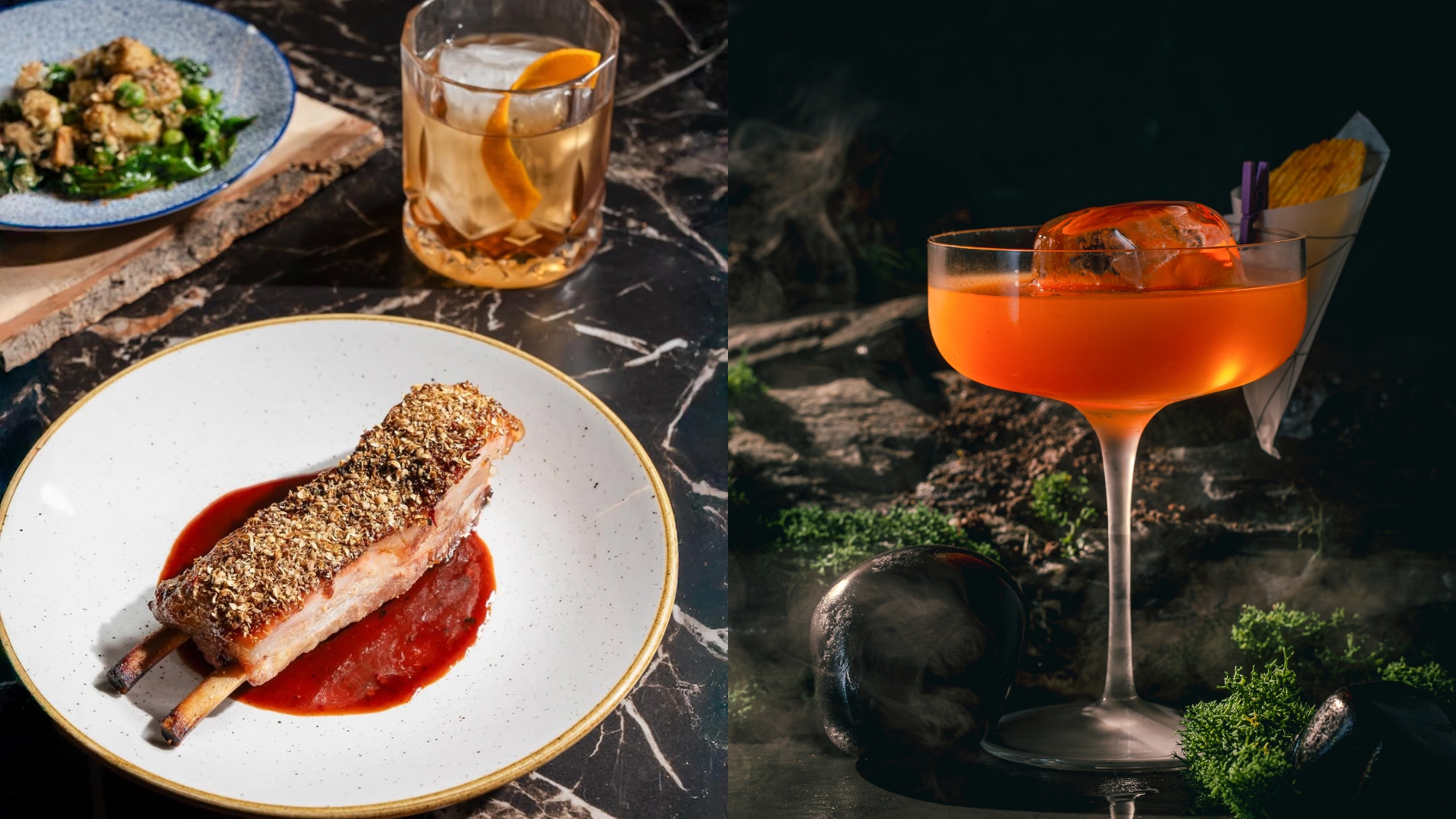
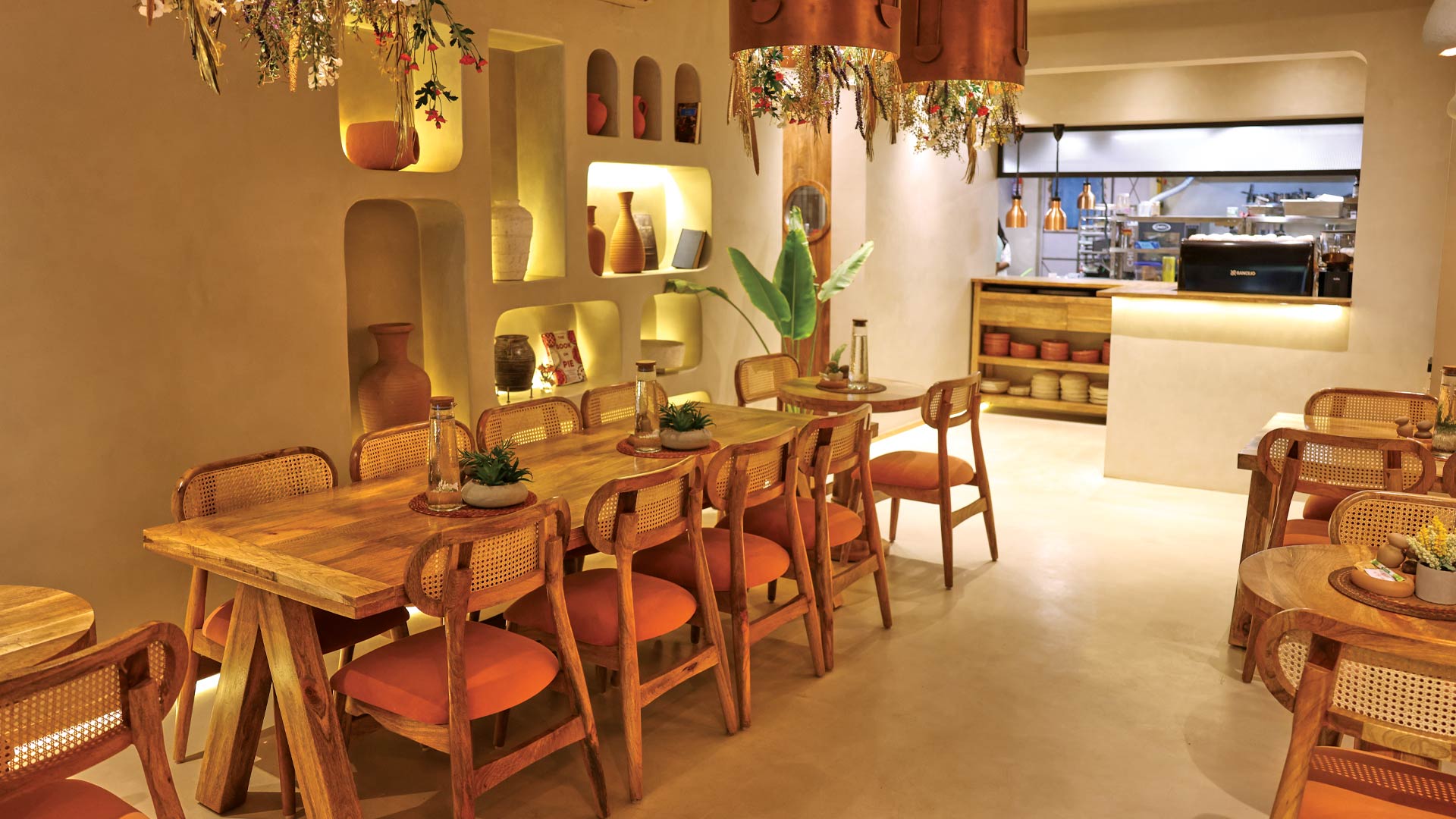
Elegant decor and an extensive coffee and wine list have defined Perch Wine and Coffee Bar.
Skin in the game
An emerging trend is the growing demand from hotels seeking expert advice on how to operate their restaurants more effectively. In India, especially among top-tier hotels, there has long been a focus on offering multiple dining outlets. However, a significant number of these have become white elephants—high-cost operations that fail to generate adequate returns and ultimately weigh down the bottom line.
While F&B consultants have increasingly started working with hotels, they unanimously point out that there are differences. “One major factor is the time needed to create a hotel, says Philip.While for a café, the timeline is three months and for bars and restaurants, at the most, four to six months, a hotel project may take years. However, it's very comforting to create a menu because you have time to do research.”
At Delhi’s Le Meridien, Secret Ingredient recently played an instrumental role in presenting its legacy restaurant Le Belvedere in a new avatar. To bring XO & Mi @Le Belvedere to life, Mathur says, they went through a comprehensive approach encompassing research, concept development, design collaboration, and operational planning. “Starting with extensive internal research and a feasibility study, Secret Ingredient conducted a deep dive into the target audience, local demographics and market trends.”
From interior mood boards to the development of brand touchpoints, every element was meticulously curated to create an unforgettable experience, Mathur elaborates. “Secret Ingredient worked closely with designers to conceptualise and bring to life this vision, ensuring every detail contributes to the immersive experience.” It also played a pivotal role in optimising operational efficiency, refining kitchen layouts, and selecting high-performance equipment to meet regulatory standards. The contribution spanned the core structure and hiring process, defining the ideal team requirements and aiding in the recruitment of top-tier culinary talent, including sous chefs, CDPs, and mixologists.
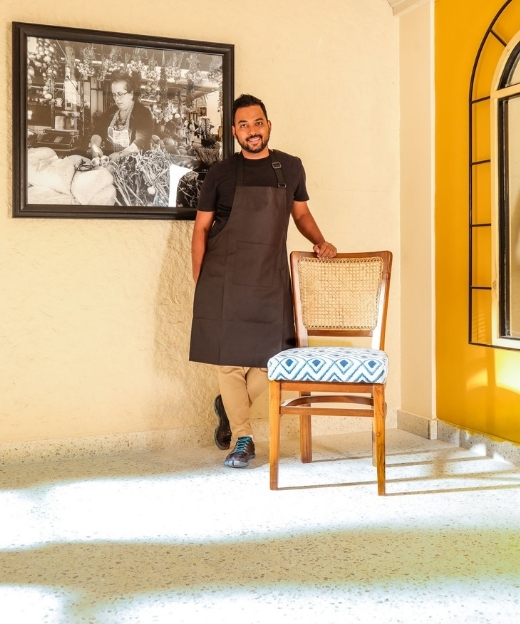
Gracian de Souza, chef and restaurant consultant.
I think a lot of people in India are quite clueless about what they want. They typically want to do cookie-cutter models.
Gracian de Souza
Chef and restaurant consultant
Philip is working with The Park on a ten-room boutique property in Ranthambore. “We do everything—from restaurants to hotels,” Balachandran says. “We have done a bunch of hotel programmes, but they are also open to people running their venues. I think hotels are a bit more rigid when it comes to ideas. Fifteen years ago, they ran successful venues when nothing much existed. It's a slow process with them, but I think it is happening.”
De Souza notes that smaller hotels are increasingly turning to consultants, recognising the untapped potential of their prime real estate. “I’m working with a very old group that recently decided it was time to revive their F&B offerings,” he says. “Once industry players understand the value consultants bring—and once there’s a track record in place—I believe these partnerships can be very productive.”
He acknowledges, however, that working with hotels tends to be more time-consuming. “When you look at hotel hierarchies, there’s the general manager, the executive chef, the F&B director… but often, they lack exposure to the outside world—especially the dynamics of standalone restaurants. Now, hotel owners are starting to realise they want that culture to come in, which is why they’re reaching out to independent consultants to help elevate their food and beverage programmes.”
As for where the space is likely to evolve to, Philip says he would want to see consultants get involved in day-to-day operations. “Let's say a client is busy in marketing, arranging finances, expansion, etc. The consultant can handle the day-to-day operations in the kitchen and ensure quality control, leaving the owner to focus on expansion.” Balachandran agrees. “Because of the right guidance, help and support, many bars are now upping their game. Here, consultants definitely played a major part in improving overall systems. And this is likely to continue.”
De Souza emphasises the importance of hiring the right people with genuine passion to lead the process. “I’ve worked on around 80 projects over the past eight years—roughly 10 to 12 a year,” he says. “In my experience, the projects that have succeeded, or are still going strong, are the ones where the promoter and I, as the consultant, were aligned from the very beginning. That alignment is critical.”
The message seems clear. As the Indian hospitality sector grows, consultants are here to stay. The crucial question is: will clients heed their expertise, or disregard their suggestions? That choice could be the crucial difference between long-term success and yet another name on the turnover list.
While for a café, the timeline is three months and for bars and restaurants, at the most, four to six months, a hotel project may take years. However, it's very comforting to create a menu because you have time to do research.
Anthony Philip
Table and Fork
Top tips for success: What consultants tell their clients
- Have a clear vision of the character of the restaurant/bar you are planning to open.
- Have a clearly delineated plan before opening.
- Do thorough research—most importantly about the location, costing, legalese, interiors, cuisine, staffing, operations, rentals, and potential clients.
- Plan for at least one year—very rarely does success come immediately.
- Have adequate budgets, as break-even may take a while.
- Invest in the right tools, right ingredients, right people.
- Get a good support system— family, friends, whoever you can rely on.
- Do not get impatient at the lack of immediate success.
- Tweak the format only if necessary. However, be flexible if the format is suitable.
- Utilise free publicity, but remember, even the smallest mistake or shortcoming can get amplified on social media.