
















Meghalaya Steps Up Tourism with ₹162 Crore Push and Four Global Hubs
Backed by 150+ active projects and ₹162 crore proposed for tourism infrastructure and community tourism, Meghalaya is shifting from volume-led expansion to a year-round, community-driven growth model.

By SOH Edit Team
Meghalaya is recalibrating its tourism economy. Rather than pursuing growth through visitor volumes alone, the State is building a model around higher-value travel, community participation, climate resilience and year-round demand.
More than 150 public and private tourism projects are currently active across the State, as investment in destinations, accommodation and visitor infrastructure expands. The larger objective is economic: use tourism to generate local enterprise, create employment and distribute growth across Meghalaya's districts.
Tourism-linked livelihoods in Meghalaya increased from approximately 50,000 in 2022 to more than 75,000 in 2025, while annual tourist footfalls reached nearly 18.55 lakh. The next phase, however, is focused less on simply increasing arrivals and more on improving the economics of each visit.
Under its Tourism Policy 2023, Meghalaya is pursuing a high-value, lower-impact model built around carrying capacity, appropriate pricing and waste management. The strategy seeks to increase length of stay and visitor expenditure while ensuring a greater share of tourism revenue remains within local communities.
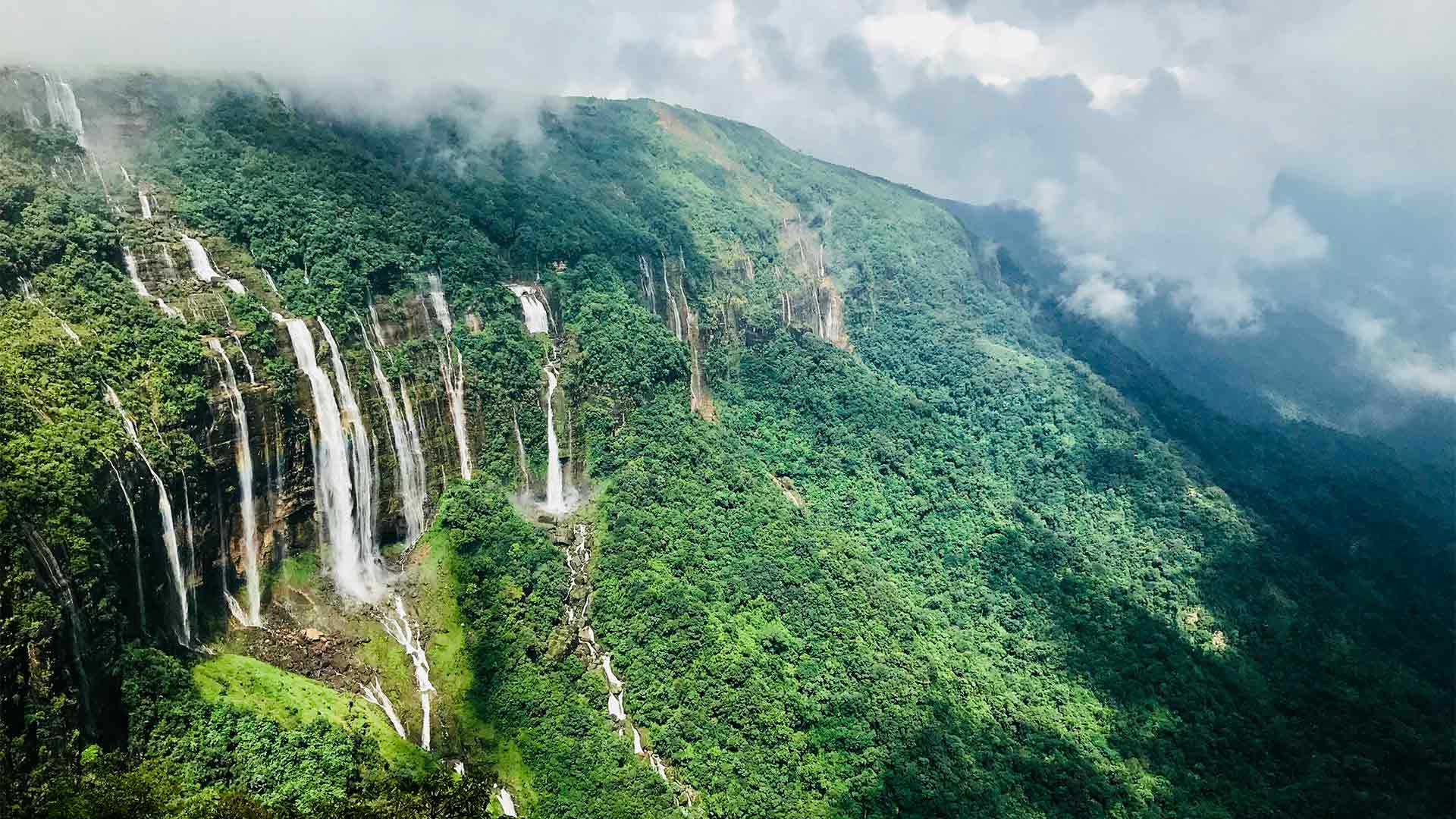
That approach is particularly significant in a State where more than 76% of the land is under forest cover and natural and cultural assets—from caves and waterfalls to Living Root Bridges—form the foundation of the tourism proposition.
Conservation Meets the Tourism Economy
Homestays, guides and local enterprises are moving communities deeper into the tourism value chain. Meghalaya's tourism strategy places local ownership at the centre of destination development. Homestays, guides, tourism transport, community-managed infrastructure and small enterprises are creating more direct routes for residents to participate in visitor spending. The State has sanctioned 877 homestay applications, with more than ₹120 crore disbursed, supporting the creation of over 6,000 jobs through local hospitality enterprises.
The Chief Minister's Meghalaya Homestay Mission is targeting the creation and upgradation of 1,000 homestays during 2026–27, towards a broader target of 3,000.
Rural tourism cooperatives and the Community-Led Tourism Infrastructure Scheme are extending the model further, giving communities a greater role in developing destinations and building tourism businesses around local assets.
Meghalaya is linking ecological stewardship with long-term destination value. Tourism growth is also being tied to climate resilience. Through the Meghalaya Community-Led Landscape Management Project, more than 400 villages have participated in restoring land, water systems and forests by combining traditional knowledge with scientific interventions.
Initiatives spanning spring rejuvenation, mine-land restoration, Living Root Bridge conservation and Payment for Ecosystem Services point to a broader strategy: protecting the natural capital on which Meghalaya's tourism economy depends while creating economic value around conservation.
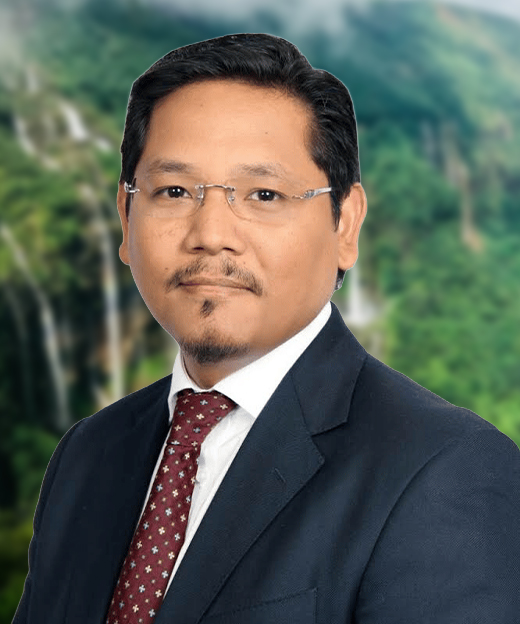
Conrad K Sangma, Chief Minister of Meghalaya.
Building Destinations Beyond the Peak Season
Meghalaya has proposed more than ₹162 crore for tourism infrastructure, destination development and community tourism, with the aim of building stronger year-round demand and spreading visitor expenditure beyond established circuits.
Four tourism hubs—Umiam, Sohra, Dawki-Shnongpdeng and Nokrek—have been identified for development as destinations with global-scale appeal.
Among the major investments is the ₹233.75-crore PM-DevINE Sohra Tourism Circuit, covering Nohkalikai Falls, Mawsmai Eco Park and the Khasi Heritage Experiential Centre.
Other projects, including the Shillong Peak Ropeway, Mawkdok Skywalk and the Rain and Bamboo Interpretation Centre at Mawsynram, are intended to broaden Meghalaya's tourism offering and create new reasons for travellers to stay longer and explore beyond conventional itineraries. Tourism is increasingly being positioned as an engine for jobs, enterprise and distributed regional growth.
Meghalaya's tourism push reflects a wider shift in destination economics: from measuring success primarily through arrivals to examining visitor value, local income, length of stay, environmental capacity and community ownership.
For Meghalaya, the opportunity lies in turning its natural and cultural capital into a more productive tourism economy without compromising the assets that create demand in the first place.
As the State works towards its USD 16 billion economic ambition, tourism is emerging not simply as a visitor-facing sector, but as an increasingly important platform for infrastructure investment, entrepreneurship, employment and regional development.