










Where Art and Hospitality Converge
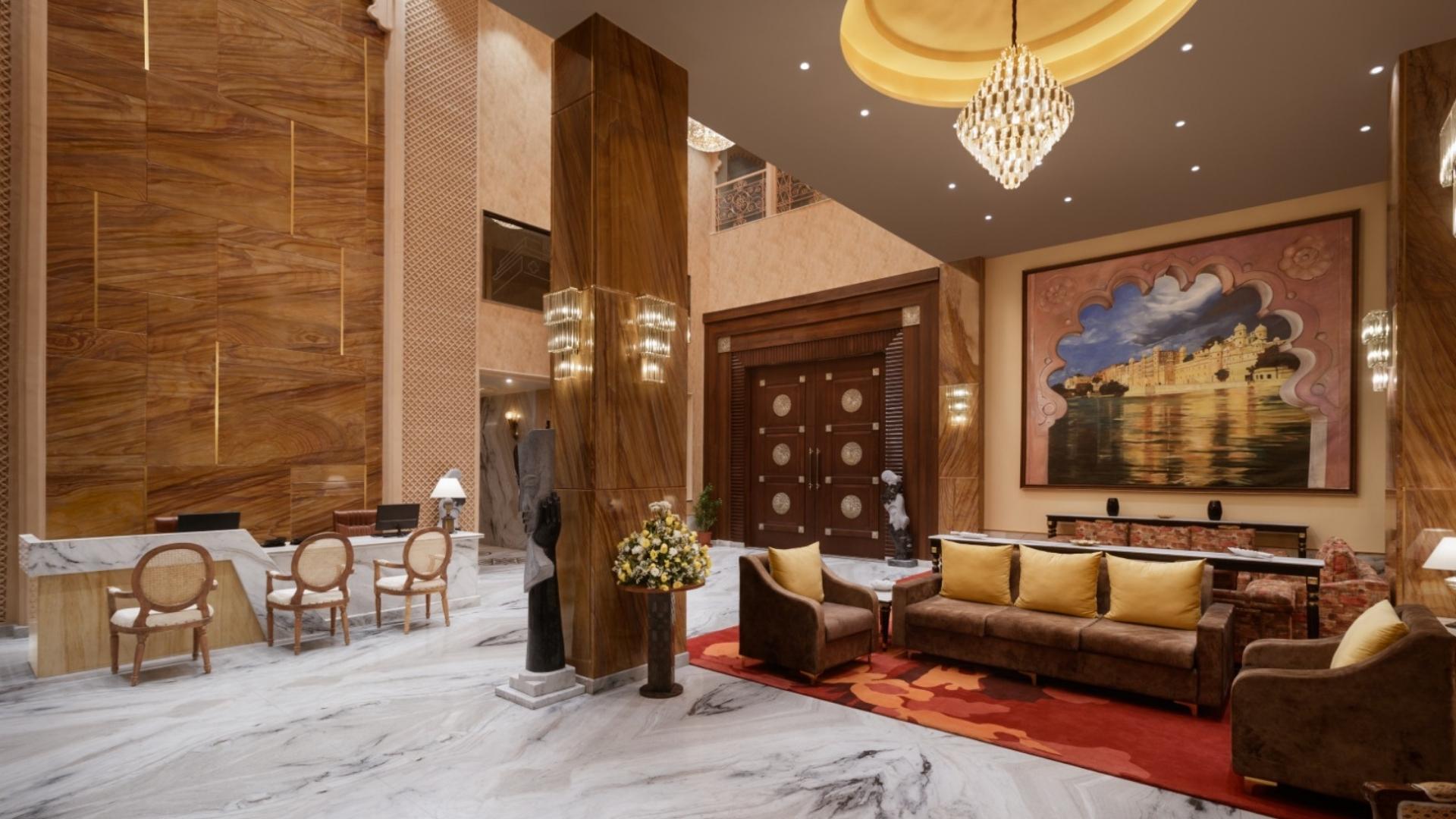
Straddling the boutique space, jüSTa Hotels & Resorts has leveraged art to create a distinct identity in the increasingly crowded Indian hospitality arena. With a deep-rooted passion for creativity, the Bengaluru-based group helmed by Ashish Vohra—set to mark two decades of operations in 2025—has integrated art as a defining pillar of its brand.

By Suman Tarafdar
Carving a niche in hospitality and making it viable—isn’t the easiest of paths. Positioning, even focusing, a brand around art is pretty rare though. And yet jüSTa, with an annual residency programme that brings together artists worldwide, does just that.
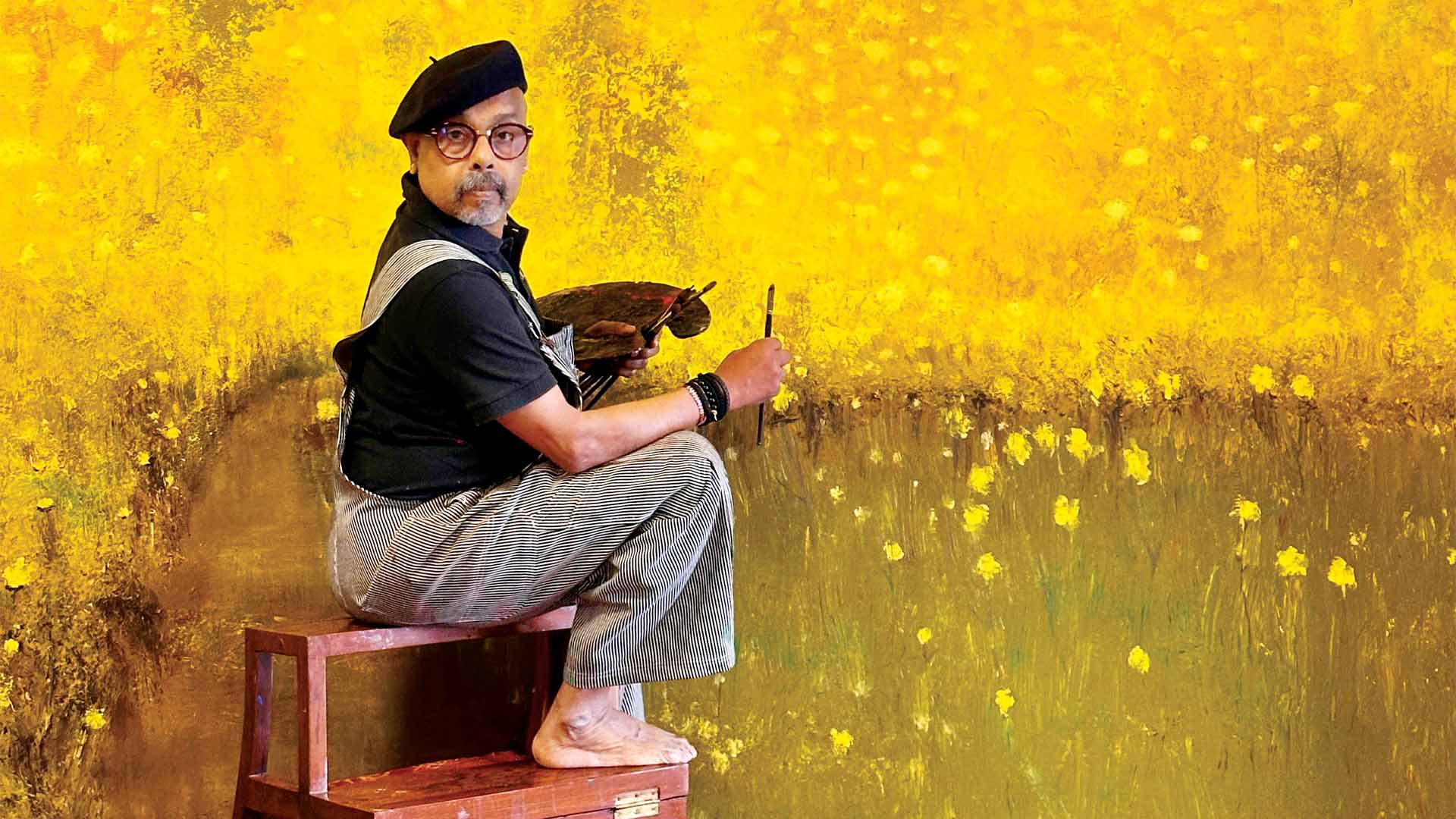
The Bengaluru-headquartered group, which is marking two decades of operations in 2025, has 30 hotels under three brands—jüSTa, Bookmark and NUO, spread across 11 states. It is at jüSTa that the owners have furthered their passion for art in its hotels. To this end, the group has been hosting an annual art residency, Chitraashala, which just marked its 10th year. 60 artists, 34 of whom came from different countries, attended the event hosted by the hotel for a week.
“We are not a cookie-cutter brand,” points out Ashish Vohra, founder and CEO of jüSTa Hotels & Resorts. “One of the reasons we have got all the people here is that we want to be associated with and own that art positioning very honestly. Unless you communicate it and people talk about it, that association is never reinforced. And that's the idea. I think it is truly a differentiator for us. That makes us feel proud.”
Interestingly, the programme, which started about a decade ago, urges participating artists to create artwork during their residency, though it is not mandatory. The artworks, acquired by the group, are displayed at jüSTa hotels across the country.
Vohra, who is passionate about this artistic endeavour, leads the initiative along with his fashion designer wife, Deepika Govind, who also handles design and interiors for the group. “Art creates an identity,” he says. “Over time, it can only get strengthened.”
A former executive with the Oberoi Group, Vohra’s foray into art was circumstantial. “In 2006-07, I had gone to China to purchase some things for a hotel along with a partner, and we thought the art was very cheap and we bought it. We put it up in one of the hotels. A friend who was visiting looked at them and said, ‘Where did you pick up this trash from?’ I was perplexed because I had no art sensibility. He mentioned heading to Shantiniketan near Kolkata and asked me if I would like to come along. I went with him and we visited at least 10 galleries.”
Vohra recollects being not just impressed by the range of art on offer, but also by how inexpensive it was.
“I was amazed and touched with the level of creativity— and the amount of poverty.” Amongst the artists was someone whose wife was pregnant and he needed ₹50,000. He promised to give me whatever artwork I wanted. “I said I'll send you the money and you send me whatever artwork you want to send me. It was just a human decision, (made at the) spur of the moment. He sent me almost 25 to 30 artworks,” says Vohra. “Something struck me, and my wife and I instituted a small scholarship for some of these guys. We started paying ₹1,500 rupees each to three boys every month. We realised some of them were poor and needed financial help.”
Today, that fledgling art initiative, which began with an art residency in 2009, is a much-anticipated event in the annual calendar for many artists.
Vohra sponsors the stay for artists who need financial assistance. “The moment you leave the top end of the spectrum of people who buy art or people who are A-listers in the art world and go down one or two levels, the costs are not so prohibitive. Yet the value artists deliver in terms of expense, experience or visual delight is phenomenal. Every year we buy 100 to 200 pieces of artwork for all our hotels. Ideally, we want each of our hotels to have a few artworks on display, which we can sell to help the artists.”
He is still to make up his mind about a gallery-like space. “What we are intending to do now is to create a sinking fund. A lot of artists fall on hard times. A lot of them require financial assistance. A lot of them are looking for some support or the other.”
At jüSTa Rasa, Rishikesh, where the latest edition of Chitraashala was held, a joyous week of creativity resulted in a plethora of artworks. Artists came from countries across the world—from Japan, the US, Thailand, Turkey, Egypt, Poland, Spain, Jordan, Netherlands, Romania, Ukraine, Mauritius, Italy, Finland and more, besides different parts of India. Their diverse backgrounds and ethnicities notwithstanding, they were united in expressing themselves in various forms.
Even as they painted their surroundings (the majestic Himalayas formed the backdrop for this edition of the residency, which is held in a different jüSTa hotel each time), or on themes such as friendship, or even each other, a cursory glance revealed an overall desire for a more cohesive existence—a power of creativity via art and a gratefulness for a platform jüSTa provides.
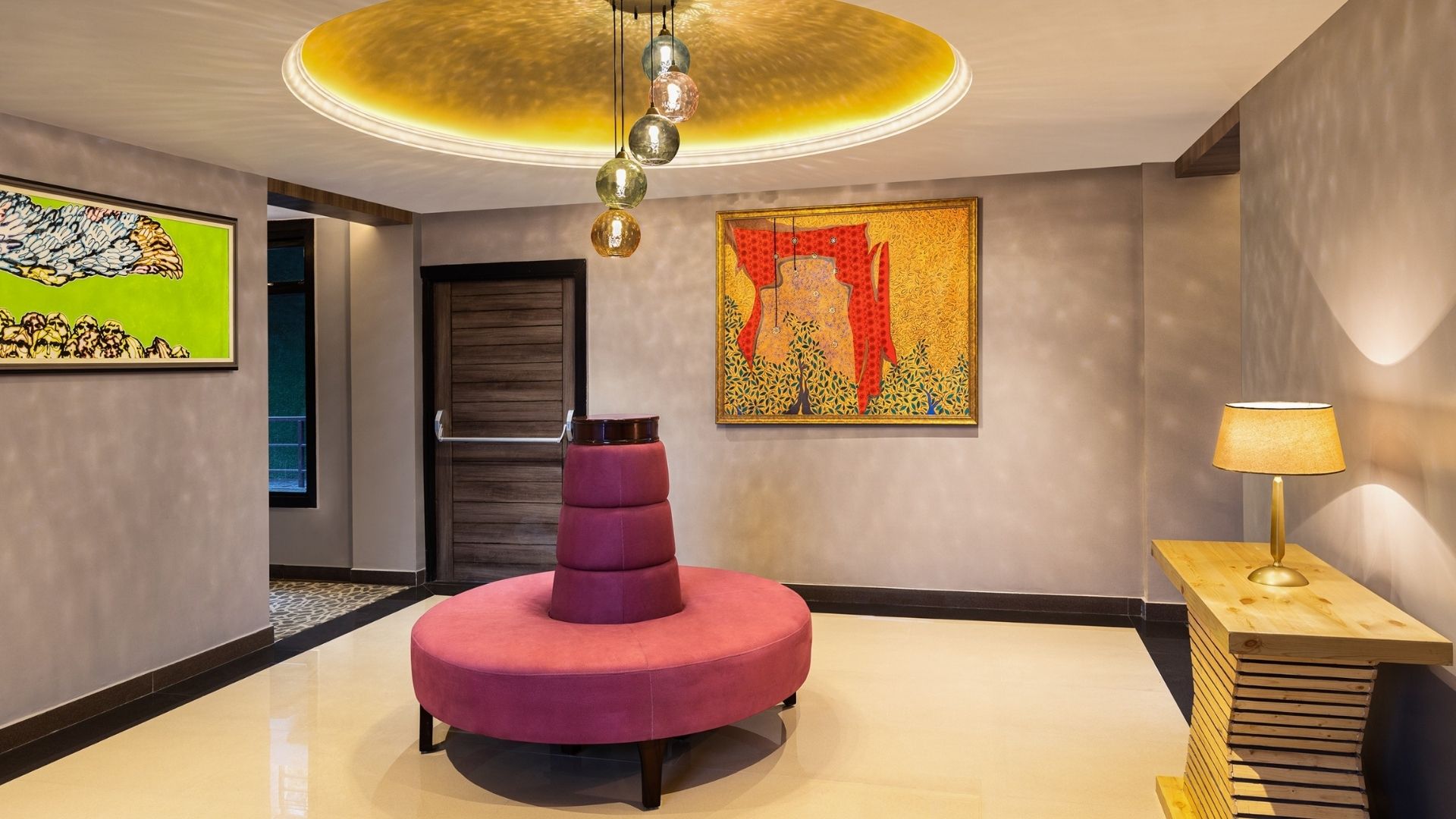
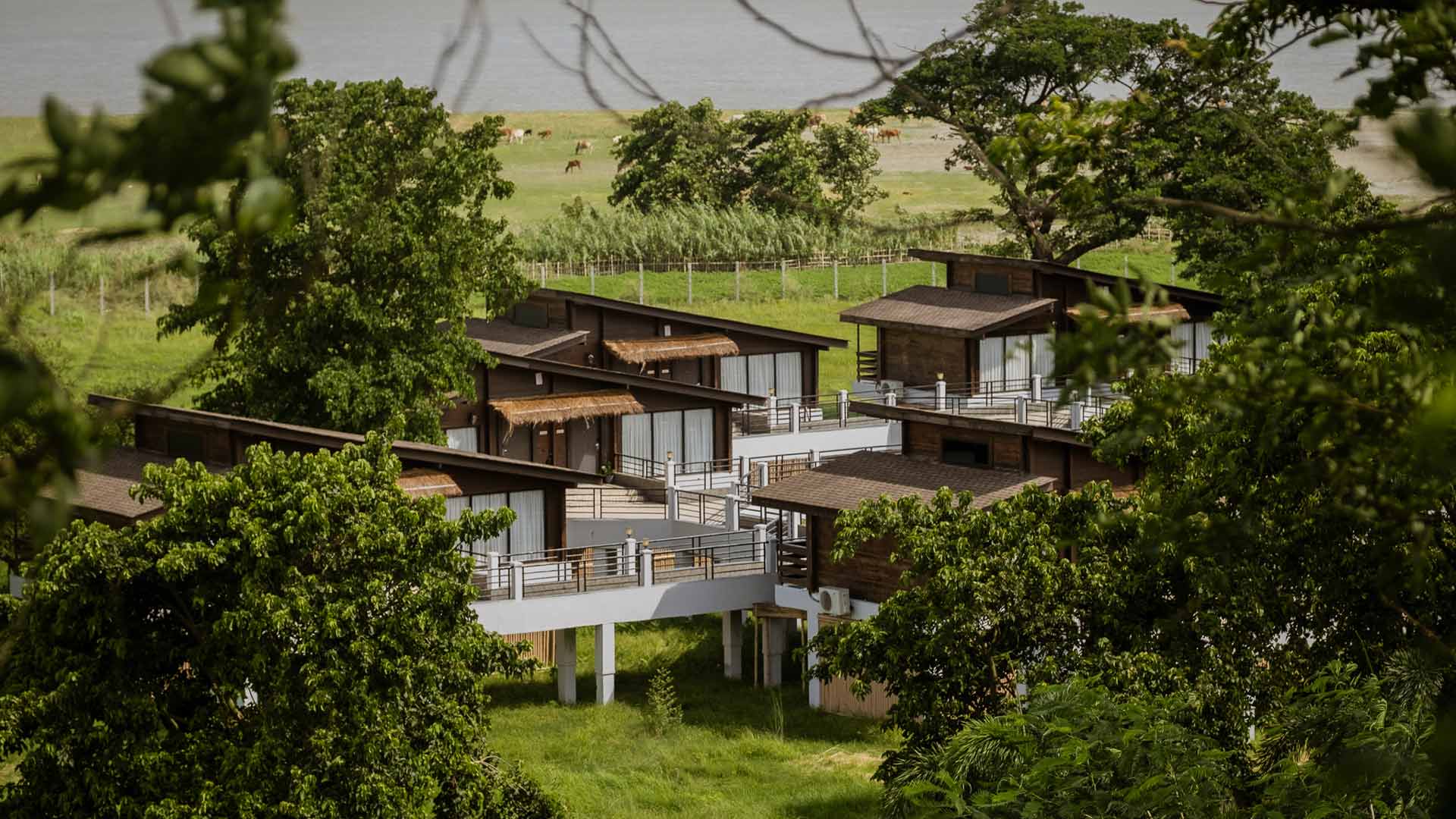
jüSTa Cliffend Resort and Spa, Mashobra.
Q&A With Ashish Vohra
While jüSTa 's focus on art has helped it carve out a distinct identity, the group’s two decades of existence have seen it reach 30 hotels with 900 rooms across the country. Founder and ceo ashish vohra encapsulates the journey and his vision for the future.
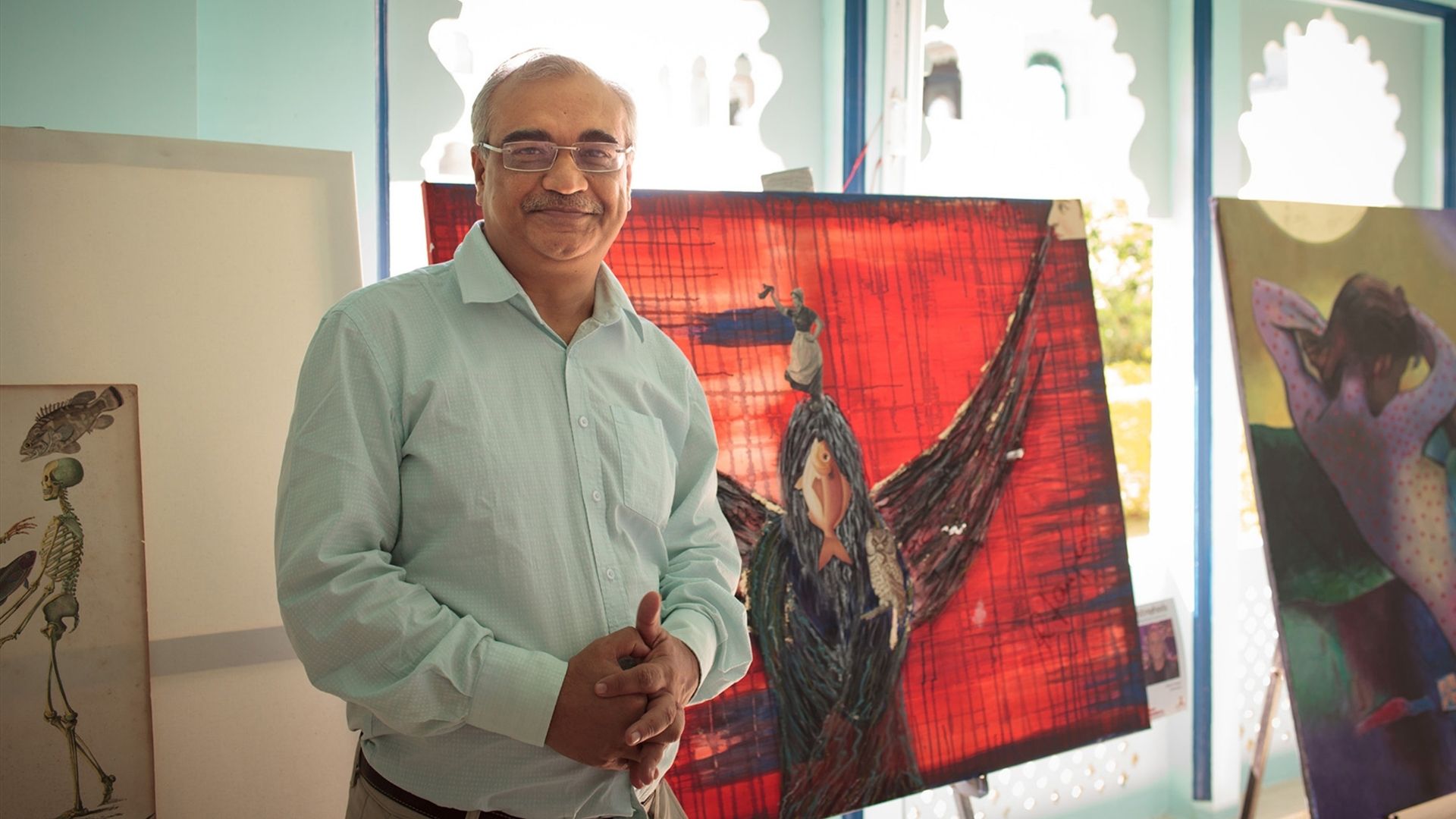
Ashish Vohra agrees that the market competition is intense, and that big brands are exploring every possible model.
How did jüSTa come about?
I worked with the Oberoi Group and my last assignment was as head of marketing and brand development. Deepika and I were expecting our second baby and we moved to Bengaluru in 2005. At that time, one couldn't find a hotel room in the city. My brotherin- law called one day and said, 'There is a building available. Would like to take it over?' We paid the first deposit on an apartment because that's all we could afford. And that's how we started with a serviced apartment. It was on the lake, so it was called Lakeview Residences.
We could not register 'Residency' as a name, so we chose jüSTa, which in Sanskrit means ‘welcome’. The logo is a tree with seven colours through a brush stroke.
How did the expansion to hotels happen?
From residences, we soon started to look at hotels. We have had two near-death experiences in our business. Soon after we started, in 2008 we had the Lehman (Brothers) crisis and Bengaluru was in complete turmoil. This was followed by 26/11. So we had to reinvent. We had expanded to 15 hotels when the pandemic hit us. We had to reinvent and recalibrate our whole business. We changed our business model again.
Post-pandemic, we decided to focus on resorts. We didn't have a single hotel in the hills; now we have 10. We recalibrated and created a more risk-managed, robust business model. I think in retrospect, the pandemic was a great boon because it offered us an opportunity to relook, reinvent, reimagine and recreate the business. We now have 30 hotels under three brands—jüSTa, Bookmark and NUO—spread across 11 states. In October 2000, we were down to eight and are back to 30 now.
When you say you changed the model, what did you change and what was the process?
Earlier, we were mostly into the leased model. Then we got into revenue share and management, which is what all the big brands do. Post-pandemic, all the owners were asking ‘What's your skin in the game’? Tomorrow, if another crisis hits us, a management company can just walk away.
We have skin in the game through a revenue share model. All the expenses are ours. So instead of taking a percentage of the top line, we give a percentage of the top line. It is more robust from a risk management point of view since not all the risk is ours if the business is down completely, which was the fear at that point in time. It did happen in the second wave. It tied with a smaller risk because we were in the process of brand building and expanding into unknown territories. The first hotel that we signed post-pandemic was in the middle of July. I went to see it and sign the agreement on 15 August and we relaunched it in Mukteshwar on 1 October.
We were fast to recognise that the business would pivot towards resorts, and also fast to push the development cycle ahead before anyone else could see or copy our model. We had a head start. All our hotels are managed, leased or on revenue share.
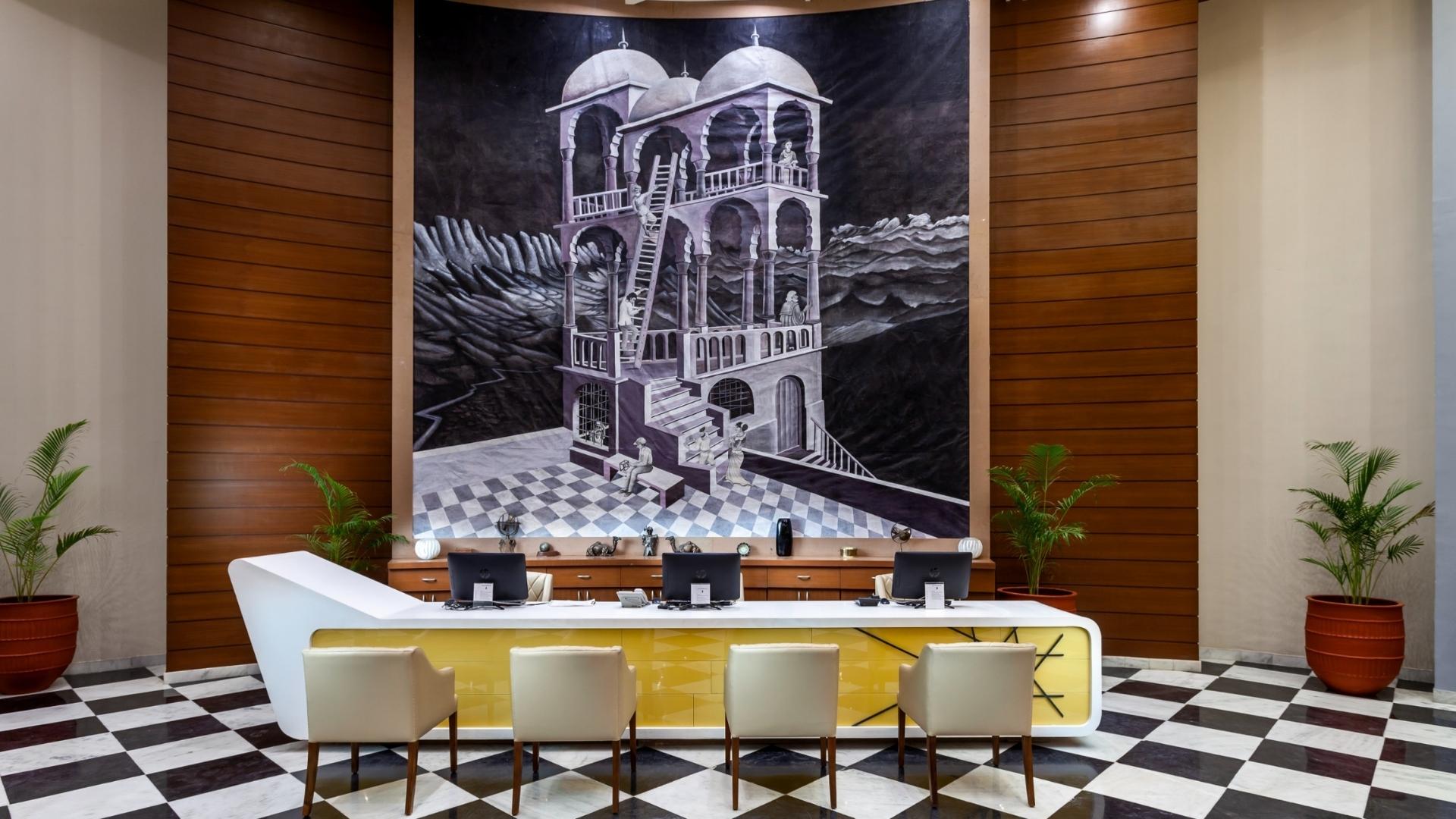
jüSTa Sajjangarh Resort and Spa, Udaipur.
We were fast to recognise that the business would pivot towards resorts, and also fast to push the development cycle ahead before anyone else could see or copy our model. We had a head start. All our hotels are managed, leased or on revenue share.
Ashish Vohra
Founder and CEO, jüSTa Hotels & Resorts

Given that Indian hospitality is witnessing a boom period, and yet experiencing risk aversion from the owner's side, how do you see the space evolving? What is your preferred model?
There is a need to have a long-term vision. We want to build two or three hotels of our own. (It is) always good to have an asset-based operation. Then we want to explore all three models—the management model, the lease model and the revenue share model. If you do only management, unless you have a scale, your top line or the margins will be wafer thin. If you do lease, it's very, very high risk. If you do revenue share, it's a high-risk, high-reward model.
Is it challenging to get owners to sign up as many brands are competing to put their flags on the same property?
I would agree that the market competition is intense. I would also agree that the big brands are exploring every possible model. But I still think that there is a play between 30 to 50-room hotels, where the big brands are not so keen and there is still space for smaller experiential resorts to exist.
What is your vision to take the brand forward?
The only way forward is to have a large number of hotels in your portfolio since a strong development pipeline is your branding. The more flags you have, the more customer touch points you have. The more partner touch points you have, the better customer relations models you can build around every possible consumer or revenue touch point.
Over a period of time, you will see a large number of mergers and acquisitions. You will see a lot of consolidation in the industry. At some stage, people will realise that rather than signing up a hotel or two, you can sign up a company. The markets are getting consolidated and mature, and they will value scale. So, the faster one scales up, the better it is for survival as an independent entity, to acquire or be acquired, or create value through an IPO route.
In the next three years, we want to establish 50 hotels and 1,500-odd rooms—a very achievable target.
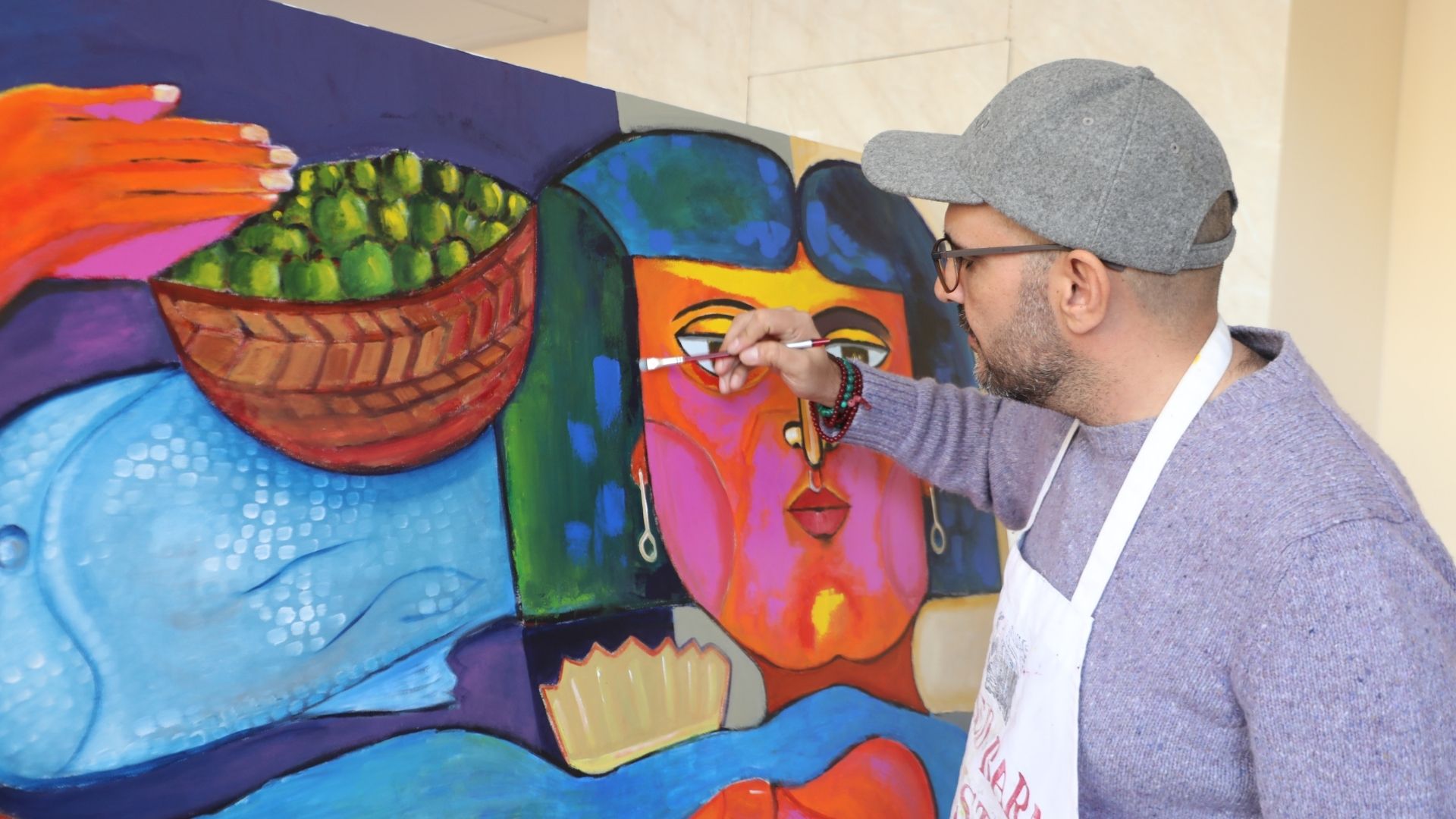
The 10th edition of Chitraashala saw the participation of 60 artists, 34 of whom came from other countries.
When you approach owners and speak to them about signing up with you, what do you offer that a bigger brand cannot?
I think the single biggest thing that we can offer is the personal touch, the relationship, the comfort, the accessibility and the ability to interact and talk frequently. The owner of the brand sits with you and takes all calls. That's a big differentiator in my mind.
The second, obviously, is that the market is quite large. And there is still a large amount of unstructured non-branded inventory that wants to come into a branded space. The third is sales. Some amount of distressed sales or distressed inventory or people not having enough funds to finish off the project.
People are looking at signing up for anything where they can put a name and a face together. Some owners are looking for investment; some are looking for deposits, and some for connectivity; someone is looking for the scale that they have might not fit in most of the brands. So the deal market is still extremely active. Scale gives you brand visibility. Scale gives you the hub-and-spoke model.
What are the top concerns of owners? What are you hearing?
For the management contract model, the owners cannot be convinced to opt for a brand if they feel that the management company doesn't have enough skin in the game. Some owners might look at the franchise model, which is for more seasoned players who are experienced in the business. Be it money, expenses, manpower, commitment, or interaction, owners are looking at how much the brand is looking to put in. That, of course, might differ from brand to brand and even owner to owner. I think hospitality is a cyclical industry. One has to move with cautious optimism. It is difficult to predict the next 10 or 20 years. We are too fragile a market and industry for that. A single incident anywhere in the world can trigger and devastate our fortunes. To me, the mantra has always been cautious optimism. We learned our lessons from the pandemic and got rid of our debt completely. We are a zero-debt company now. We want to build reserves and then see how we can build a couple of our own resorts.
What would you like the guests to know about jüSTa as a brand?
We are not a cookie-cutter brand. Each unit is a unique entity and offers its own experience. As our tagline says, everything comes to life through art. So art is an important brand pillar for us. It creates its own visual delight, in any form. It could be a sculpture, it could be a painting, or it could be another medium.