















Goa’s Heritage Seat of Power
Perched on the highest point of Cabo, Goa’s Governor’s House, or Lok Bhavan, is where the sea, empire, religion, architecture, politics, and memory converge. A newly introduced trail by the state tourism department and Soul Travelling invites travellers and history enthusiasts to explore this layered past.

By Deepali Nandwani
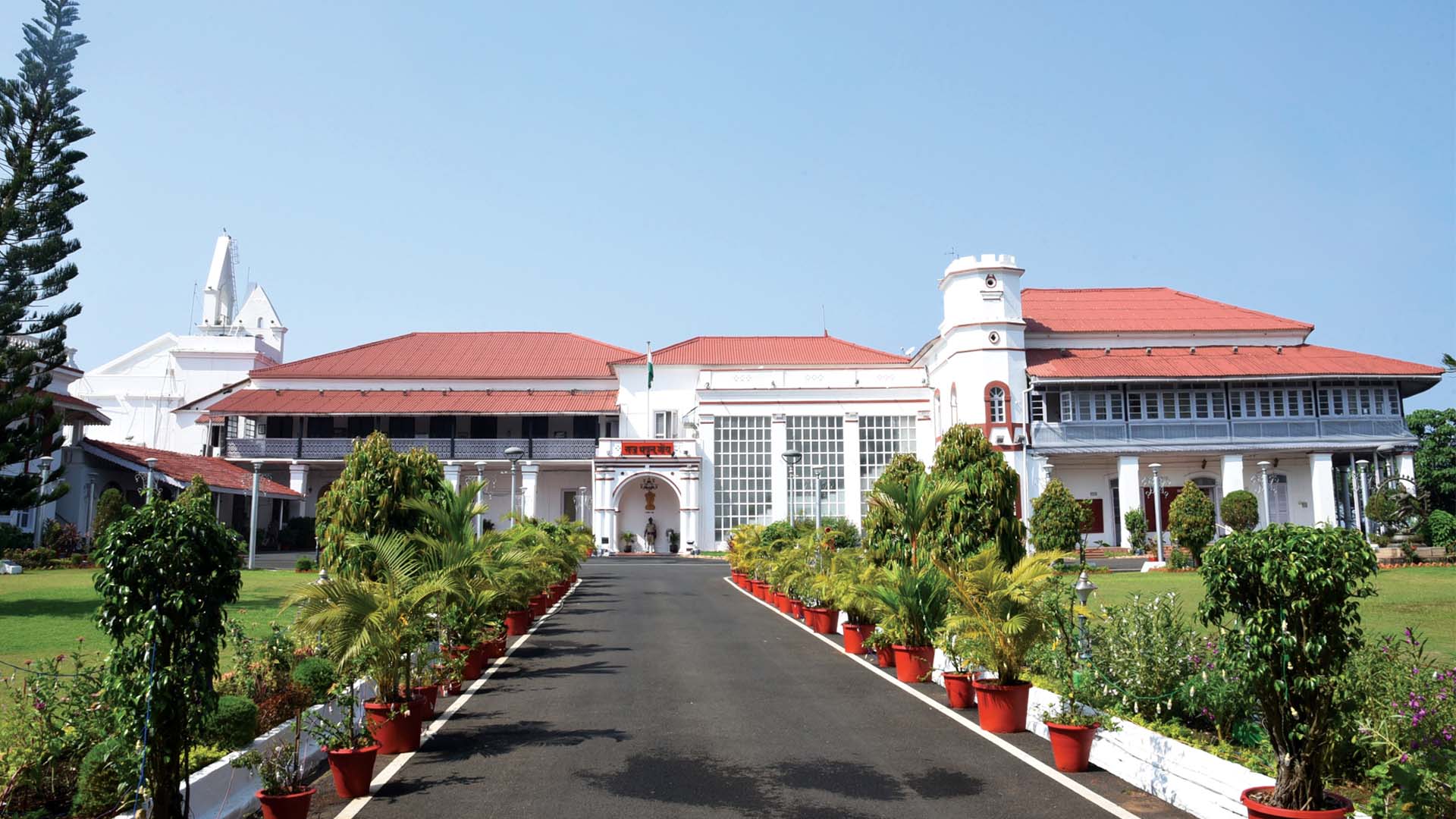
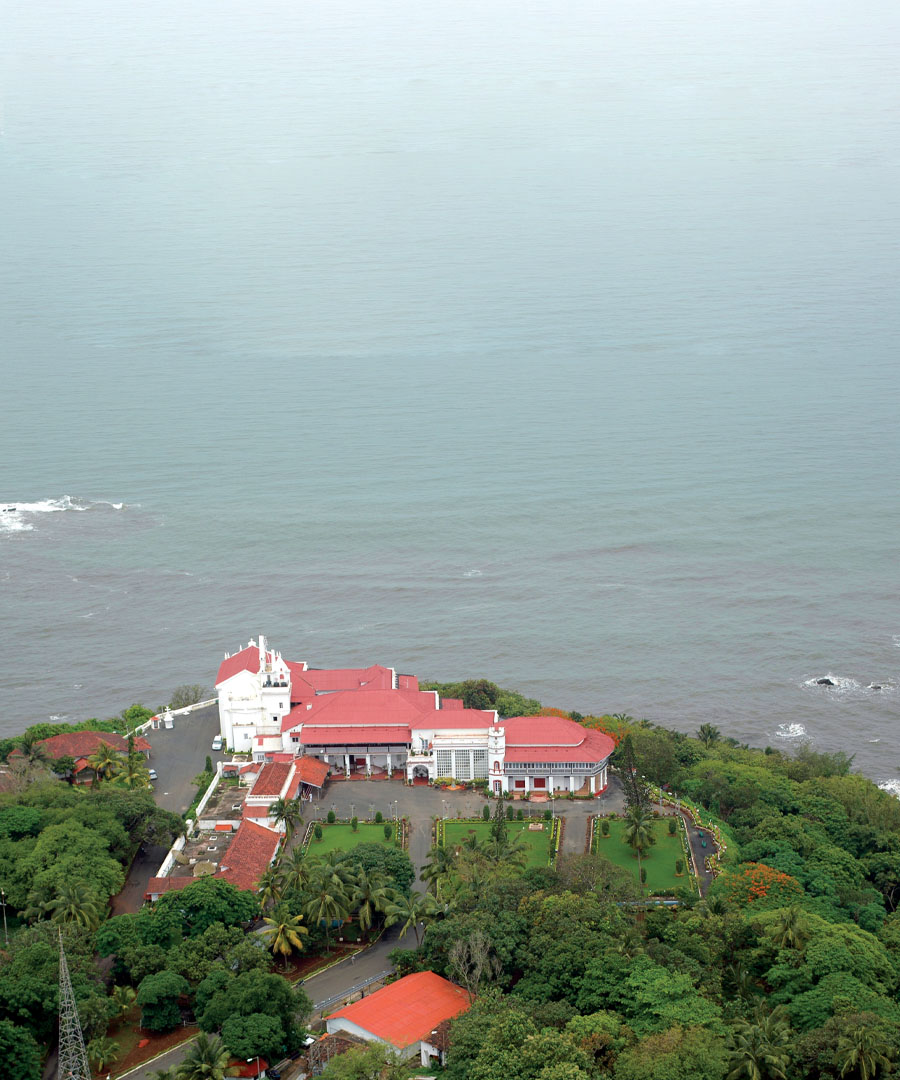
On a dramatic promontory at Cabo (Cape Goa), overlooking the Arabian Sea near Dona Paula, stands Goa’s Lok Bhavan (formerly Raj Bhavan), the official residence of the Governor of Goa and among India’s rare historically layered government residences.
From the highest point on this headland, the Mandovi and Zuari estuaries sweep into the sea in shades of blue-grey. The drive into Lok Bhavan winds past wooded slopes, sea cliffs, and hidden coves before the residence emerges—not as a grand mansion, but as a secluded coastal retreat shaped by centuries of occupation, weather, religion, and maritime history.
Goa Tourism and Soul Travelling, an experiential travel company, now offer access to parts of Lok Bhavan through a curated heritage trail, moving through chapels, cemeteries, gardens, viewpoints, grottoes, and political halls as it traces the regimes that shaped Goa. Soul Travelling’s co-founder Varun Hegde explains, "Our aim is to reveal more of Goa, beyond its usual projections. This government partnership lets us showcase another side of Goa beyond the beaches."

Old Cadillac sits as a reminder of Lok Bhavan’s administrative past.
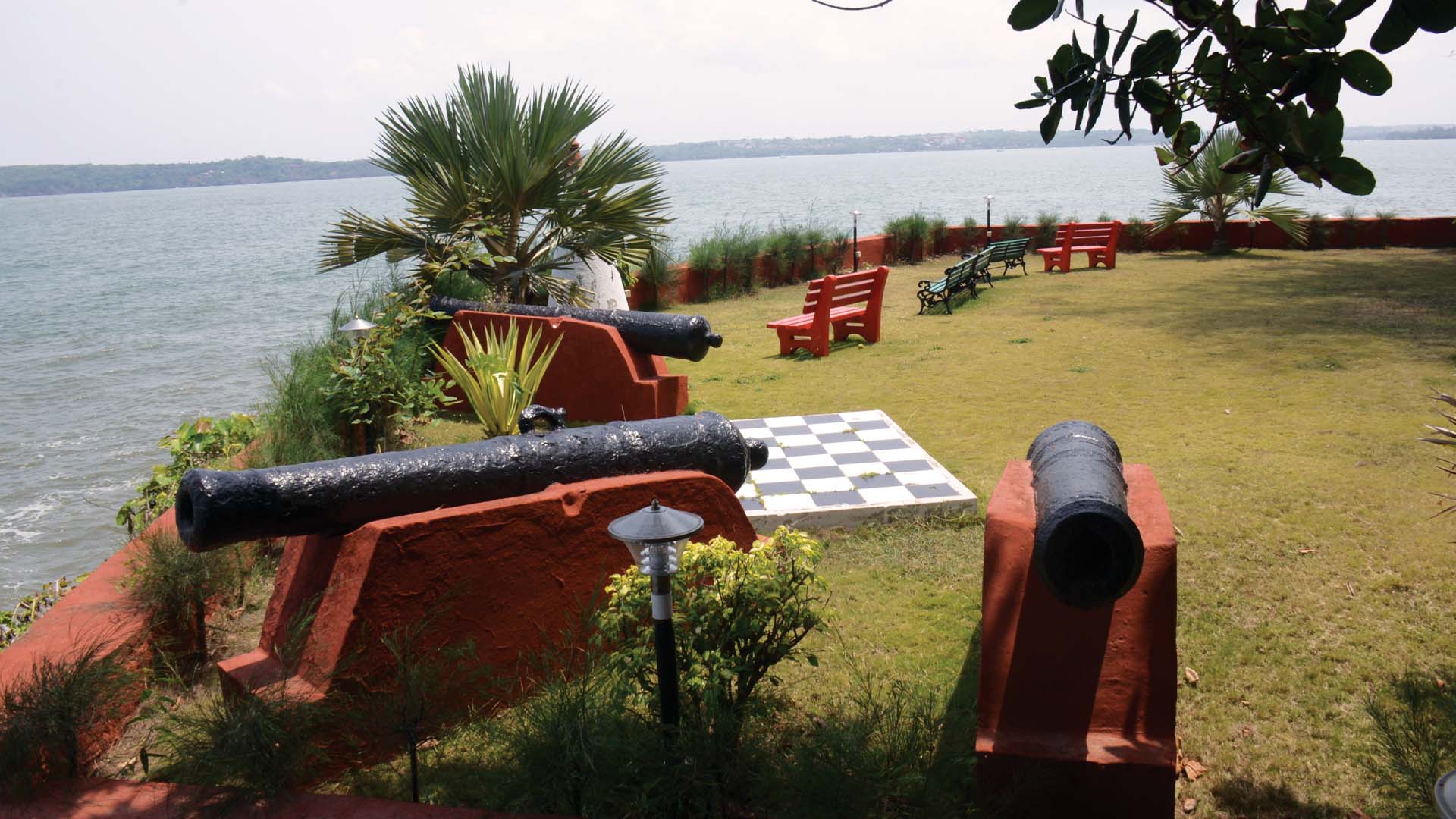
From Lok Bhavan’s lawns, the Mandovi and Zuari estuaries sweep into the Arabian Sea.
A strategic headland
Long before it became a governor’s residence, Cabo was prized for its geography. Historian Sanjeev V. Sardesai, who curated the trail, describes it as “a natural lookout point, from where maritime movement could be monitored.”
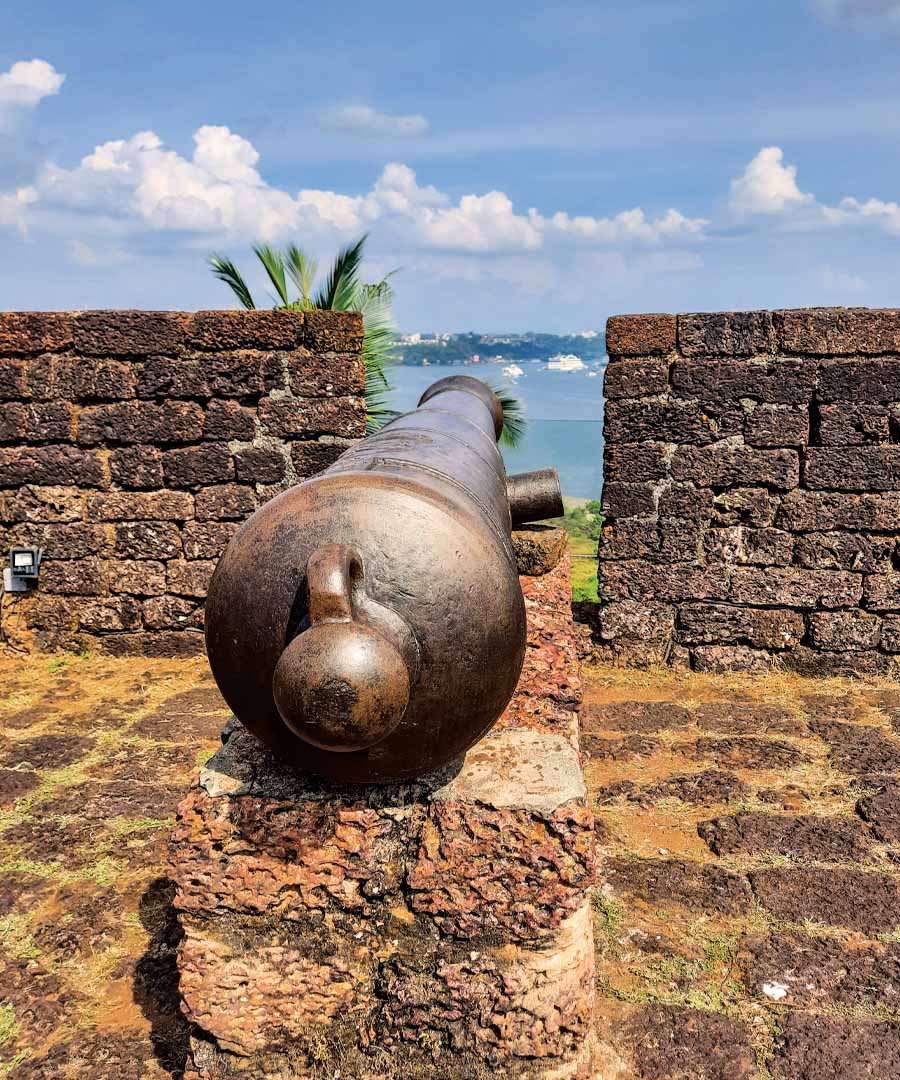
Before the Portuguese arrived, the Adil Shahi rulers of Bijapur used the hill to watch ships entering the Mandovi estuary. The Portuguese later integrated it into a larger coastal defence network protecting Old Goa and its waterways. The headland formed one point of a triangular maritime surveillance system. Fort Aguada guarded the outer sea approach, while Reis Magos Fort monitored entry into the Mandovi River. On the Panjim side stood the now-vanished Gaspar Dias Fort. Cabo itself functioned as a lookout and artillery point. “In 1597–1598, two Dutch ships tried to enter the mouth of the river,” says Sardesai. “That made the Portuguese realise they needed stronger defence.” The response eventually led to the strengthening of Cabo’s fortifications and the construction of Aguada Fort in 1604.
Even today, traces of this history remain within the estate at Cannon Point, where cannoneers once trained. Fragments of the fort walls, and laterite quarries were later repurposed into rainwater harvesting systems.
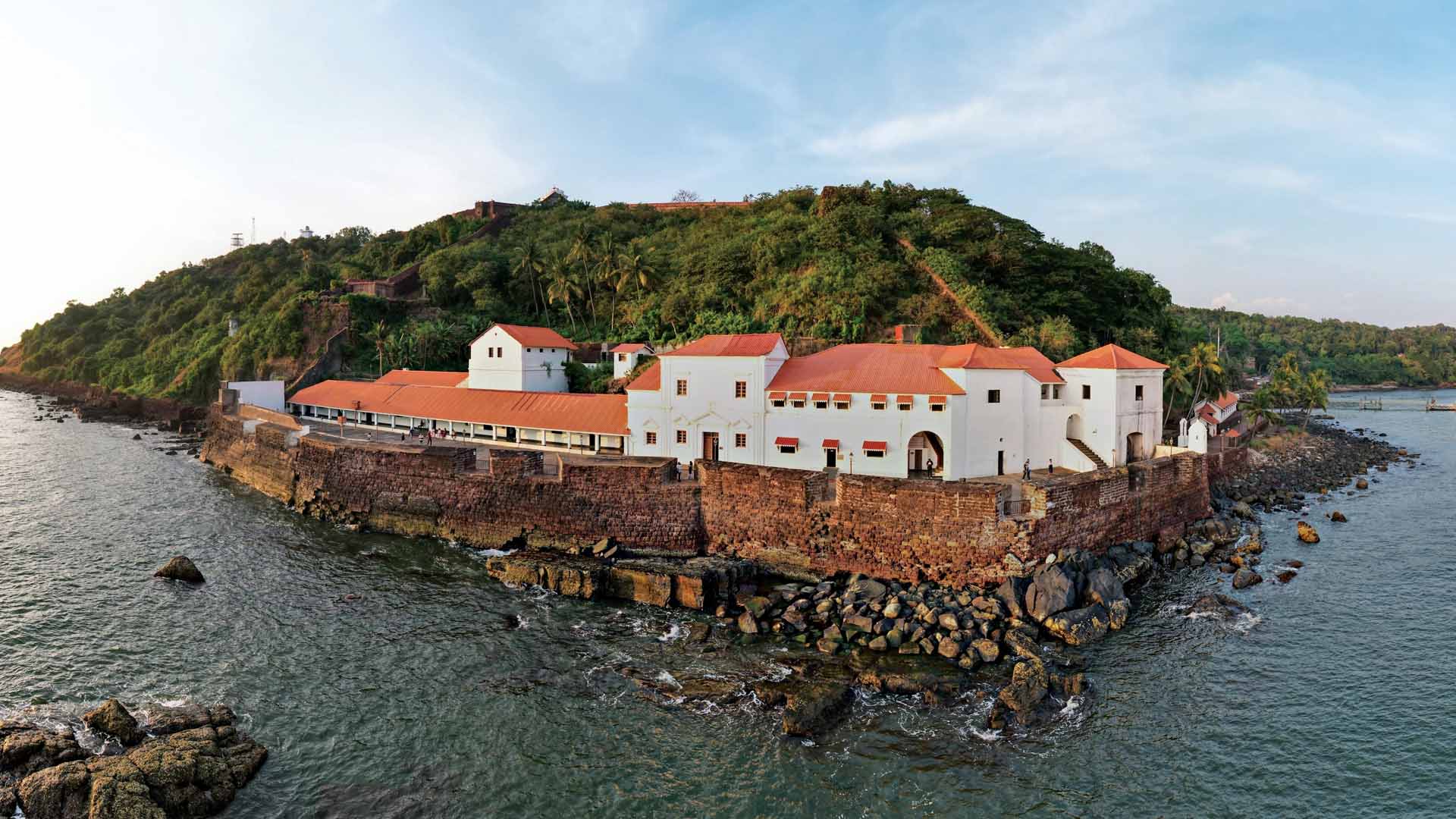
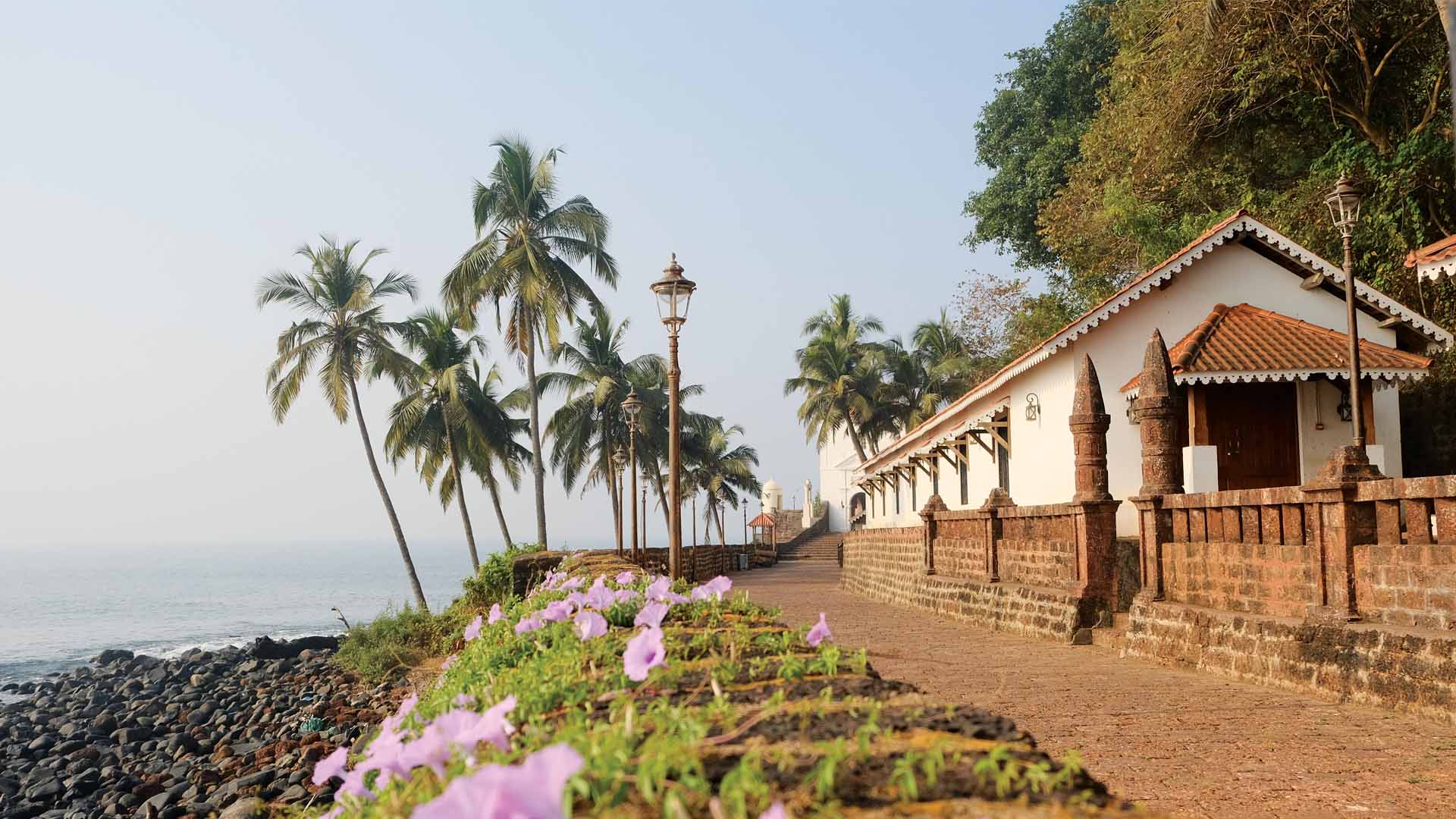
Whitewashed façades, deep verandas and laterite walls reflect Goa’s Indo-Portuguese architectural language.
Fort Aguada formed part of the larger coastal defence network that once worked in tandem with Cabo’s lookout point.
More than a military outpost
And yet, Cabo was never merely strategic. Its dramatic cliffs, restless sea, and isolation transformed the headland into both a defensive and tranquil refuge. In the 1540s, Portuguese governor Estêvão da Gama envisioned a chapel here. “Chapels usually have a large façade and are built high,” explains storyteller and Soul Travelling ambassador Adolfina Thamm during the trail. “That would be the first visible point for ships arriving or leaving. It became a reference point, almost like a map.”
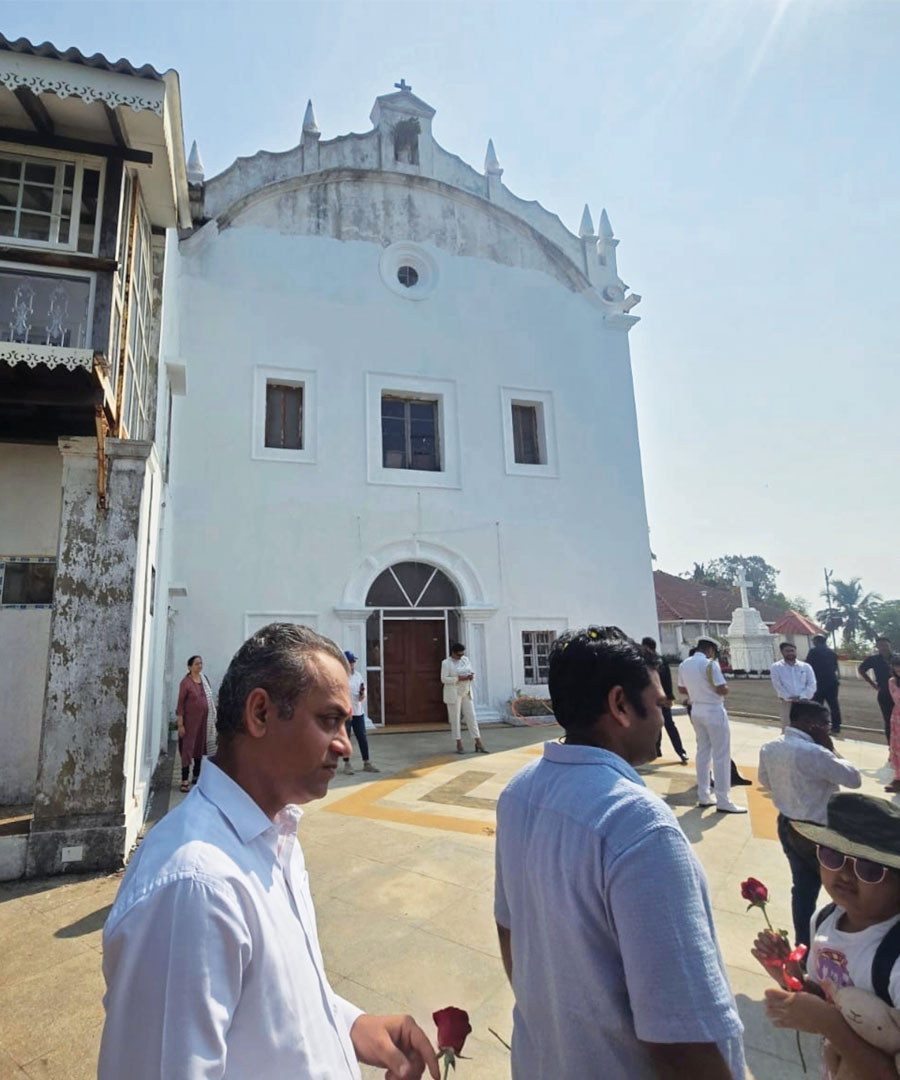
The Portuguese eventually built the Chapel of Nossa Senhora de Boa Viagem (Our Lady of Good Voyage), where sailors prayed before long voyages. Franciscan priests later settled here and expanded the site into a convent. Sardesai notes that for ships sailing toward Portugal or further east into Asia, “it was the last man-made structure they would see once they crossed the horizon.”
Over time, the convent evolved into an administrative residence and, in the early 20th century, became the Governor's residence.
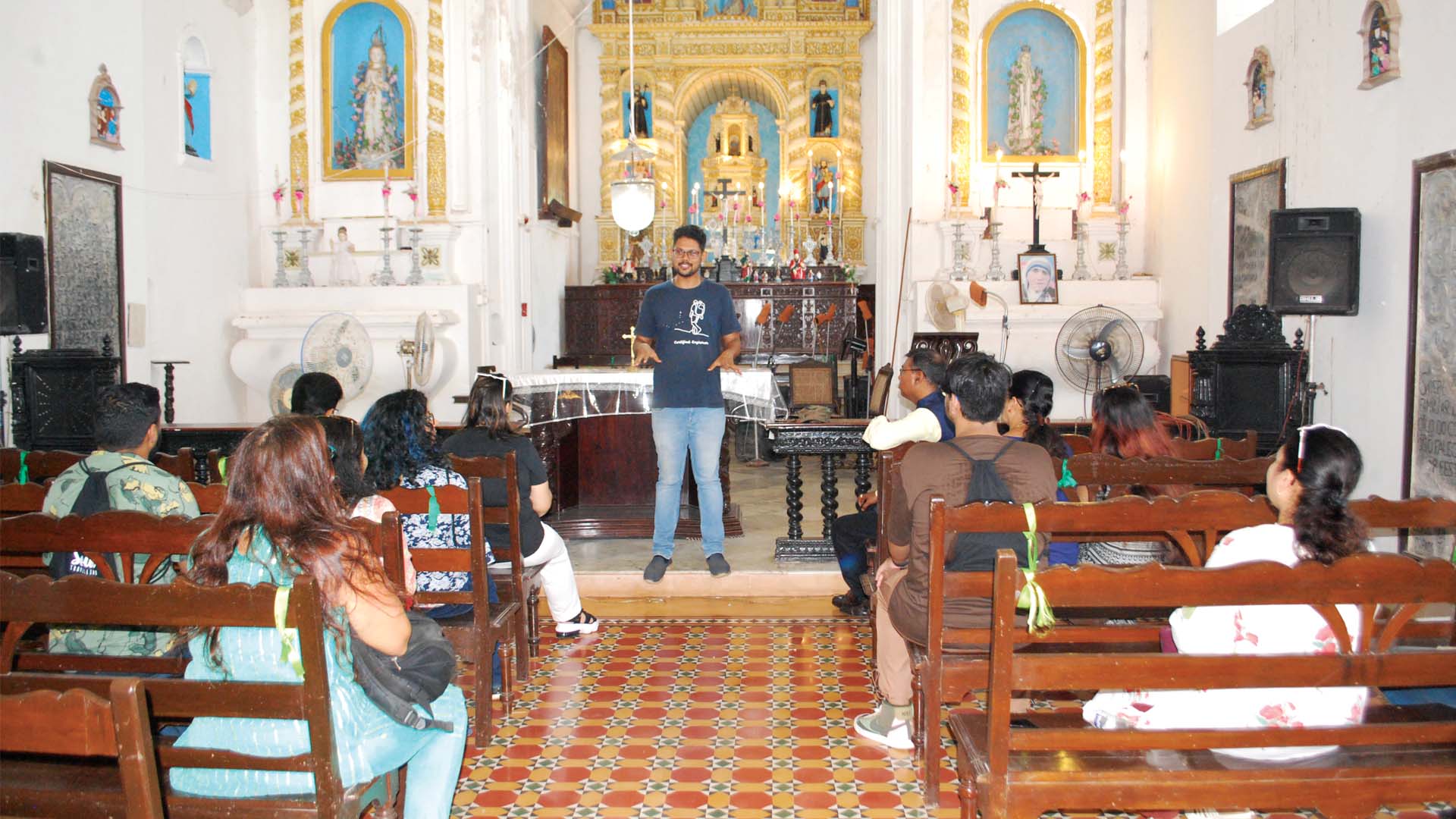
Small in scale but richly detailed, the chapel’s white-and-gold wooden altar reflects early seventeenth-century additions to Cabo.
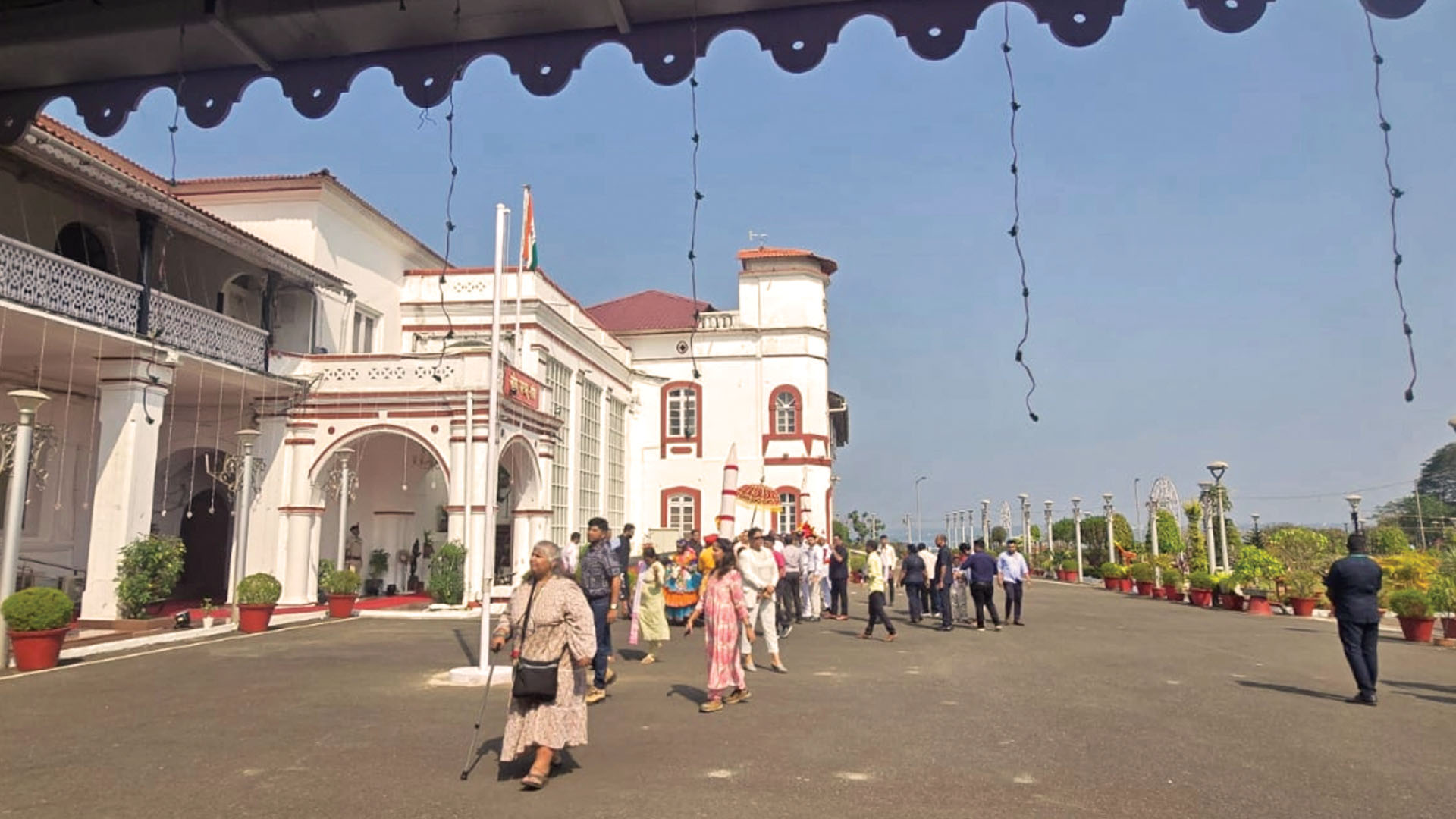
The Lok Bhavan trail moves through gardens, viewpoints and hidden corners usually closed to the public.
The truth about Dona Paula
A fascinating part of the trail dismantles Goa’s most repeated legend—the tragic love story of Dona Paula. “Please correct people when you hear that story,” Thamm says, referring to the myth that Dona Paula leapt to her death for love. “That story has been made famous by taxi drivers.” Instead, the trail reconstructs the historical figure behind the name. Sardesai explains that the land once belonged to the influential Sotomayor family. Dona Paula de Menezes, daughter of a Portuguese viceroy, married António Sotomayor and became associated with the estate. The area itself was originally known as Odda Vale, likely named after the small coves scattered along the shoreline below the hill.
During restoration work inside the chapel, workers discovered her burial slab beneath the flooring, confirming that Dona Paula was buried there. “If she had committed suicide,” Thamm says, “she would never have been allowed burial inside a Catholic chapel at that time.”
The famous twin statues at Dona Paula Jetty, Sardesai adds, have no connection to her either. Sculpted by Yrsa von Leistner and inaugurated in 1969, they were intended to represent ʻImage of Indiaʼ and ʻThe Far East Travellers,ʼ symbolic of Portuguese journeys eastward from Goa.
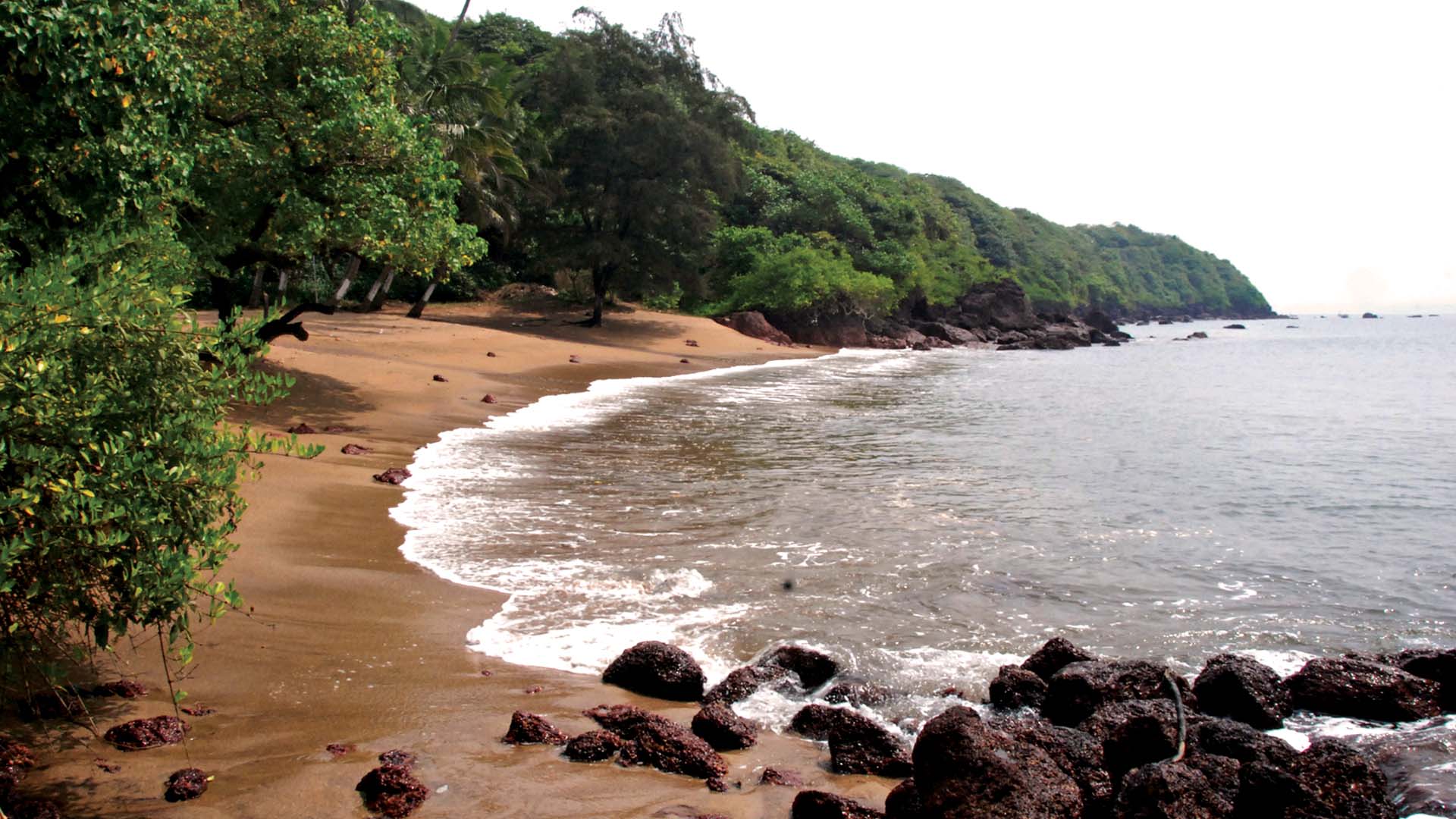
The quiet beach below Lok Bhavan reveals the hidden coves that shaped Cabo’s coastal geography.
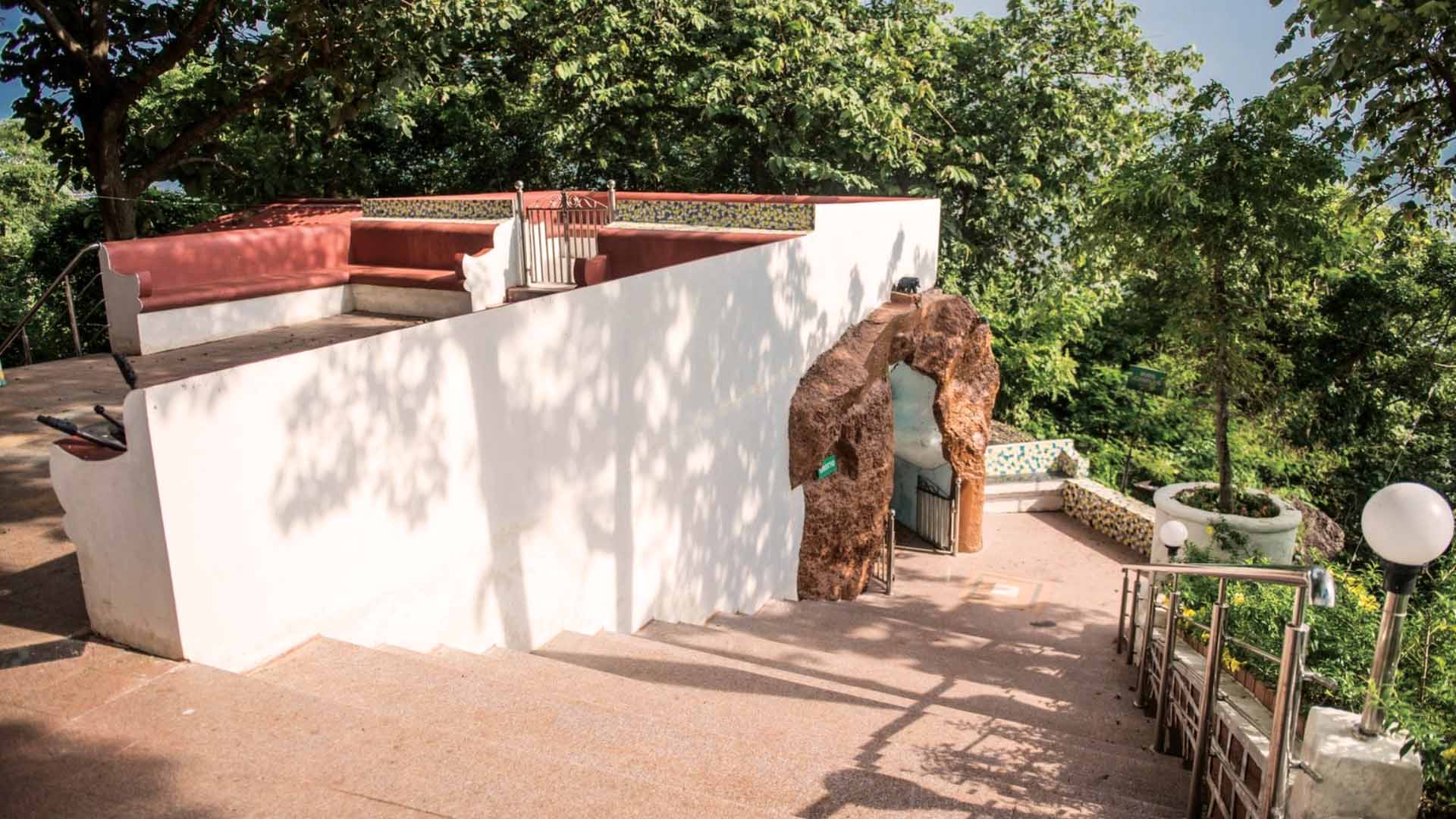
Laterite steps descend to the grotto of Santa Paulina, where her recumbent figure rests beside the sea-facing altar.
Architecture shaped by Goa
What survives at Lok Bhavan today is not purely Portuguese architecture, but something more layered and localised. “In Goa, we don’t have Portuguese houses,” says Sardesai. “We have Indo-Portuguese architecture, or European architecture blended with Indian architecture.”
And Lok Bhavan embodies that hybridity. Thick laterite walls temper tropical heat. High ceilings, verandas, deep corridors, and sea-facing openings allow wind and light to move through naturally. Whitewashed exteriors emerge dramatically against dense greenery and the Arabian Sea beyond.
Inside the chapel, local craftsmanship reveals itself. The pulpit, carved by Goan artisans, carries motifs drawn from the region—flowers, creepers, hibiscus blooms, and even cashew-inspired detailing. “Each artisan incorporated local elements into their ornamental vocabulary,” Thamm explains. Nearby sits the choir loft, another feature common to churches built before 1962.
Throughout the estate, architecture and adaptation overlap constantly. Parts of the original flooring had to be replaced due to sea-facing erosion. The cliff itself began to collapse toward the sea, forcing reinforcement work along the Arabian-facing edge. Old laterite extraction pits became reservoirs. Passageways connected the Governor’s residence directly to the chapel.
The many lives of Cabo
The history of Cabo is layered with occupation after occupation. Between 1799 and 1813, during the Napoleonic Wars, British troops occupied Goa to prevent French expansion into Portuguese territories. Around 1,000 British soldiers took charge of strategic points across the region.
The British left behind traces still visible today. A quiet cemetery near Lok Bhavan holds 47 graves, including soldiers and engineers, connected to later railway and port construction projects. In 1982, former British Prime Minister Margaret Thatcher visited the cemetery and laid a wreath there during the Commonwealth Heads of Government meeting in Goa.
Following Goa’s liberation in 1961, the Indian Army briefly converted the estate into the headquarters of the military governor before it became the residence of the Lieutenant Governor of Goa and eventually, the official residence of Goa’s Governor after statehood.
One of the ceremonial halls inside Lok Bhavan has since witnessed the swearing-in ceremonies of several chief ministers and cabinet ministers. Former Governor Mridula Sinha added the Darbar Hall and parts of the bonsai complex to the estate, while former Governor P. S. Sreedharan Pillai expanded the bonsai garden into the Vaman Kala Udyan.
The grotto is among the estate’s most atmospheric spaces, situated below the chapel complex and approached by a staircase descending toward the sea-facing edge of the promontory. A cave-like devotional space with openings on both sides allowing light and sea air to pass through, it houses a female figure dressed in a saree, an Indianised representation of Saint Paulina, believed to grant wishes asked of her.
What makes the Lok Bhavan Trail compelling is that it never treats history as static. Instead, it unfolds through stories of priests, sailors, local artisans, British soldiers, forgotten quarries, hidden coves, and burial slabs beneath chapel floors.