











The New Cultural Capital
For decades, India sold its past to travellers. In 2026, we are creating an ambitious cultural economy in which the living intangible heritage—the weave, the recipe, the performance, the festival—has become the primary tourism asset.
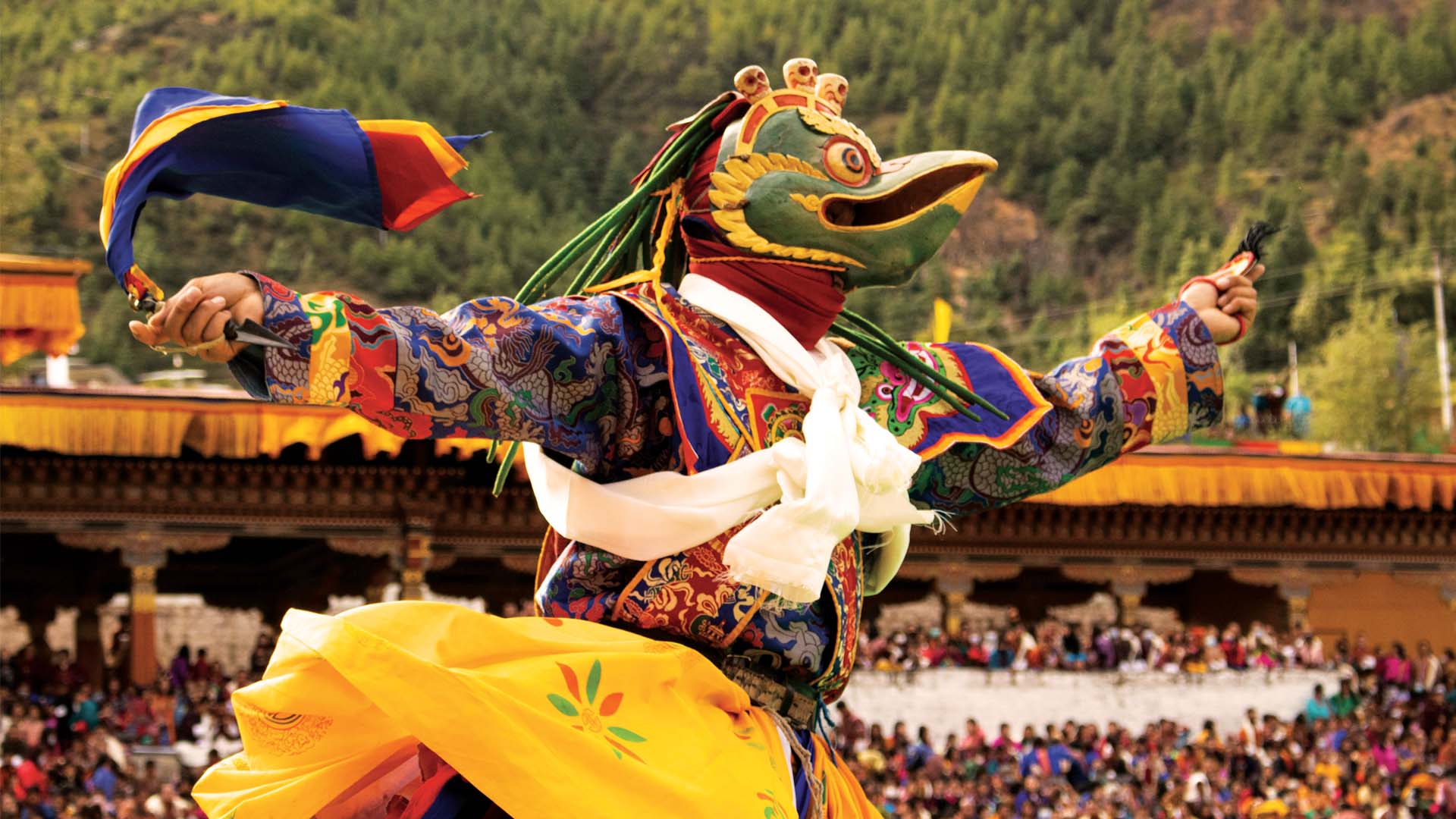

By Deepali Nandwani
Every December the city of Panaji, or Panjim, comes alive with art, music, theatre and dance. The cafes fill with people who have not come for the beaches. The old Latin Quarter, or Fontainhas, normally in a state of sussegad through the afternoons and after dark, awakens as theatre and art move into bylanes and venues within the old residential zone. At the various venues of the Serendipity Arts Festival, you find a grandmother from Goa watching a contemporary dance piece. An architect from Bengaluru deep in conversation with a textile artist from Manipur. A young couple from Delhi, who planned a five-day trip around a single performance, extending their stay by three days. This is not an arts festival in the conventional sense.
“We never imagined people would plan their calendars around Serendipity Arts Festival,” says Sunil Kant Munjal, Chairman of Hero Enterprises and founder of the festival. “But they do now, and that has been transformative for Goa’s economy and ecosystem.” He chose Goa deliberately for what he calls ‘a culture of relaxation’. “People come to do nothing, unwind, or simply have fun. That mental openness makes them far more receptive to art, theatre, music and culture.”
That receptiveness sits at the centre of a structural shift underway across India’s tourism and hospitality landscape. For decades, the country marketed itself through its monuments, inviting travellers to see what previous generations had built. Increasingly, however, destinations are competing through identity rather than geography. “Travellers are choosing places because of the stories they tell, the traditions they preserve and the experiences they offer,” says Anjali Mehra, Executive Vice President – Brand and Communication, The Leela Palaces Hotels and Resorts.
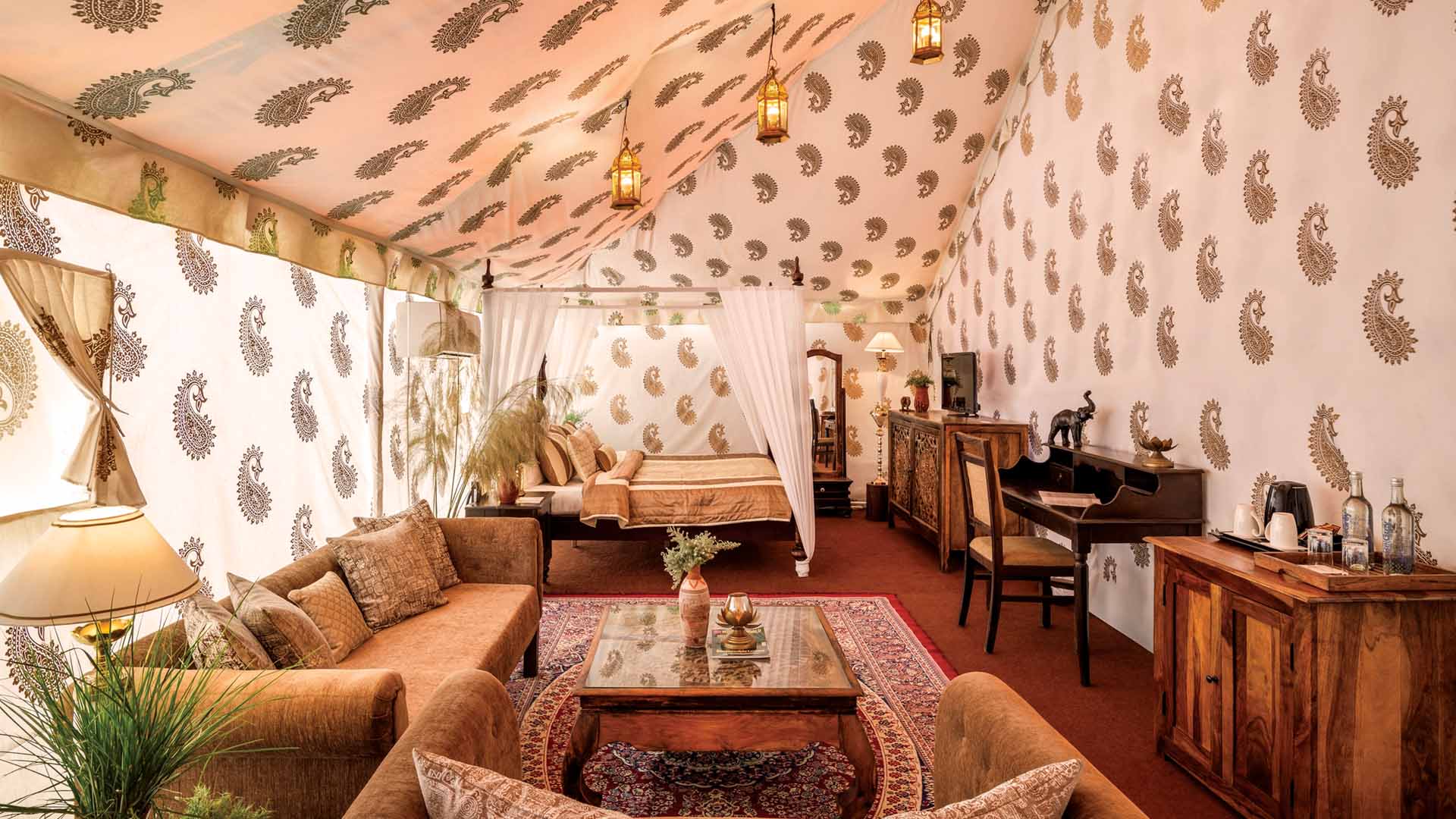
The Rann Utsav transformed culture, craft and landscape into a thriving seasonal economy.
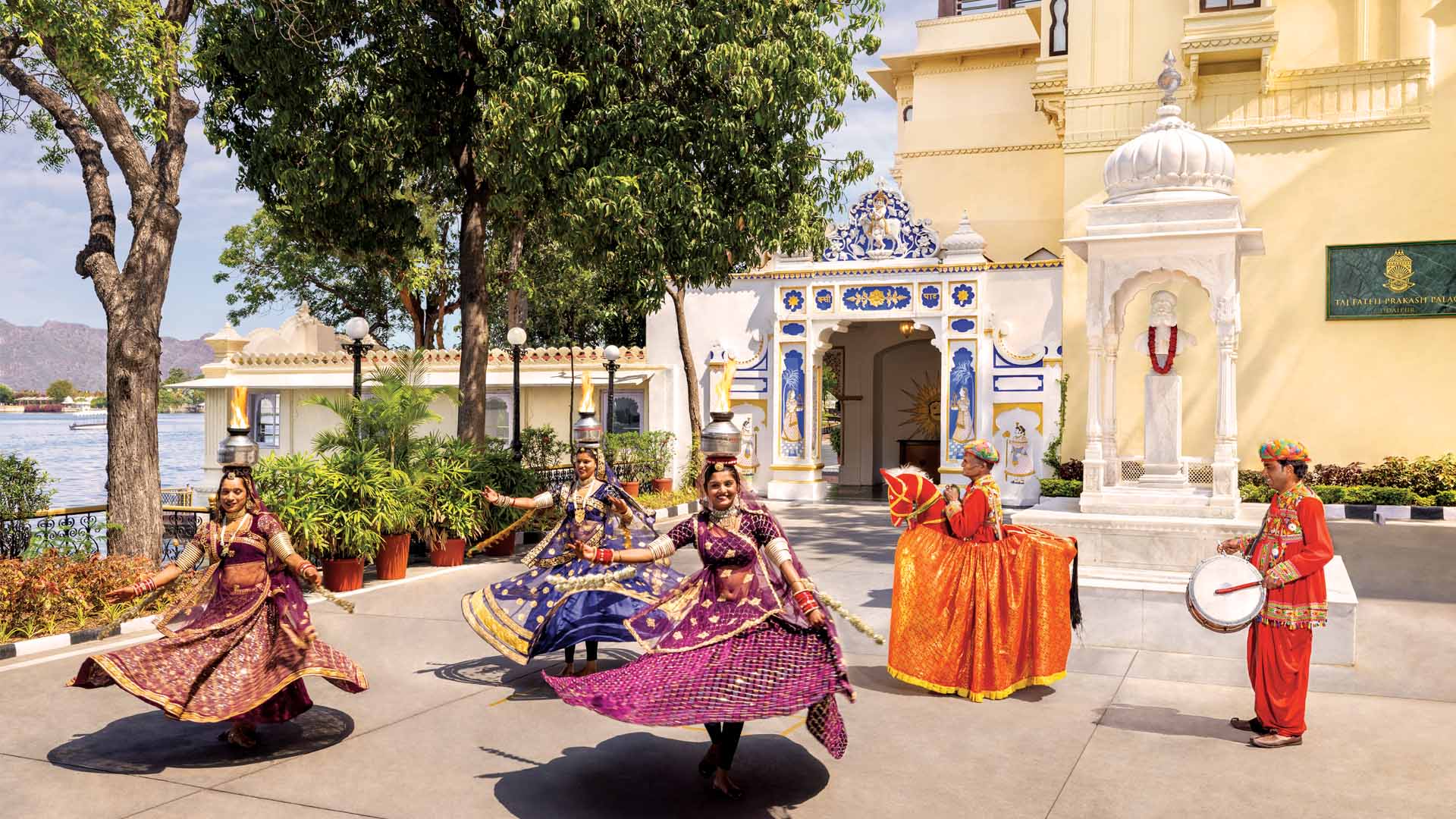
Taj Fateh Prakash Palace, Udaipur, living culture unfolds through the city's rhythms and rituals. (Unsplash)
The state as cultural brand
The clearest signal of this shift is institutional. Union Minister for Culture and Tourism Gajendra Singh Shekhawat, who holds both portfolios, has consistently spoken of culture not as heritage to be preserved but as power to be deployed. “Our nation’s growing soft power is in its rich cultural fabric and its myriad manifestations in the form of art, music, dance, textiles among others,” he said on assuming charge in 2024. At the World Audio Visual and Entertainment Summit in Mumbai in 2025, he went further: “This is the time for the rise of India’s cultural creative economy. The orange economy rests on three pillars: content, creativity and culture.” And at the WION World Pulse Summit, he made the ambition explicit: “India is today not only politically and economically powerful, but also culturally.”
At the state level, the work is more granular. Madhya Pradesh, which won India’s Leading Tourist Board at the World Travel Awards 2024 and welcomed 134.1 million tourists in 2024, a 19.6% rise from the previous year, has moved decisively from marketing geography to building cultural narrative. Sheo Shekhar Shukla, Principal Secretary, Tourism and Culture, and Managing Director, Madhya Pradesh Tourism Board, speaking at a UNESCO heritage session, set out the governing principle: “Heritage cities can be developed and conserved simultaneously by placing the community at the core. We must sensitise the community, instill a sense of ownership, and generate livelihood opportunities around both built and intangible heritage.” Long sold on the twin draws of Khajuraho and tigers, the state has built an entirely different narrative, one of civilisational depth, through Mahakal Lok in Ujjain, Ahilya Lok, tribal circuits and handloom trails, and has secured UNESCO nominations for Bhagoria Dance, Gond Painting and Narmada Parikrama as intangible cultural heritage. Shukla is direct about what drives this: “Tourism is most impactful when locals are not just passive participants but active stakeholders.”
Kerala, which won the World Travel Awards for India’s Leading Tourist Board in 2025, operates a different but equally deliberate model. Kerala Tourism 2.0, a $43 million sustainable tourism initiative, builds travel corridors between Kochi and lesser-visited destinations while programming around local festivals, from Thrissur Pooram to the Kochi-Muziris Biennale. Former Tourism Minister P.A. Mohammed Riyas says, “Kerala Tourism has always strived to strike a judicious balance between the commercial growth of tourism and its sustainability to ensure participation and well-being of local communities.” His description of the Kerala model as having “set an exemplar for the entire world on account of its emphasis on sustainability and inclusivity” reflects a policy architecture built over years that insists culture belongs to its communities first.
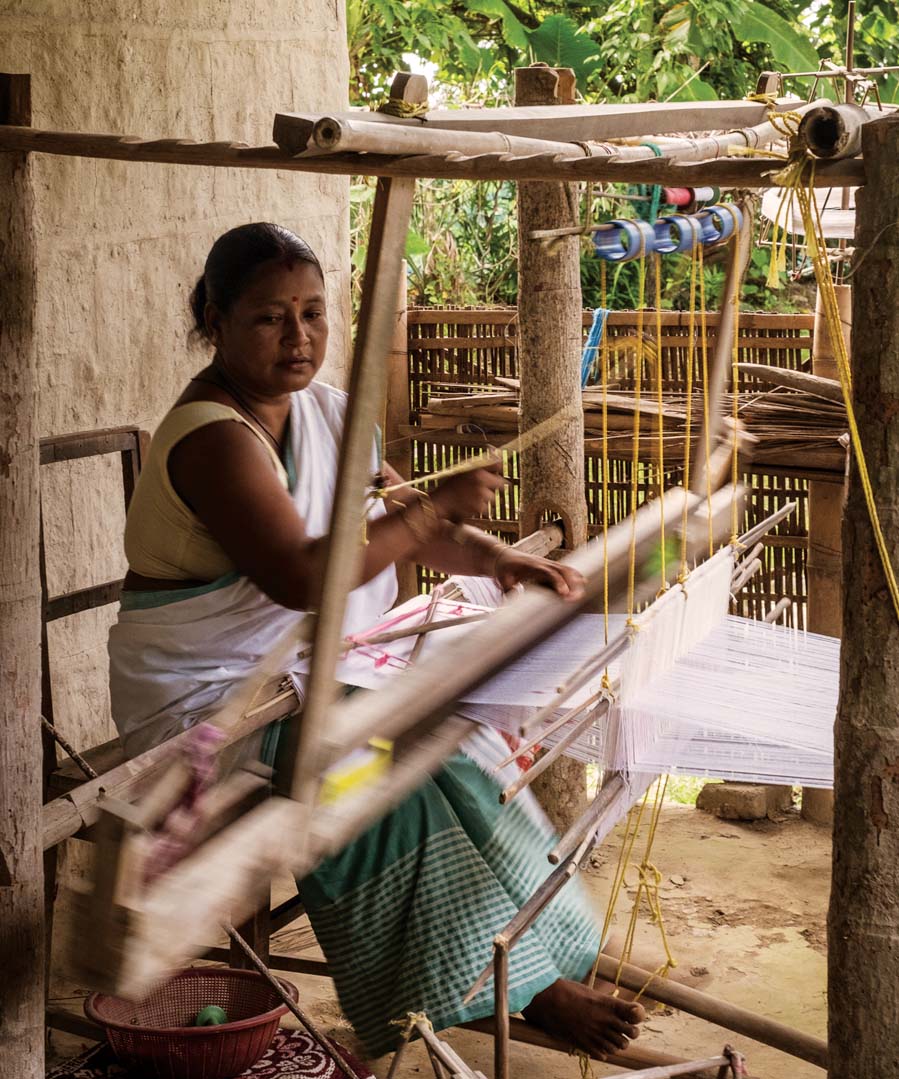
At Rhino & River Wildlife Retreat & Spa, Pobitora, craft traditions remain inseparable from the communities that sustain them.
The monument is no longer the product
For most of the last century, heritage tourism operated on the premise that the monument, something old and architecturally significant, was the product. The experience was visual, passive and often concluded at the souvenir shop. That model still exists, but it is no longer what is driving travellers.
The national imagination around heritage is shifting toward what UNESCO has long called intangible heritage: oral traditions, folk music, food, weaving, ritual and festival. When culture itself becomes the experience, the cultural practitioner becomes the infrastructure, requiring different kinds of investment, stewardship and a fundamentally different relationship between the visitor and the visited.
Akshita M Bhanj Deo, from the royal Mayurbhanj family and custodian of The Belgadia Palace in Odisha, articulates this distinction with precision. Mayurbhanj is not a conventional tourism destination. No mass market has arrived to smooth its edges, package its traditions or build a theme park around its tribal culture. “Odisha, unlike Rajasthan, Kerala, and Goa, has not experienced mass tourism; it’s still untouched,” she says. “There is a high-value tourist who realises he is the last who is going to experience something like this: meeting nomadic or pastoral tribes, meeting the last speakers of a language, learning a skill from a 12th generation Dokra artist who has not been impacted by the digital age. This is rare.”
What Belgadia offers is not a curated experience of Odisha but an introduction to the state through people who carry its culture: the Chhau dancer who performs in the same tradition his grandfather did, the phuta jhala weaver whose handloom predates most of what we call contemporary design. The palace is the entry point, says Bhanj Deo, “but Mayurbhanj itself is the destination. My job is simply to make that legible to someone arriving from Mumbai or Monaco.” Also, she says, culture cannot be reverse-engineered. “You cannot decide to have a tribal heritage and then build infrastructure around it. The infrastructure has to follow from genuine cultural stewardship over time.”
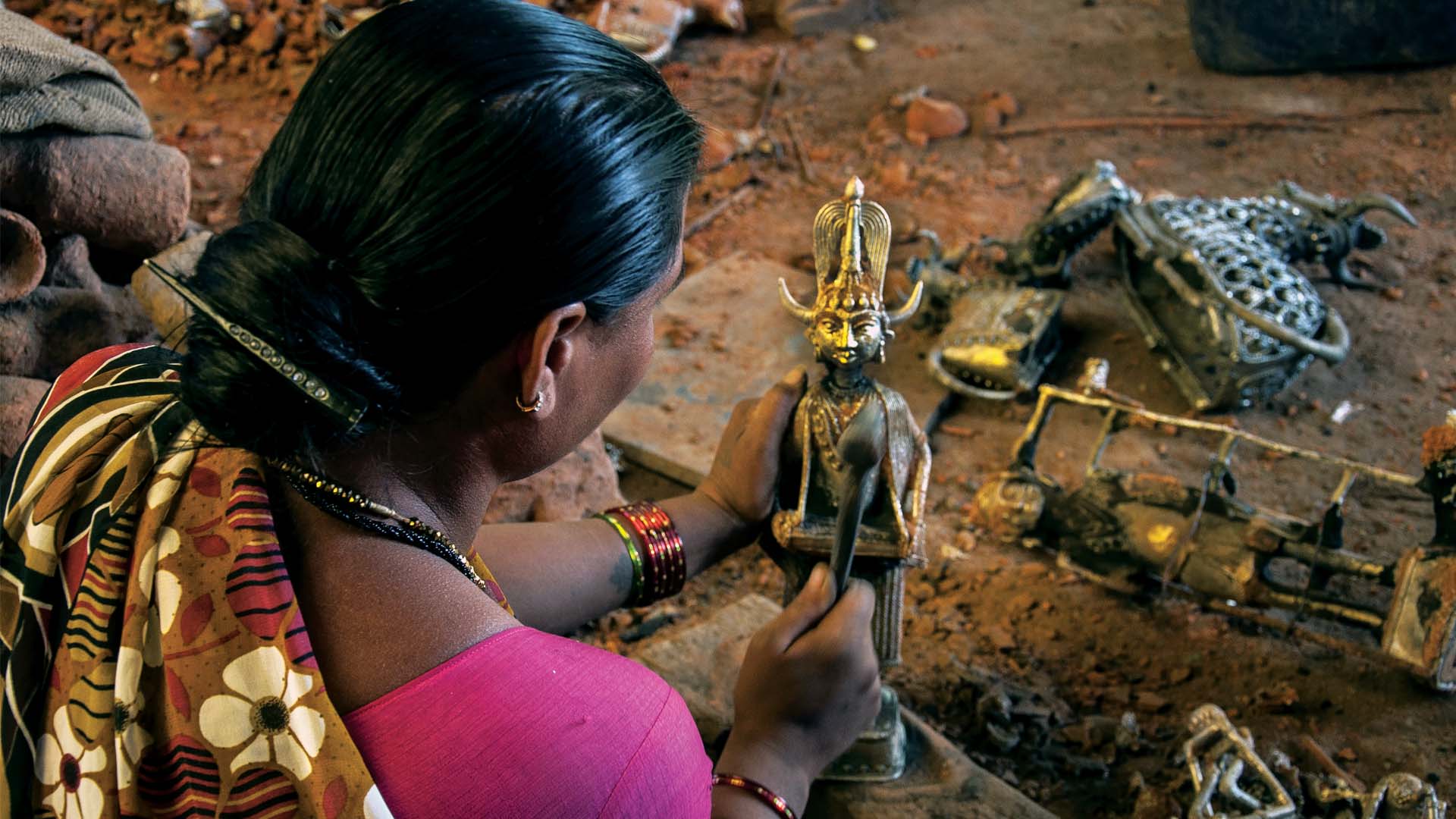
Living crafts such as Dokra carry stories that no monument can tell alone.
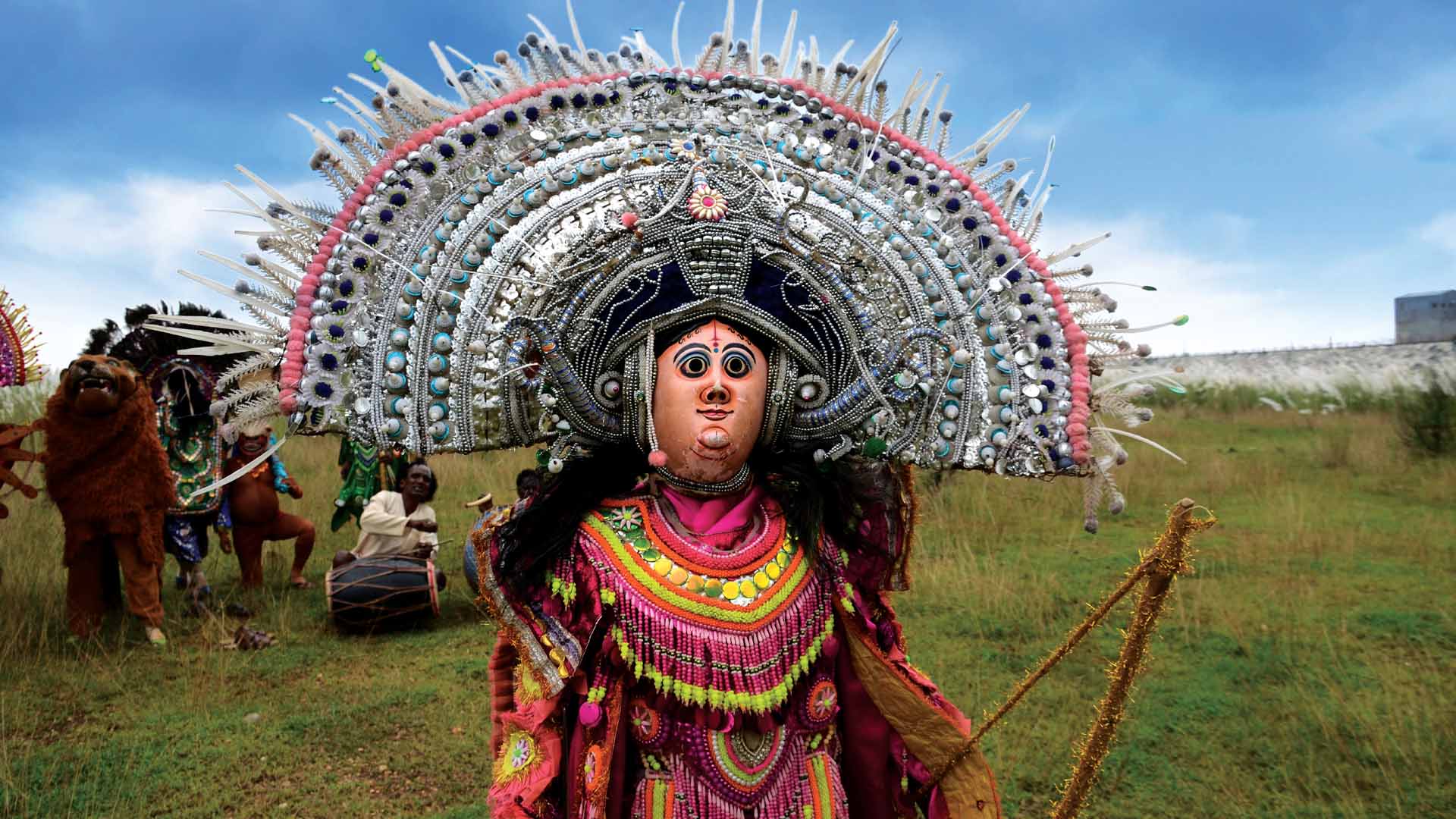
For many travellers, encounters with traditions such as Chhau are becoming as compelling as visits to historic sites.
Hotels as cultural infrastructure
This is where hotels enter the story. They may not be leading India’s cultural renaissance, but they are responding to it. States created the conditions; hospitality became the stage, offering experiences that interpret culture, cuisine, craft and community for travellers.
At JW Marriott Kolkata, the chandelier in the lobby is more than a design feature. Inspired by the bangles worn by Goddess Durga during Durga Puja, it becomes, for many guests, a first introduction to the city’s cultural identity. “For many guests, it becomes their first introduction to the spirit of Kolkata,” says General Manager Gorav Arora, “a city where art, faith, and community are deeply intertwined.”
For IHCL and the Taj group, cultural storytelling stretches back more than a century. “For over a century, IHCL has served as a custodian of India’s cultural and architectural legacy,” says Gaurav Pokhariyal, Executive Vice President, Human Resources. “By integrating conservation, adaptive reuse, and community engagement, we view heritage as a vital pillar of sustainable development, preserving the past while ensuring its relevance for future generations.” That philosophy finds expression through HeritEdge Celebration, introduced under Paathya, IHCL’s ESG+ framework, which brings regional traditions, local craftsmanship and lived cultural practices into the guest experience. Examples range from reviving regional recipes through curated culinary sessions at Taj Lake Palace in Udaipur and guided explorations of Goa’s historic churches at Taj Exotica Resort and Spa to craft-led workshops at Taj Sawai Ranthambore that create direct revenue streams for local artisans. “Across its portfolio,” says Pokhariyal, “IHCL enables travellers to engage directly with India’s living heritage,” from interactions with the Bishnoi community in Rajasthan and the Molela terracotta artform in Udaipur to Durga Puja in Kolkata and the Ganga Aarti in Varanasi.
On hotels becoming cultural institutions, his answer is unequivocal: “Hotels are increasingly taking on a broader role, particularly in destinations where culture shapes the identity of the experience. The focus is on curating experiences that bring together multiple art forms within settings that are historically and culturally significant.” The inaugural edition of Ninaad at Rambagh Palace, Jaipur, bringing together curated performances, immersive heritage encounters and culinary experiences within the Mughal Lawns and Maharani Mahal, is the latest expression of that ambition.
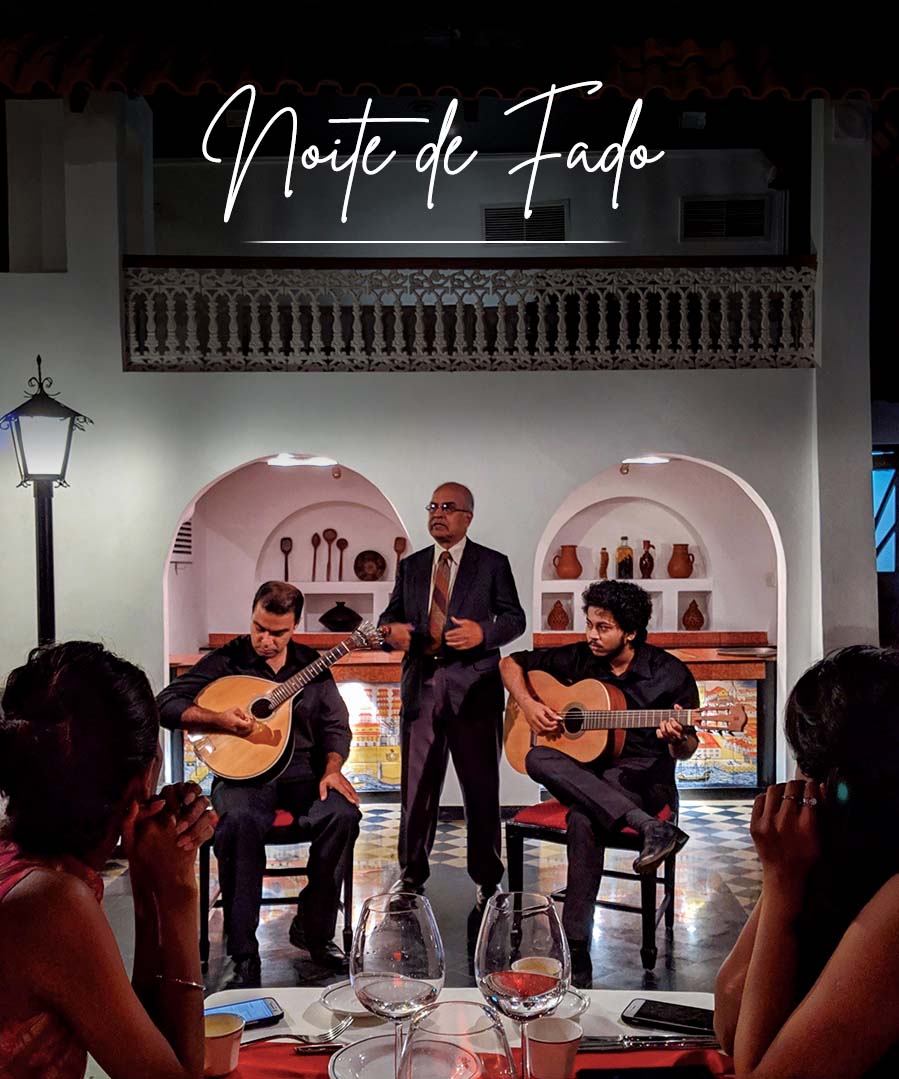
IHCL's Goa properties have moved well beyond hospitality into active cultural stewardship. Fado performances at Alfama, the restaurant at Taj Cidade de Goa Heritage, keep a dying musical tradition alive; heritage walks through Panjim and Old Goa connect guests to layers of colonial history; and the Tribal Food Festival, developed with Tata Steel Foundation, brought indigenous recipes and sacred food practices into the mainstream spotlight. Corporate support for Forest Recipes of Goa extended that commitment to the page. The ambition, says Ranjit Phillipose, Senior Vice President, Operations, Goa, IHCL, is to offer "authentic connections rather than just sightseeing" — making the hotel, in his words, “a powerful custodian and storyteller of India's rich cultural legacy.”
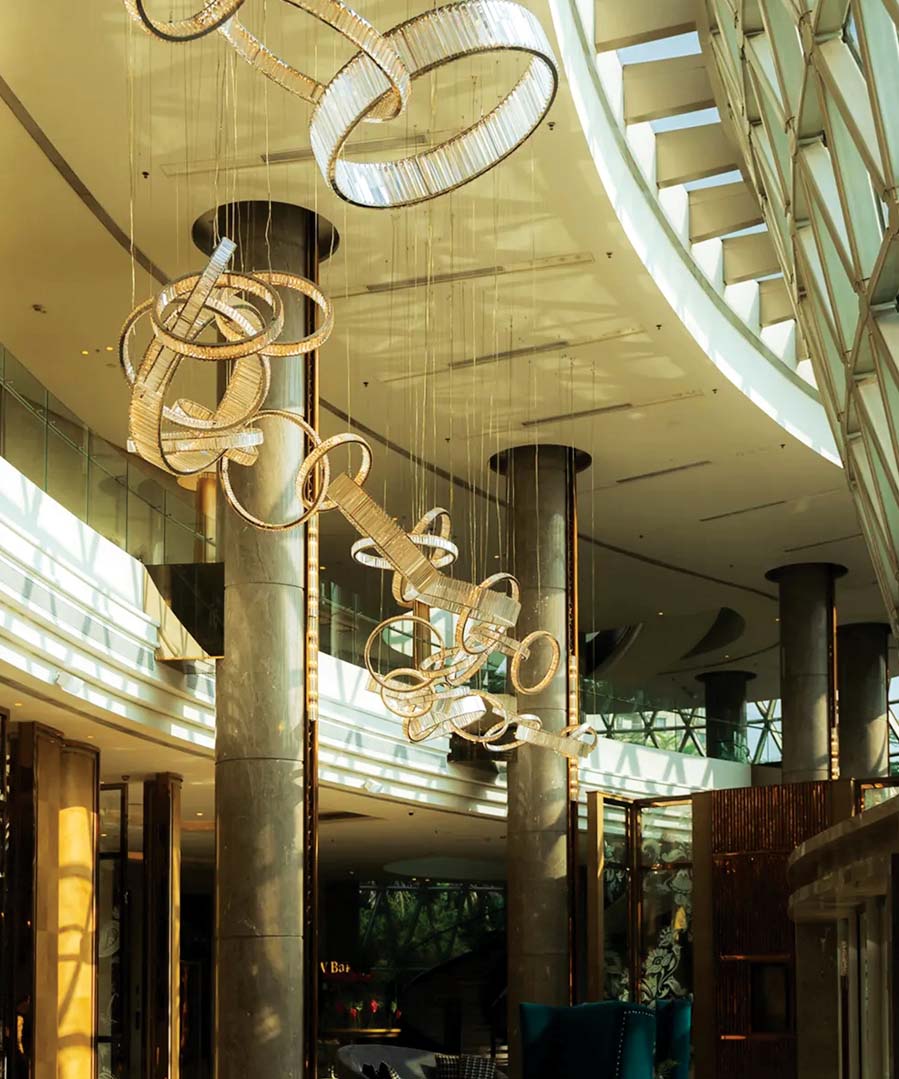
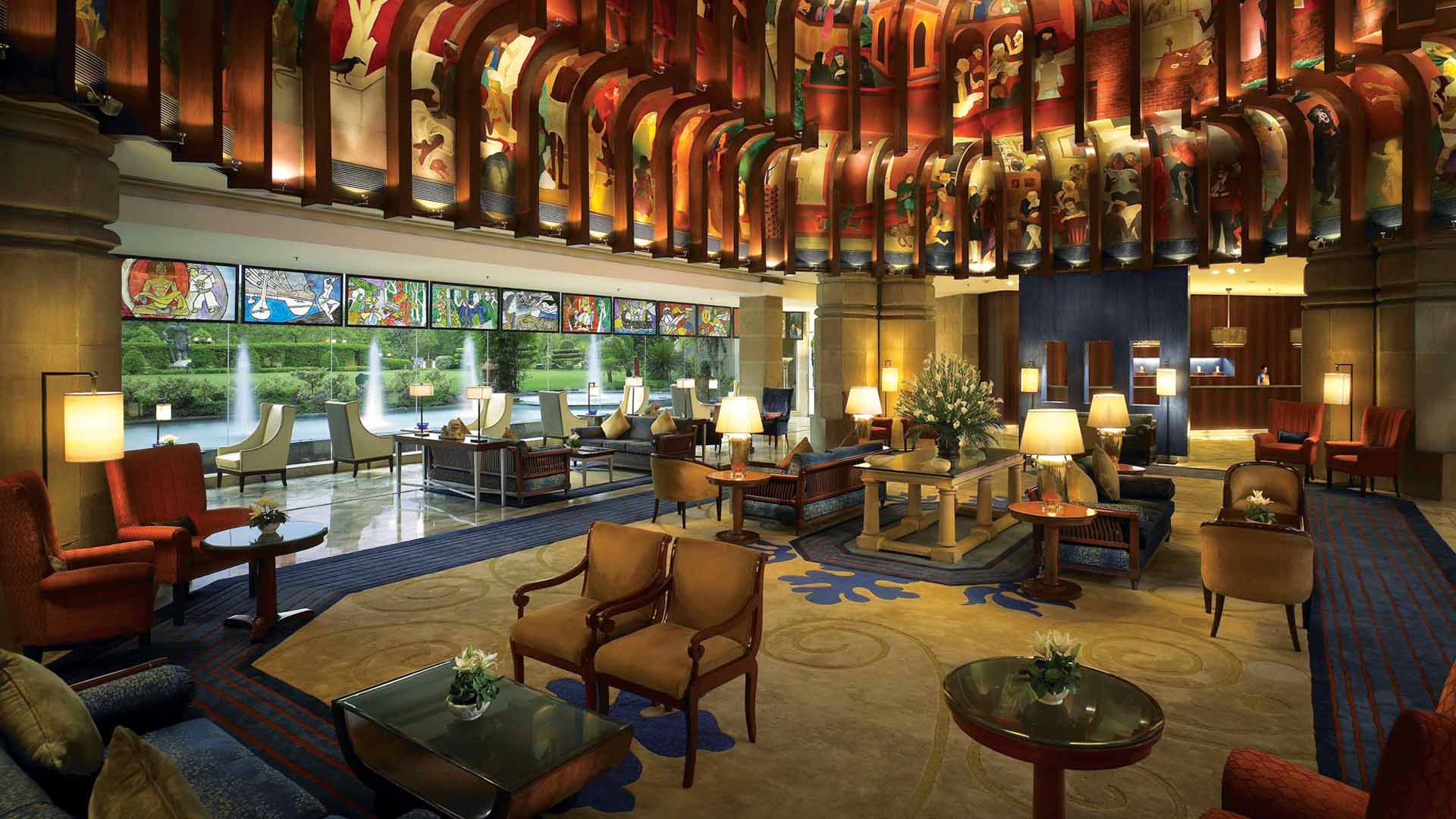
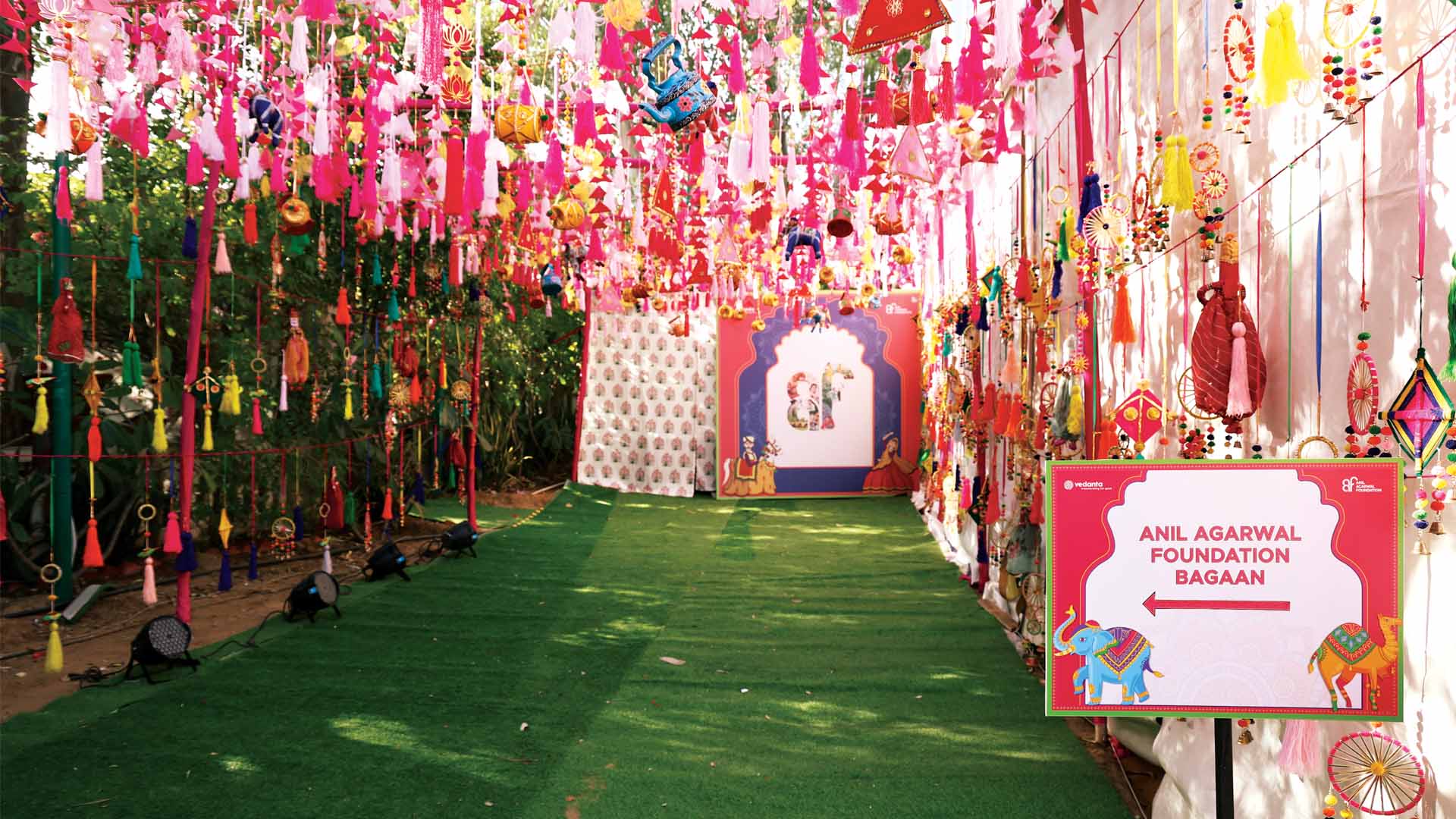
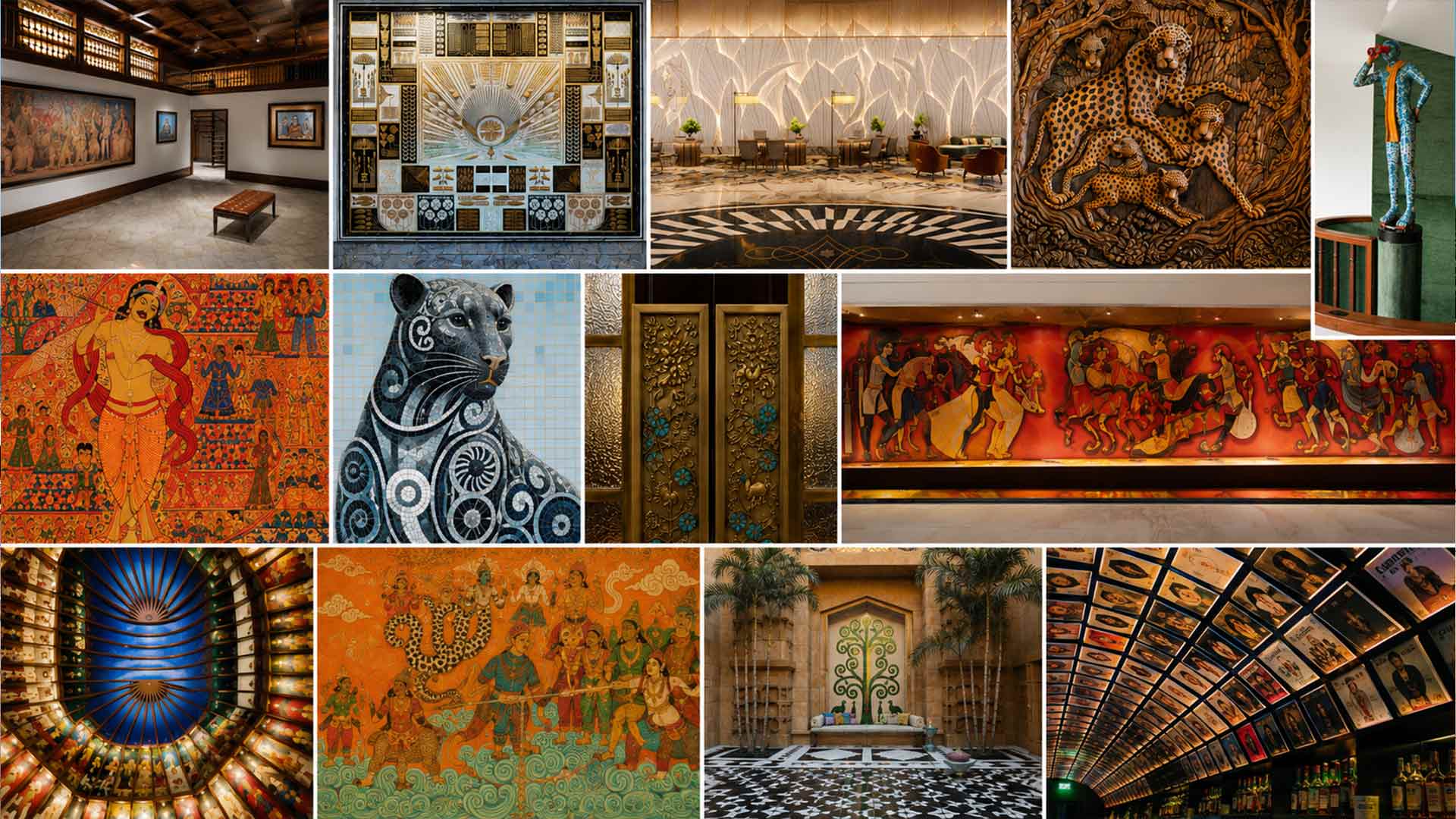
ITC Hotels has dovetailed India’s cultural offerings with experiential luxury through a commitment that predates the current industry conversation by decades. The WelcomArt initiative, launched in the 1970s, transformed hotel spaces into living galleries, not as a branding exercise but as a sustained commitment to commissioning, collecting and displaying Indian art. At ITC Maurya, one of the country’s most significant private collections of modern Indian art includes works by Tyeb Mehta, FN Souza, MF Husain, Krishen Khanna and Satish Gujral.
“Every property is conceptualised as a distinct expression of regional identity,” says Managing Director Anil Chadha, “drawing upon local history, architecture, craftsmanship and traditions to create a deeply contextual and authentic guest experience.” That principle extends from the temple-inspired grandeur of ITC Grand Chola and the aristocratic elegance of ITC Royal Bengal to the Gujarat-inspired jaali motifs of ITC Narmada. In collaboration with Tata Steel Foundation, the brand also runs tribal food pop-ups across Mumbai, Goa and Jamshedpur, alongside a culinary training programme that, over three years, has engaged 56 participants from 10 states across 15 tribes. “Cuisine is a defining element of India’s cultural identity,” says Chadha. “We showcase this diversity through initiatives rooted in regional traditions, while creating entrepreneurial avenues for the communities that sustain them.”
The Leela Palaces Hotels and Resorts has built its cultural positioning through long-term institutional partnerships: a five-year association with the Jaipur Literature Festival, a partnership with India Art Fair and the Icons of India initiative celebrating cultural luminaries. “Hotels today sit at the intersection of culture and access,” says Mehra. “A guest may arrive for a stay but leave having discovered an artist, a writer, a craft tradition or a cultural narrative they may never have encountered otherwise.”
SUJÁN, three of whose four properties are members of Relais & Châteaux, has woven conservation and authenticity into its very DNA. “We never stage or curate any cultural experience. That goes against our ethos completely,” says Global Brand Director Laura McGowan. “The artisans, musicians, cooks, guides and storytellers we work with are not performers following a script; they are custodians of their own heritage.” The Manganiyar musicians of the Thar Desert have a long-standing relationship with SUJÁN, not as entertainment but as neighbours and collaborators. With 82% of its team drawn from Rajasthan and 12 schools supported across three districts, SUJÁN’s argument is not that culture makes good hospitality. It is that conservation without cultural stewardship is incomplete.
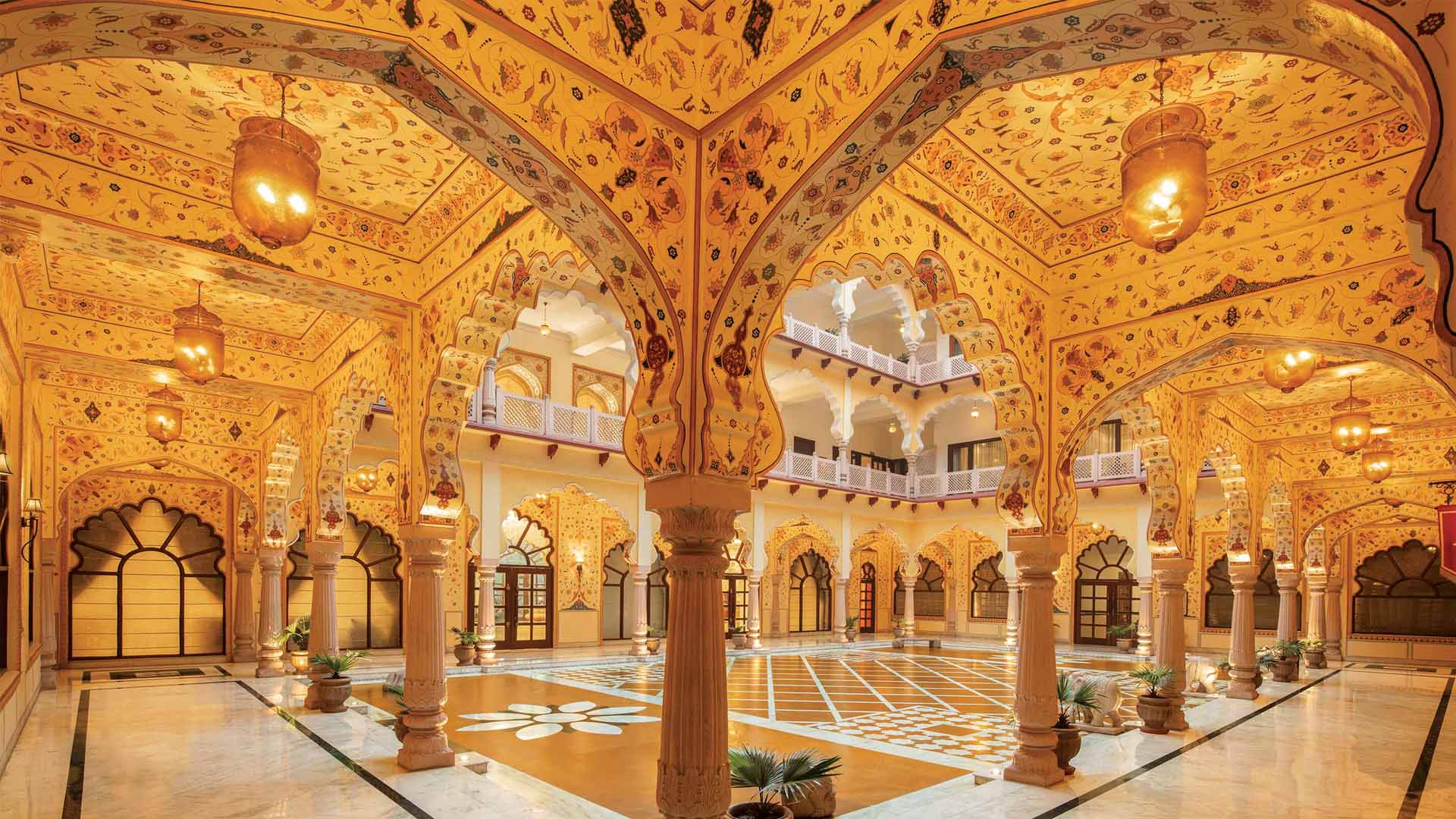
The courtyards of Noor Mahal Palace form part of the region's living cultural archive.
Art on the walls and in the room
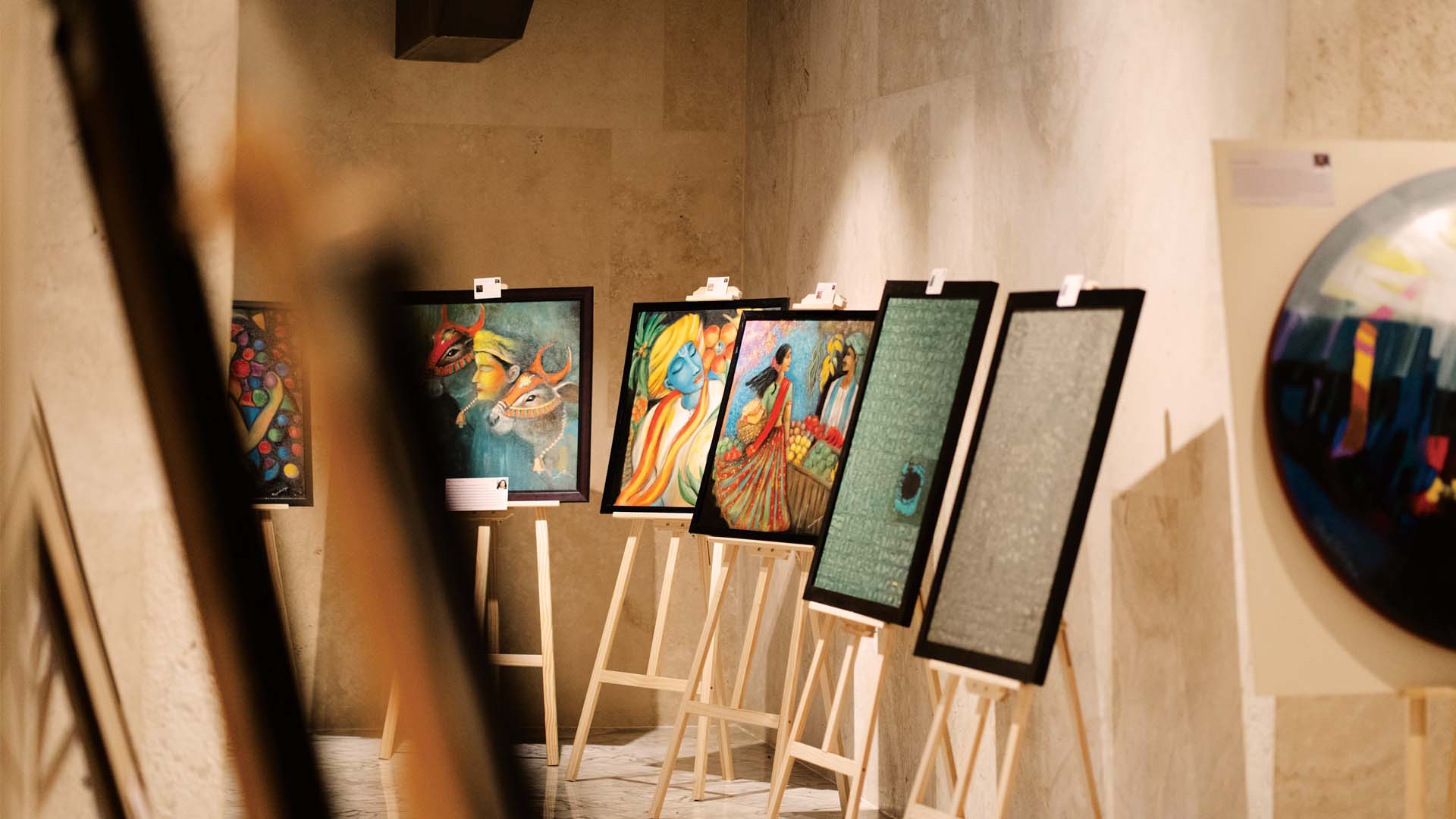
Many hotels now function almost like living galleries, and the commitment extends well beyond art on walls.
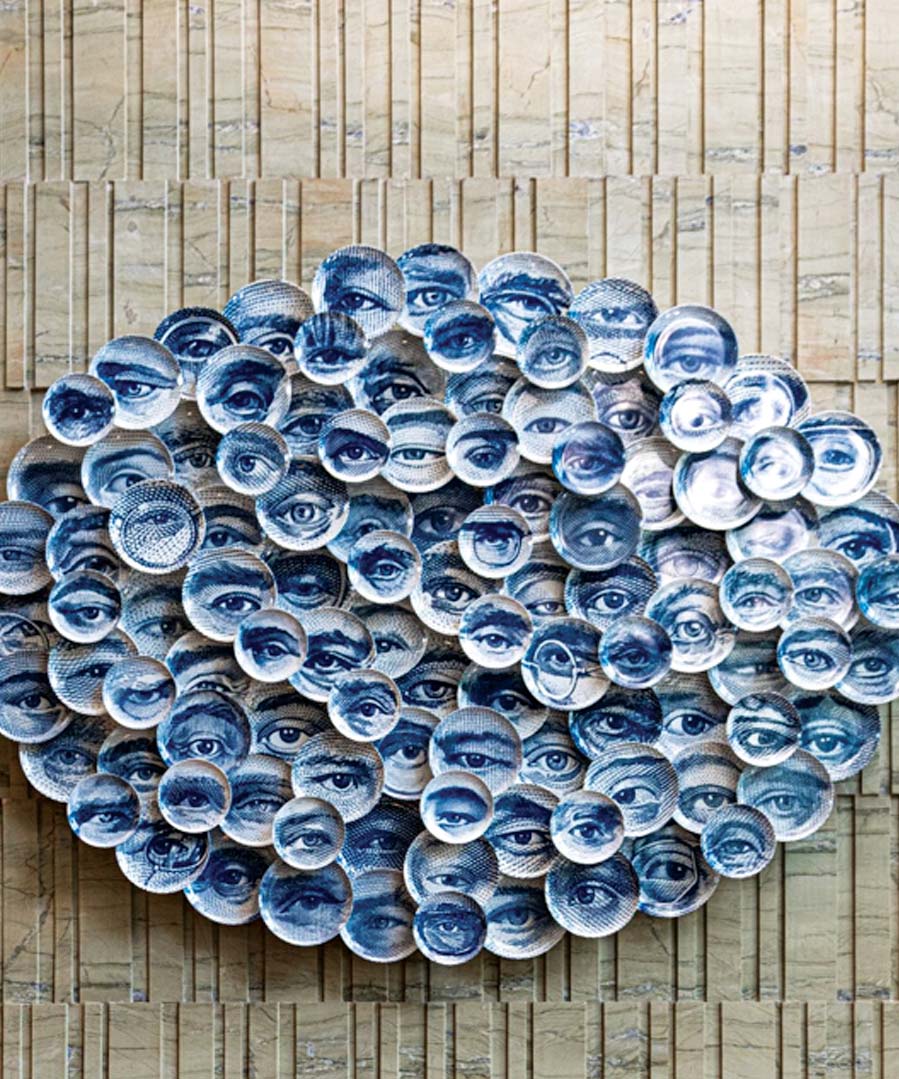
At JW Marriott Aerocity New Delhi, the art roster has included Padma Shri-awarded sculptor Hemi Bawa’s Frangipani, built from recycled toughened glass, mirror and resin; Ashfika Rahman’s Than Para (No Land Without Us), an installation of temple bells bearing the fingerprints of nearly a thousand indigenous Bangladeshi villagers; and Spanish artist Carlos Aires’s Haiku, in which enlarged eyes of world leaders, lifted from banknotes, demand that the viewer stop and be present in a space designed for rushing through. These are works that provoke in a setting most people move through on autopilot.
The Imperial in New Delhi houses what is believed to be the world’s largest private collection depicting India between the late 17th and 18th centuries, comprising over 5,500 rare works including aquatints, lithographs, engravings and oil paintings. The Royal Ballroom anchors a monumental durbar scene from the early 1900s. In the Imperial Suite, an Archibald Herman Muller oil painting and a nearly century-old longcase clock still keeping time speak to a stewardship that goes beyond aesthetics.
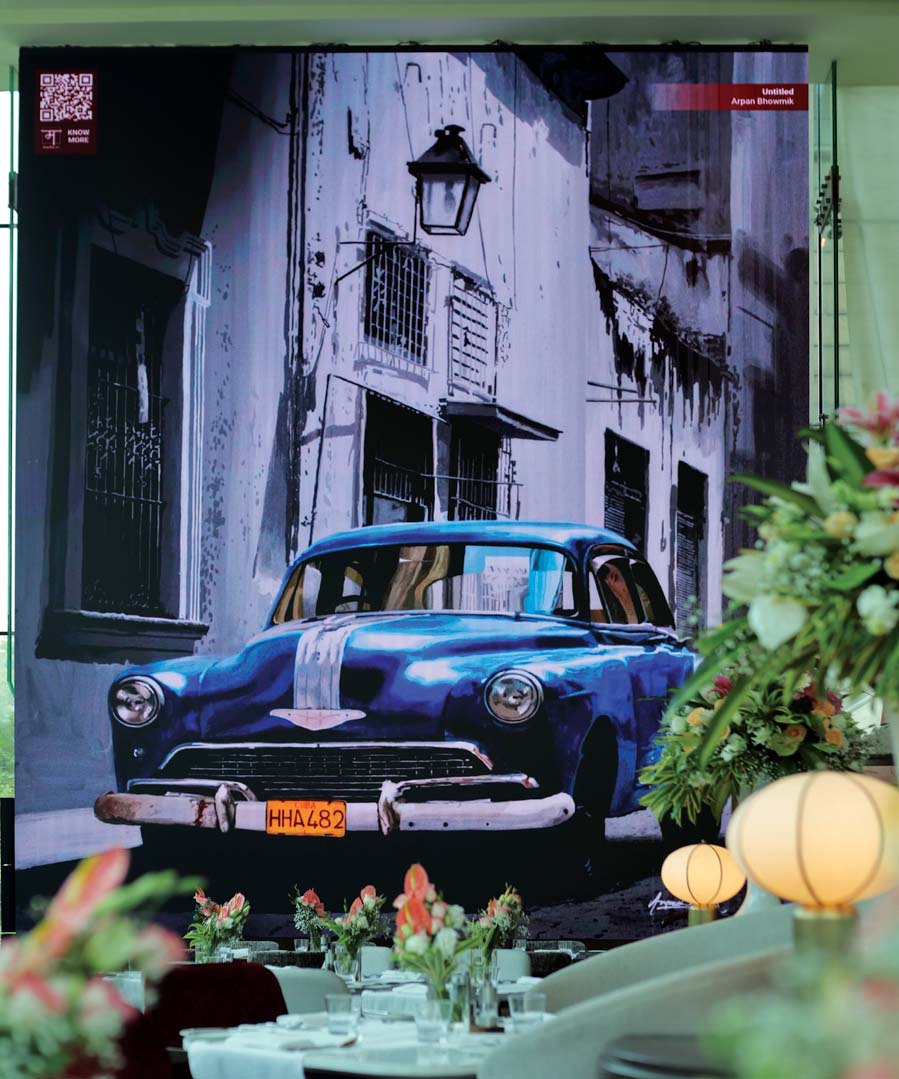
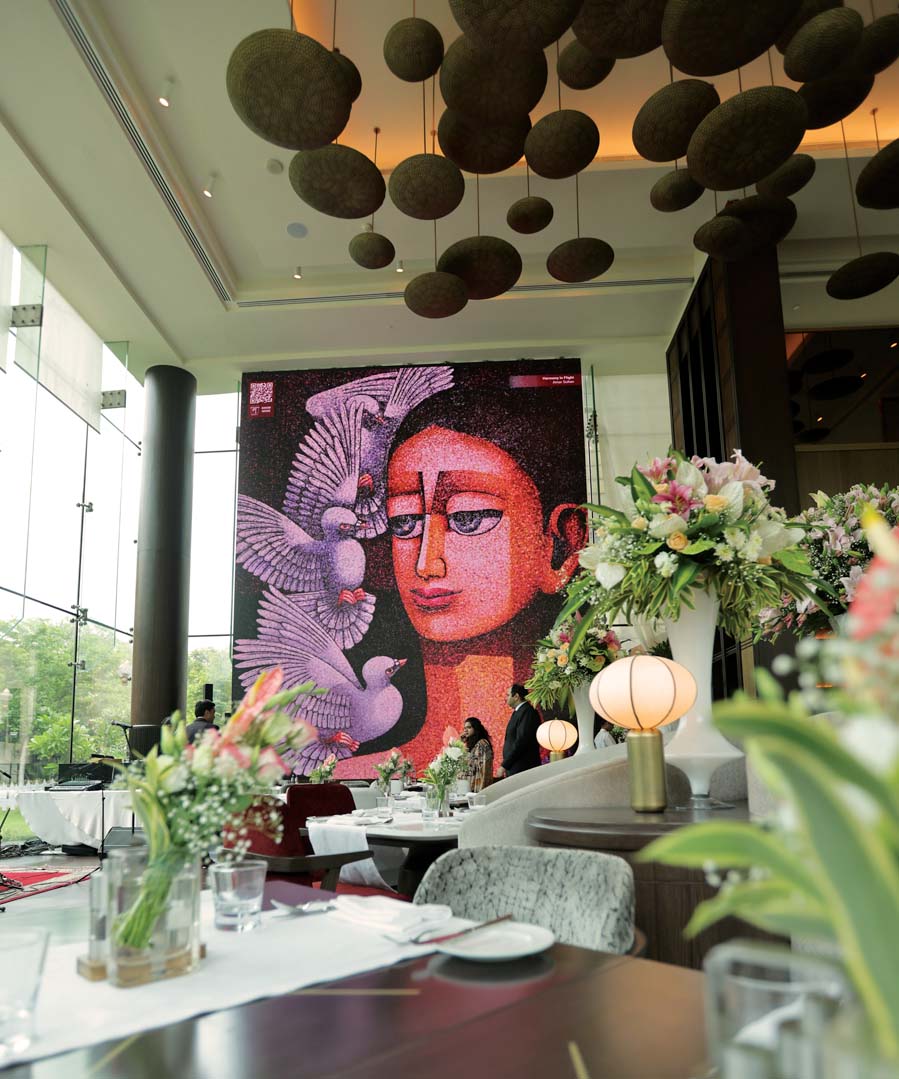
At The Leela Palace New Delhi, a partnership with Masha Art has installed a large-scale digital art wall at The Qube, rotating works by established and emerging Indian artists across the dining day. At Four Seasons Hotel Bengaluru, the Cur8 exhibition programme is explicitly framed around the city’s creative ecosystem. “We invite guests to not only engage with the art but to connect with the city in its purest form,” says General Manager Biswajit Chakraborty.
Elsewhere, art and heritage are woven into broader cultural narratives. At Noor Mahal Palace, Karnal, India’s first Autograph Collection hotel, the collection ranges from regional artefacts and colonial memorabilia to century-old textiles, reflecting centuries of Mughal, Rajput, Punjabi and Persian cultural confluence. “The collection serves as a bridge between generations,” says Managing Director Binny Choudhary, “preserving traditions and narratives that might otherwise be lost with time.”
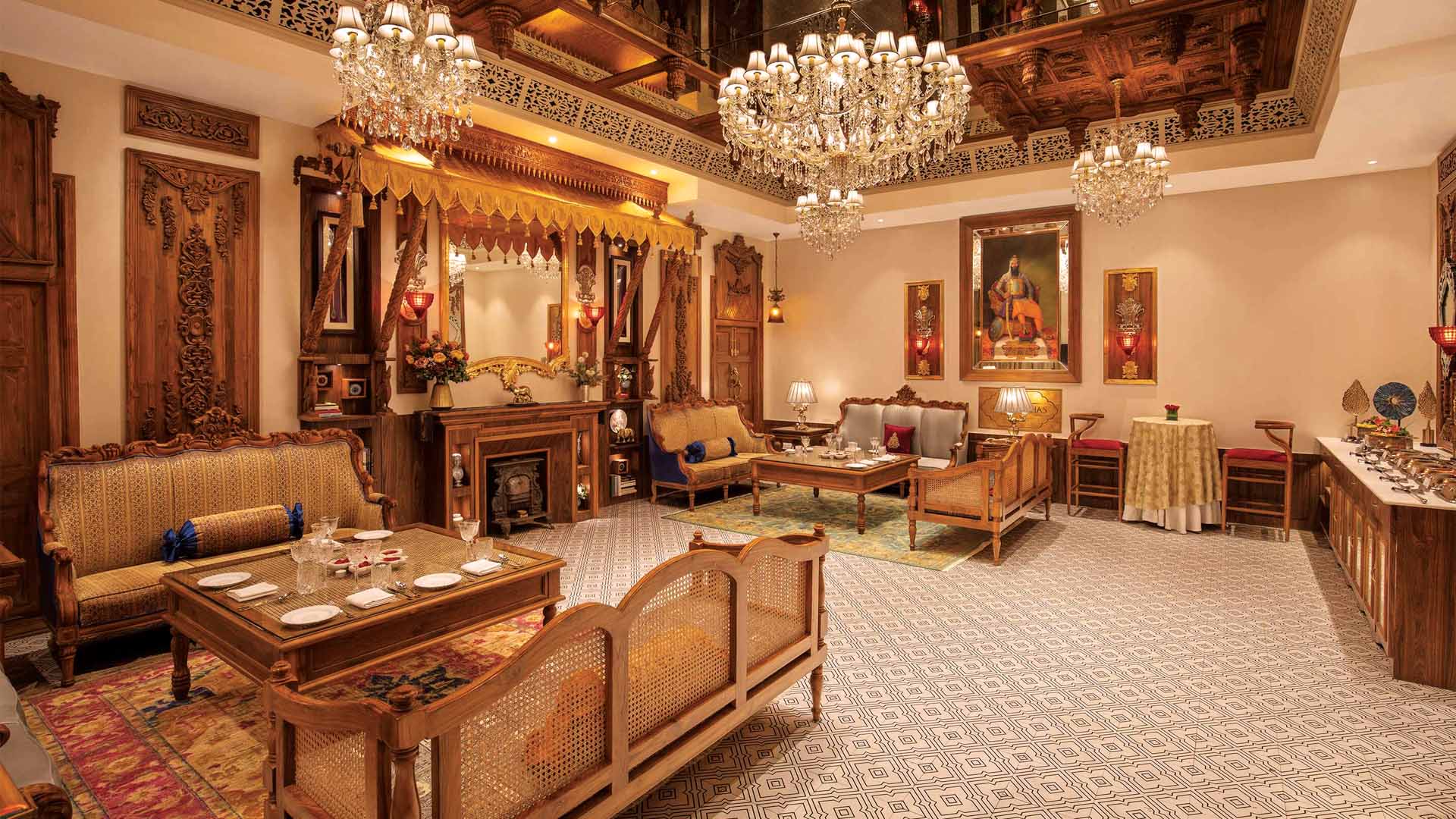
Relais & Châteaux Ran Baas, The Palace in Patiala, a restoration of the historic Qila Mubarak complex and Punjab’s first luxury palace hotel, grounds its approach in the cultural ecosystem of the city itself. Gurjeet Singh’s distinctive soft sculptures occupy pride of place in the lobby, bespoke chandeliers by Aseem Jain draw from the Maharaja’s chandelier at Moti Bagh Palace, and the Nabha Foundation supplies organic produce and handlooms. “We are not just preserving the past,” says General Manager Deep Mohan Arneja. “We are reinterpreting it for the discerning modern traveller, one handcrafted detail at a time.” Long term, the property intends to deepen direct engagement between guests, artisans and artists, extending heritage hospitality beyond preservation into participation.
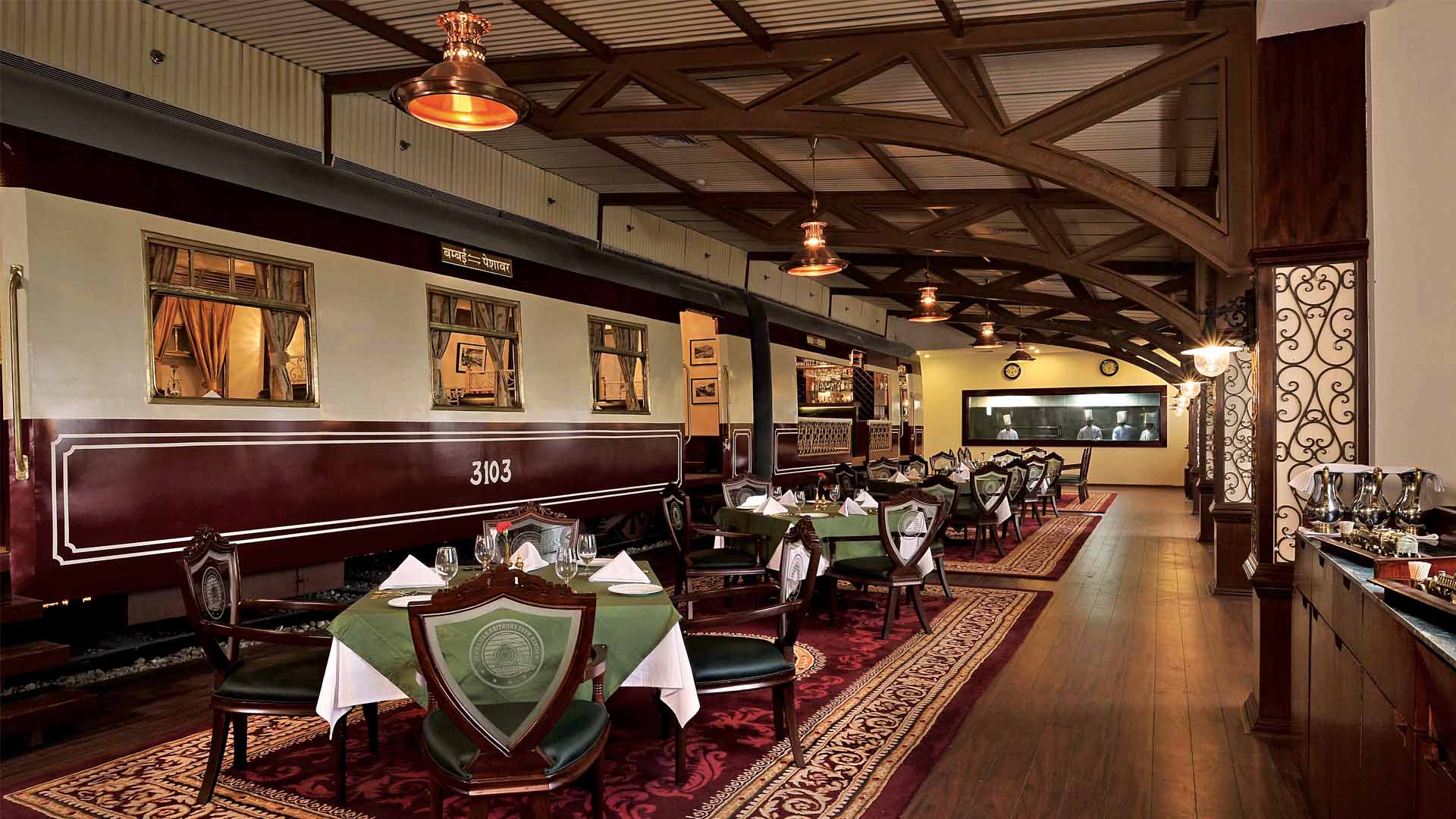
The heritage of a destination
CGH Earth, one of India’s oldest practitioners of this philosophy, has always believed that the destination is the hero. From Kathakali performances at Marari Beach and Chaya Chechi’s canoe-borne tea service at Coconut Lagoon to the Syrian Christian kitchens of Kerala and the making of traditional Poi bread at Mansao Curtorim in Goa, the company’s network is built around the belief that genuine culture, encountered respectfully and directly, needs no embellishment. “When culture is allowed to remain true to itself,” says Managing Director Michael Dominic, “it becomes far more powerful than any staged experience.”
Kamat Hotels India’s Fort Jadhavgadh near Pune, a beautifully restored Maratha fort, grounds its offering in Maharashtra’s cultural legacy. “For today’s travellers, authentic experiences and a genuine connection with the destination are becoming more valuable than standardised luxury,” says General Manager Lalit Mundkur. Traditional architecture, antique artefacts, folk performances and regional cuisine work together not as themed amenities but as context.
Leisure Hotels Group, working across Uttarakhand, has built its philosophy around the landscapes it inhabits. Regional ingredients, seasonal harvests, indigenous grains and cherished recipes from local farming communities are hospitality decisions rooted in the culinary heritage of the mountains. “Cultural authenticity has emerged as a defining aspect of luxury,” says Director Vibhas Prasad, “because it offers experiences that cannot be replicated anywhere else.”
The Radisson Hotel Group’s Literary Escapes initiative applies the same logic to intellectual culture. Through curated reading spaces, literary evenings and author-led engagements developed in collaboration with Simon and Schuster India, the programme creates opportunities for guests to engage with ideas beyond the conventional hotel stay. “Travellers today are increasingly looking for experiences that feel meaningful, immersive, and emotionally enriching rather than purely transactional,” says Nikhil Sharma, MD and COO, South Asia. “Through initiatives such as Literary Escapes, we wanted to create environments where guests can slow down, reflect, and engage with ideas in a more thoughtful way.”
Hotels, Sharma argues, are naturally suited to this role. “They bring together people from different geographies, professions, and backgrounds, making them ideal spaces for intellectual and creative exchange. Hospitality brands can help nurture reading culture in more engaging and informal environments. These experiences become part of the travel journey rather than standalone events.”
In Chennai, this approach extended to the GReaT Conversation, co-produced by Radisson Blu Hotel and Suites GRT Chennai and Ministry of Chutneys at the historic Amir Mahal. Military historians, food historians, hospitality leaders and cultural custodians came together to explore the connections between regimental mess culture, cantonment kitchens and the culinary traditions of South India. “Some of the most meaningful travel experiences are often shaped around the table, through the flavours we discover, the stories we hear and the people we share them with,” says Sharma. “Events such as the GReaT Conversation offer a unique opportunity to celebrate the traditions and narratives that continue to influence the way we experience food and culture today.” The audience included diplomats, military veterans, food historians and business leaders, a reminder that cultural tourism increasingly operates across disciplines rather than within neat categories.
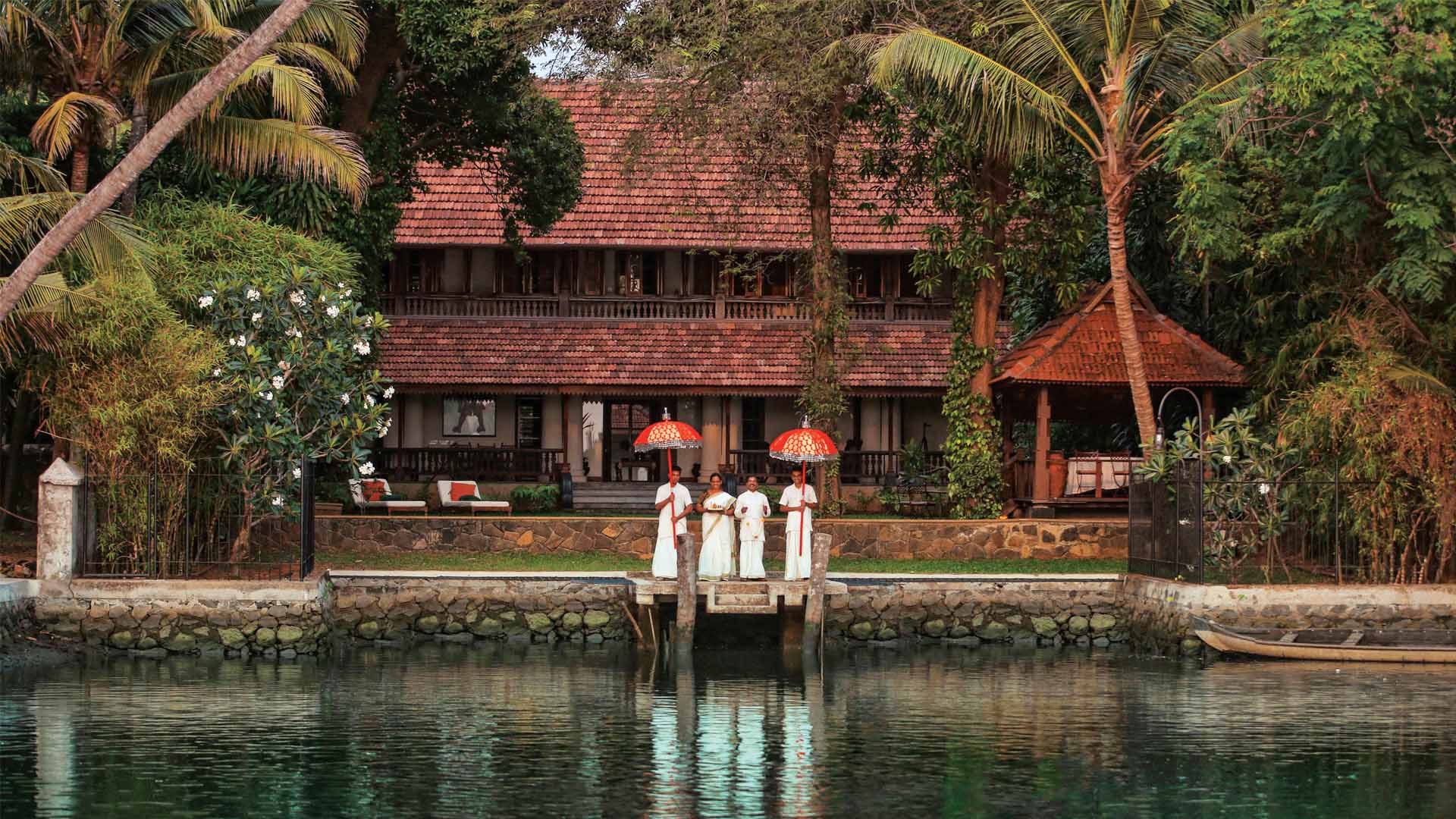
For CGH Earth, the destination has always been the hero, with culture encountered directly and respectfully.
Courtesy of ‘River of Sweat’ by Anshu Singh, sā Ladakh, 2023, Disko Valley Bike Park. Photo by Raki Nikahetiya.
The new patronage
India’s cultural traditions were sustained for centuries through a layered system of patronage. Royal courts commissioned art, architecture and music. Temples funded craft traditions and performance. Wealthy merchant families supported literature and learning. Colonial interruption, Partition and the nationalisation of cultural institutions disrupted many of these structures. The state stepped in, imperfectly, with bureaucratic constraints and limited budgets, but could not entirely replace the role private patronage once played.
What is happening now in Indian hospitality is, in some respects, the emergence of a new form of patronage. Hotels are commissioning artists and craftspeople, supporting chefs and food researchers, restoring buildings, hosting writers and building audiences for traditions that might otherwise struggle to find contemporary platforms.
SUJÁN runs 12 schools across three districts. The Belgadia Palace sustains tribal athlete programmes and Chhau practitioners. ITC Hotels preserves culinary traditions across 15 tribes. The Leela supports Karigar Foundation artisans and the Mouth and Foot Painting Artists Association. CGH Earth has worked for over 25 years with the same Ottanthullal artist, sustaining a performance tradition that might otherwise remain invisible to the audiences he now reaches.
“As travel becomes more experiential, guests are seeking a deeper understanding of place,” says Pokhariyal. “The hospitality industry has a responsibility to interpret and present local identity with sensitivity. In doing so, it can help sustain artistic practices, enable new forms of expression and ensure that cultural heritage continues to evolve as a dynamic, lived tradition.”
Chadha puts it in terms of legacy: “Hotels now offer environments where guests continuously interact with architecture, design, cuisine, music, craftsmanship and storytelling, transforming the stay itself into a cultural experience.”
At ITC, this extends well beyond the lobby. The ITC Hotels Historic Vehicles Drive, the Himalayan Car Rally flagged off from Welcomhotel The Savoy Mussoorie, and ITC Grand Chola’s association with Ed Sheeran’s music video for Sapphire, filmed in the kitchens of Avartana, are all expressions of a brand that sees itself as a cultural participant rather than a cultural backdrop.
The Fairmont Jaipur’s India Music Retreat, a four-day immersive festival of classical ragas, folk music, ghazals and contemporary fusion, drew in 2025 a lineup that included Kaushiki Chakraborty, Ustad Shujaat Khan, Jayanthi Kumaresh and Aruna Sairam. These are names that fill concert halls in Indian cities. Here, they reach not only guests but also audiences who arrive for Rajasthan and leave having encountered a deeper layer of India’s musical traditions. This is not an amenity. It is patronage, albeit commercially motivated.
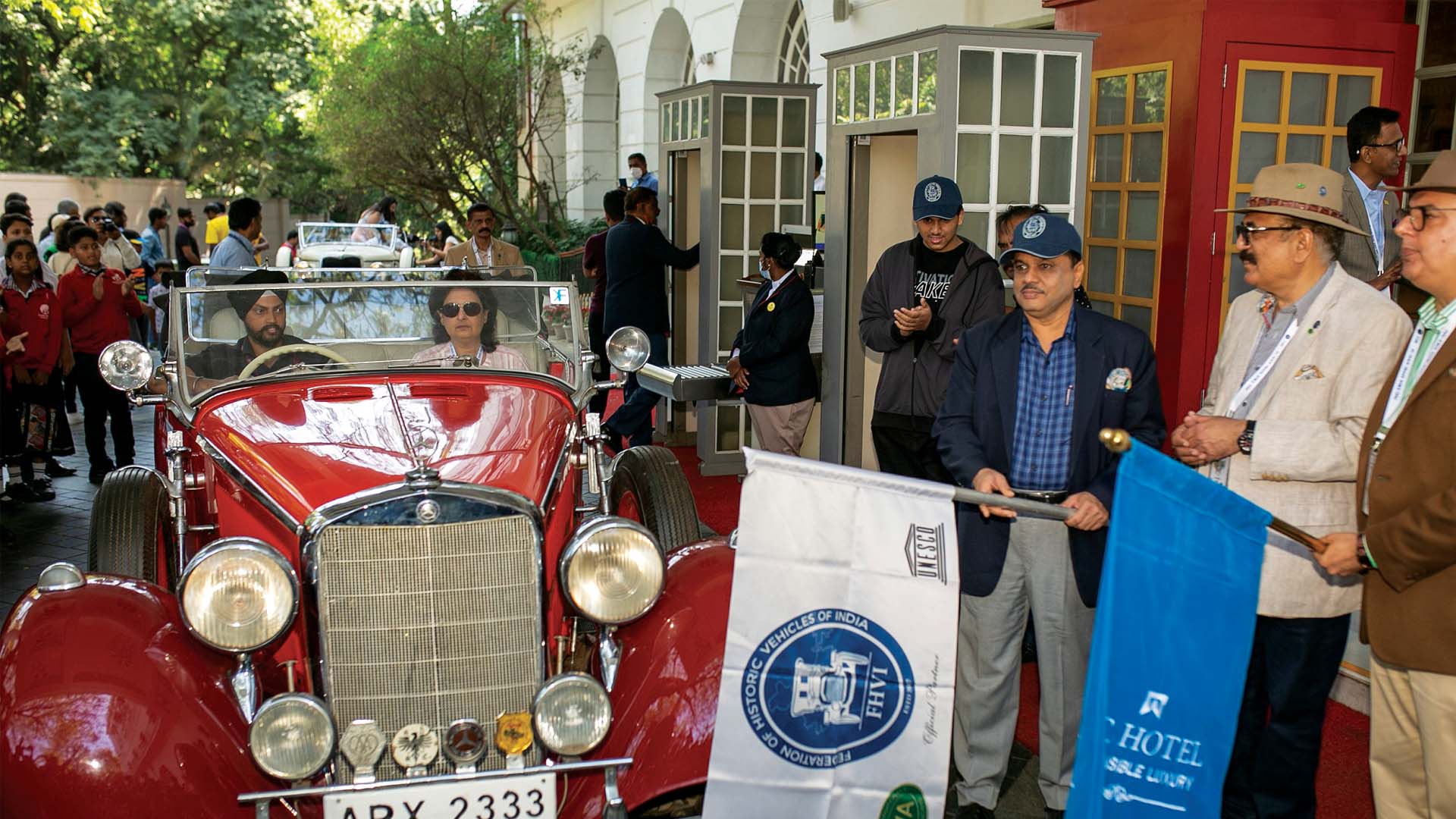
The ITC Hotels Historic Vehicles Drive reflects a growing interest in preserving and experiencing automotive heritage.
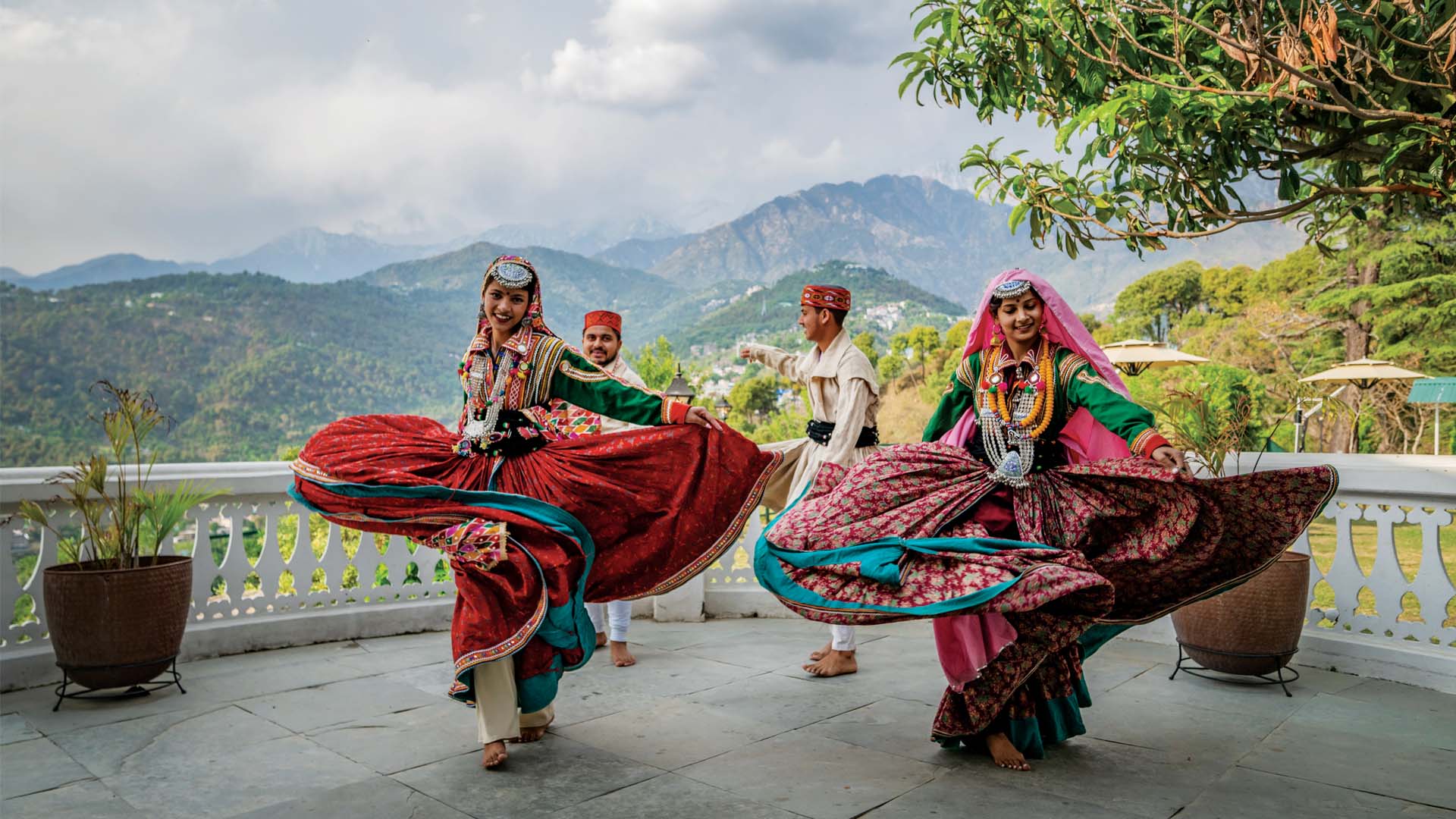
At Brij Anayra, local communities remain active participants in the guest experience.
Food as the deepest archive
If there is one domain in which the argument for culture as tourism infrastructure is most urgently and convincingly being made, it is food.
Food is perhaps the most complete form of cultural expression. A dish carries geography, climate, migration history, caste dynamics, trade routes, royal preferences, colonial interruption and the accumulated adaptations of generations of cooks responding to the world around them. To eat regional Indian food is to read a kind of palimpsest.
Former ITC chef Aksharaj Jodha, now a restaurant and food consultant, is a custodian of Akheraj Deolia cuisine, the culinary tradition of his Rajput family. He speaks of its complexity with the ease of someone who has lived inside it. The cuisine he is reviving is not a fixed set of dishes but a record of movement. His great-grandfather’s friendship with the Maharaja of Kashmir brought Kashmiri cooks to a village in Rajasthan, where they cooked alongside local cooks and exchanged techniques. “So Yakhni entered our cuisine, 110 to 120 years ago,” he says. “Rajasthani food had no tomatoes 100 years ago. Now we use tomatoes.”
Indian food is inherently hybrid, and its evolution tells a larger story about trade, migration and exchange. “If someone wants to do something meaningful in regional cuisine,” Chef Jodha says, “food stories are the most important element. When you’re engaging with the guest, it becomes important that the food comes with the stories.” What interests him is the cultural understanding that regional cuisine can unlock. “The transition from what we think of as Indian food to what it can become is a huge opportunity.”
ITC Hotels is one of the deepest practitioners of this thinking. “Indian cuisine at ITC Hotels is presented not merely as a dining offering, but as a cultural narrative that reflects the history, geography and traditions of each destination,” says Anil Chadha, Managing Director, ITC Hotels. The emphasis on heirloom recipes, hyper-local sourcing, indigenous grains and artisanal produce runs through initiatives such as Mighty Millets, Still Made Here and Vocal for Local.
Signature restaurants carry distinct mandates: Dum Pukht preserves the elegance of Awadhi cuisine; Bukhara celebrates robust frontier-style cooking; Dakshin showcases the diversity of southern Indian flavours; and Avartana has reimagined South Indian cuisine through a contemporary lens that brought it into the global fine-dining conversation.
“Chef pop-ups and regional food festivals serve a purpose that extends well beyond commercial viability,” says Chadha. “Their deeper value lies in their ability to act as platforms for cultural expression, knowledge sharing and storytelling. They spotlight indigenous ingredients, community-driven recipes, and lesser-known food traditions that may otherwise remain underrepresented in mainstream dining. Select dishes are integrated into regular menus, helping sustain interest in regional cuisines while creating continued demand for local and artisanal produce.”
IHCL’s approach to tribal culinary traditions, spanning pop-ups presenting indigenous ingredients and traditional cooking methods supported by training across 15 tribes, is perhaps the most scaled expression of food as cultural infrastructure in Indian hospitality.
At The Belgadia Palace, Odia cuisine becomes an introduction to a rarely explored culture. Guests eat mudhi-mangsho and pakhala, ask what they are eating, and “suddenly they’re in a conversation about Odisha’s agrarian calendar and the logic of fermented indigenous rice in a hot climate,” says Akshita Bhanj Deo, Custodian of Heritage, The Belgadia Palace. “We source from tribal farming communities in Mayurbhanj, which means the ingredient on the plate has a provenance worth talking about.”
At The Sarvato within Jaipur’s City Palace, the tasting menu explores Rajasthan’s culinary landscape not as a greatest-hits compilation but as an archaeology of the region: recipes from royal courts, the nourishing food of pastoral and warrior communities, and traces left by traders and travellers across centuries. “We were conceived as a living museum of Rajasthan’s heritage,” says Founder Abhishek Honawar, “using food and hospitality as a medium to share the region’s stories and traditions.” The restaurant sits within a working palace, providing a depth of context that no amount of themed décor could manufacture.
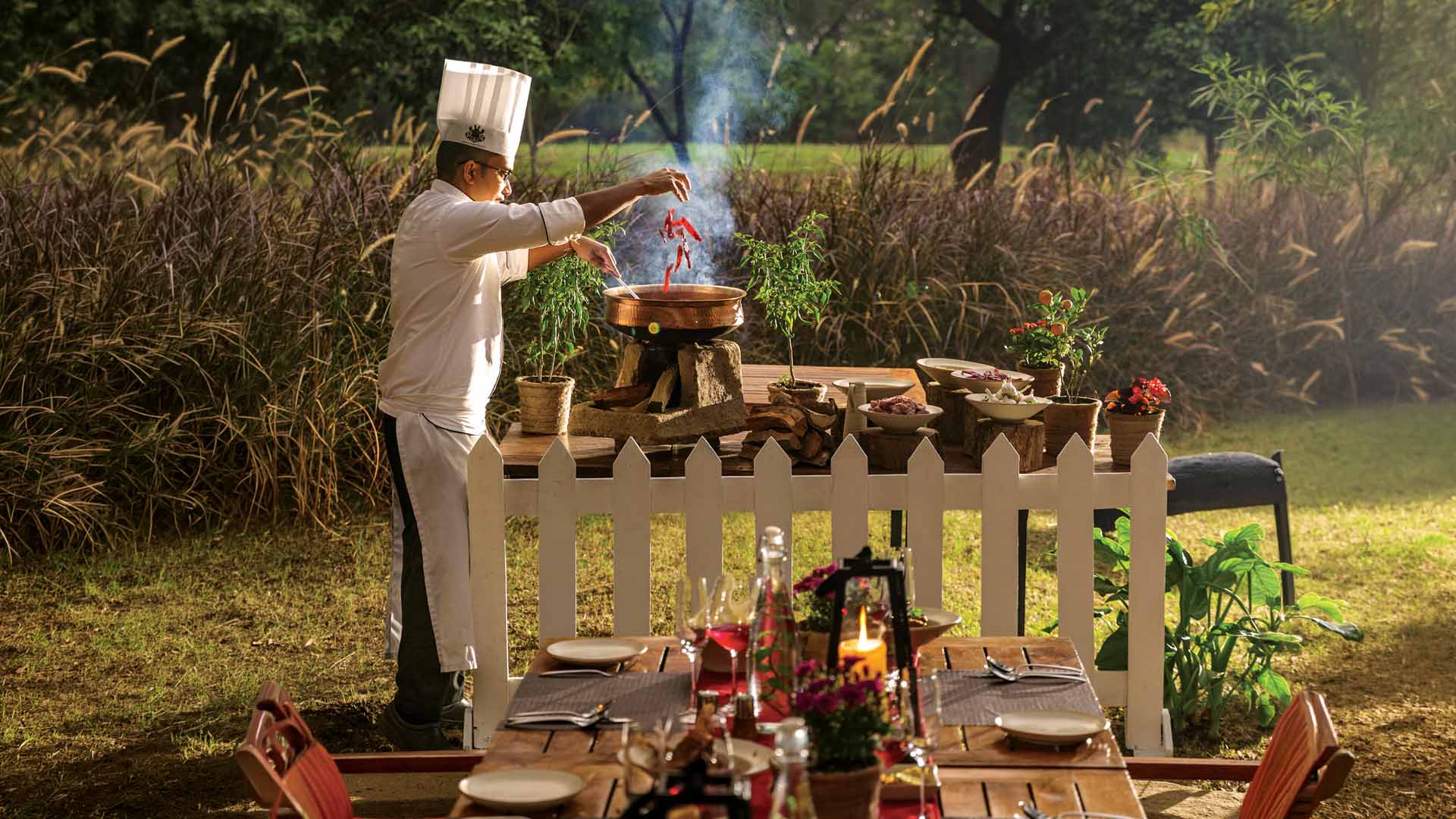
At Jehan Numa Retreat, Bhopal, the Under the Babul Tree experience places regional food traditions in direct conversation with landscape and place.
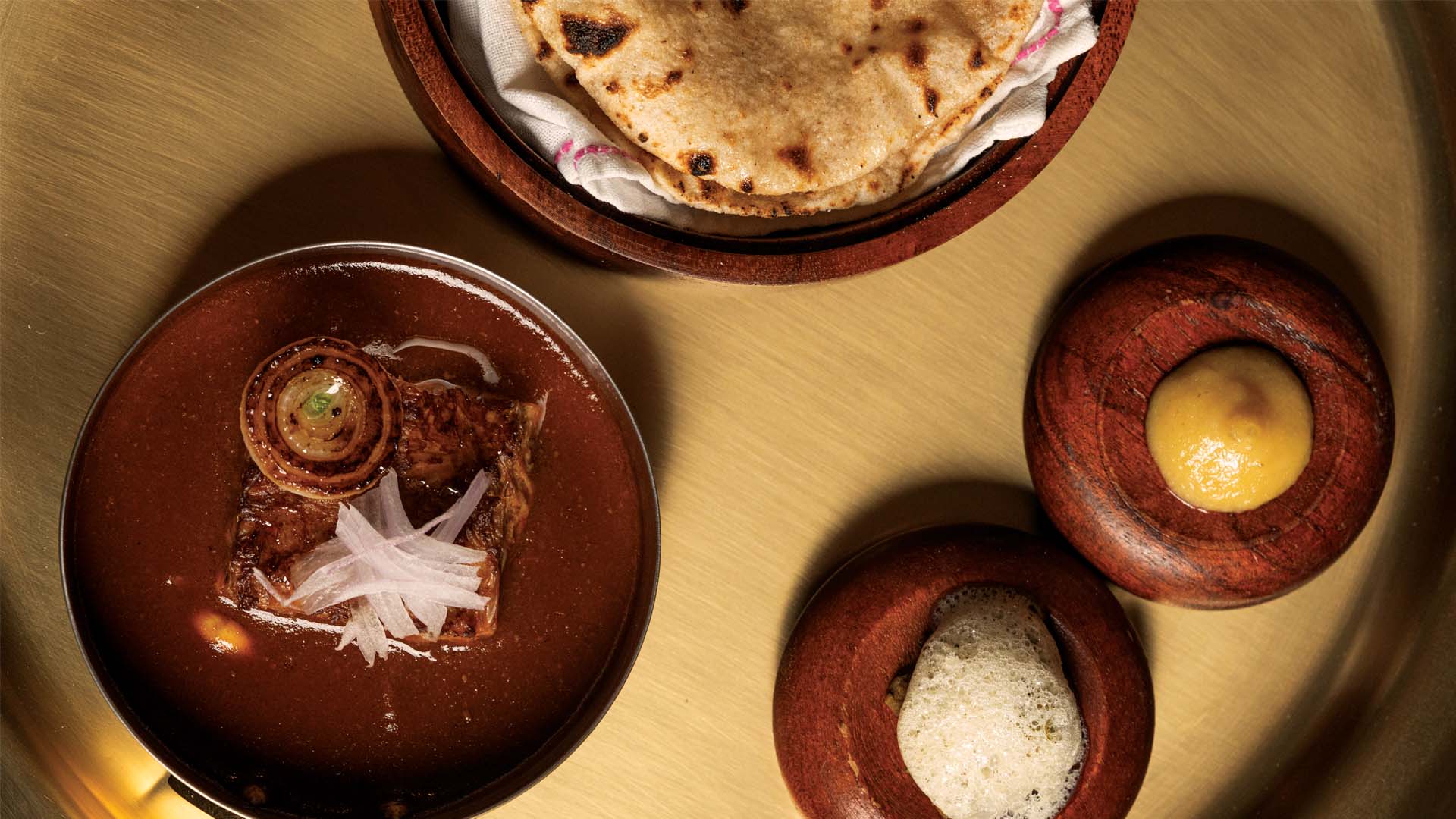
At The Relais & Châteaux The Sarvato, City Palace Jaipur, food becomes a lens through which to understand Rajasthan's layered history.
The counterargument
And yet, the cultural shift in Indian hospitality creates a problem its practitioners rarely address directly. If hotels become the primary curators of cultural life, the spaces where artists find platforms, regional cuisines find audiences and craft traditions find patrons, then culture inevitably becomes luxury-coded. Access is priced. Which artists are selected is determined not by cultural consensus but by what fits a hospitality brand’s narrative and target demographic. Which cuisines get celebrated depends on which ingredients are photogenic, which stories translate easily to an international guest with limited context and two nights to spare.
What happens to independent galleries, community art spaces, regional theatres and street food traditions that do not fit this frame? What happens to the Chhau dancer in Mayurbhanj when the guests who witness his performance become the entirety of his audience outside his own community? Rudra is characteristically direct: “The best of local culture is promoted by connoisseurs, experts and hotel owners. I don’t think any of this is a focus for state tourism departments.” The implication is double-edged. Private hospitality is doing work the state cannot or will not do. But in doing so, it is helping shape a cultural economy that serves, primarily, the people who can afford to stay in luxury hotels.
Shekhawat, speaking at FICCI’s Annual General Meeting in November 2025, gestures at this very partnership: “India needs private investment to reimagine hospitality models, develop innovative experiential tourism products, establish globally benchmarked service excellence and build strong community linkages. The government has created an enabling environment and now it is the industry’s moment to lead, shape, and elevate the country’s tourism brand globally.”
The division of labour is clear: the state sets the frame, the private sector fills it. What remains unresolved is whether that framework will ever extend meaningfully beyond the premium traveller.
The Malabar House, Fort Kochi occupies a position that makes this tension particularly visible. The property sits in a neighbourhood shaped by centuries of cultural confluence: Arab, Portuguese, Jewish, Dutch, British, Malayali and, now, the Kochi-Muziris Biennale, one of Asia’s most significant contemporary art events. Guests engage with Kochi’s creative life not because it has been packaged for them, but because the hotel is embedded in a city where art is inseparable from daily life. “Fort Kochi is a place where cultures have met for centuries, and that spirit is reflected in everything we do,” says General Manager Sasikumar K. “Local culture is not something we showcase occasionally; it is part of our everyday identity.” The Biennale, in that context, is a city-wide event that the hotel helps guests navigate. The distinction matters.
Sharma of Radisson frames the responsibility plainly: “Hospitality brands are often the first touchpoint for travellers, which gives us an important responsibility to act as gateways to local culture and contribute meaningfully to destination storytelling.” Pokhariyal agrees, but broadens the obligation: “The hospitality industry has a responsibility to interpret and present local identity with sensitivity, ensuring that cultural heritage continues to evolve as a dynamic, lived tradition.” What neither says, what almost no one in the industry says directly, is who bears the cost when the lived tradition does not fit neatly into a guest experience.
The Serendipity Arts Festival offers a partial answer to the access question. By choosing public venues, programming free events and structuring the festival as a public intervention rather than a curated experience, it has managed to create a form of public culture that attracts tourists.“The result is a remarkably diverse mix of visitors,” says Munjal. “At times, simply standing at a venue and watching people pass by becomes an experience in itself.”
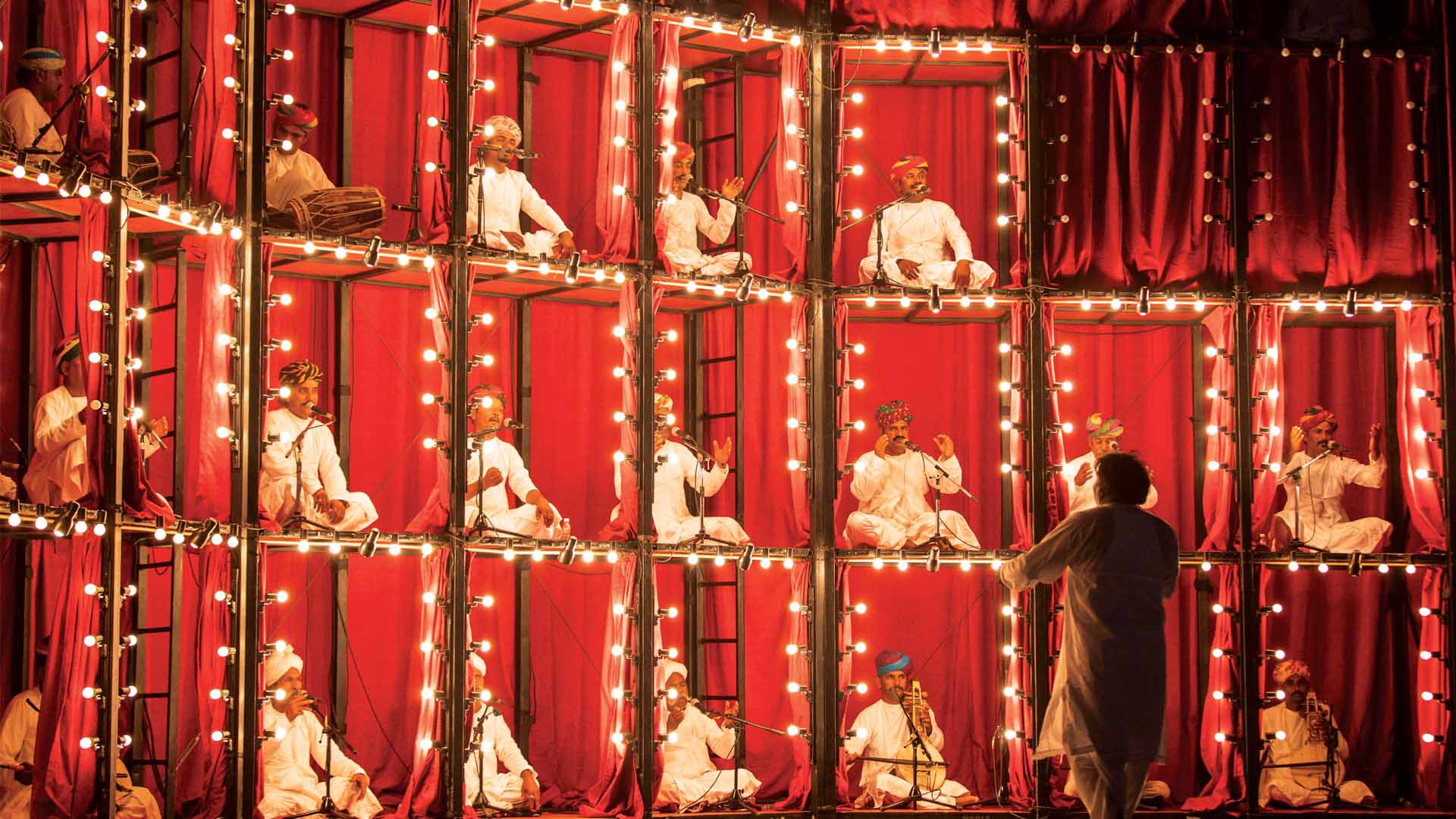
The Manganiyar Seduction shows how traditional art forms can find new audiences without losing their cultural roots.
Courtesy of The Manganiyar Seduction by Roysten Abel: A Mesmerizing Blend of Music and Theatre
So, what comes next
The signals point in several directions simultaneously.
The sā Ladakh Biennale, set at over 3,000mts. above sea level across eight locations along the Leh-Kargil corridor, brings together local Ladakhi artists and international names under the theme Signals from Another Star, rooted in climate, memory and lived experience. One of the highest art festivals in the world, it is taking place in a landscape understood until recently almost exclusively as a trekking destination. With partners including the German Embassy, LAMO and the Rubin Museum of Art, the initiative extends well beyond a conventional art showcase.
Kerala Tourism’s Lenscape project, a travelling exhibition commissioning India’s leading photographers to document the state, takes cultural tourism a step further: the documentation of culture itself becomes the tourism product. Siyahi’s writers’ retreats at Alila Fort Bishangarh and Samode Haveli similarly position heritage hospitality as creative infrastructure, creating intensive environments where writers and translators can work alongside one another rather than simply consume culture as spectators.
In the live entertainment space, the shift is unfolding at scale. India hosted 30,687 live events across 319 cities in 2024, an 18% increase over the previous year. Samit Garg, Founder, EEMA, points to formats that would have been difficult to imagine a decade ago. Shiva Immersive, India’s first permanent-format immersive mythology franchise, uses 360-degree projection mapping, spatial audio and AI-powered dramaturgy to render ancient narratives in a language familiar to audiences raised on streaming platforms and gaming. “While Japan exports anime and Korea exports K-dramas,” says the association’s co-founder, “India has owned the civilisational raw material of mythology but never learned to tell it in a future-ready language. Shiva Immersive changes that.”
What unites these seemingly disparate developments—a biennale in the high Himalayas, photographers documenting Kerala, writers working from Rajput forts, mythology reimagined through immersive technology, regional cuisines carried home through hospitality—is a refusal to separate the cultural from the experiential, the local from the contemporary.
For decades, India invited travellers to witness the achievements of its past. The emerging cultural economy makes a different proposition. It asks visitors to participate in a living culture that continues to evolve, create and reinvent itself. The monument remains important. But increasingly, it is the story, the craft, the performance, the meal and the community around it that travellers come seeking. India is no longer simply marketing its past. It is making an argument about its present.
(- With inputs from Chandreyi Bandyopadhyay)
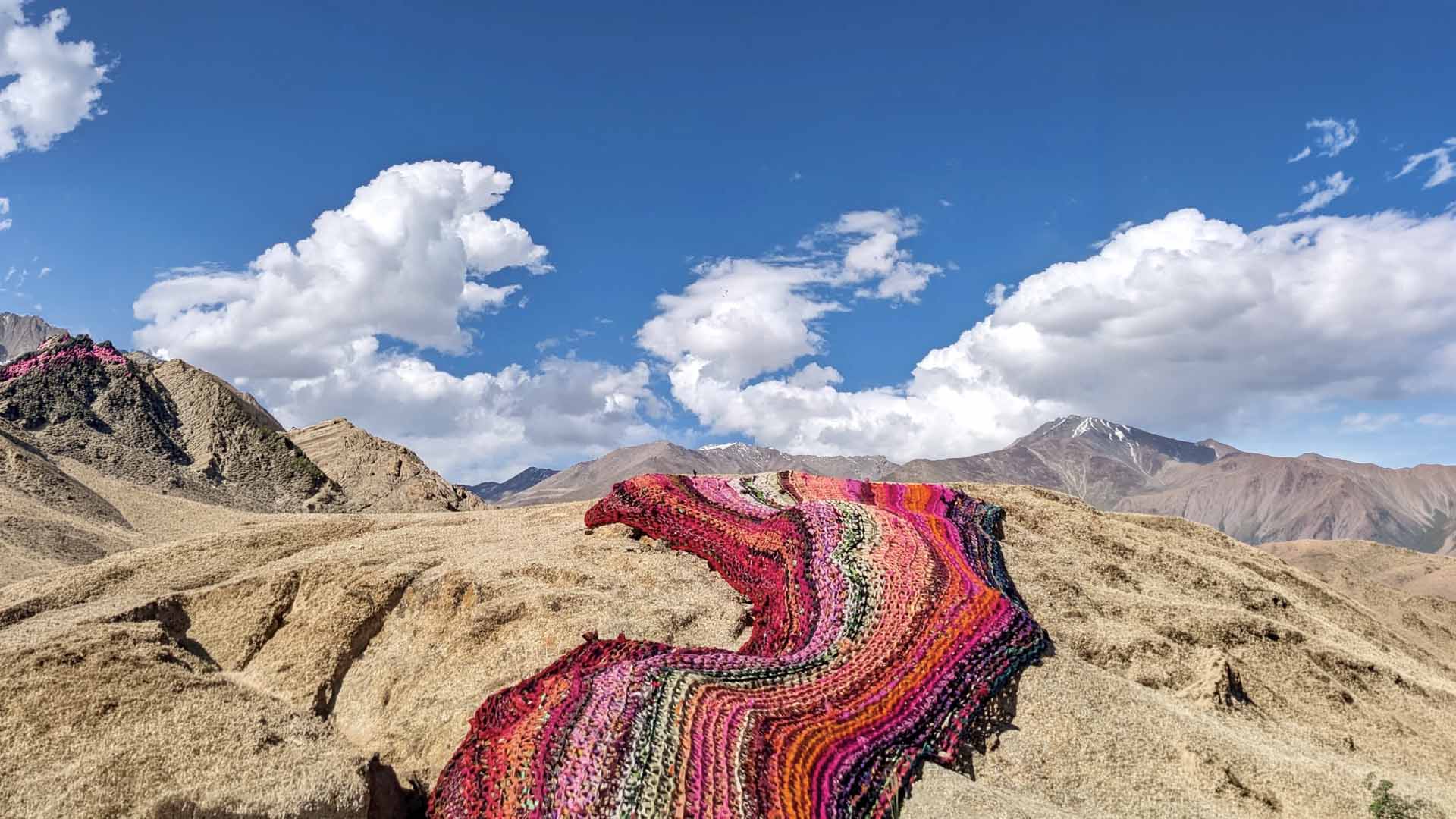
At over 3,000mts. above sea level, the sā Ladakh Biennale is reshaping the identity of a destination.
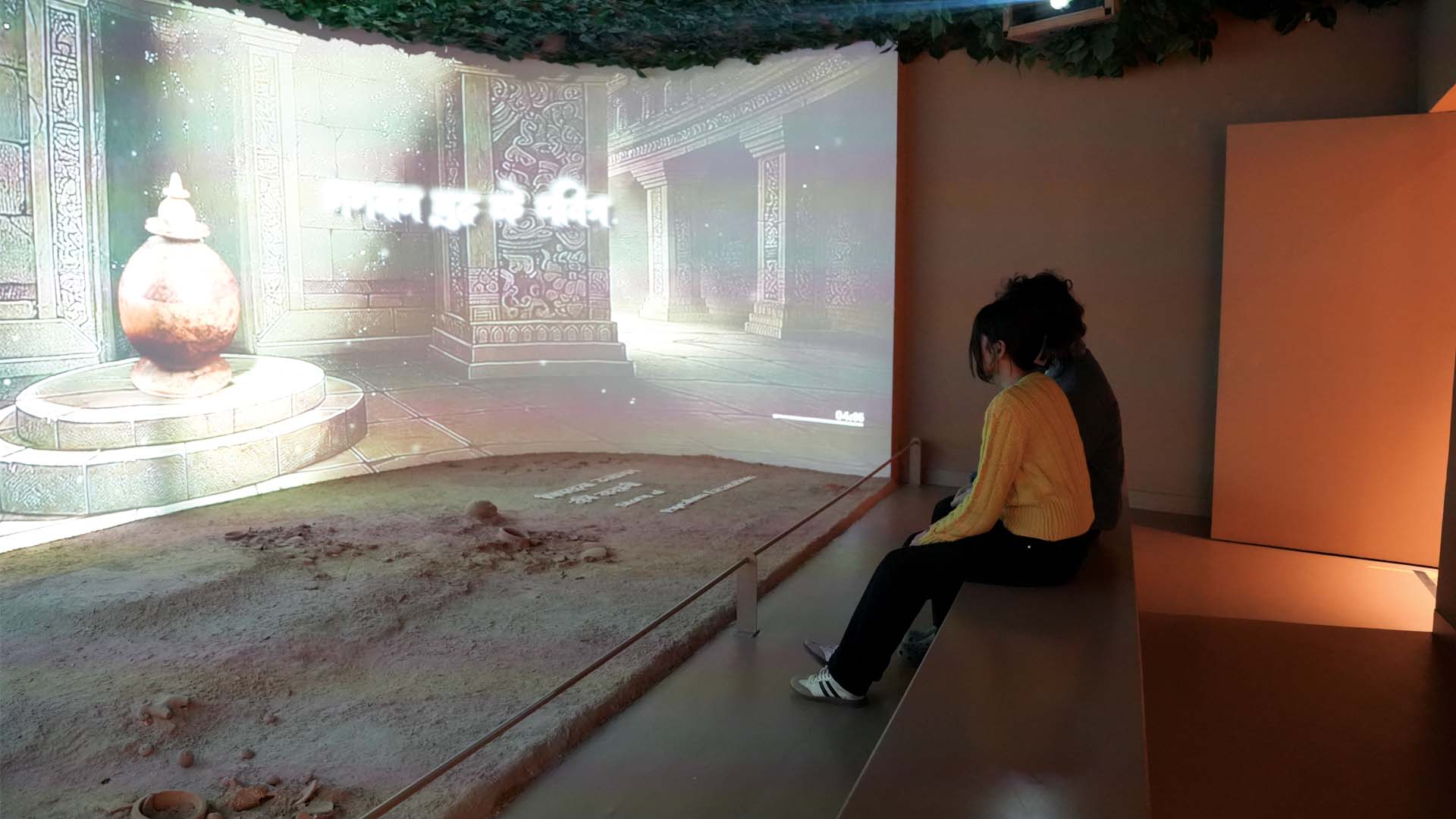
With experiences such as Light and Lotus, cultural-tech is creating contemporary pathways into India's heritage.
Courtesy of the light and the lotus: relics of the awakened one.