

















Four-Sight for 2025
Defining the four key areas that will drive operational stability and set the stage for long-term growth for general managers.


By Manav Thadani & Siddharth Savkur
The new generation of travellers
There is a high level of comfort and security in knowing that a consistent volume of business is almost guaranteed from a particular market segment. This could be an office district or manufacturing hub in the neighbourhood, wedding planners who throng to you because of your location and facilities, large events hosted at a convention centre nearby, or tourists visiting a famous landmark in your vicinity.
However, the adage of “do not put all your eggs in one basket” holds merit here. In 2025, focus on diversifying your market segment so as to reduce dependency on any one, or even two, segment/s.
- If you are a wedding-centric hotel, draw up strategies to bring in more MICE groups since you already have the event venues.
- If you are a corporate FIT hotel, explore how you can leverage those existing relationships to host their offsites or events at your hotel. Is there an opportunity to bring in locals for staycations during quiet weekends?
- If you are in a leisure destination, reduce your dependence on a few source markets and promote your hotel in newer geographies. With better flight and road connectivity, travellers are looking to explore hitherto unknown destinations. Can you also leverage your open spaces and event venues to draw in group business?
Challenge your sales and marketing teams to look beyond the obvious. Ideally, your market segmentation pie-chart should have at least three segments with a significant contribution, with the largest being not more than 50%. Let 2025 be the year that you focus on achieving this balance.
A dollar saved is a dollar earned
In an increasingly competitive marketplace, bringing in business will become more challenging. Once secured, it is crucial that the profit from that business is optimised. The hotel GM must keep a very close eye on their expense structures.
Often, there is a tendency to consider the current expenses level as the benchmark and build it up from there factoring in inflation, product upgrades, and so on. However, once every few years, a zero-based budgeting exercise is recommended to determine if the current expenses themselves are justified. Keep past trends aside and calculate your expenses based on hard facts like room inventory, number of outlets and covers, staff headcount, positioning, brand standards, and so on. Often, this can lead to surprising revelations of overspending—leakages due to redundant technology or processes, overcharging by vendors, inflated assumptions and lack of inventory control. Streamlining your expenses can give a big fillip to your bottomline.
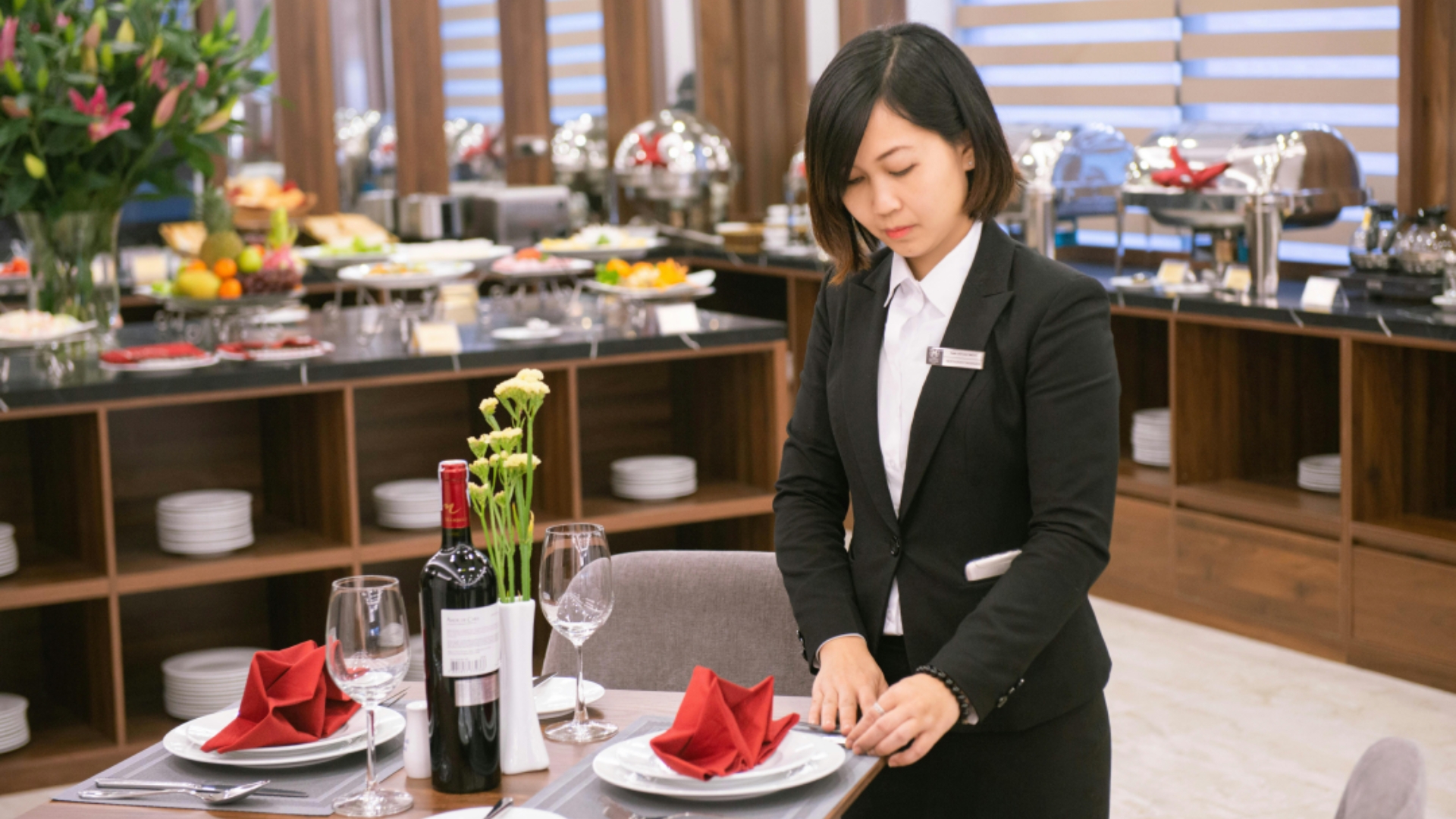
For all the facilities and services offered by your hotel, you need competent people to bring it to your guests.
The real power lies in manpower
Perhaps top of the list in media coverage, the alarming manpower crunch in our industry today is only too well-entrenched in every GM’s mind. Every article on a new hotel opening or a brand’s ambitious growth plans is followed by one on declining admissions in hotel schools or how young hospitality professionals are moving to other sectors. For all the facilities and services offered by your hotel, you need competent people to bring it to your guests.
Unfortunately, the hospitality industry has not implemented many game-changing ideas to stem the rot. Here’s some food for thought.
- Let’s say your payroll cost was 20% of your revenue (which is the industry standard in many parts of the world, as per trends observed by the Hotelivate Executive Search team). Allow for a mere 2% increase in this figure for the next five years. Task your HR team with using this additional amount to overhaul the compensation and benefits structure, including but not limited to:
- Increasing salaries, but also reviewing headcount so that employees don’t have to work long hours.
- Revisiting policies to make the workplace more women-friendly and inclusive.
- Offering better and more training.
- Improving facilities like cafeteria and locker rooms.
- Introducing initiatives for better employee engagement and work-life balance.
Yes, for the next few years your bottomline would see a negative impact. But then, you will create a team that is more competent, more professional, better trained, presumably more loyal and passionate about their workplace. This, in turn, will lead to better customer service, more efficient operations, improved market perception of your hotel and the opportunity to get more business at higher rates. And yes, you guessed it, in five years your payroll cost will return to 20% of your (now significantly higher) revenue.
This may sound simplistic and does not guarantee success but, given the dire situation on the HR front, it may be a gamble worth taking for the long-term stability of your asset.

Manav Thadani, MRICS, Founder Chairman, Hotelivate.
Tech It Easy
Typically, hoteliers are not the most tech-oriented folks. We are so used to face-to-face, ‘old-school’ service that engaging with our guests digitally can be daunting. Yet, that is the platform where our customers are spending the most time, and that is where they are most likely to notice us. Run a quick check.
- Is your social media presence in tune with your brand positioning? The colour scheme, images, copy, layout—are they in sync with the kind of guest you are trying to attract?
- Are you showing up among the top search results for your market?
- Is your website (a) updated, (b) optimised for viewing on all devices, (c) is the content relevant to today’s times? (Hotels are still including complimentary WiFi, bottles of water, tea kettle, etc. in their room descriptions!), (d) is the content
SEO-optimised?
- Are your displayed rates in parity between your own website and all OTAs? Additionally, are the best deals available on your own website rather than on an OTA platform?
You may not know the answers to all these questions yourself, so please spend on working with the right experts.
To run a hotel well is to make many moving parts work together in harmony. Having a good asset manager on board gives the owners and the GM an additional resource to ensure that no tricks are missed in optimising the hotel’s performance.

Siddharth Savkur, managing Director – Asset Management, Hotelivate.