












A Room of One’s Own and Then Another
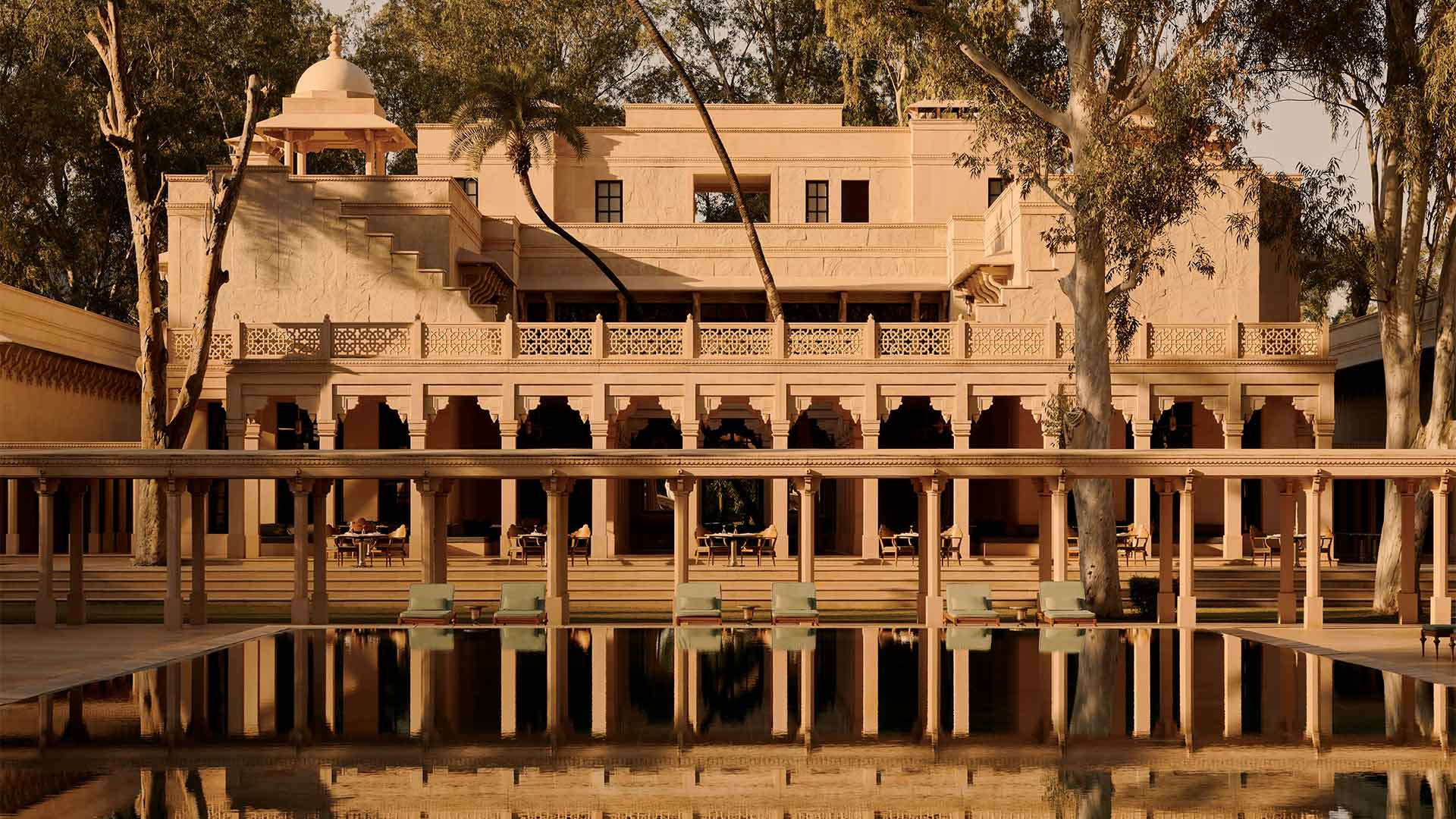
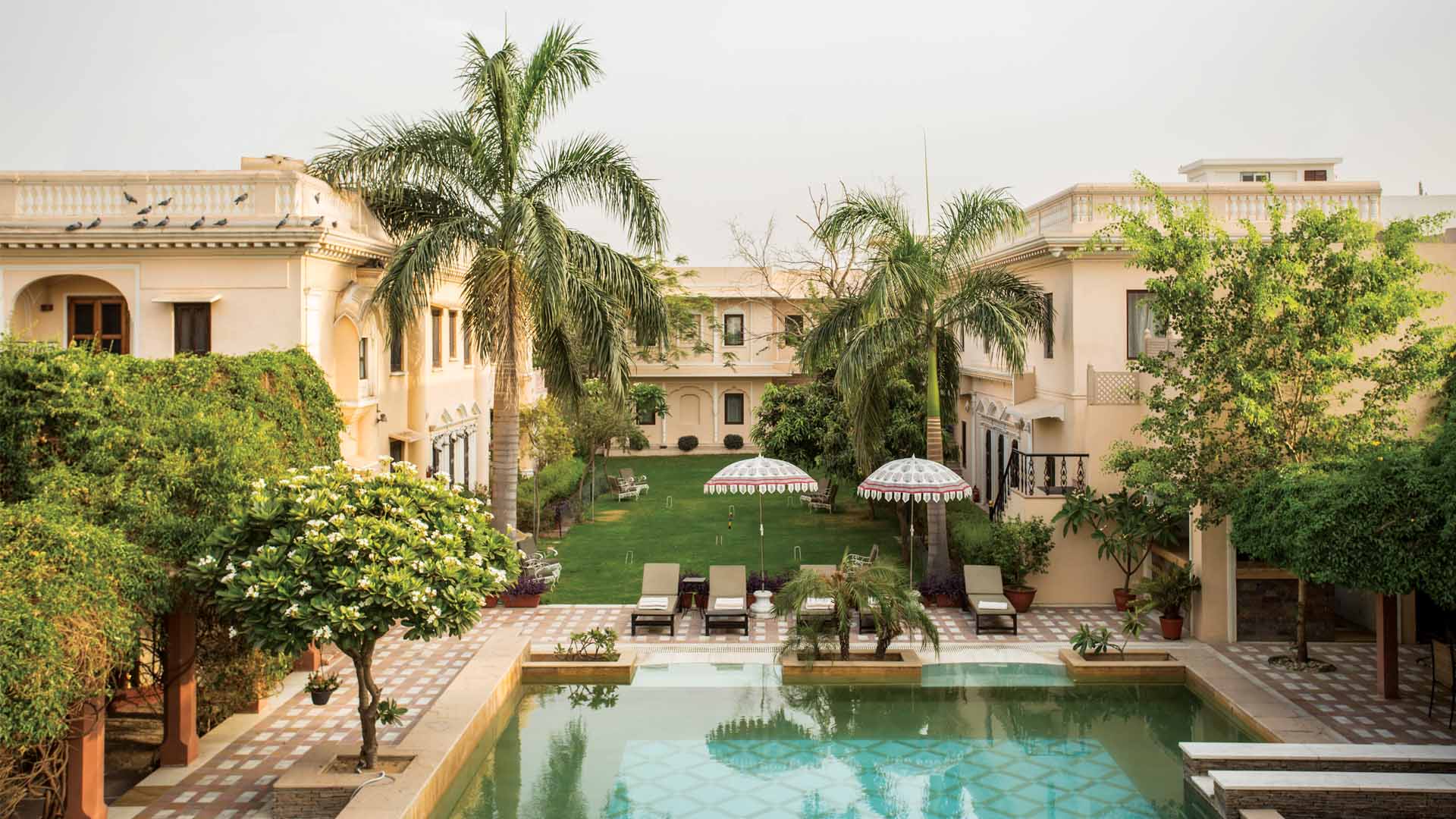
From hunting lodge to heritage retreat, the Royal Heritage Haveli offers a deeply personal slice of Jaipur’s royal past. This rather unexpected palace beautifully blends its heritage with contemporary updates, standing out in a city of palaces.

By Suman Tarafdar
Do you feel a bit out of sorts when you discover that every room in your hotel is different? Is there a temptation to take a glimpse into other rooms, too? Well, right from the days of the pioneers who renovated heritage spaces in boutique hotels, such as the first Neemrana Hotel, I have had the nagging feeling that other rooms are better than the one I am in.
During my visit to the Royal Heritage Haveli (RHH), a 300-year-old haveli that has been lovingly restored and transformed into a luxury boutique hotel, that apprehension was addressed upfront. Thanks to the kindness of the hosts, I was able to explore a number of rooms.
Here’s the point—each turned out to be not only different (well, there was that element of heavily ornamented and embellished traditional Rajputana interiors), but they were sufficiently different, and adoringly so. Each room features a distinct colour palette, layout, and slightly varying interior design and motifs.
Now, Jaipur, of course, is chock-full of palace hotels, many with genuine claims to being abodes of royalty in the colonial period. Regal, commanding and heritage-laden as their presence and legacy are, there is a certain sameness to them. I was glad to note that RHH has, in a sense, carved its own identity, best experienced by staying there. Just sayin’.
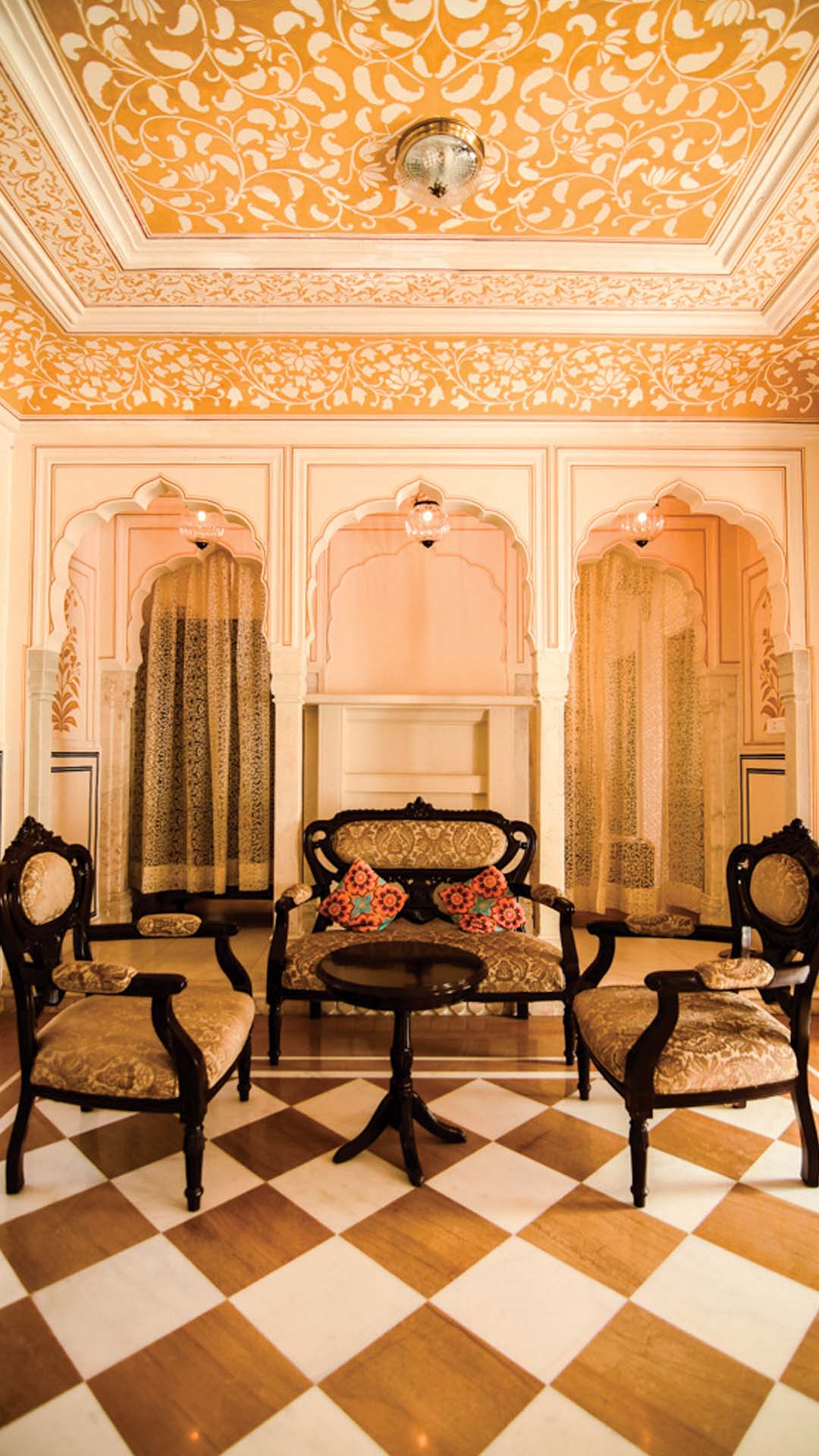
The room interiors are lovingly curated, such as this one in white, gold and cream.
From hunting lodge to hidden gem
For starters, it isn’t located where most Jaipur palaces are.
Instead, its address reads Khatipura, on the western side of the city—though with Jaipur’s recent expansion, the area now feels quite central. The palace itself started life as a hunting lodge somewhere in the 18th century, especially for wild boar and bucks. It served various functions over the years, including a school for girls and an army base camp for two years. It was important enough for the then queen of the British Empire, Mary, to have visited in 1919. However, decades of neglect in the post-Second World War era saw its condition deteriorate.
Today, in contrast to the bustling ‘Pink City’, it offers a more authentic, relaxed rhythm of life. Guests staying at the RHH get to experience a lesser-seen side of Jaipur: local markets, old temples, and the slow beauty of everyday life in a suburb.
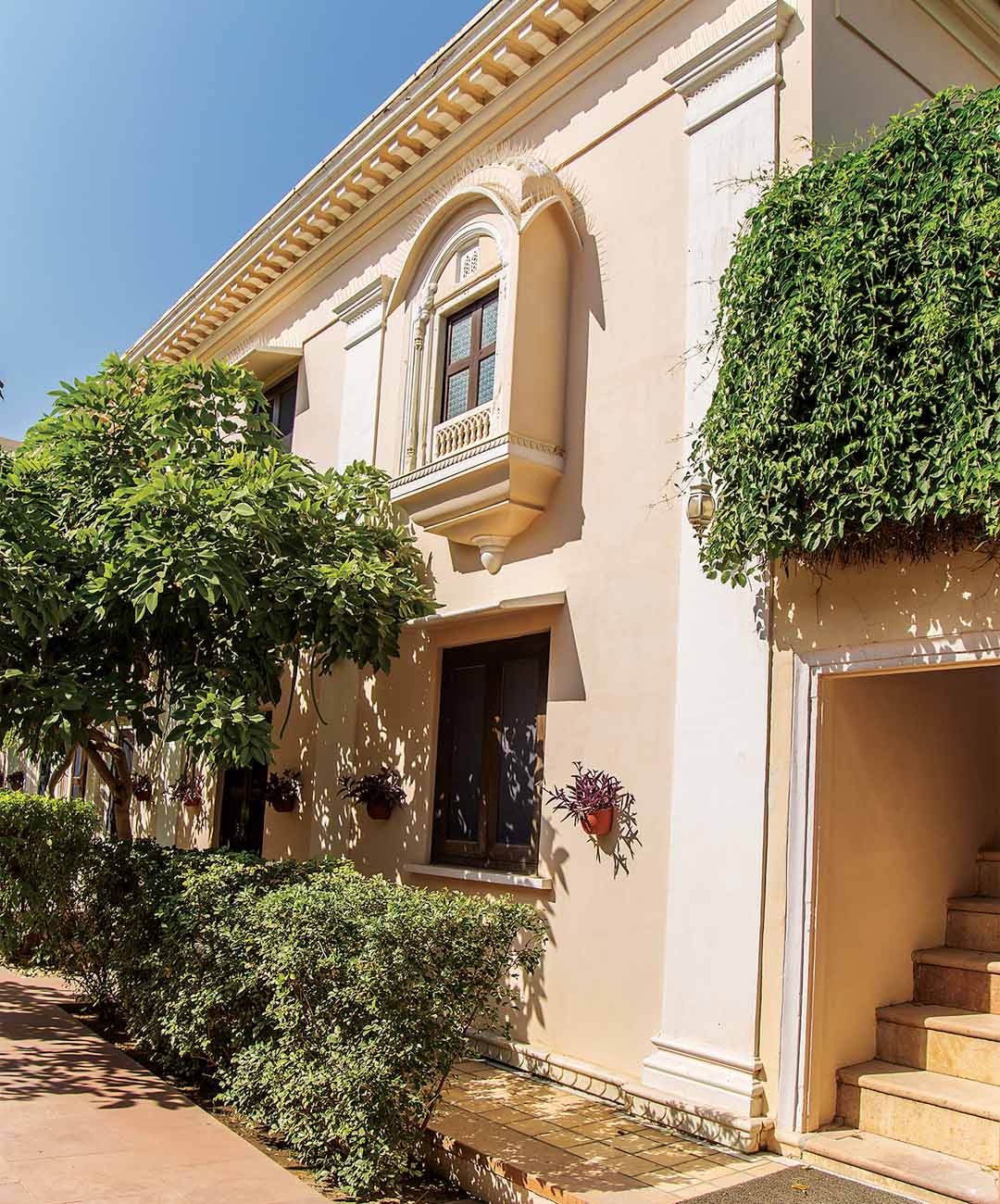
Traditional architectural elements add elfin charm to the place.
Rediscovery and restoration
A chance dinner table conversation changed the haveli's fortunes. "One day it came up over dinner table conversation at my Nani’s home," recollects Shambhavi Singh, Director, Royal Heritage Haveli. "My father was quite interested and intrigued because he didn't know that there was a haveli in the family. He came to see it the next morning and asked if he could restore it. So that's how it started."
Now owned by Maharaj Jai Singh of Jaipur, the haveli was lovingly restored by his niece, Kanwarani Angelique Singh, and her husband, Kanwar Pradip Singh, as a lifelong passion project—carried out with care and respect for its heritage. Starting with four suite rooms, they now have 25, each uniquely designed and personally curated by her. This family-run property is not just a hotel—it is a home steeped in history, emotion, and royal heritage.
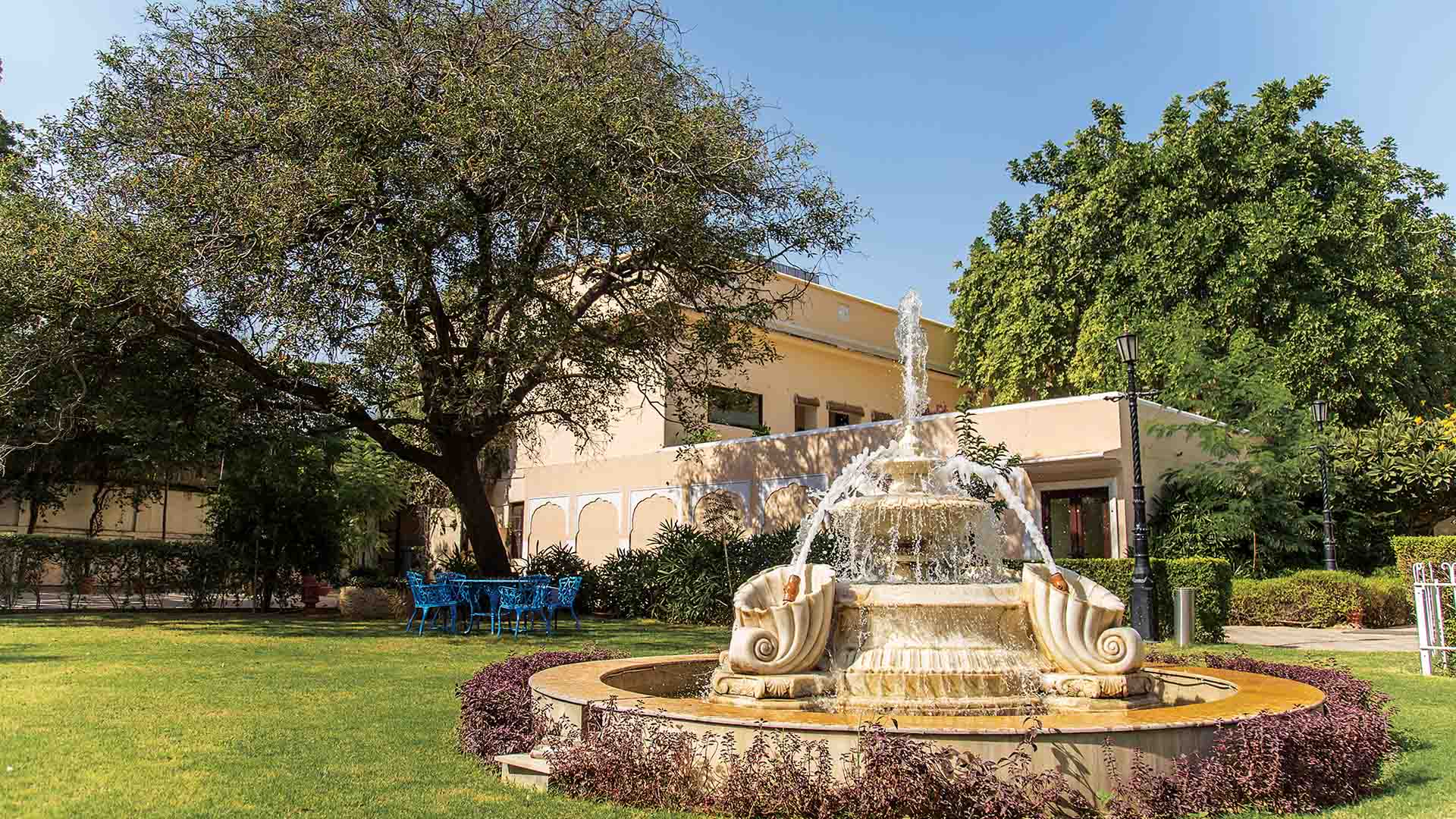
Fountains add to the sprawling lawns of the Haveli.
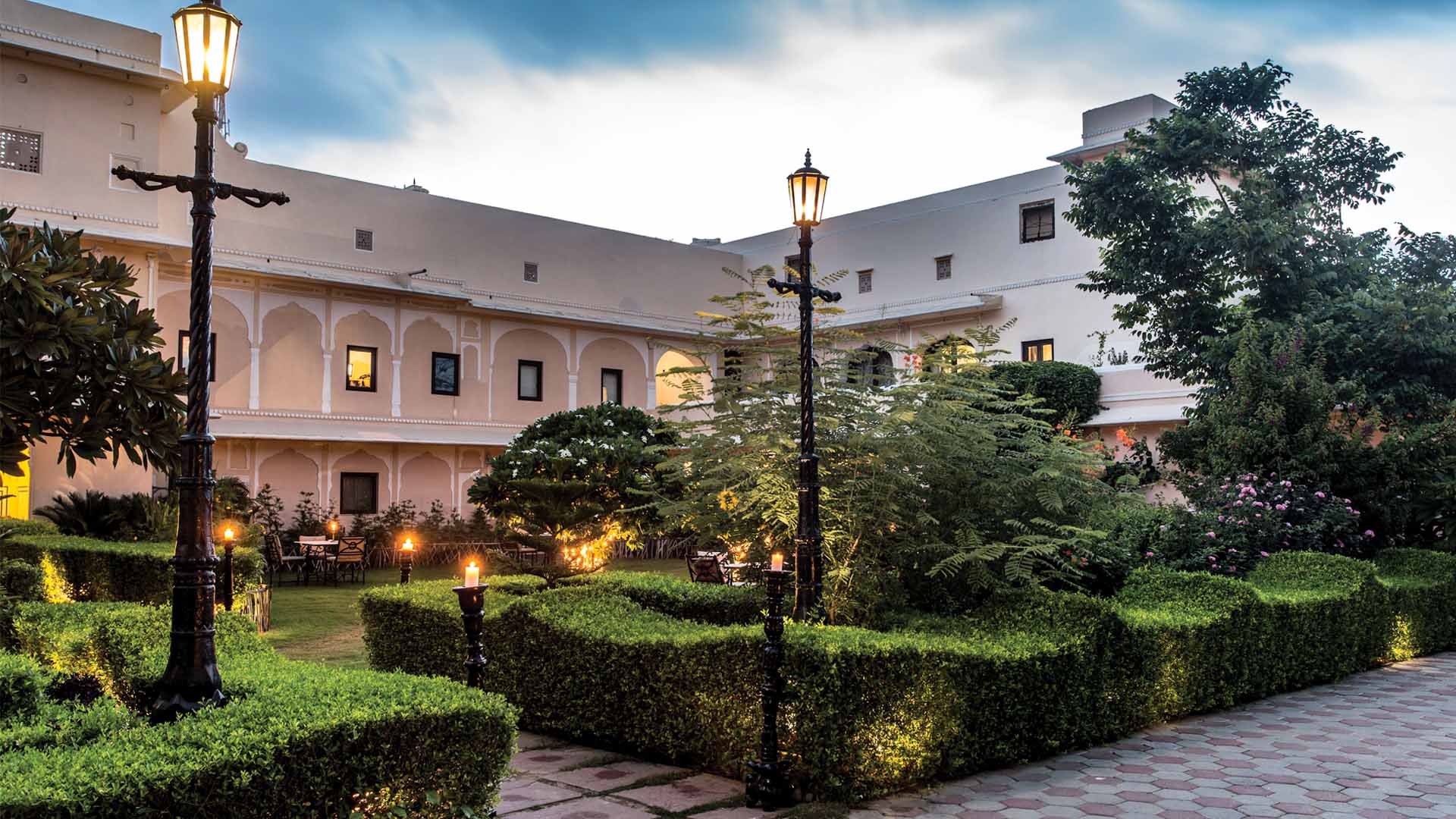
The front façade in the evening.
Conservation challenges
Restoration was a formidable task, given the complete lack of plumbing, electrical systems, and even a structural blueprint to guide the process. Every effort was made to retain original architectural details—from opening the arches that had been bricked in when the property served as an army base camp and later, a school for girls.
The restoration was overseen by Pradip Singh, with guidance from local artisans, conservation experts, and master craftspeople, many of whom had inherited techniques passed down through generations.
The aim was not to modernise the haveli, but to breathe life into it—to let it evolve naturally while retaining its soul. Each of the suites, uniquely designed by her mother, points out Shambhavi Singh, reflects her taste, family heirlooms, and stories from the haveli's past.
Original elements—such as stone floors—have been retained where possible, antique doors meticulously restored, and hand-painted frescoes preserved, all thoughtfully juxtaposed with modern comforts.
The interiors reflect a modern take on traditional design—with local materials such as hand-block printed fabrics, stone from Jaipur’s quarries, and antique furniture pieces restored to their former glory. Each suite has a distinct colour palette—some cool and airy, others earthy and dramatic—but all are unified by softness, grace, and attention to detail. Special attention was paid to textiles and upholstery, with many pieces handmade by artisans from nearby villages, keeping the local economy closely tied to the property’s revival.
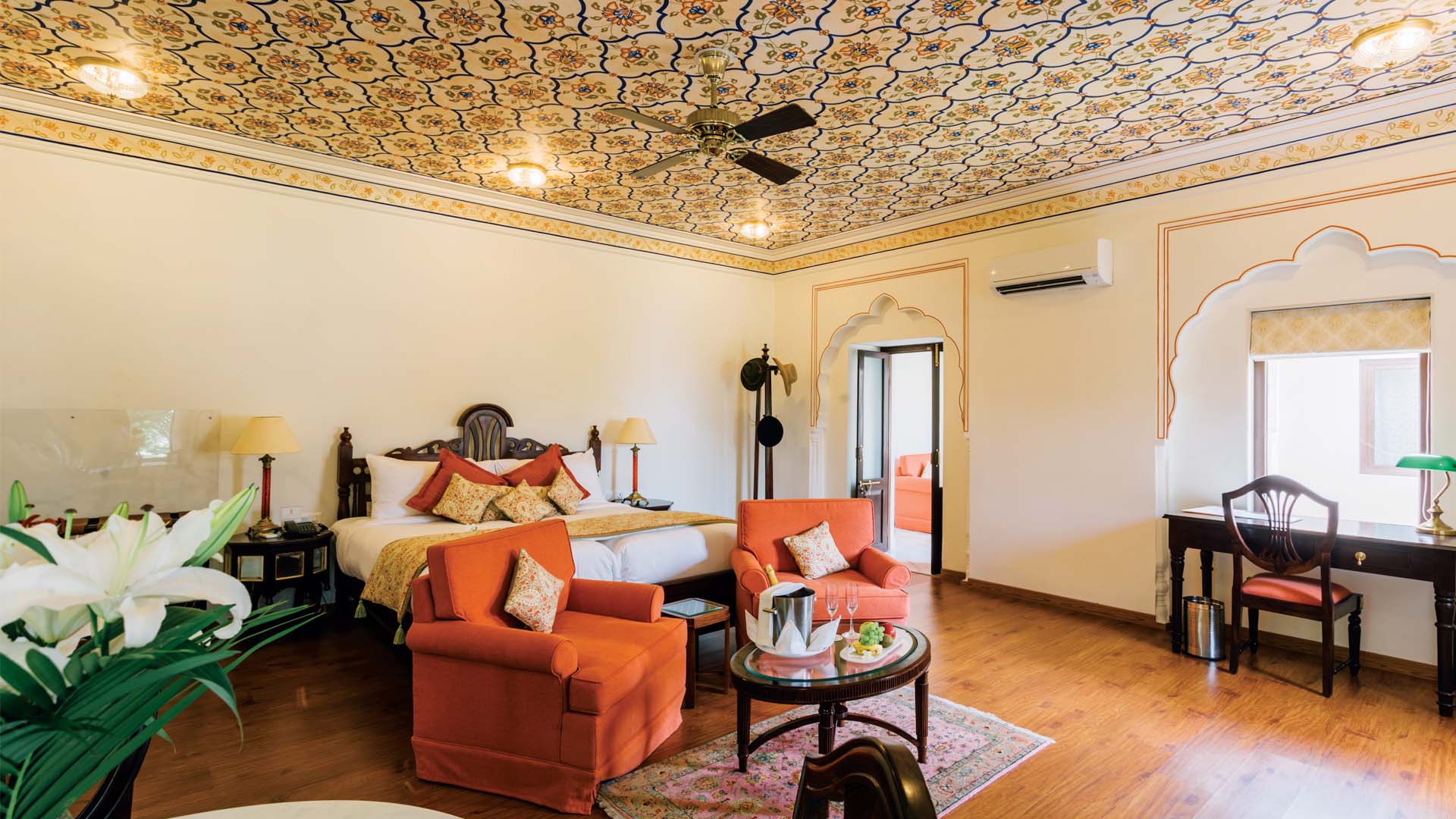
Each room has its own colour scheme, creating a fresh look behind every door.
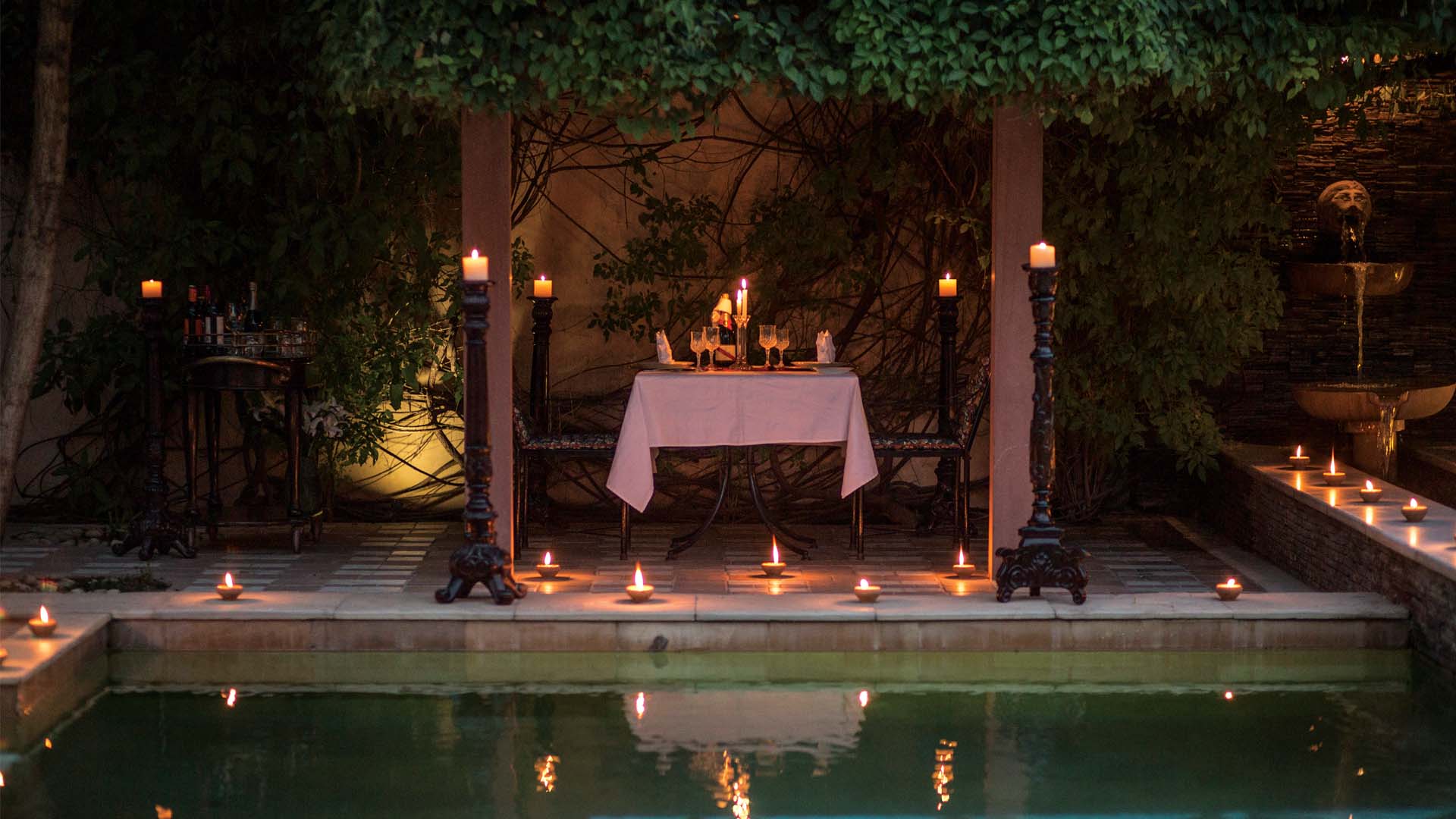
The property has multiple magical nooks, ideal for private dinners.
Contemporary comforts
Spread across five acres, the property feels expansive yet deeply personal, with hidden gardens, a central pool carved in marble and sandstone on the mezzanine floor, and courtyards that invite reflection. "The haveli has changed—not by addition, but by careful curation," explains Shambhavi Singh. "The beautifully mirrored bar, Mehrab, which has bevelled mirrors designed to look like trophy heads, and the reception now occupy what was once a garage for horse-drawn carriages. Araish and lime wash have found their way back onto the walls over plaster and paint."
Dining is especially noteworthy at the haveli. "Guests can partake in cooking classes curated around my grandmother, Thakurani Sneh Govind Singh’s cookbook of recipes that she learned in these kitchens, when she arrived in the haveli as a new bride over 70 years ago; each dish carries both taste and memory," recollects the younger Singh. "She would fondly remember getting dinner ready only when she saw the headlights of the car, carrying her husband Thakur Govind Singh, approaching from a far distance, as there were no other buildings in sight!"
Today, guests at Royal Heritage Haveli enjoy staying in individually designed suites, ranging from 450 to 1,200sq.ft., spread across several wings. The palace is an oasis within the hubbub of the city, and the courtyard-facing swimming pool and tranquil gardens are perfect antidotes. Now wellness is a focus, from Ayurvedic-inspired massages to yoga under the palm trees. As for the choice of room to stay in, "some are very particular about the rooms they have stayed in, and they want the same. If there are early arrivals, we try to give them options to choose from," reveals Singh.
Stories still float in the hotel’s sun-dappled courtyards—of royal gatherings, seasonal rituals, and evenings of classical music echoing through the arched corridors. "The decision to open the haveli to guests came from a desire to preserve and share a piece of living history, not in a museum-like way, but in a form that could be experienced, touched, and lived."
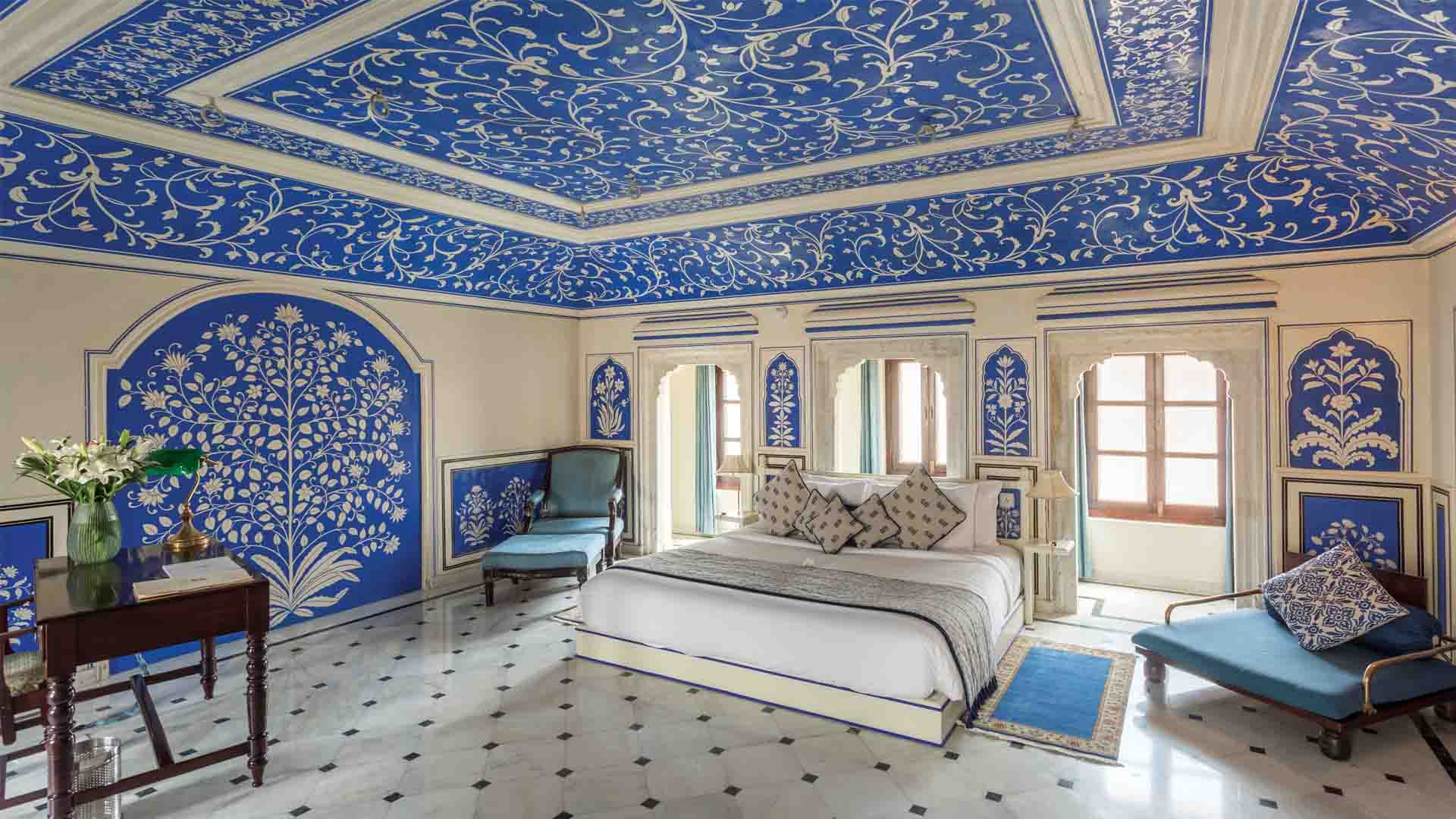
Room 104 epitomises the haveli’s grandeur in cream and blue.

Shambhavi Singh - Director, Royal Heritage Haveli.
Q&A with Shambhavi Singh - Director, Royal Heritage Haveli
Royal Heritage Haveli’s transformation has been remarkable. She sheds light on the process and how her family turned a forgotten haveli into a luxurious heritage stay.
When was the decision taken on the renovation of the haveli, and why?
My parents began the renovation process in the early 2000s. The haveli had been in the family for generations, and we are grateful to my father’s foresight in wanting to restore it—not just structurally, but as a living space. Rather than let it remain locked in time, he wanted to open it to travellers who value authenticity and personal connection.
They did have a good team of advisors, and they also had a team of—from what I remember, because I was in school back then—very skilled restorers who had the knowledge of old structures and buildings. So, at the time of doing the wiring and the plumbing, they were discovering embedded marble pillars. We keep teasing my father about how he tried very hard to dig around for some hidden treasure. It took them about seven years to just get the façade and the first four rooms up. Every year since then, they have added two rooms.
What was its potential as a heritage hotel?
It was immense—the architecture, the stories, the peaceful location. But more than that, it had soul. We knew that in a world of cookie-cutter luxury, a place like this—rooted in memory and meaning—would resonate deeply.
What were the challenges of restoring an old structure?
The biggest challenge was the restoration itself—finding artisans skilled in traditional methods, sourcing original materials, and working within the limitations of a centuries-old building. But the highlight was seeing it come back to life—room by room, tile by tile.
What kind of research went into the process?
A lot of it was oral—listening to family stories, speaking with former staff and local elders. We also consulted conservation experts, checked old photographs, and researched design and planning references at the Jaipur family archives. I like to think of it as my third sibling because of the time, energy and love my parents have put into this property, the attention to detail that they had.
How long did the entire process take?
The first phase took nearly four years to get the façade and gardens restored, with four suite rooms where we lived. The first guests (outside of friends and family) visited in 2010. But in truth, the process is ongoing—we continue to restore, refine, and rethink small aspects each year.
How did the rooms acquire different looks?
That was all (the work of) my mom. The rooms represent her personality—they are understated, yet so elegant and timeless. She wanted the hotel to boast a soothing palette. She believes that a room should engender a sense of peace. You see a lot of intricate details (across the room), such as tiny figures on curtain rods. The upholstery, which I think my mom got spot on, is sourced from all around Jaipur. A lot of the furniture that was in storage has been restored.
Who is the main target group for the hotel?
Our guests are largely high-end, independent travellers—people looking for intimacy and authenticity. We receive guests from India, the UK, Europe, and the US. There’s a growing segment of domestic travellers rediscovering Indian heritage in meaningful ways.
What percentage of guests are leisure travellers?
100%. We are not a business hotel. Our guests come here to slow down, connect, and experience Jaipur at their own pace.
For first-time guests—what should they know?
Welcome to your home in Jaipur! This isn’t a typical hotel. You are stepping into a home that has witnessed 300 years of life. Come with curiosity, a love for quiet beauty, and a willingness to savour slow luxury. We will take care of the rest.
We knew that in a world of cookie-cutter luxury, a place like this—rooted in memory and meaning—would resonate deeply.
Shambhavi Singh
Director, Royal Heritage Haveli