











Bhajan Clubbing Is Rewriting the Nightlife Script
A reflective dive into bhajan clubbing, the growing cultural phenomenon reshaping nightlife.

By Rachna Virdi
Picture this: It’s 10 p.m. on a Saturday. The city hums with its usual neon promise, but somewhere in a tucked-away rooftop studio, the glow is softer, more saffron instead of strobe. The bass still thrums, the crowd still sways, the air still vibrates with anticipation. But this time, the soundtrack isn’t techno or Bollywood remixes. It’s the loud chants of Om Namah Shivaya layered over lo-fi beats. It’s about hands folded as often as they are raised. It’s tea, not tequila. And it’s a generation choosing to be high on harmony, not hangovers.
Welcome to bhajan clubbing, Gen Z’s most surprising cultural pivot and the hospitality world’s newest frontier.

Bhajan clubbing is a new kind of nightlife that invites joy without judgment, community without chaos, celebration without intoxication.
A new kind of night out
Bhajan clubbing is a new kind of nightlife that invites joy without judgment, community without chaos, celebration without intoxication. It blends India’s centuries-old devotional tradition with the sensory pulse of modern nightlife. Think high-energy chanting in a club-like setting, minus the chaos or the cocktails. It’s not a satsang, not a rave, not a spiritual workshop, but a curated nightlife experience that feels both ancient and freshly minted.
Here, herbal teas replace spirits. Tulsi-rose mocktails sit where margaritas once did. Prasad-inspired desserts follow the setlist. And the dance floor becomes a space of collective emotion, both intentional and uplifting. For a generation exhausted by the hustle culture, performance pressure, and digital overstimulation, this cultural space offers a sense of peace and solace. A place where they can show up as they are, surrounded by strangers who chant like old friends.
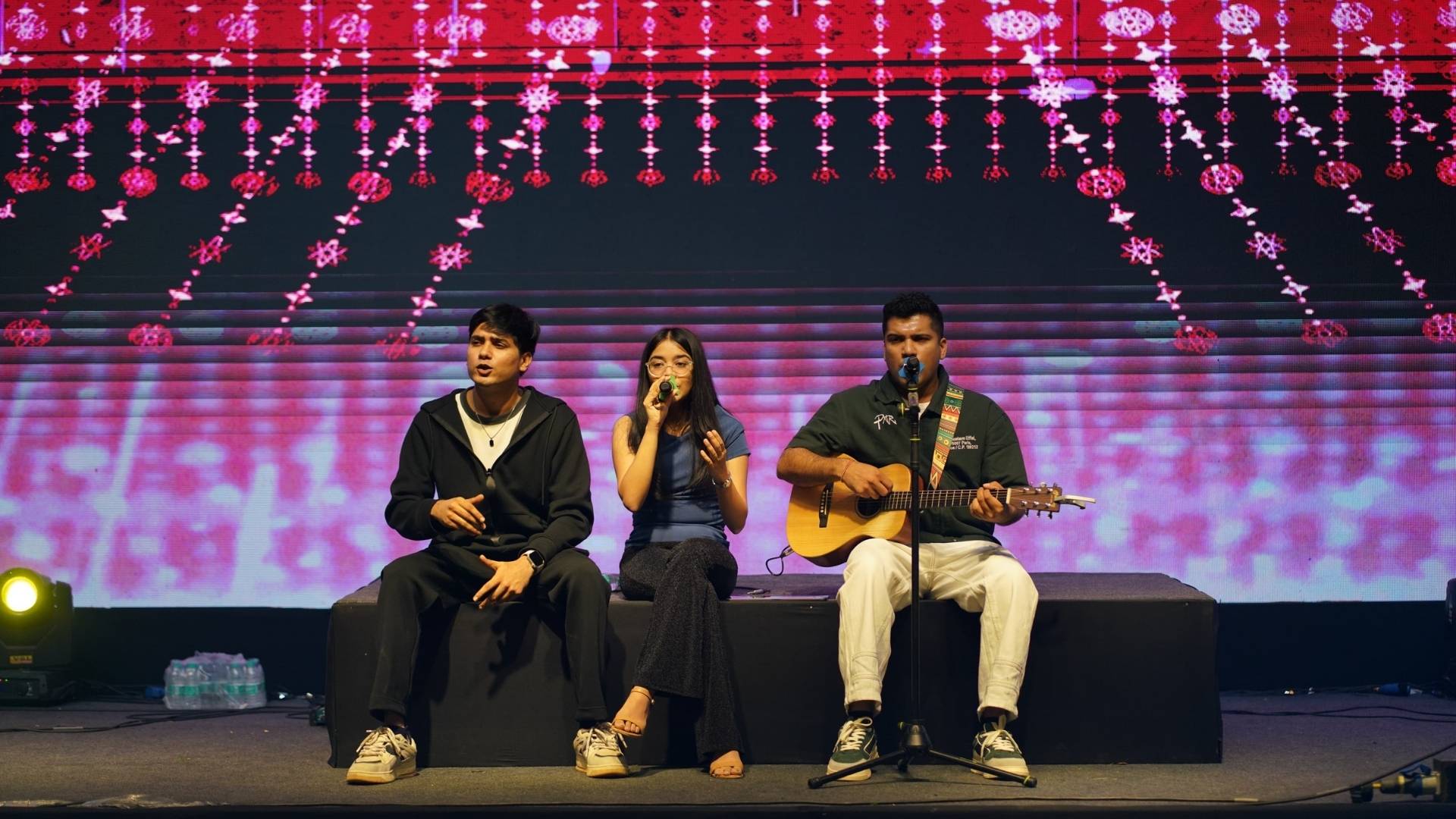
Backstage Siblings Prachi and Raghav, are the brother-sister duo whose viral bhajan jams reintroduced devotional music to an audience that didn’t know it needed it.
The artists turning devotion into a movement
Global artists such as Krishna Das have long drawn crowds that blur the line between concert and collective meditation. However, today’s bhajan clubbing wave has its own icons, who are young, socially native, and deeply rooted in tradition.
London-based kirtan artist and Bhakti Yoga teacher Radhika Das is the modern pied piper of kirtans and one of the brightest sparks of this movement. With performances spanning over 30 cities, his concerts often sell out, drawing thousands of young people who crave spiritual connection without religious rigidity. His recent New Delhi event welcomed 15,000 attendees, a record-breaking testament to this cultural rise.
Before bhajan clubbing had a name, Sounds for the Soul, an initiative by singer Nirvaan Birla, started the spark. Birla’s experiential concerts brought sacred sounds to the dance floor, merging symphonic arrangements, devotional lyrics, and contemporary production. “You don’t need to party to feel alive,” Birla says. “You are the party.” His early shows laid the foundation for what is now a cultural shift sweeping cities.
From Kolkata come Backstage Siblings Prachi and Raghav, the brother-sister duo whose viral bhajan jams reintroduced devotional music to an audience that didn’t know it needed it. “Bhajan clubbing isn't new. It’s just finally being recognised,” they say. “For us, it's not a trend but a deeper cultural movement. People are finally letting go of old stereotypes about bhajan sandhyas and realising that anything bringing them peace, even a bhajan, is worth embracing. That's what bhajan clubbing means to us, choosing peace, in whatever form it comes.”
What started as childhood memories of following their father to satsangs blossomed into a full-time career after they quit their finance jobs to pursue music. “The energy and the vibrations we would feel in that one hour felt truly magical. That same feeling has stayed with us, and singing devotional songs still brings us back to that moment.” The duo’s ticketed Sumiran Satsang events are intimate, baithak-style gatherings where guests sit on the floor, no food or drinks allowed; it is just shared breath, rhythm, and voice.

London-based kirtan artist and Bhakti Yoga teacher Radhika Das is the modern pied piper of kirtans and one of the brightest sparks of this movement.
A sensory reimagining of devotion
If hospitality is theatre, bhajan clubbing is its most intriguing new script. The ambience is soulful with warm lighting, saffron hues, and diffused lantern glows. The sound of traditional instruments (flute, cajon, harmonium) is layered with electronic textures. The energy is club frenzy. The F&B offerings are as varied as tulsi-watermelon spritzers, kesar-jaggery shots, and rose-chai elixirs. And the goal isn’t spectacle, it’s shared elevation.
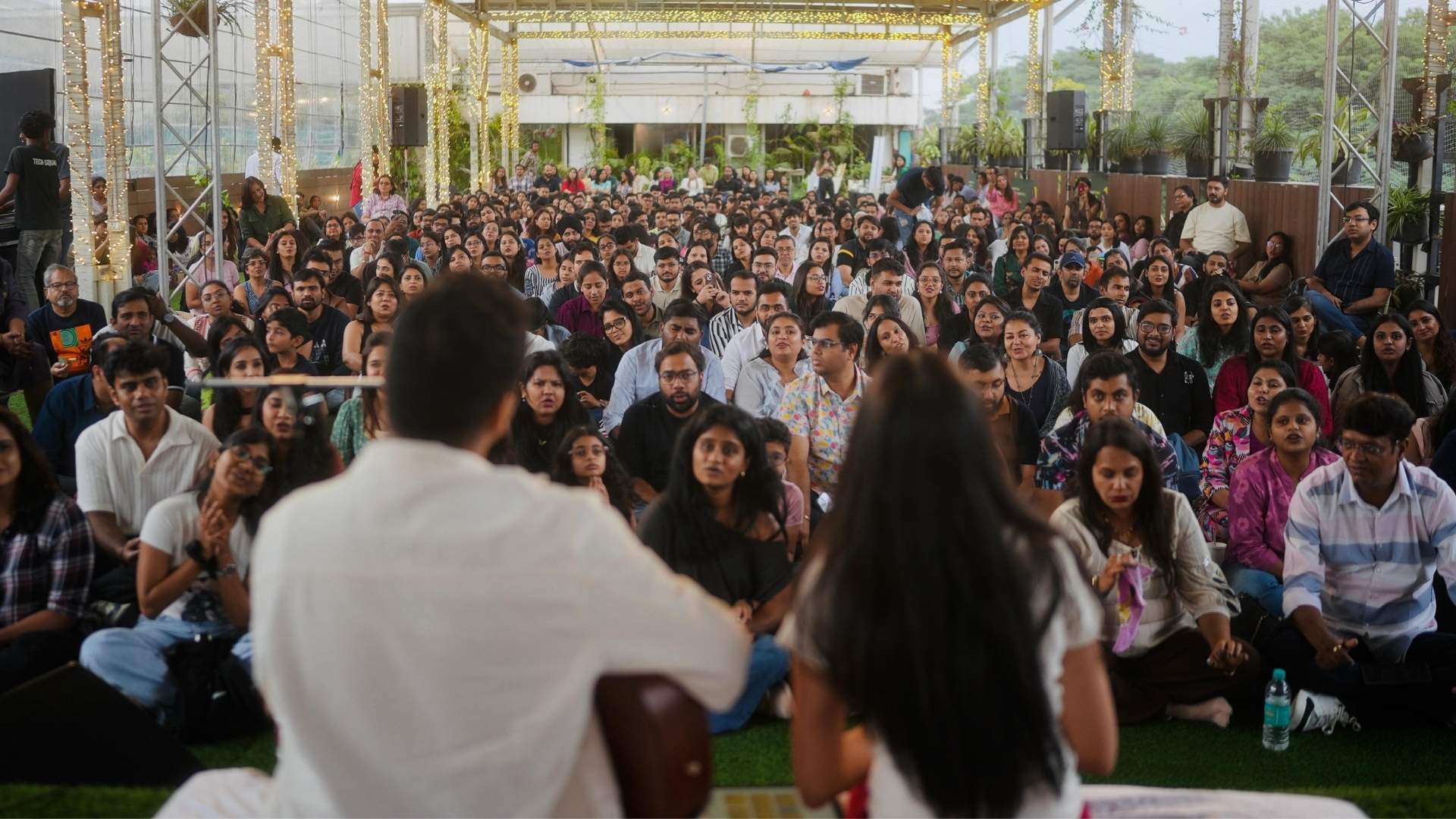
Who’s going for bhajan clubbing? Everybody, literally. At a typical bhajan clubbing night, you’ll find a teenager sitting beside a grandparent, young professionals next to parents on a family outing, even first dates, friend groups and solo seekers. The Backstage Siblings say it best: “We’ve had ages nine to 99 in one room. The magic isn’t the music; it’s 2,000 people chanting as one.” For Gen Z, who often feel disconnected despite hyper-connectivity, this togetherness is the draw.
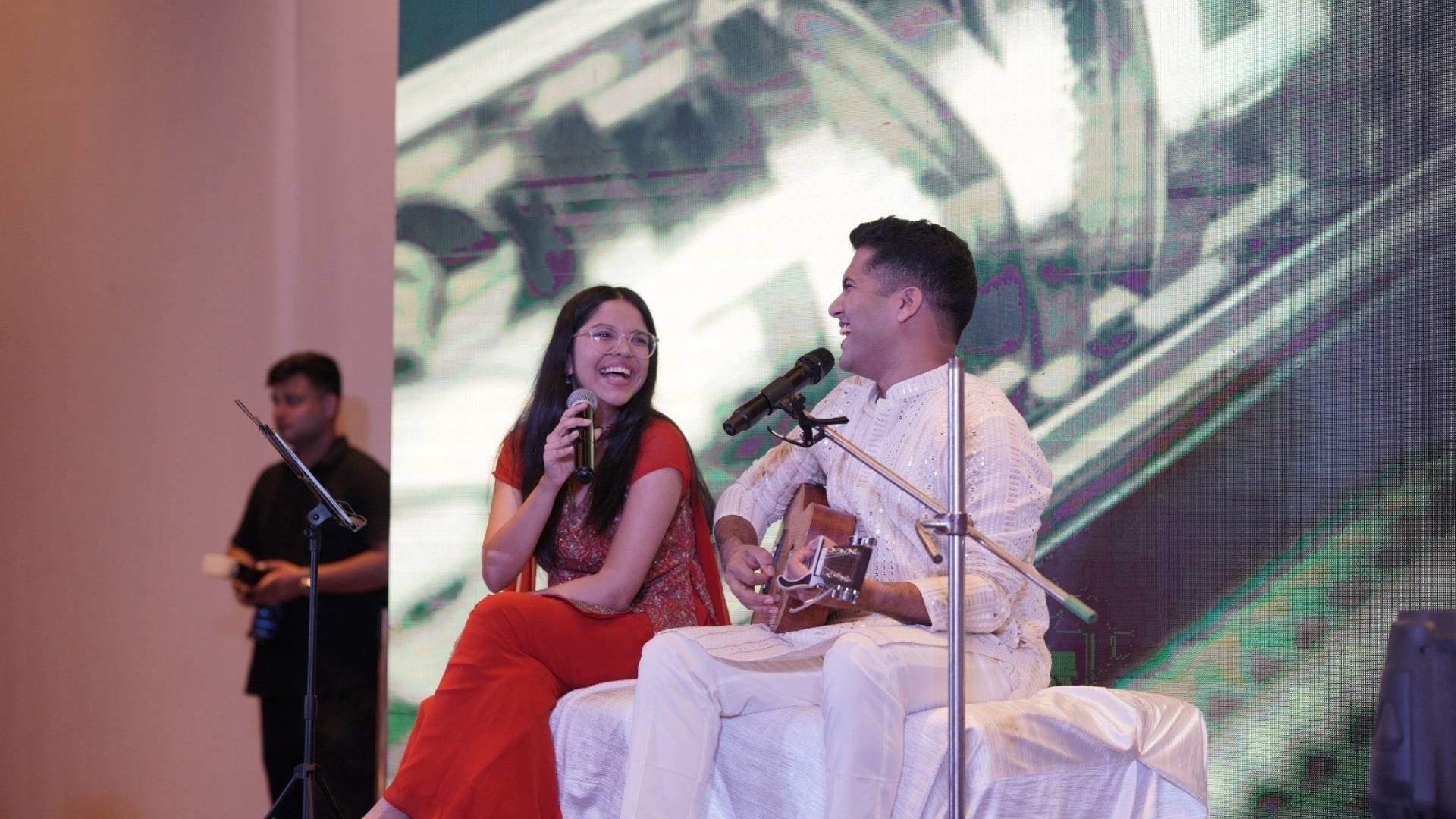
People are finally letting go of old stereotypes about bhajan sandhyas and realising that anything bringing them peace, even a bhajan, is worth embracing, say Prachi & Raghav.
Why Gen Z is choosing devotion over drinks
Several forces are converging to drive bhajan clubbing as a trend:
Wellness first lifestyles: Mental health awareness has shifted night-out choices. A spiritually charged environment feels gentler—and more meaningful—than traditional clubbing.
Cultural reclamation: Young Indians are embracing heritage without the heaviness of convention. Bhajans feel familiar yet fresh when wrapped in contemporary soundscapes.
Community and belonging: Group chanting releases a natural emotional high. In a lonely digital age, this
collective experience is magnetic.
The social media effect: Clips of saffron-lit rooms echoing with voices are wildly shareable. The aesthetic is soothing, nostalgic, and novel, perfect for Gen Z.
Prachi and Raghav explain, “In today’s world, everyone is busy, caught up in work, gadgets, and a hundred other things. Everyone is looking for an escape. We wanted to offer people a different kind of high, minus the alcohol. A high that comes from music, from bhajans, from sitting together for an hour and feeling those vibrations in your body. That feeling is stronger than any substance, and in these tough times, this is the escape we want people to experience.”
With cafés in Gujarat hosting weekly bhajan concerts and artists planning multi-city India tours, the movement is quietly becoming part of mainstream urban culture. Dr. Mayur Sejpal, psychologist, notes, “It’s the best example youth cafés have set across India.”
A hospitality trend in the making
India’s religious and spiritual market was valued at $58.5 billion in 2024, with Bhajan Clubbing as a new segment. There is a significant shift towards 'clean' partying and cultural reconnection, supported by social media buzz and platforms listing over 100 events. Driven by the search for meaning and community, the bhajan clubbing movement is definitely drawing large crowds. Backstage Siblings are planning a full-fledged all-India Bhajan Jamming Tour starting January 2026, covering 6-10 major metros with 2,500-3,000 people per show.
The opportunities are wide open—from culture to commerce. And hospitality players are taking notice. Imagine hotels' programming mantra raves as wellness events, lounges hosting sober spiritual club nights, destination retreats built around devotional nightlife, and corporate off-sites with evening kirtan concerts. For a generation redefining what it means to unwind, this might just be the next long-term hospitality movement. And if the rising crowds, ticketed shows, and chai-fuelled midnight chants are any indication, the saffron glow is only getting brighter.
Is the hospitality industry listening?