
















Tea-Laden Hills and Lure of the Wild
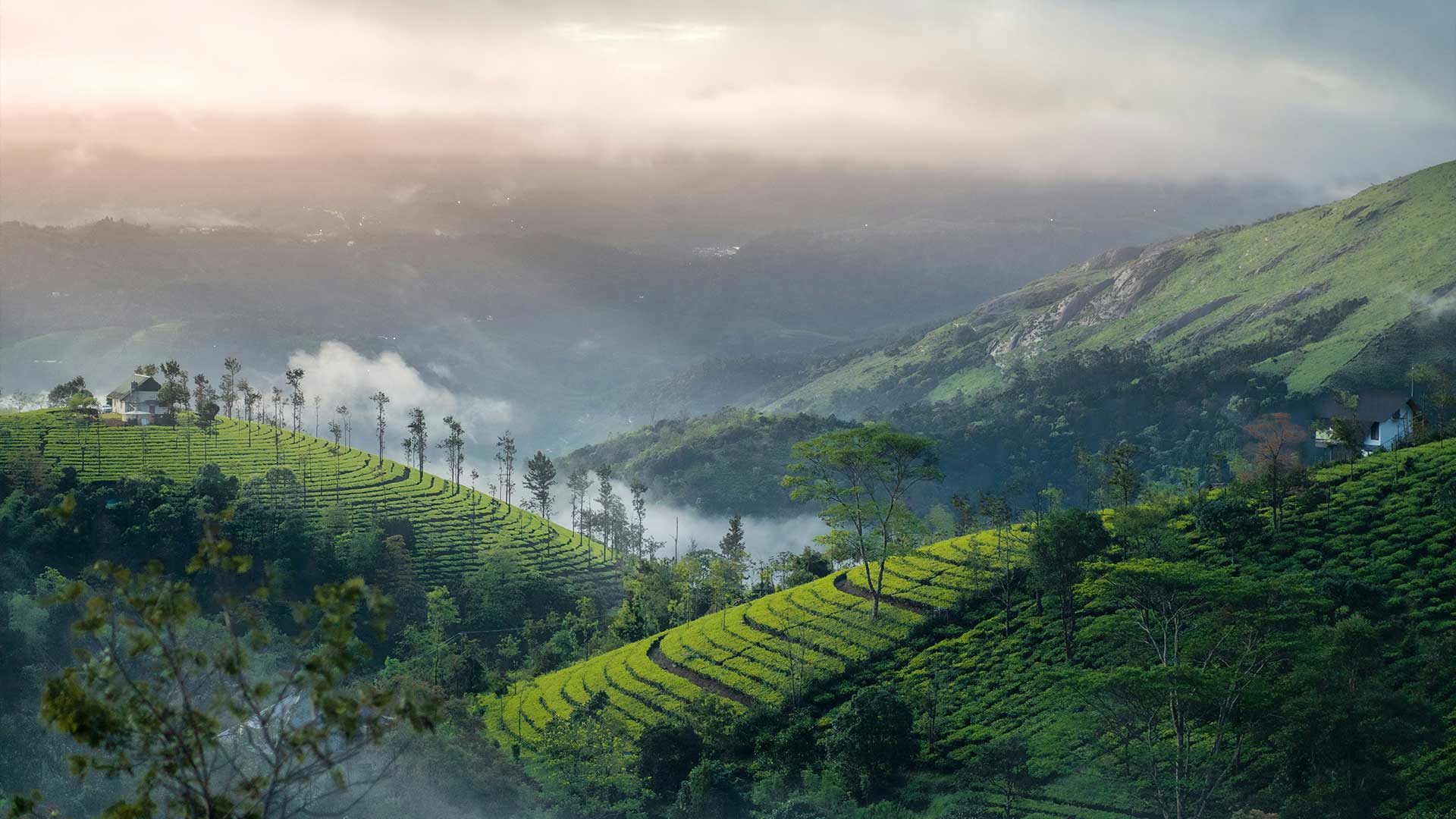
Jorhat, with its sprawling tea estates, gibbon-inhabited rainforests, and colonial-era allure, has quietly become India’s most searched-for destination.

By Deepali Nandwani
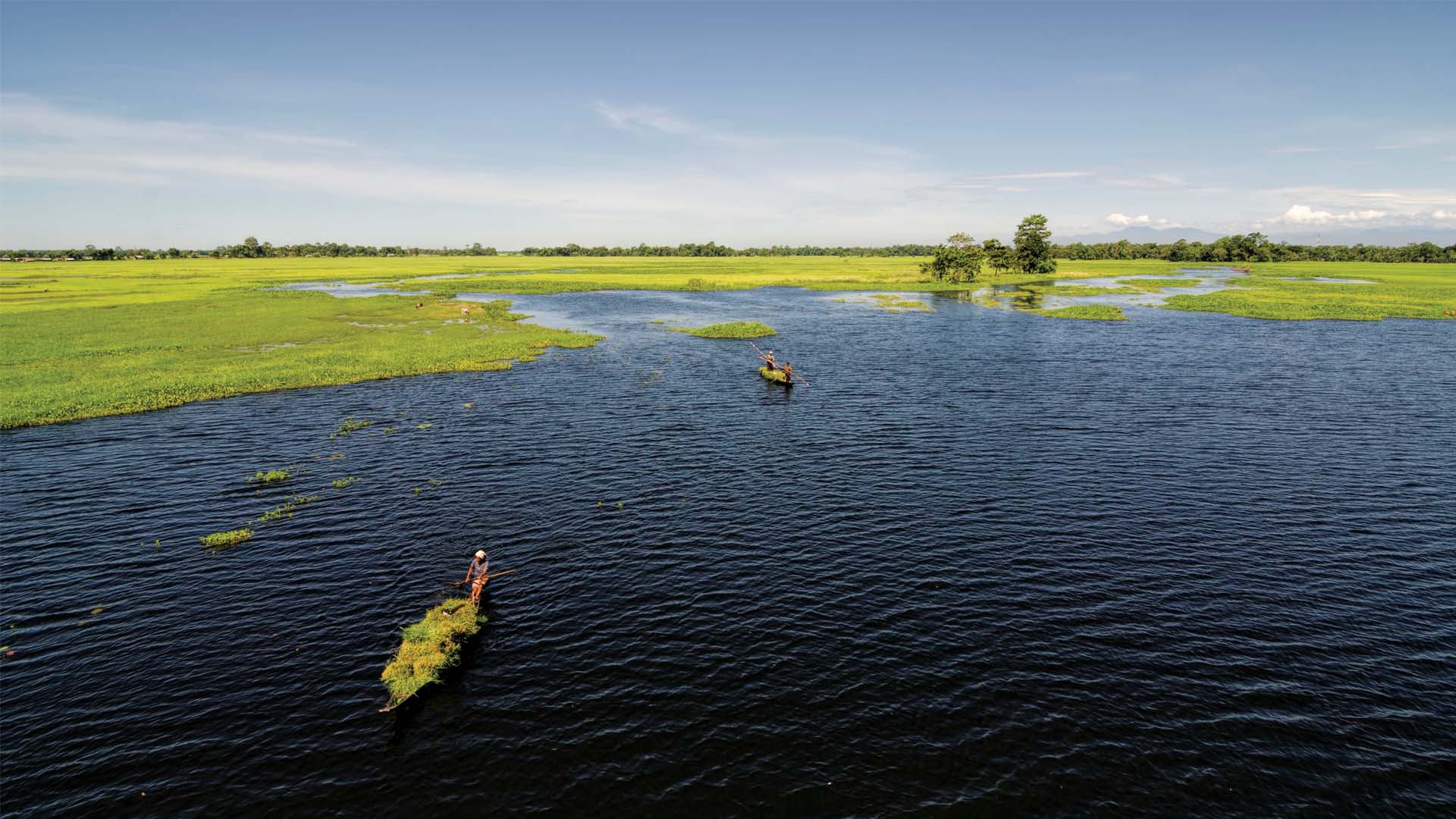
Some destinations make themselves known instantly. Others, like Jorhat, reveal their stories slowly. On the surface, it appears to be a gentle, self-contained Assamese town framed by tea gardens and the wide arc of the Brahmaputra. But look closer and you discover a destination where heritage, science, craft, and wilderness intersect in unexpectedly graceful ways.
Jorhat, often called Assam’s tea capital, is drawing new attention. The city recently topped Skyscanner’s list of most-searched destinations by Indian travellers, even surpassing Phuket and Berlin. Skyscanner’s data reveals a shift: travellers are seeking less obvious places, motivated by affordability, cultural richness, and authentic local experiences.
Travel to Jorhat and you will know why Indians, ferreting out experiential, offbeat destinations, are travelling beyond their comfort zone to a destination located 300 kms. east of the state capital Dispu. It is a destination that grows on you—through the measured quiet of monasteries on the river island of Majuli, and the distinctive whooping calls of gibbons echoing through the ancient Hoollongapar Gibbon Wildlife Sanctuary, announcing the day. To watch a gibbon family swing effortlessly between trees is to witness a rare, fragile world that has carved out a space for itself amidst tea and human habitation.
A town rooted in memory
Jorhat’s colonial and tea-era legacy lingers in quiet corners—in the historic Gymkhana Club, in markets lined with local produce, in eateries serving fish cooked with herbs and mustard, and in families who continue to preserve Assamese culinary traditions.
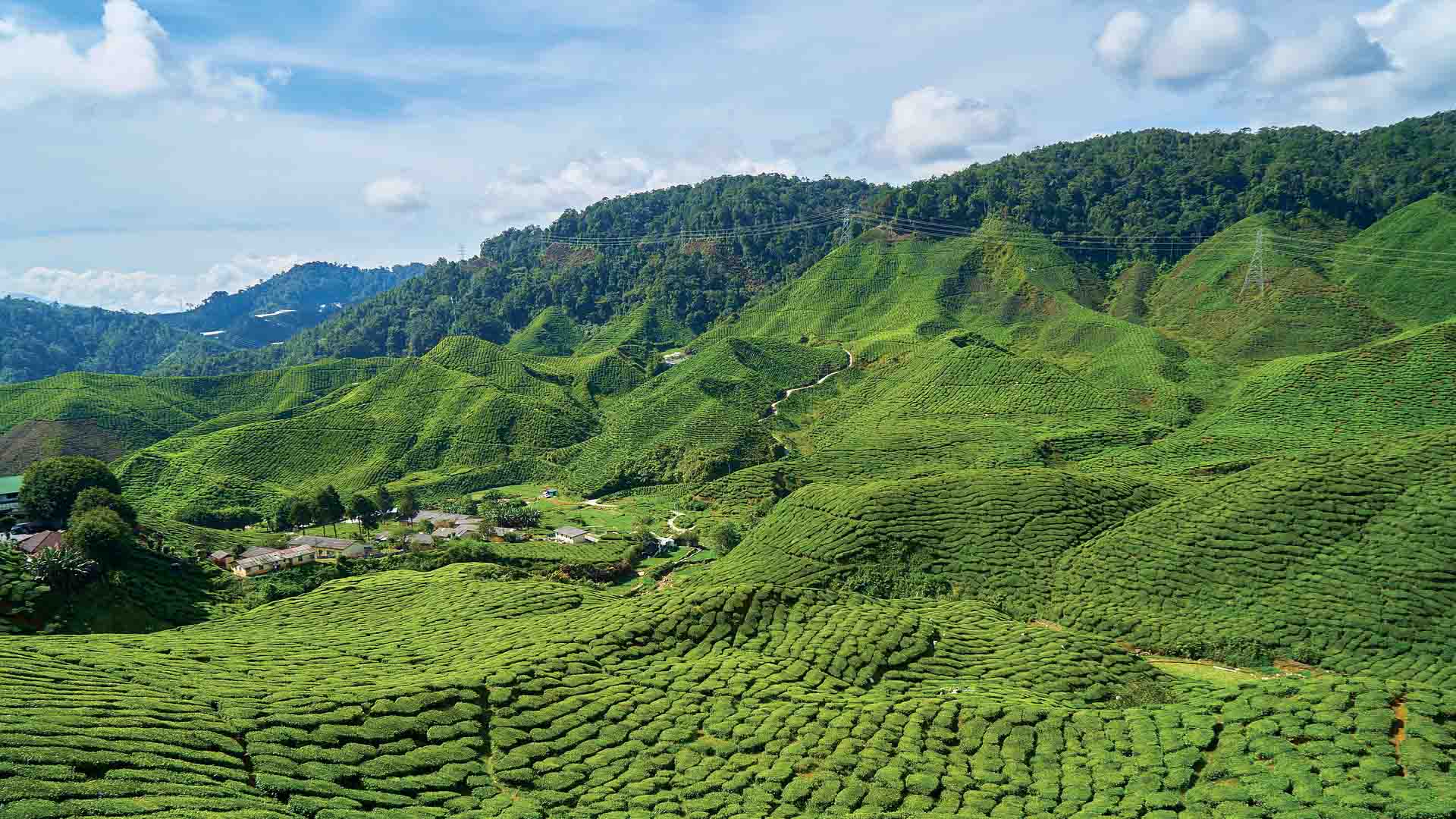
Wild tea plants in Jorhat were discovered by the British in 1823 when Robert Bruce, a Scottish arms trader and mercenary operating in the northeast, met Bisa Gam, a Singpho tribal chief. He collected samples, hoping to set up a plantation, but unfortunately, died soon after. His brother, Charles Alexander Bruce, played a stellar role after him in cultivating tea in Assam and setting up the state’s commercial tea industry. Cinnamora Tea Estate, one of the largest estates in Jorhat, was established in 1850 by Maniram Dewan, recognised as Assam’s first Indian tea planter.
The heritage left behind by India’s colonial rulers is woven into the history of Assam’s tea estates. Yet the town is also evolving. Small cafés, regional cuisine, homestays, weaving collectives, and cultural initiatives are slowly reshaping how travellers engage with the region.
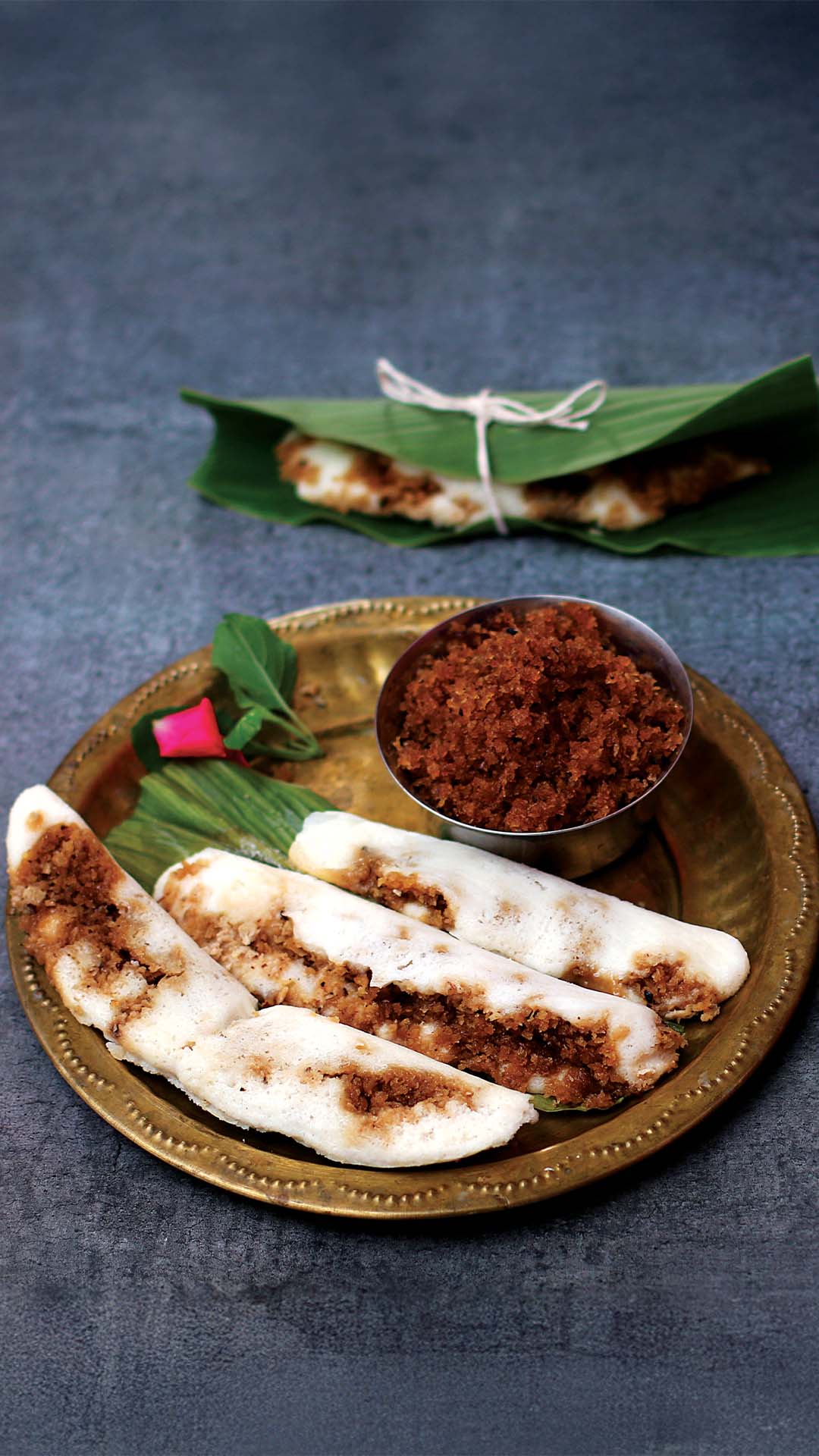
Food remains central to the experience. Assamese cooking, with its emphasis on fresh herbs, subtle flavours and seasonal ingredients, is both comforting and distinctive. Pithas, smoked meats, a variety of greens, dishes enriched with bamboo shoot, and, of course, endless cups of single-estate tea define the culinary landscape. Increasingly, boutique stays and chefs are experimenting with tea pairings, offering visitors a more nuanced understanding of the region’s produce.
There is also something discreetly luxurious about Jorhat, though not in the conventional sense. The luxury here comes from space, silence and heritage. From moments when the Brahmaputra catches the evening light, from conversations with a tea taster at Tocklai Tea Research Institute, and from the music drifting out of a satra (Vaishnavite monastic institution) at dusk.
For travellers who seek stories rooted in the destination, Jorhat narrates a tale of the British era, India’s obsession with tea, and an island that is slowly sinking.
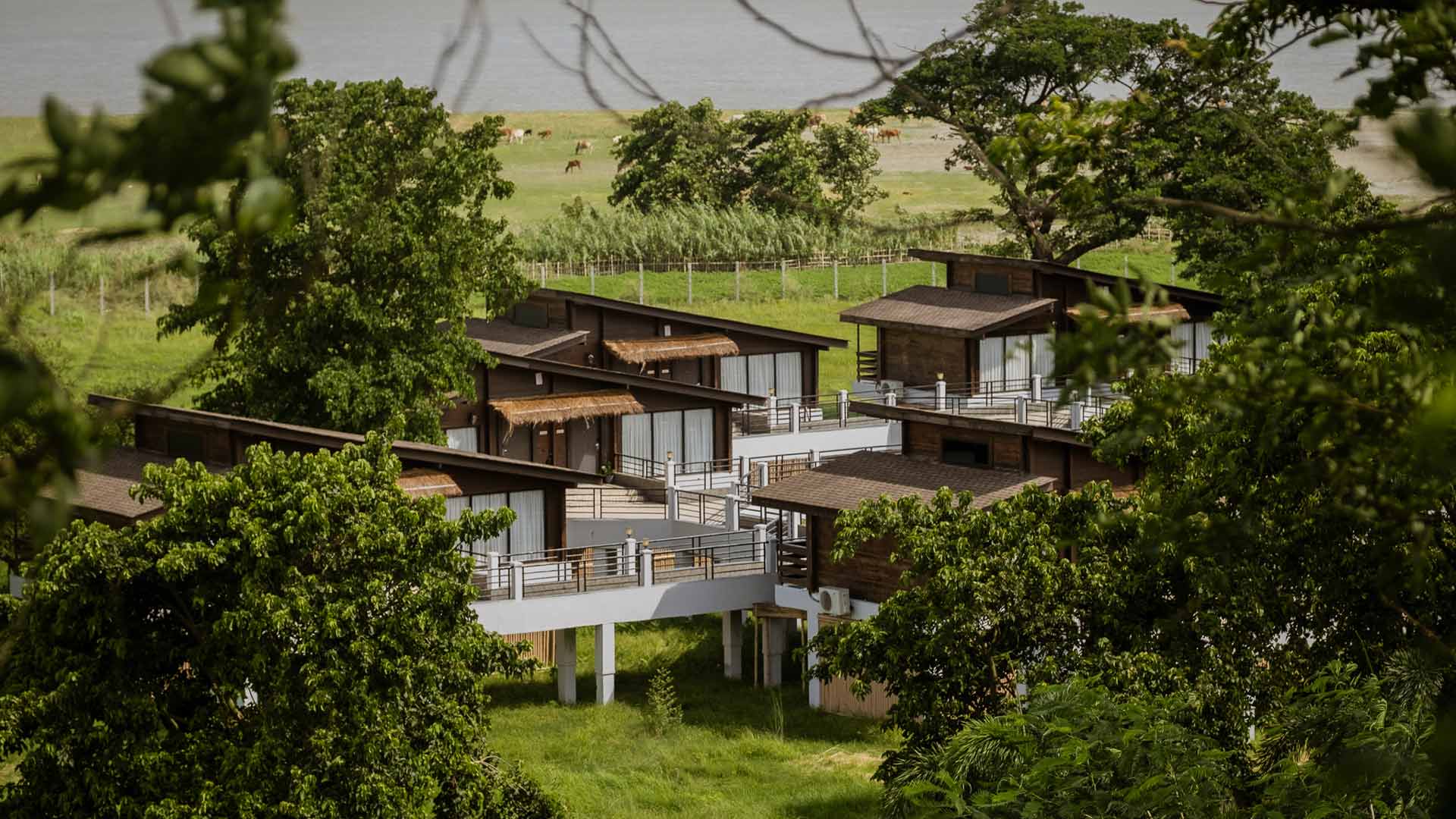
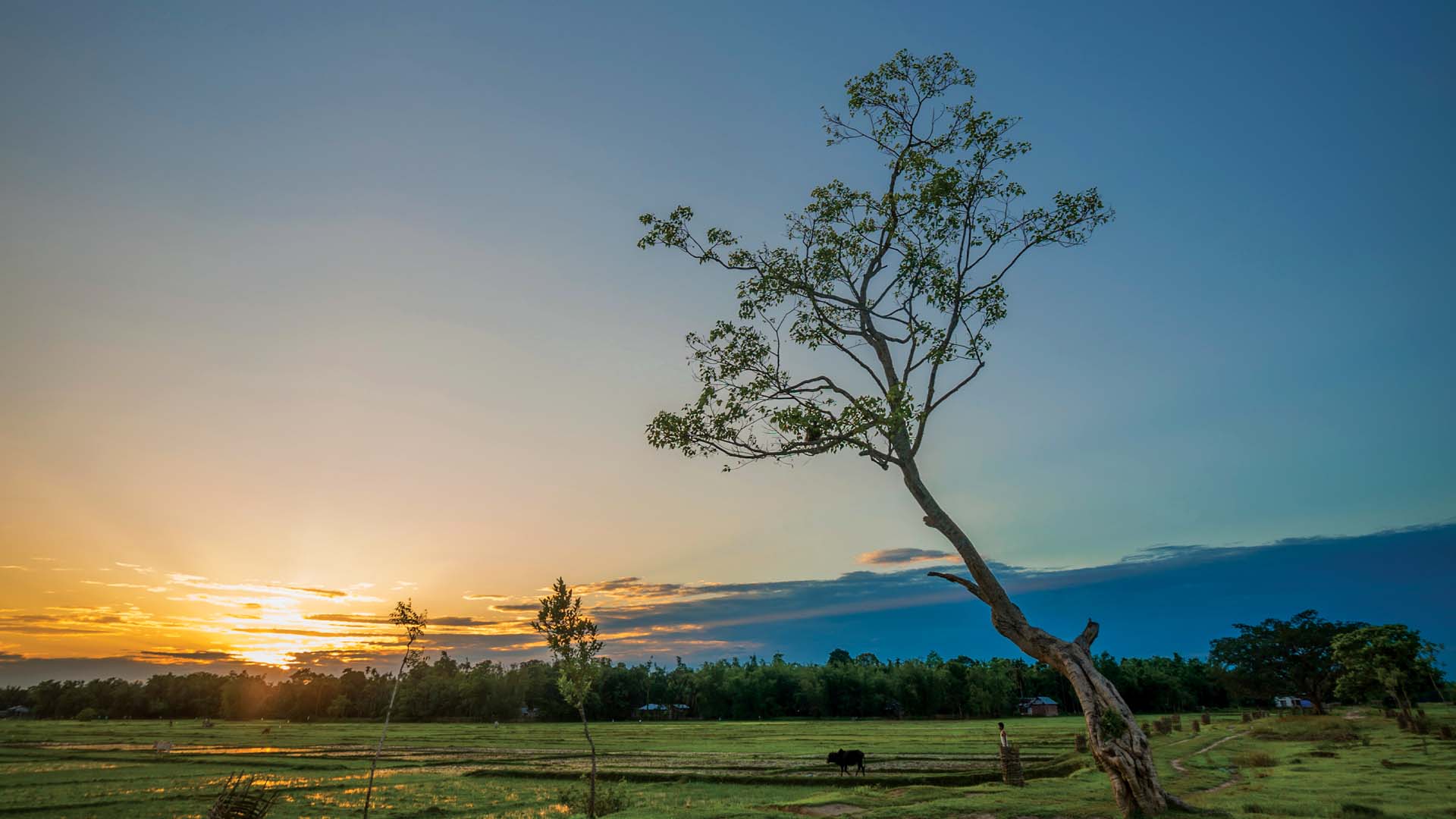
Low-lying plains and light forest cover shape Jorhat’s landscape.

In many Assamese households, weaving is still practised at home.
Where to stay
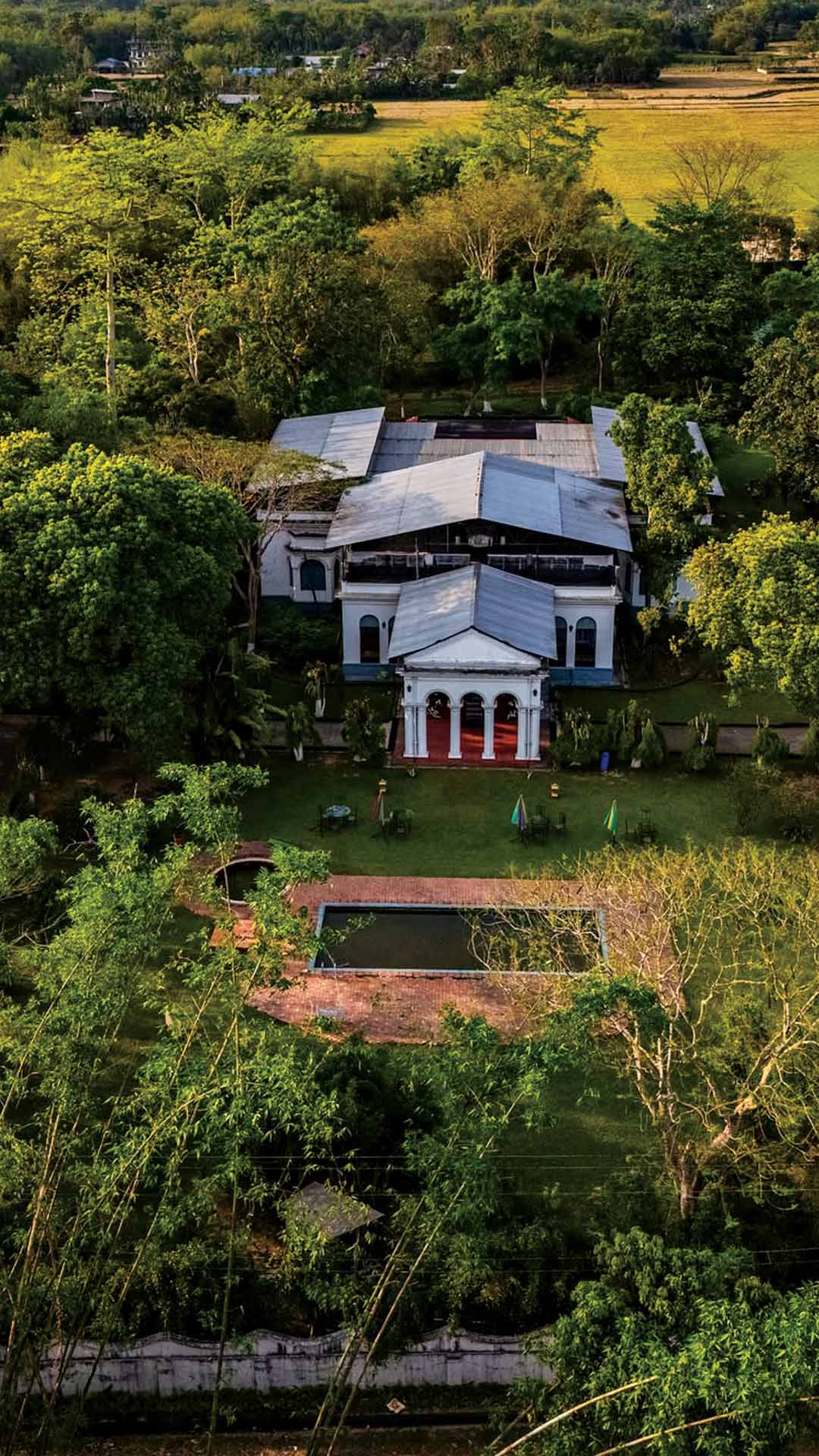
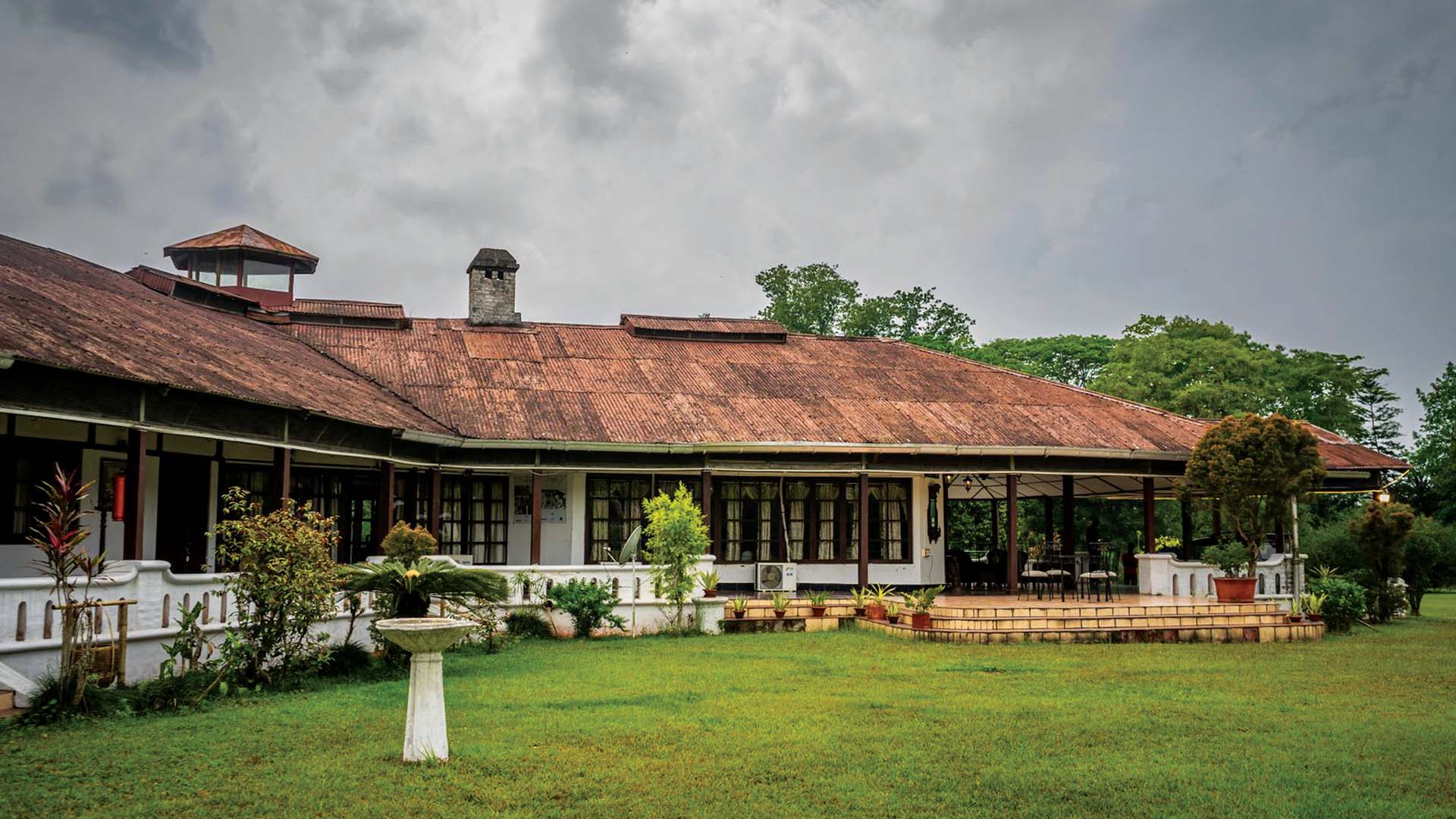
Thengal Manor, a colonial-era planter’s mansion (1929), is now a heritage stay where travellers can experience how Assamese planters continue to live a life steeped in the rituals and traditions of 18th-century colonial India.
Banyan Grove at Gatoonga Tea Estate is a century-old colonial bungalow right in a tea estate, with views of sprawling estate grounds where women can be seen plucking leaves while singing songs drawn from the local culture.
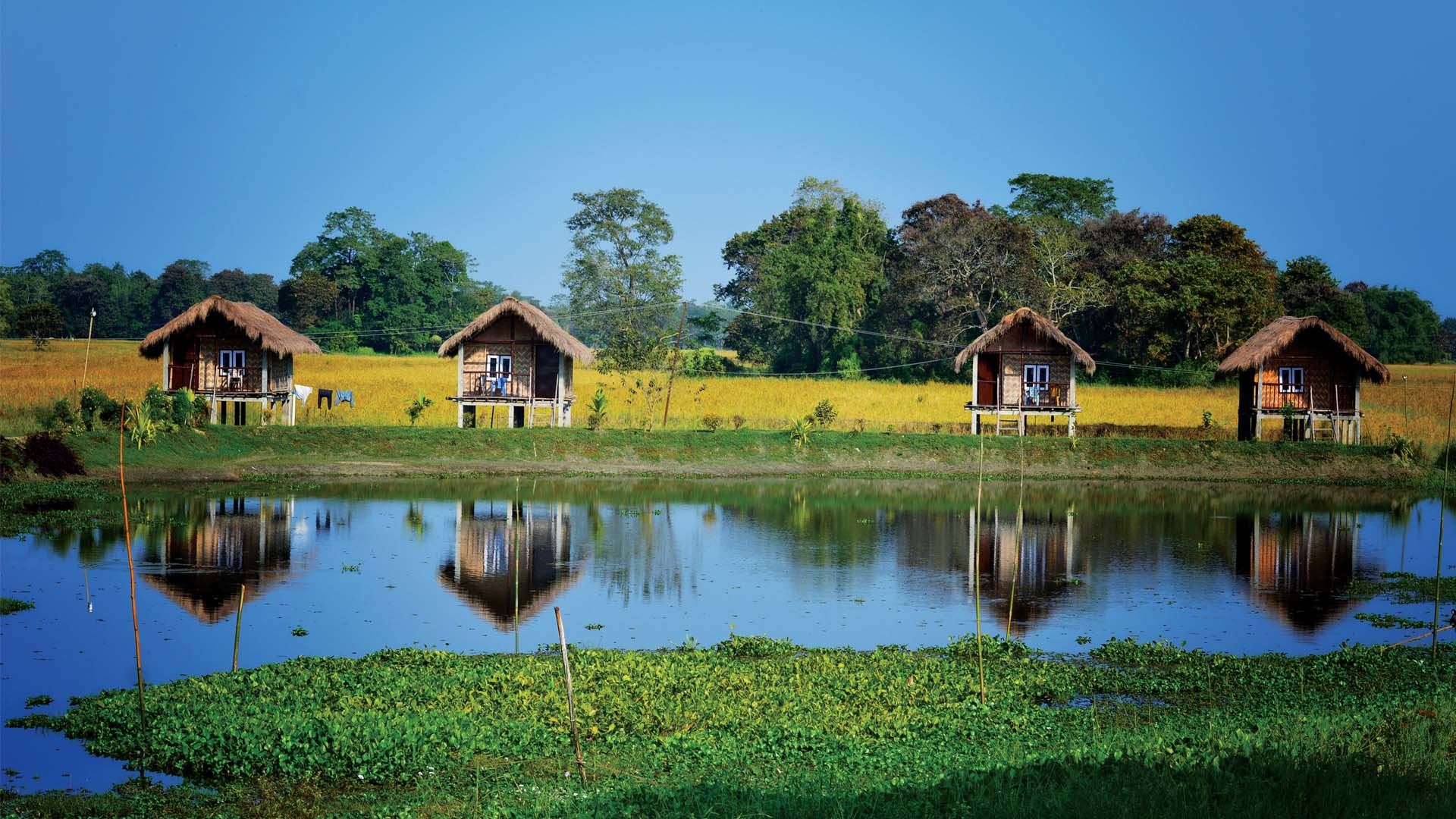
The region is dotted with heritage tea bungalows that have now been transformed into exclusive stays for travellers. Blending vintage architecture, old-world charm, and modern comforts, the Jorhat tea bungalows are more than just accommodation—you will experience Assam’s colonial connection, Assamese culture, sip freshly
brewed tea, and enjoy the serene countryside that defines the region.