



















Destination: The Airport Terminal
Quiet zones, secure check-in, ‘boarding bites’, global retail and dining options, AI-aided navigation, a range of entertainment options, massages—Indian airports are upping the game to offer better airport experiences.


By Suman Tarafdar
As you step past the security check in at Delhi airport’s newly refurbished T1, you would be forgiven for thinking you had stepped into an upscale mall. Or at Bengaluru's Kempegowda International Airport T2, you could excuse yourself for thinking you had absentmindedly strayed into a forest—or a really fancy food court. Its concept of ‘a terminal in a garden’ catapults it into the few new-age airport terminals category in the country, complete with enviable green credentials. India’s airports are upscaling, and how.
For long, Indian travellers to Singapore have budgeted extra time for Changi. Repeatedly voted the world’s best airport in recent years, Changi with its butterfly garden, cinema halls, waterfalls, gardens galore, numerous activity/ nap time areas, a plethora of lounges and, of course, world class retail, and quite often, free shopping vouchers for those transiting through the airport, is the benchmark airports around the world seek to emulate.
Indian airports have not quite had the same reputation in the past. Perhaps even now. Notably however, the airport experience for Indian traveller is improving fast as operators realise that not just passengers want better services, there is a considerable pot of gold for those getting it right. Skytrax, a UK-based consultancy that runs an airline and airport review website, has rated five Indian airports in its list of 100 best world airports: Delhi (at 32); Bengaluru (at 48); Hyderabad (at 56); Mumbai (at 73) and MOPA Goa (at 80), indicating the transformation of Indian airports from drab to glamorous.


The Boom in India’s Travel Industry
India’s relatively faster growth at the moment is getting reflected in airport spends, though this is limited to the top few airports, chiefly serving India’s metros. According to AX24: The Age of the Airport Experience 2024 report by Airport Dimensions, India will spend approximately 980 billion rupees ($12 billion) between 2023-2025 on airports, in order to ease the pressures that ever-growing demand is putting on existing infrastructure. By 2025, there will be 220 airports in the country—up from 148 at the start of 2023.
The report also indicates that Indian travellers expect 16% growth in travel frequency over the next 12 months, compared to a global average of 8%. That means that of those surveyed for AX24, each Indian traveller is predicted to make an average of 6.5 trips in the year ahead. This growth is being driven by increased expectations on business travel, which is growing at 22% in India versus a global average of 11%, and increased international travel of 35% against the global average of 16%. India mirrors the wider global trend for travel frequency being driven primarily by millennials and Gen Z travellers.
"As one might expect from the fastest-growing aviation market in the world, the Indian travel sector is redefining modern travellers' expectations for airport experiences,” says Errol McGlothan, President, EMEA & APAC, Airport Dimensions. “These evolving expectations and behaviours will significantly influence the global airport landscape."
While most of India’s airports are still operated by the Airports Authority of India (AAI), the pace of private airports, both greenfield and through stake sales, has increased. The government may be planning to sell half a dozen loss-making airports by the end of the financial year 2025-26, the third privatisation round for airports. Currently, the largest operators are Adani Airports (Mumbai, Jaipur, Lucknow, Ahmedabad, Thiruvananthapuram, Mangaluru and Guwahati) and GMR (Delhi, Hyderabad and MOPA, Goa).
Both players have been continuously upgrading their facilities for enhanced passenger experiences. Delhi airport, for example, uses facial recognition technology, 20 Automated Tray Retrieval Systems (ATRS), and 108 Common Usage Self-Service (CUSS) kiosks offering passengers self-service options for check-in and baggage drop. A 360-degree virtual navigation map is available to help passengers navigate through the airport. Similarly, Mumbai’s T2 uses CUSS kiosks, facial recognition technology, has a Pranaam Meet & Greet service, and a ‘Desk of Goodness’, which utilises AI-based video analytics to provide enhanced passenger assistance. Passengers can order meals and drinks to be delivered to their gate.

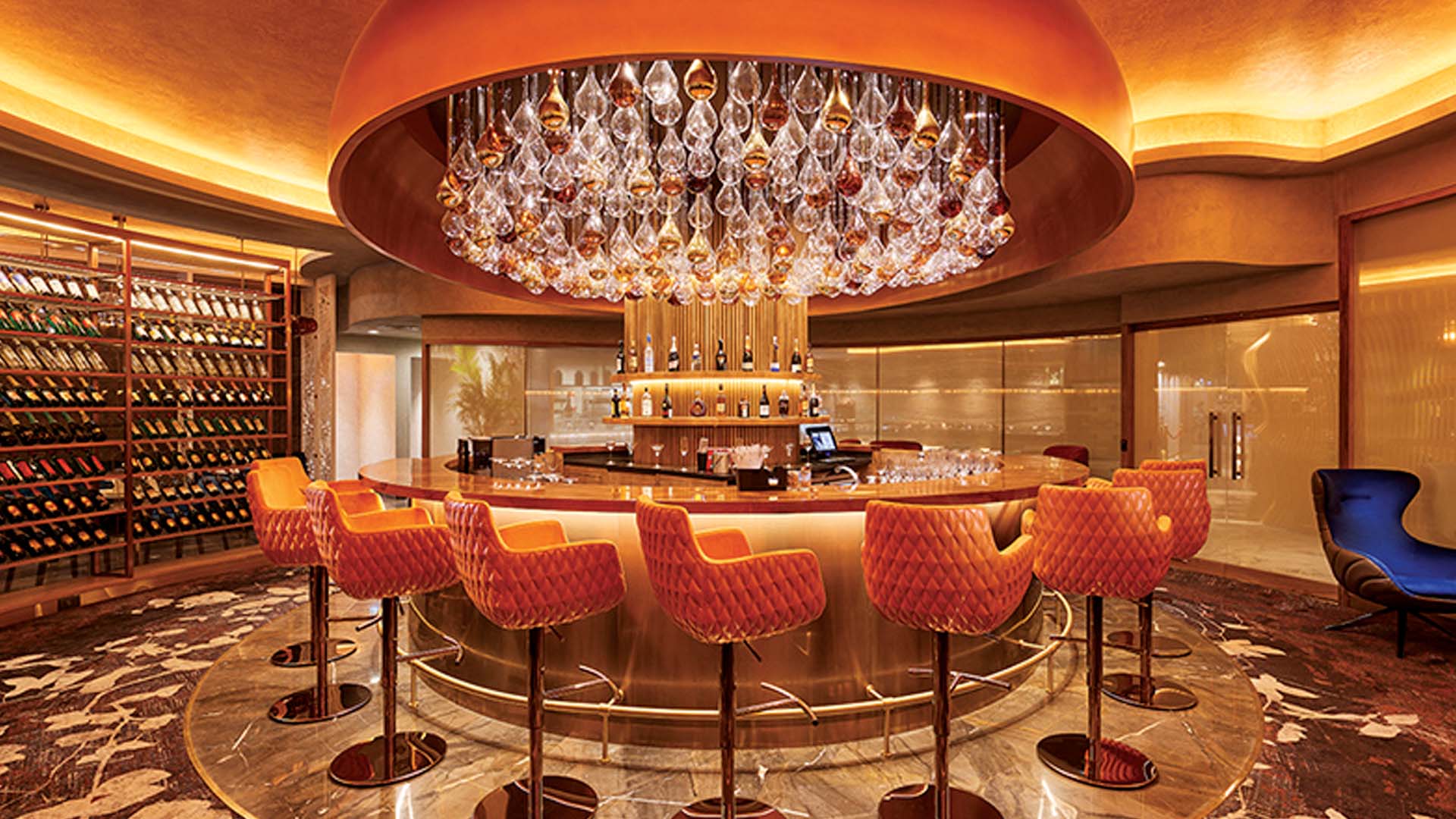
Wellness options, such as the Encalm Spa, have rapidly risen as India’s leading options.
Where are Indian passengers spending?
Retail therapy is big, even at airports. The report indicates that Indian travellers show interest in traditional airport retail, more so than their global counterparts. This enthusiasm is likely fuelled by the recent surge in new, modern airport infrastructure boasting a wider variety of shops and brands.
However, again, this is true only for India’s biggest airports. Even a cursory glance at new airport terminals at fairly large cities such as Jaipur or Pune show a lack of enthusiasm for airport retail and dining—though probably reflecting the quality of services available.
The retail experience at selected Indian airports has evolved significantly, transforming airports from mere transit hubs into vibrant retail and lifestyle destinations. Below is a detailed overview based on available information:
Indian airports have become key retail hubs due to increasing air passenger traffic, infrastructure upgrades, and a growing consumer base with higher disposable incomes. The airport retail market is projected to grow from $1.4 billion in 2019 to $9.3 billion by 2030, with duty-free retail expected to reach $2 billion. Real estate opportunity for Indian airport operators is projected to be $1.6 billion (about ₹11,350 crore) by 2030, global property consultancy Knight Frank said in its report on transit retail. "The total opportunity for airport retail will be approximately $9.3 billion by 2030, up from the estimated market size of $1.4 billion in 2019," it said. Duty-free retail, which is about 50 per cent of the total retail opportunity at $0.7 billion currently, is expected to grow to $2 billion during this period, it stated.
According to Knight Frank's research, Delhi airport earns close to $10-11 duty-free revenue per passenger, while Mumbai earns a duty-free revenue in the range $9-10 per passenger and Bengaluru airport stands in the range of $5-6 per passenger.
The share of non-aeronautical revenue for Delhi, Mumbai and Bengaluru airport for 2019 financial year stood at 70%, 54% and 49%, respectively, the report said. For the airports managed by the Airports Authority of India, the share of non-aeronautical revenue stood at 13 per cent. "Today non-aeronautical revenue has become a very vital component to measure an airport's health and success. The rise in the number of global travel passengers and the changing demographics are bringing a paradigm shift in how retail and food and beverage offerings are viewed at an airport," Knight Frank India Chairman and Managing Director Shishir Baijal said.
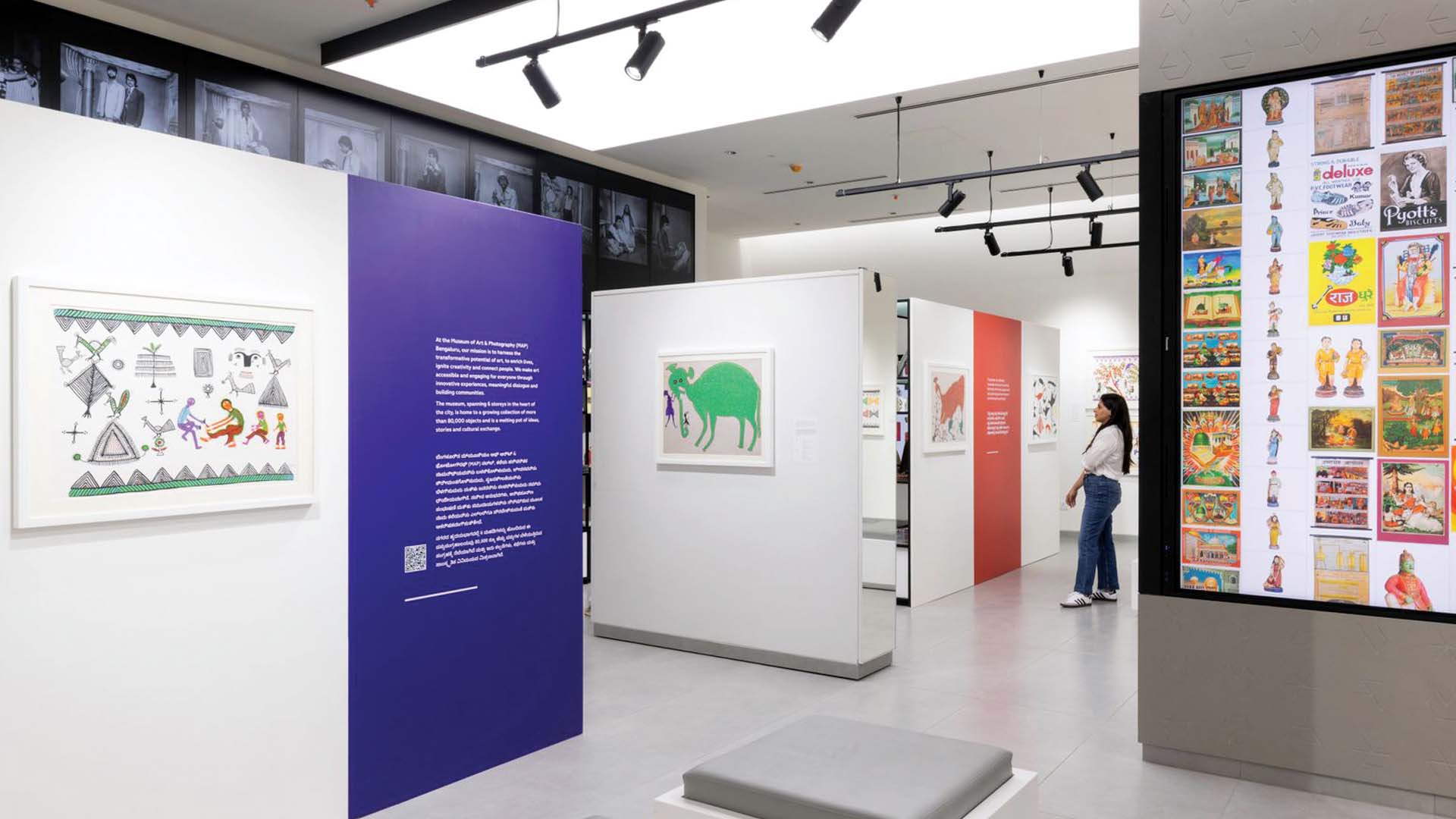
Brands like Marks & Spencer, Mango, Lacoste, Tommy Hilfiger, Hidesign, Da Milano, Samsonite, Fossil, Forest Essentials, Tanishq, Amrapali Jewels, and Swarovski are found in most large Indian airports. Unique offerings include the Johnnie Walker outlet at Mumbai’s T2, the only one at an Indian airport, and experiences like the Flight for Fantasy simulator. Bengaluru Airport features a rotating art gallery and sensory rooms for neurodivergent passengers. Delhi even boasts a Chanel airport store, opened in 2025, the first luxury brand to open in an Indian airport. Over 300 million passengers travelled through Indian airports in FY 2017-18, growing at 16.5% year-on-year, creating a captive audience with time to shop.
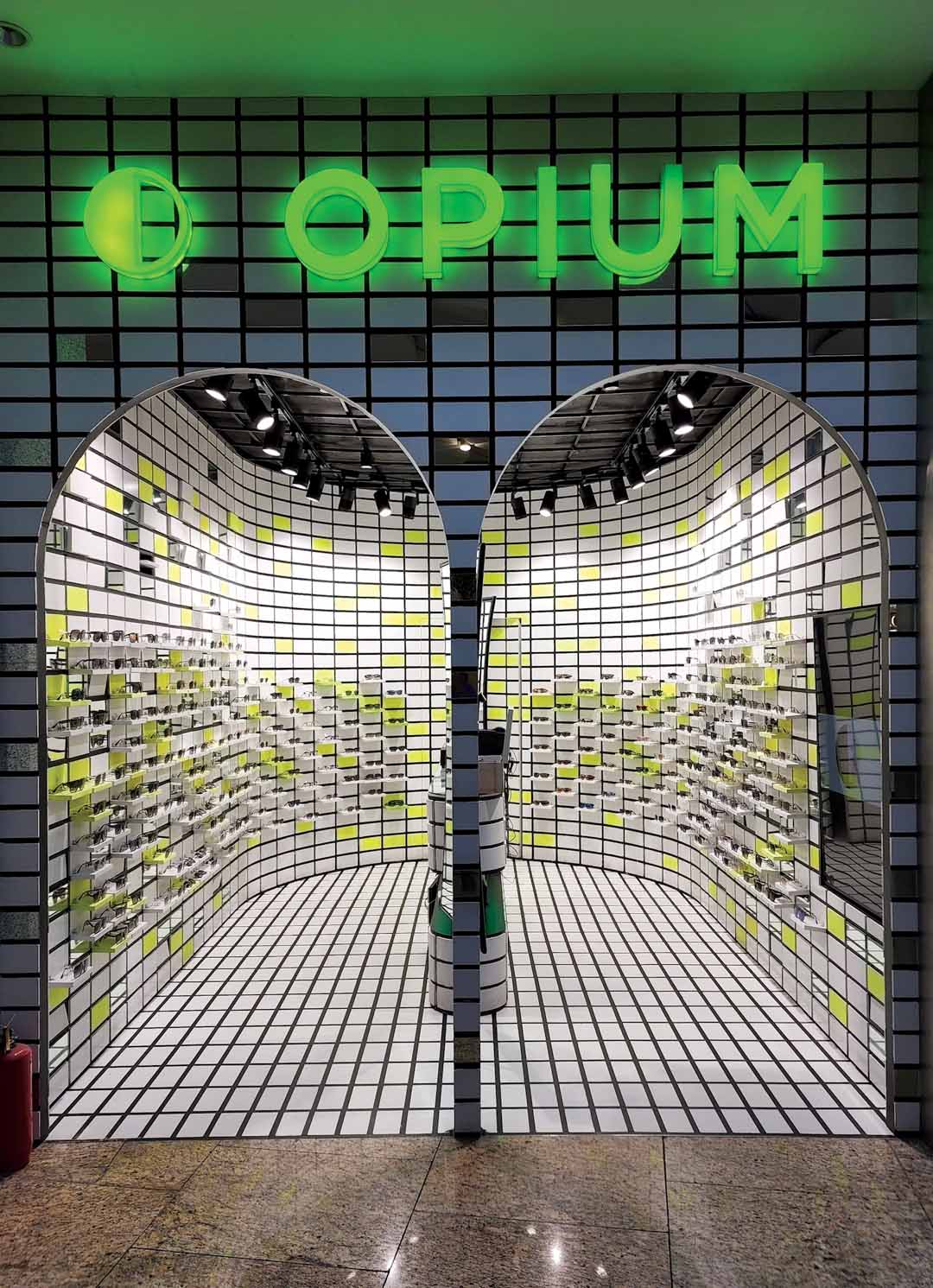
The eye-catching Opium store at CSMIA, Mumbai.
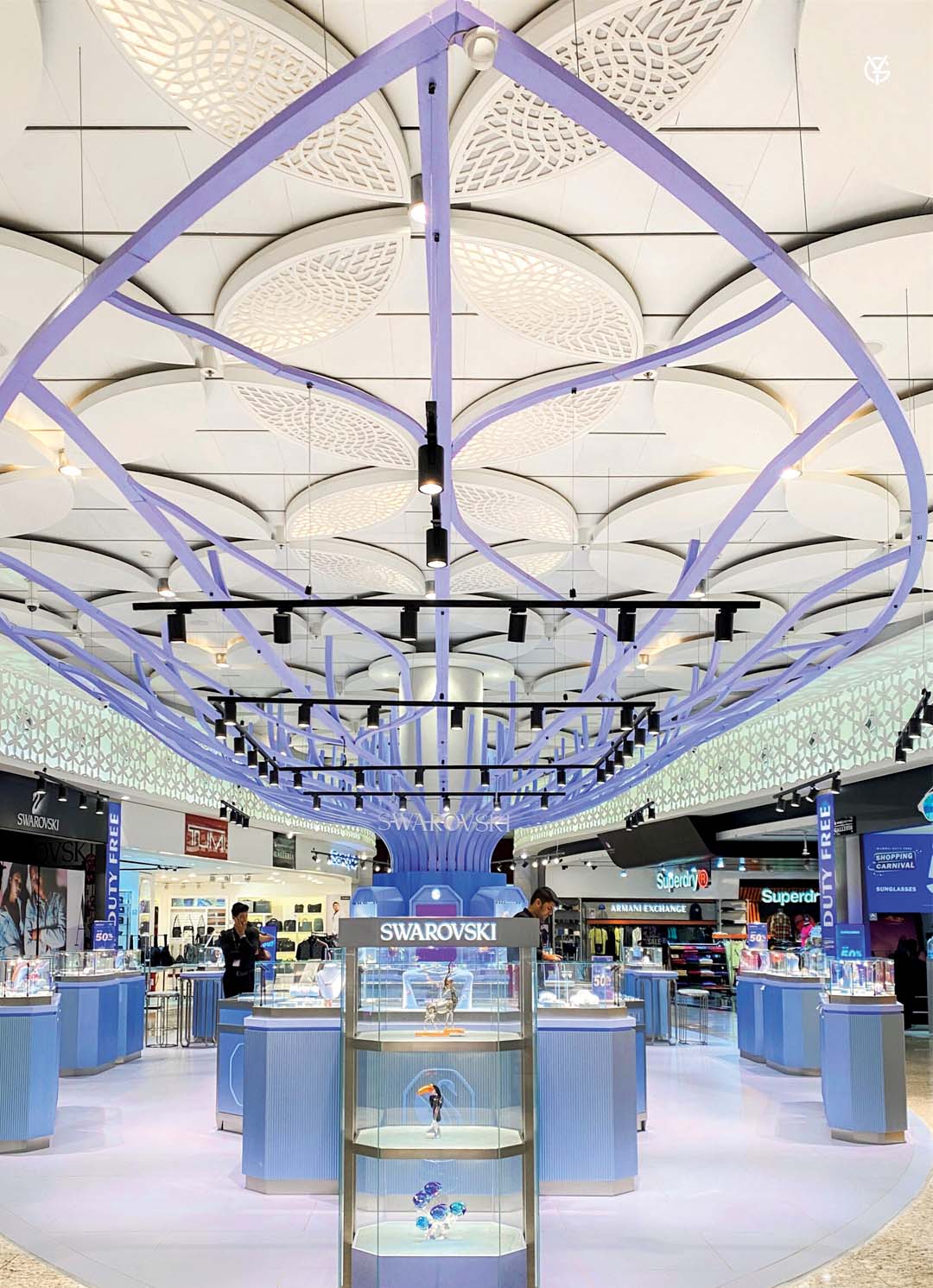
Retail is one of the fastest growing category at Indian airports, attracting even luxury brands, like the Chanel store at the New Delhi airport.
Lounges: From luxury to Necessity
When the amenities are available, Indian travellers are some of the most enthusiastic global lounge users, with three-quarters (76%) suggesting that they use airport lounges, compared to 50% worldwide, reveals the AX24 report. 84% Indian travellers believe that more lounge access options would significantly enhance their airport experience.
Increased lounge access options can also be instrumental in helping to manage passenger flow and addressing overcrowding at the lounge check-in counters.
For a frequent flyer, the greatest tool to have at airports is Priority Pass, a programme that provides members access to airport lounges around the world. Collinson International, owner of Priority Pass, reported a 56% increase in visits to airport lounges and travel experiences by Indian travellers in Asia Pacific during the first half of 2024 compared to the same period in 2023. Even more significantly, Priority Pass lounges and travel experiences have seen a considerable increase in popularity among domestic travellers.
Encalm has emerged as a leading player in this transformation, offering a full suite of premium services designed to enhance every stage of the journey:
- Atithya provides a seamless meet-and-assist experience—from check-in to luggage handling, buggy transfers, porter services, and more.
- Encalm Lounges are equipped with high-speed Wi-Fi, live food counters, and plush seating, offering a refined space for business and leisure travellers alike.
- Encalm Privé, their flagship lounge for high-value and business-class passengers, brings together spa and gym access, nap pods, a gaming zone, and family-friendly play areas.
- Encalm Spa delivers rejuvenating treatments and massages—ideal for layovers or pre-flight relaxation.
- Transit by Encalm, available in Delhi and Hyderabad, offers in-terminal accommodation with rooms, spa services, and 24/7 dining for transit passengers and short-stay travellers.
This emphasis on personalisation, wellness, and hospitality-driven design signals how Indian airports—and their service partners—are reimagining what a terminal can offer.
“At Encalm, we are transforming the airport from a transit point into a luxurious, experience-led destination,” says Vikas Sharma, CEO, Encalm Hospitality. “Our lounges are designed for comfort and sophistication—offering gourmet cuisine, wellness amenities, and refined interiors that set a new benchmark for indulgence in travel. There is a tremendous opportunity in the growing Indian aviation sector, which is witnessing a sharp rise in passenger expectations. Travellers today are seeking not just convenience, but experiential, wellness-driven, and personalised services. This shift is opening new avenues for us to innovate across lounges, technology, and ancillary services—always with excellence as our guiding principle.”
Sharma admits there are challenges too. “Growth in airport environments does come with its challenges—particularly in ensuring uniform service standards across multiple locations, each with their own logistical, cultural, and infrastructural nuances.”
However, he is confident about the future. “We are at an exciting juncture in our journey, and our expansion strategy is focused on growing both horizontally and vertically—geographically, across services, and through the creation of a 360-degree hospitality ecosystem,” points out Sharma. “Domestically, we are deepening our presence in high-growth metros and Tier II cities, working closely with airport authorities to design experiences that resonate with evolving passenger expectations—while staying true to Encalm’s premium and consistent brand identity.”
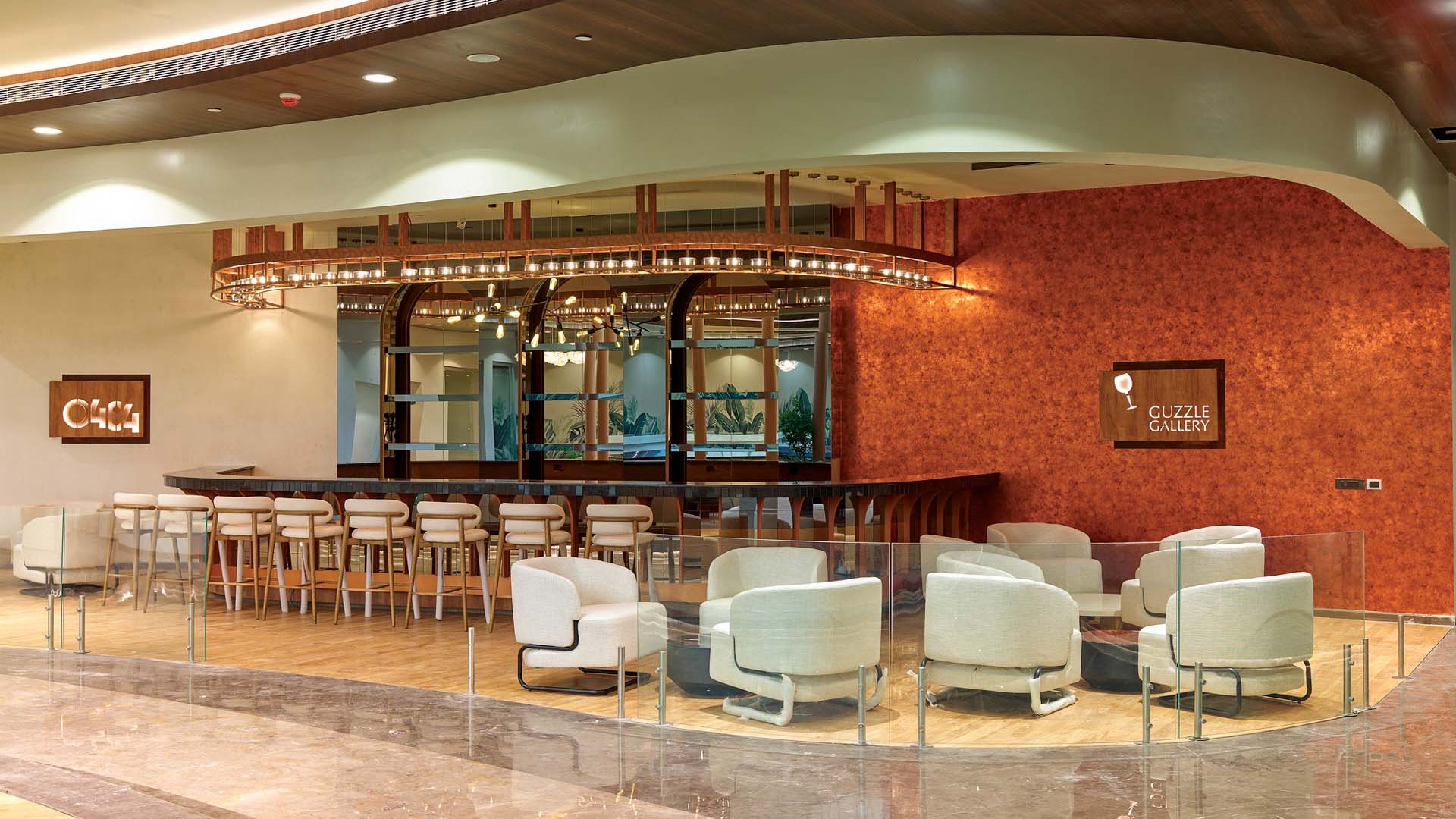
The 0484 Aero Lounge bar area, Guzzle Gallery, at Cochin International Airport.

The sensory room is a thoughtfully designed space tailored for neurodivergent passengers.
Scent as Strategy
A significant role in enhancing any indoor experience is, of course, via the sense of smell. Mumbai-based Aéromé specialises in premium ambient scenting solutions for various industries, including airports. As Rishi Chhabria, Founder, Aéromé, puts it, “Airports are no longer just transitional zones. These are places where memories are made, stories begin, and impressions last. At Aéromé, we don’t just design fragrances. We design experiences, emotions and moments that stays with you for a lifetime and travel with you. The moment a passenger steps into an airport, their journey begins—not just in terms of transit, but in terms of emotional experience. From the smell of freshly brewed coffee to the calming scent of a clean terminal, olfactory cues work in the background, often unnoticed, yet deeply influential.”
Chhabria points out that as passengers spend time within the airport; the fragrance continues to work subtly in the background. Without changing, the composition gradually allows the heart notes to become more noticeable—creating a sense of calm, stillness, and familiarity. In terminals filled with constant announcements and visual noise, a soothing olfactory layer can bring a sense of grounding. For modern travellers—especially those navigating complex global itineraries—this calm becomes essential. “At Aéromé, we tailor these heart notes to reflect not just universal comfort but also the unique cultural soul of each airport. Whether it's a floral tone reminiscent of the region’s native blooms or a spice note rooted in its culinary heritage, the heart of the fragrance reflects the identity of the destination.” A relaxing atmosphere for passengers directly leads to greater propensity to browse through the retail section or dine at one of the outlets—augmenting airport operator revenues.
Designing a fragrance for an airport is not a one-size-fits-all exercise but a fine balance of art and science—requiring a nuanced understanding of spatial dynamics, human psychology, air circulation, and cultural sensitivity. Aéromé, which is currently in several Adani and GMR airports, collaborates closely with airport planners, architects, and brand custodians to craft olfactory identities that are both functional and emotionally resonant. Of course, the aromas may differ. A beachside airport may carry tropical citrus and coconut notes that instantly set the tone for a vacation. A metropolitan hub may choose crisp citrus and aromatic herbs to signal modernity, precision, and efficiency.

A 'Wishing Tree' installation at the Seven Sisters Tea Room in the international lounge at Bengaluru.
Gourmet to Food Courts
Yes, easily the most sought-after destinations at an airport are the dining options, even if they are only to rest the luggage and get free wifi. Aligned to a global trend towards the importance of food and beverage (F&B), Indian travellers say that the F&B offering is the most important factor when deciding to purchase lounge access, even more important than their wait time at the airport, according to AX24.
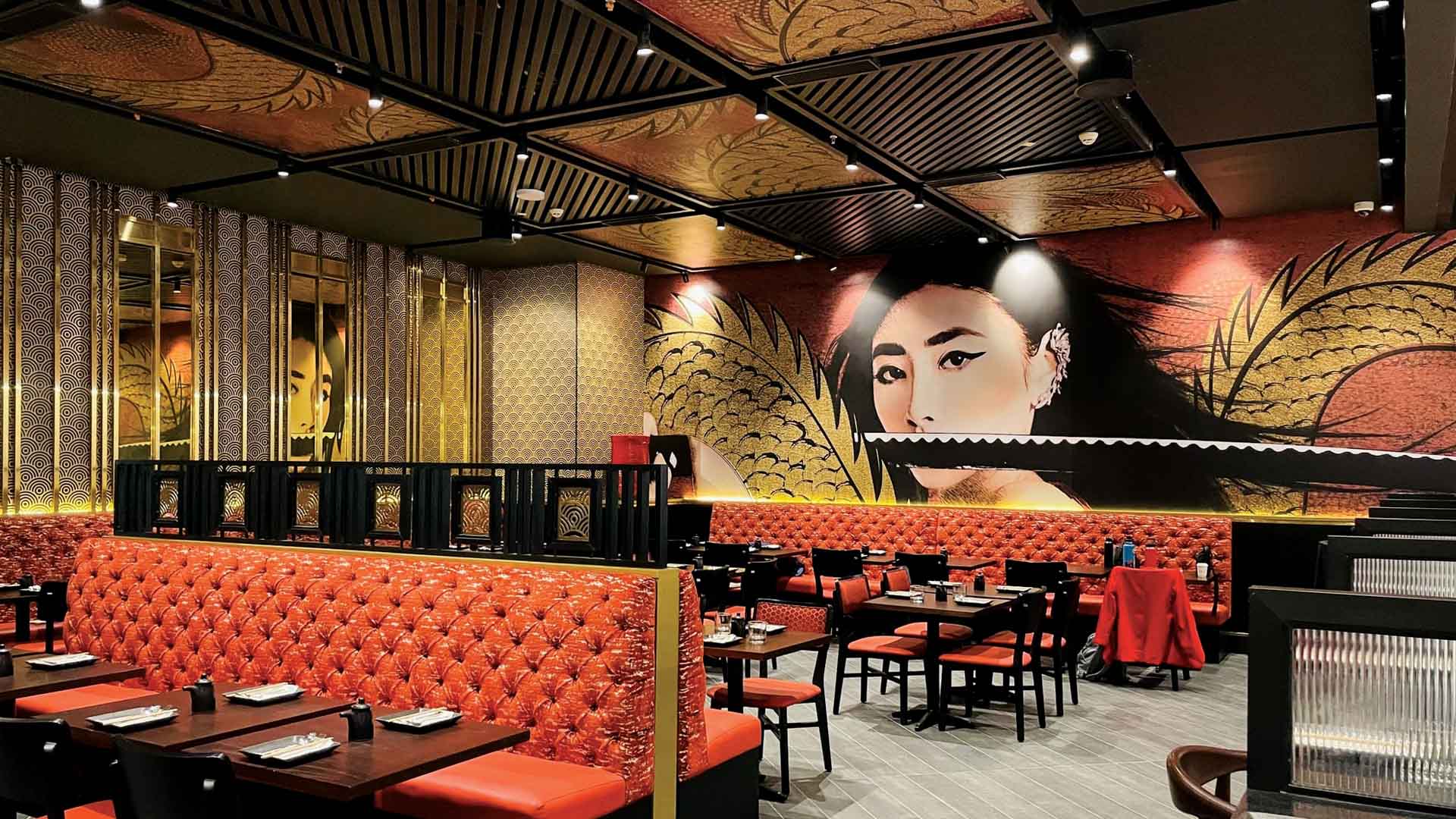
While dining options are available at most airports, world-class food options are only at a select few. Terminal 2 at Kempegowda International Airport in Bengaluru perhaps shows the way. Among its dining options are international names such as Wolfgang Puck Kitchen + Bar, PF Chang's, Hard Rock Cafe, Maiyas, Johnny Rockets, Giraffe, Gully Kitchen, Starbucks, Costa, Brioche Dorée, The Quad and more.
While Mumbai’s T2 and Delhi's T3, India’s busiest airport terminals, have been vast improvements over what they replaced, few reviewers, especially on social media, have been kind in their assessments of the available choices. Travel Food Services (TFS), arguably the largest airport food services operator with over 30 lounges and 350-plus QSRs, and present at both airports, has been making changes, though they are yet to compare favourably with international airports that Indians are increasingly frequenting. TFS, which already has Subway, Burger King and Krispy Kreme amongst others, is looking to bring in brands such as Wagamama to India’s airports soon.
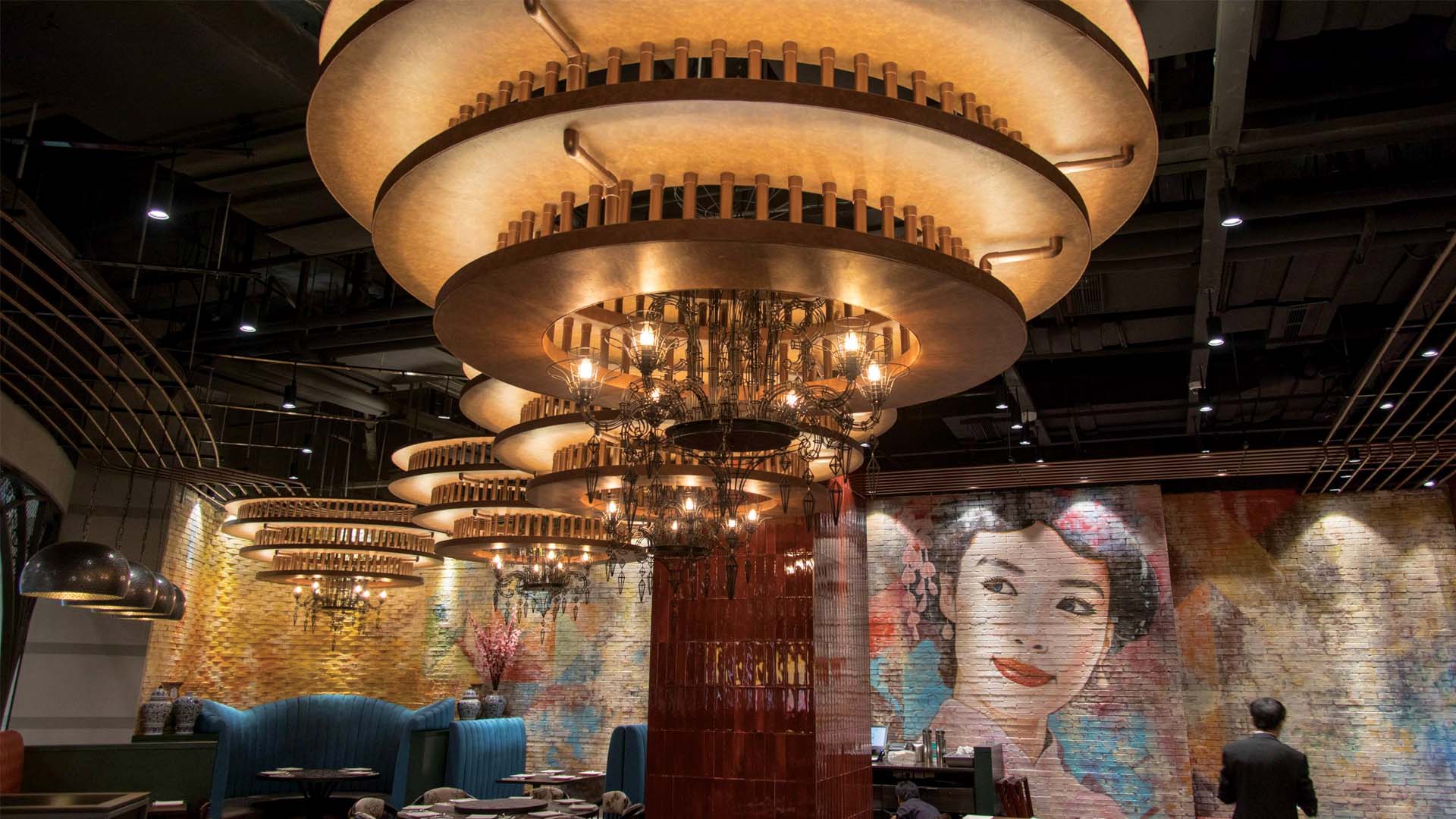
Kempegowda International Airport's T2 features world-class dining options such as PF Chang's. Seen here is its Shanghai outlet.
Indulgence Breaks
Studies indicate Indians travellers over-index on desire for wellness and grooming and gaming services versus the global average, showing a keen appetite for unique ways to elevate their time at the airport, according to AX24.
The presence of spa and wellness facilities at airports is becoming a key factor in improving the overall passenger experience, say Megha Dinesh and Prashant Jain, Co-Founders, Meghavi Wellness. “Air travel can be stressful due to long queues, delays, and crowded terminals. Wellness services such as massages, relaxation rooms, and meditation zones offer travellers a way to unwind, reduce anxiety, and feel more comfortable during their journey.”
In India, the demand for airport spa services is growing steadily, points out Dinesh. “This increase is attributed to a surge in premium travellers and the proliferation of credit card programmes offering complimentary lounge and spa access. The Indian spa market itself is experiencing significant growth, with its value reaching $2.02 billion in 2024 and projected to expand at a CAGR of 9.67% to $4.63 billion by 2033."
All three outlets of Meghavi Wellness Spa located within the Mumbai T2 International Airport will now feature cutting-edge wellness amenities for customers, setting a new benchmark in the industry. Each outlet will be equipped with Zero Gravity Chairs, Normatec Boots Leg Revivers, and Sleep Vibroacoustic Beds, offering travellers a unique and rejuvenating experience.
This initiative marks a first in India by any wellness organisation, showcasing commitment to innovation, customer well-being, and elevating the standard of wellness services in travel environments.

Gordon Ramsay and TFS have plans to launch six outlets at Indian airports.
Loyalty, the Ultimate Test
Indian travellers rely less on their airline, e.g. class of travel and Frequent Flyer Programme (FFP) status, for lounge access, and instead use either network programs such as Priority Pass, or simply pay for access as they need it. Lounge benefits are provided through banks/credit cards. With lower levels of FFP participation, 35% in India, versus a global average of 51%, they are seeking rewards, recognition and benefits from alternative sources, and like the flexibility of travel benefits, such as lounge access, that are not tied to a particular airline. Thus, opening up greater opportunities for airports to influence travellers’ loyalty. This is a trend that will likely be mirrored around the world over time as lounge propositions and access options continue to evolve.
Mastercard’s new Airport Experiences provides cardholders with access to preflight and post-flight benefits seamlessly. Cardholders enjoy immediate access to a range of travel benefits, including baggage assistance with priority check-in on select domestic routes, and one-time access to over 53 domestic and international lounges across India.
As India has set itself a target of rapid growth in the number of airports, there are corresponding opportunities for airport service providers. According to the Mastercard Economics Institute’s Travel Trends 2024 report, travel is democratising rapidly in India, bolstered by the robust growth of the economy and a growing middle class with an appetite for travel. Nearly 20 million more people are expected to join the middle class over the next five years, and with the aspirational value airport travel holds, the outlook for India’s travel industry is decidedly bright. Just about every airport operator can look forward to a bounty from the Indian traveller, provided they ensure value. Whether an Indian airport will break into the ranks of the world’s top 10 remains to be seen, but the trajectory is promising—and passengers are increasingly making the most of what’s already available.
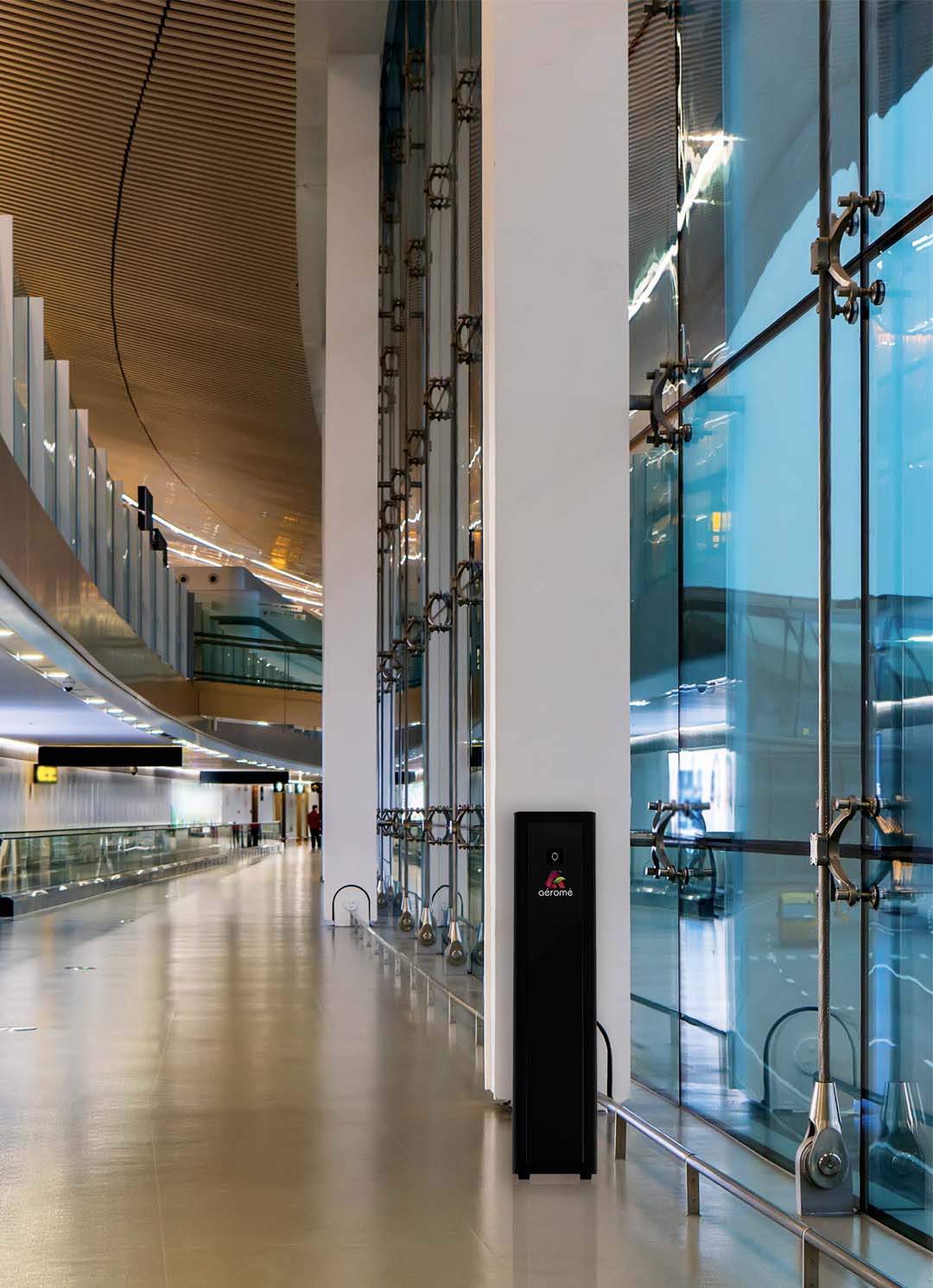
Aéromé designs its fragrances to reflect not just universal comfort but also the unique cultural soul of each airport.
Ease of passage, securely
- One of the more notable innovations at Indian airports is the Digi Yatra service, which is now operational at 24 airports across the country. It is redefining the future of air travel in India by making journeys more seamless, efficient, and secure. Leveraging facial authentication technology, the platform enables a paperless, contactless experience where a passenger’s face becomes a single token of identity.
- “This innovation significantly enhances traveller convenience by eliminating the need to wait in long queues at multiple checkpoints,” points out Suresh Khadakbhavi, CEO, Digi Yatra Foundation. “Passengers can swiftly pass through airport gates without repeatedly showing ID proofs or boarding passes, ensuring a smoother and faster airport journey.”
- Digi Yatra has revolutionised passenger movement through terminals, enabling travellers to clear key checkpoints in just five seconds using facial biometrics as a single-token identity. Khadakbhavi points out that this experience has resonated strongly with travellers, who increasingly value speed, convenience, and minimal physical contact. “Equally important is the platform’s strong commitment to privacy and security. Built on a Self-Sovereign Identity (SSI) framework and following Privacy by Design principles, Digi Yatra ensures that users’ data remains safe, with their personal information deleted by the Airport Verifier within 24 hours of their flight’s scheduled time of departure.”
- Ever since its inception in 2022, Digi Yatra has received an overwhelmingly positive response, reflecting its growing impact on India’s aviation ecosystem. Backed by the Ministry of Civil Aviation and operated by the Digi Yatra Foundation, it has had over 13 million downloads as of May 2025.
- Digi Yatra is poised to enter its next phase of growth, with ambitious plans that align with India’s vision of becoming a global aviation hub. The platform is set to expand internationally by 2025, bringing the same seamless, paperless travel experience to global passengers. Key upcoming features include a real-time support chatbot, guardianship functionality for enrolling and managing travel for dependent minors, and expanded applications beyond airports—such as access control at public venues like stadiums.

Mumbai Airport offers the Pawfect initiative, where therapy dogs are available for passengers to interact with at Terminal 2.