


















A Soft Landing in the Heart of Mumbai’s BKC
Ibis Mumbai BKC, part of next-gen ibis rollouts, is rewriting the rules of budget hospitality—one sweet bed at a time.

By Deepali Nandwani
Six storeys below, the city traffic is a relentless stream of horns
Flashy taillights, and a never-ending wait for the road to clear.
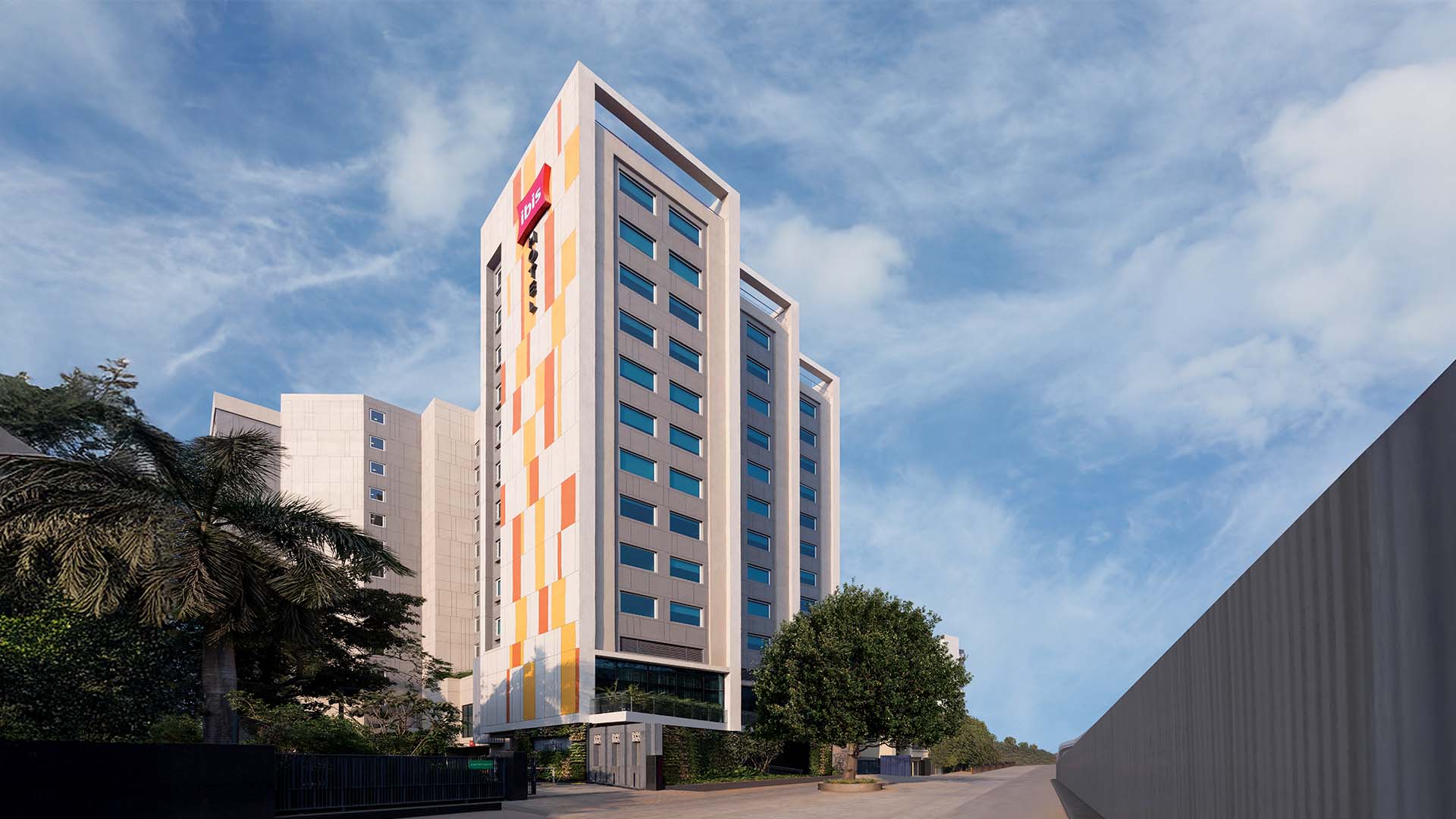
Here, above the street chaos, lying on my 'Sweet Bed' mattress, I hear none of the cacophony, although ibis Mumbai BKC stands on the road next to a highway (I can see the cars moving in an assembly line).
If you are looking at a hotel which is next to all the action, ibis’s newest opening in Mumbai is the perfect bolthole—the offices and business district of BKC, the art, theatre and dining hub at the Nita Ambani Cultural Centre (NMACC), the luxury shopping at Jio World, one of the biggest convention centres in India, not to mention the diners, cafés, and bars that dot this mixed-used neighbourhood, are all at walking distance—if you like to walk that is. BKC’s broad roads afford you the luxury of walking, which is denied to you in most parts of a city that’s home to 16 million people.
It is also within a short driving distance from Lower Parel, another commercial and retail hub in central Mumbai, and a one-hour drive to ‘town’ (the older parts of Colaba, Churchgate, and VT—now known as CST). Set along the bustling LBS Road, right across from 247 Corporate Park, the hotel enjoys a strategic perch with quick access to Powai, Ghatkopar, and Vikhroli. The airport is just a 30-minute drive away, making it a well-placed hub for both business and transit travellers.
ibis isn’t particularly selling ‘serenity’ as one of its strong points. But I believe it should, given the busy axis on which it stands and the sprawling city around it. That you can accomplish a modicum of that on your ibis-trademarked Sweet Bed as the city marches, runs, and drives around you is some sort of an achievement.
For a long time, budget hotels in India—especially those part of global chains—have followed a predictable formula: functional rooms, basic breakfast, and a service model that prized efficiency over personality. Says the general manager Sandip Satange, “ibis Mumbai BKC signals a refreshing shift in how we think about budget stays—one that embraces contemporary design, community connection, and culinary ambition, all while keeping the price point comfortably accessible.”
The hotel is part of Accor’s next-gen ibis rollout, with each property adding its regional touches. At BKC, that means a lively palette, clever use of space, and an overall aesthetic that feels young, vibrant, and urban.
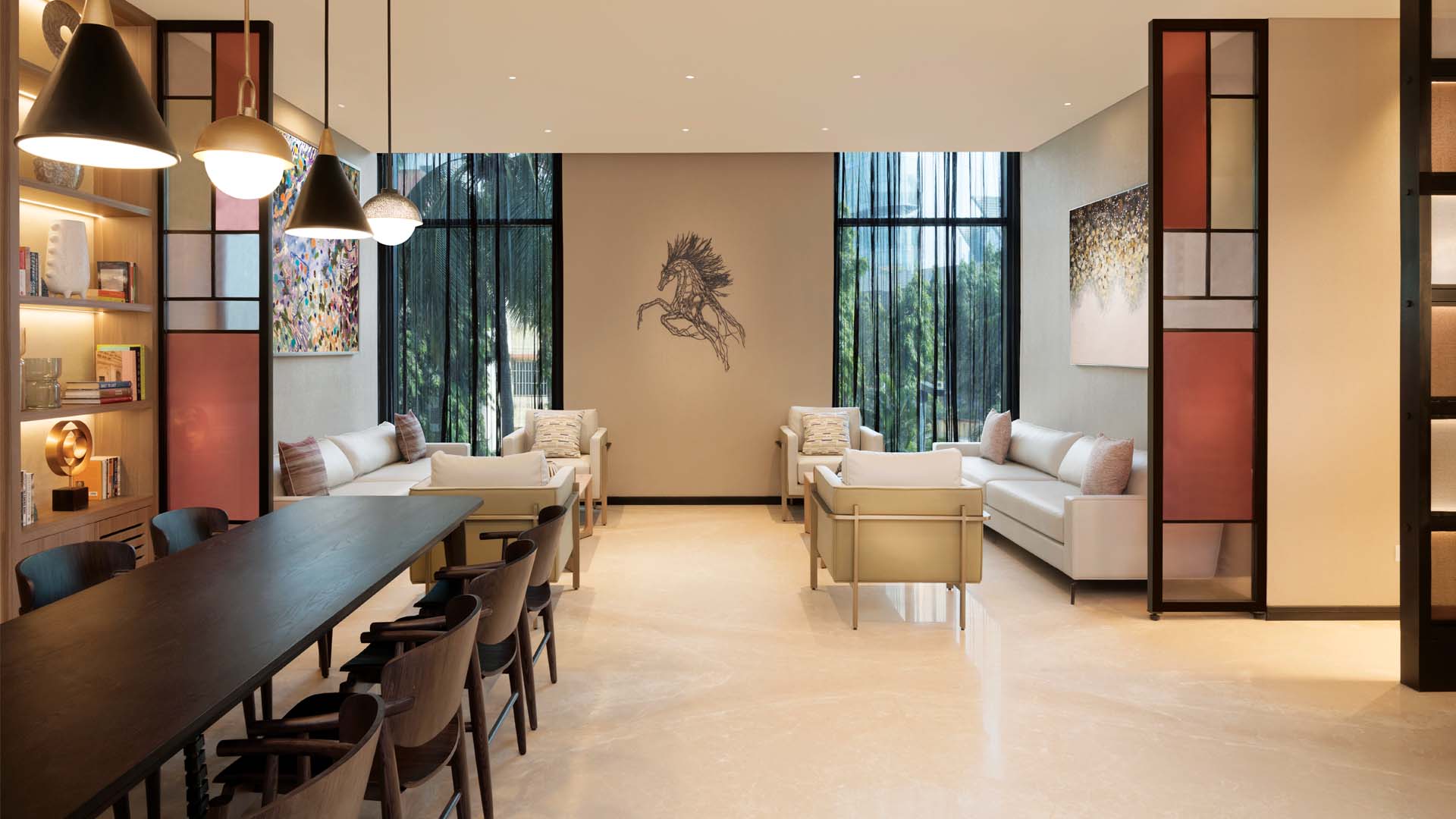
More than a check-in space, the lobby invites you to linger, connect, and recharge.
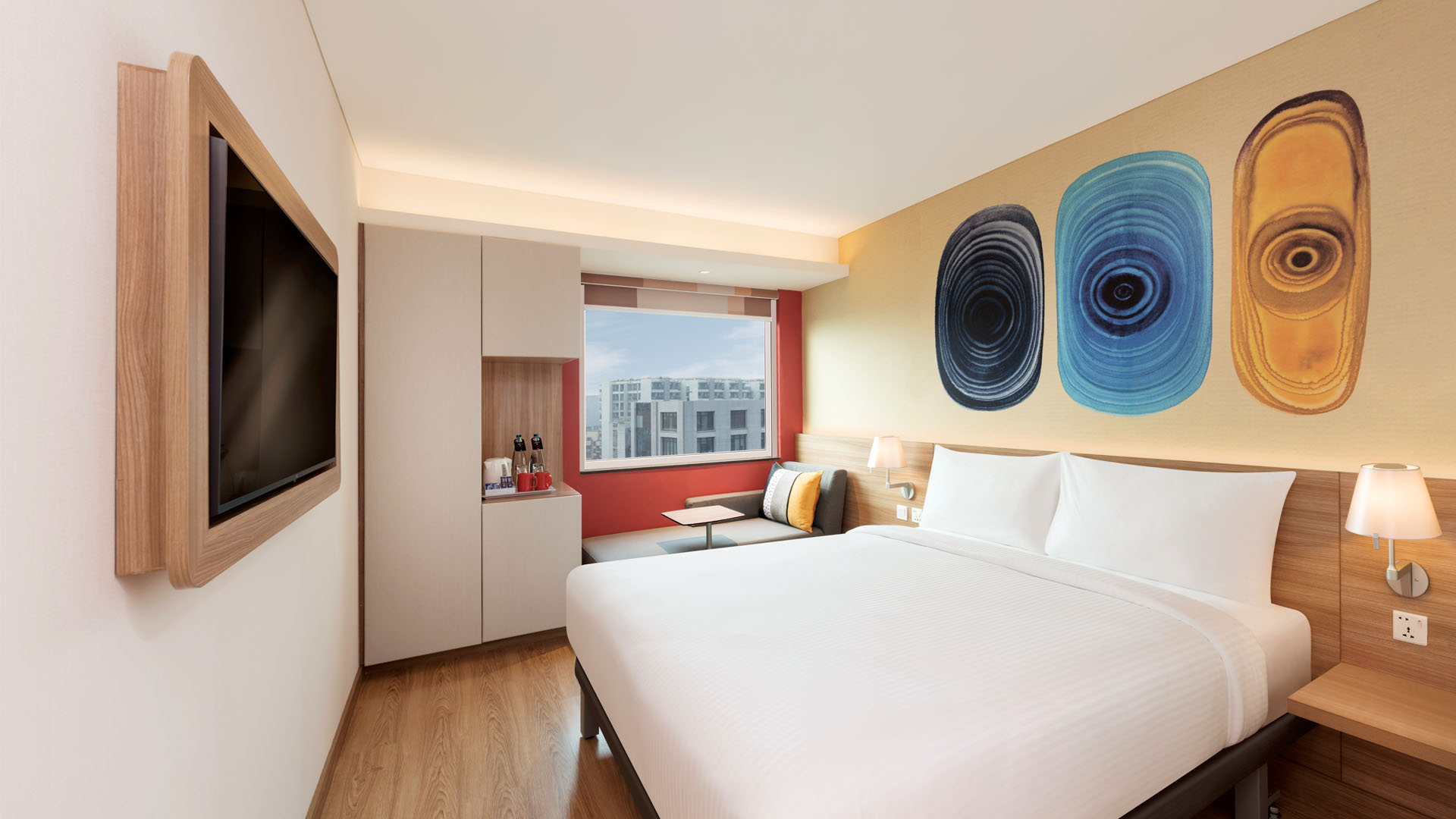
Every room delivers just what matters—nothing more, nothing less. Pop art energises the space with its youthful spirit.
A hotel that feels like a hangout
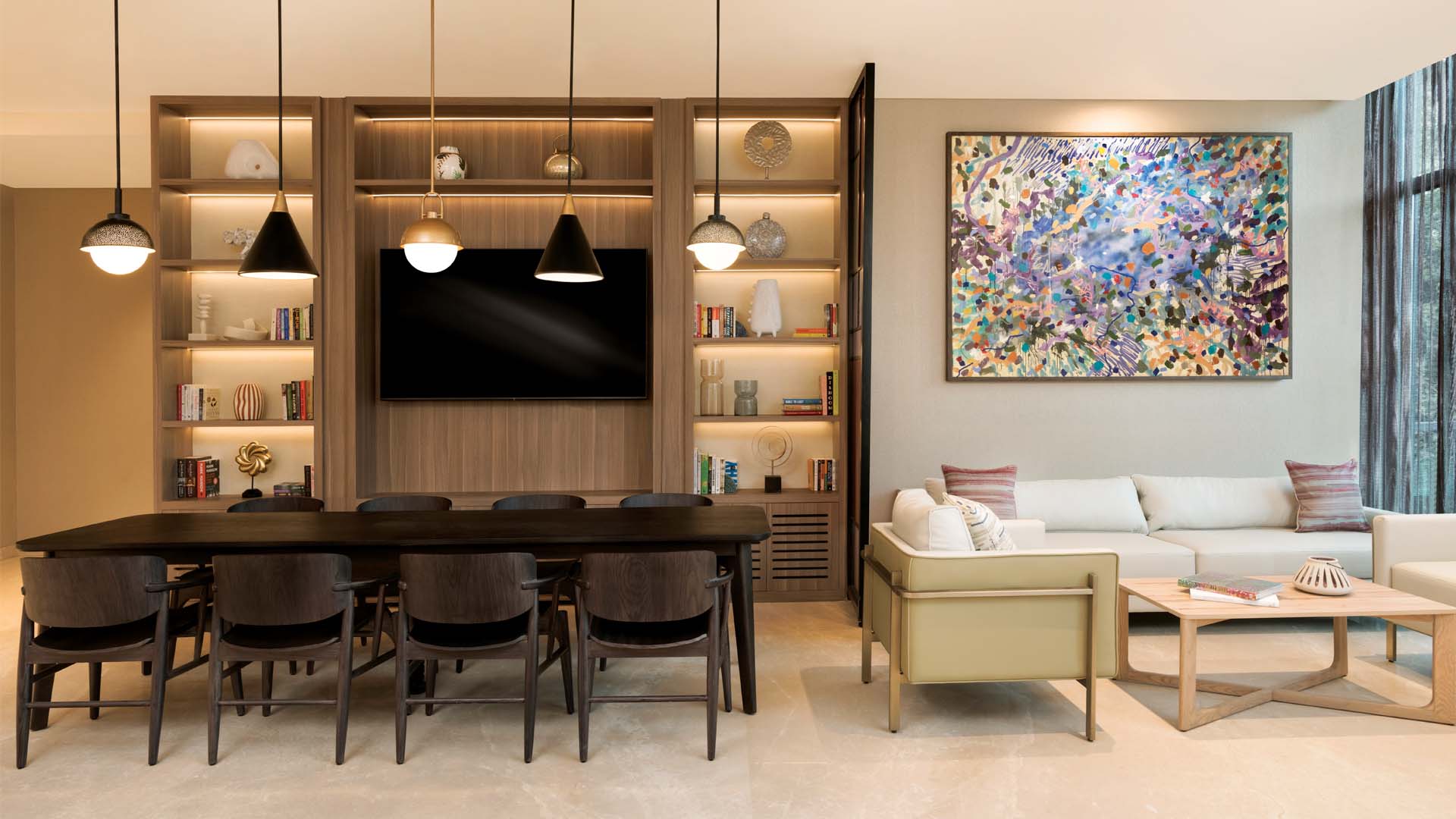
Much like new-age ibis hotels, ibis Mumbai BKC is a vertical edifice with neatly spread out spaces—the welcoming area on the ground level has comfortable seating; the first level a seamless integration of the lobby, lounge, bar and restaurant areas—an inviting space to work, relax, or socialise. The latter—the heart of the hotel—shifts between tranquillity and a gentle buzz, depending on the hour. The lobby has been reimagined as a social zone: open-plan, WiFi-rich, with plug-and-play nooks, worktables, and a grab-and-go coffee counter. Think of it as a co-working-meets-café vibe—a nod to the hybrid traveller. In the mornings and evenings, particularly during breakfast and dinner, the space comes alive. Guests check in, conversations rise around Spice It (the restaurant), servers weave swiftly between tables, and the general manager walks the floor, pausing to greet diners and engage with his team. This ibis is positioning itself not just as a business stopover, but as a lifestyle space.
Beyond the glass of the open kitchens, chef Kasim Khan and his team are often seen in full swing, especially during peak hours—which are frequent in a bustling business hotel. The lounge, with its cosy mini-library, music corner, and inviting sofas and loungers, springs to life in the evenings, offering a relaxed atmosphere for guests looking to unwind.
The hotel’s 206 well-appointed rooms are designed for comfort and functionality. A notable upgrade at ibis Mumbai BKC is the bathroom—built on-site rather than pre-fabricated and fitted in, as seen in earlier ibis properties—lending the space a more refined and contemporary feel.
Walls across the hotel are adorned with art that channels Mumbai’s pop culture—bright, eclectic, and full of local flavour—spilling through public spaces and guestrooms alike. The public areas were conceptualised by Singapore-based French designer Isabelle Miaja, who brings a fresh, vibrant aesthetic to ibis Mumbai BKC. Her design captures the pulse of Aamchi Mumbai with industrial-chic finishes, playful music zones, curated artefacts, and inviting lounge spaces. The library and lounge, in particular, are dotted with thoughtfully chosen pieces that lend the space both character and charm.
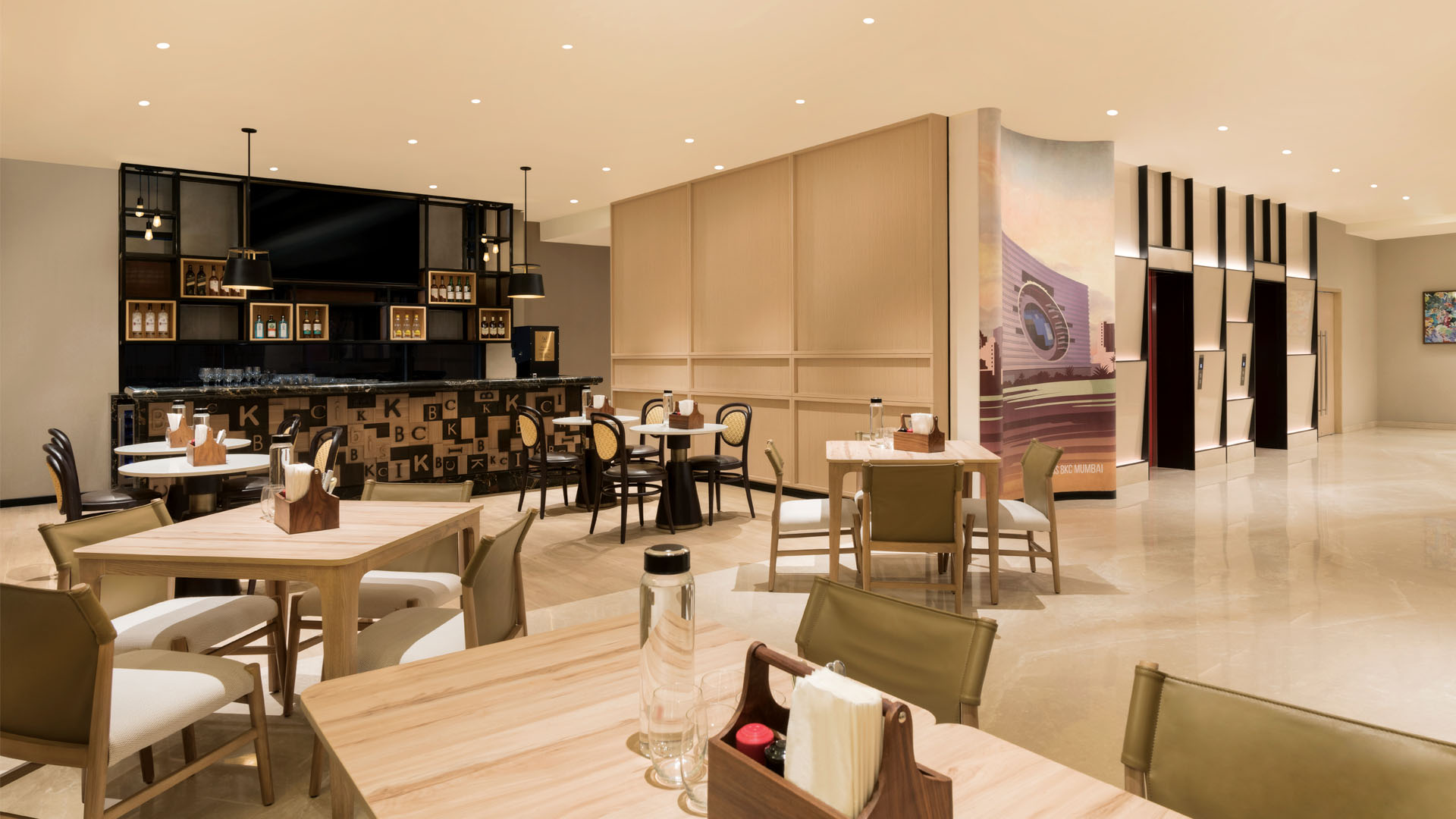
From breakfast to midnight bites, Spice It serves comfort, colour, and local favourites.
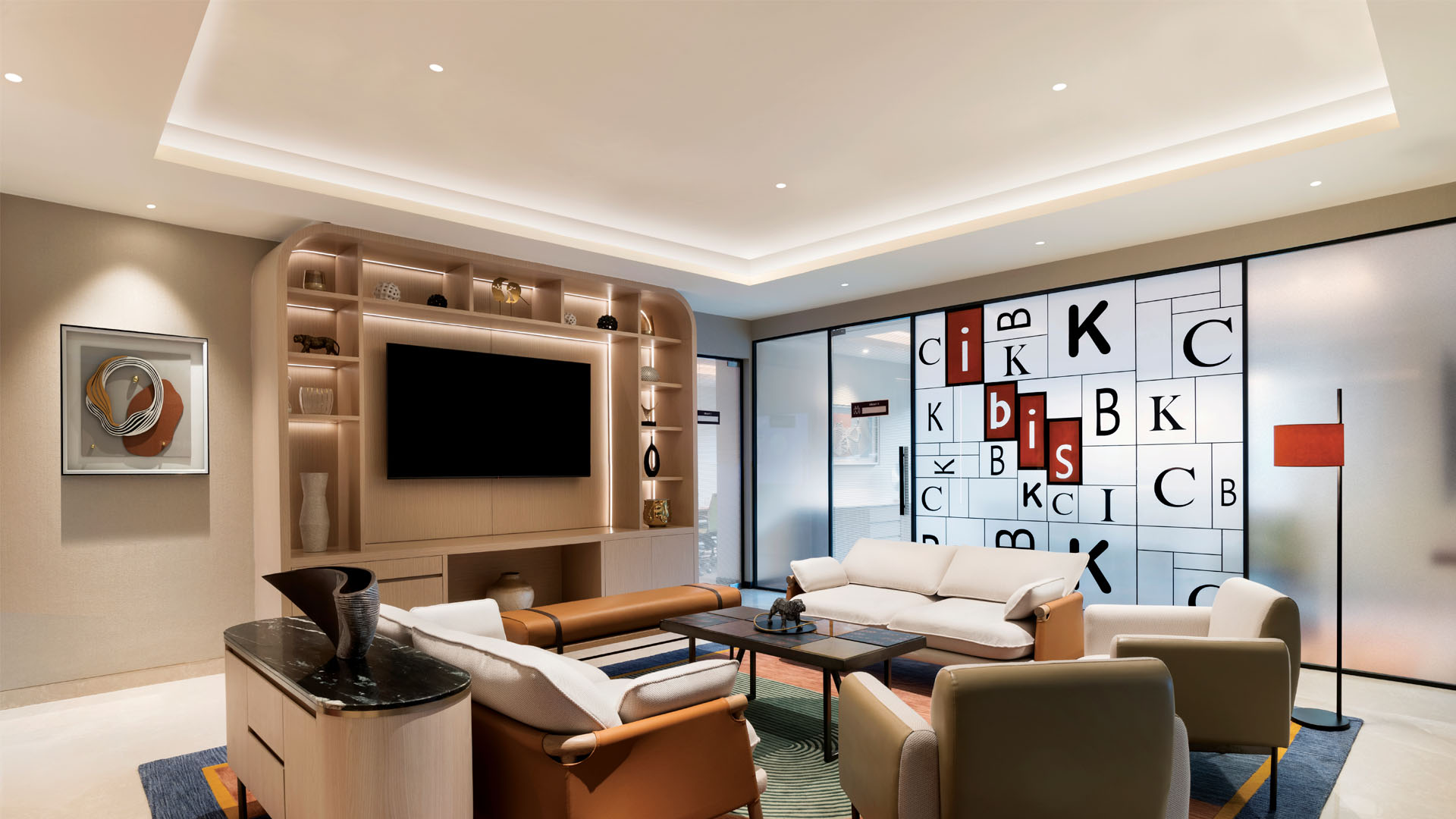
The lounge is accented with curated pieces that infuse the space with personality and warmth.
The experiences
What stands out for me is the food—comfort takes precedence over unnecessary flair. The dishes are hearty and familiar, with just enough of a twist to keep things interesting, without straying so far as to feel unfamiliar—especially when all you want is a satisfying meal. After a long Mumbai day or a stormy monsoon morning, who wouldn’t gravitate towards a handmade pizza, a pepper-and-cumin-infused rasam, Pav Bhaji Fondue, a bowl of warm Railway Chicken Curry, Egg Shin Ramen, or a scoop of Gulab Jamun Ice Cream?
While ibis has collaborated with chef Sanjyot Keer to revitalise its food offerings, head chef Khan of ibis Mumbai BKC must be mentioned for drawing from India’s food culture to curate a meal. For my stay at the hotel, he curated an indulgent Awadhi meal, complete with mutton biryani (which I rarely eat, being more of a vegetable lover, but which I quite enjoyed), kebabs and such, cooked with homemade garam masalas.
The idea is simple: serve honest, flavourful food that speaks to local palates and dietary needs. Guests can grab a tandoori paneer roll at midnight or start the day with a protein-packed millet upma. And if you're on a Zoom call or catching a flight, the hotel's 24/7 menu keeps it fuss-free.
Walk away from the restaurant, enter your room, and plop onto your Sweet Bed for that equally comforting afternoon snooze, or a great night of sleep. The ‘Sweet Bed by ibis’ is the brand’s signature bedding collection, thoughtfully designed to deliver a restful sleep experience across all ibis hotels. At its core is a specially engineered mattress that strikes the right balance between firmness and comfort, using pocket spring technology to minimise motion transfer and ease back tension. Certified by both Oeko-Tex® and NF Environment, it meets stringent standards for safety and sustainability. Built into the design is a plush mattress topper that contours to the body, adding an extra layer of softness and support for enhanced comfort.
The bigger picture
What ibis Mumbai BKC shows us is that the boundaries of the budget segment are being redrawn. Guests—especially urban, mobile, experience-first travellers—don’t want less; they want value. Not just in rupees, but in taste, design, efficiency, and connection.