














The Sacred Journey
How IHCL is redefining the Ganga journey.

By SOH Edit Team
Ganga, India's sacred river is remarkable in so many ways. Originating in the icy heights of the Gangotri Glacier in Uttarakhand (technically at Gaumukh) and emptying into the Bay of Bengal in West Bengal, it runs through varied terrain: land and river basins, forests, cities, and small towns. Its journey spans 2,525kms. and traverses five states, from the mountainous Uttarakhand, the plains of Uttar Pradesh, the northern state of Bihar to the forest-covered Jharkhand, besides the eastern state of West Bengal, before ending in the lush Sundarbans delta, which India shares with Bangladesh.
It is also home to a variety of wildlife: India's national aquatic animal, the Gangetic dolphin; the slender-snouted gharial; the feared mugger crocodile; the famous Himalayan fish, mahseer; and, not to mention, the endangered olive ridley turtle. On the banks of the river, everyday life and divinity merge in ways that the world has rarely witnessed anywhere else.
This massive river attracts Indians for both leisure and spirituality. For a long time, the accommodation along its banks reflected that duality in the most utilitarian way: pilgrim guesthouses on one end, the occasional boutique hotel on the other. IHCL has changed that calculus entirely. With a string of properties now open and announced along the river's length, from the Himalayan foothills to the plains of Uttar Pradesh, the group has effectively created a luxury corridor along the Ganga, one that makes it possible to travel the river's most storied stretches without compromising on either comfort or context.
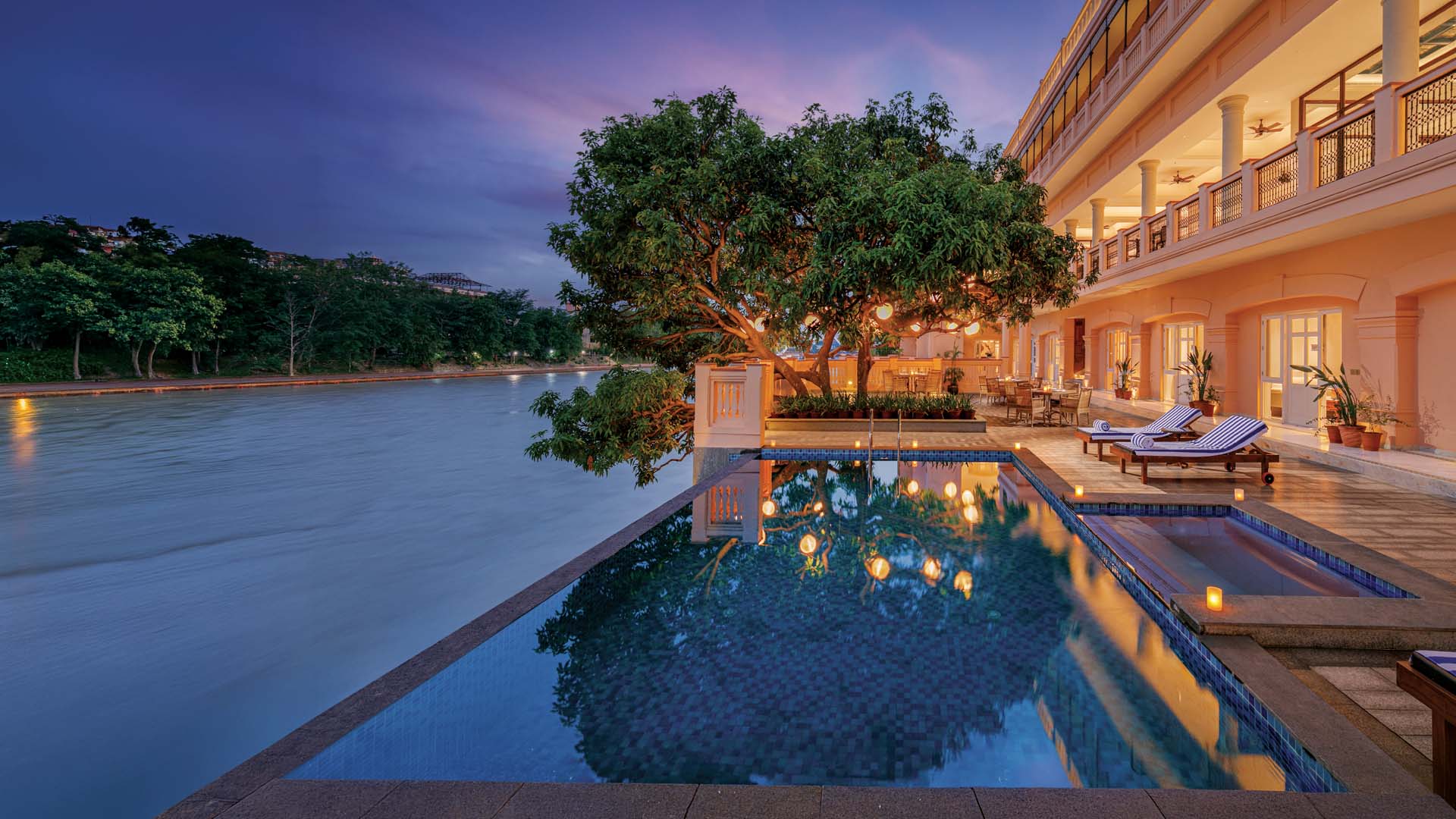
In Haridwar, where the river descends from the mountains onto the plains and pilgrims have gathered for centuries, Pilibhit House, IHCL SeleQtions, brings a new kind of intimacy with the river. A century-old heritage mansion, originally built between the 1920s and 1930s by a prominent family from the town of Pilibhit, it has been meticulously restored into a luxury property while retaining its historic domestic scale, the kind of place that feels less like a hotel and more like staying as a guest in a home of considerable lineage. Its 33 rooms and two suites are spread across terraced courtyards and balconies, all oriented towards the Ganga, so that the river is never far from sight or mind. The interiors carry the quiet confidence of early 20th-century aristocratic design: unhurried, considered, and rooted in a specific time and place.
But it is the property's relationship with the river that makes it truly distinctive. Its private bathing ghat, one of the largest on this stretch, allows guests to perform ritual dips, observe navgraha puja, or participate in Ganga aarti away from the overwhelming crowds of Har Ki Pauri. Here, the sacred is personal rather than congregational, and the Ganga becomes a functional and devotional axis of the stay rather than a distant, scenic backdrop.
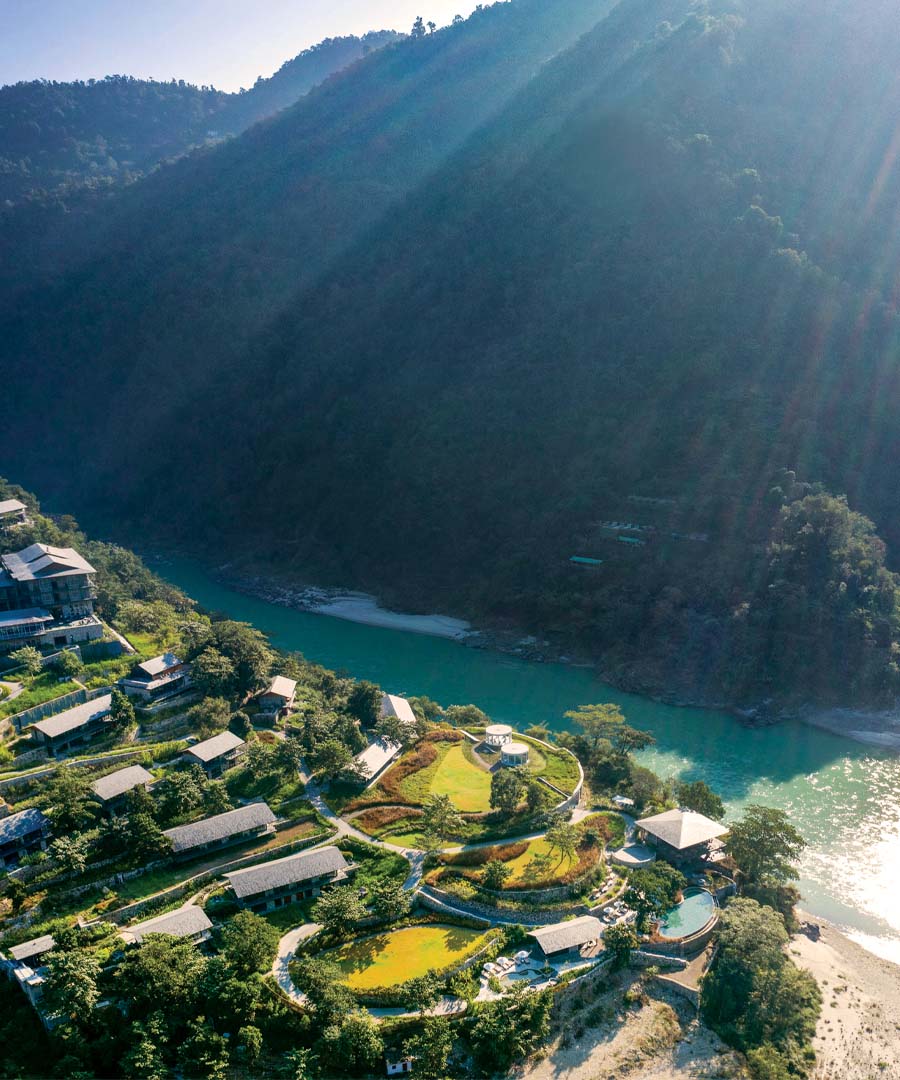
Taj Rishikesh Resort & Spa, Uttarakhand occupies a hillside overlooking the Ganga and the Shivalik mountains.
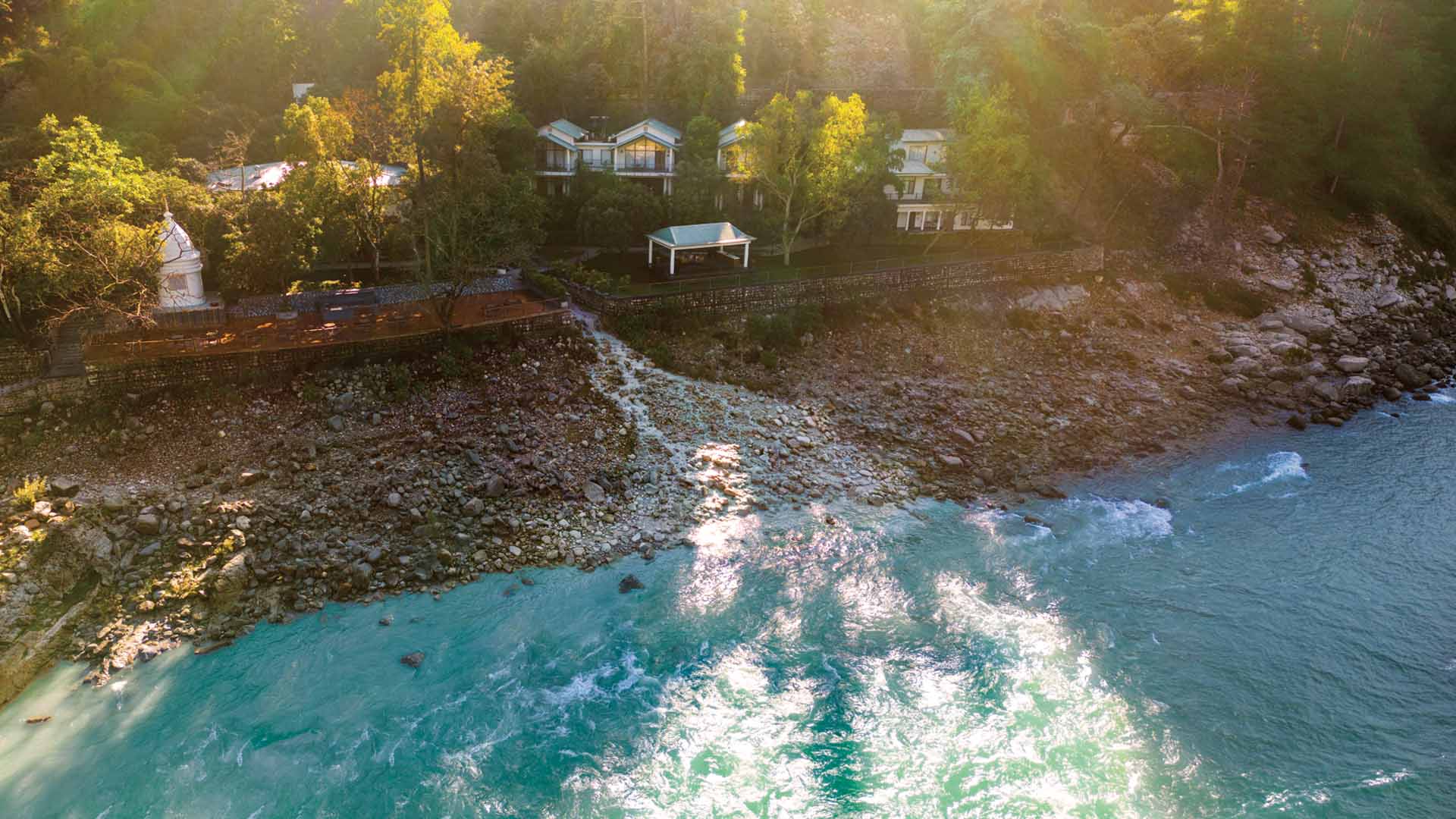
Further upstream, in Rishikesh, where the river is faster and framed by the first ridges of the Himalayas, IHCL has two distinct properties, each pitched at a different kind of traveller. Anand Kashi by the Ganges, IHCL SeleQtions, sits on an auspicious bend of the river, on the grounds of what was once the Maharaja of Tehri Garhwal's summer hunting lodge. That royal lineage gives the property its bones. What gives it its character is a genuine attentiveness to where it stands. A private white-sand riverbank allows an unhurried daily aarti to unfold within the hotel's own grounds rather than the public spectacle it becomes at the main ghats. The design draws from Vedic Panchamahabhuta philosophy, Garhwali architectural idioms, and a wellness programme built around yoga and meditation. An on-site Shiv Mandir grounds it in the devotional culture this stretch of the Ganga has carried for centuries.
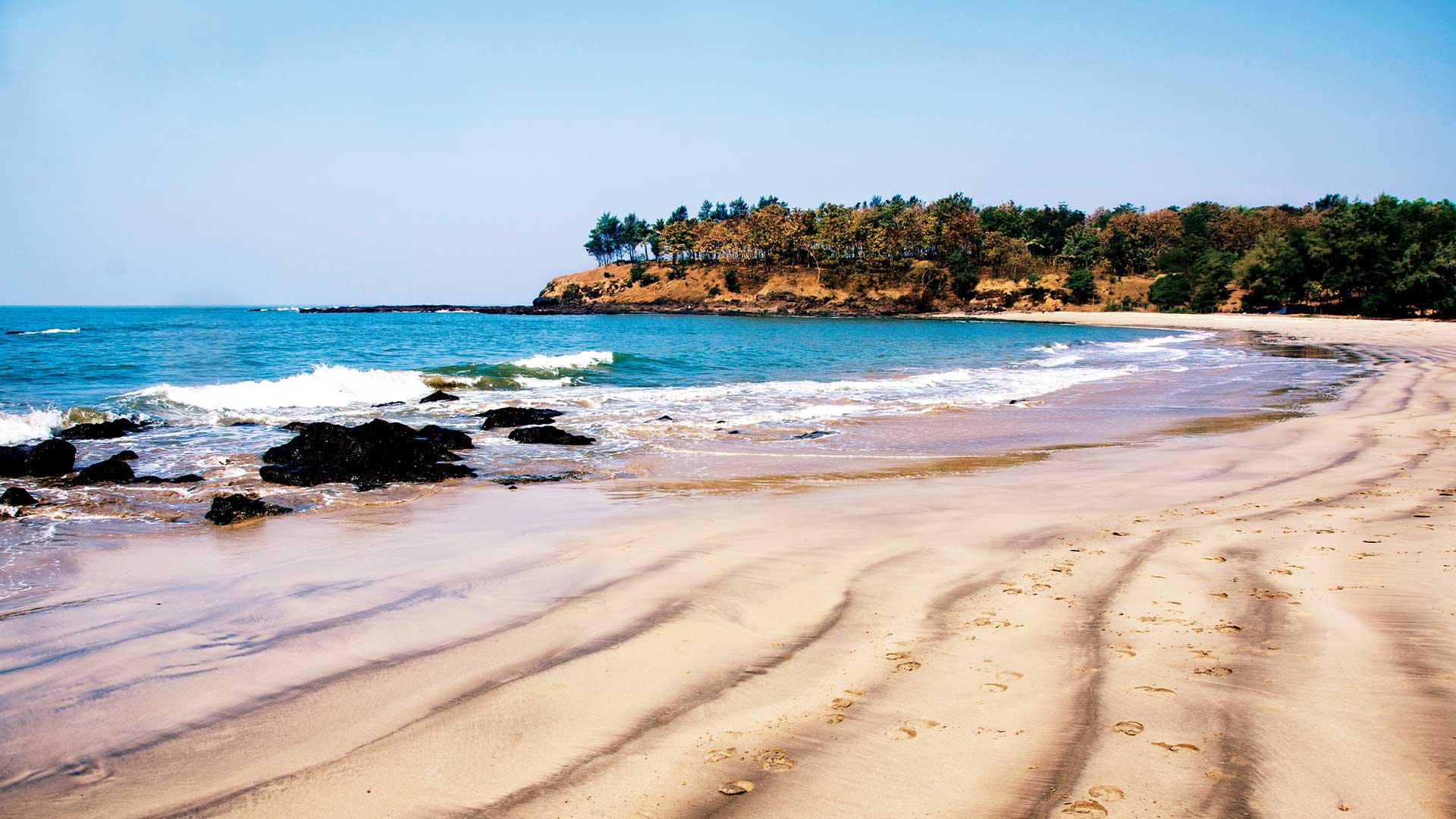
The second Rishikesh property, Taj Rishikesh Resort & Spa, takes a different approach. It is more retreat than residence, more contemplative than ceremonial. Set on a forested hillside in Singthali, approximately 30kms. from central Rishikesh, it is deliberately removed from the town's bustle. Built in the Garhwali vernacular tradition with locally sourced stone, timber, and slate, the resort seems to grow naturally from its surroundings, its terraced layout allowing uninterrupted views of the Ganga and the Shivalik mountains from virtually every vantage point. A pebble-strewn private beach serves as the setting for sunset Ganga aarti each evening. The wellness offering, anchored by Taj's J Wellness Circle, brings together Ayurvedic therapies, yoga, and meditation in a programme that draws its meaning directly from the spiritual geography it inhabits.
As the Ganga moves southward and eastward, gathering both water and myth, it eventually reaches Varanasi, the spiritual capital of the river's entire 2,500km. journey, and one of the oldest continuously inhabited cities on earth. Here, IHCL's presence takes the form of Taj Nadesar Palace, and the contrast with the Rishikesh properties could not be more instructive. Where those hotels lean into the river's natural drama, Nadesar is defined by enclosure and stillness. Built in 1782 and once part of the estate of the Maharaja of Benares, the 14-room palace sits on 40 acres of landscaped gardens, orchards, and flowering groves.
On the banks of the river, everyday life and divinity merge in ways that the world has rarely witnessed anywhere else.
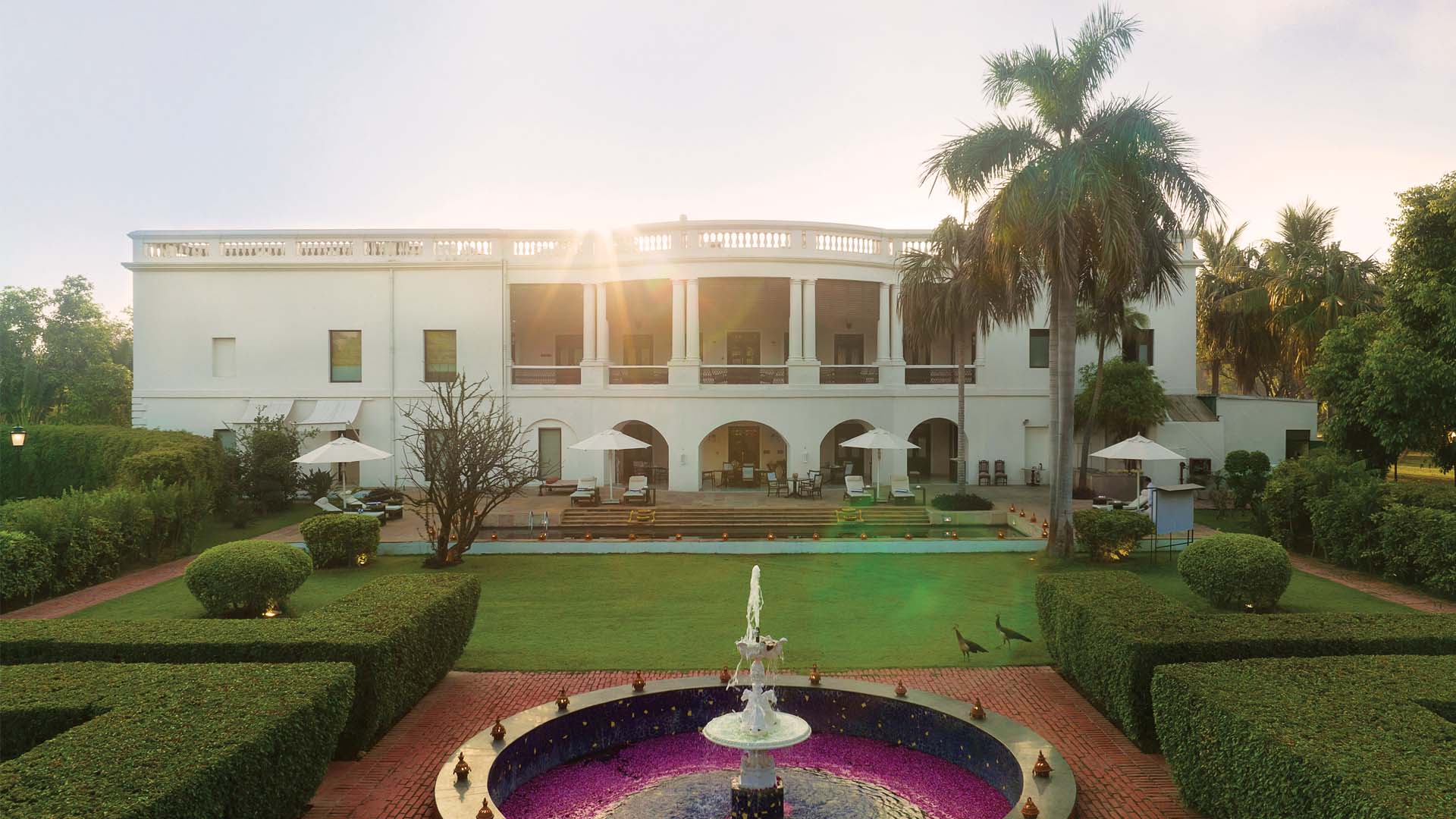
Set within 40 acres of gardens and orchards, Taj Nadesar Palace offers a rare sense of stillness in the heart of Varanasi.
The suites are furnished with artefacts and heirlooms from the Maharaja's personal collection, giving the property the feel of a royal residence that receives guests rather than a hotel that has borrowed some history. Located five kilometres from the principal ghats, it offers proximity to the living rituals of the city: the dawn boat rides, the evening aarti at Dashashwamedh, and the lanes of the old city, while providing a retreat defined by privacy, historical continuity, and an unhurried pace.
The river's final act, as it fans out towards the Bay of Bengal through West Bengal, is now also part of the IHCL story. Taj Ganga Kutir Resort & Spa at Raichak sits on a 100-acre estate near the confluence of the Ganga and the sea, a sprawling, rurally rooted property with 155 rooms that draws on the idyllic character of Bengal's countryside, a fittingly unhurried close to a journey that begins in the ice and altitude of the Himalayas.
The group is also expanding Taj Ganges, its existing Varanasi property, with the addition of 100 rooms, a signal of just how much demand this city is generating. On the horizon is a 500-key Taj Patna, positioned opposite Gandhi Maidan with the Ganga flowing to the north, a property that, when complete, will fill the one remaining gap in IHCL's river-length presence.
From the glacier-fed upper reaches to the delta’s edge, the properties have created a benchmark in hospitality, comfort, luxury and its spiritual grounding.
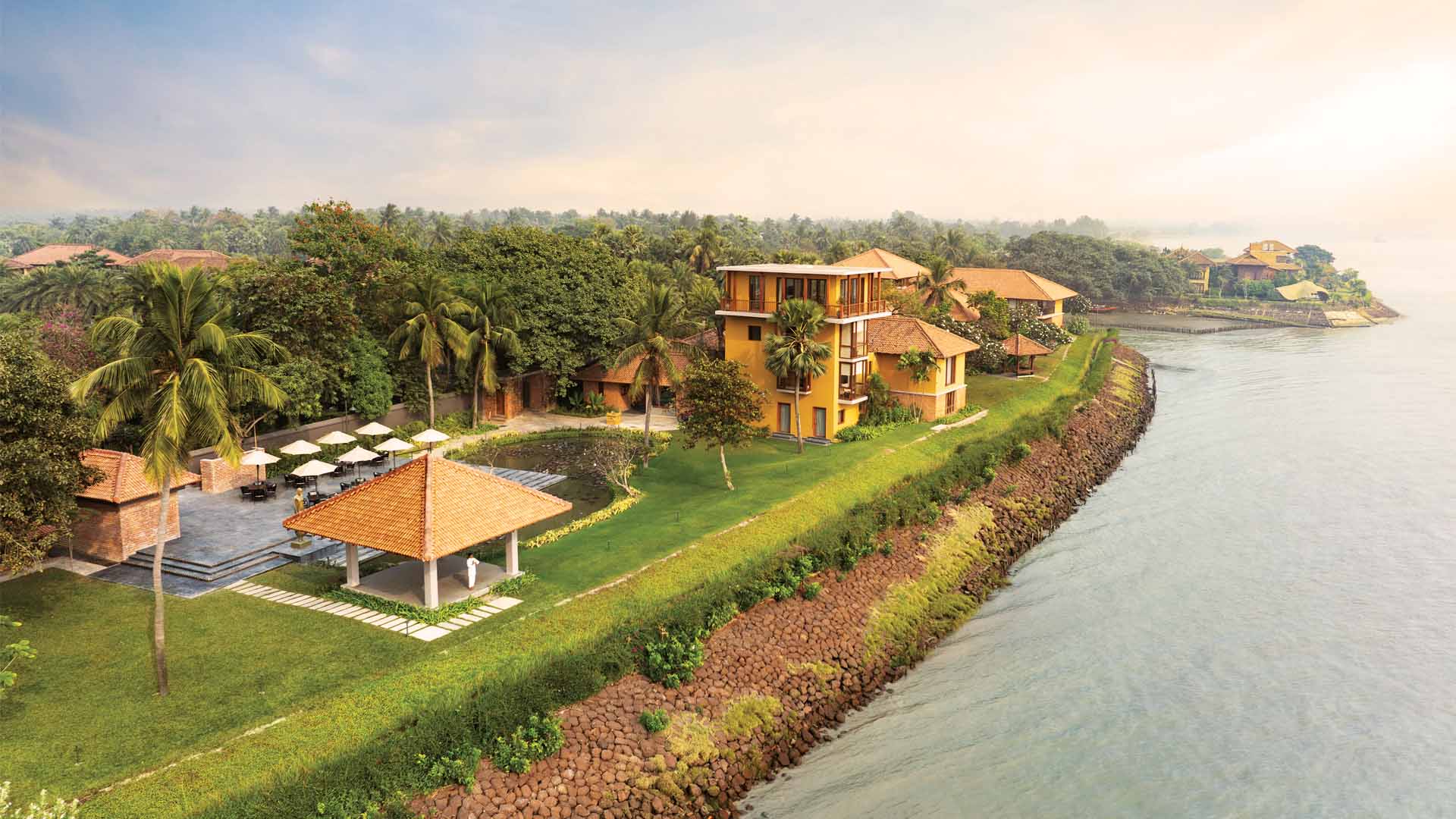
At Raichak, Taj Ganga Kutir Resort & Spa draws on the unhurried character of Bengal’s riverine landscape.