











A Café Made From Almost Nothing
How Spanish designer Lucas Muñoz and The Park Hotels turned discarded hotel parts into an intriguing experiment at the recently-concluded Design Mumbai.


By SOH Edit Team
At Design Mumbai, The Park Hotels unveiled a tiny, quietly radical space designed by Spanish designer Lucas Muñoz—an experiment that felt more like a manifesto. The brief was simple: a four-day café. The opportunity was anything but.
For Muñoz, the collaboration marks the beginning of a deeper association with The Park Hotels, whose legacy of design experimentation gave him complete freedom to build under his own philosophy. That philosophy begins with a question: How little do we really need to design well?
Working from scarcity rather than abundance, Muñoz and his team ‘mined’ materials from a recently acquired, long-shuttered hotel within The Park’s ecosystem. What could have been discarded became the building blocks of the café—an honest, semi-cooked space that celebrates process over perfection.
Ceiling cut-outs, complete with their original light fixtures, returned as pendant lamps. Old bed structures, topped with chatais and an improvised blend of lamp parts, became a daybed set around a low centre table. Room doors stood shoulder-to-shoulder as space dividers. Chairs and round tables were simply wrapped in the hotel’s white bedsheets. Even the massive central table was pieced together from reclaimed wall panels. Nothing was disguised; every reuse was visible, intentional, and dignified.
The result wasn’t a polished hospitality set-piece—it was a living demonstration of circularity, material honesty and the beauty of underdesign. In Muñoz’s world, the challenge isn’t to create more, but to think more: to reconfigure what already exists, to question excess, and to design lightly yet impactfully.
For four days, this makeshift café offered Design Mumbai a pause—a space that asked visitors to rethink value, rethink waste, and rethink how design can move forward by looking closely at what’s already here.
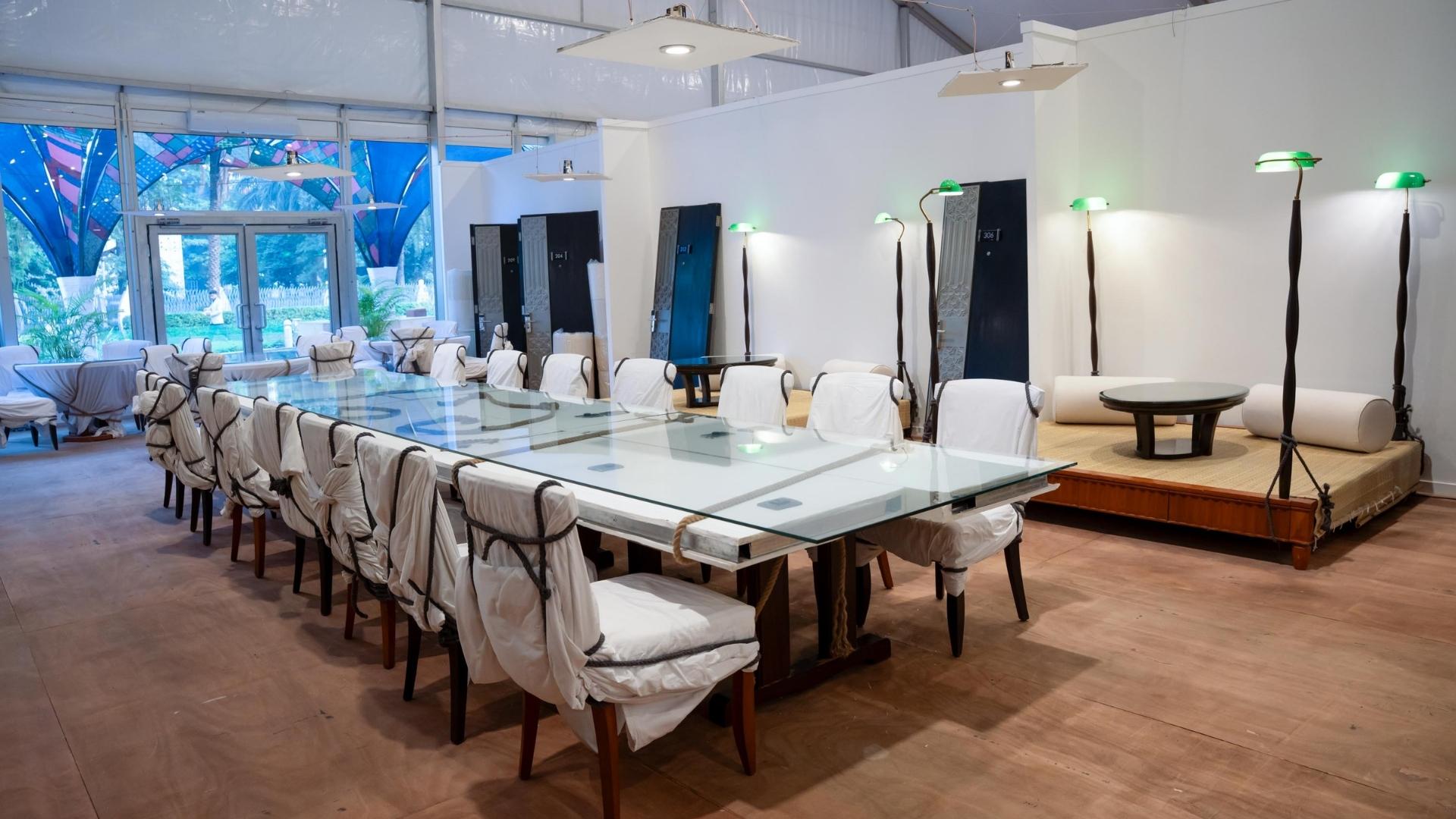
Chairs and round tables were simply wrapped in the hotel’s white bedsheets.
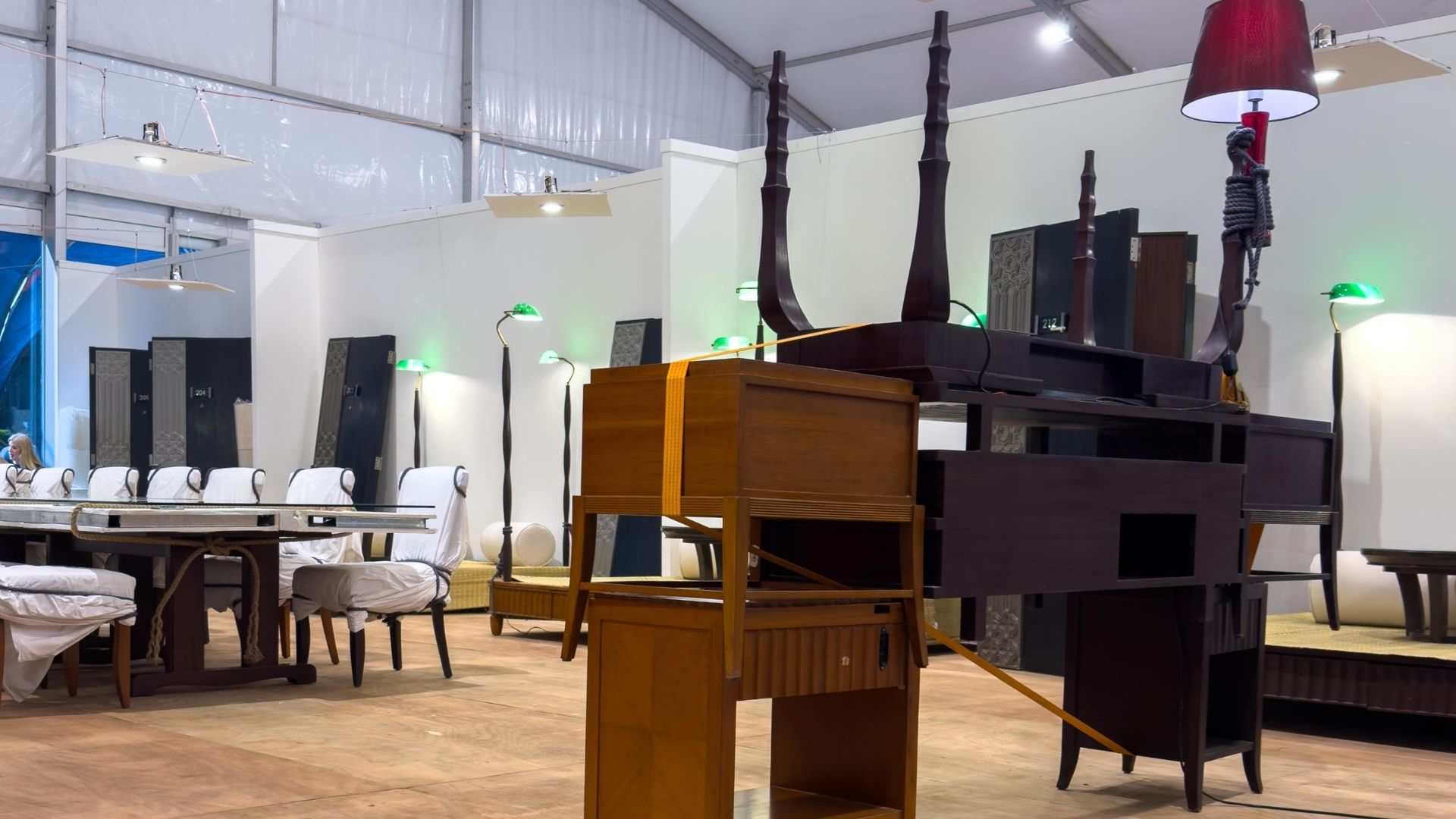
Ceiling cut-outs returned as pendant lamps, and an improvised blend of lamp parts, became a daybed set around a low centre table.
In an interaction with SOH, Lucas Muñoz throws light on the design philosophy of the makeshift cafe.
Tell us about your forthcoming association with The Park Hotels.
The association with THE Park Hotels has begun with this Design Mumbai cafe space. Being a pioneer in design experimentation in India, THE Park Hotels has given me and my team carte blanche to create a space under our philosophy. This translated into a series of conversations driven by a search for opportunities in their ecosystem for us to extract materials and configure them as a cafe space for the 4 days event. Eventually we “mined” and processed material from a property recently acquired by them, a former hotel that had been closed for several years. After this test experiment, the success of it is overarching further collaborations between us.
What was the main idea behind such a design? What did you and The Park Hotel wanted to convey through this?
It is foundational to this project to acknowledge that the space we had been commissioned was to be active for only 4 days. This is a great conditioner since it implies that we can be very temporary on the assembly process and we can also afford to be more raw on the material configuration. All in all, the result is a “semi-cooked” space which shows its process, talks about the intrinsic value of most materials and specially takes an about to be residue and gives it the dignity to be back in use.
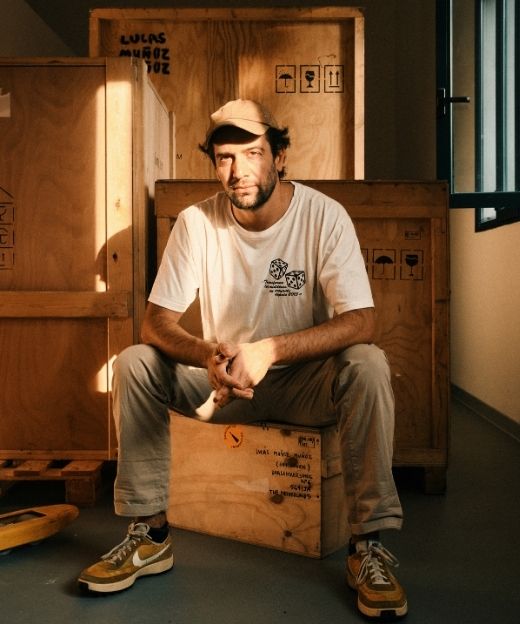
Most of the projects developed by Munoz are conceived under the lens of working from scarcity and not from abundance.
Give us some examples of how old elements have been used in this makeshift cafe.
Cut out ceiling pieces has preserved their light fixtures and are used as hanging lights instead; bed structures plus a chatai and a mash up of different lamps pieces are configured together as a day bed with a low table in the middle; room doors are screwed to each other to create space dividers; chairs and round tables are wrapped into the hotel’s white bedsheets and a massive central table is configured with wall pieces.
How would you explain your design philosophy?
Most of the projects I develop are conceived under the lens of working from scarcity and not from abundance. I take what is at hand on site or very close by and try to resolve design questions only with those available elements. This responds to notions of circularity and sustainable thinking but also they are mainly responding to the conviction that we are using too much for actually responding to sometimes simple challenges. Eventually, as an example, if we talk about let’s say a lamp, how much material and processes and logistics, etc are needed to sustain the few grams that a lightbulb has to be lighting a few centimetres over a desk… I believe we sometimes overdesign in the name of innovation when what actually could be needed might be more related to underdesigning and just re-configuring what is there to fit its next functions.