










The Next Decade of Indian Hospitality
The numbers are extraordinary, and Indian hospitality has never looked stronger on paper. But paper is not where the next decade will be won or lost. It will be won in the lobby, at the table, the way the hotel is designed, in the moment a guest feels genuinely seen in a place that knows exactly where it is, the kind of conversations the industry needs to have.

By Deepali Nandwani
There is a particular kind of confidence that comes with good numbers. Indian hospitality has them in abundance right now. Occupancy at 68%, the highest in recent memory; Average Daily Rates up 8.6% to ₹8,624; RevPAR climbing 10.8% to ₹5,522; a branded supply pipeline of 144,000 rooms that could push the country's total hotel inventory toward 360,000 keys by 2030. Tourism is projected to support nearly 64 million jobs by 2035. The online accommodation market, valued at close to $9 billion in 2025, is on its way to $16 billion by 2031. Demand is outpacing supply. Pricing power is holding.
And yet, if you sit in a room with the people who actually run this industry—the CEOs, the architects, the investors, the lawyers who write the contracts that bind brands to owners for decades—the conversation is rarely about the numbers. It is about something harder to measure. Who truly owns the guest in an age when an app can stand between a hotel and the person sleeping in its bed? What does Indian luxury actually mean, on its own terms, without borrowing the vocabulary of somewhere else? Can you build a portfolio of a hundred hotels and still have the thing that made the first one worth staying in?
These are the questions that will define the next decade of Indian hospitality. Not the pipeline. The pipeline is the easy part.
Puneet Chhatwal, MD & CEO, IHCL, puts the larger transformation in context: "The last 10 years have been transformative for India, its economy, and consumer behaviour. Being such a large domestic market of 1.5 billion people, everything else has to change with it, and hospitality is no exception." For Chhatwal, the sector's evolution goes beyond customer service: "From being just a customer service–driven business, there are many facets to customer service, which is at the core, that have been added. Some of those include creating shareholder value, being very good with all stakeholders—not just your own employees, but your suppliers, your partners, anybody who works in the hospitality ecosystem."
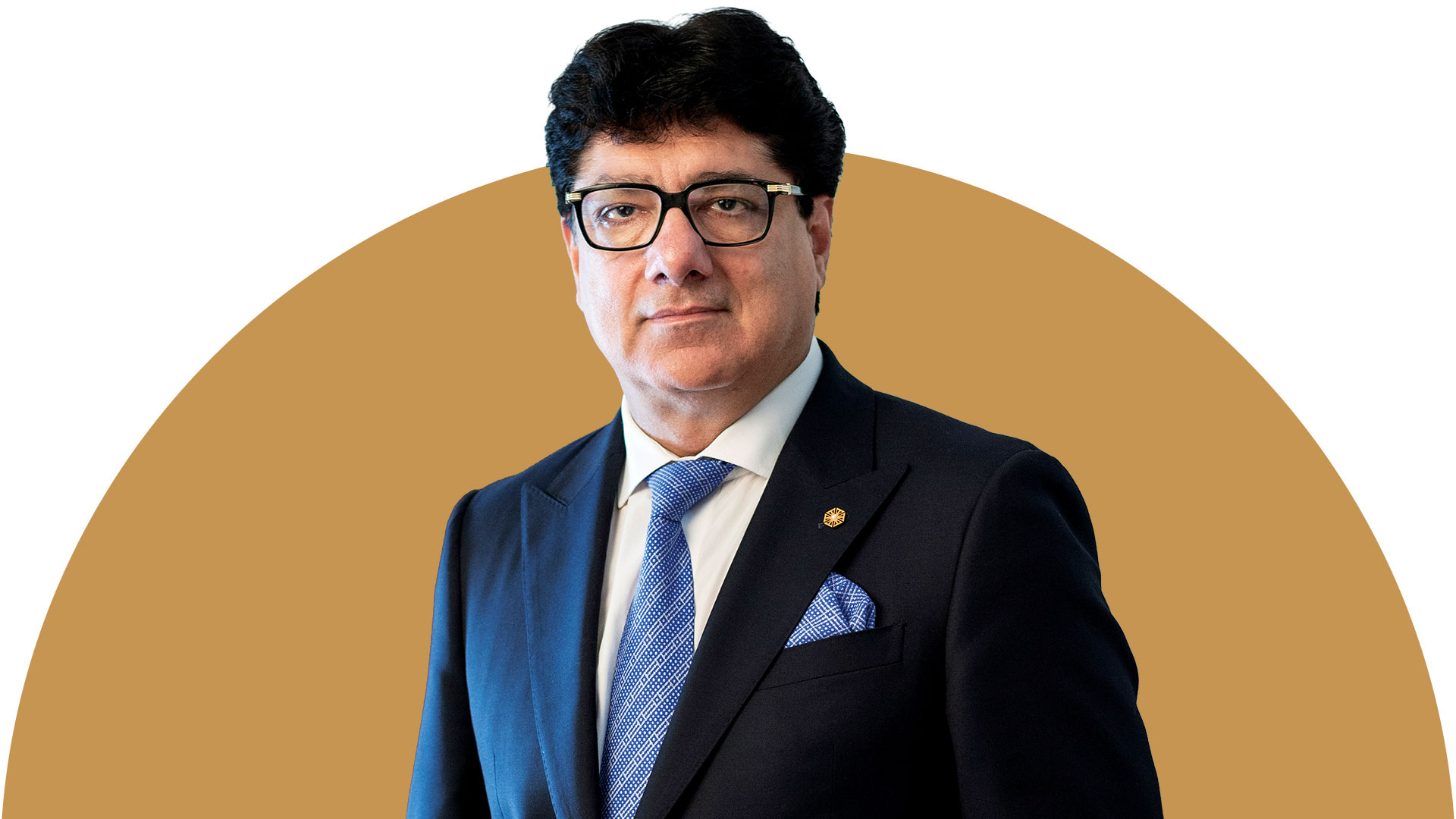
Puneet Chhatwal, MD & CEO, IHCL.
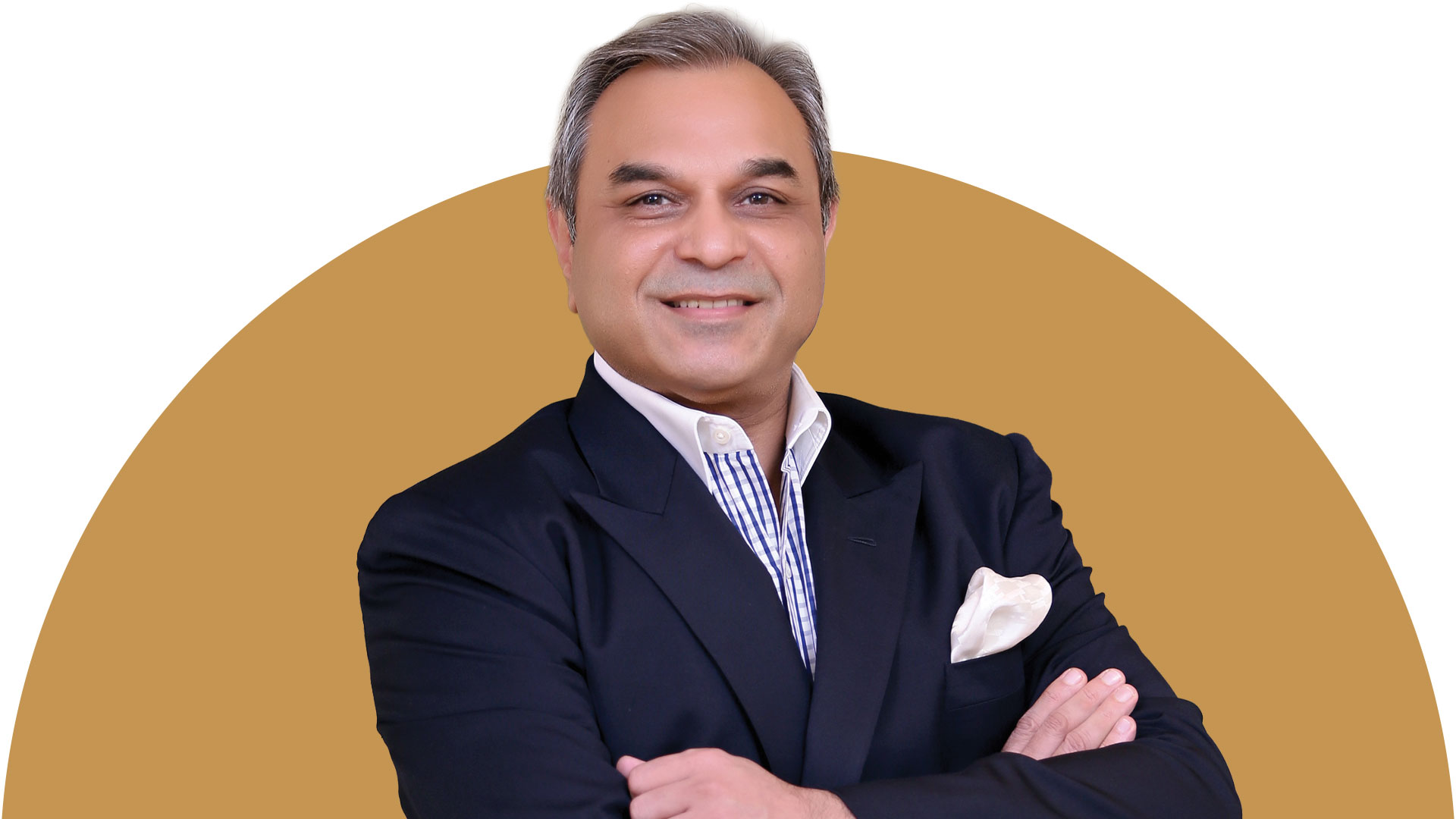
Anil Chadha, Managing Director, ITC Hotels Limited.
The new power map: who owns the guest?
The asset-light model—management contracts, franchises, white-label operators—has been the industry's operating logic for years now. Brands expanded without balance-sheet exposure. Owners got global distribution and reservation infrastructure without building a brand from scratch. A tidy arrangement, except for one unsettling question that has moved from the edges of industry conversations to the centre: in all of this, who actually owns the guest?
Not the brand, necessarily. Not the owner, certainly. Increasingly, the answer is the platform.
Online travel agencies hold a commanding position. Third-party portals accounted for 58.66% of India's online accommodation market in 2025. MakeMyTrip's hotels and packages segment grew gross bookings by 22.6% in Q4 FY'25, with hotel room nights up 23.2%, their highest-growth segment. The platform's own investor presentation projects India's online travel market growing from $12 billion in 2022 to $60 billion in 2030. That is the number their entire investment thesis is built around, and hotels are the product they are most excited about.
Airbnb's India numbers are among the most telling data points of the moment. During the December 2025 quarter, nights booked in India surged 50% year-on-year, with first-time bookers up more than 60%. India is now explicitly one of Airbnb's fastest-growing origin markets globally. Their 'Feet on Street' host recruitment strategy expanded Tier 2 and Tier 3 city listings by over 30%. OYO, meanwhile, acquired US-based G6 Hospitality (of Motel 6 and Studio 6 fame) for $525 million in December 2024, a move that confirmed the platform ambition is no longer merely domestic.
MakeMyTrip's launch of 'Myra,' a multilingual GenAI trip-planning assistant, signals that the next hundred million travel users will be unlocked through vernacular, conversational interfaces rather than a standard English booking page. And yet. Direct bookings remained remarkably stable in 2025, staying within 1.5 percentage points of the prior year in 95% of markets analysed. Hotels that have invested seriously in their own booking infrastructure are holding ground against the OTA squeeze. Mobile now drives 87.5% of search and booking activity. There are 140 million high-income households arriving in India by 2030, along with 90 million new households headed by millennials who grew up booking things online. The demand is structural. The question is only who gets to sit between it and the hotel bed.
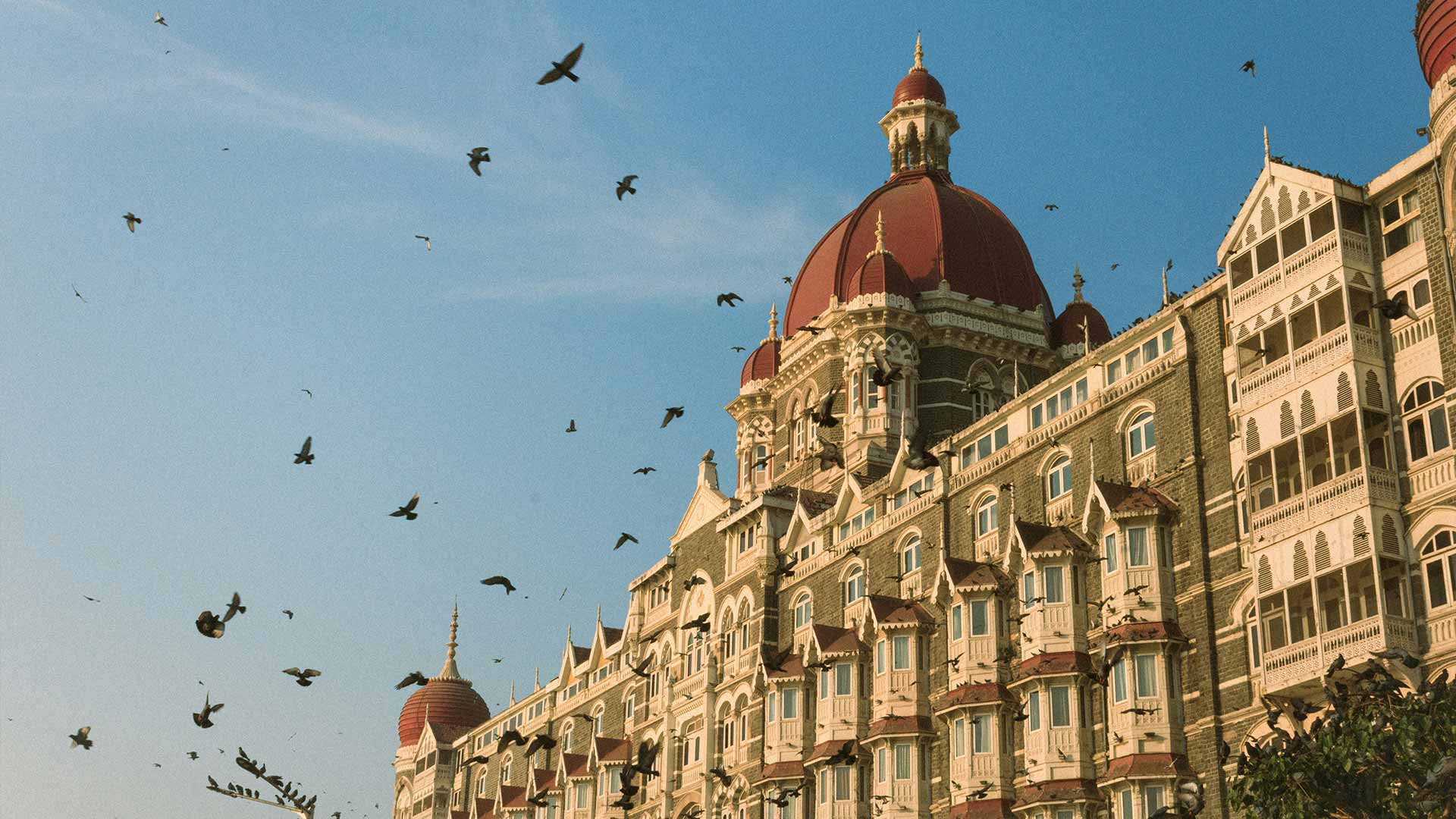
Taj Mahal Palace, Mumbai, where Indian hospitality's century-long story began.
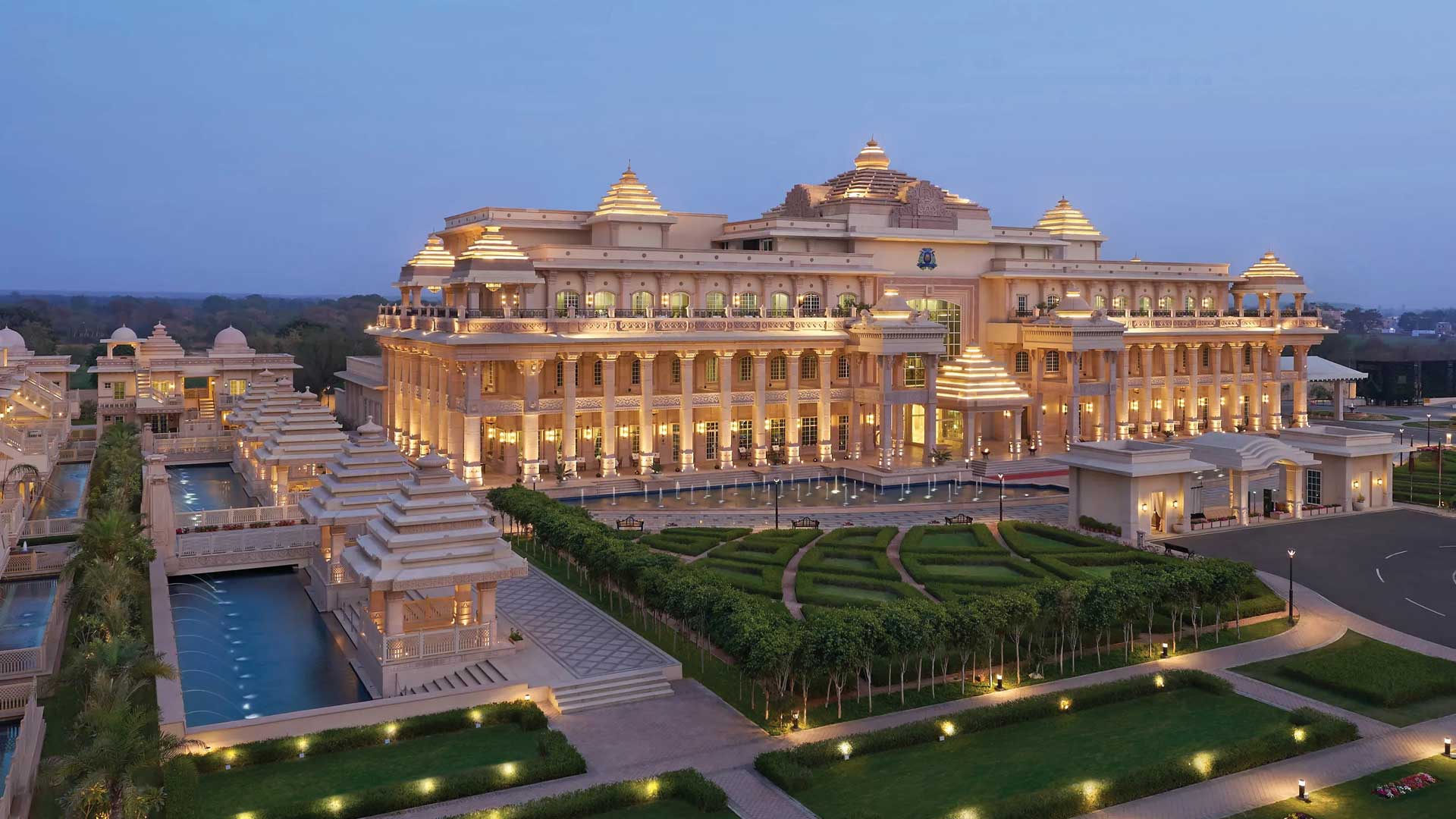
ITC Grand Bharat, Gurugram represents the new face of Indian luxury: rooted and yet global.
Nirupa Shankar, Managing Director, Brigade Hotel Ventures Ltd., cuts through the platform anxiety with unusual directness: "An app might own the transaction, but the hotel owns the experience. The platform is often just the digital front door." The real shift over the next decade, she says, is not about fighting the platforms. It is about what happens once the guest walks through that door: "If a guest books through an app but arrives to find their room temperature exactly where they like it, or their favourite local coffee waiting because our internal systems remembered them, that loyalty shifts to us." Data, in her framing, is not a technology story. It is an attention story. "The relationship is ours to build the moment the user becomes a guest."
Shwetank Singh, MD & CEO, Chalet Hotels Limited, frames the same question at a longer time horizon: "The more important question is who owns guest preference, trust, and emotional recall over time." A platform can facilitate a transaction, he says, but long-term loyalty is built through the quality of the experience, consistency of service, and the emotional connection a guest develops with a brand or property. "Over the next decade, the competitive advantage for hospitality brands will increasingly come from their ability to create differentiated and memorable experiences rather than just acquire customers efficiently." At Chalet, technology is an enabler rather than a substitute: "Data and digital tools will become increasingly important in understanding guest behaviour and removing friction from the journey, but hospitality will still remain deeply human at its core."
Nikhil Sharma, Managing Director & COO, South Asia, Radisson Hotel Group, makes the commercial logic explicit: "OTAs and super-apps are important distribution partners because they expand visibility and reach, especially in a dynamic market like India. However, long-term loyalty is built through personalised experiences, seamless service, and meaningful engagement beyond the transaction itself." Radisson is investing in its digital ecosystem, loyalty platforms, and data-driven personalisation to deepen direct guest engagement across the full lifecycle—before, during, and after the stay. The industry, Sharma says, is witnessing a broader shift toward loyalty-led ecosystems, "where guests increasingly expect recognition, flexibility, and curated experiences rather than just room inventory."
The wildcard in all of this is the Open Network for Digital Commerce, or ONDC, a government initiative that could allow smaller hotels to access multiple buyer apps without paying OTA discovery fees, potentially redrawing the economics of distribution in ways no single commercial player has been able to manage. For owners who feel squeezed by commissions on one side and brand fees on the other, it is a development worth watching very closely.
That squeeze, incidentally, is getting sharper. Sujjain Talwar, Co-founding Partner, Economic Laws Practice, who has spent years inside the legal architecture of hotel deals, describes how the shift towards institutional capital has changed everything: what was once "largely promoter-driven and relationship-based" is now "far more document-driven, contract-led, and granular." Management contracts, he says, remain "heavily skewed in favour of brands." Fee structures are typically tied to revenue, which means brands collect their fees regardless of how an owner's debt is performing. "There is likely to be greater insistence on brands having skin in the game," he says, aligning fees more closely with net profitability after financial obligations. Without that, he adds, long-term project viability itself could be at risk.
There is another legal frontier emerging that the industry has barely begun to grapple with. Data privacy regulations now carry penalties of up to ₹250 crore for breaches, and hotels, which sit on extraordinarily sensitive personal data across every booking touchpoint, are caught between owners who argue they lack operational control and brands that resist full liability. "There is currently a gap in how this risk is allocated," Talwar notes. It will not remain a gap for long.
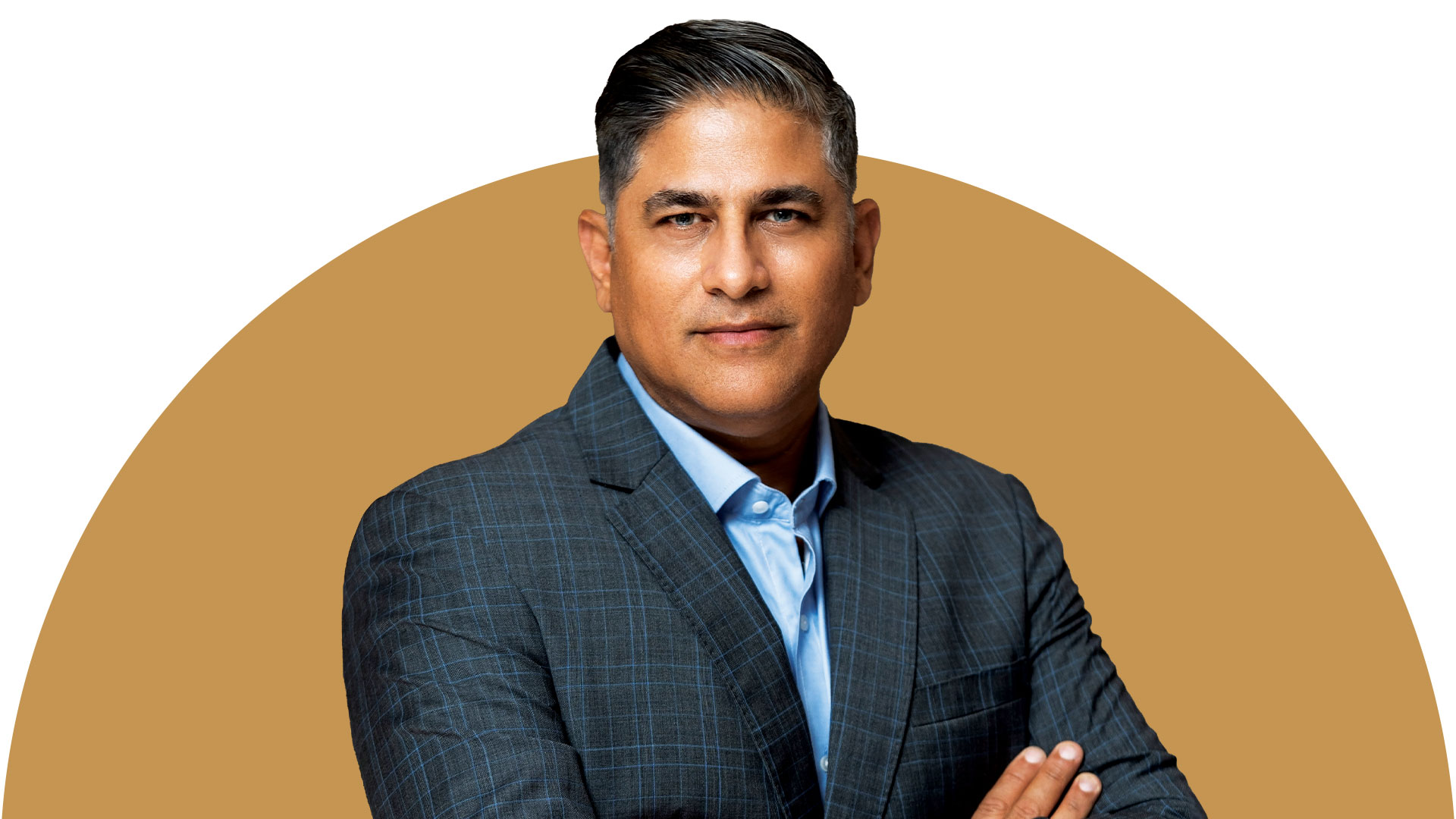
Ranjit Batra, CEO, Ventive Hospitality.
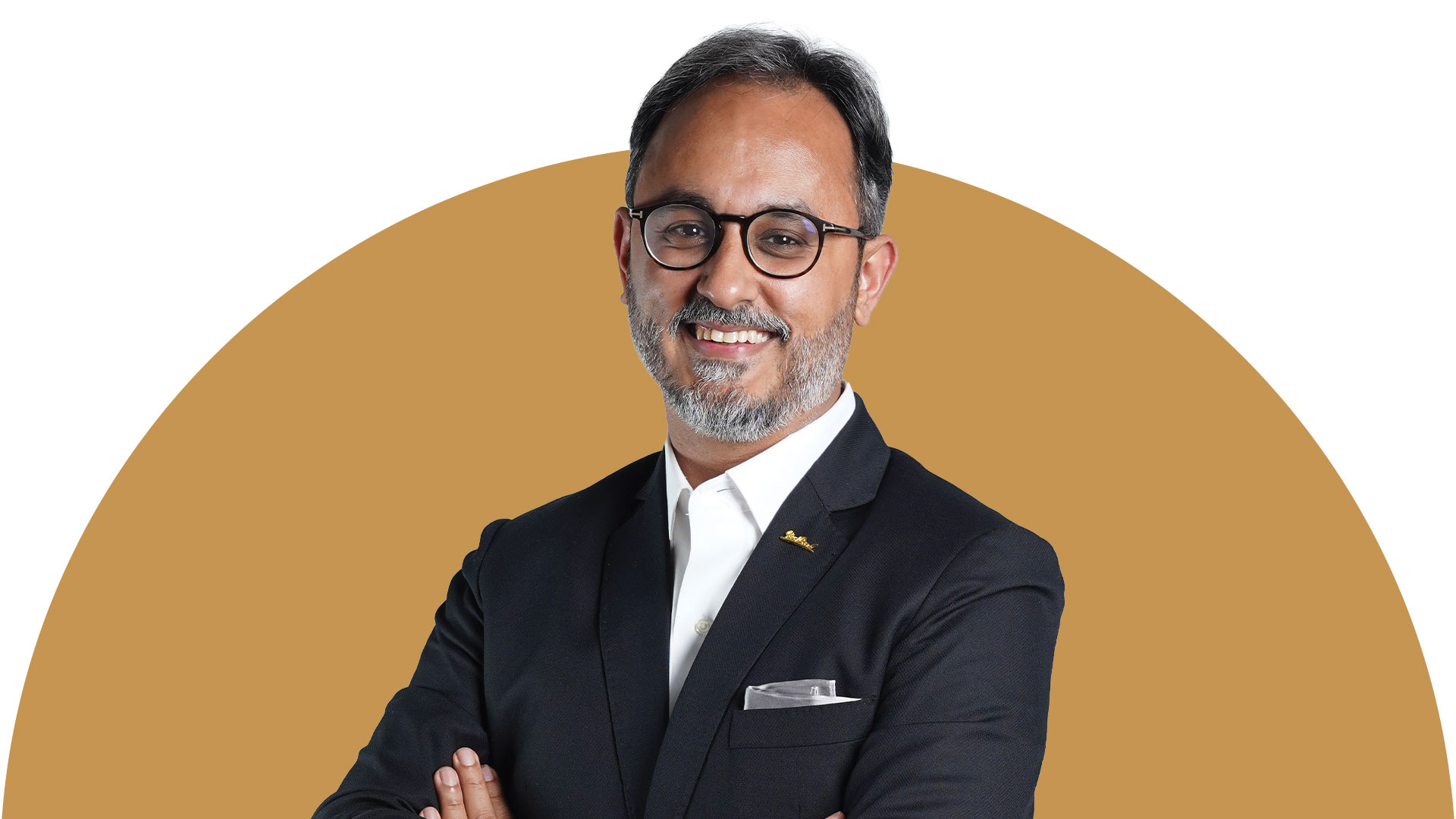
Nikhil Sharma, Managing Director & COO, South Asia, Radisson Hotel Group.
India is no longer one market
For a long time, Indian hospitality operated as though Delhi and Mumbai were India. The data is now making that position increasingly difficult to hold.
Tier 2 and Tier 3 cities are no longer emerging. They are the market. The Hotelivate Trends & Opportunities report, tracking the sector for 28 years, notes that the proposed supply pipeline now introduces branded hotels into 177 new markets. For the first time in over a decade, India's proposed branded supply has crossed the 100,000-room mark, a 58% surge in five years.
Infrastructure is redrawing the map of where travel happens: UDAN's third round added 106 tourism routes with plans to link 120 destinations serving 40 million passengers. Government investment in roads, railways, and logistics is expected to nearly double from ₹51.2 trillion in FY'17–23 to ₹103.8 trillion in FY'24–30. Emerging hotspots such as Indore and Varanasi are challenging the dominance of traditional metros. In online accommodation specifically, the northeast is projected to grow at a 15.89% CAGR through 2031, the fastest of any region in the country.
Chhatwal reads this infrastructure buildout as something close to a civilisational moment: "I always call it the renaissance of train stations, millions of square kilometres of highways getting built, doubling of airports—all that is happening." The demand that follows, he argues, is not incidental. "You can't become the world's fourth-largest economy, aspiring to become the third-largest, and have the same behaviour pattern as you did at number 20 or 25 or 30. The change in GDP growth, in the per capita income, and in disposable income is going to drive consumer sectors. And within the consumer sectors, definitely travel, tourism, hospitality, and aviation are among those."
Anil Chadha, Managing Director, ITC Hotels Limited, connects that infrastructure story directly to where hotel development is heading: "Improved air, road and railway connectivity is helping the growth into new markets. The experience of discovering India by oneself is getting better each year and our ability to develop micro-cultural hubs along with new business based micro-markets is helping the hotel development boom." For Chadha, the signal is visible in India's newest airports: "Our new airports—Navi Mumbai and Jewar more recently—and the development around them is a demonstrated case of the same." On Tier 2 and Tier 3 cities specifically, he is precise about what is actually driving the numbers: “The new hotel growth markets, which today qualify as Tier 2 and Tier 3, is where the recent year-on-year growth is being witnessed owing to a small to limited base of branded hotel rooms. India's pilgrimage destinations have existed for many decades; however, it is only very recently that the demand of quality hotel accommodation in many of these locations has started to outpace supply.”
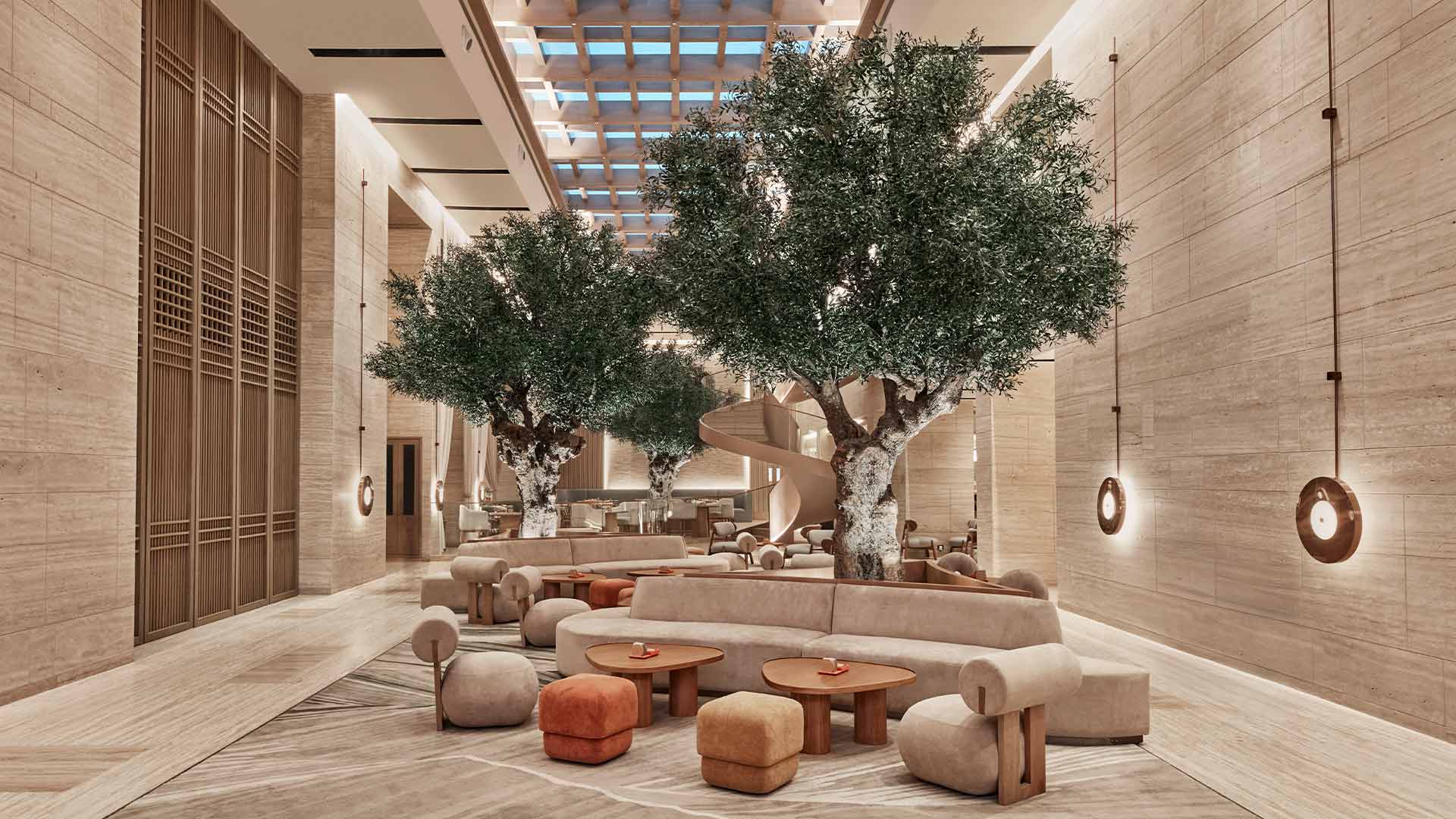
Hilton Baani City Centre, Gurugram's lobby was designed to undo the city before it undoes you.
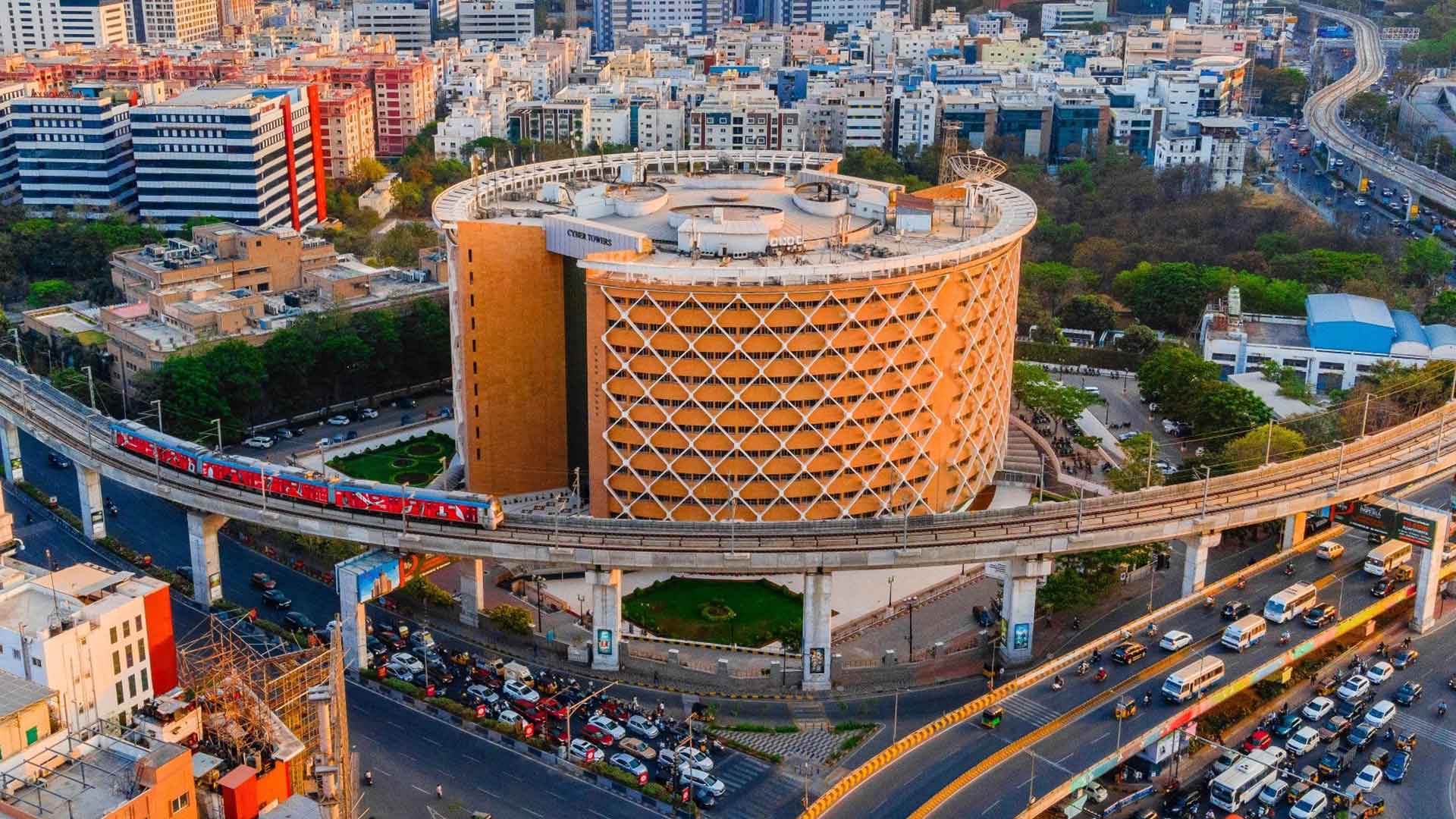
Hyderabad HITEC City: The corporate corridors of India's tech capital are finally getting the hotels they deserve.
Ajay K. Bakaya, Chairman, Sarovar Hotels & Director, Louvre Hotels India, is equally clear that infrastructure is necessary but not sufficient. For him, the more important question is what kind of growth the industry is actually building toward: "Growth is not just about adding more hotels, but about building relevance across diverse markets. Scale creates long-term value when it strengthens distribution, brand trust, and operating efficiencies. However, in emerging leisure and pilgrimage destinations, cultural sensitivity and localisation become equally important." A hotel in Omkareshwar, Rishikesh, or Sindhudurg, he says, cannot be approached with the same lens as a metro business hotel. "Travellers today are looking for authenticity, local connection, and destination-led experiences. Our approach has therefore been to scale with sensitivity—adapting experiences, food, and service to the destination rather than imposing a uniform hospitality template." On the question of which markets justify long-term capital, Bakaya looks for structural signals rather than momentum: "Infrastructure development is often the first signal—airports, highways, rail connectivity, industrial corridors, and tourism projects tend to create long-term hospitality ecosystems." Equally important, he says, is diversified demand: "Markets supported by a mix of business travel, leisure, weddings, pilgrimage, and social events tend to be far more resilient over time." The risk he watches most carefully is the one the industry least likes to discuss: "One of the key risks in fast-growing destinations is over-supply before demand fully matures, which can eventually impact pricing and long-term returns. Sustainable expansion requires balancing opportunity with long-term market depth."
Zubin Saxena, Senior Vice President & Regional Head, South Asia, Hilton, brings a framework to the geography question that is worth sitting with. Before scaling into any Tier 2, 3, or spiritual destination, he says, Hilton looks closely at three things: demand durability, infrastructure readiness, and brand-market fit. "High footfalls alone don't make a strong hospitality market. The real question is whether the demand is consistent and diversified through the year." Markets like Jaipur, Varanasi, Surat, Kochi, Indore, Vrindavan, Ayodhya, and Guwahati, he says, have seen major improvements in connectivity and economic activity that are now translating into stronger demand for branded hospitality. But the third filter is the most important: "Not every city needs a luxury product. In many emerging destinations, full service and focused service brands actually make far stronger business sense because they align better with customer demand and owner economics." The conclusion is disciplined: "Sustainable growth is not about being present everywhere. It is about disciplined capital allocation and a clear understanding of long-term demand quality."
Shankar takes the same logic and adds a dimension that is specific to Brigade's development model. Roughly 45% of their portfolio is already in Tier 2 cities, but the approach has been deliberately integrated: "We don't just build a standalone hotel; we build as part of a larger, thoughtful plan. Most of our projects are mixed-use developments, where the hotel lives alongside office spaces, retail, and homes. This creates a natural energy and a built-in community from the day we open our doors." What she calls "ecosystem readiness"—a reliable airport, a growing corporate landscape, a local spirit worth tapping into—is what tells her a market is genuinely ready. And she is candid about where Brigade's own focus is shifting: "Our primary focus for growth will be back in Tier 1 markets where we see deep, sustained demand. The exception to that rule will be leisure destinations in Tier 2 areas; in those spots, the beauty of the destination itself is the draw."
Not everyone agrees on the implications. Arun Saraf, Chairman and MD, Juniper Hotels, is unequivocal about a different logic: "We continue to prioritise large hotels in major cities." For Saraf, who has completed a successful IPO and is now accountable to public markets, the argument is about expertise and discipline. "As a hotel owner and developer, we cannot operate everywhere, so we must be selective and focus on areas where we have expertise." He is not wrong. The Tier 2 story is real, but it is not a story for everyone.
What the Horwath HTL India Hotel Market Review 2025 observes is perhaps the most grounded read on the geography question: lower saturation in Tier 2, Tier 3, and pilgrimage destinations could keep national occupancy in the mid-to-high 60% range for the next several years, precisely because demand in these markets is growing faster than supply. Religious and pilgrimage travel, weekend getaway destinations near business cities, and state markets like the northeast, Odisha, Andhra Pradesh, and Madhya Pradesh are the next wave.
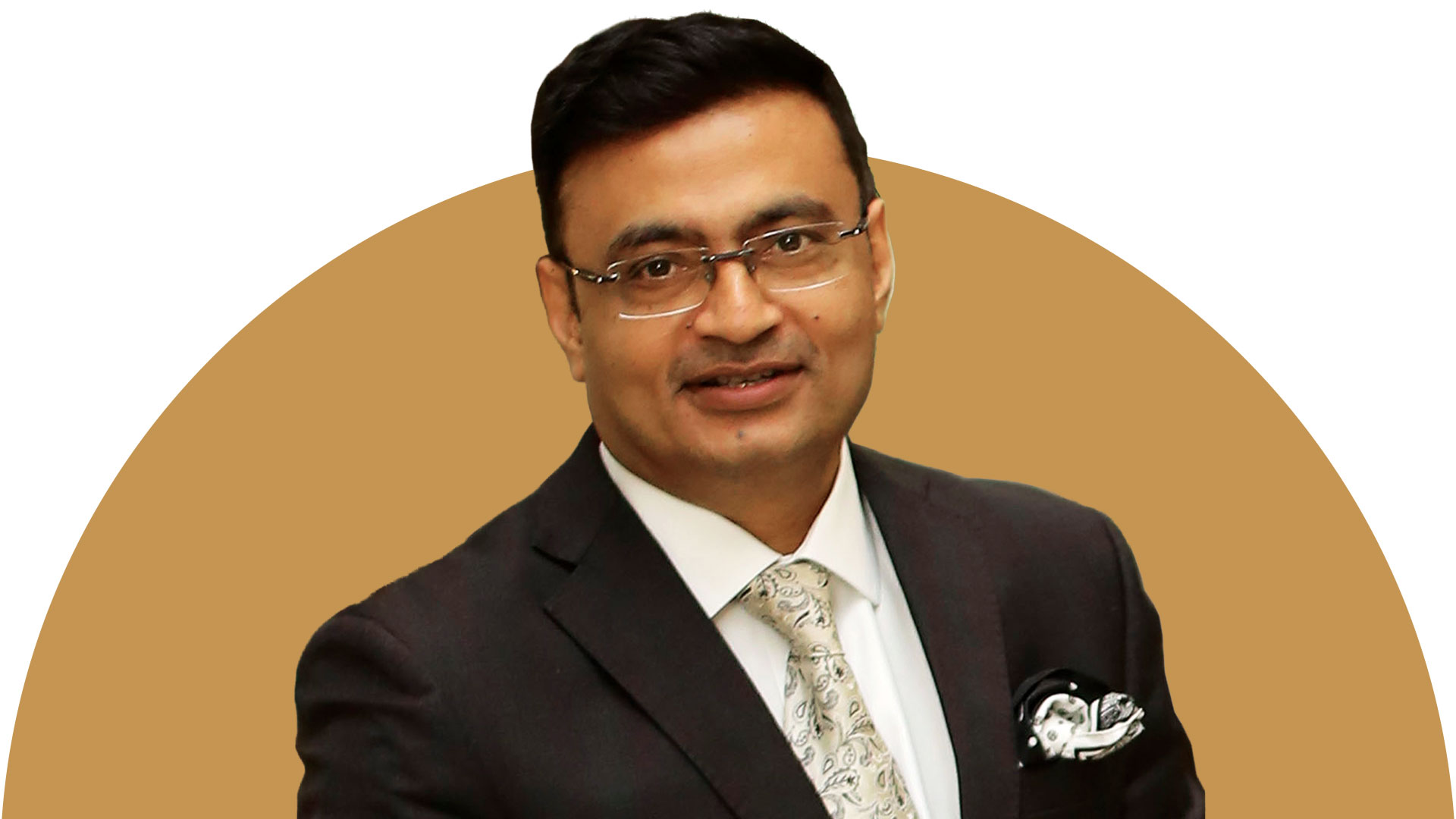
Anuraag Bhatnagar, CEO, The Leela Palaces, Hotels and Resorts.
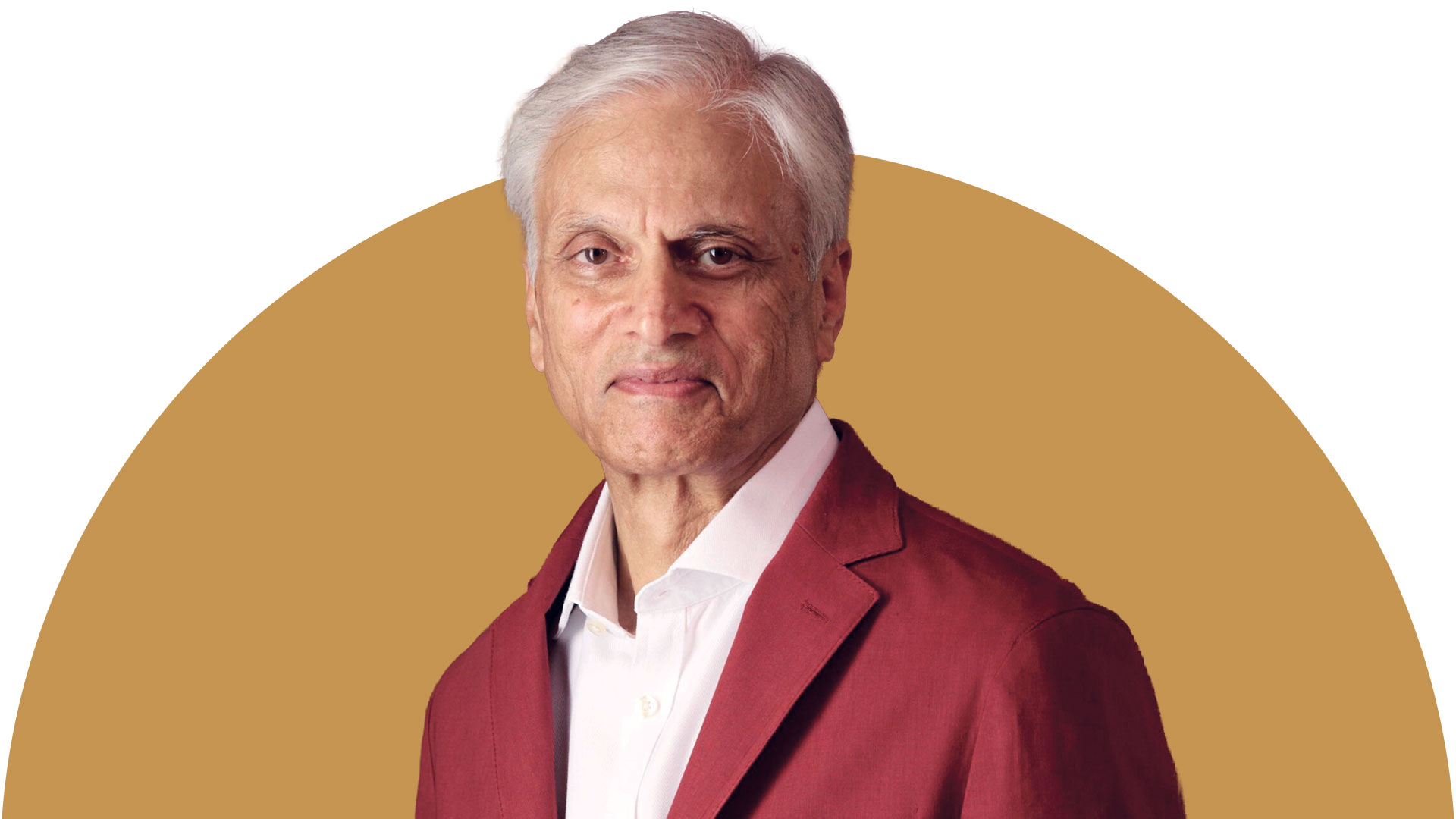
Ajay K. Bakaya, Chairman, Sarovar Hotels & Director, Louvre Hotels India.
From rooms to rituals: what are we actually selling?
Ask anyone running a hotel in India in 2025 what their core product is and almost no one says rooms anymore. The language has shifted so dramatically towards experiences, ecosystems, storytelling, and emotional resonance that one occasionally wonders whether anyone still changes the sheets.
But the shift is real. The question is whether the industry is ahead of it or merely performing it.
Anuraag Bhatnagar, CEO, The Leela Palaces, Hotels and Resorts, describes the structural change with the confidence of someone who has the numbers to back it up: "Hotels are no longer defined only by the rooms they sell, but by the ecosystems they create across cultural, social, and experiential dimensions. By 2026, this shift will no longer be a differentiator; it will be an expectation." The Leela's ecosystem includes Aujasya by The Leela, which integrates wellness into the core guest journey; Arq By The Leela, an invitation-only members' club for private cultural and culinary experiences; and The Leela branded residences, which carry hospitality-led service into long-stay living. The commercial evidence is not soft: RevPAR growth of 13% in H1 FY'26; EBITDA margins of 48.2%. Experience-led hospitality, it turns out, is not just more meaningful. It is more profitable.
Chadha frames the same shift with a philosophical breadth that is hard to argue with: "Luxury hospitality today is no longer confined to just scale or physical opulence. What hotels are truly selling today is how people feel, what they remember, and increasingly, what they become through those experiences." For ITC Hotels, this is not a recent pivot but a long-standing position: the promise of Responsible Luxury, rooted in what Chadha calls Authentic Indigenous Experiences. "Long before sustainability became a global conversation, ITCHL believed luxury could be both world-class and deeply conscious: luxury that exists in harmony with the environment and society, while remaining rooted in Indian sensibilities." The hotel, in his framing, has become something larger than itself: "Hotels are no longer just places to stay, they are becoming cultural platforms, social ecosystems, culinary destinations, wellness spaces, and communities where people connect and engage."
Bakaya locates the same shift in the changing grammar of what Indian guests actually want: "Hotels today are no longer just selling rooms or conventional luxury. Increasingly, hospitality is about experiences, emotional connection, and a sense of belonging." For many travellers, he says, luxury has been quietly redefined: "It is becoming less about imported global markers and more about authenticity, personalisation, wellness, and meaningful experiences. For many travellers today, luxury could mean a spiritually immersive stay in Haridwar, a nature-led retreat in Sindhudurg, or locally rooted culinary experiences that reflect the destination." The commercial logic follows: “There is a clear shift toward experience-led value, where guests are willing to spend more on memorable and culturally relevant experiences rather than only physical opulence.”
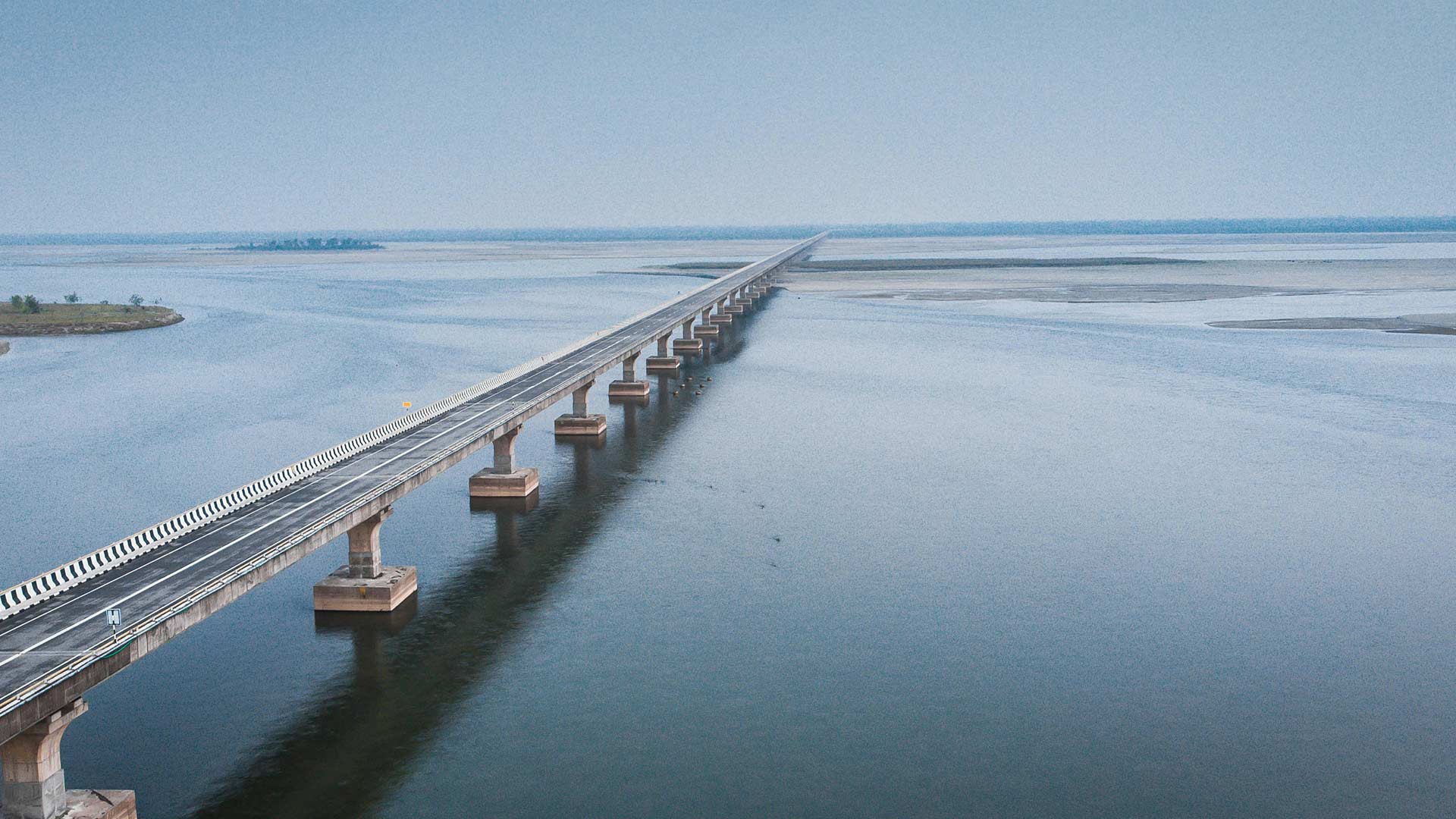
At 9.15 kilometres, the Dhola Sadiya Bridge has done more for Assam's hospitality story than a decade of marketing ever could.
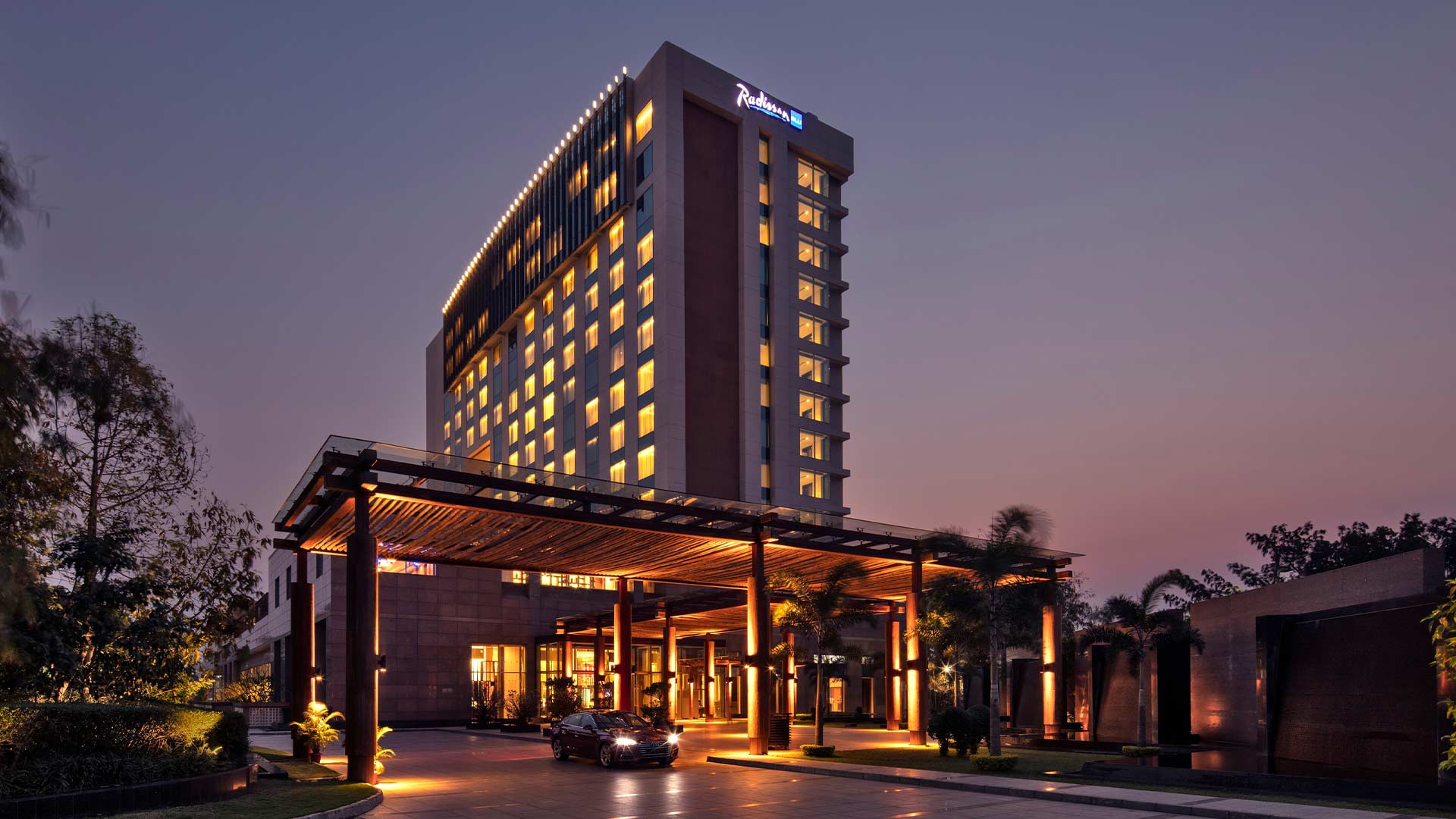
Radisson Blu Hotel, Guwahati is proof that branded hospitality has finally caught up with the northeast's moment.
Singh at Chalet puts it with a directness that cuts through the marketing vocabulary: "At its core, hospitality is about making people feel something—whether that is comfort, belonging, inspiration, restoration, or emotional connection. Hotels are no longer just selling rooms or physical infrastructure. Increasingly, they are selling time well spent." Guests are highly discerning, he says, and can immediately tell the difference between experiences curated with intent and those that exist only at a branding level. That thinking shaped the launch of Athiva Hotels and Resorts, Chalet's upper-upscale lifestyle brand: "The intention was not simply to introduce another hospitality offering, but to build experiences centred around joy, wellness, immersive engagement, and a stronger connection with the destination itself."
Saxena at Hilton returns the conversation to a proposition that cuts through the vocabulary accumulation: "Fundamentally, hospitality is still about one core idea: it matters where you stay." Wellness, he says, has moved far beyond spas and fitness facilities—it now means better sleep, healthier dining, intuitive technology, flexible spaces, personalised service, and a seamless, stress-free experience. "Similarly, experiences are becoming more personal and destination-led. Guests want stays that feel relevant to why they are travelling, whether for business, leisure, pilgrimage, or celebration." The test, always, is whether the concept survives contact with the actual guest journey.
Sharma at Radisson makes the same point from an operational angle: "Experiences become meaningful only when they are locally rooted and thoughtfully integrated into the guest journey." At Radisson, the translation from concept to reality runs through hyperlocal food experiences, local culture and design integrated into properties, seamless digital journeys, and personalised interactions at every touchpoint. "We achieve that by translating these ideas into tangible outcomes rather than positioning statements."
Shankar at Brigade is equally grounded about what genuine experience looks like in practice: "Today, we aren't just selling a bed; we are selling a lifestyle, which can mean different things to different people." For some guests, lifestyle means a power shower, sound sleep, and a hearty breakfast. For others, it is downtime, healthy food, and green spaces. At Grand Mercure Mysuru, the F&B reflects local narratives through cuisine and the items served. "We ensure our ecosystem includes everything from co-working spaces to curated local art, making the hotel a neighbourhood hub, not just a transit point."
Hotels will no longer be viewed as standalone accommodation providers but as lifestyle platforms, integrating dining, wellness, culture, entertainment, and community engagement into a cohesive guest journey.
Sanjay Sood, CEO, Leisure Hotels—whose portfolio sits in Uttarakhand, across hill and spiritual destinations along rivers and lakes in Corbett, Haridwar, Rishikesh, Nainital, and Naukuchiatal—is perhaps the most direct of all: "The focus is firmly on experiences. The goal is to offer a holistic, immersive stay rather than just accommodation." He runs his business on a straightforward principle: create experiences both within the hotel and in the surrounding destination, so that guests engage with local culture and environment, not just the property's thread count.
The data agrees. Domestic visitor spending reached approximately ₹16 trillion to ₹16.8 trillion in 2025. Younger travellers are consistently choosing experience-led trips and spending more per trip as a result. Millennials and Gen Z are driving vacation rentals at an 18.24% CAGR through 2030. Curated brands like SaffronStays and StayVista are proving that the experience proposition works at least as well outside the traditional hotel format as within it. Workations are extending average lengths of stay in hill and leisure destinations in ways that are quietly rewriting the economics of seasonality.
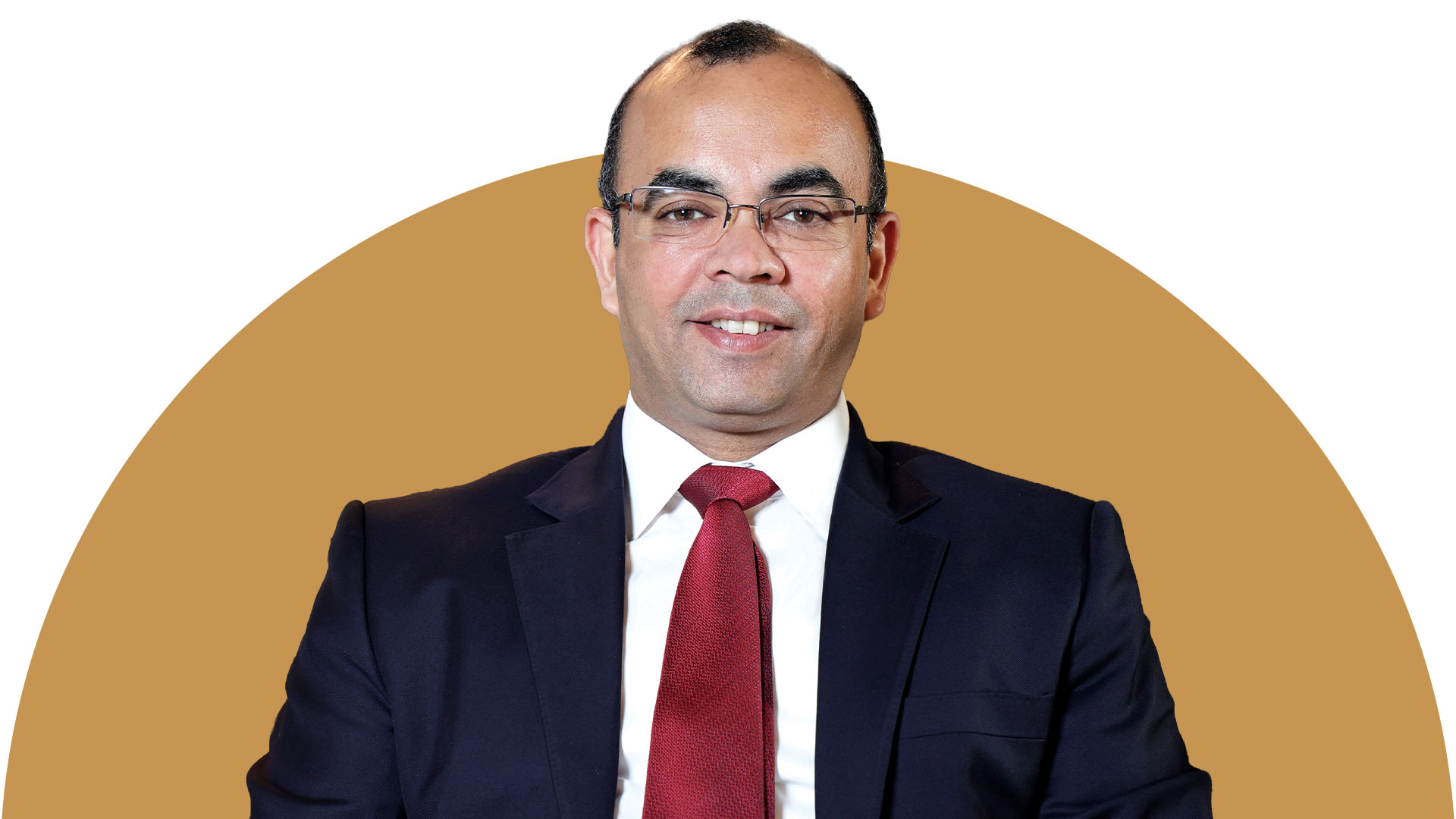
Zubin Saxena, Senior Vice President & Regional Head, South Asia, Hilton.
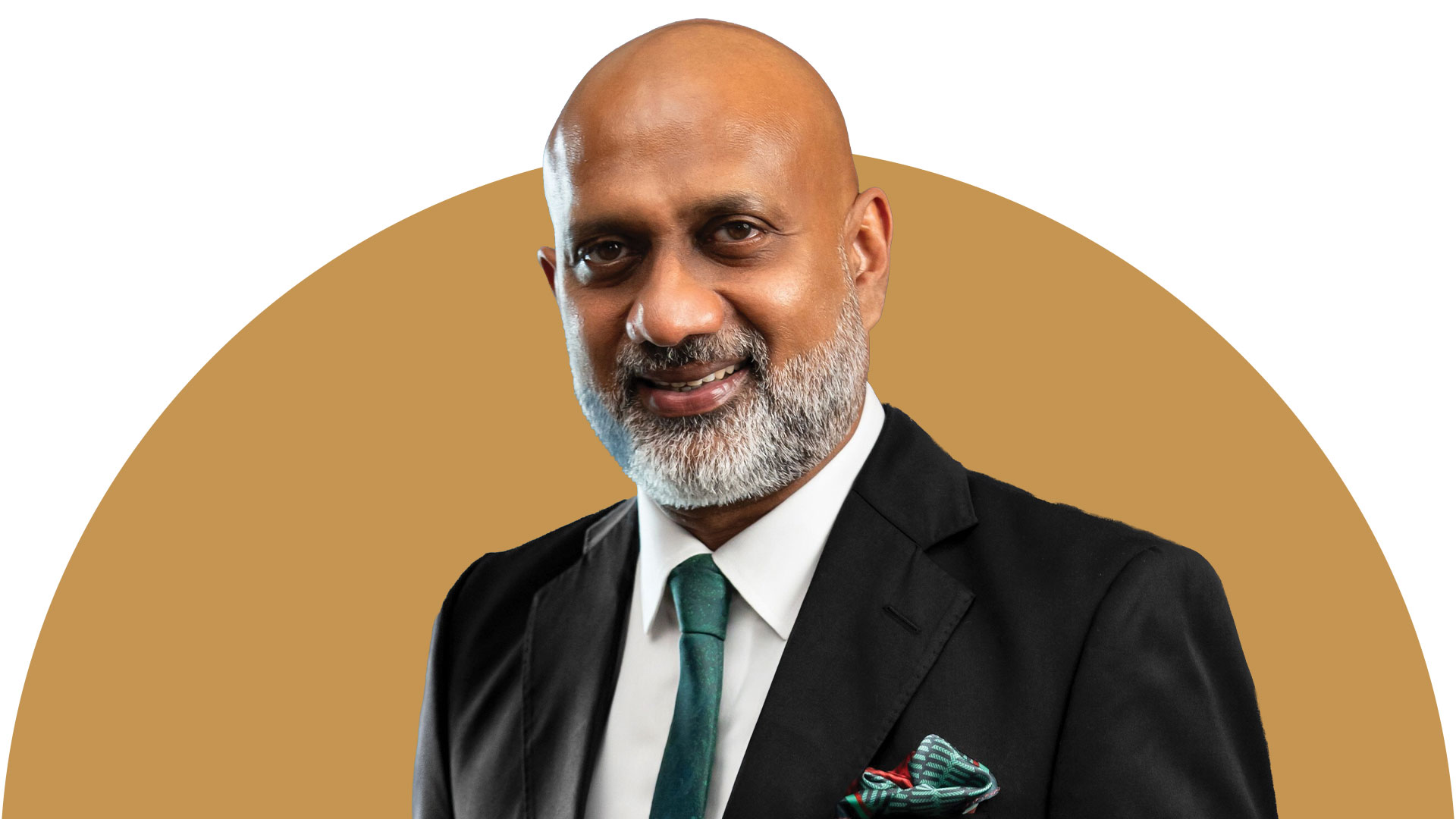
Kiran Andicot, Senior Vice President, South Asia, Marriott International.