











The New Era of Boutique Hotels
A generation of small, independent, design-led properties, promoted by passionate independent hoteliers, is reshaping Indian hospitality. Now the homegrown and global hospitality groups want in. SOH asks what happens to intimacy and individuality once boutique becomes big business.
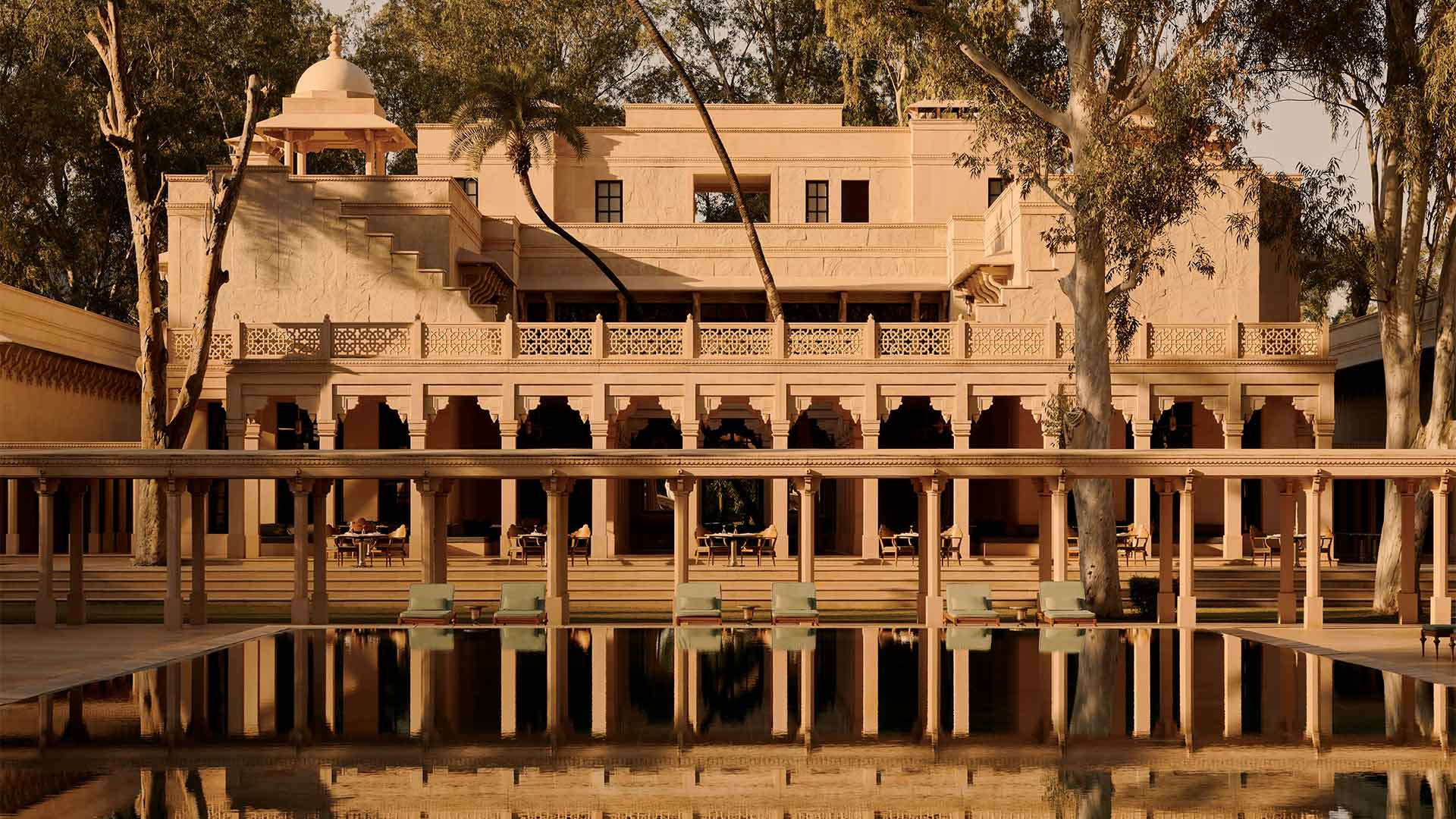

By Deepali Nandwani
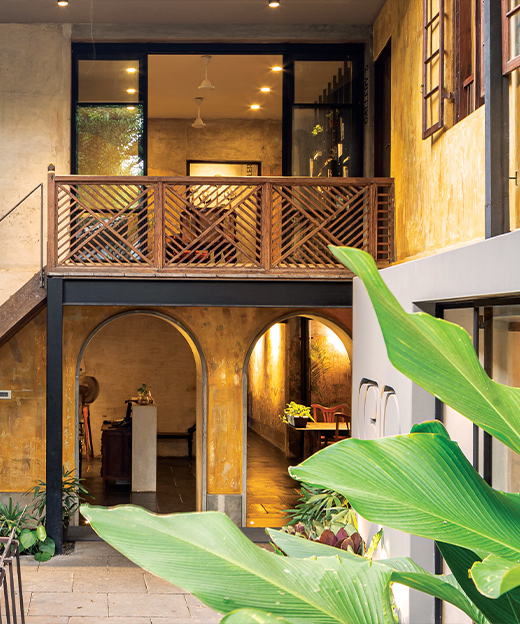
In Assagao, Goa's old ‘Land of Flowers,’ where the blooms and pretty Indo-Portuguese houses have been replaced by luxury villas, urban restaurants and bars, stands Unseen, a small coffee-forward boutique hotel. Just 11 rooms and a penthouse, and big feels, especially for coffee lovers. The Coffee Culture café within the boutique puts out a coffee omakase experience, an intimate journey through several terroirs—the well-balanced El Salvador volcanic coffee with a chocolate and nutty profile; Ethiopian coffee from its misty highlands; Colombian coffee from its floral valleys, and Panama's citrus-kissed brew.
You begin slowly, listening to the barista, Rishikesh, who has represented India at the world championships, tell stories about the terroirs the coffees come from, the rituals of the making, and sampling the small bites that heighten each flavour. Somewhere in the sequence a cold brew appears that has been coaxed for 12 hours, tasting improbably of hops—grassy, green, with a floral finish. Each bit is curated to the last. In an Assagao that has largely swapped its stillness for expensive square footage, this is one of the few places you can still take slowness one pour at a time.
Gaurav Narang, Founder, Coffee Culture & Unseen, says the property was built “not on a brief, but on a feeling”. The idea was to take the ritual around coffee, which had been the company’s world for close to two decades, and see what happens when it became part of hospitality. The hotel has a working roastery, café and coffee omakase, but a guest can also spend the afternoon by the pool, read a book, sleep or wander around Assagao. “We never wanted to make a coffee-themed hotel,” Narang says. “Coffee is the operating rhythm, not the wallpaper.”
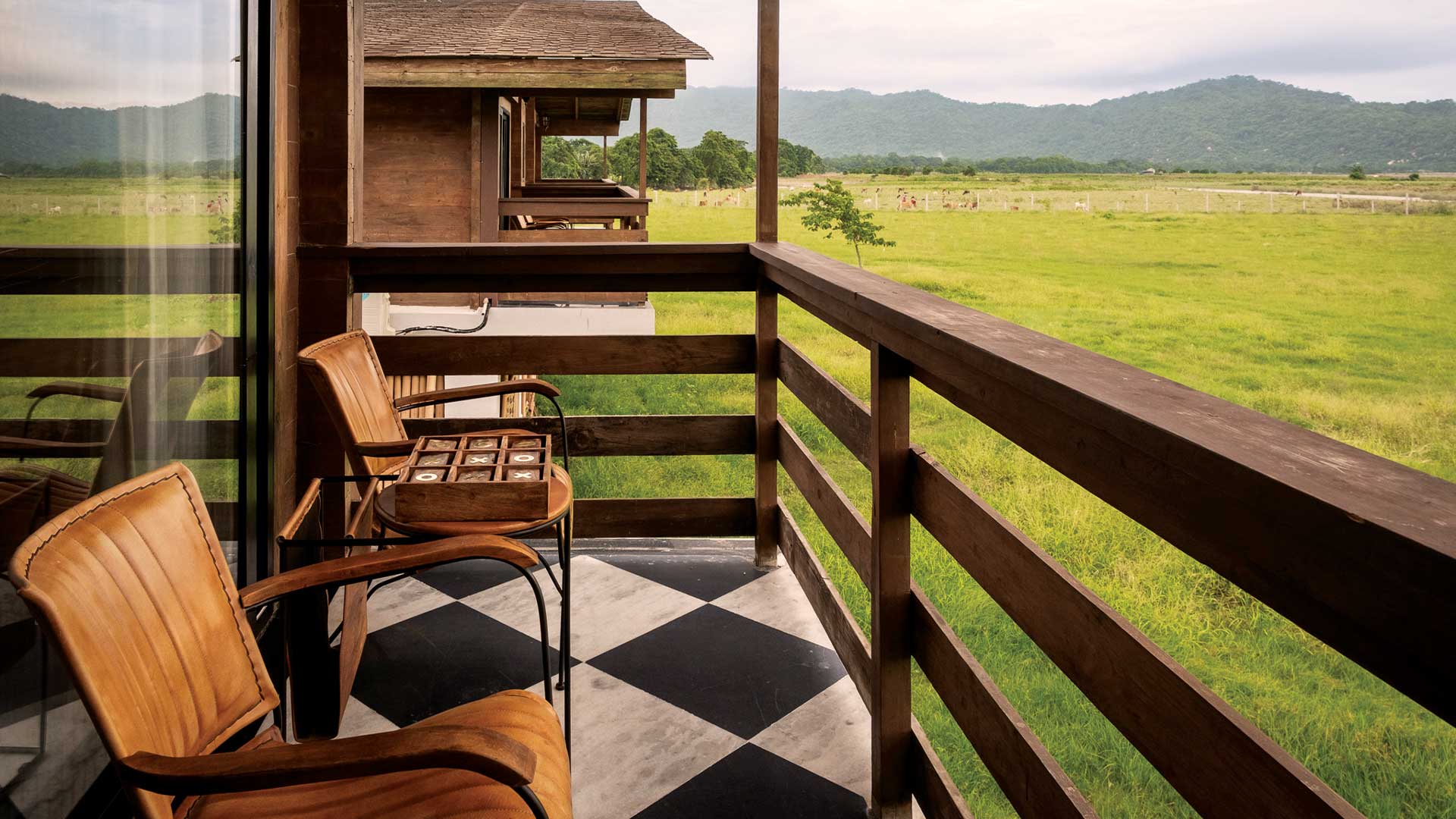
Rhino & River Wildlife Retreat & Spa, Pobitora, roots its boutique experience in Assam’s wildlife and culture.
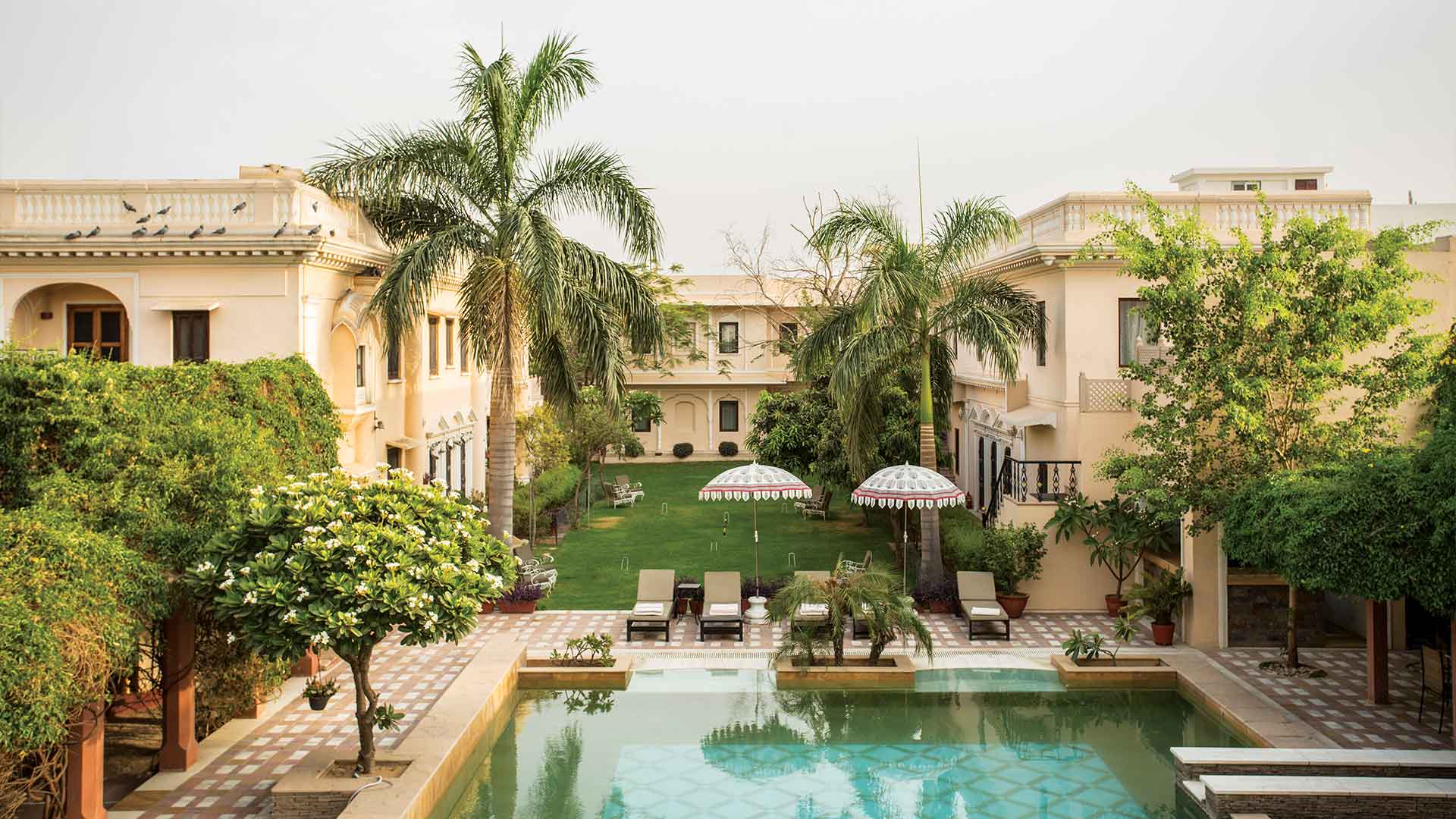
Royal Heritage Haveli brings family-run intimacy to its Jaipur setting.
At MRS Group’s flagship property, Suryagarh, which stands just where the enormous Thar begins outside Jaisalmer, that script might begin at five in the morning, curled under a blanket at the ruined Khaba Fort, waiting as the first orange light spills over the hill and peacocks walk down to a village boy's whistle for its Breakfast with Peacocks experience. By night it moves to a sand dune lit by a million stars, game meat and kebabs, and Manganiyars singing the songs of the land. The havelis borrow from the Paliwal Brahmins, built, as Managing Director Manvendra Singh Shekhawat puts it, so that “stand under any structure in this region, and immediately, even in the harshest of summer, you feel a cool wind enveloping you.”
Deeper into the state, in the leopard country of Jawai and the wilds of Ranthambore, SUJÁN writes a different kind of script, with luxury resorts of just 10 or 12 tents, where the safari is not an add-on but the reason for being there. Owner Jaisal Singh founded Sher Bagh in Ranthambore in 2000, on wilderness his family had called home for decades, and has never treated the two as separate pursuits. “When I founded Sher Bagh, I did not view conservation and hospitality as separate endeavours,” he says. The camp existed to give that wilderness greater value by letting people experience it meaningfully, and through that experience, care about its future. A guest, in his telling, is “invited to understand the wilderness and to become part of its protection”. Singh is candid about what sets the camps apart: every one should “belong unmistakably to its landscape and culture,” and the craft lies in letting “the landscape, not the hotel, remain the protagonist.”
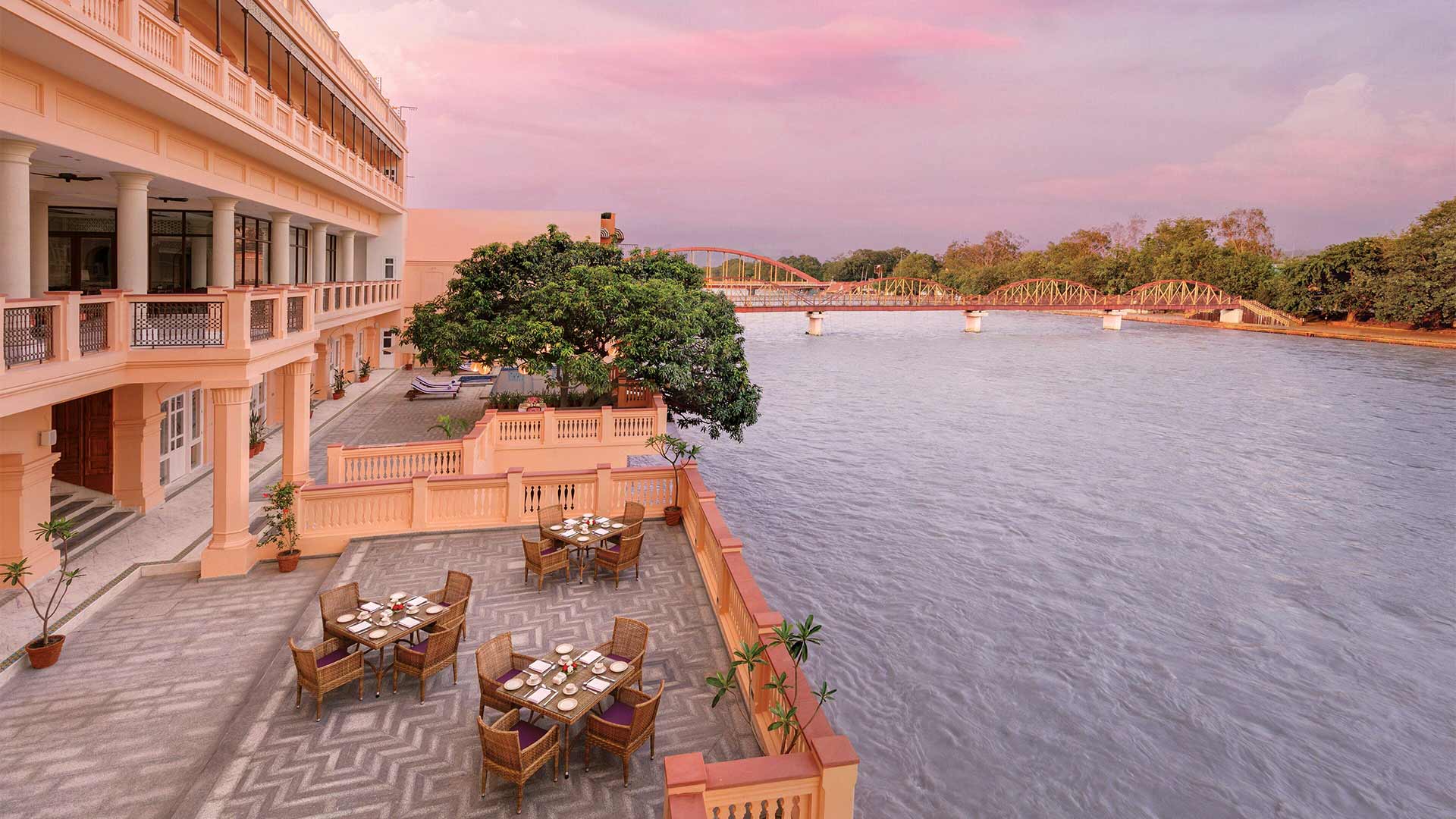
In West Bengal, Bari Kothi, at the Sheherwali mansion in Azimganj pulled back from collapse, guests wake up to the Bhagirathi lapping outside and chai poured as light filters through restored stained glass, before walking them through a seven-course vegetarian meal where each dish carries stories about the history of migration. “I define luxury in three ways,” says co-founder Darshan Dudhoria, “the quality of what you touch and feel, the quality of the people you interact with, and the quality of time spent in a place.”
Its 30-member team is native to the region, and the family has deliberately built links with the wider community. Boatmen who take guests out on the river have seen their incomes increase substantially; artisans and other local businesses are part of the hotel's ecosystem. “If we had built everything ourselves and brought everything from outside, we would have been outsiders in our own land,” says Dudhoria. The family now hopes to restore five more Bari Kothis over the next five to seven years, using the experience as a model for heritage conservation and rural economic development.
Further east, on the Brahmaputra, the 16-key Rhino & River Wildlife Retreat & Spa, now part of the Small Luxury Hotels (SLH) collection, leans on near-guaranteed rhino sightings in Pobitora, boatmen's songs at dinner, and an afternoon in the unsettling black-magic museum at Mayang, proof, as Managing Director Vikas Agarwal admits, that the retreat “couldn't be what [it has] become without the rhino or the river”. The hotel is the first resort on the Brahmaputra in this part of Assam, with stilted cottages designed for the region's floods and interiors that use materials and craftsmanship from the northeast. The idea was to make Pobitora and Mayang part of the experience rather than simply use the hotel as a base for a safari. Much of that experience revolves around a sanctuary most travellers overlook. Pobitora holds one of the world’s densest rhino populations in under 40 square kilometres, an hour from Guwahati, and Rhino & River has built its case around it. “Everyone knows Kaziranga, but very few people know Pobitora,” says Resort Manager Mani Gurung. “Here, rhino sightings are almost guaranteed, and the culture is ancient.”
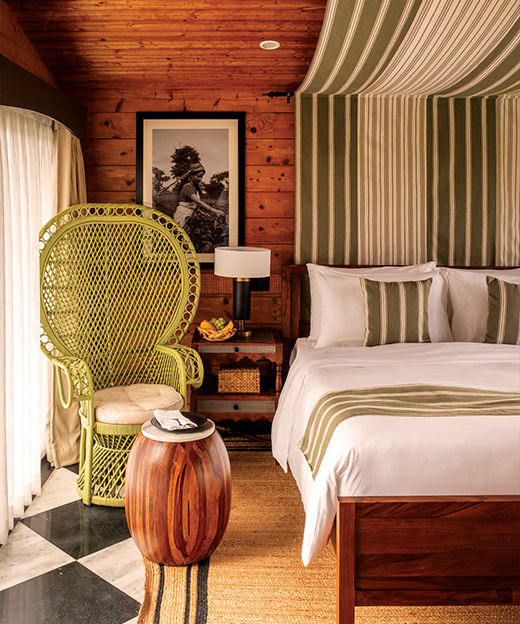
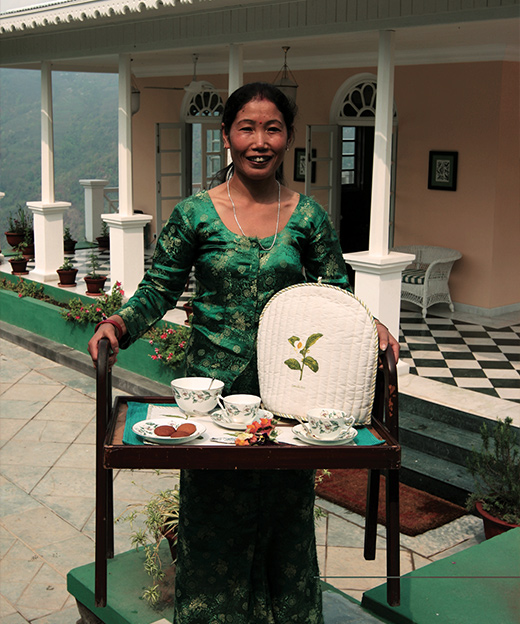
And in Darjeeling, Glenburn folds tea into everything, from the two-leaves-and-a-bud stitched onto the bed linen to the tea-smoked chicken at dinner, offering, in owner Husna-Tara Prakash's words, the chance to “live the grand life of a tea planter, but also get up close to the local community who are the heart and soul of what we do”. The 1,600-acre estate, with its private forests, also gives the tea estate another source of income, helping sustain the estate and the communities around it.
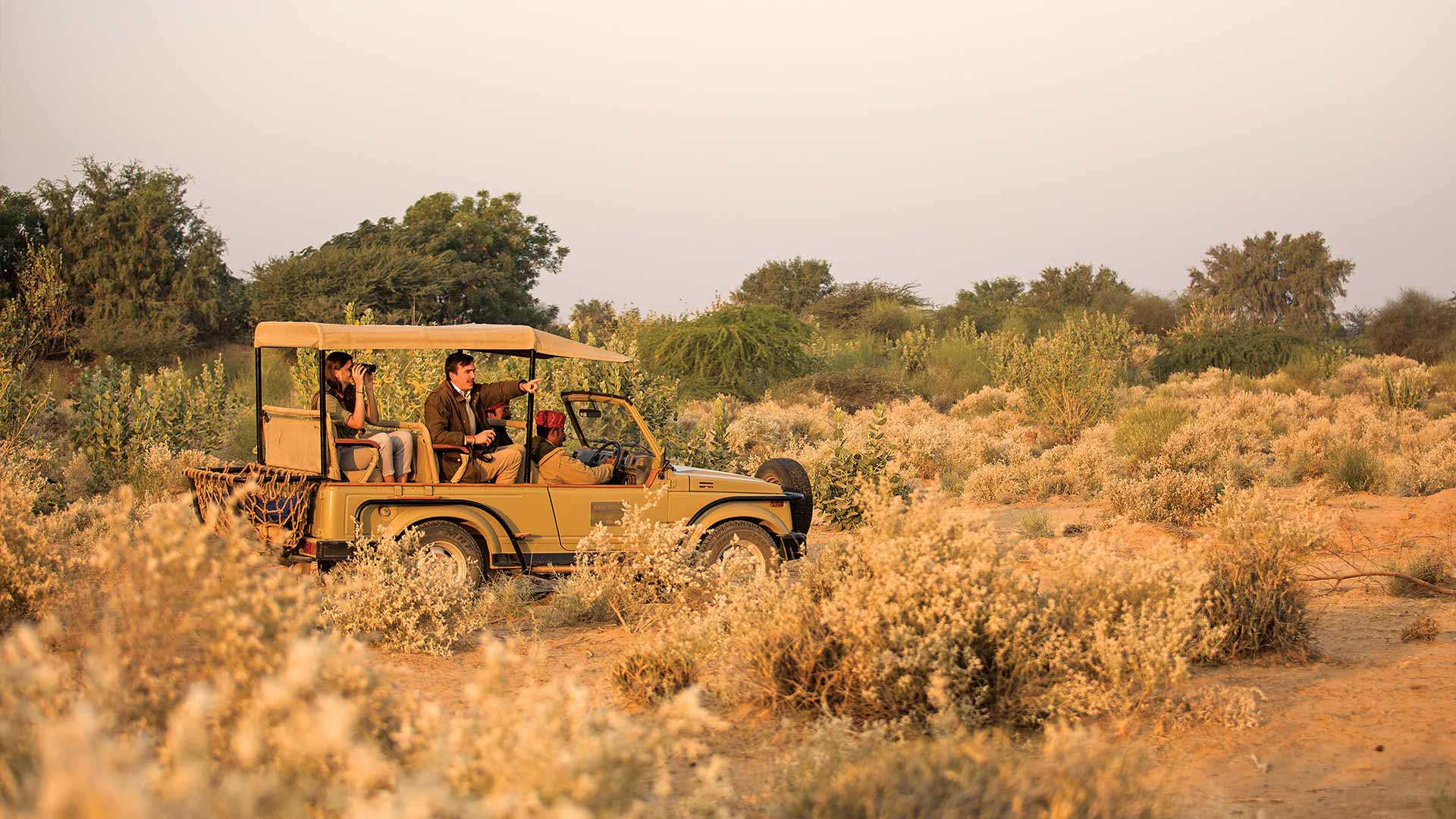
Journeys by jeep into the Thar take guests at Relais & Châteaux member SUJÁN The Serai beyond the camp.
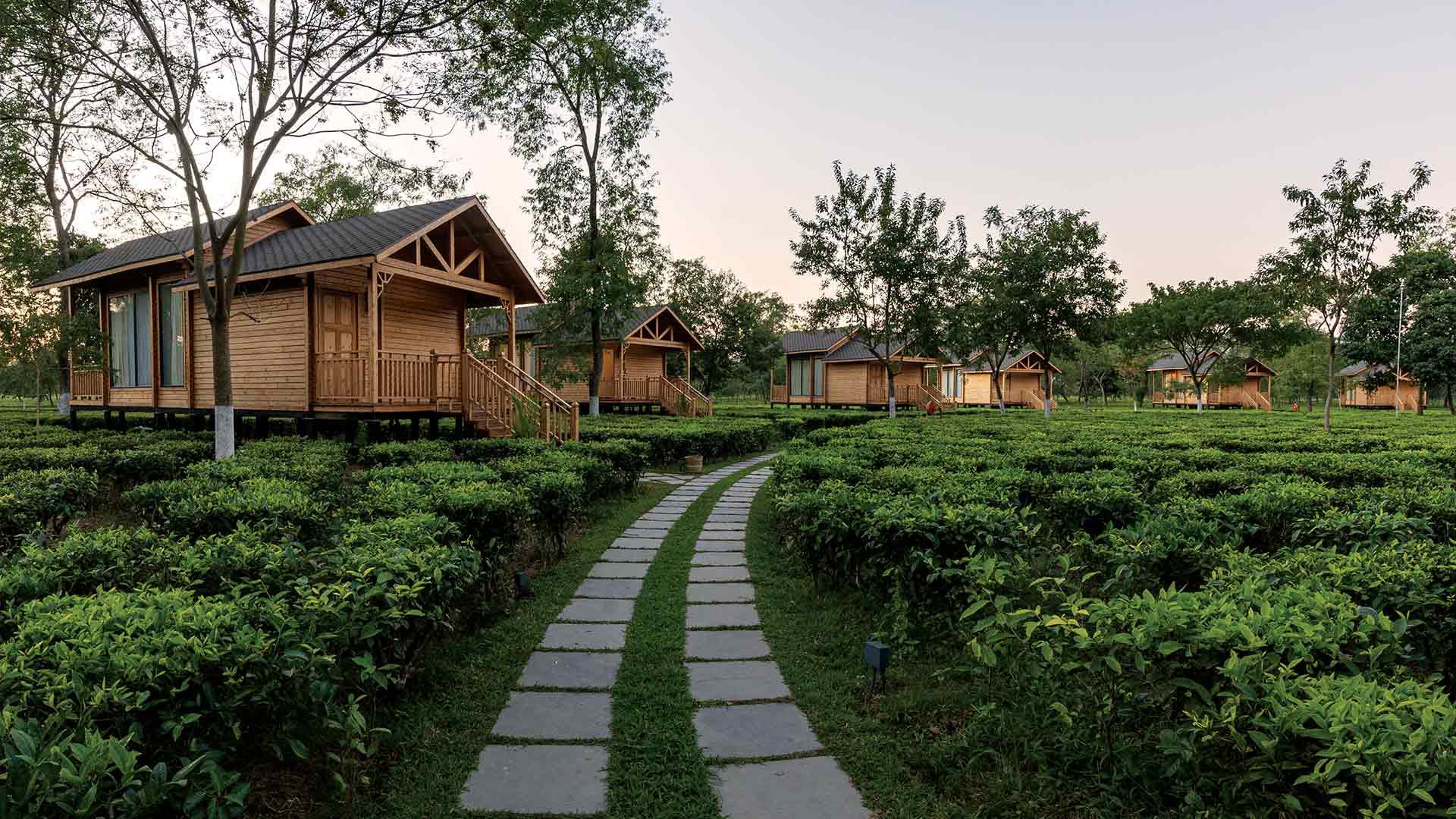
The Postcard in the Durrung Tea Estate, Assam, turns life on a 1,400-acre tea estate into an intimate boutique stay.
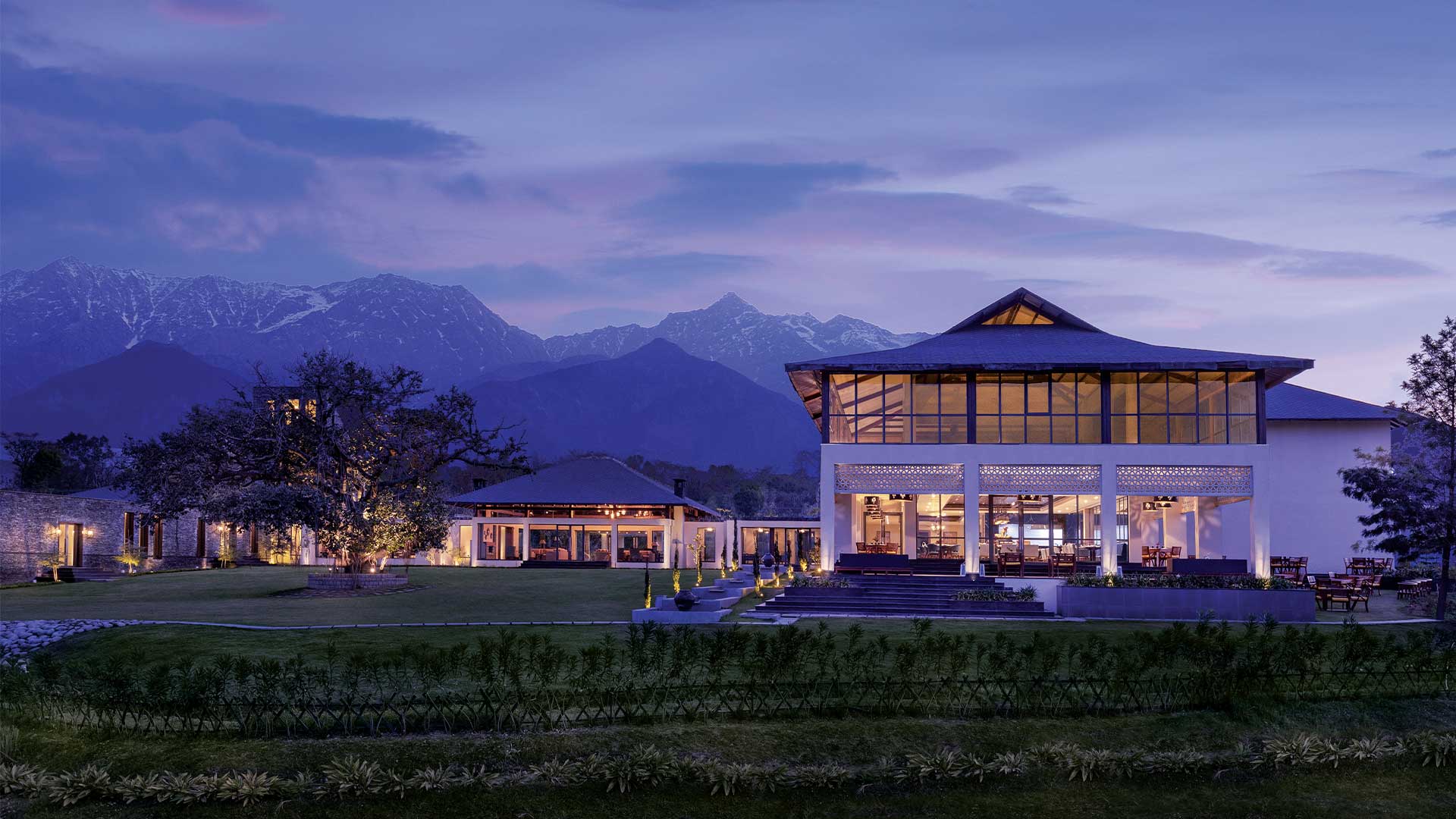
What many international guests misunderstand about India is the idea of luxury beyond a grand lobby with crystal chandeliers and gold décor. What defines small luxury here is depth: a family that's run a haveli for generations, a former corporate executive building a retreat from the actual materials of the hillside it sits on, a lodge built around genuine wildlife conservation. There's also a slower, stiller register of luxury that India does exceptionally well but doesn't always get credit for.
MARK WONG
Senior Vice President-Asia Pacific, Small Luxury Hotels of the World (SLH)

How big is the opportunity
By HVS Anarock's India Hospitality Industry Overview 2025’s reckoning, rather large. India's hotel brand signings hit a record of roughly 64,000 keys across 586 properties in 2025, up 36% in a single year, and 42% of the hotels that opened that year were in leisure destinations rather than the metros. IHCL big boss, the ever-candid and outspoken Puneet Chhatwal recently mentioned in a podcast with Nikhil Kamath, “If I were to advice a young person looking to start an enterprise, I would advise him or her to forget AI, and start a small boutique or a green hotel. There is immense potential there.”
Akash Datta, Managing Director (South Asia), HVS Anarock, says that the Indian travel industry is undergoing a remarkable transformation, shaped by shifting traveller preferences towards unique, experiential, and immersive journeys. “India's affluent consumer base has expanded considerably, while domestic leisure travel has become much more sophisticated. Importantly, the Indian luxury traveller is increasingly willing to spend meaningfully on experiences within the country. This has created a growing pool of consumers with both the ability and, increasingly, the willingness to spend time on differentiated luxury experiences.”
Underpinning the shift is a change in what travellers want from a stay: the report notes that nearly 80% of Indian travellers now treat the stay itself as central to the trip rather than just a bed for the night, and a clear majority are actively seeking experiential, culturally rooted holidays. HVS's own shorthand for what these guests are after is disarmingly simple: properties that feel “like somewhere rather than anywhere”.
Offbeat and remote destinations are fundamental to the proposition of the boutique story. A compelling boutique hotel can sometimes create demand for a destination, and open up opportunities across India's coastline, mountains, wildlife destinations, heritage locations, plantations and culturally rich secondary destinations. “In boutique luxury, sometimes the guest chooses the hotel first and discovers the destination through it. Tier 3 and Tier 4 markets accounted for 45% of keys signed in H1 2026, increasing from 40% in H1 2025. The numbers reinforce the idea that hotel development is steadily moving beyond India's largest urban centres, creating a wider canvas of hospitality offerings. A subset of it is smaller-format, experiential and destination-led hospitality concepts,” adds Datta.
Not everyone reads the numbers as an invitation to build. Jaisal Singh, whose SUJÁN camps sit inside two of India's most sought-after wildlife landscapes, is blunt about where the growth should not go. “Conservation-led hospitality can, and I wish would, grow in India, but not through the addition of more hotels and more rooms,” he says. In his view neither Ranthambore nor Jawai needs another hotel, and the country does not need more beds in its wildlife areas. The opportunity, as he sees it, is to scale a set of principles rather than keys: operating within a landscape's carrying capacity, reducing pressure on natural resources, and holding the hotels already inside these fragile areas to account for their impact.
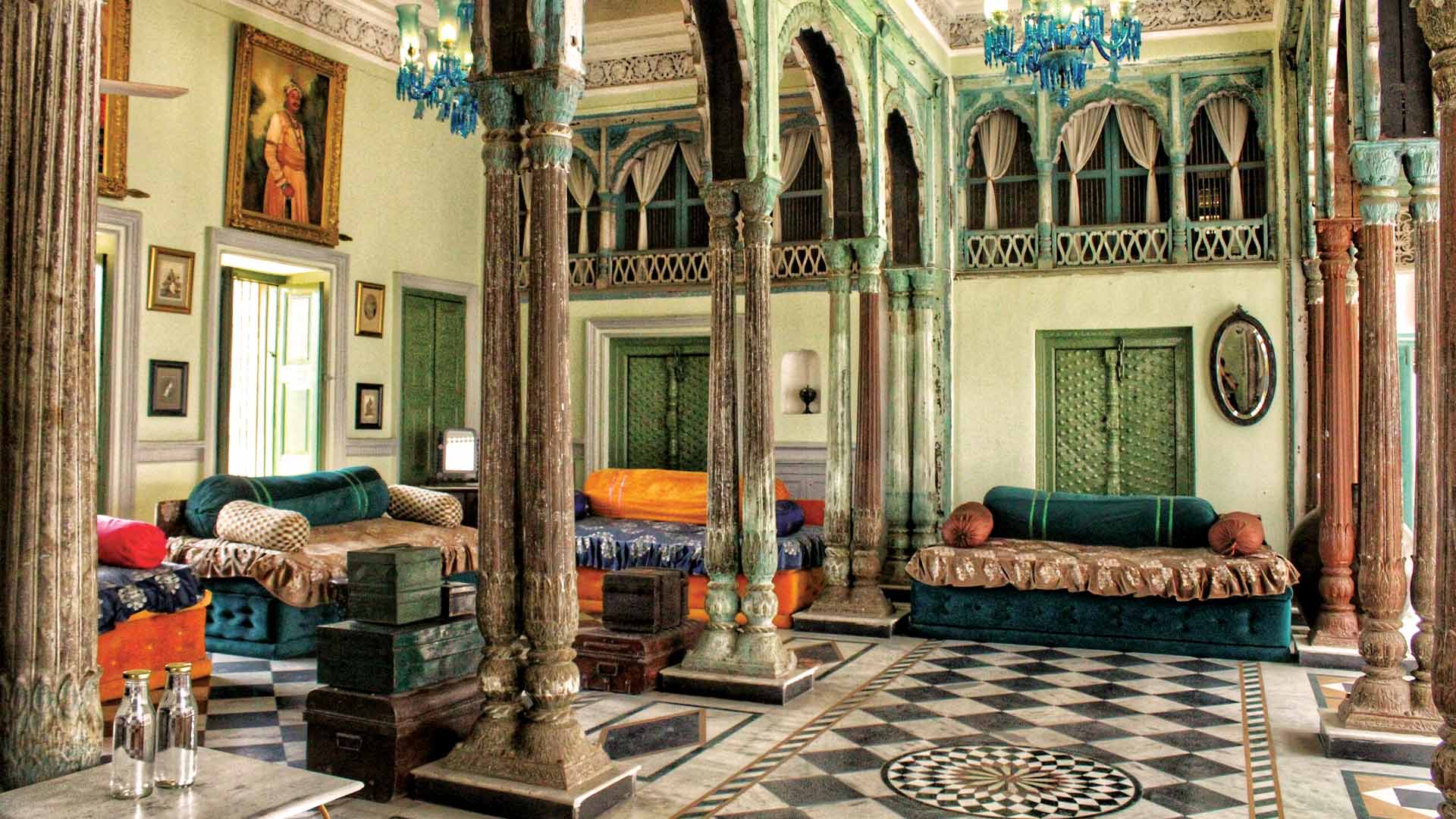
Restored after half a century, Bari Kothi in Azimganj gives a Sheherwali mansion new life.
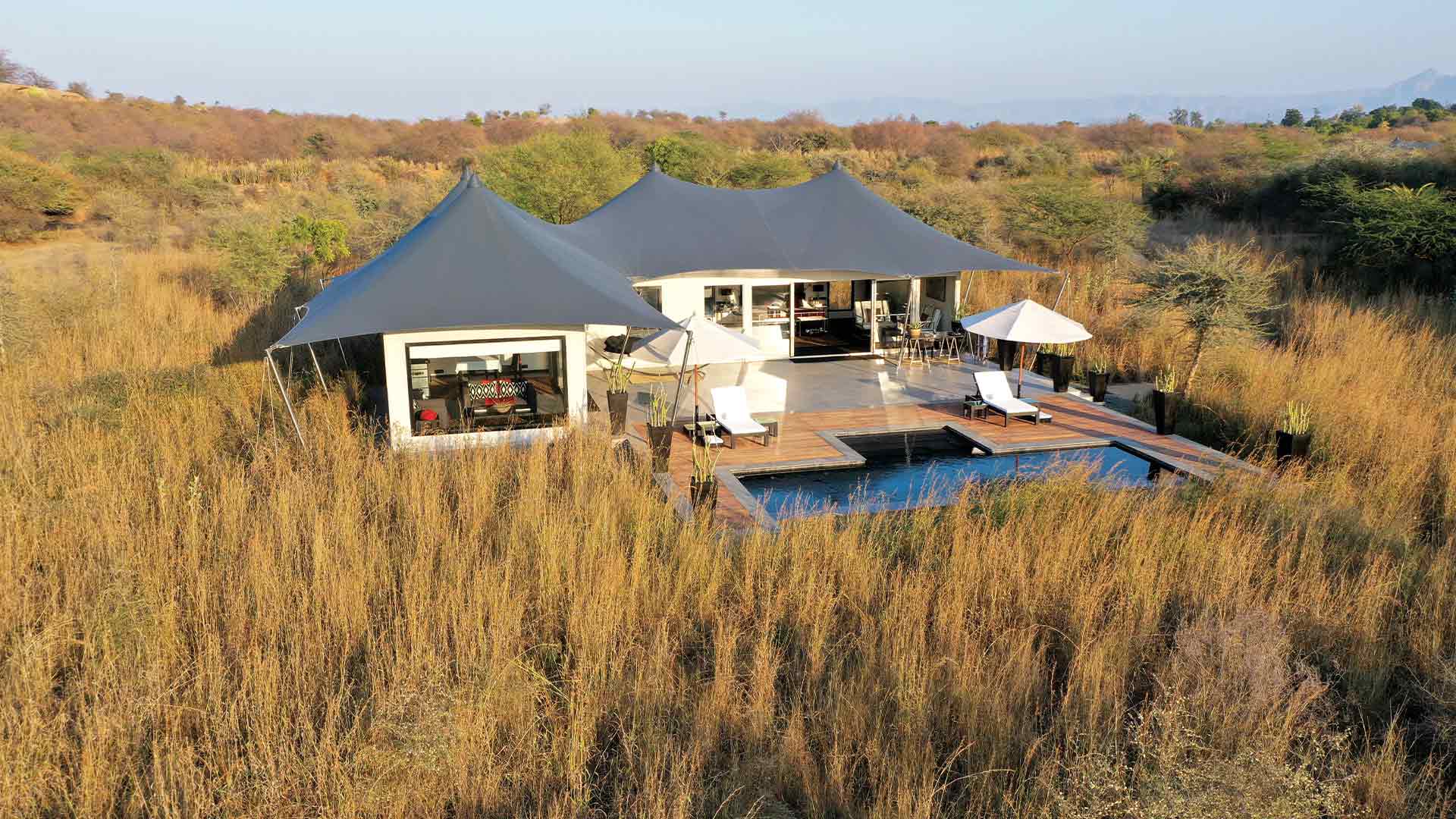
Relais & Châteaux member SUJÁN JAWAI’s Royal ‘Panthera’ Suite pairs privacy with proximity to the wild.
IHCL’s brandscape has evolved with changing consumer preferences. amã Stays & Trails pioneered branded luxury homestays in India, while Tree of Life offers upscale boutique retreats rooted in the character and culture of their destinations. Together, they expand IHCL’s leisure portfolio with distinctive stays that retain a strong sense of place.
DEEPIKA RAO
Executive Vice President, Select Service Business, IHCL
Amruda Nair, Founder, Araiya Hotels & Resorts, has watched the transformation of the boutique segment closely. After working on large hotels, including a 611-room project in Saudi Arabia, she returned to India wanting to move “from big box to something small and meaningful”. What she has seen since then, however, is a growing interest among Indians in discovering India itself. Younger travellers, she says, are returning to their roots, looking for villages, spiritual destinations, wellness and places that are difficult to access from the big cities. When Araiya first opened in Palampur, Nair remembers that people would confuse it with Palanpur. Today, the property has helped put the destination on the map for its source markets.
The model also creates a multiplier effect in the destination. Araiya hires locally and works with organisations in Himachal Pradesh and Uttarakhand to source products such as oils made from apricots and walnuts. In Palampur, one young woman from a neighbouring village became a guide, earning her a safe source of employment and, Nair says, changing the way she was perceived within the village. “She became a representative of the destination to urban, international and celebrity guests, while bringing another income into her family.”
International luxury travellers still tend to associate India with a narrow group of destinations—Rajasthan, Kerala and Agra. Yet the country has a cornucopia of attractions such as the Siang River and Pasighat, Kangra Valley, the Thar, central India and the northeast, where travel can be meaningful connection with the destination rather than spectacle or formulaic luxury. Postcard Hotels and Resorts recent property in Assam, at Durrung Tea Estate, is an example. The 1,400-acre estate is one of Assam's oldest tea estates, and the hotel has restored a 1960s plantation bungalow with its high ceilings and deep verandas, adding luxury chalets. For Kapil Chopra, Founder & CEO, The Postcard Hotel, it is a way of bringing the northeast into the luxury travel conversation through its landscape and tea.
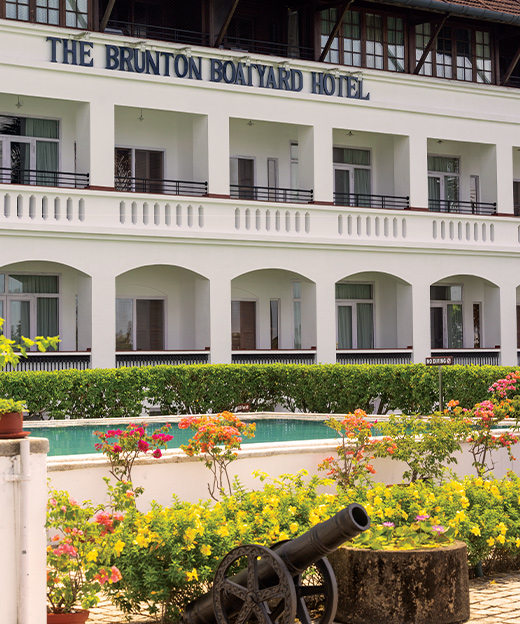
The opportunity is also visible in heritage enclaves. Joerg Drechsel, owner of the art-filled The Malabar House in Fort Kochi, (also a Delegate for the Indian Subcontinent, Greater China & Southeast Asia and Member of Board of Directors, Relais & Châteaux), remembers the time the hotel opened 30 years ago. “Our local friends asked: What is there in Fort Cochin, and who wants to go there? Today Fort Cochin is on the global must-see list. Guests reach us with multiple, often different perceptions. Heritage, design, cuisine, atmosphere, dialogue with the host—they all are part of the expectations. The individual mix of exploring the surrounding world and cocooning creates different priorities.”
Jehan Numa offers another example. The former palace in Bhopal was converted into a hotel in 1983, and the family later moved into wildlife hospitality with Reni Pani in Satpura. Faiz Rashid, Director, Jehan Numa Group of Hotels, says the family initially entered hospitality partly because it needed an income stream to maintain its historic properties. The group started with 16 rooms and gradually expanded. Reni Pani, the wildlife retreat, was established in Satpura at a time when the destination was not well known. Its 12 rooms and four tents sit in a buffer zone, with no fencing, and the experience is built around the forest rather than a concentration of conventional resort amenities. Most of its staff come from within five kilometres, tying employment to conservation and giving local communities a stake in the tourism economy. “For us, Bhopal's identity is really about the begums, who ruled for over 100 years and made the erstwhile kingdom quite unique and different to other princely states in the country. It is also about our unique cuisine,” he says about the experiences on offer. “Also, the family has a legacy of breeding horses at the Bhopal Stud, and we have incorporated that into our hospitality.”
However, how many independent brands can scale up is rather difficult to tell. As Datta says, “The appeal of boutique and small format independent luxury hospitality lies in offering a strong sense of place, distinctive design and experiences that cannot easily be replicated elsewhere. However, this distinctiveness also means that the size and scale of the segment will always remain a small percentage of the overall supply, given that there exists an inherent tension between personalisation and scale.”
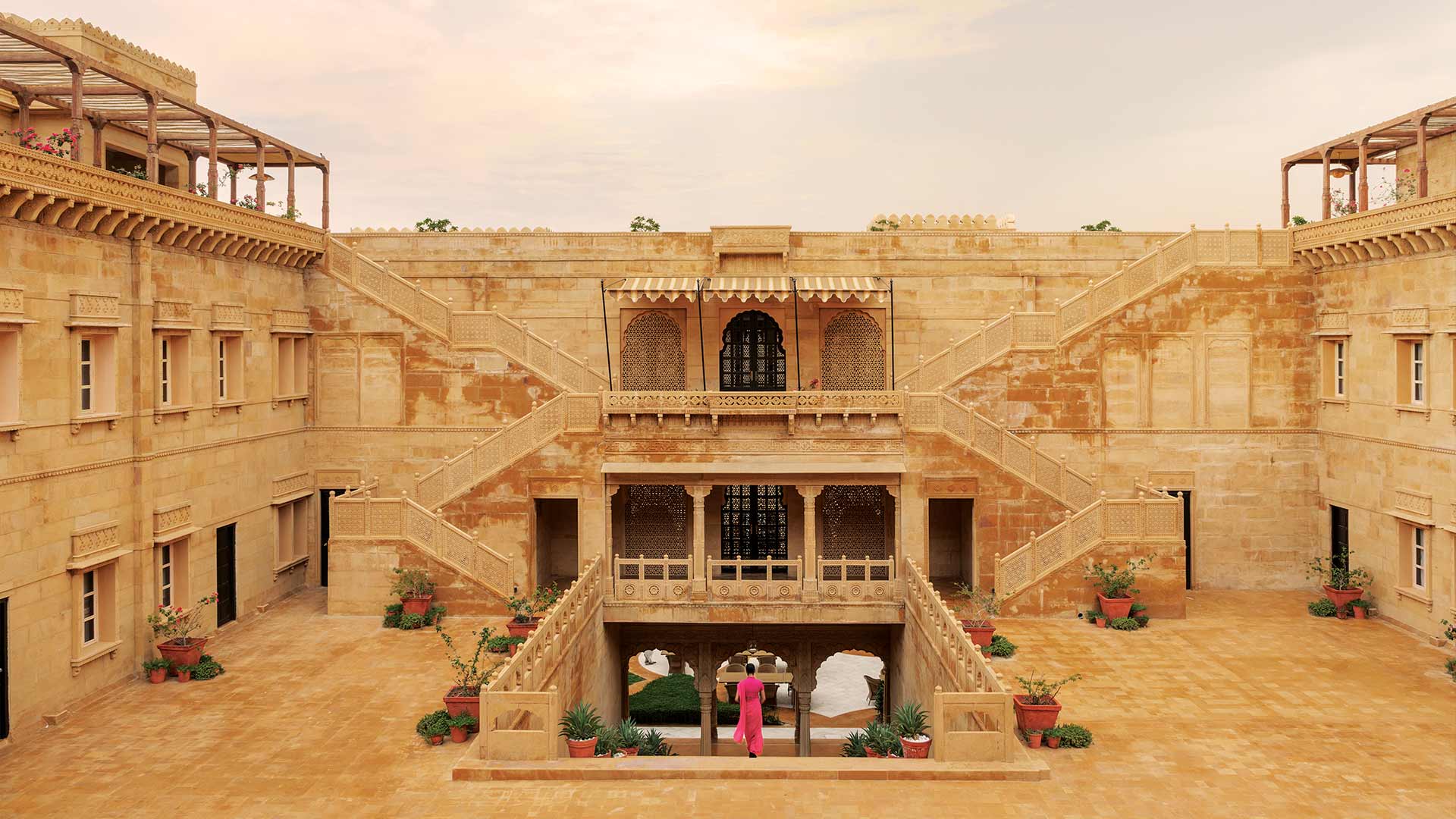
Suryagarh’s Thar Apartments bring local textures and cultural references into a more private, residential-style stay.
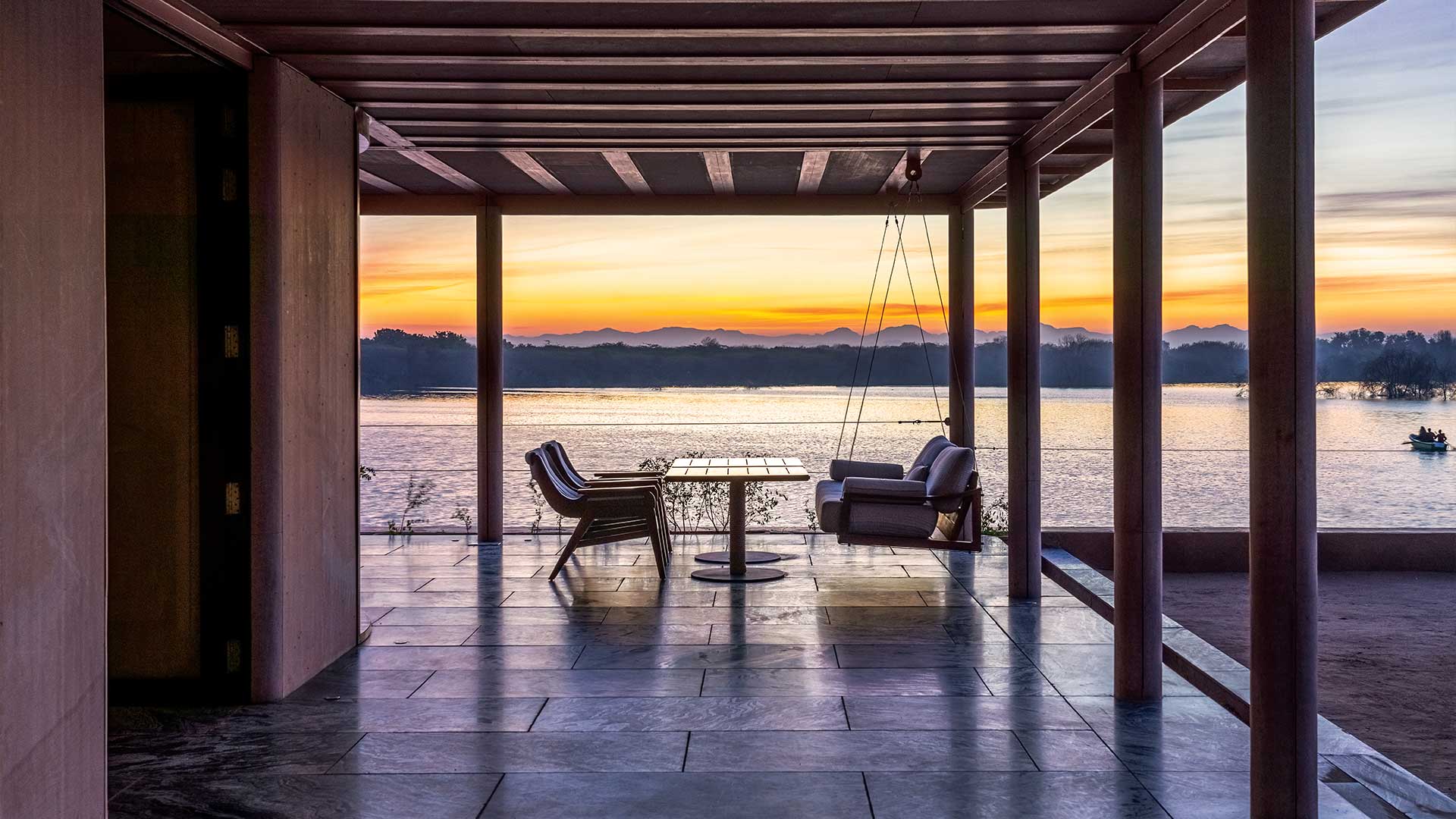
RAAS Chhatrasagar’s tented suites look across the reservoir, keeping the landscape firmly in view.
I believe the future of luxury in Kashmir should be shaped by the character of the destination, rather than Kashmir being reshaped to fit a global template. If we can grow while preserving that sense of warmth, respect and shared belonging, then we are not simply developing
tourism; we are contributing to a more responsible future for the destination.
VINIT KUMAR CHHABRA
Associate Vice President & GM, The Khyber Himalayan Resort & Spa, Gulmarg
The corporatisation of the segment
HVS Anarock and hospitality majors had indicated the corporatisation of the boutique segment early. As far back as 2020, when the segment was barely visible here, HVS Anarock was flagging “significant untapped growth potential” in India's luxury boutique space, defining the category by customised service and an elevated, story-led guest experience, typically in a property of under 60 keys. Five years on, the big group agrees: IHCL's Accelerate 2030 push has seen it buy into boutique-experiential brands such as Brij and Tree of Life, exactly the small, characterful formats the majors once ignored.
Few feel the shift as directly as the owners already working in the landscapes the majors now want. Jaisal Singh has seen larger brands arrive around Ranthambore and circle Jawai, and he is unconvinced by their motives. “Many of the larger brands that keep appearing in Ranthambhore or that are now talking of opening in JAWAI are not doing so because of a longstanding connection to the landscape or a deep-rooted commitment to protecting its wilderness,” he says. “They are coming because they recognise its commercial potential and want a share of what has been created here.” What capital cannot buy, in his reading, is time in a place. “Wilderness hospitality cannot be manufactured through design, branding or capital alone,” he says. “It depends upon an intimate knowledge of place, relationships built over decades.” SUJÁN, he points out, has “never opened somewhere simply because we identified a commercial opportunity, because a destination had become fashionable, or because others were moving into it.” The line he will not cross as the company grows is scale for its own sake: each camp, he insists, must earn its place by leaving “the wilderness stronger than we found it,” and by holding on to a human element no operating system can replicate. “Nothing can, or should, replace warm, genuine care and hospitality.”
The obvious question is whether a boutique brand created inside a large hotel company can deliver what an owner-run original does. Seema Roy, Area Managing Director for South Asia, Middle East and Africa at Preferred Hotels & Resorts, reads the trend as an endorsement of the space independents have worked for decades. But she does believe that ownership changes the product. “Boutique brands created by large hospitality companies can deliver exceptional design, service, and highly curated guest experiences,” she says. “Independent hotels, however, are often guided and influenced by the vision, passion, and values of their owners, whether they are families, entrepreneurs, or long-term custodians of a destination, resulting in experiences that feel deeply personal. Their decisions are not driven by a brand playbook, but by a desire to create something distinctive.” And as the segment scales, Roy names the real danger: “The real risk is not in competition but sameness. The most successful boutique hotels will be those that grow and evolve while preserving their individuality and local relevance.”
The large hotel companies are also learning that the appeal of boutique properties lies precisely in their differences. Deepika Rao, Executive Vice President, Select Service Business, IHCL, points to the evolution of IHCL's portfolio through amã Stays & Trails and Tree of Life. amã pioneered a branded homestay model built around heritage homes, villas, bungalows and private residences, growing from nine heritage bungalows in Coorg and Chikmagalur to more than 360 bungalows. Tree of Life has similarly expanded its boutique retreat portfolio, with an emphasis on destination character and unhurried stays. “Together, these brands complement IHCL’s leisure portfolio by offering guests authentic, intimate stays rooted in their surroundings. As they expand, the focus remains on preserving individuality and sense of place, while delivering the trusted hospitality and service excellence that define IHCL.”
Taljinder Singh, Senior Vice President & Brand Custodian, IHCL, makes a similar point about SeleQtions. “Heritage is not solely defined by the age of a building, but by the story it carries and its connection to the destination. IHCL SeleQtions is a platform that curates properties closely linked to the history, culture and evolution of the communities they are part of. It is this connection, along with the character of the property, that shapes its relevance today. Hotels such as Anand Kashi by the Ganges in Rishikesh or Gulab Haveli in Mandawa have long been part of the social and cultural fabric of their cities, reflecting the evolution of these destinations over the years.”
That platform logic looks different from inside one of its hotels. Pilibhit House in Haridwar, a century-old aristocratic mansion and former royal residence on the Ganga, sits within SeleQtions with its own private ghat and a programme built around the city, from Mangla Arti at 6am to the evening Ganga Aarti at the ghat. For General Manager Mayank Mittal, the collection’s value is that it does not iron out that specificity. “At Pilibhit House, individuality is not a brand proposition; it is a living legacy,” he says. “The collection allows each property to retain its individual character rather than fitting every hotel into the same format.” What the group supplies sits underneath rather than on top. “The individuality is ours; the excellence is strengthened by IHCL.”
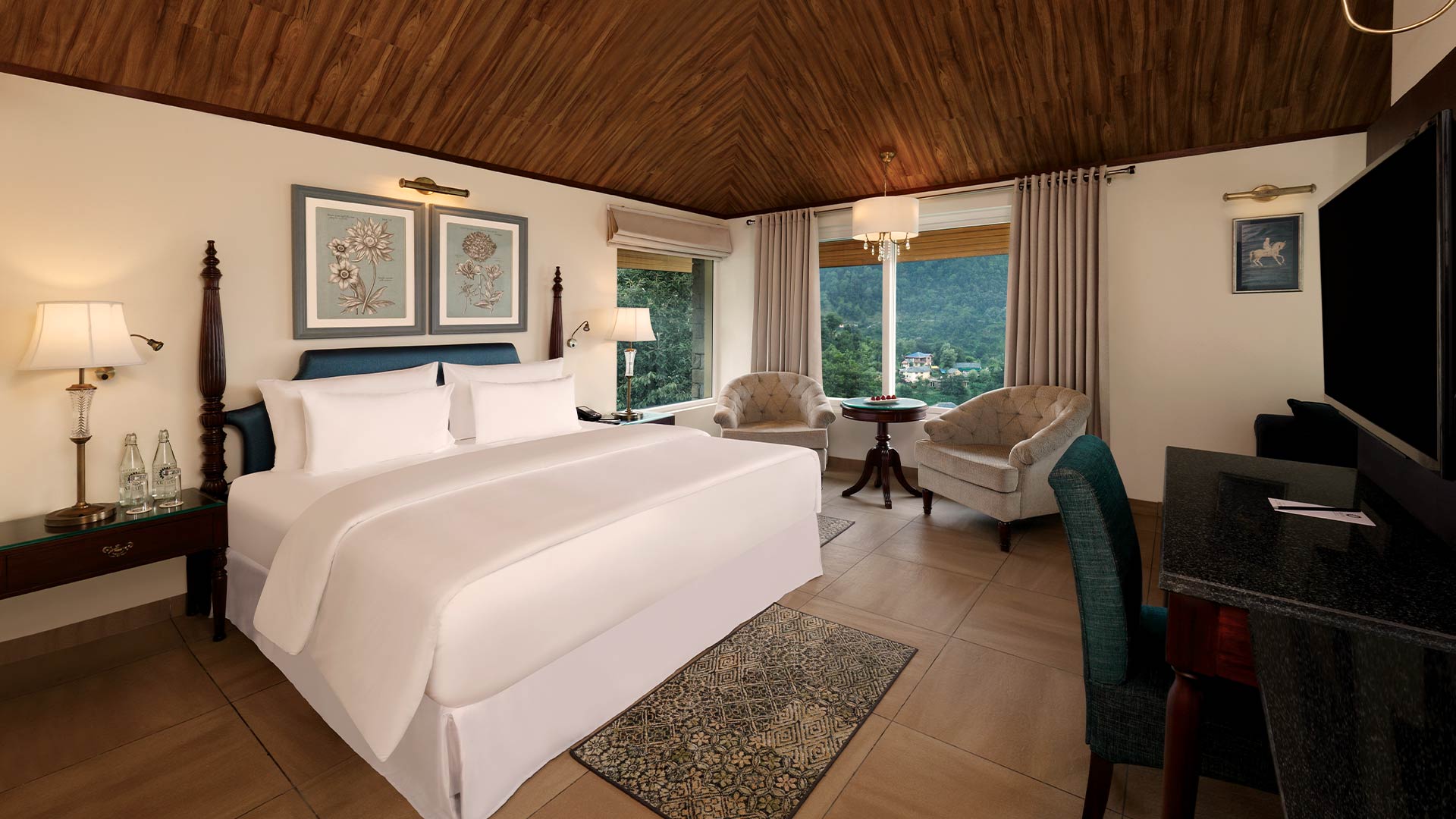
Araiya Palampur’s Duplex Master pairs contemporary comfort with its Himalayan setting.
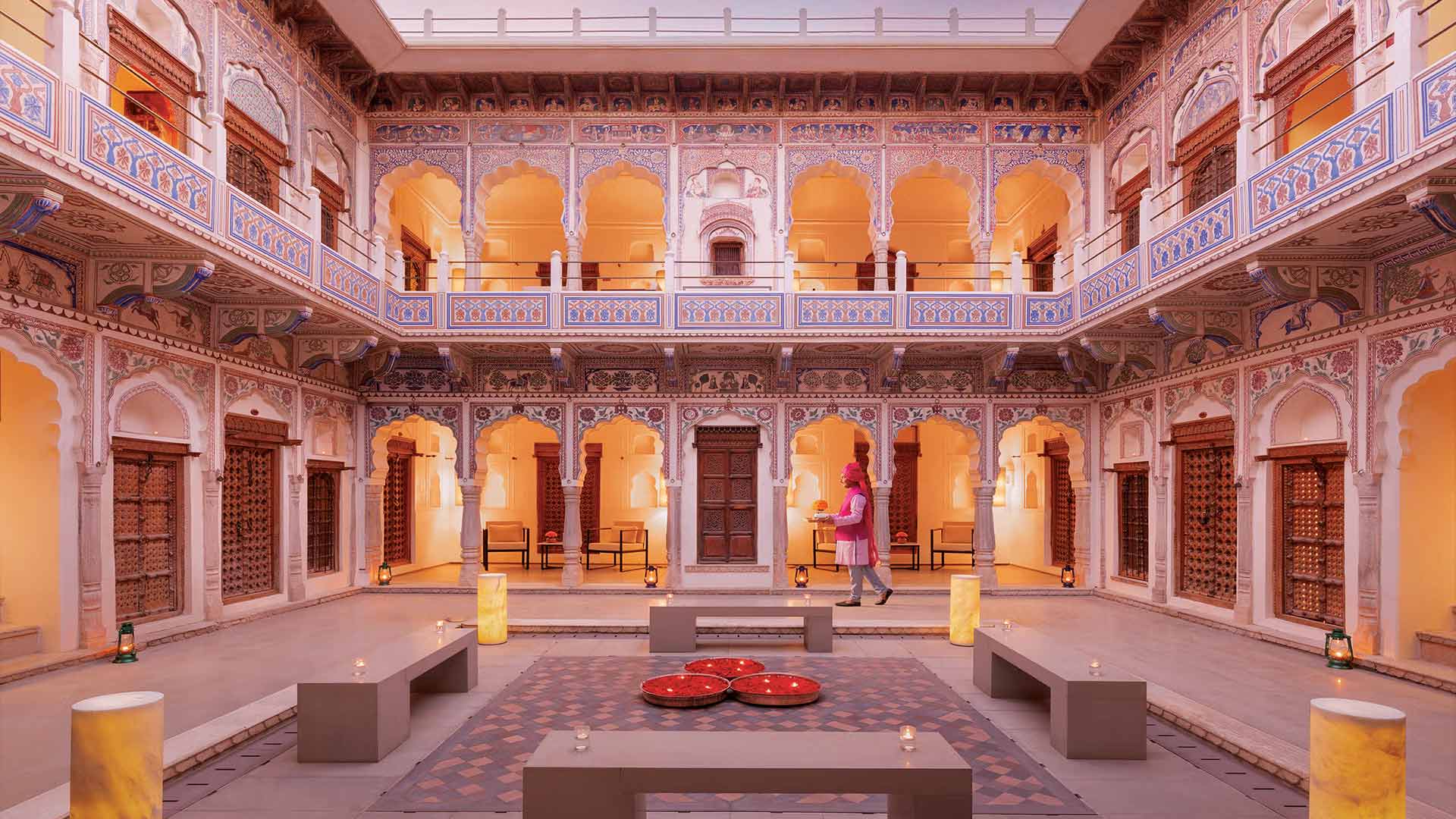
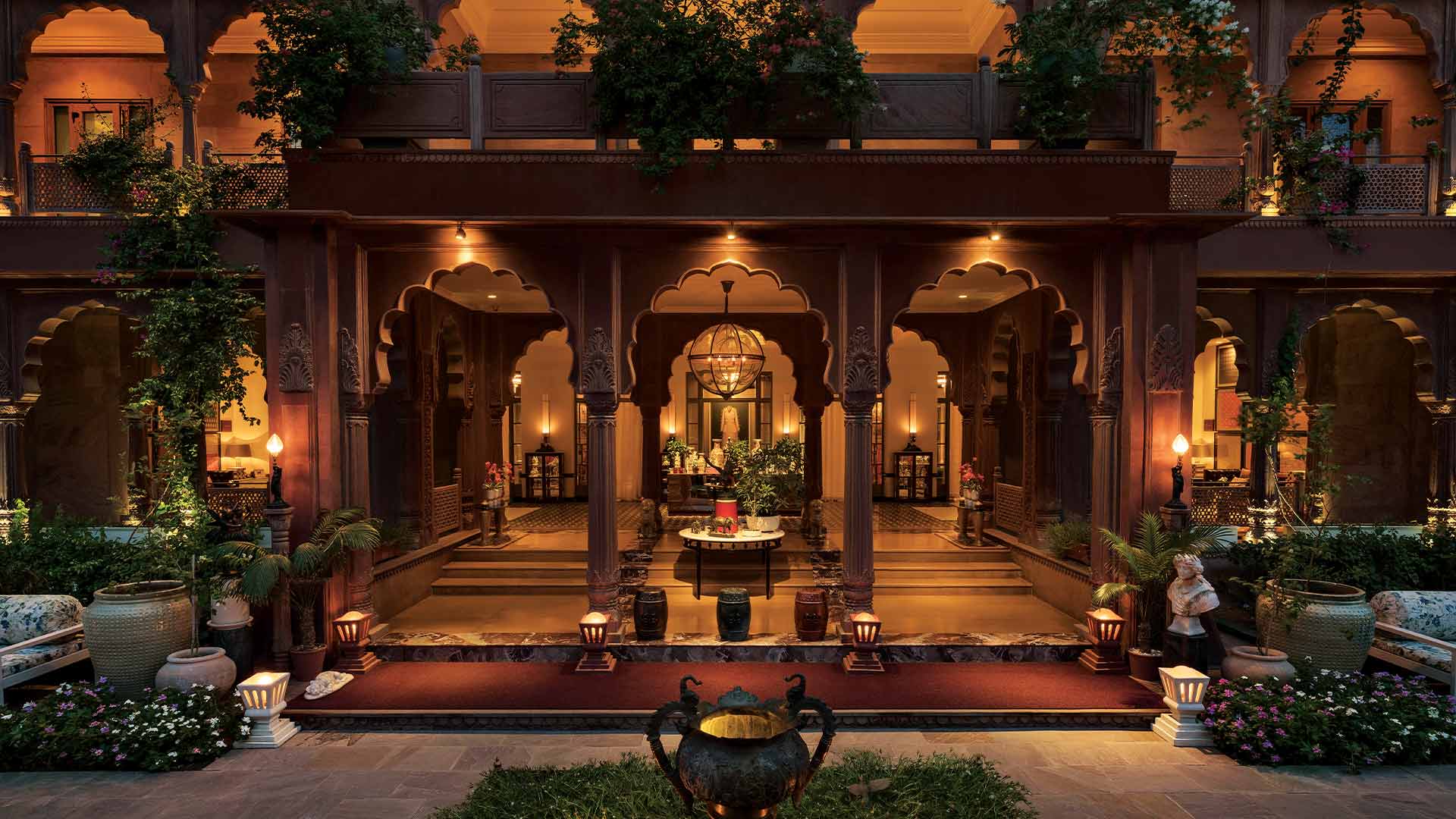
Gulab Haveli, Mandawa – IHCL SeleQtions centres on an open-to-sky courtyard that preserves the character of the restored 19th-century haveli.
Younger Indian travellers are interested in going back to their roots—whether through spirituality, wellness or simply experiencing village life that is far removed from the city. There has also been a shift towards discovering lesser-known parts of India and putting them on the map. There is a real sense of pride in helping people discover a place they might otherwise never have known.
AMRUDA NAIR
Founder, Araiya Hotels & Resorts
Storii by ITC Hotels has been built around a similar idea. Its properties in mainstream Goa, Jaipur, Jaisalmer, Dharamshala and Manali start with the destination, with architecture, cuisine and guest experiences shaped by the history and character of the property. ITC's infrastructure sits behind the hotel: operational systems, culinary expertise, service training, sustainability practices, technology and distribution. Anil Chadha, Managing Director, ITC Hotels Limited, says, “As long as connectivity through road, rail, and air infrastructure continues to improve, boutique hotels will keep adding new destinations across India. We are already seeing this through the growth of the Storii portfolio, with distinctive properties. The segment will continue to evolve as more Indian travellers seek immersive, authentic and personalised experiences that differ from large-format hotels.”
The Khyber Himalayan Resort & Spa in Gulmarg offers a counterpoint to the idea that boutique must necessarily mean tiny. At 85 rooms, it is larger than the traditional definition of a boutique hotel, but Associate Vice President & General Manager Vinit Kumar Chhabra argues that intimacy is not simply a function of room count. It is about the quality of interaction, attention and care. “For us, intimacy comes from the quality of interaction, attention to detail and the sense of being cared for—not simply from having fewer rooms,” he says. “And for those seeking a more private and secluded experience, The Khyber offers exclusive accommodation, providing a greater sense of privacy without compromising on the resort experience.”
At The Khyber, Kashmir is not simply represented through carpets and Kashmiri art placed inside a generic luxury building. The food, the suppliers, the artisans and the staff are all part of the experience. “We understand that Kashmir cannot be reduced to its mountains, its beauty or its seasonality. There is a particular warmth to the people, an extraordinary cultural depth and a way of hosting that is deeply embedded in everyday life. For us, Kashmiriyat is not simply a cultural label; it is a spirit of generosity, coexistence, dignity and belonging. It is reflected in the way people welcome one another, in the respect shown to different communities and traditions, and in the instinct to make a guest feel at home.”
Not every version of scale flattens character. The collection model offers a gentler consolidation. When Small Luxury Hotels of the World (SLH) re-entered India after the pandemic, it did so through the Rajasthan-based MRS Group, bringing in properties such as Narendra Bhawan Bikaner and the very Suryagarh whose 5am fort breakfast opened this story. Its members interestingly plug into partner Hilton's loyalty programme and its 220-million-plus members for global reach, while Mark Wong, the group's Senior Vice President for Asia Pacific, is careful to note, “the hotel itself retains full control over its own pricing structure and inventory”. He sums the trade up in a line: “Global reach on tap, complete autonomy underneath.”
The boutique hotel’s real advantage, then, may lie less in its size than in its ability to make a destination feel specific. As more hotel groups enter the category, the challenge will be to provide the reach, systems and investment that independent properties often lack without sanding away the character that brought guests there in the first place.
(To be continued)
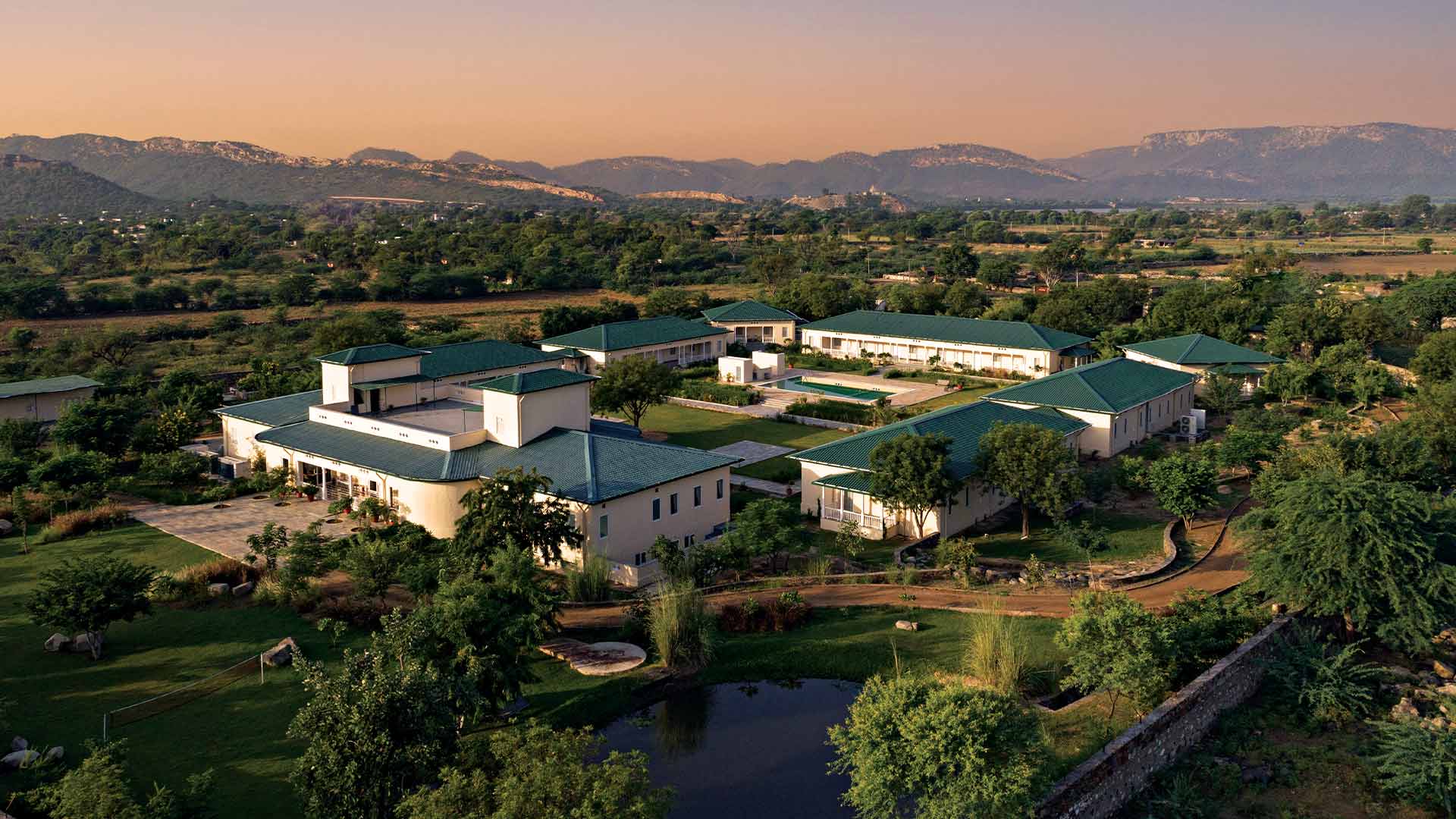
A drone view of Tree of Life Sariska Manor, Tehla reveals its low-rise footprint, a small-scale retreat now part of IHCL’s expanding boutique portfolio.
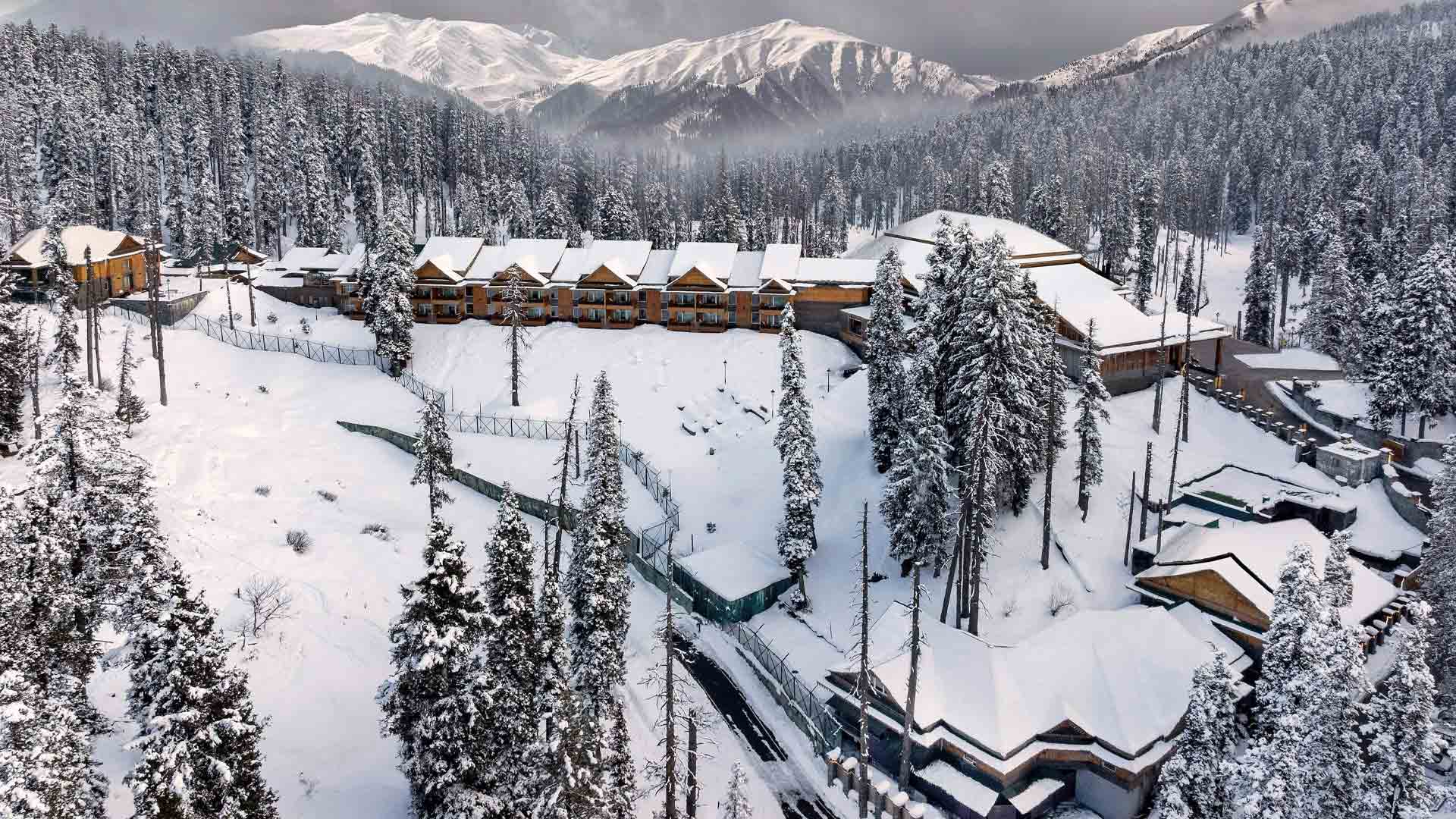
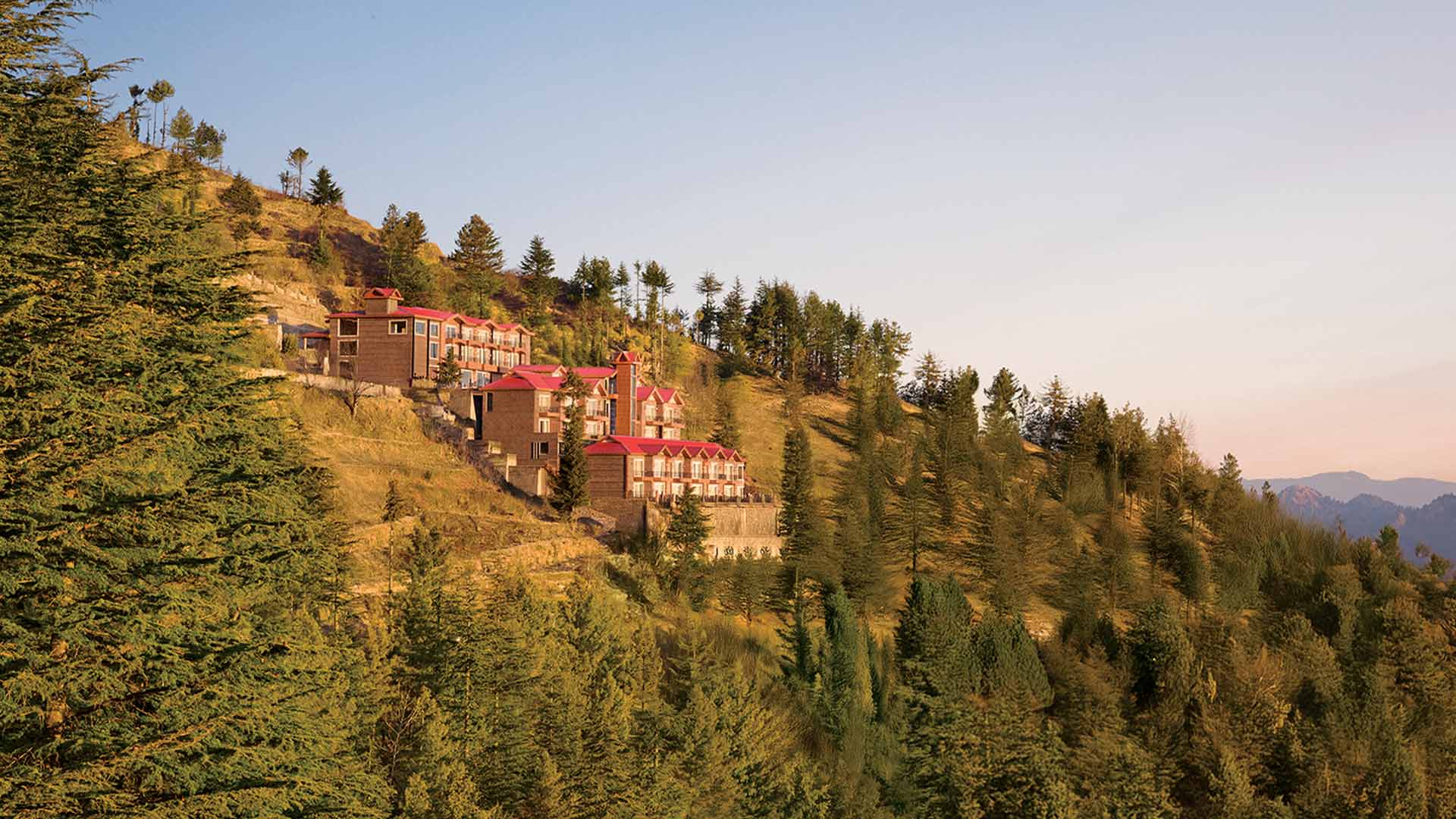
The Khyber Himalayan Resort & Spa, Gulmarg turns its snowbound mountain setting into an essential part of the experience.
There shouldn’t be any tension between building a hotel and nurturing the wildlife and a forest, if the conservation tourism model is right and there is a balance. If wildlife is not treated as an adjunct to hospitality, but as the reason for being there. That’s why at SUJÁN we deliberately operate small camps with just 10 or 12 tents. It is important to manage access carefully and ensure that every decision, from the design of a camp to the movement of vehicles, respects the rhythms and carrying capacity of the wilderness.
Jaisal Singh
Owner, Sujan