










Calibrated to the Deccan
At Hilton Hyderabad Genome Valley Resort and Spa, designed by architect Tony Joseph-helmed Stapati, architecture, water and landscape negotiate climate through restraint rather than spectacle—crafting a contemporary resort rooted in Telangana’s spatial memory.

By Rupali Sebastian
Hyderabad’s hospitality landscape has expanded steadily over the past decade, but true resort-format properties remain relatively rare. Beyond the city’s denser precincts, towards Genome Valley, the terrain shifts into a semi-rural Deccan register—flat stretches of land, scattered village clusters, hard afternoon light and open sky. It is here that Hilton Hyderabad Genome Valley Resort and Spa takes its ground.
The property sits within a 20-acre parcel, though the built footprint occupies only a portion of it. A long, winding driveway moves through land that remains planted and held back—trees and saplings nurtured over years, shaped by ownership that has cared deeply about vegetation. The driveway culminates in a large, commodious porch before opening into a lobby that establishes the project’s temperament early: expansive yet composed, rooted without being ornamental.
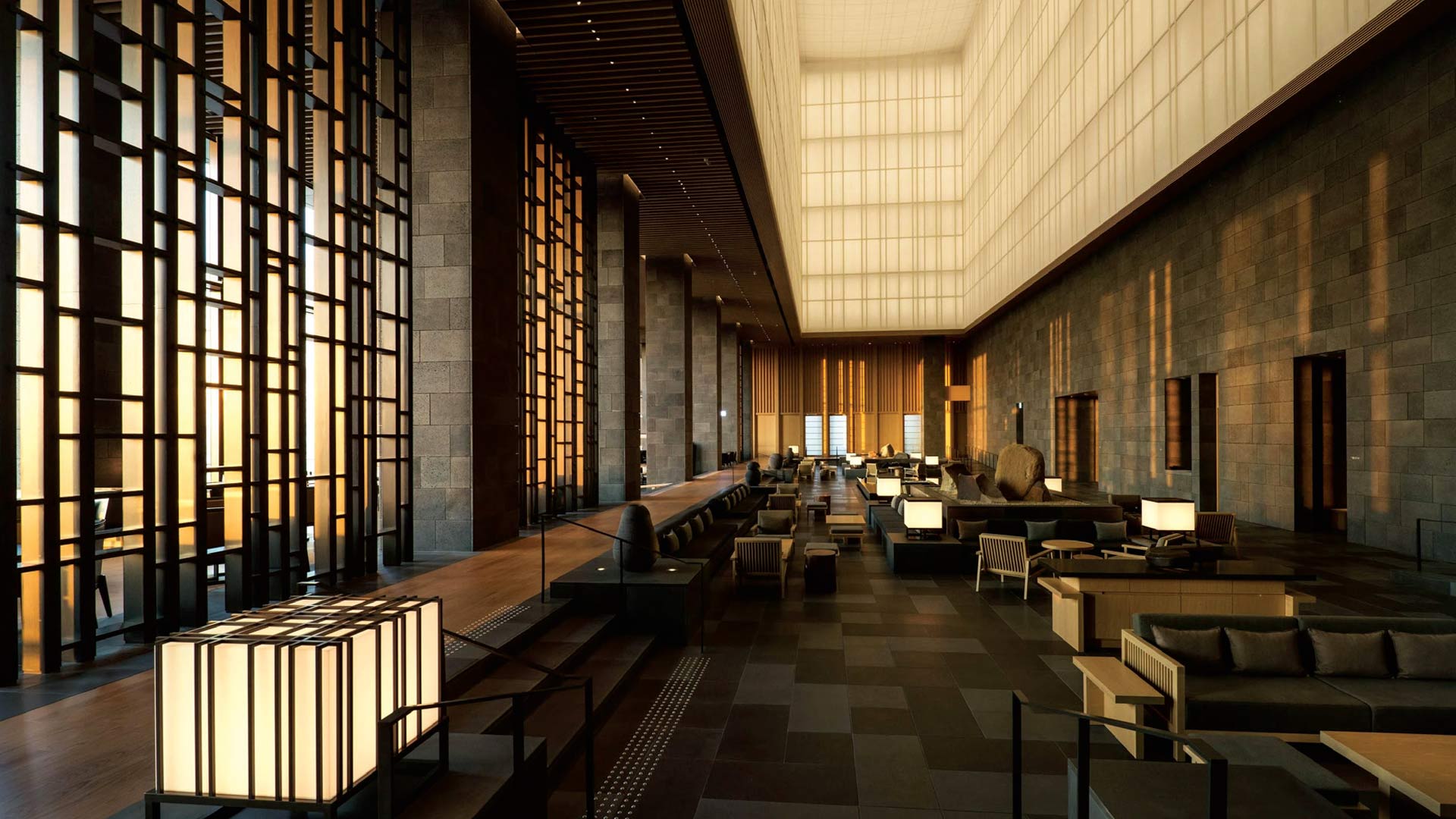
The first impression of the lobby is not of décor, but of volume: the pitched ceiling lifts, and timber trusses exposed and structured rather than concealed. Light travels deep into the space. Directly ahead, water stretches across the arrival court, visually stitching together a series of pavilion-like structures linked by semi-open corridors. For a moment, it is difficult to tell where interior ends and exterior begins.
At the centre of the lobby stands a clay sculptural installation that immediately claims attention. Fabricated in Jaipur, the piece draws from the stepped massing and rhythmic geometry of the Thousand Pillar Temple in Warangal—one of the most significant monuments of the Kakatiya dynasty, which shaped much of present-day Telangana’s architectural vocabulary. The reference is not literal replication but abstraction; tiered and architectonic in form, the sculpture echoes the temple’s plinth-based solidity and columnar rhythm without reproducing ornament. The reception desk sits to the side, set against a patterned backdrop that abstracts Kakatiya stone motifs into a contemporary graphic language rather than carved relief.
Above, an oversized woven chandelier hangs within the timber volume, its textured surface diffusing a warm glow.
It fills the vertical expanse without overwhelming it. The material palette remains disciplined—stone underfoot, brass accents, textured surfaces that carry regional memory without tipping into nostalgia.
It is this clarity that points to the architectural hand behind the project. Designed by Stapati, under the leadership of its founder architect Tony Joseph, the resort draws from the spatial and climatic intelligence of the Deccan plateau—courtyard clustering, shaded thresholds and tectonic massing—rather than from superficial ornament. “Rather than designing a standard resort and subsequently layering cultural elements onto it, the concept evolved with regional identity as a foundational framework,” the architect explains.
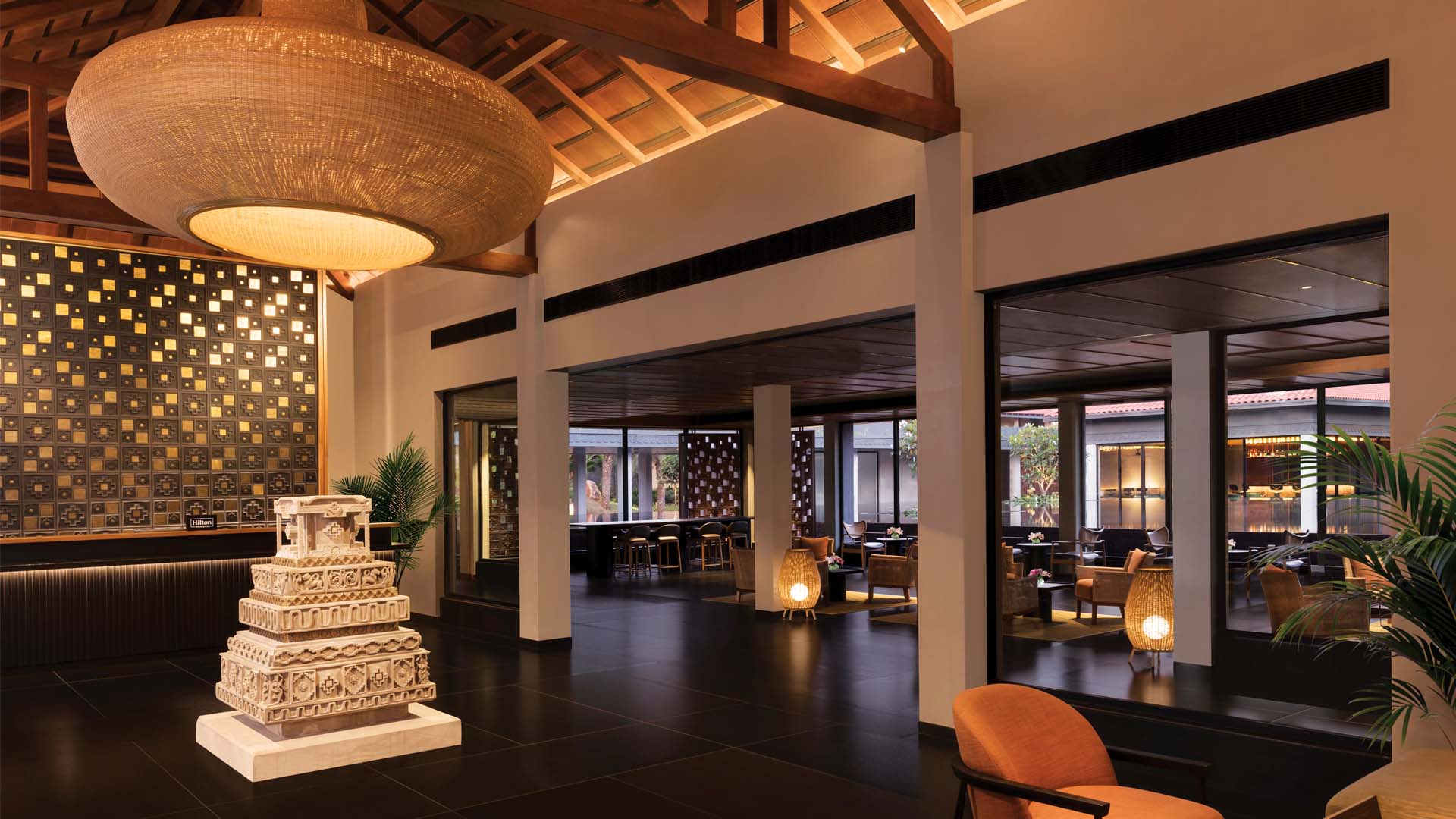
In the lobby, a clay installation—abstracted from the plinth geometry of Warangal’s Thousand Pillar Temple—anchors the arrival space.
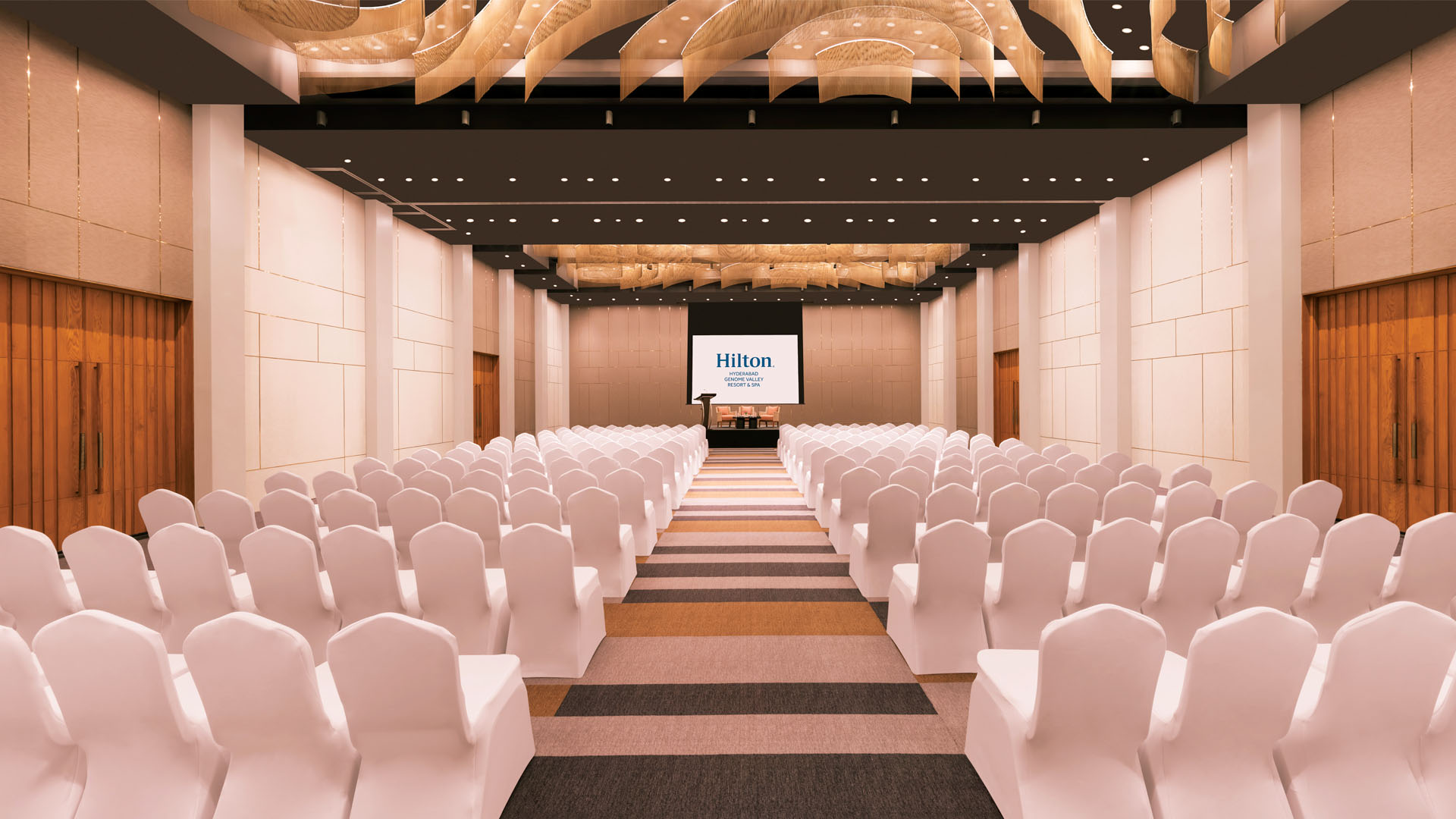
Large-format gatherings are handled with measured lighting and a disciplined material palette.
Building from the Deccan outward
For Tony Joseph, the starting point was spatial intent. The Deccan condition—heat, glare and hard horizon—demands negotiation. The masterplan responds through clustering rather than sprawl. The resort is organised into nine low-rise, pitched-roofed blocks housing 102 rooms, including 12 pool villas and a Presidential villa. All structures are ground plus one, deliberately restrained to preserve horizontality and reduce heat gain. “The low-rise clustering emerges from both climatic and cultural logic,” he notes. “In surrounding villages, built form evolves directly from the climate.”
Built mass is dispersed rather than consolidated. Courtyards temper heat and create pause, and the resort’s low plinths and layered thresholds lend the blocks a grounded, tectonic quality rather than a lightweight resort aesthetic. Shaded corridors soften transitions between volumes. The architecture feels settled into its terrain rather than imposed upon it.
Material selection reinforces this reading. Kadappa stone, widely used across the Deccan, forms a key flooring surface—chosen not only for contextual relevance but for durability. Oxide flooring, brass detailing and jaali screens further root the project in regional craft traditions. Yet each material was evaluated against international hospitality performance benchmarks, ensuring life-cycle suitability and ease of maintenance within a demanding operational environment.
In a resort distributed across multiple low-rise blocks, circulation becomes as critical as form. Service movement has been planned as a parallel system, with a separate entry and discreet back-of-house routes connecting key functions such as the restaurants and conference halls. Guests rarely encounter this network, not visually and not acoustically.
Equal consideration was given to staff comfort. Circulation distances were studied carefully, and restrooms and service points are distributed across the property so that staff do not have to traverse the entire site during a shift. In a spread-out masterplan, this becomes essential. Planning for staff efficiency was embedded into the layout from the outset rather than resolved later.
In master planning, considerations such as vastu also formed part of the dialogue. Alignments and orientations—particularly in relation to the mandapam and event spaces—were studied with care, allowing cultural expectations to be accommodated without compromising architectural clarity.
This calibration between context and contemporary performance is not treated as a constraint. “The goal is not to replicate the past, but to interpret it meaningfully,” Tony Joseph says. “Creating architecture that feels rooted, yet unmistakably contemporary.” If the masterplan establishes this discipline at scale, it becomes more tactile in movement.
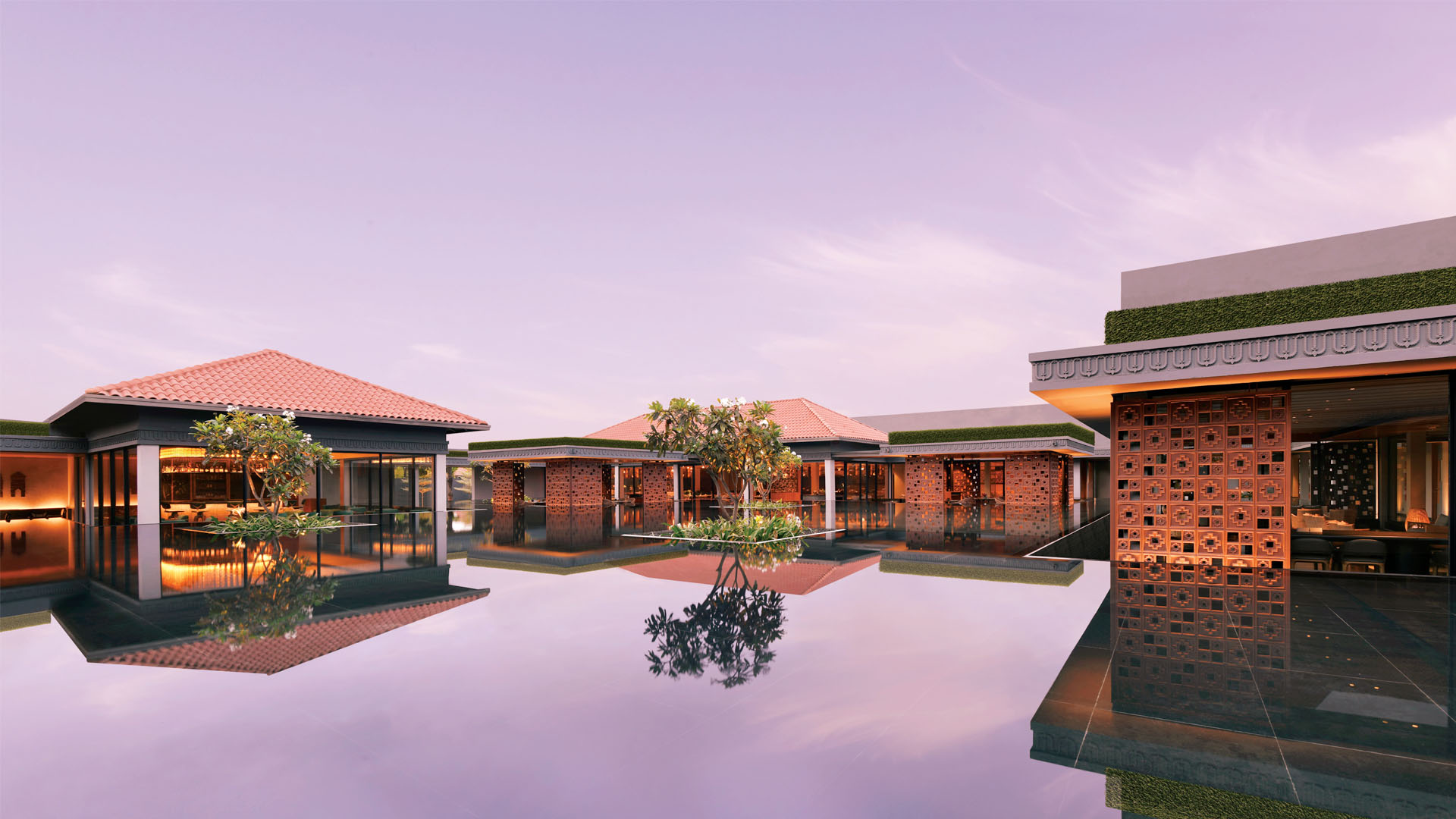
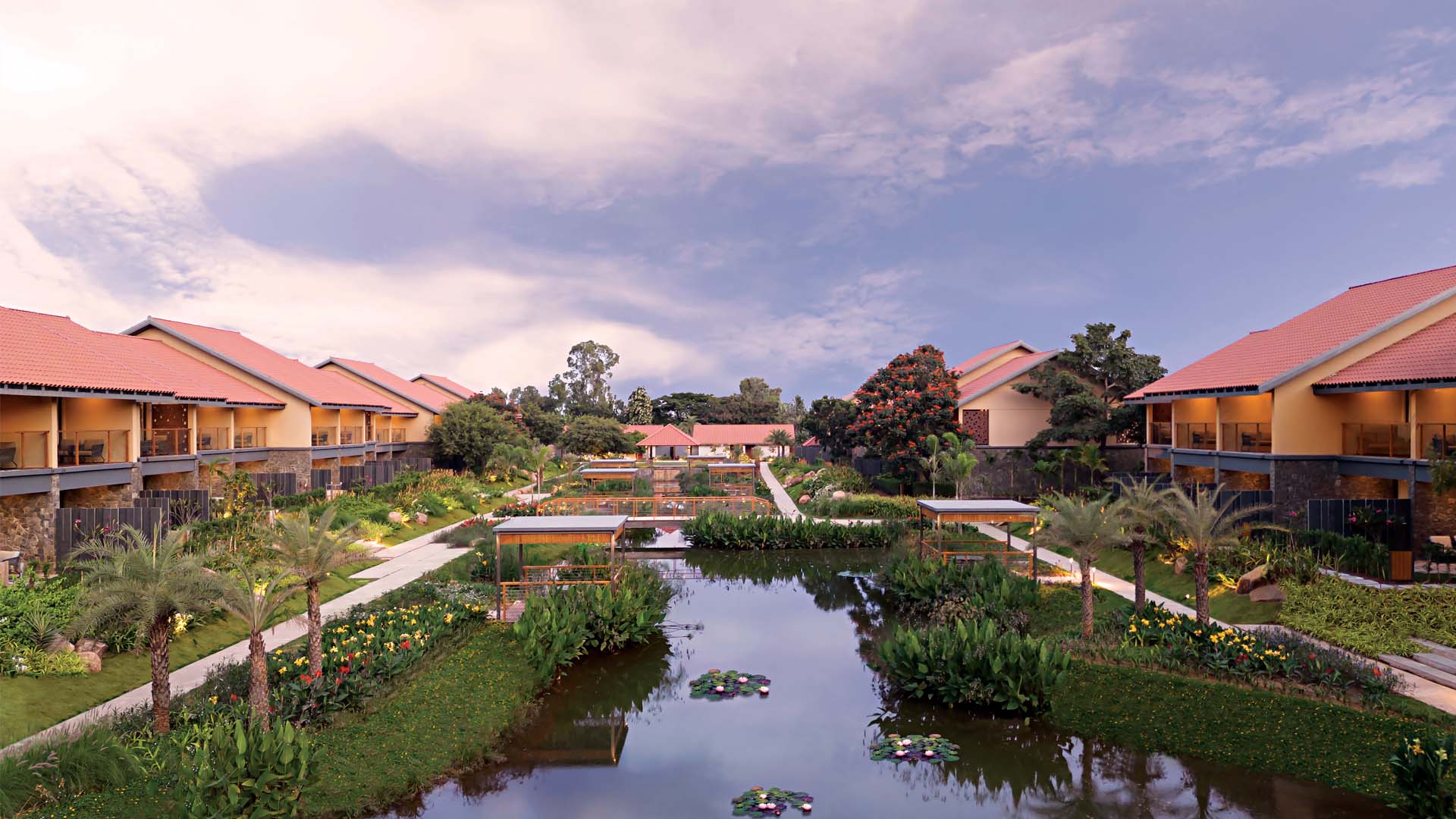
Reflective pools extend the lobby outward, visually stitching together pavilion-like volumes—water operating as spatial device rather than ornament.
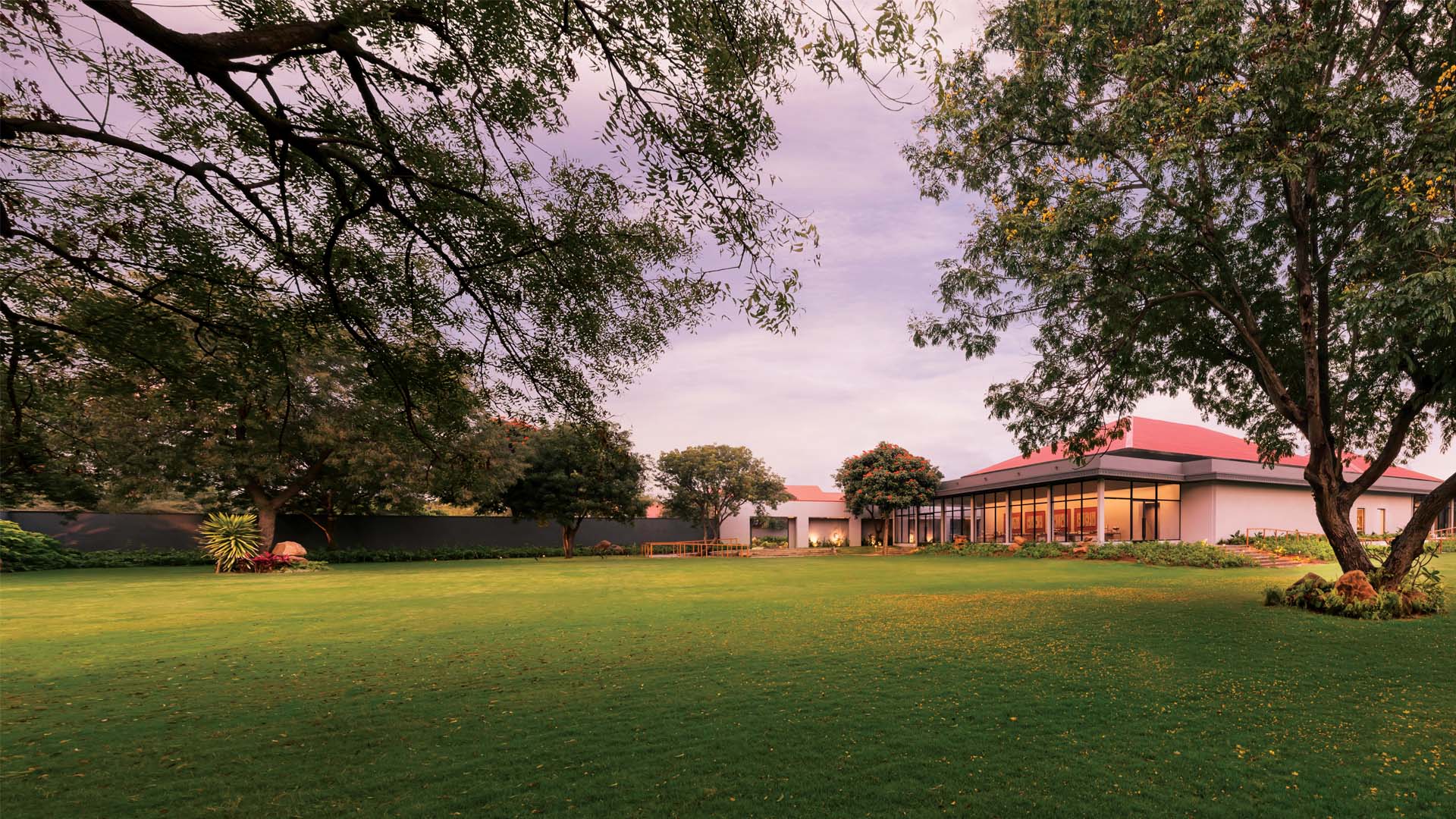
Open lawn and restrained planting temper the built footprint, allowing the architecture to be read as dispersed clusters within landscape rather than a single consolidated mass.
Environmental Intelligence
Sustainability at Hilton Hyderabad Genome Valley Resort and Spa is embedded in planning rather than expressed through technological display. The low-rise clustering reduces heat gain, while shaded corridors and layered thresholds temper the Deccan glare before guests step into conditioned interiors. Courtyards break built mass and encourage airflow, functioning as climatic devices rather than decorative inserts.
Water plays a central environmental role. Reflective pools at arrival and the linear creek that threads through the site contribute to microclimatic cooling, softening ambient temperature across the public realm. Their placement is strategic rather than ornamental.
Landscape strategy reinforces this approach. Existing trees were retained, and new planting introduced in calibrated densities to reduce glare and support biodiversity. The creek now supports fish, which in turn attract birdlife—an ecological loop that signals the landscape’s functioning beyond aesthetics.
Material choices were equally deliberate. Kadappa stone and oxide flooring were selected for durability and long life cycles, evaluated against international hospitality performance benchmarks to ensure resilience in a high-use environment.
Environmental performance here is less about display and more about discipline—rooted in climate, calibrated through design and sustained through use.
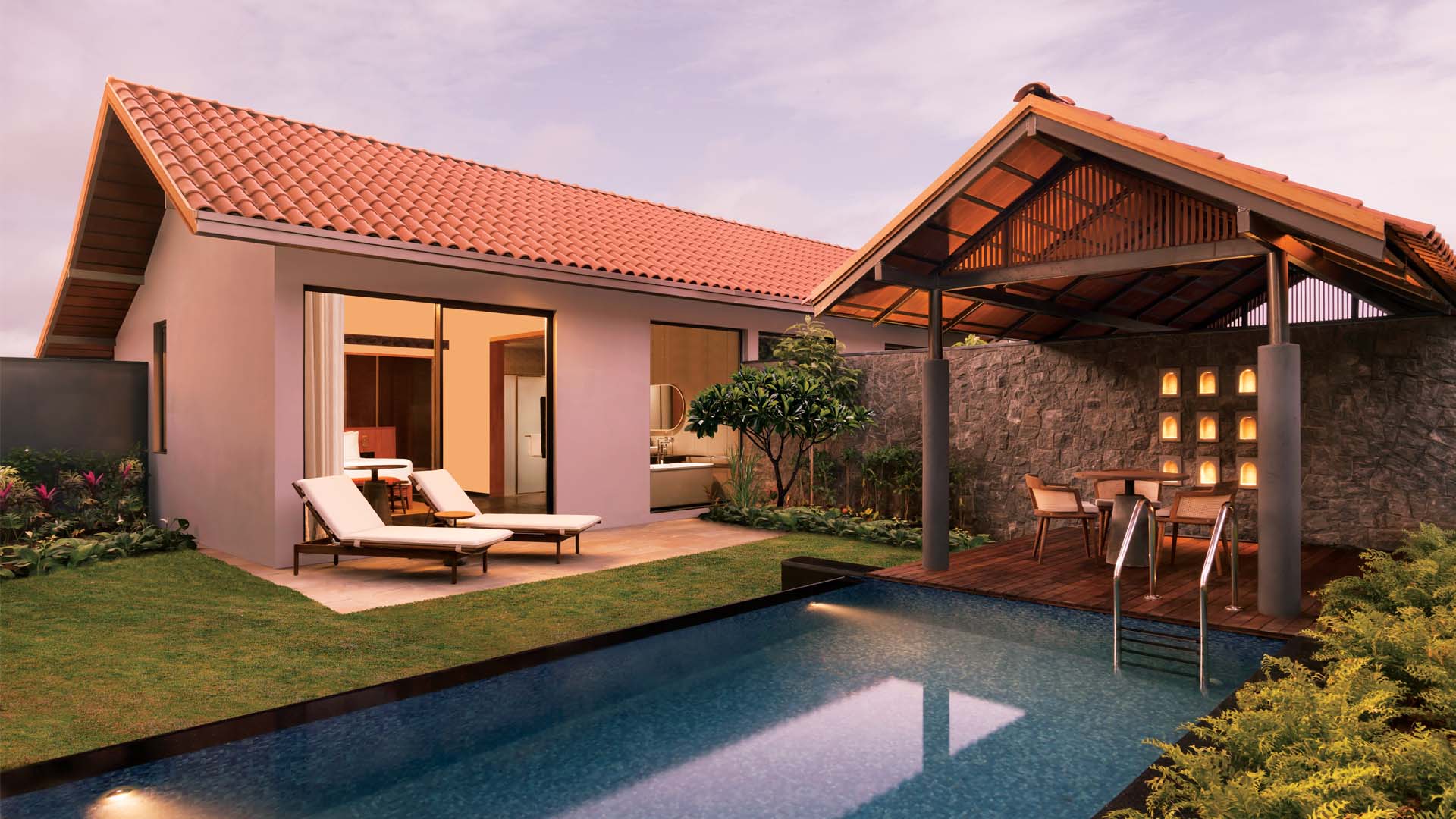
The Pool Villa pairs a private plunge pool with a shaded court and gazebo, shaping an intimate retreat.
Layered thresholds
That climatic intelligence becomes more evident in movement. Circulation across the resort is rarely direct. Deep overhangs, recessed entries and semi-open corridors create a sequence of compression and release. You step out of glare into shade before entering conditioned interiors. You cross a court before arriving at a room.
Accommodation blocks follow the same discipline. Balconies extend rooms outward but remain protected by overhangs and screens. In the villas, plunge pools sit within contained courts rather than on exposed decks, preserving privacy while maintaining openness to sky.
These are not aesthetic decisions alone. Heat is managed through depth. Glare is filtered rather than blocked. Shade becomes one of architecture’s most consistent materials.
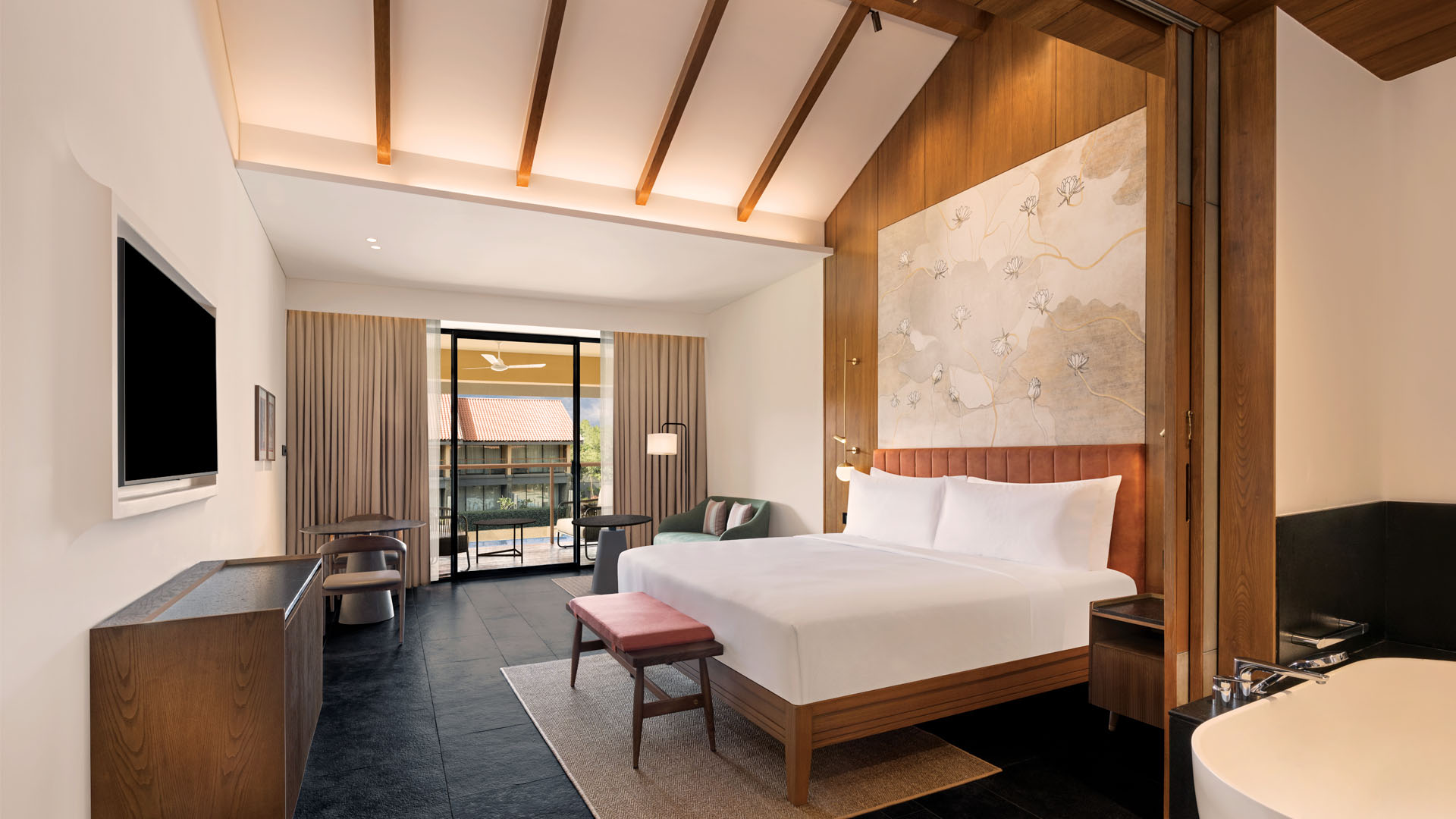
The Balcony Water View Rooms overlook greenery and the creek landscape.
Water as architectural medium
“Water was treated not merely as a decorative landscape feature but as an architectural medium in itself,” Stapati’s founder says. “It plays a crucial role in climatic moderation, helping to cool the surroundings and create its own microclimate. At the same time, it defines space and enhances spatial perception through reflections that visually amplify the built form.”
At the arrival forecourt, the reception block and adjoining F&B outlets—Gingerfire, the all-day dining restaurant; Grid, the bar; and Drip, the café—sit abutting reflective pools. Through the day, the water surfaces carry a gentle ripple, keeping the court in motion. By evening, when the water is allowed to settle, the transformation is striking. The pavilions appear to hover; their outlines double in the surface below. Tree silhouettes sharpen. Light from within the structures spills outward and returns as reflection. Architecture and water become indistinguishable for a moment, the court suspended between built form and image.
Running roughly parallel to the arrival pools, a linear creek forms the resort’s second water spine. Guest accommodation blocks are deployed along its banks, ensuring that rooms overlook water rather than turning inward toward corridors. Small pavilions punctuate its edge, creating moments of pause.The pool villas, by contrast, are positioned away from this central spine, each organised around its own contained plunge pool.
At one end, the creek culminates in a mandapam positioned for wedding ceremonies. Directly across from it, on the opposite bank, sits the elevated main pool. The pool deck sits beside Nero, the Mediterranean restaurant, forming a distinct hospitality cluster at this end of the site.
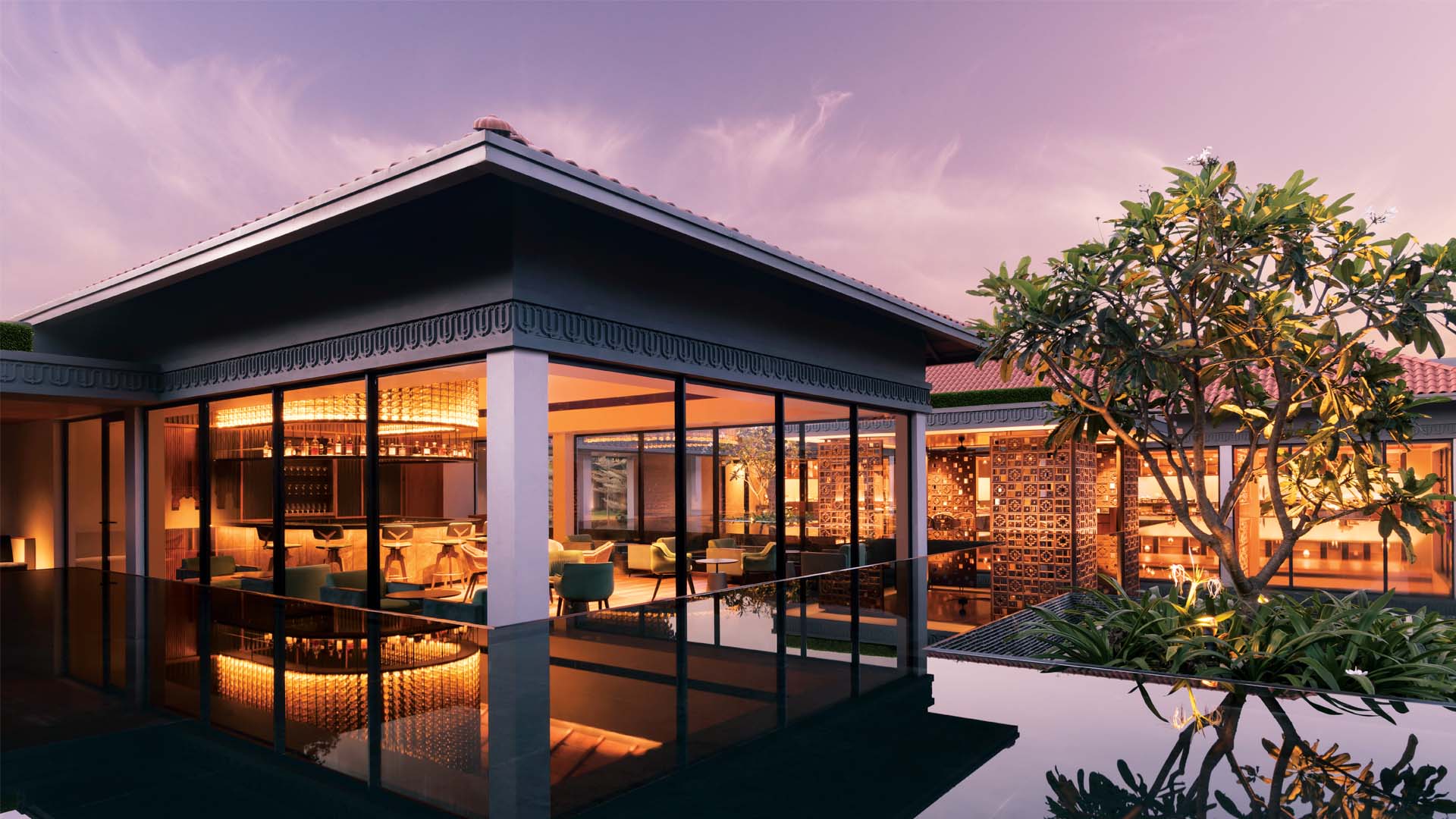
At dusk, when the water surface stills, the reflective pool doubles Grid 78’s pavilion form.
Landscape as living system
Landscape architect Laharika Reddy of Laharika Reddy Design Studio joined the project early, before final plans were locked in. The landscape was not applied after the architecture; it evolved alongside it.
If the architecture negotiates the Deccan climate through clustering and shaded thresholds, the landscape extends that negotiation outward. The driveway mirrors this logic. As one moves inward, planting thickens gradually. Existing trees frame the approach. Boulders begin to surface. The shift is incremental rather than abrupt, easing visitors from exposure into enclosure.The transition begins before arrival, recalibrating the mind even before the porch comes into view.
Hyderabad’s association with monumental granite outcrops surfaces subtly across the site. Existing boulders were retained, and additional ones were carefully oriented and set in place, allowing the terrain to feel anchored rather than decorated “The landscape concept was not driven by vernacular tradition,” Reddy says. “It responded to the site and to the architectural language that was emerging.”
Planting is calibrated rather than lush for its own sake. Along the creek, density increases strategically, softening glare while preserving views from the guest rooms. The green landscape is mated deliberately with the water bodies, lowering ambient temperature and strengthening the site’s microclimate.
Flowering species were introduced to attract pollinators and birdlife. Fish introduced into the creek have, in turn, drawn fishing birds to the site, reinforcing a functional ecological chain. “Over time, we began to see bird activity increase. That was important—it meant the landscape was functioning ecologically, not just visually.”
Each courtyard is handled individually. At Gingerfire, red ginger provides tonal emphasis. At Yuzu, the composition is more restrained. The ficus court near the banquet spaces has matured into a shaded enclosure that now supports nesting birds within its canopy.
None of the existing trees were removed during construction; new species were woven around them. Retaining mature canopy allowed the resort to avoid the staged quality that often marks newly developed landscapes.
Reddy also acknowledges the owner’s sustained involvement. “His interest in greenery pushed us to think beyond the ordinary. He encouraged density and was very particular about quality.”
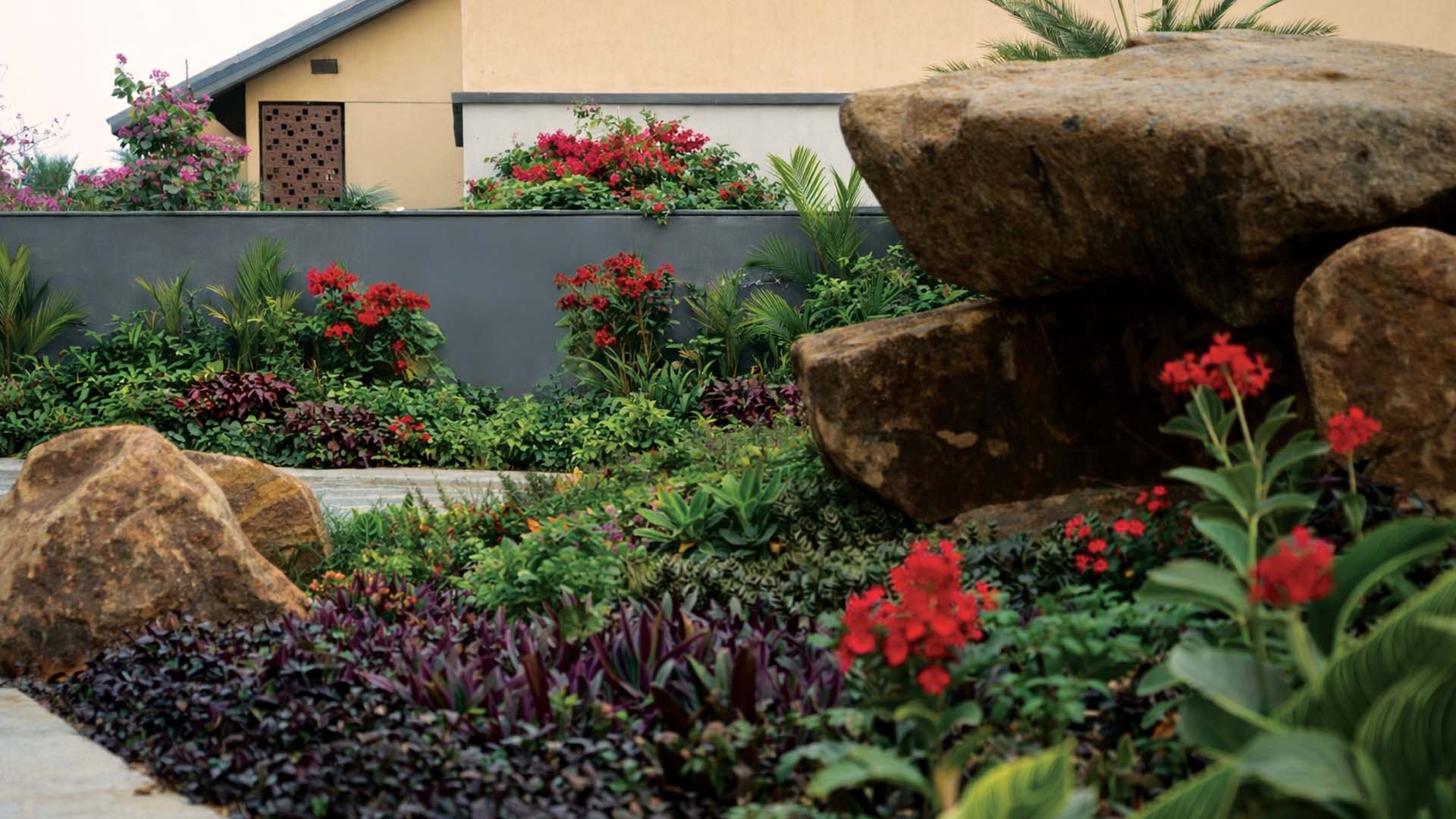
Planting is layered around water and stone, allowing the built form to sit within a dense, tropical landscape.
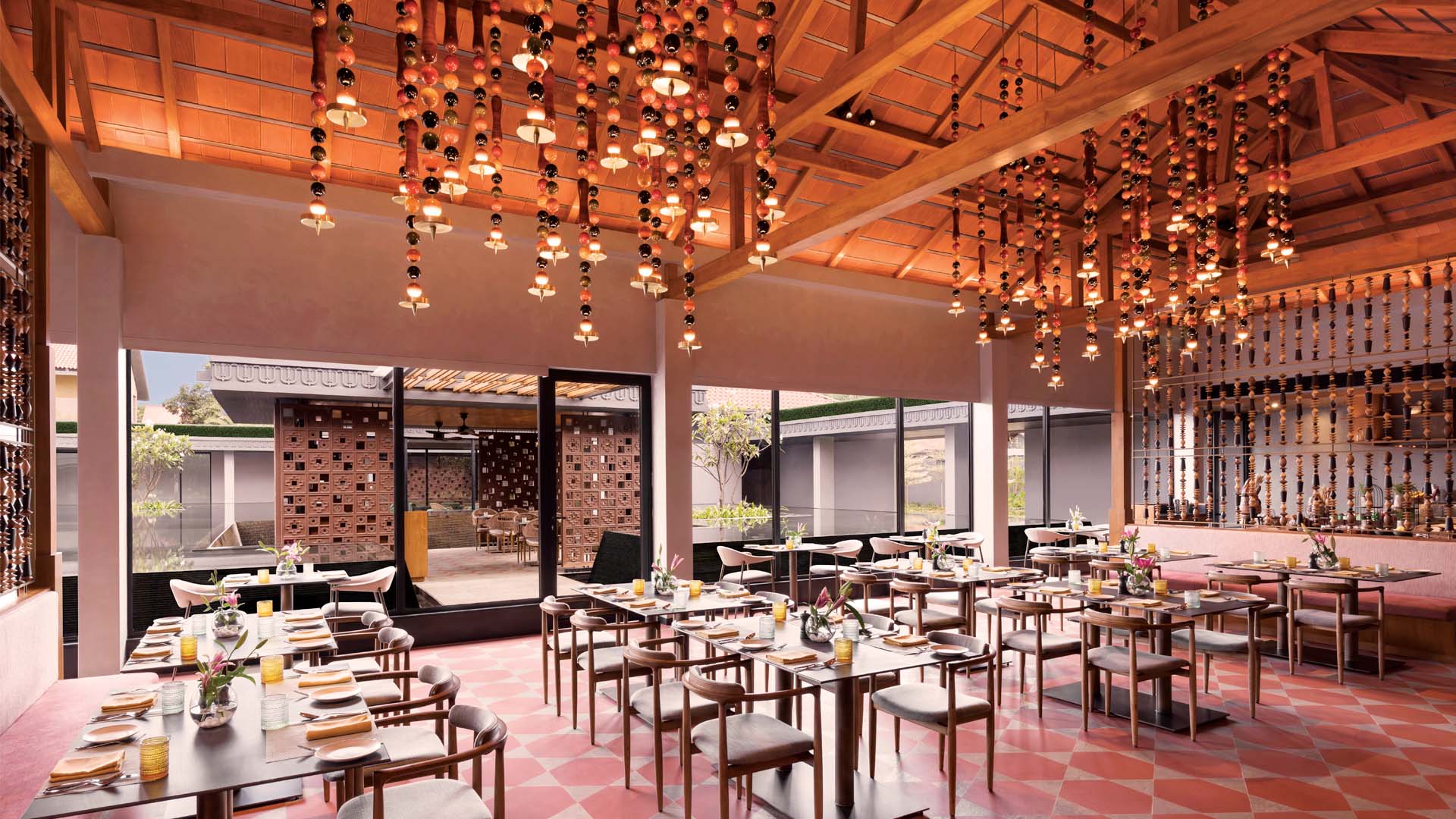
Inside Gingerfire, contemporary chandeliers reinterpret Etikoppaka lacquer craft from Andhra Pradesh.
Habitation and habitat
Guest accommodation is oriented toward water and planting, drawing the landscape into the private realm. The guest blocks are named after bird species observed on site—Blue Jay, Malkoha, Prinia, Parakeet, Jacana, Silverbill, Lapwing, Egret and Oriole—an understated gesture that anchors habitation to habitat.
Inside, the same material restraint continues. Stone floors ground the rooms. Timber detailing and muted textiles soften the palette. Proportions are comfortable rather than dramatic; even in larger categories, volume is handled with control.Balconies extend into shade rather than glare. Openings are generous but calibrated, framing water or foliage without exposing the room to the full intensity of the Deccan sun.
In the villas, private plunge pools sit within walled courts, offering sky and openness without sacrificing privacy.
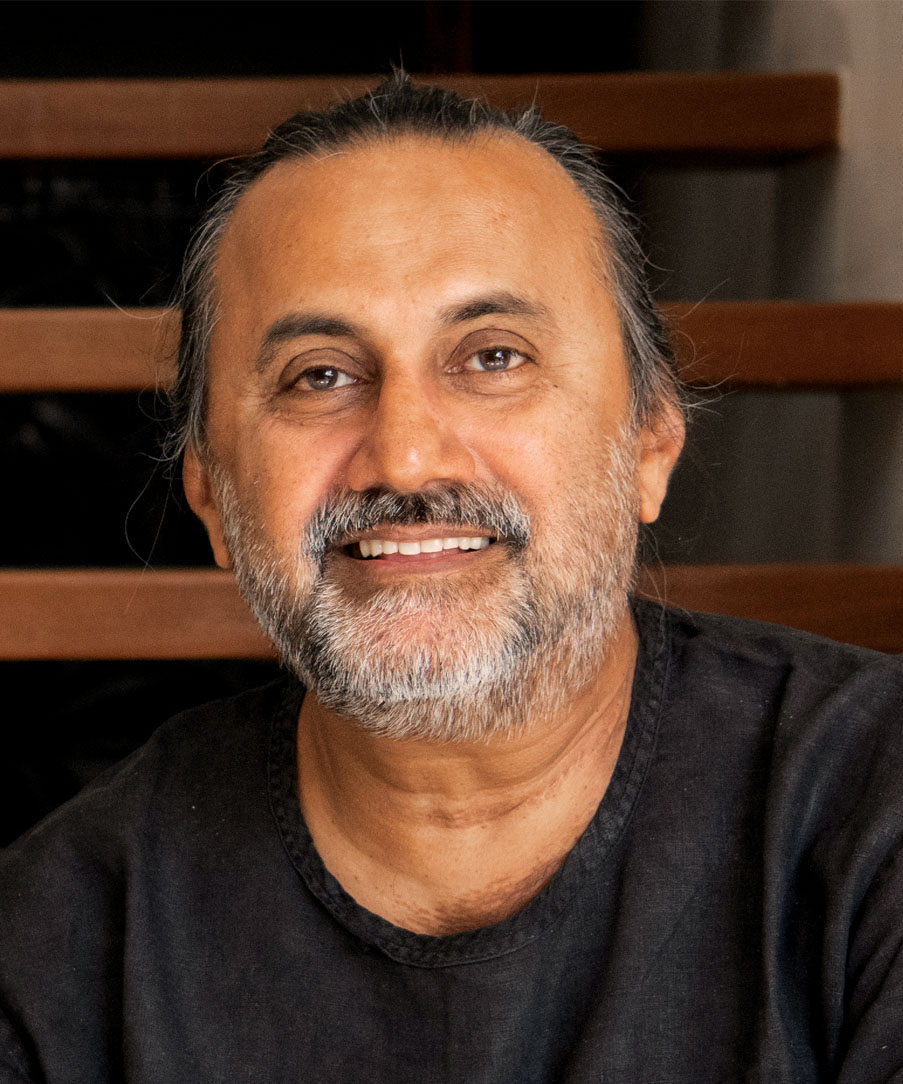
Tony Joseph, Founder & Principal Architect, Stapati.
The intent is not replication but resonance—so the resort embodies an international standard of luxury shaped unmistakably by its local cultural ground.
Tony Joseph
Founder & Principal Architect, Stapati

Reading the Market
“Hyderabad had strong urban hotels, but there was limited supply in the international resort category,” says General Manager Amandeep Singh Grover. The initial momentum came from leisure demand and destination weddings, which quickly positioned the property within the city’s celebration circuit.
Corporate demand from Genome Valley followed. “We are already seeing strong engagement across leadership retreats and strategic meetings,” Grover notes, pointing to a shift in how companies approach off-sites. Increasingly, business travel is expected to integrate wellness, recreation and curated dining rather than separate work from experience.
One of the more encouraging trends has been short-break demand. “Guests increasingly view the drive as part of the experience,” he says. Pool villas, in particular, have performed strongly.
Perhaps most telling is the willingness of guests to travel specifically for dining or wellness. “When the offering is meaningful, guests are willing to invest both time and distance,” Grover observes.
The demand mix today spans corporate, MICE, leisure and social segments—but increasingly, these categories overlap. Corporate travellers extend stays. Wedding guests seek experiential layers beyond ceremony. “Whether it is a wedding, a corporate retreat or a social celebration, we believe in hand holding our guests from the very beginning,” Grover says. That personalised, hands-on approach has become central to building long-term trust in an evolving Hyderabad market.

Laharika Reddy, Founder and principal architect, Laharika Reddy Design Studio.
The landscape was envisioned as a forest-like retreat, where water, stone and planting work together to create an experience that complements the architecture.
Laharika Reddy
Founder & Principal Architect, Laharika Reddy Design Studio
Culinary Layering
Food and beverage at Hilton Hyderabad Genome Valley Resort and Spa operates as a parallel narrative rather than an appendage to accommodation. Over 60% of the produce is locally sourced, extending the resort’s regional grounding beyond architecture. Each venue carries a distinct register while remaining aligned with the resort’s broader spatial logic.
At arrival, Gingerfire sets the tone with regional conviction. Breakfast moves beyond standardisation—a Gongura Pancake carries the sour-green sharpness of the local leaf, while Khagina with soft buns and a well-brewed Irani chai reference Hyderabad’s morning rituals. By lunch, Tomato Pappu, Bagara Baigan and Kori Pulao reinforce that flavour is not moderated for neutrality. On occasion, a biryani drawn from the owner’s family recipe appears—less staple, more inheritance.
Yuzu shifts the register toward Japanese-led precision. Salmon Aburi arrives lightly torched and glazed with yuzu soy; Charcoal Jiaozi arrive in unexpected black, a visual interruption to the usual pale dumpling palette; ramen carries measured warmth. Even dessert—a Yuzu Semifreddo—leans towards citrus restraint rather than sweetness.
Beside the elevated pool deck, Nero extends the leisure narrative into Mediterranea n territory. Millets and Avocado Salad, a Duo Flower Steak, Yoghurt Roll sharpened with Coorg pepper and burnt green apple relish, Chicken Souvlaki and Fiery Jumbo Prawns together create a menu that feels lighter without being insubstantial—attuned to afternoons that stretch into evening.
Grid 78 anchors the bar programme, while Drip operates as a transitional café just off reception. Further along the creek, private cabanas allow dining to unfold within foliage and water.

Char-grilled New Zealand Lamb Chops finished with quinoa.

Yuzu Semifreddo is a delicate citrus semifreddo paired with a honey-ginger streusel.
Wellness as extension
Wellness is housed within Hilton’s signature eforea spa, marking the brand’s first eforea presence in India, positioned as an inward counterpoint to the resort’s more public water courts. The experience is deliberately contained. Light is softened, surfaces muted, circulation hushed. There is no dramatic reveal, no ornamental excess—only a steady lowering of tempo. A small herb garden sits adjacent to the spa, doubling as a no-device zone, reinforcing the shift from social engagement to personal retreat. If the larger resort negotiates climate through water and shade, the spa negotiates it through enclosure and quiet.
Luxury as an experience
For Tony Joseph, luxury in this project is not defined by spectacle. “Luxury is not visual opulence. It is fundamentally experiential. It is about how a space makes you feel rather than how it tries to impress you.”
Across the resort, that philosophy translates into proportion rather than excess, natural light that is calibrated rather than theatrical, materials that feel authentic, and an intuitive connection between architecture, water and landscape. “Ultimately,” he says, “luxury is the ability of a space to offer calm, privacy and emotional comfort. Our intention was to create a place where guests can truly relax—a setting that feels composed, balanced and quietly refined.”
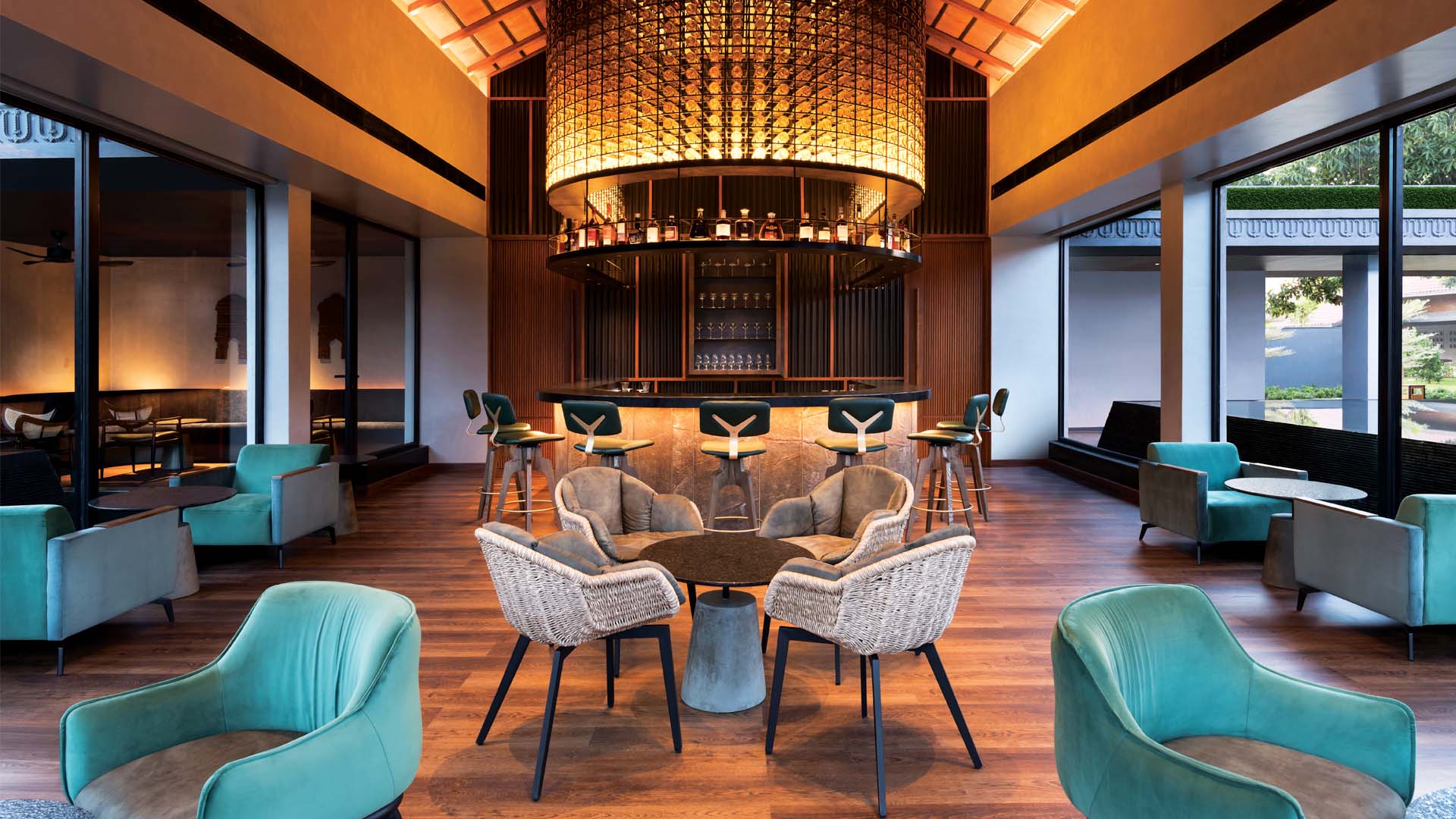
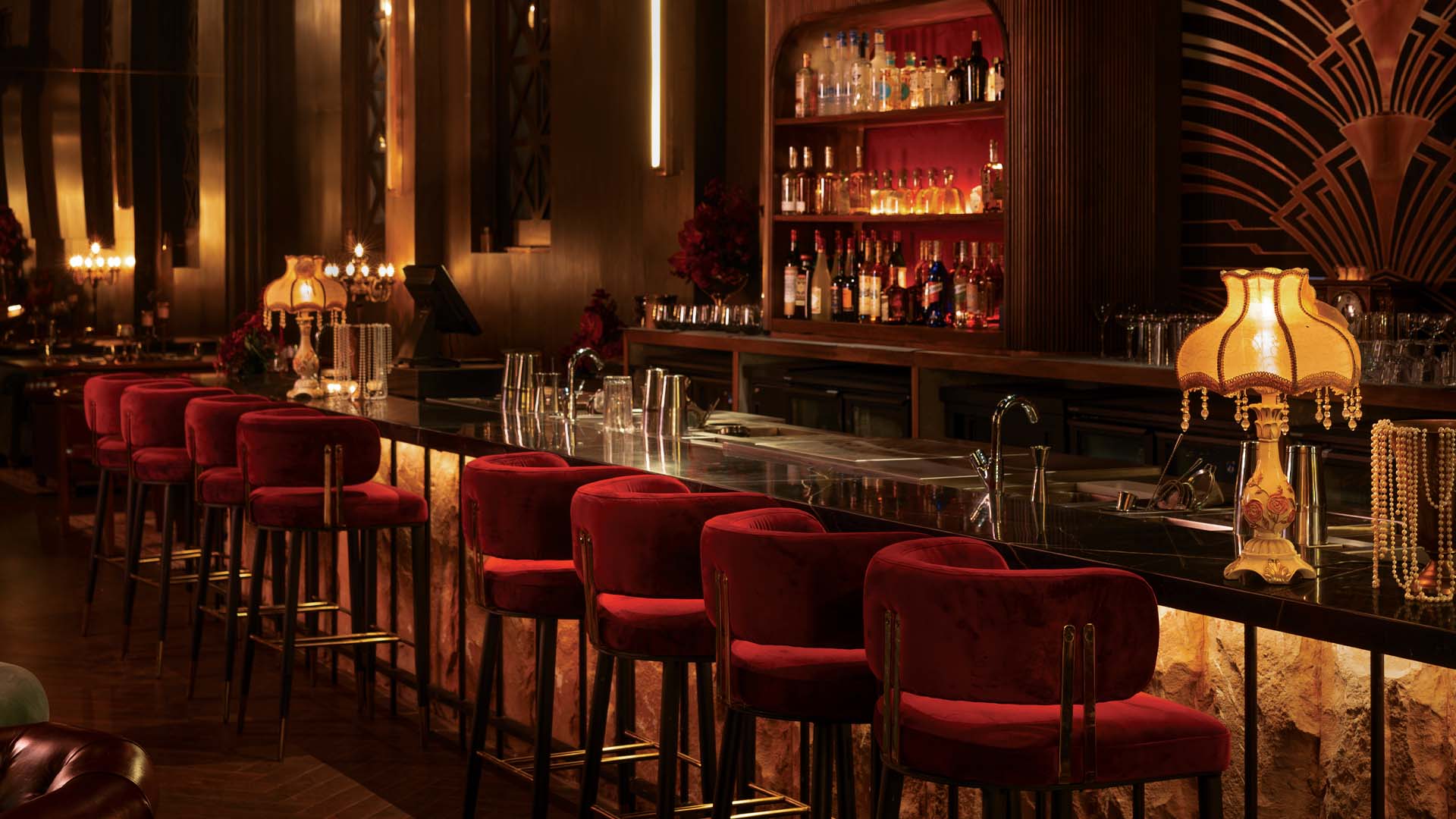
Grid 78 unfolds as an intimate bar and lounge, where warm lighting and a restrained material palette create a relaxed evening setting.
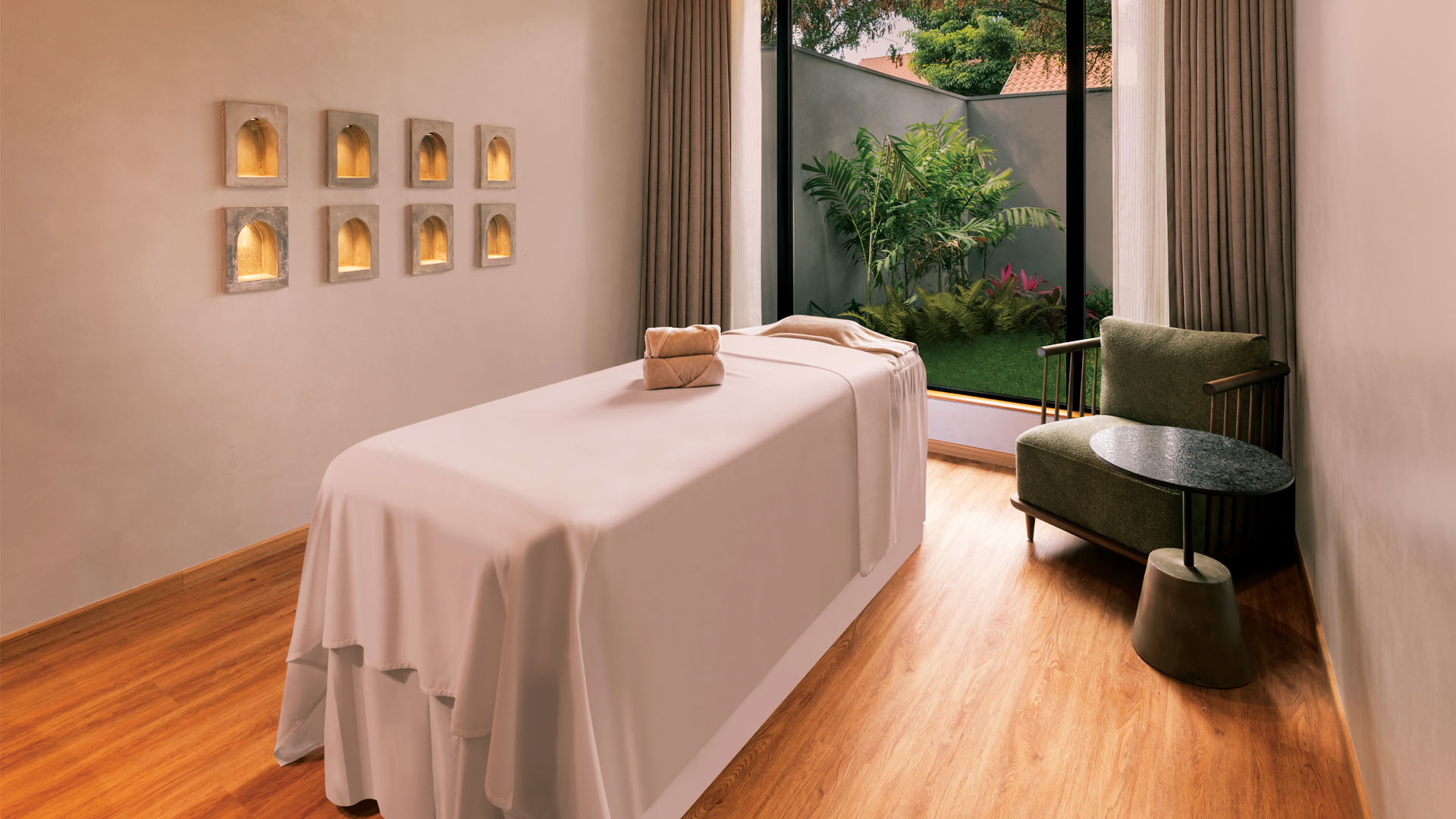
Treatment beds at the eforea spa sit within softly lit interiors.