











Bars That Break The Mould
Design-forward drinking spaces that reimagine the bar as an experience.

By Rupali Sebastian
For decades, the bar followed a familiar script.
A long counter, rows of bottles, dim lighting and the steady rhythm of cocktails ordered and delivered across a polished surface. The formula worked—and still does. But in recent years, a handful of bars across India have begun quietly rewriting that spatial grammar.
Today’s most compelling bars are no longer just places to drink. They are environments that frame the act of drinking through architecture, narrative and spatial theatre. Counters spiral into the room, dissolve into sculptural installations, or disappear within surrealist stage sets. Guests wander through spaces designed to reveal themselves gradually rather than all at once.
This shift reflects a broader change in how hospitality design approaches the night. Earlier bars relied largely on lighting and music to define atmosphere. Newer spaces are exploring form, material and spatial choreography as equally powerful tools. Some lean into cinematic glamour; others favour shadowy intrigue, surreal playfulness or the quiet precision of craft.
What connects them is a shared understanding that the bar itself can become the protagonist of the evening.
Across Mumbai and Bengaluru, a new generation of bars is testing that idea through distinct design languages. From the seductive drama of Fielia to the shadowed intrigue of Paradox, the surreal playfulness of Dali & Gala and the geometric clarity of Naked & Famous, these spaces show how design can shape not just the room around the drink but the entire ritual of the night.
Fielia, Mumbai
Where the bar becomes theatre.
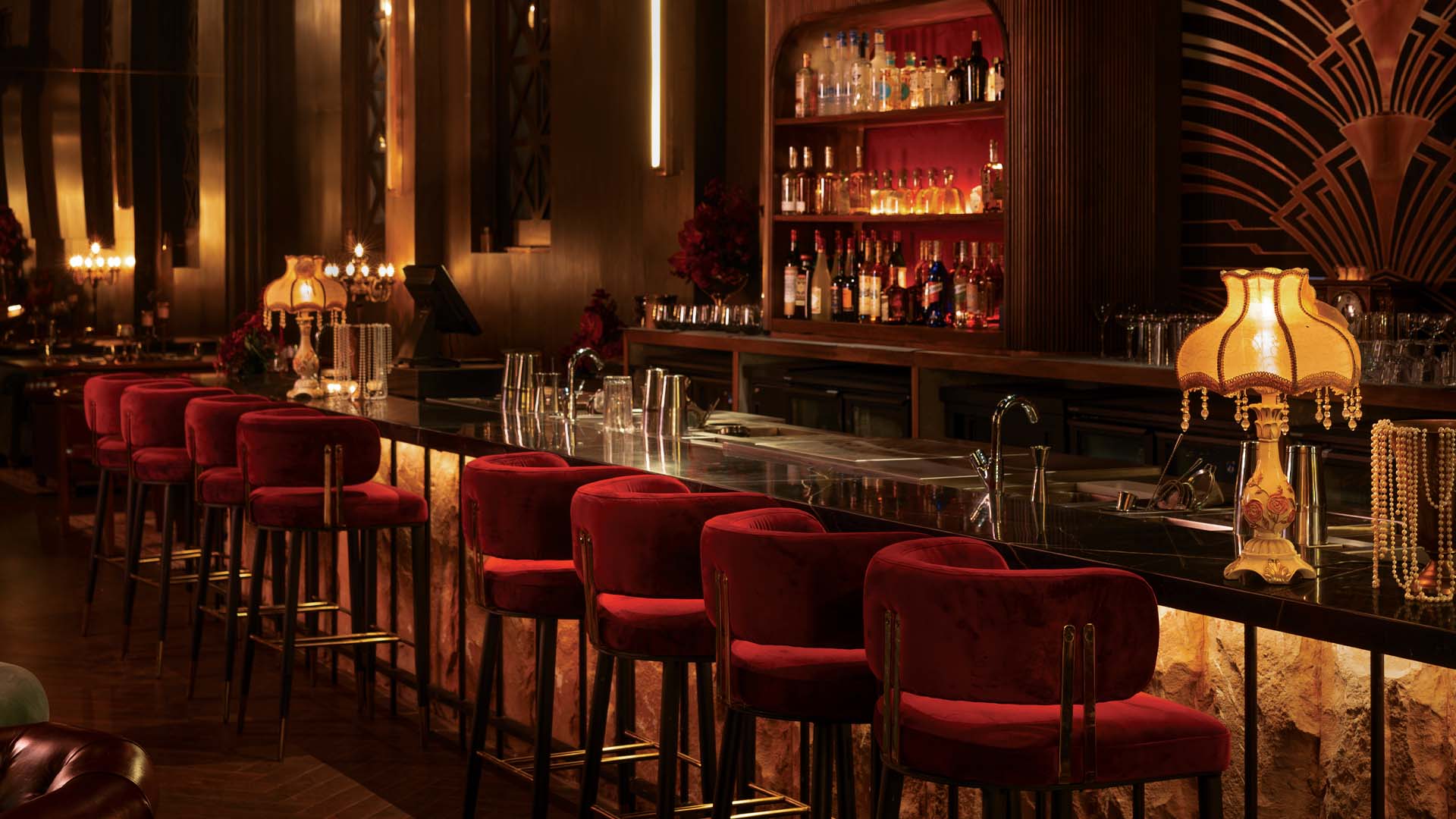
At Fielia, the evening begins quietly. The entry is almost ceremonial, allowing the space to reveal itself gradually before opening into warmth and depth. Designer Gauri Khan describes the approach as intentional—creating the sensation of stepping into a world that whispers rather than announces itself.
That atmosphere was central to the brief set by founders Afsana Verma, Amit Verma and Dhaval Udeshi, who envisioned Fielia as more than a cocktail bar. The idea was to create an environment where design and experience feel inseparable—where the room shapes the rhythm of the evening as much as the drinks do. The interiors therefore lean into what Khan calls "nocturnal luxury: intimate yet grand, darker, sensual and immersive." One element remained non‑negotiable—the bar had to remain the gravitational centre of the room.
That centrality defines the spatial choreography. Conceived almost like a stage, the bar rises tall and sculptural, softly illuminated from within. Seating across the main floor and mezzanine preserves clear sightlines toward it, encouraging guests to watch the rhythm of bartenders at work. Rather than spectacle for its own sake, the intention is storytelling—the act of making drinks becomes part of the evening’s theatre.
Material choices deepen the atmosphere without overwhelming it. A palette of aged wood, distressed mirrors, marble, velvet and burnished metal gives the room tactile richness, while forest green, tobacco brown and oxblood red sit alongside antique brass finishes. These surfaces suggest time and memory, creating a space that feels indulgent yet welcoming.
Lighting quietly orchestrates the mood. Chandeliers soften into warm pools of illumination, wall sconces glow discreetly and table lamps create small islands of intimacy across the room. At the centre, the bar glows internally, anchoring the space in a chiaroscuro of shadow and light.
At Fielia, the room remains constant while the evening evolves around it—the bar acting as both anchor and stage.
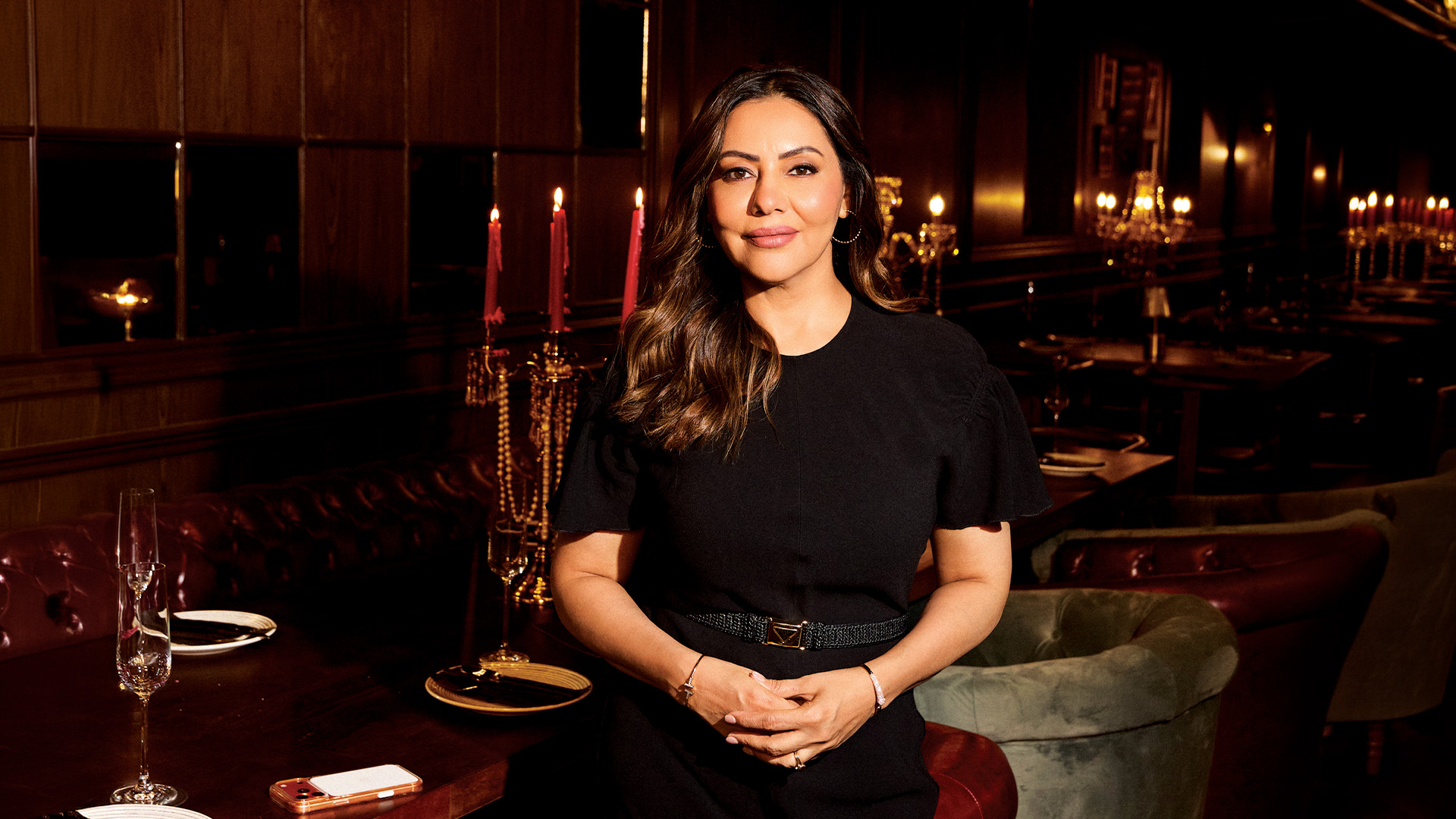
A slow reveal sets the tone at Fielia, where designer Gauri Khan shapes a cinematic bar.
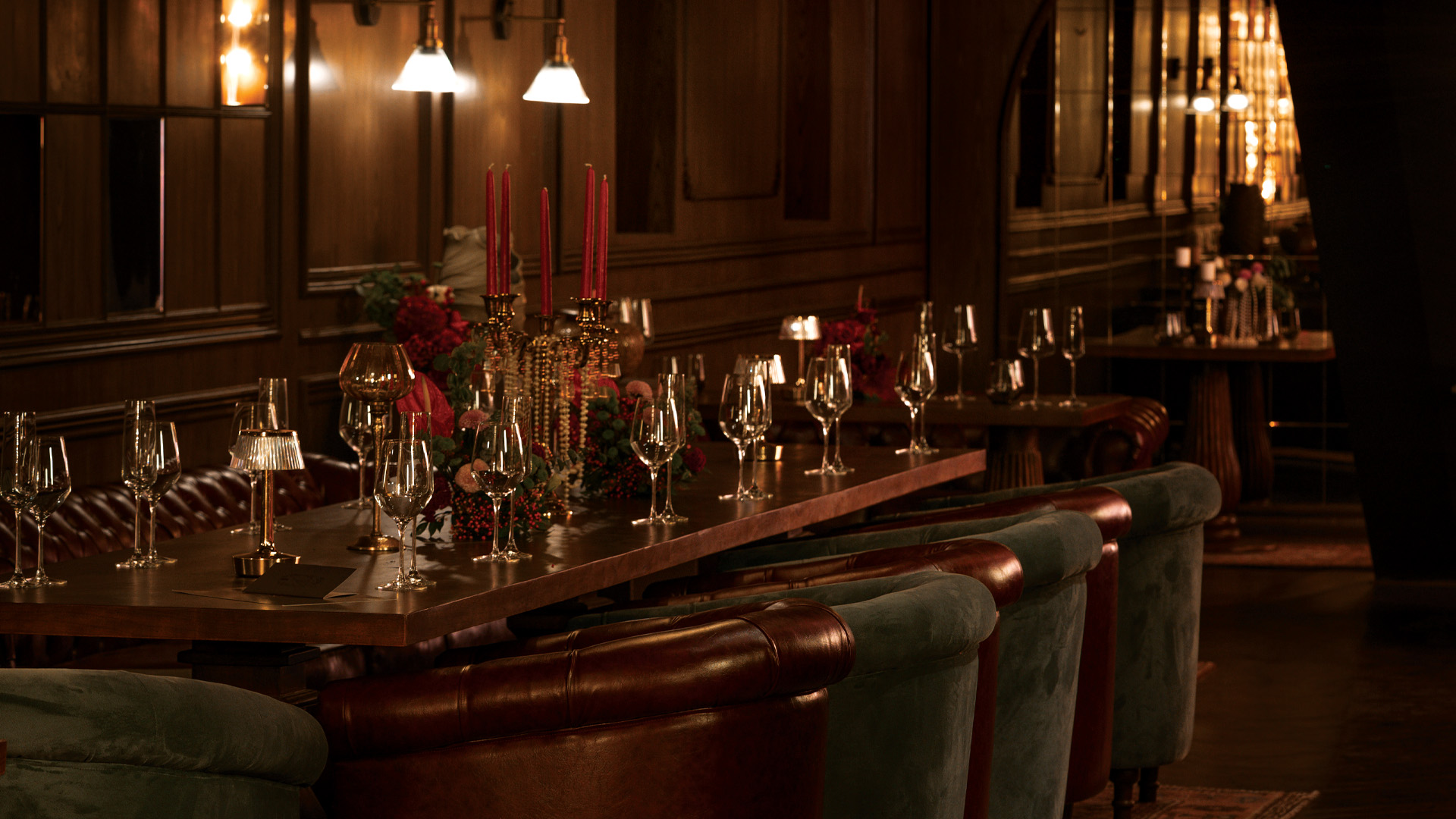
At Fielia, light, texture and a glowing counter guide the evening.
Paradox, Mumbai
Where shadow, material and movement shape the night.
Paradox occupies a former mill building, and the architecture it inherits becomes the starting point of the experience. The column grid, ceiling heights and structural proportions are largely fixed—conditions that might easily have constrained the design. Instead, they became the framework through which the bar’s character emerged.
For Aditya Dugar, Director and Co‑Founder of Urban Gourmet India, the idea of a paradox felt inherent to the space. That tension guided the design interpretation by architect Ashiesh Shah, who approached the interiors through contrast: dark, enveloping surfaces set against reflective ones, dramatic gestures placed beside quieter tactile materials. "Paradox pulls inspiration from Mumbai's art Deco heritage, reimagined through a contemporary lens... from there on, the space reveals itself in layers," he notes.
The inherited structural grid allowed the layout to break into smaller zones, creating pockets of differing energy. Some areas feel lively and social, while others are more cocooned, with deeper seating and softer lighting.
Circulation becomes part of the narrative. Turning a corner reveals another perspective, another seating pocket, another shift in atmosphere. The experience is less about a single focal point and more about discovery—the sense that the evening reveals itself gradually as guests move through the bar.
Materiality helps maintain intimacy within this layered environment. Darker finishes absorb both light and sound, allowing the room to remain vibrant without becoming overwhelming. Textiles, wood and stone soften acoustics while adding depth to the interiors.
Shadow is used deliberately. Instead of illuminating every surface evenly, parts of the room remain in darkness, encouraging the eye to move slowly through the space and allowing details to emerge over time.
At Paradox, the night unfolds slowly, guided by architecture, material and shadow rather than spectacle.
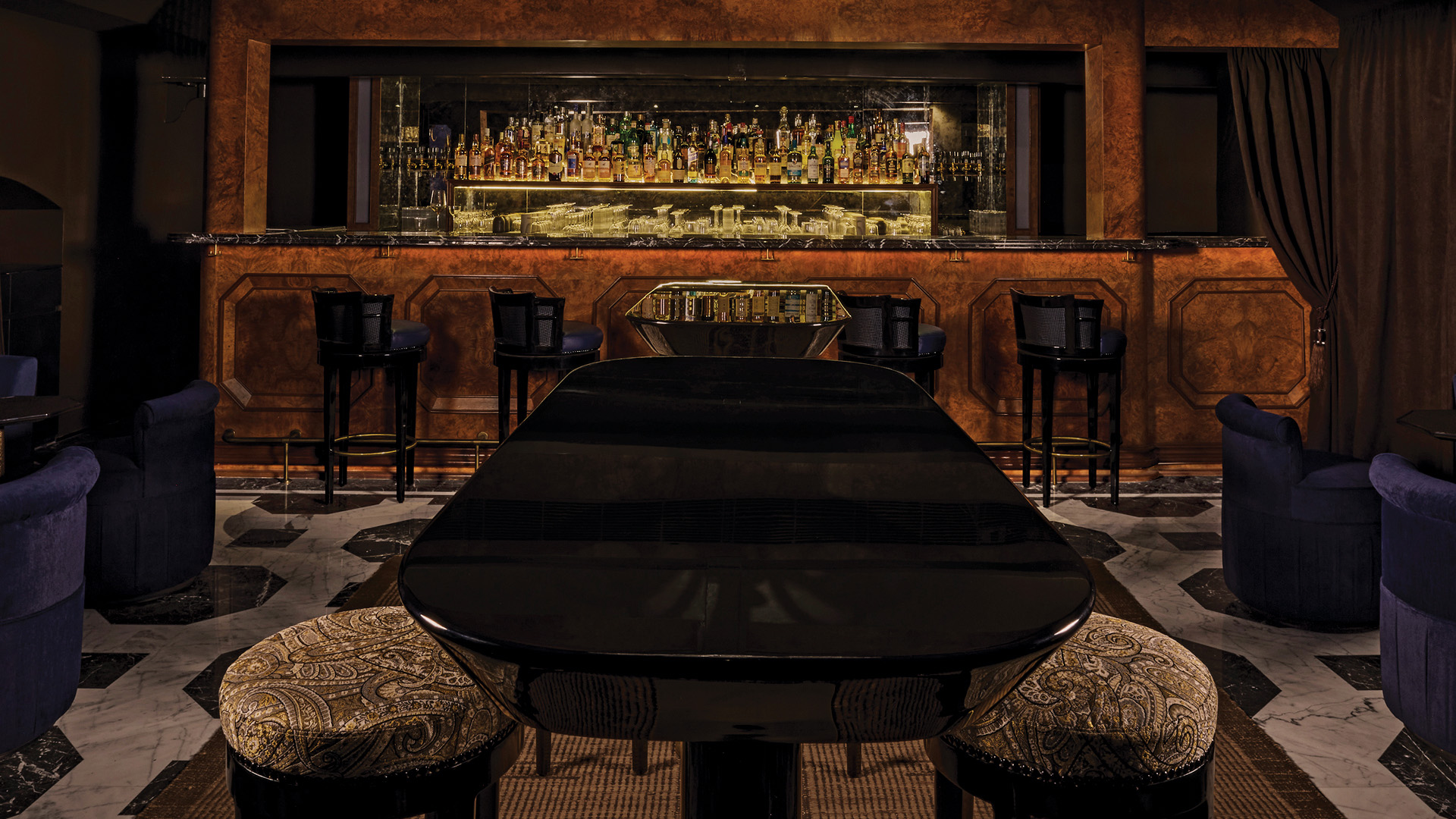
Shadow does most of the work at Paradox.
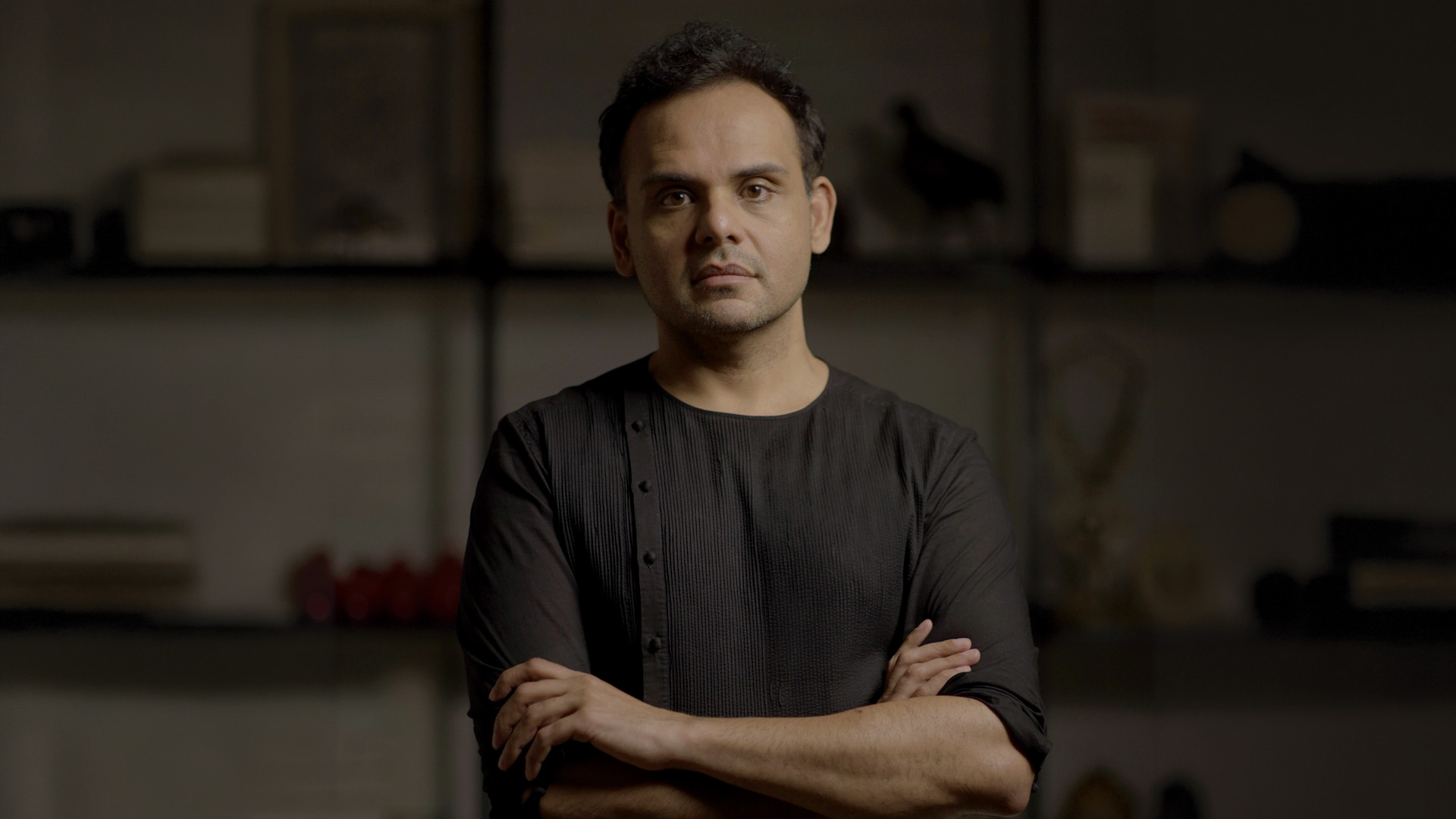
Architect Ashiesh Shah layers the space in shifting moods—rooms that unfold gradually as the night deepens.
Dali & Gala, Bengaluru
Where surrealism meets a well‑made drink.
If Salvador Dalí had designed a bar, it might have felt something like this—strange enough to intrigue, playful enough to keep the evening moving and just irreverent enough to raise an eyebrow.
At Dali & Gala, the inspiration comes from the famously unconventional relationship between the surrealist painter and his muse—who would eventually become his wife. The bar borrows less from Dalí’s paintings than from the spirit behind them—theatrical, mischievous and faintly scandalous.
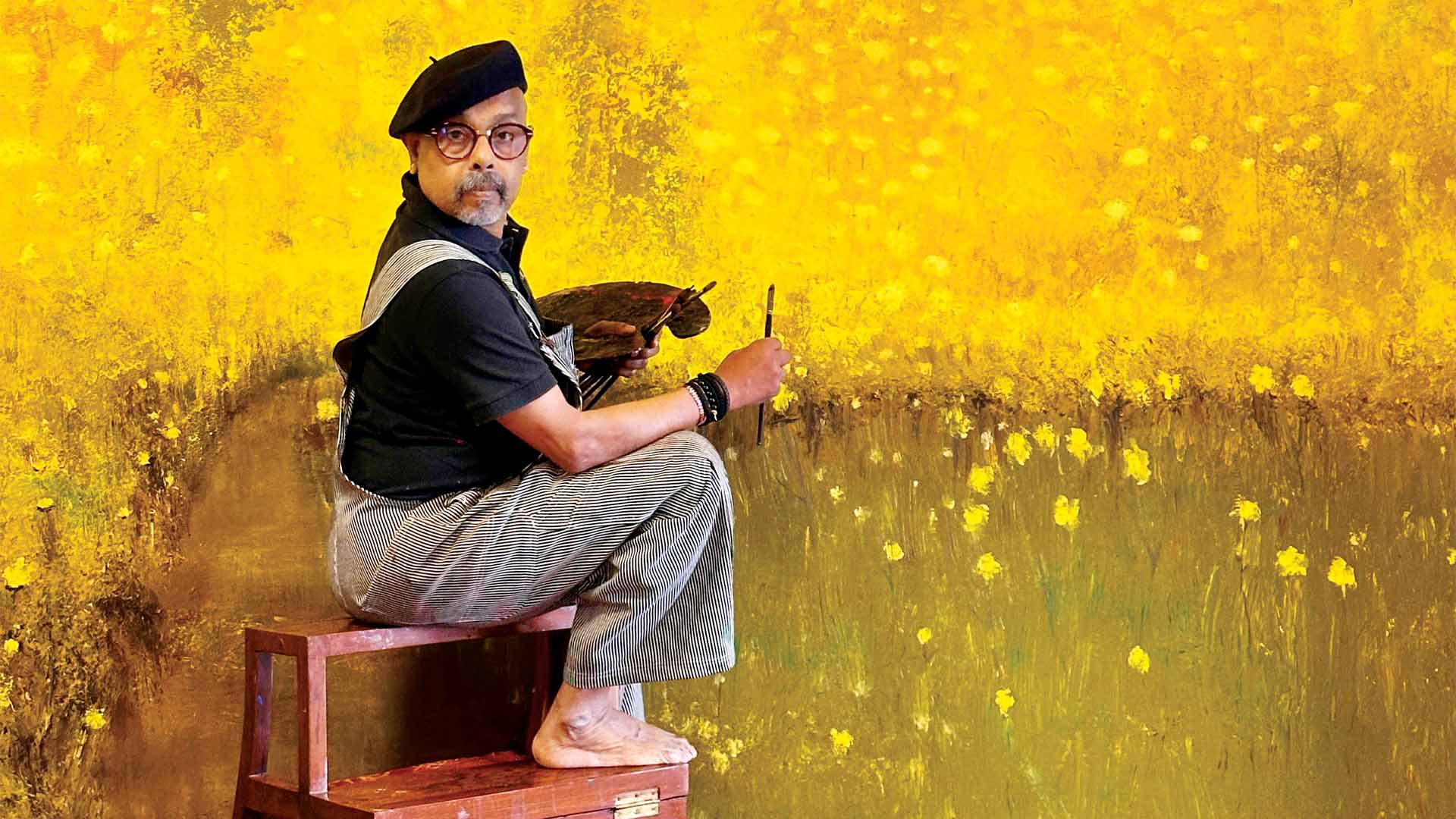
The concept grew out of conversations between restaurateur Vipin Raman and artist Siddharth Kerkar. "Art is freedom," says Kerkar. "and that's what Dali & Gala is all about. Zero inhibitions, no rules. We want you to walk and feel like you're part of a celebration."
The intention was not to recreate Dalí’s world literally but to capture its sense of playful distortion—where familiar things appear slightly altered and curiosity is rewarded. That idea translates into a layout designed for gradual discovery. Instead of a single dominant room, the bar unfolds in stages, encouraging guests to wander rather than remain rooted to one spot.
The journey begins at the Eye‑Bar, a copper counter embedded with dozens of hand‑beaten eyes that seem to watch the room with quiet suspicion. From here the space branches into adjoining pockets—the cheeky Rooster Room, quieter corners suited to long conversations and installations that appear unexpectedly as one moves through the interiors. Sculptural objects and surreal motifs guide movement without overwhelming the room. What remains is a bar that reveals its quirks slowly—sometimes after a second look, or a second drink.
At Dali & Gala, surrealism is not treated with reverence—it’s treated the way Dalí himself might have preferred: with curiosity, wit and a very good cocktail in hand—preferably a second one.
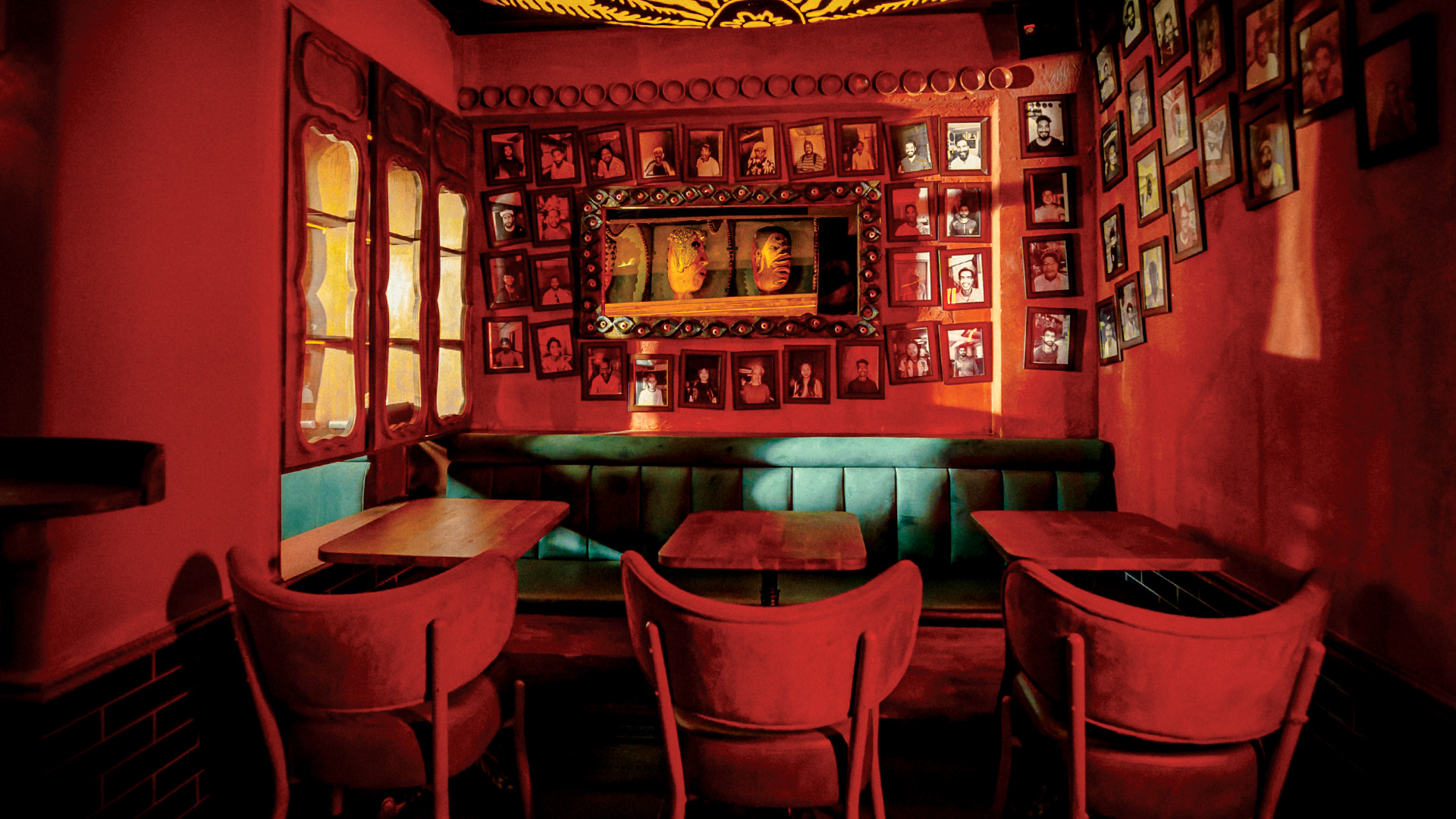
Designed by artist Siddharth Kerkar, art, romance and mischief spill into the bar.
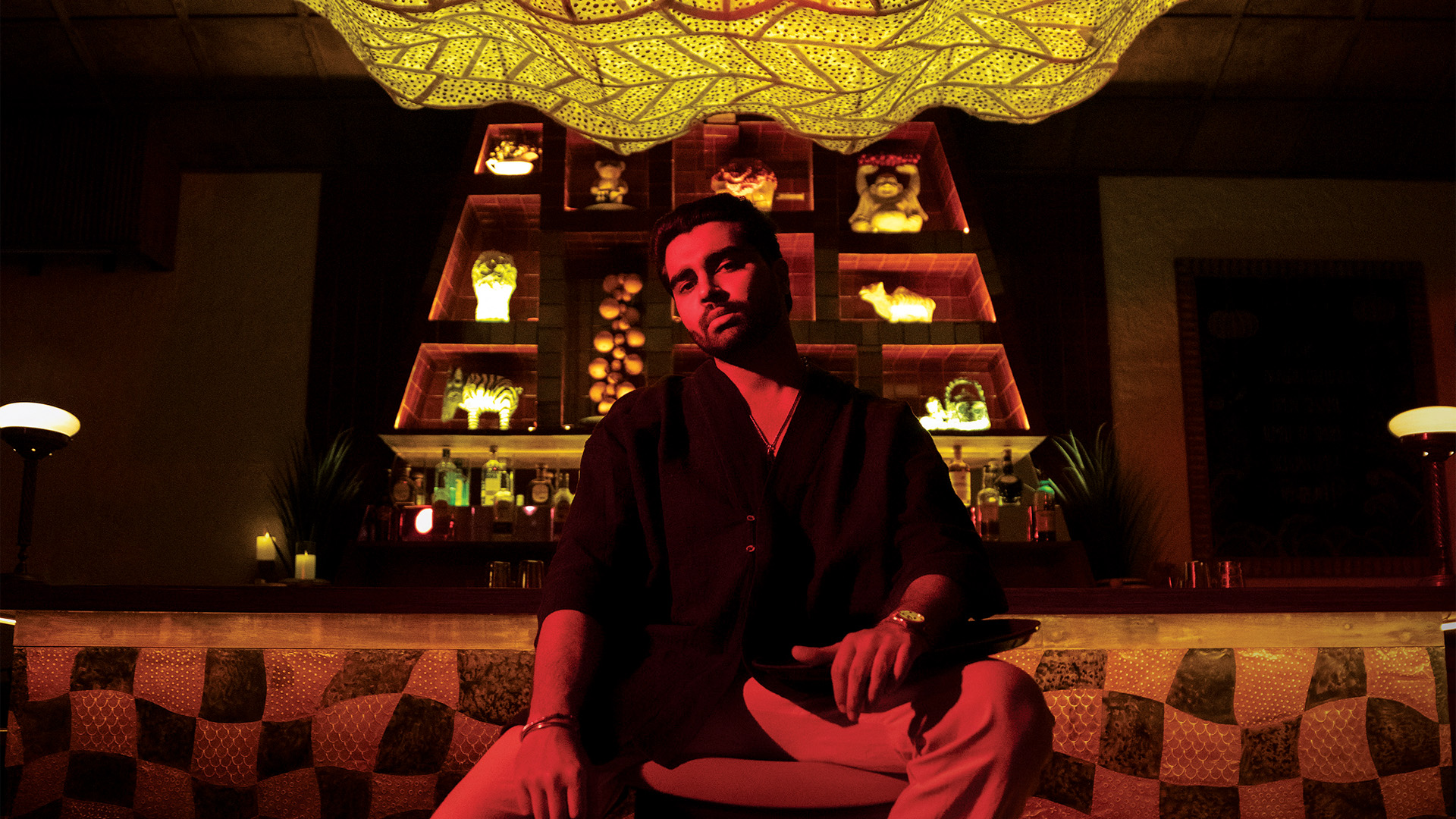
Slightly unhinged and entirely playful, Dali & Gala channels Dalí’s world.
Naked & Famous, Bengaluru
Where the bar itself becomes the experience.
At Naked & Famous, the first instinct is to look toward the centre of the room. There, an octagonal bar anchors the space—a form rarely seen in Indian cocktail bars and one that immediately changes how the evening unfolds.
For Karthik Kumar and Priyesh Busetty, the geometry was never intended as spectacle. The goal was to create a bar where guests sit close enough to the action that the process of making a drink becomes part of the experience. The bar, therefore, functions as both stage and meeting point, encouraging conversation between guests and bartenders.
The structure of the octagon also informs the menu. Each side corresponds to a different cocktail technique—built, stirred, shaken and neat—allowing guests to explore drinks through the mechanics of how they are made rather than through rigid spirit categories.
From the centre of the counter rises a striking red installation—a tangle of metal forms that spirals upward toward the ceiling like a kinetic chandelier, adding visual drama while keeping the bar itself firmly at the heart of the room.
From this vantage point, the preparation of cocktails becomes the real performance. Bartenders measure, stir, shake and build drinks within arm’s reach of the guest, making the craft visible without turning it into spectacle.
At Naked & Famous, everything continues to orbit the octagonal bar—conversation, craft and the quiet pleasure of watching a drink come together.
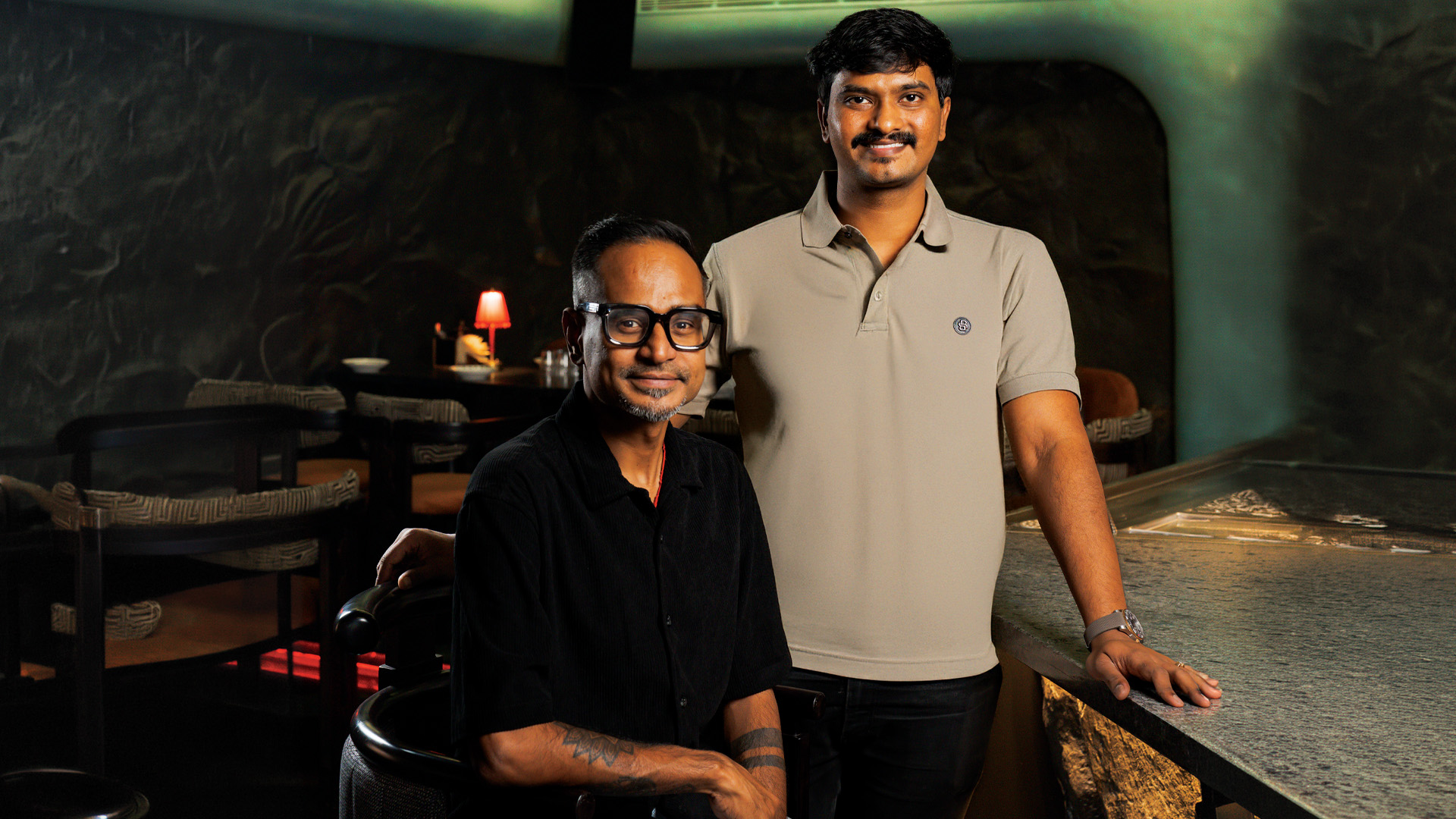
Karthik Kumar and Priyesh Busetty bring guests into the craft—cocktails unfolding within arm’s reach.
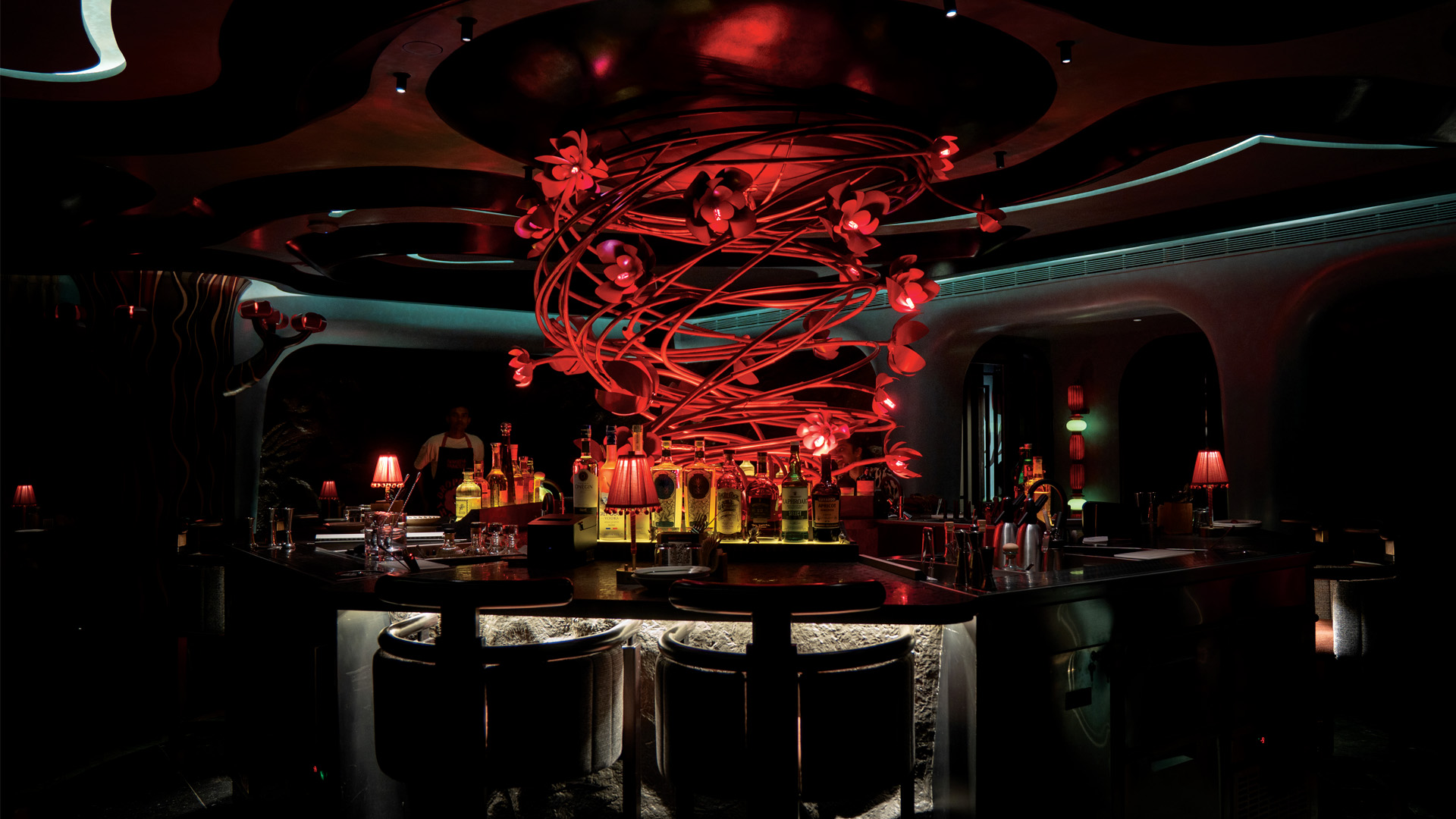
At Naked & Famous, everything converges at the octagonal bar.