











A Bar Rooted in Indian Palace Architecture
Perched on the 13th floor of an Art Deco building, Kai Bar and Kitchen was 1.5 years in the making. Converting a penthouse to a symmetrically fluid and flexible bar has been an exercise in creativity and balance for Maze Concept Design Studio.

By Ruth Dsouza Prabhu
In the early 2000s, the Central Business District (CBD) of Bengaluru was where all the action was at MG Road, Brigade Road, and Residency Road had some great restaurants, pubs, and bars, and were the ultimate hangout spaces for folks of all wallet sizes. Then, thanks to Bengaluru's circular growth pattern, the localities of Indiranagar, Koramangala, JP Nagar, Whitefield, Sarjapur Road, each began to see spectacular levels of expansion, particularly in the F&B space, keeping crowds locality bound. From the 2020s, the OG localities have been seeing a spate of new openings.
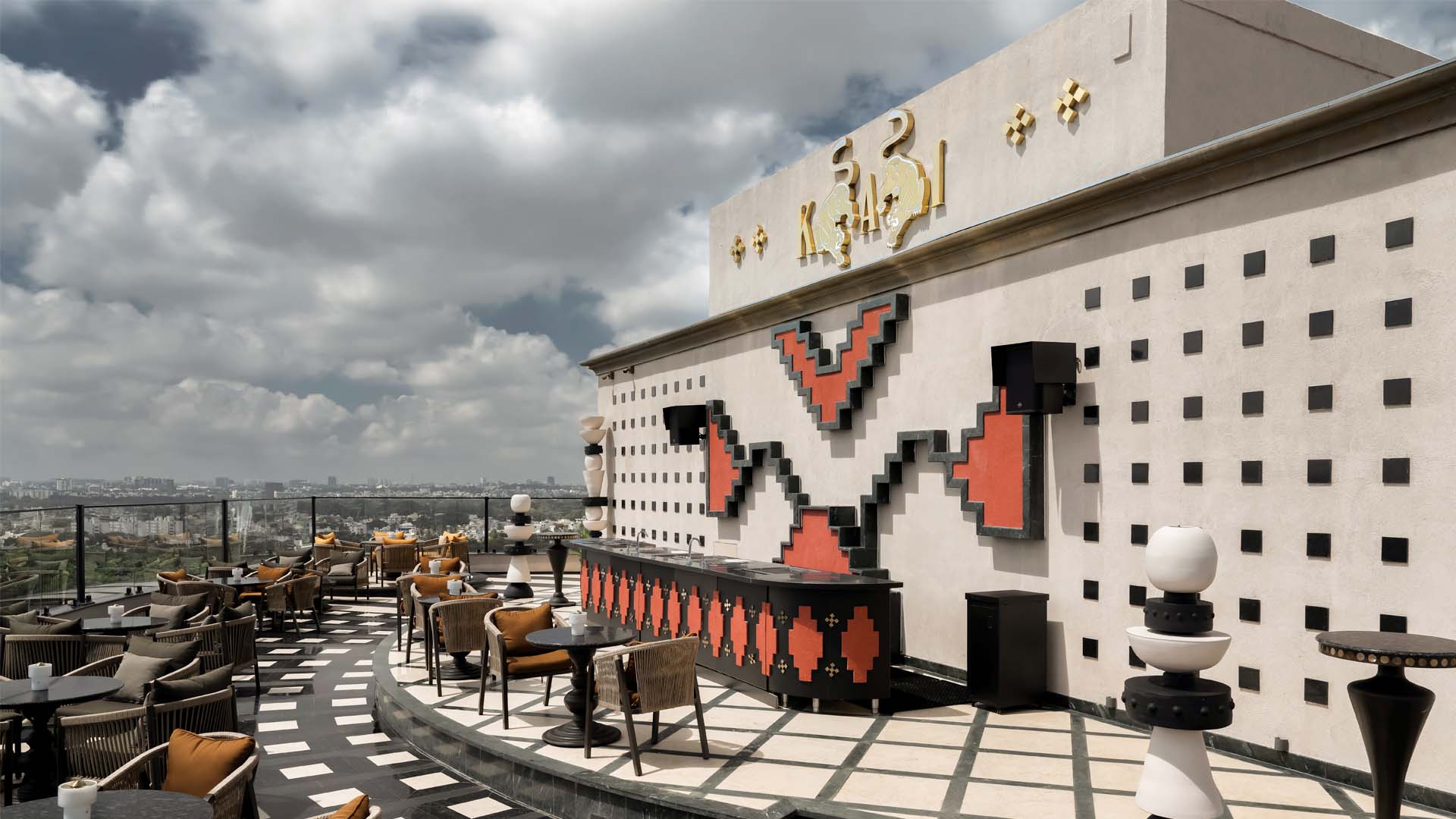
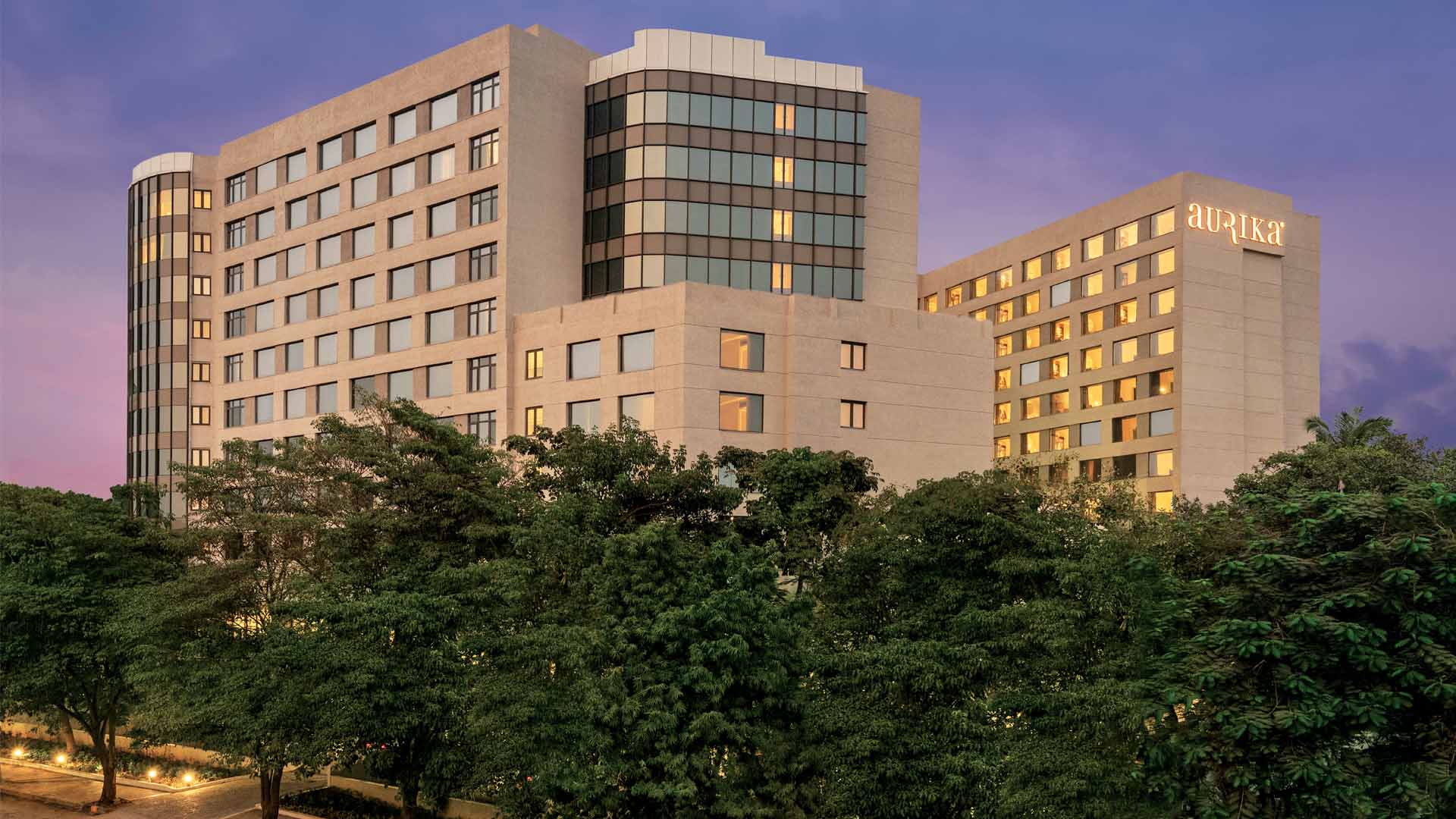
Recently joining the scene, capitalising on Bengaluru’s legendary weather, is Kai Bar and Kitchen. Set atop the 1996-built Du Parc Trinity—a 13-storey Art Deco commercial building—the interiors of Kai draw heavily from the maximalism and intricacy of Indian palaces. Principal designers of Maze Concept Design Studio, Koushik B. R. and Priyanka M. C. have reinterpreted these royal inspirations in a contemporary, non-intimidating way.

Koushik B.R., Principal Designer, Maze Concept Design Studio.
The creation of Kai
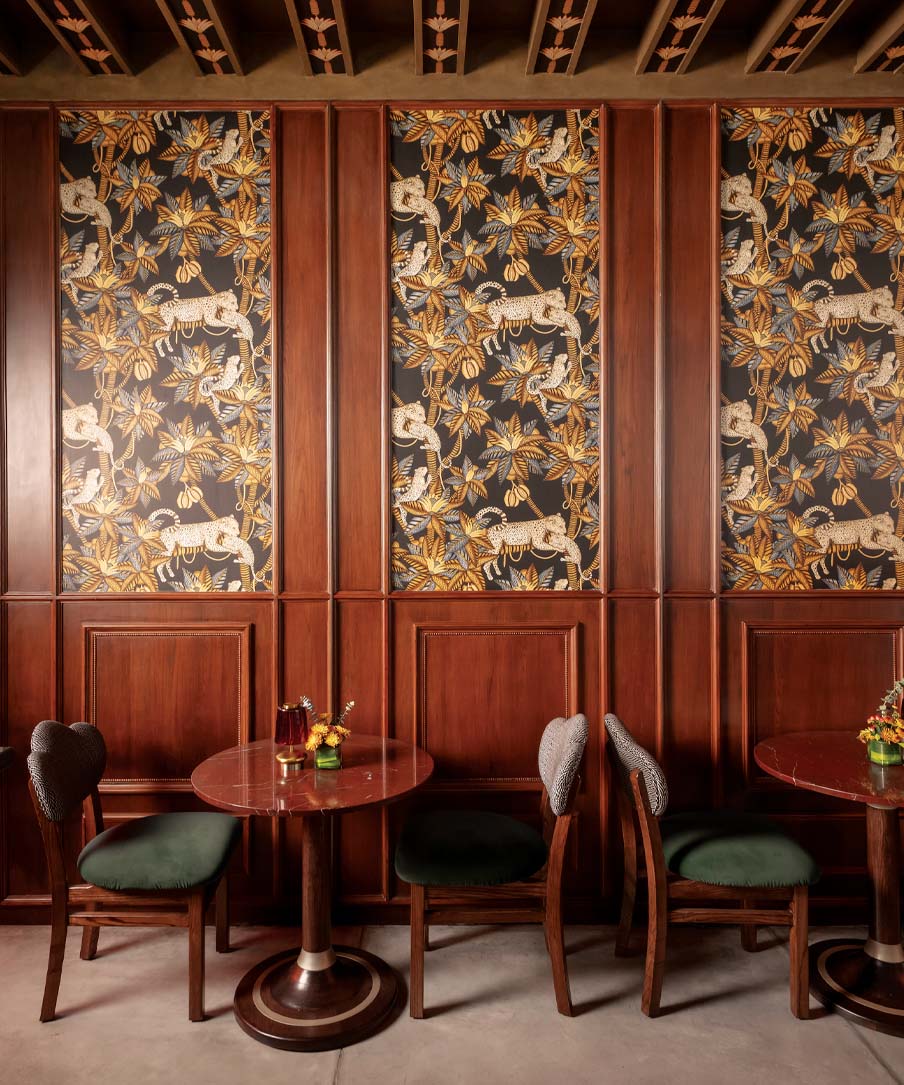
Kai, a character-led identity rather than a linguistic one, introduces itself through the subtle recurrence of a leopard motif, setting the tone for an architecture that builds narrative through form and detail.
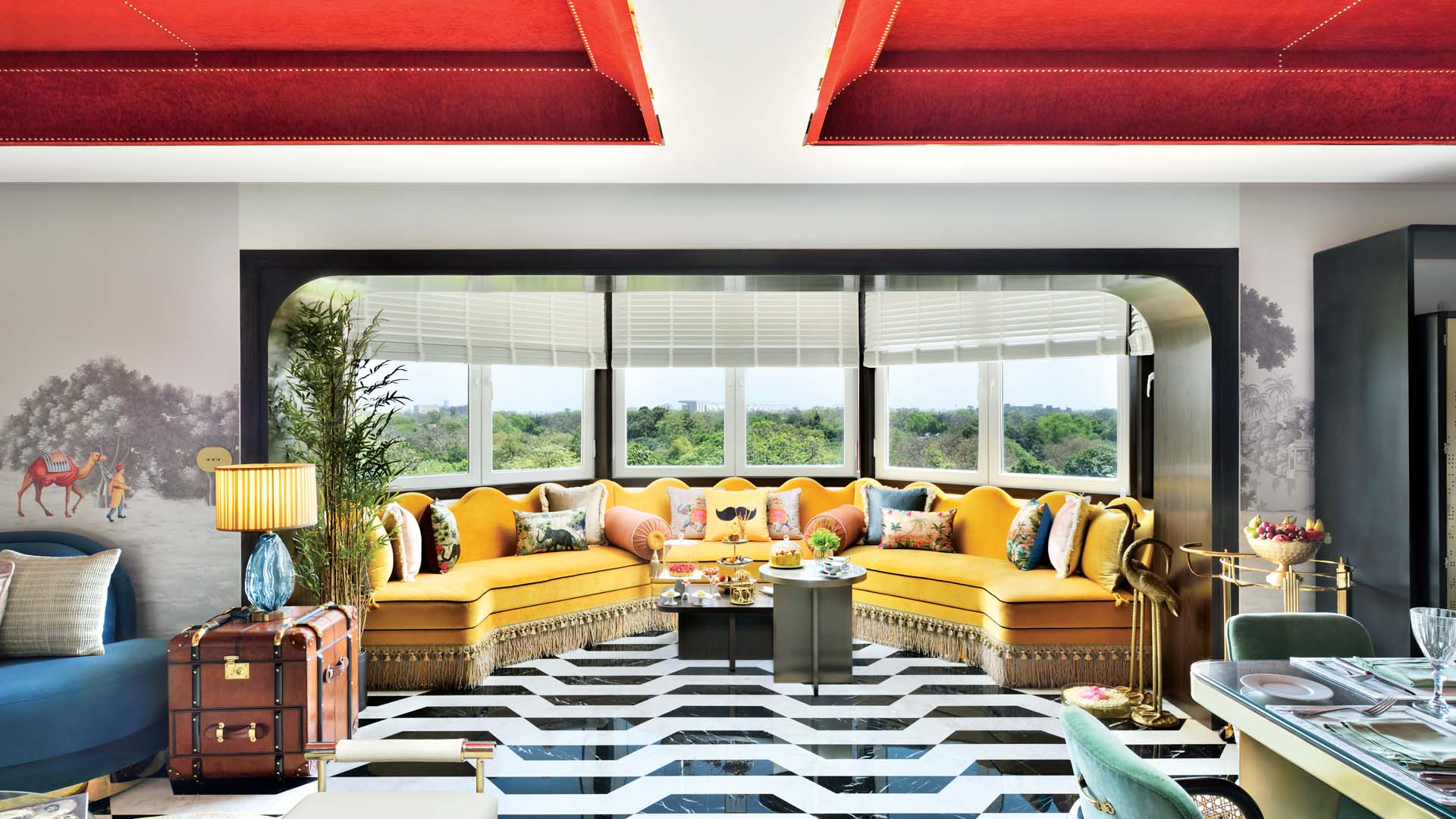
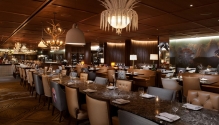
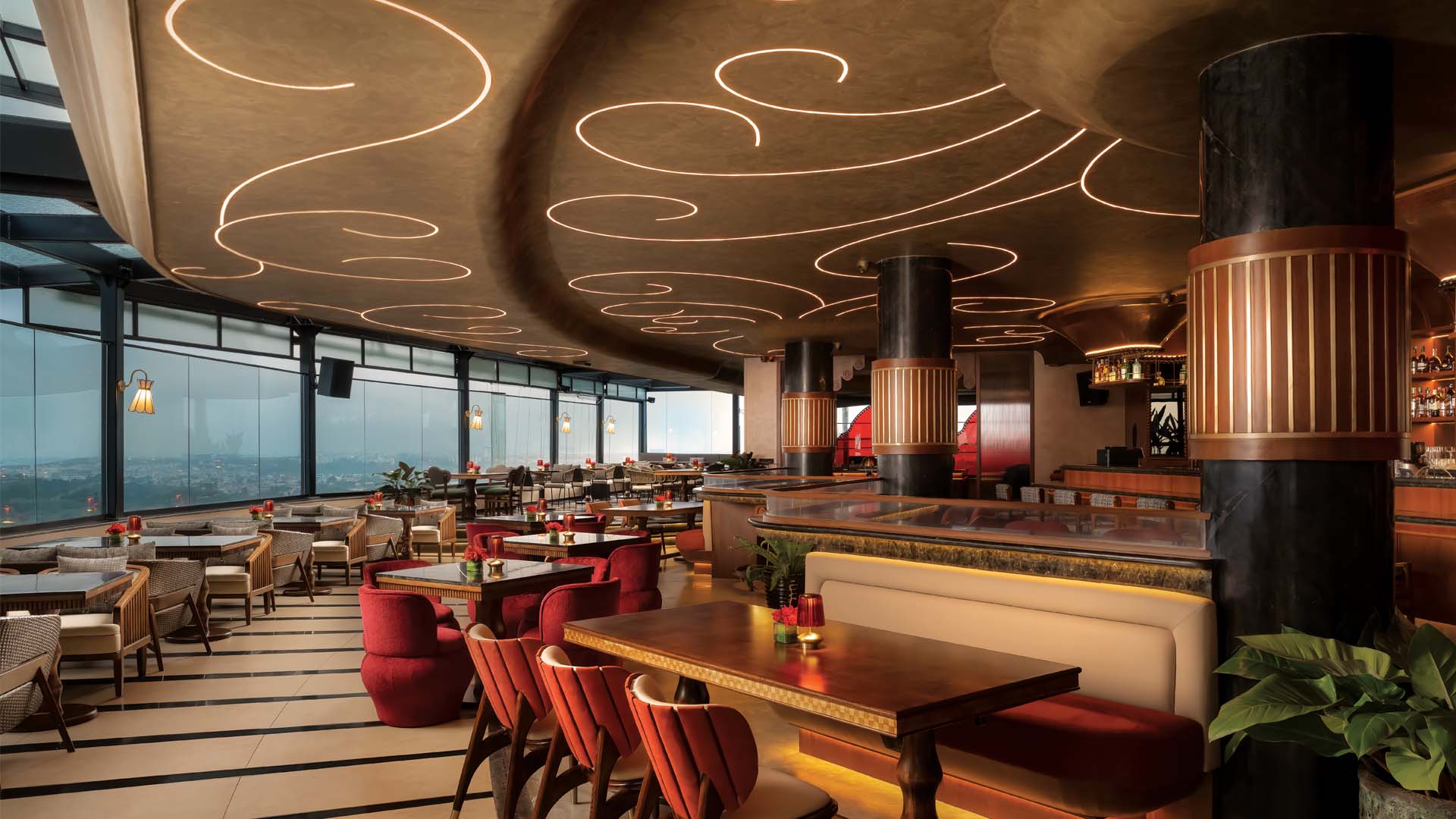
Step into Kai, and you can’t help but feel like you are walking into a modern-day durbar. The 6,500sq.ft., two-level space draws from the Rajasthani tradition of ornate arches, layered surface patterning, and material richness, interpreting it for the modern city.
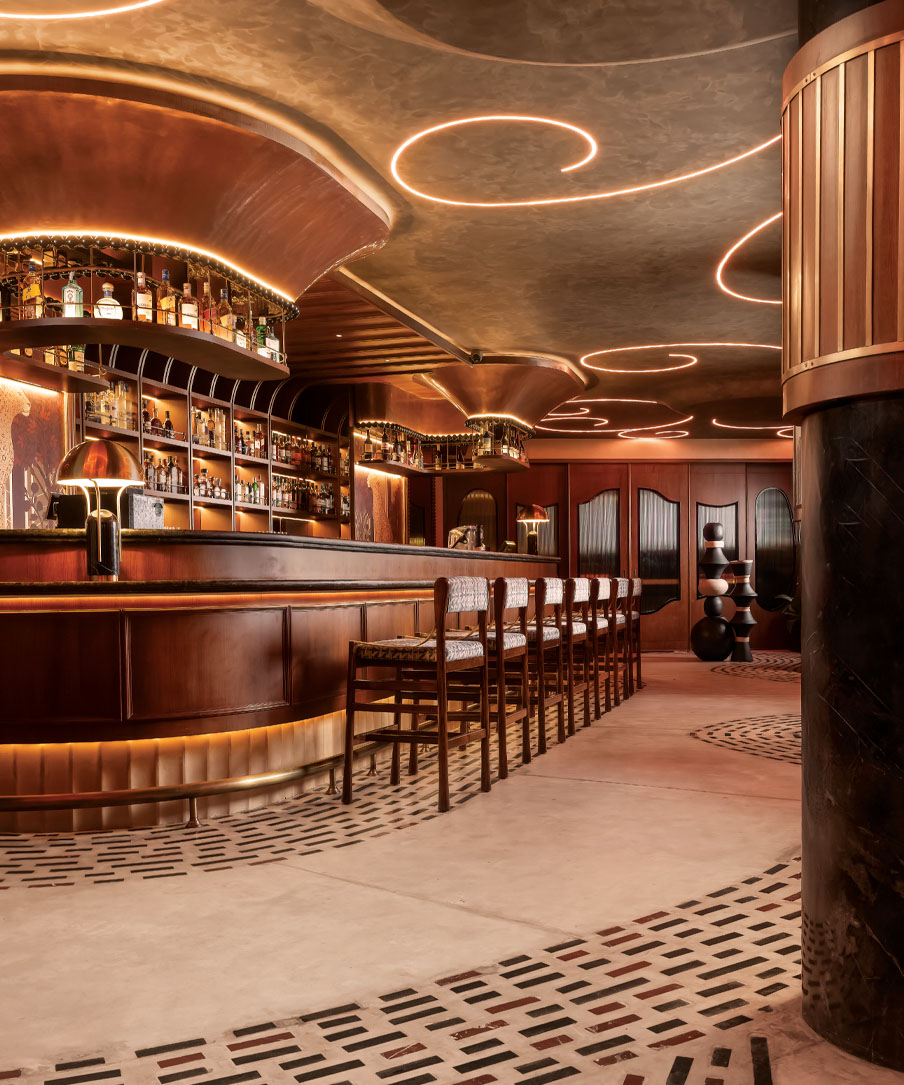
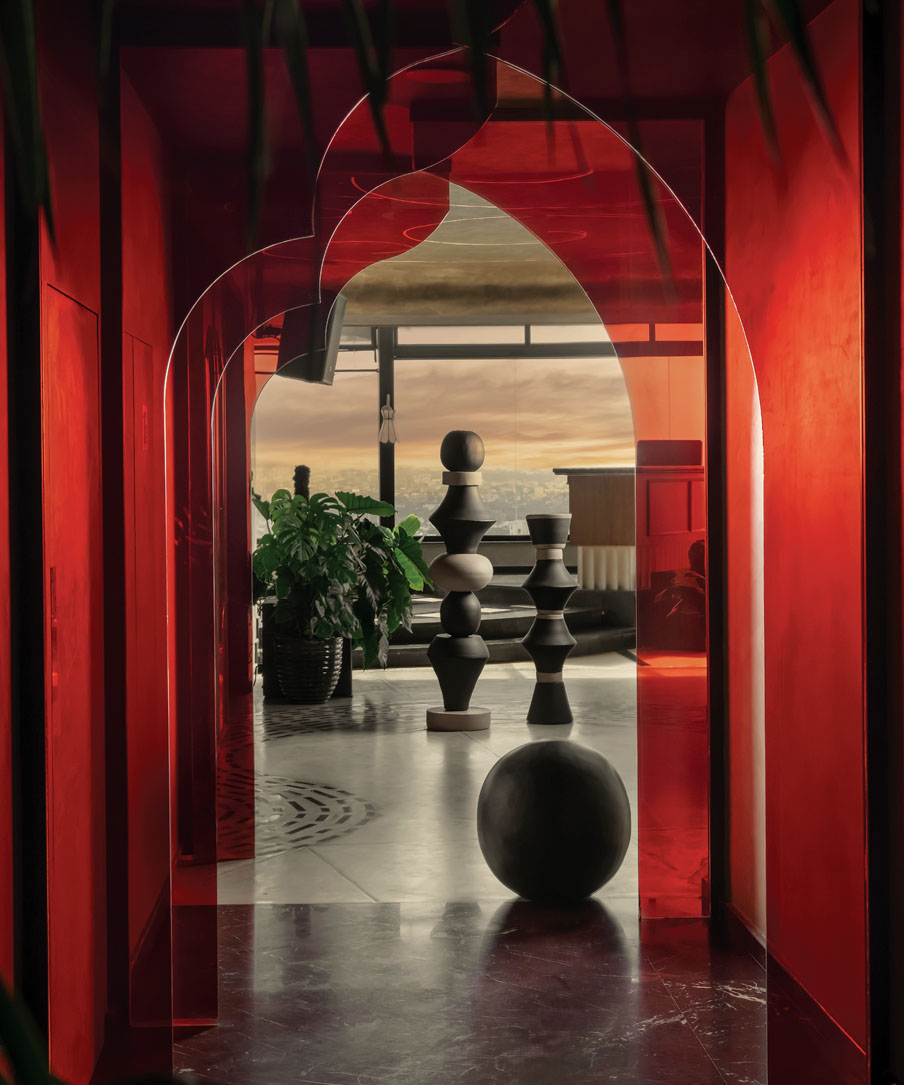
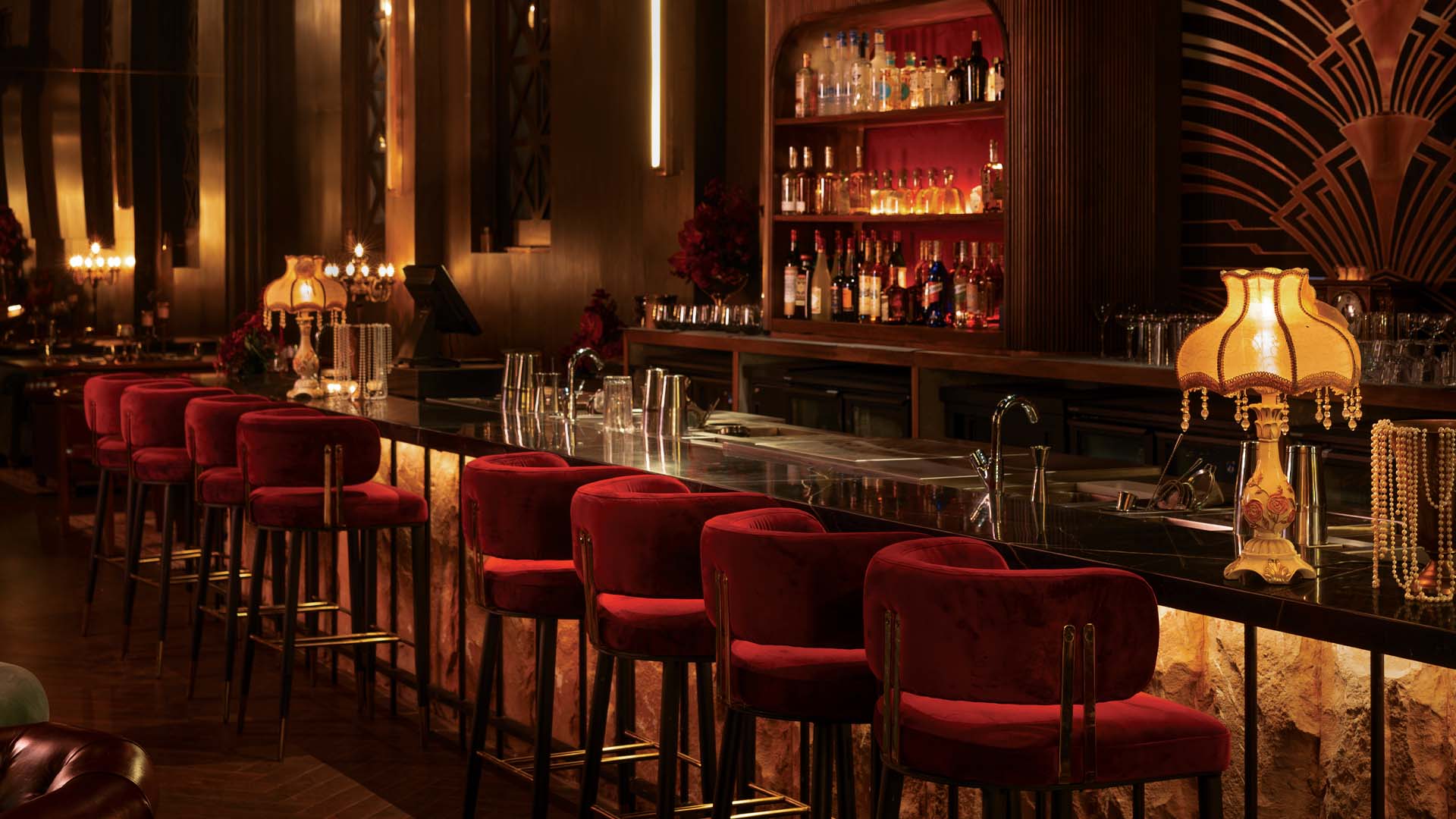
Guests walk past split arches designed to give the visual effect of being whole, in a red-on-red hue. The layout on this floor is anchored by a central bar, conceived as the spatial nucleus around which all movement unfolds. Raised internally by a foot to accommodate plumbing below, its back wall flanking two structural building shafts is finished in liquid metal paint, a copper powder substrate that oxidises over time. “It will change colour,” says Priyanka. Mirrors amplify the bottle shelf lighting, while the brackets and mouldings are scaled up from carved timber brackets found in traditional Indian doorframes. Red glass panels backlit at the bar shift the ambient colour of the space around it. Between seating spaces on the floor, drain inlays are a custom CNC-cut motif taken from the Kai logo.
The ceiling motif is drawn from the peacock feather, abstracted into a curved symmetry built from pixel LED strips. “It enables those operating the space to change the vibe instantly,” says Koushik, during a demonstration that moves from a fine dining setup to a high-energy night.
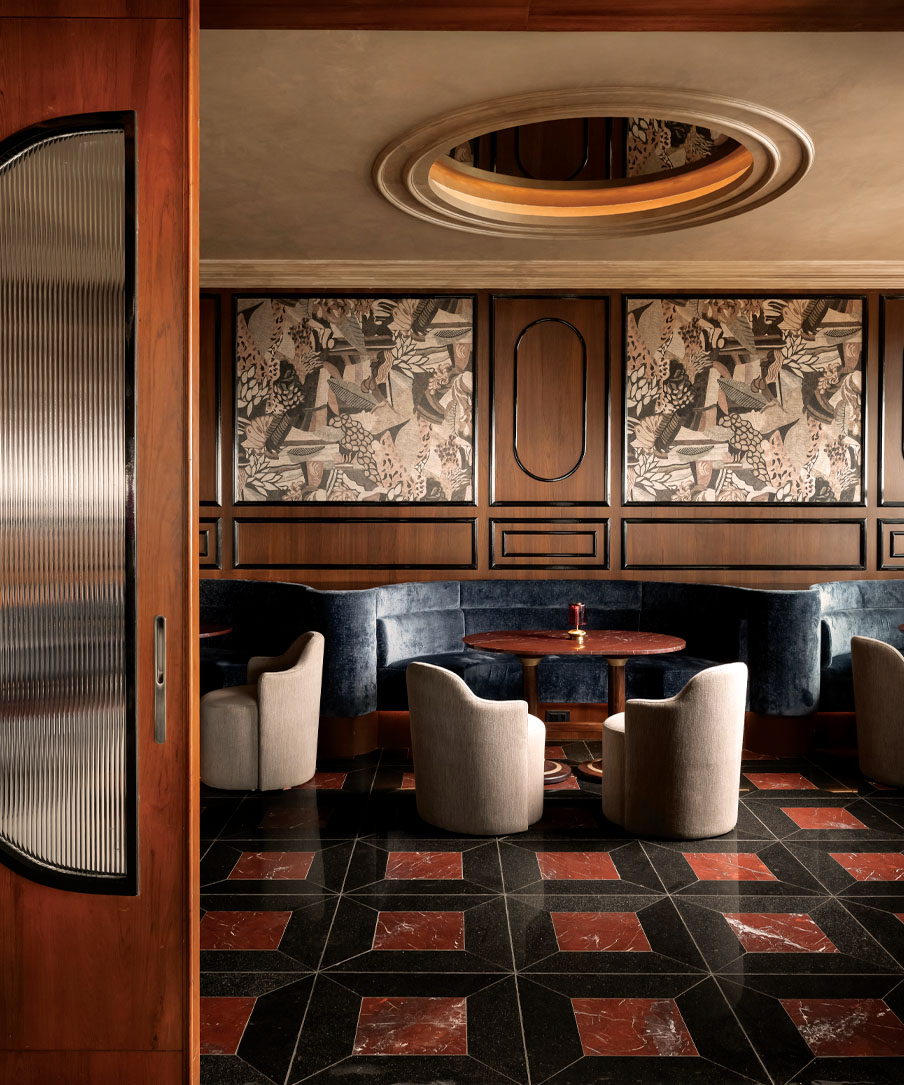
Materiality carries the narrative. Floors combine marble and granite in custom-cut inlay patterns that were factory-cut off-site and assembled here due to elevator constraints. “Marble is softer,” notes Priyanka, explaining the need to protect the finish. The main dining area’s wallpaper, a symmetrical leopard motif printed on metallic foil, was designed in the studio. Brass threads through fixtures and surfaces.
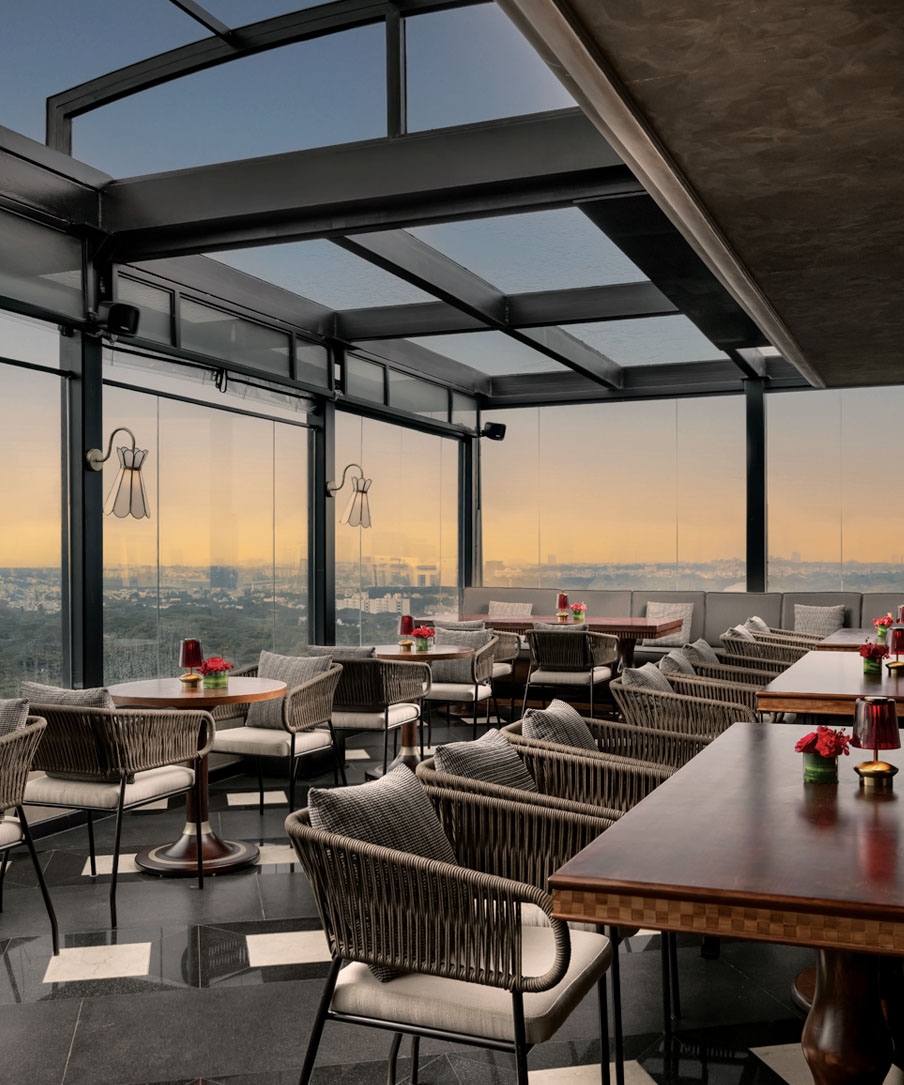
But the more telling quality of Kai is how the space moves. “We wanted all the seats to face the view,” says Koushik. Every zone is oriented toward the panoramic skyline. The community bench along the glass perimeter is grouped in threes, positioned to the view and fully loose. It works as a quiet spot for two, a sociable stretch for a group, or a standing ledge when the DJ console comes alive and the floor clears. “You move everything, and it becomes a dance floor,” he says.
The raised deck within the main floor offers an elevated vantage, allowing sightlines over those below toward the bar and the view. Tables can be joined or kept separate. The private dining enclosure seats around 20, closes on a telescoping sliding mechanism, and is the only air-conditioned zone, an intimate chamber that can be absorbed back into the main hall.
The upper floor, added later, is a continuation of this fluid logic. On weekends, it operates as an open party space, tables removed, and the floor given over to standing and dancing. “You can just take this entire space and arrange it however you want,” says Koushik.
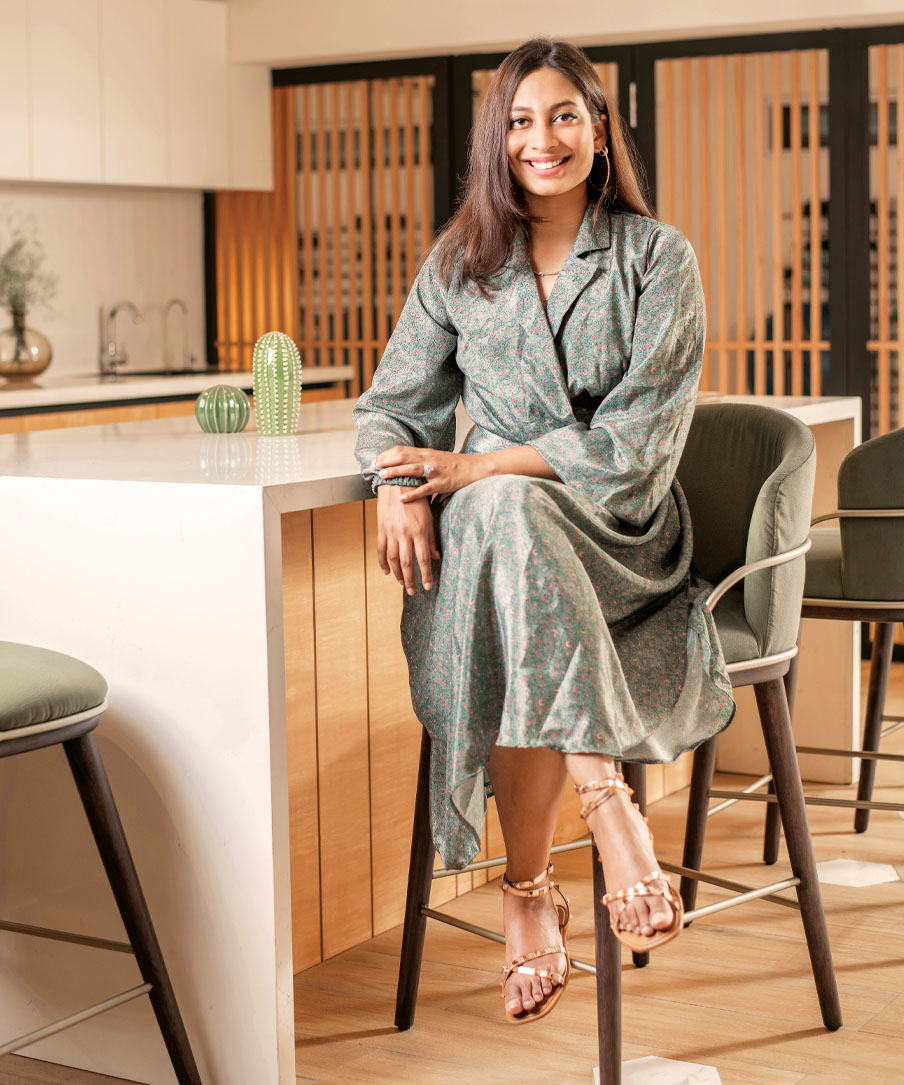
Priyanka M.C., Principal Designer, Maze Concept Design Studio.
Food that keeps pace
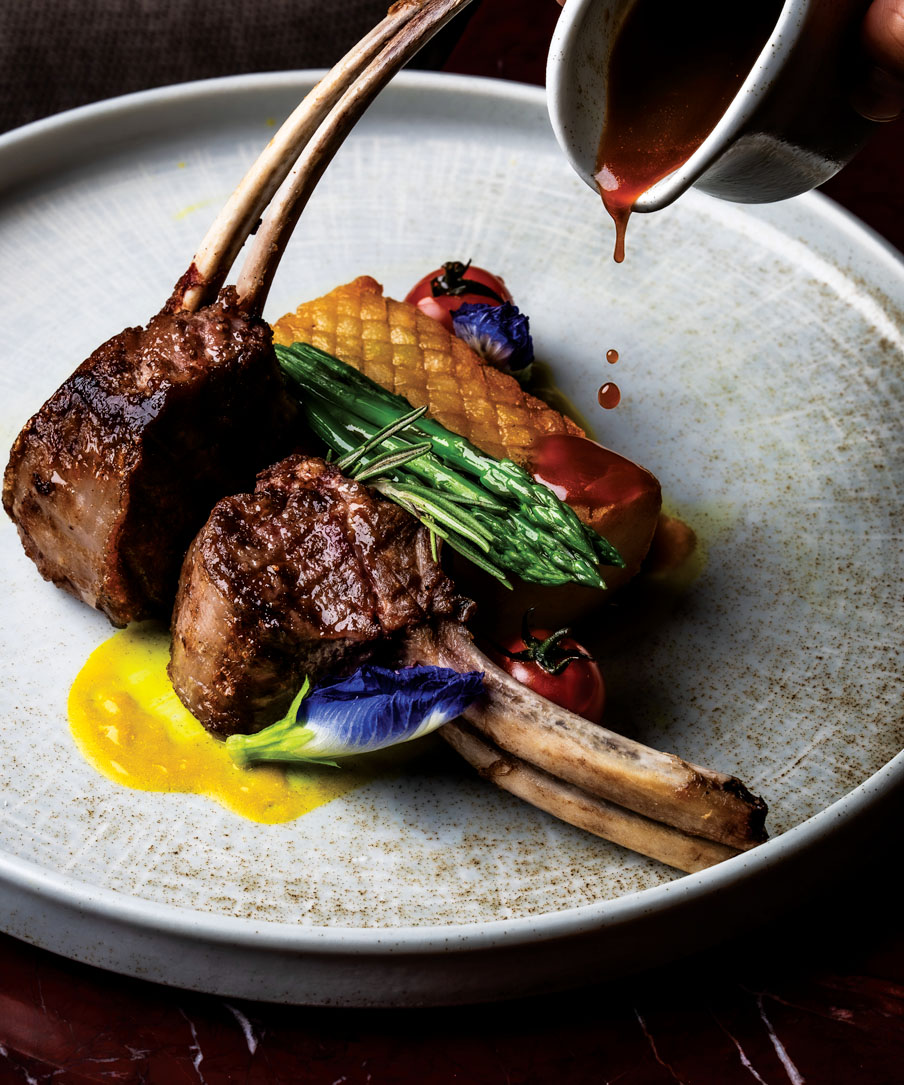
Kai, as a space, shifts easily between moods. Its menu follows a similar rhythm. It moves across a global mix, drawing from Japanese, Asian, Indian, and Mediterranean influences, without leaning too heavily into the fine dining space. Instead, it reads as a spread designed to hold a table together, with something for everyone, whether you are here for a full meal or just a drink and a few plates to share.
Small plates set the tone. The Smoked Chicken with Baby Arugula and Yuzu Vinaigrette is clean and balanced, the bitterness of the leaves and the sharp citrus lifting the tenderness of the meat. Bar nibbles keep things easy. Polenta bites with Strawberry Salsa are great flavour contrasts, while the crispy spicy Shake Salmon Roll brings in crunch through tempura flakes with a gentle heat. Basil Butter Prawns are straightforward and satisfying, and the Char Siu Crispy Pork holds onto that familiar sweet-savoury depth. The selection of dumplings and gyozas is more about comfort than flourish.
The mains stay in that same space. The Pad Prapow, with lamb mince, bird’s eye chilli, basil, soy, and ginger, is robust and direct. You can also opt for a Pistachio and Cottage Cheese Steak, Vodka Prawn Spaghetti, Malabar Seared Fish, Dum Murgh with Kulcha or the classic green Thai curry chicken with jasmine rice.
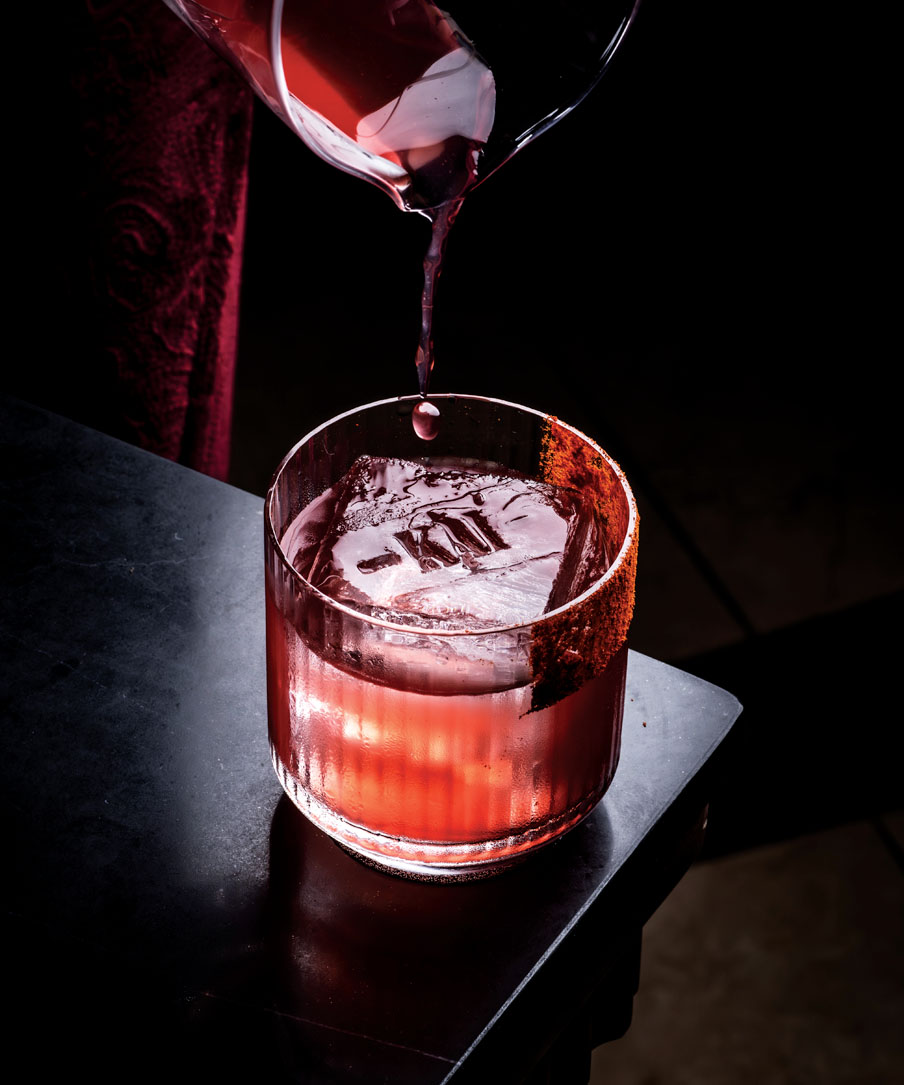
Cocktails carry a bit more play. The Meiju works through layers, with Camino Real Blanco, plum brine pickle, and clarified green apple coming together in a drink that is sharp and slightly unexpected. The Hibana leans fruit-forward, pulling together Tanqueray, Ketel One, Camino Real Blanco, pineapple, and pomegranate molasses into something brighter. The Trinity Paloma, carbonated and built on pink grapefruit and plum, keeps things light and easy to return to.
Dessert closes simply. A berry chocolate tart made with single-origin chocolate, familiar in structure, but enough to round off the meal without slowing it down.
Like the space, the food does not fix itself into one idea. It moves, adapts, and settles where it needs to.