













A Palace in the Sky, Reimagined
The Palace Returns, quietly, within Air India’s Vista cabins. Nearly 90 years after that first mail flight, Air India’s interiors are once again central to its identity.

By Deepali Nandwani
Step into Air India’s newest Airbus A350 today and the message is unmistakable: this is an airline intent on reclaiming its place among the world’s finest. Sliding doors seal Business Class passengers into private Horizon mini-suites; lie-flat beds stretch nearly two metres; 21-inch 4K screens glow against a palette of deep reds, muted golds and aubergine accents. Premium Economy—new to Air India’s widebody fleet—offers generous recline, leg rests and ample spacing, while lighting, textures and finishes feel calm, contemporary and deliberately global.
Branded Vista, these cabins are the most visible expression of Air India’s transformation under the Tata Group’s Vihaan.AI roadmap. They signal confidence and restraint rather than spectacle—luxury articulated through privacy, proportion and polish instead of ornament. For those familiar with Air India’s past, this renewed focus on how a passenger inhabits the aircraft, rather than moves through it, feels less like reinvention and more like remembrance.
Long before sliding doors and mini-suites, Air India understood the cabin as a stage for an experience—one where comfort, cultural expression, and service combined to make the flight itself feel ceremonial. The language has changed and the materials modernised, but the impulse remains recognisable: to make the aircraft interior a place where travellers feel considered, elevated and quietly indulged.
To trace the origins of this philosophy, one must return nearly a century, to a time when flying itself was still an act of faith.
On a balmy October morning in 1932, a single-engine de Havilland Puss Moth lifted off from a small airfield in Karachi, its silver fuselage carrying little more than mailbags and ambition. At the controls was a 28-year-old J.R.D. Tata, who began what would become one of aviation’s most storied journeys. The flight was bumpy and hot; a bird flew into the cabin and had to be killed mid-air. Fuel was ferried by bullock cart during a stop in Ahmedabad before the aircraft finally landed on a mudflat in Bombay. Nothing about the journey suggested grandeur—but embedded within it was a philosophy that would later define Air India’s interiors: attention to detail, pride of place, and a belief that flying could be an experience, not merely transport.
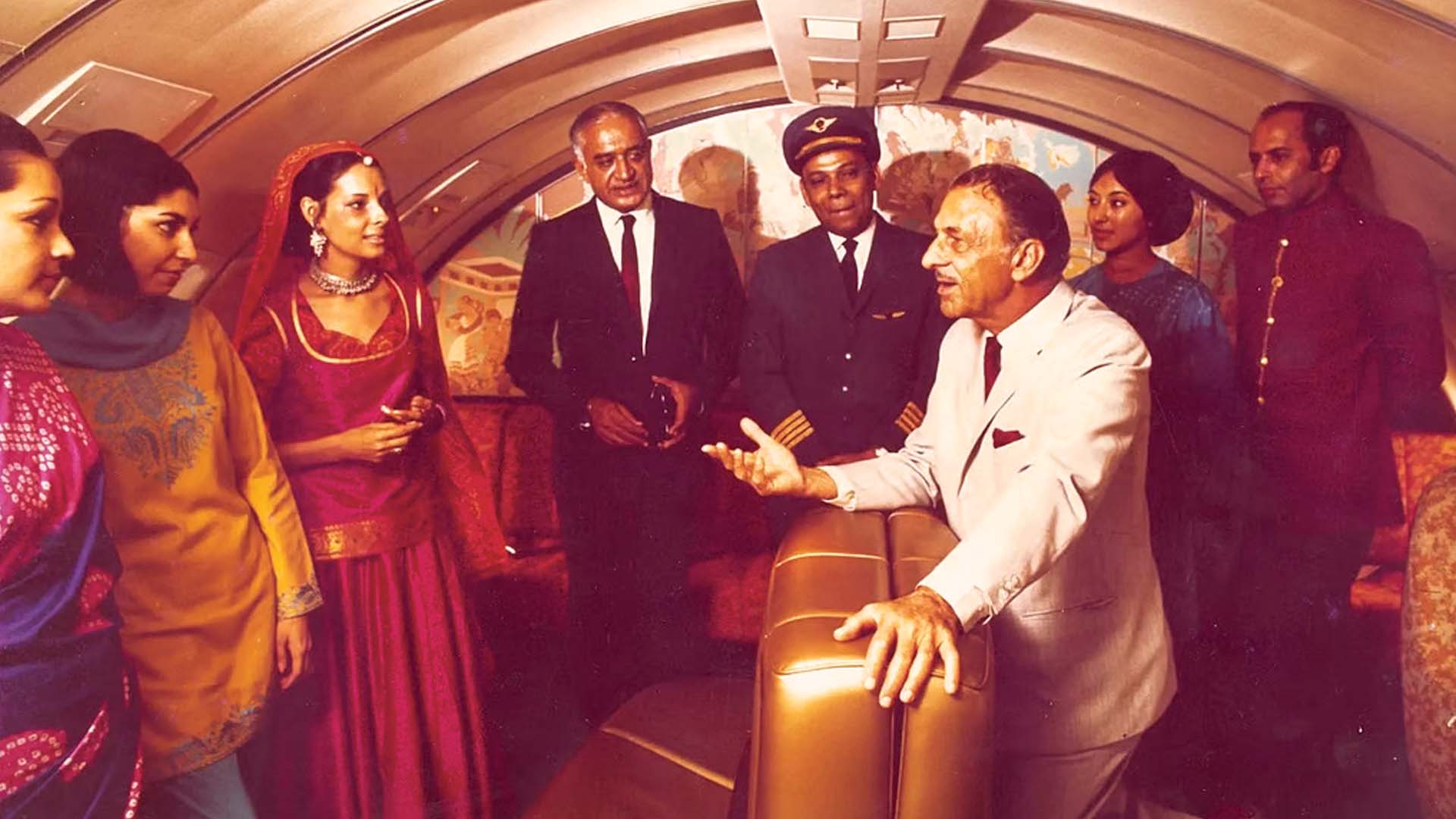
Under J.R.D. Tata’s watchful eye, cabins, uniforms, and service reflected meticulous care, while artists such as M.F. Husain, B. Prabha and R.K. Laxman shaped an airline confident of its cultural voice.
The foundations of an experience airline
Founded as Tata Airlines, the carrier emerged at a time when commercial aviation itself was still finding its feet. Early aircraft were utilitarian by necessity, with basic interiors and minimal branding. Yet even in these formative years, J.R.D. Tata’s obsession with quality was unmistakable. Fondly remembered by Meher Heroyce Moos, an air hostess who joined Air India in 1965, Tata was known to walk the full length of the aircraft, closely scrutinising everything—from galleys and equipment to frayed curtains and dust along the edges. As chronicled in Harish Bhat’s Tata Stories: 40 Timeless Tales To Inspire You, no detail was too small to escape his attention.
This philosophy came into full bloom after nationalisation in 1953, when Air India became India’s flag carrier. The airline was no longer merely transporting passengers; it was representing a young nation to the world.
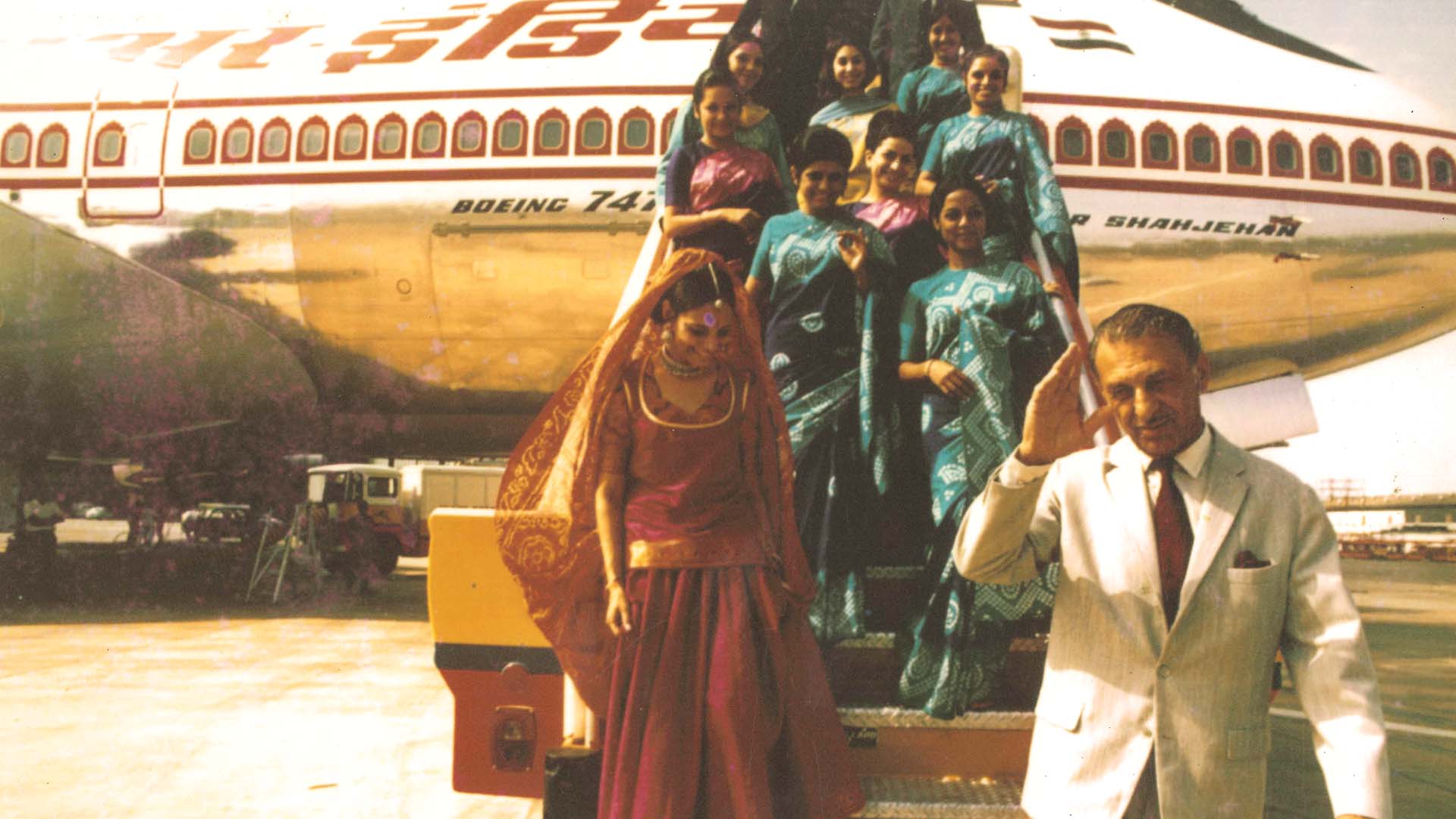
The cabin crew uniforms echoed the décor, with plum-coloured ghaghras, bandhani cholis, odhanis and old silver jewellery.
Designing a national identity in the sky
The post-Independence decades marked the birth of Air India’s design language, one that seamlessly blended Indian cultural symbolism with international modernity. The Centaur logo, introduced in 1948, became central to this identity. A stylised Sagittarius archer, chosen by J.R.D. Tata himself represented aspiration and excellence, encircled by the Konark Sun Temple wheel, grounding the airline in Indian symbology. Red and white became signature colours, appearing everywhere from tickets and luggage tags to cabin textiles and aircraft exteriors.
Inside the aircraft, these ideas translated into spaces that felt ceremonial yet welcoming. By the 1950s through the 1970s, Air India had become synonymous with indulgence. Cabins featured carefully chosen materials, ornate interiors, generous spacing, and a service style that evoked the feeling of “having arrived, while never having left home.” The Maharaja mascot—urbane, witty, and impeccably dressed—emerged as a cultural icon, reinforcing the airline’s image as a purveyor of refined Indian hospitality.
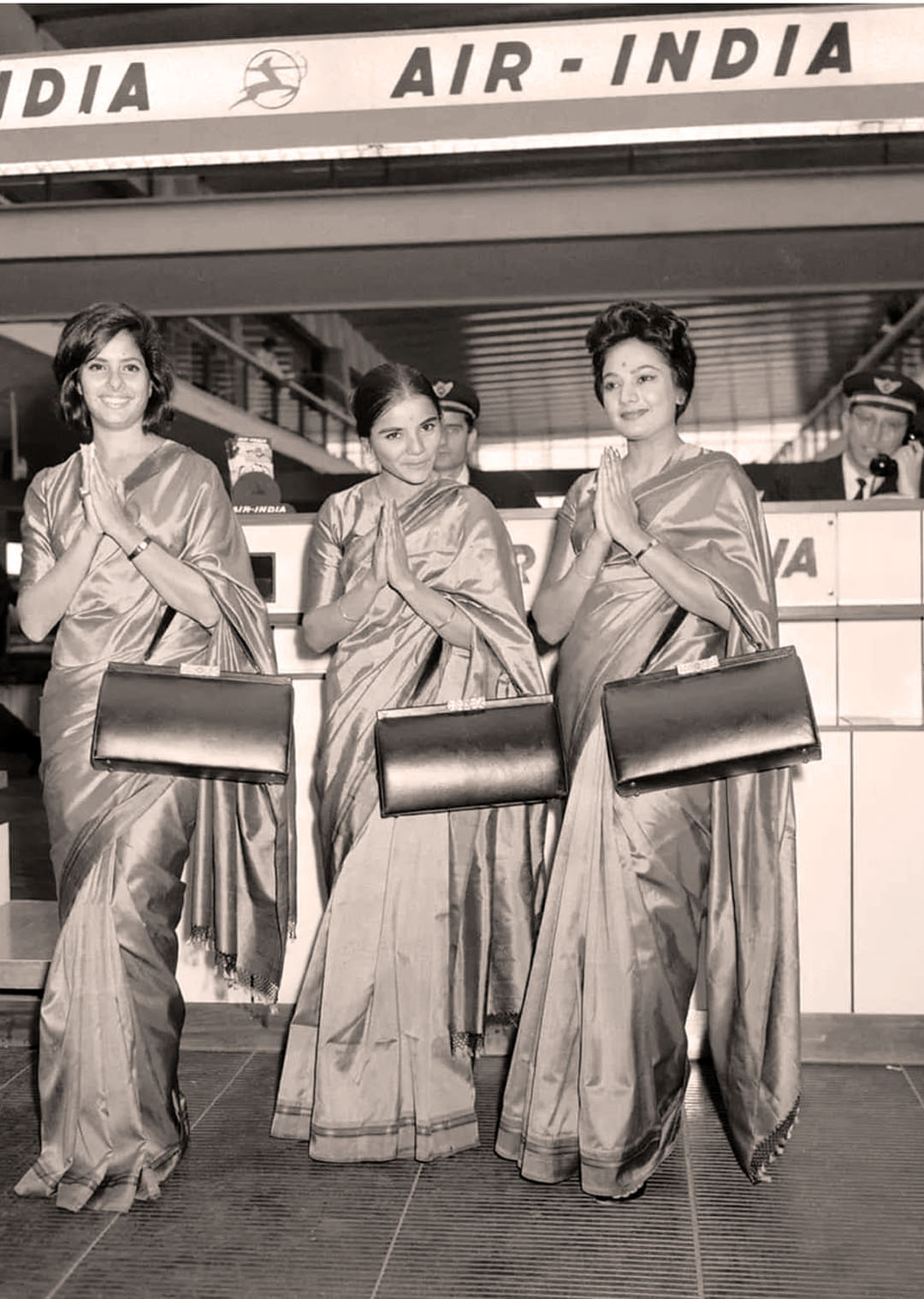
In its earliest decades, Air India treated flight as ceremony.
Palace in the sky
This ethos reached its apotheosis in 1971 with the induction of the Boeing 747. Branded unapologetically as the “Palace in the Sky,” the Jumbo Jet allowed Air India to redefine inflight interiors on a global stage. The aircraft featured two levels, with the upper deck transformed into the legendary Maharajah Lounge—a space that felt closer to a private salon than an aircraft cabin.
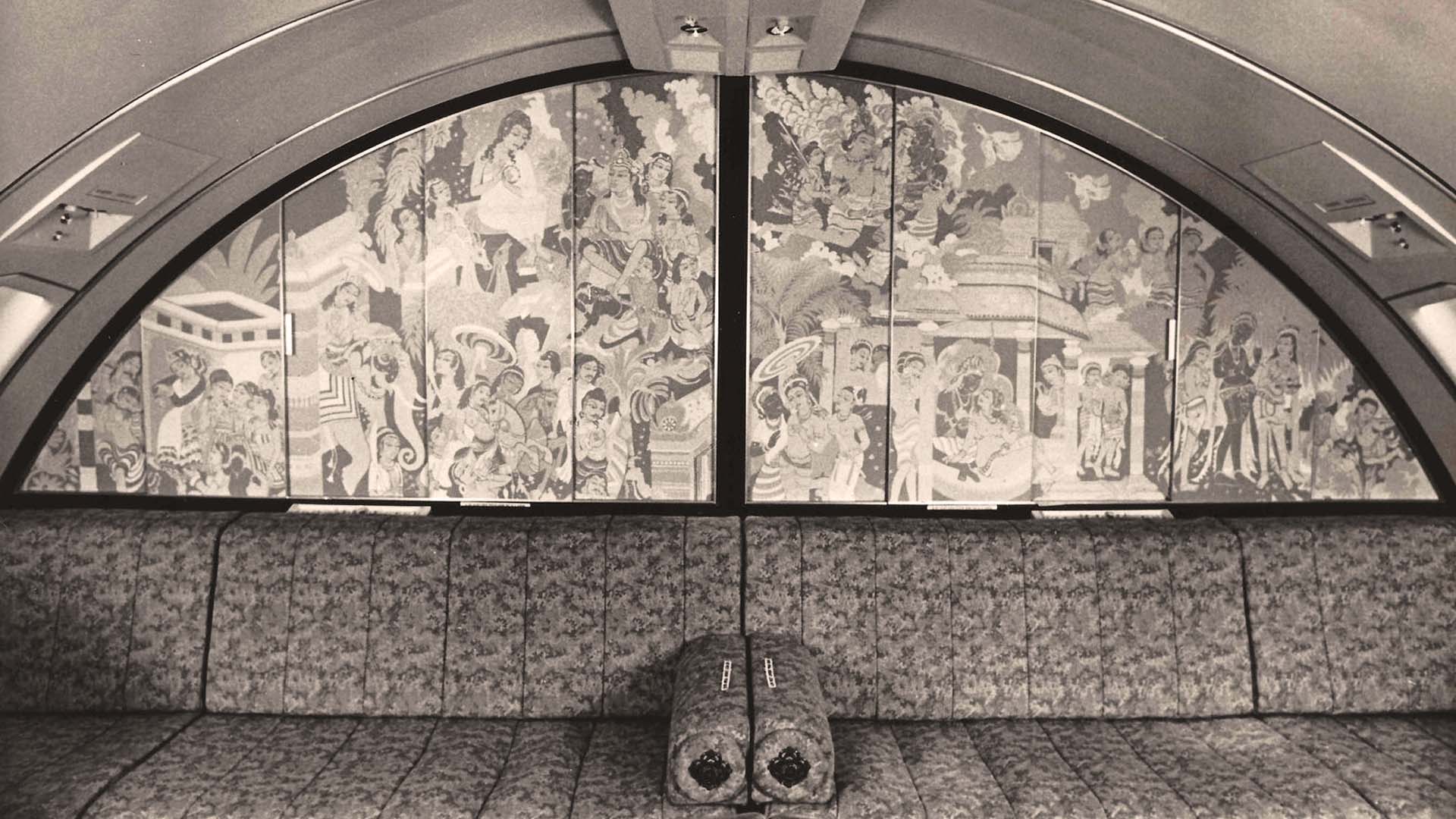
Accessed via a spiral staircase, the lounge was furnished with a velvet turquoise-blue carpet, a golden-yellow round settee at its centre, golden-hued couches, and flush seating for 15 guests. Murals on the walls depicted seventh-century Ajanta frescoes and scenes from the Jataka tales. Even the cabin crew uniforms echoed the décor, with plum-coloured ghaghras, bandhani cholis, odhanis and old silver jewellery.
“The flying experience back then can be best described as the cultural ambassador of India in the sky,” says Piyush Khaitan, a Bengaluru-based Air India historian and collector of its memorabilia. Aircraft were given regal names—Emperor Ashoka, Konark and Malabar Princess.
Passengers were treated accordingly. “I still remember being served a leg of lamb on the flight, which was sliced and plated right at the table. There was caviar too,” recalls Debasish Chakraverty, a Mumbai-based financial investor who flew Air India as a child in the late 1970s and early 1980s and has several photographs of Air India in his collection. “There were silver trolleys, and the bar in the lounge section had all sorts of magazines and comics.” His father, Captain D.M. Chakraverty, was among the first pilots to fly Air India’s Boeing 747s.
This extravagance was deliberate. J.R.D. Tata got the best talent for everything, gave them a free hand, and allowed them to experiment and learn from mistakes. Bone china came from Royal Doulton; coasters were designed by R.K. Laxman; promotional material featured artists such as M.F. Husain and B. Prabha. Salvador Dalí even designed 1,000 limited-edition ashtrays in the 1960s. For Air India’s golden jubilee in 1988, Swarovski presented a crystal Maharaja to J.R.D. Tata at the Taj Mahal Palace Hotel.
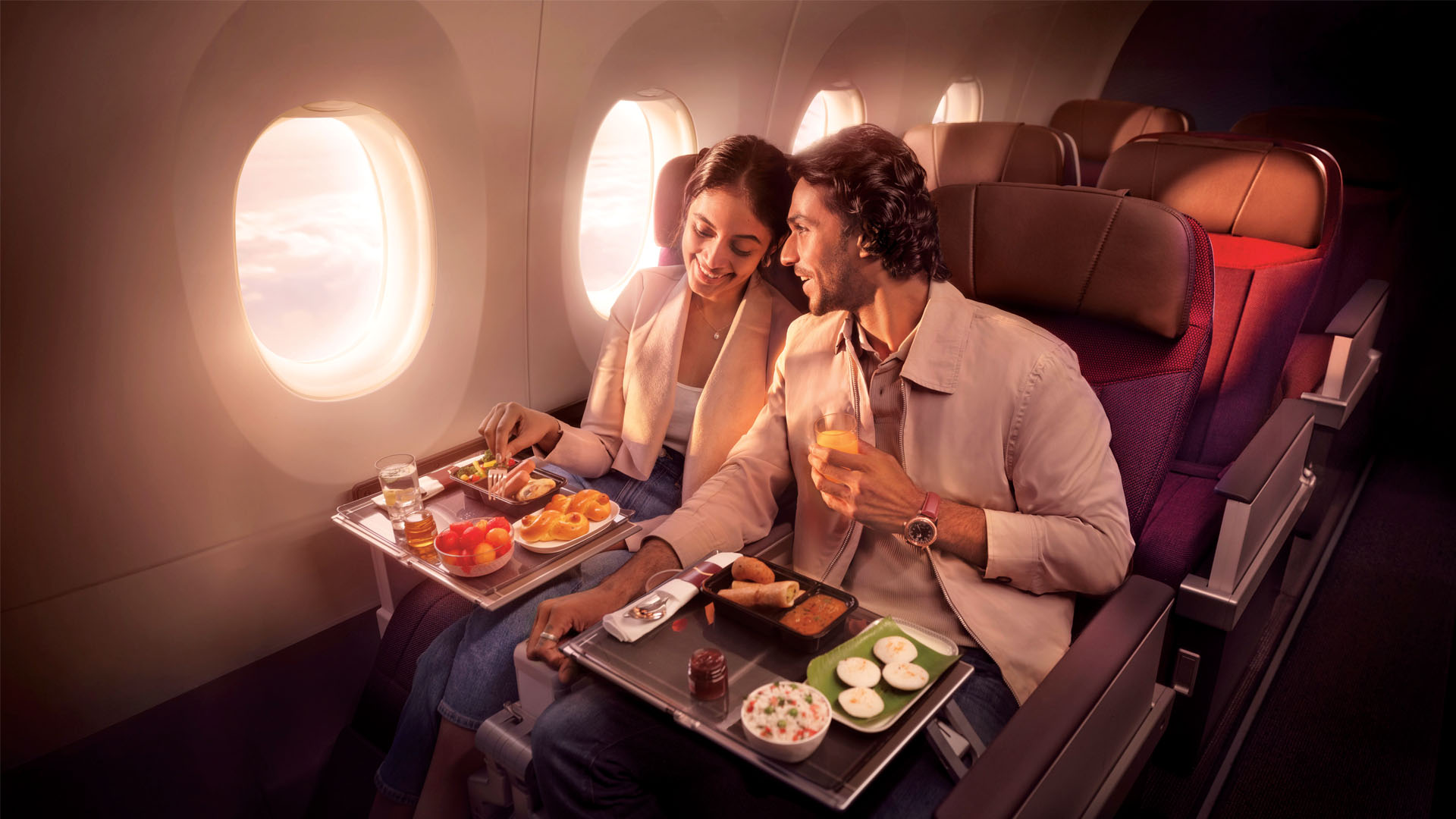
Premium Economy on the A350 introduces generous pitch, leg rests, and a quieter long-haul experience.
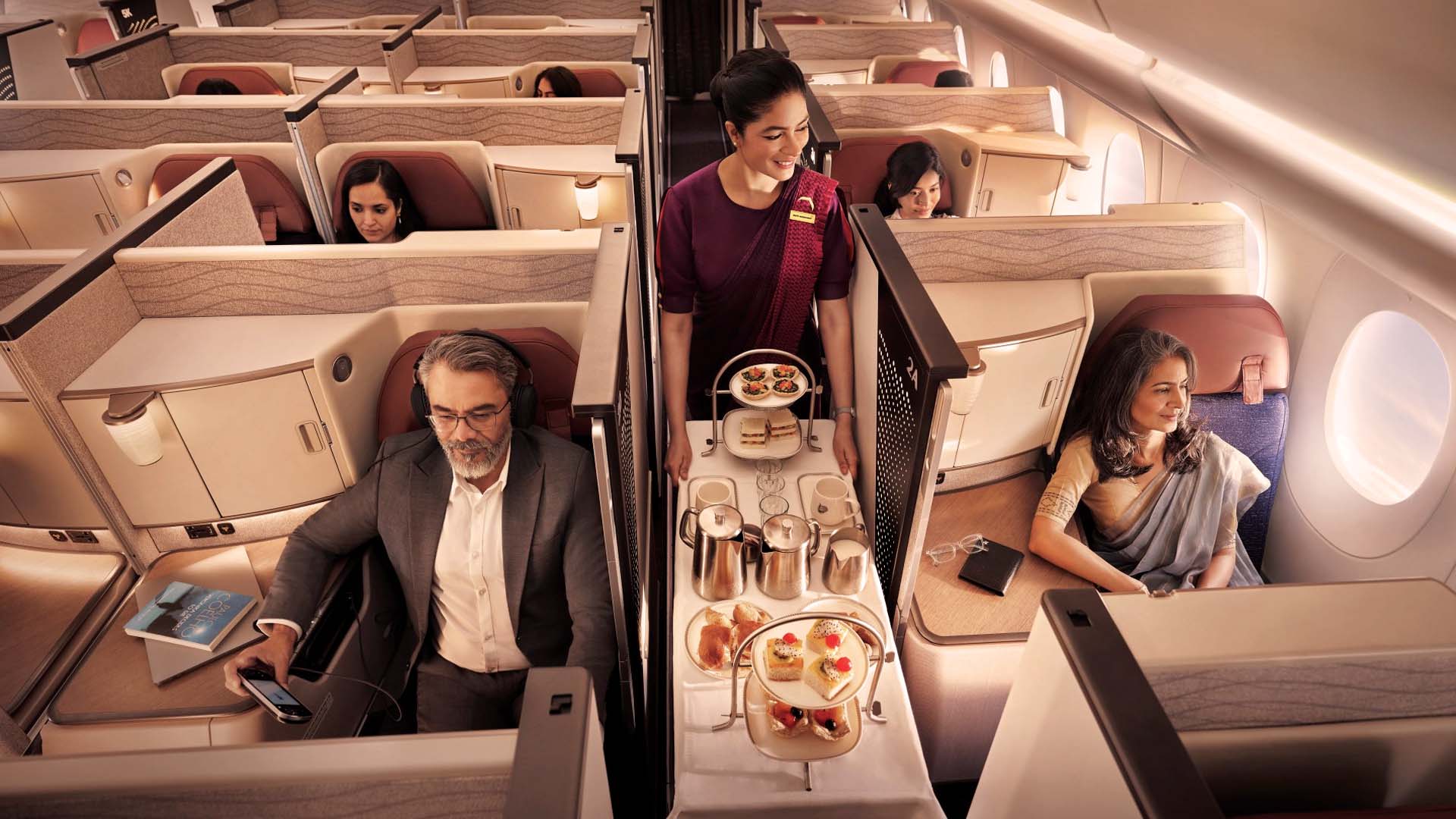
Vista Business Class introduces private mini-suites with sliding doors and direct aisle access.
Decline and disrepair
Yet even the grandest interiors cannot withstand prolonged neglect. As decades passed, nationalisation and mounting financial pressures began to erode Air India’s once-exalted onboard experience. By the 2000s and 2010s, cabins—particularly on long-haul Boeing 777s and 787s—were visibly dated. Seats were worn, inflight entertainment systems unreliable, and lounges increasingly criticised for their tired appearance. The airline that once gave global competitors a run for their money struggled to keep pace. Financial losses mounted, peaking at ₹9,556 crore in 2021–22. The Palace in the Sky had faded into memory.
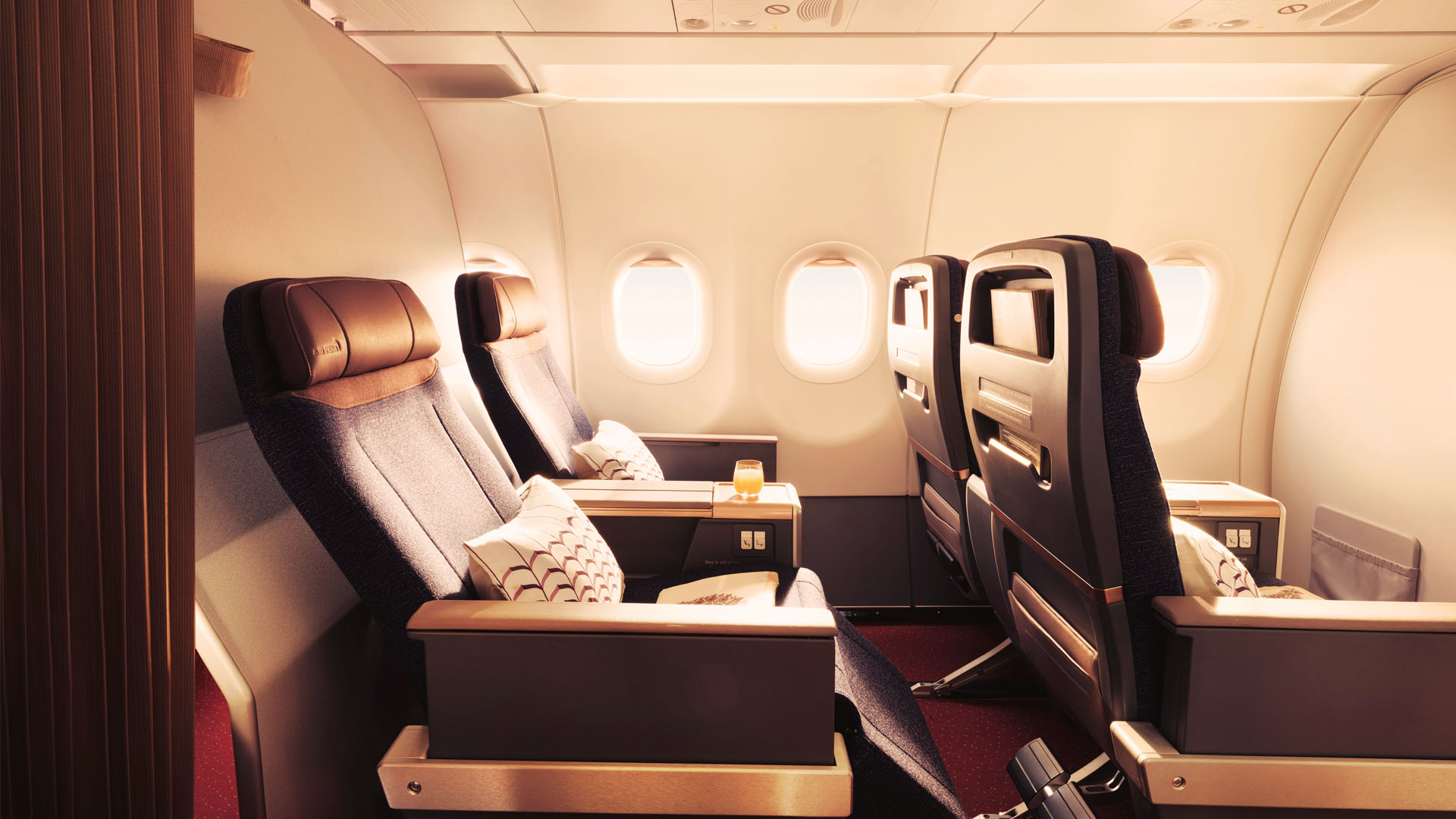
Business Class on the A320neo focuses on ergonomics, privacy, and refreshed materials.
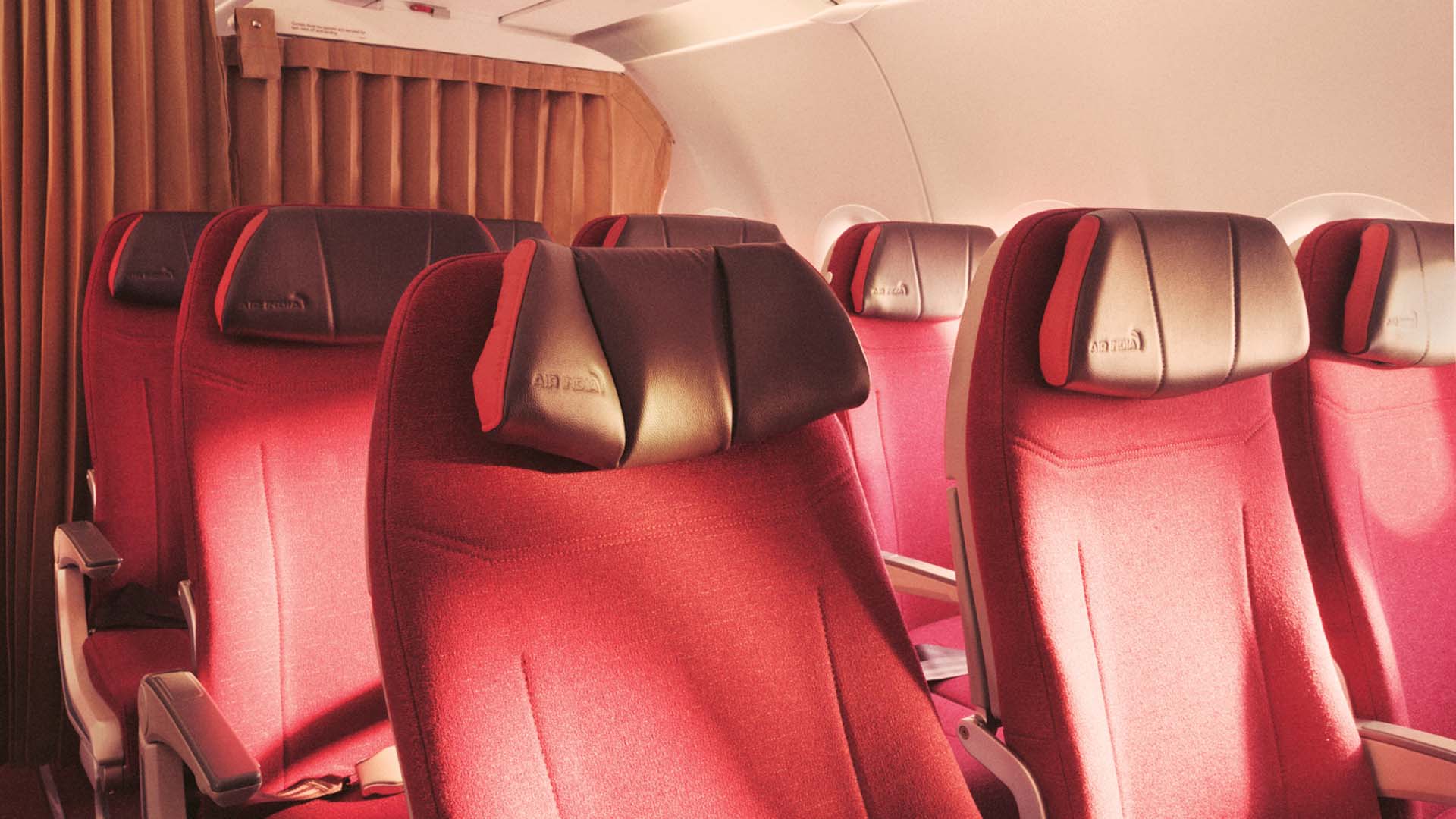
Premium Economy on the A320neo brings added comfort and consistency to short- and medium-haul routes.
Reclaiming the legacy: Vihaan.AI and the Vista cabins
The turning point came in 2022, when the Tata Group reacquired Air India for $2.2 billion, bringing the airline full circle. Under CEO Campbell Wilson, a five-year transformation plan—Vihaan.AI—was unveiled, aiming to create a “world-class global airline with an Indian heart.”
At the centre of this transformation is the reinvention of interiors. In February 2023, Air India announced a record-breaking order of 470 aircraft, the largest in commercial aviation history. The first Airbus A350-900s, delivered in late 2023, became the technological and experiential showcase of the new Air India. Branded ‘Vista,’ these cabins represent a radical departure from the past while subtly echoing heritage. Business Class features 28 Collins Aerospace Horizon mini-suites in a 1-2-1 configuration, each with a sliding door, direct aisle access, a two-metre-long lie-flat bed, 21-inch 4K screens, enhanced storage, and down duvets. Premium Economy, introduced on Air India widebodies, offers 24 Collins MIQ seats with generous recline, leg rests, and a 96.5 cm pitch.
The design language is restrained yet confident—deep reds, gold accents, aubergine highlights—preferring overt ornamentation over modern luxury.
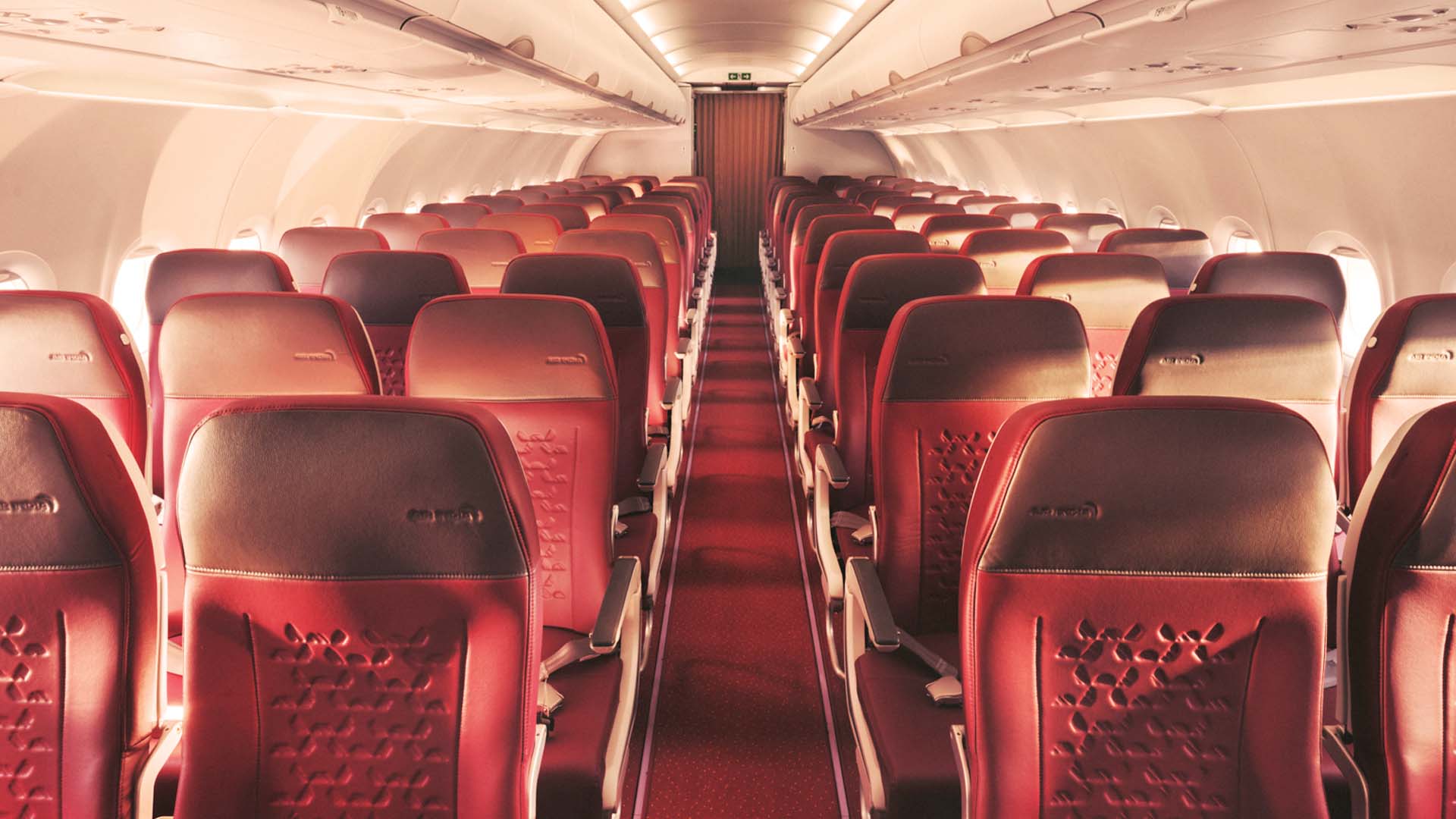
Refitted A320 Economy cabins feature updated seats, finishes, and inflight systems.
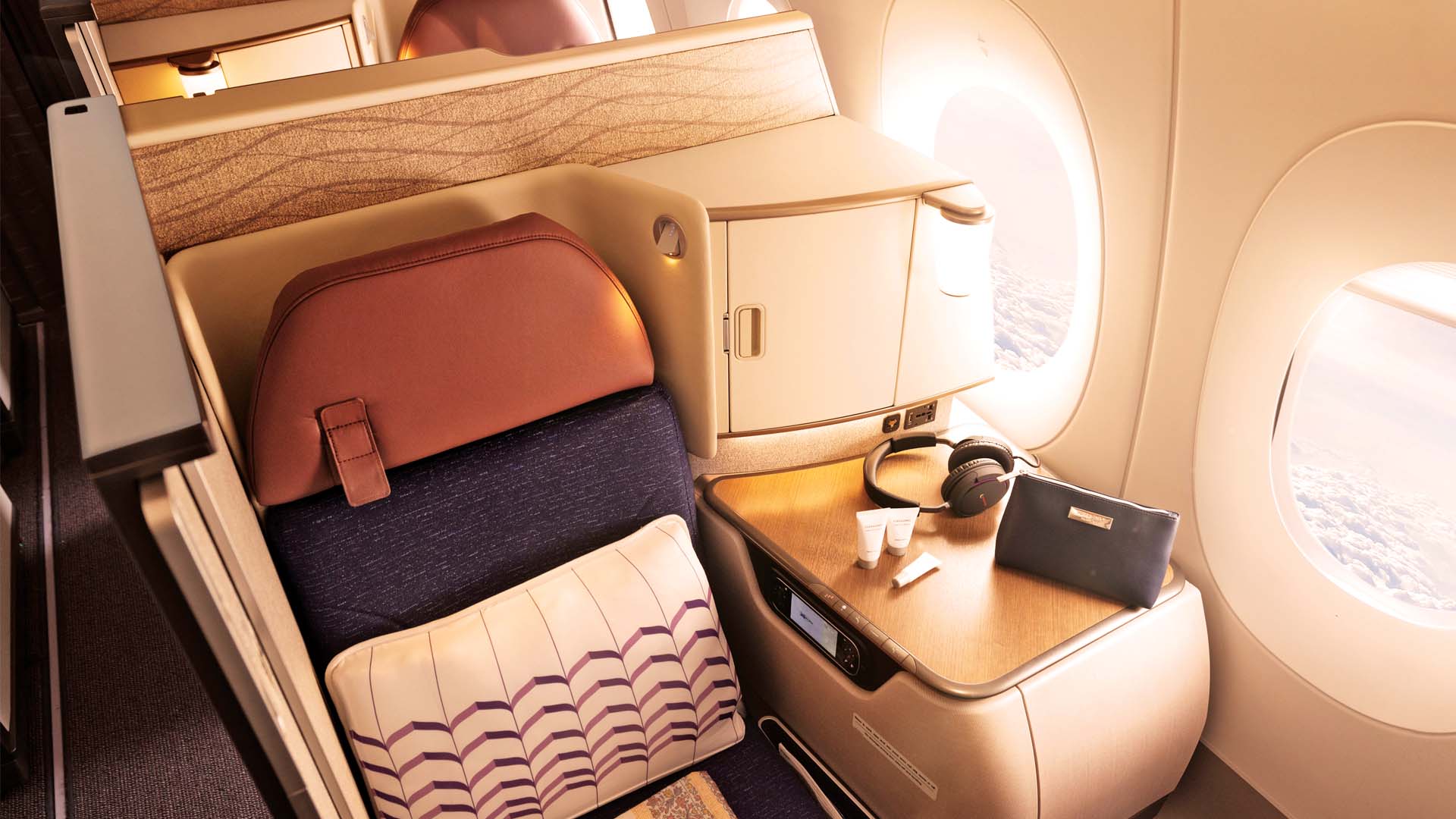
A closer look at the Vista Business Class seat—where proportion, privacy, and material restraint define a quieter, more considered luxury.
Refits, lounges, and the road ahead
Beyond new aircraft, Air India has spent $400 million on refitting 67 existing aircraft. Narrowbody A320-family retrofits, which were rolled out in late 2025, introduced consistent three-class cabins with ergonomic seats, larger IFE screens, USB ports, refreshed carpets and curtains, and improved lighting. Widebody Boeing 777 and 787 retrofits are underway, adding Premium Economy, fully flat Business Class beds, updated Economy cabins, Wi-Fi, and custom branding.
Lounges, once a weak link, are also being reimagined. Inspired by the erstwhile Vistara’s Delhi lounges, renovated spaces at Delhi Terminal 3 and Mumbai Terminal 2 prioritise natural light, quality materials, expanded dining options, showers, rest areas, and improved connectivity—combining contemporary aesthetics with Indian cultural touches.
From bullock-cart fuel stops to private Business Class suites, from Ajanta murals to minimalist Vista cabins, Air India’s interiors tell the story of a nation, an airline, and an evolving idea of luxury. The Palace in the Sky may look different today—but its spirit, long dormant, is finally airborne again.
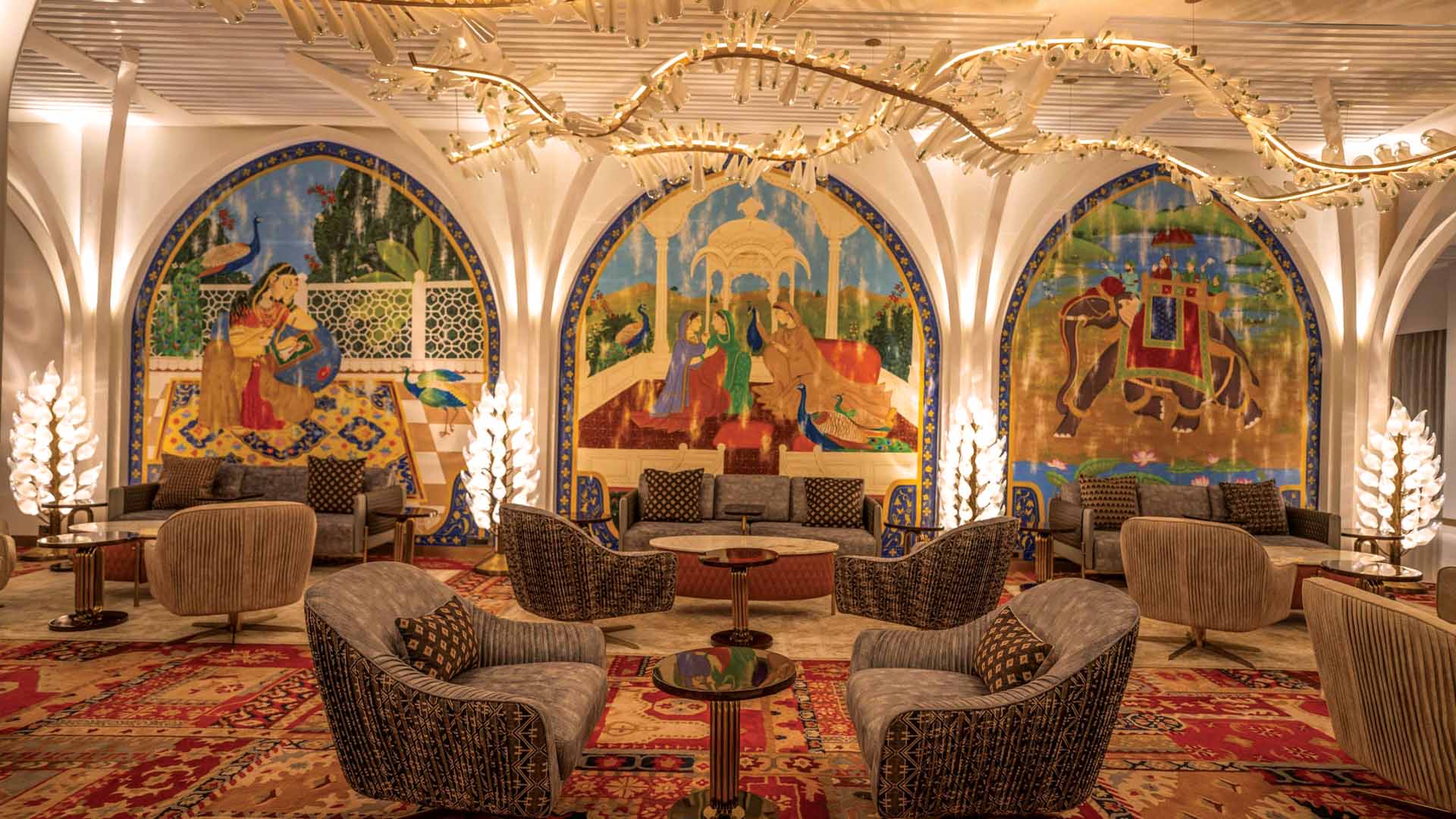
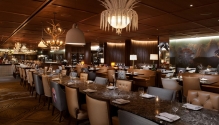
Reimagined lounges prioritise light, material quality, and calm—extending Air India’s renewed experience beyond the aircraft.