




















The New Altitude of Luxury
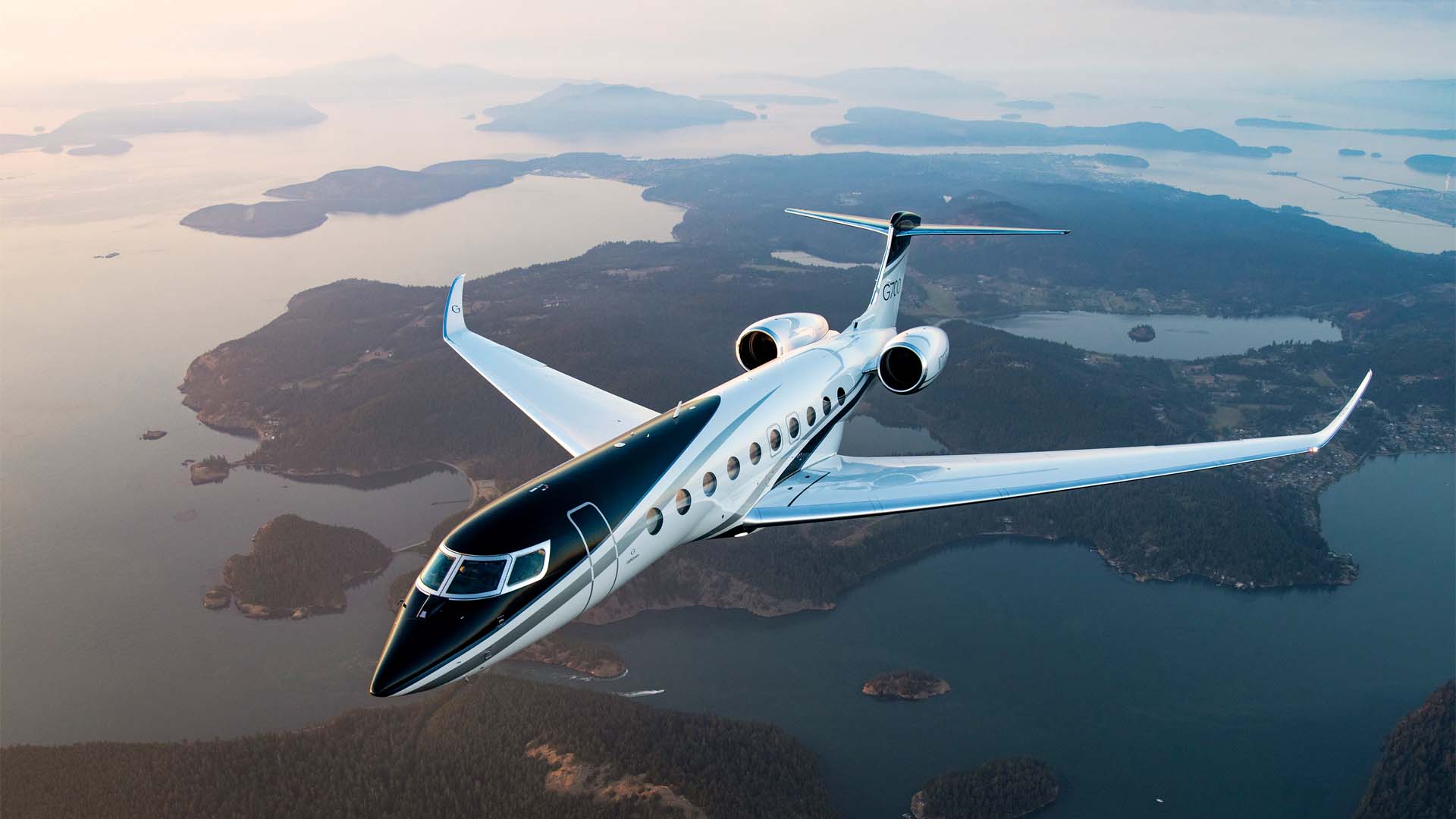
At 51,000ft., somewhere between New Delhi and New York, the modern boardroom is no longer anchored to land. It is designed into the cabin of an aircraft such as the Gulfstream G700.

By Deepali Nandwani
Picture this: you are cruising 7,750 nautical miles
Your airplane is powered by a Rolls-Royce next gen engine, your team or your business partner/s are around to discuss the ins and outs of your company or business, while you sip on expensive single malts or wines. On hand are all the accoutrements of a business meeting, including wifi connection.
This is how the world’s biggest entrepreneurs conduct business aboard the business jet Gulfstream G700.
As India’s ultra-high-net-worth individuals expand their global footprint, business aviation is being viewed not merely as transport, but as an extension of lifestyle, productivity and personal space. The certification of the Gulfstream G700 by India’s Directorate General of Civil Aviation signals more than the arrival of a new aircraft. It reflects the growing maturity of India’s private aviation market and the evolving expectations of a globally mobile clientele.
Developed by Gulfstream Aerospace, the G700 sits at the very top tier of ultra-long-range business jets, designed to connect distant financial and cultural centres non-stop. With the ability to operate routes such as New Delhi–New York or Mumbai–London, the aircraft aligns with the increasingly international nature of Indian business and wealth.
For India’s globally mobile entrepreneurs, the new currency of luxury is time, privacy and productivity, making aircraft such as the Gulfstream G700 less a symbol of status and more an integrated environment for decision-making at 40,000 feet.
The business aviation jet
Globally, business aviation is shifting from convenience to an integrated productivity ecosystem. In India, this transition is visible among family offices, technology entrepreneurs and promoters of globally active businesses who view time as a strategic asset.
Aircraft such as the Gulfstream G700 function as seamless extensions of office and home environments, allowing travellers to move between continents without interrupting workflow or personal routine. High-speed connectivity, quiet cabin acoustics and configurable interiors support continuous work, collaboration and rest within a single journey.
The G700’s performance capabilities reinforce this positioning. With a range of approximately 7,750 nautical miles and cruising speeds approaching Mach 0.90–0.935, the aircraft enables direct long-haul connections between major global hubs. Powered by Rolls-Royce Pearl 700 engines, it combines speed with improved fuel efficiency and lower cabin noise, allowing operators to maintain both performance and comfort on extended missions.
Operators such as Qatar Executive and Flexjet have already introduced the G700 into international charter fleets, reflecting growing global demand for ultra-long-range aircraft without the long-term commitments associated with ownership.
For many Indian users, this model offers the ability to experience flagship aircraft while maintaining capital efficiency. It also reflects a broader shift across luxury sectors, where access and experience increasingly take precedence over possession. Large-cabin jets such as the G700 are particularly relevant in this context, offering the ability to operate ultra-long-haul routes without refuelling stops. This capability is increasingly valued in a business environment where time efficiency and scheduling flexibility are essential.
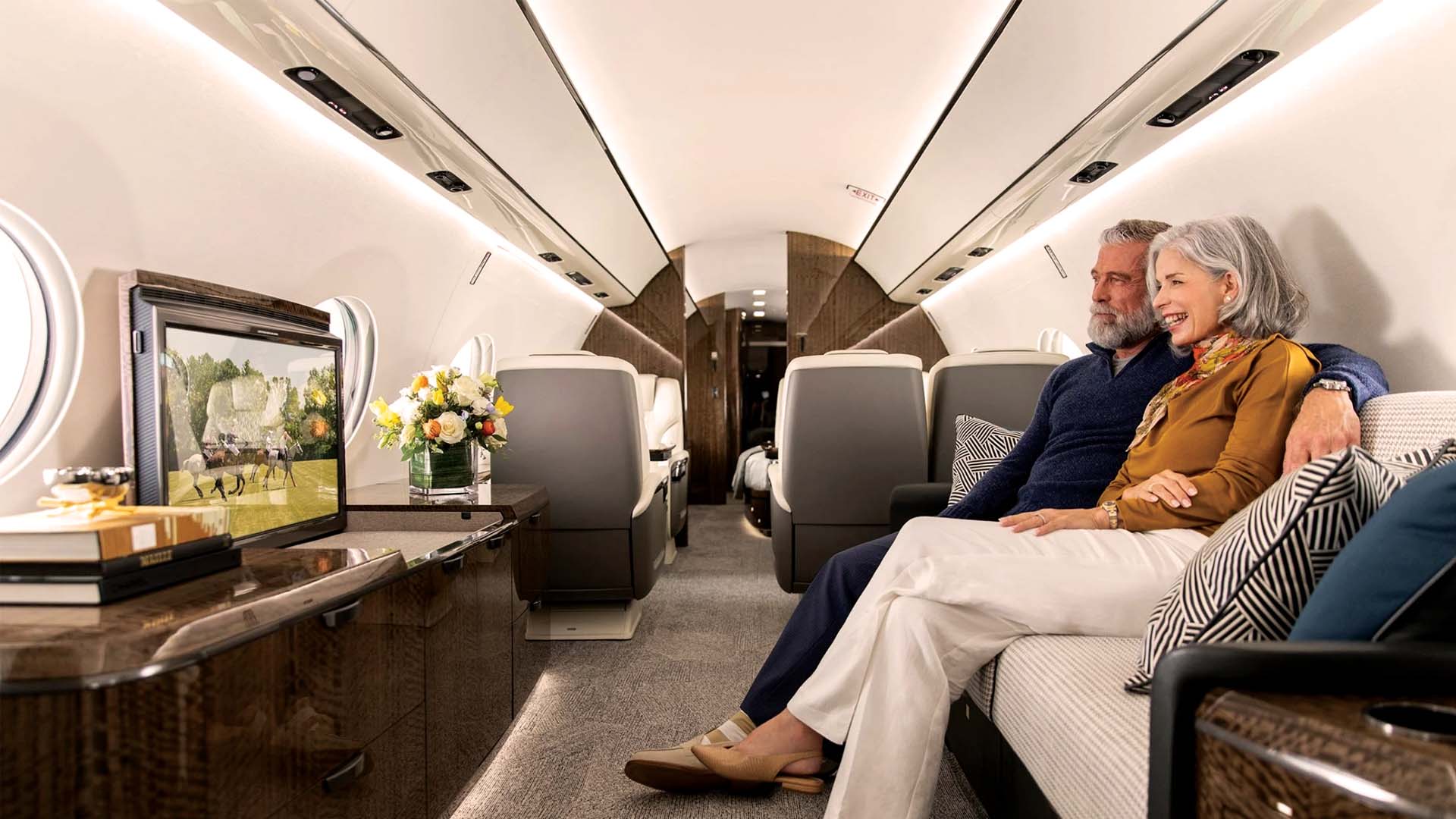
A multi-zone cabin design for work and rest.
Cabin design shaped by hospitality trends
A defining aspect of the G700 lies in its spatial design, which reflects influences from luxury residential and hospitality environments. The aircraft can be configured into up to five distinct living areas, including lounge settings, dining or conference spaces and a private suite with optional shower.
With a cabin length of approximately 56ft. and 20 panoramic oval windows, the aircraft emphasises natural light, openness and spatial continuity, qualities associated with contemporary luxury design. Alignment with hospitality sensibilities is visible in the aircraft’s ‘ultra-galley’, which allows restaurant-style dining preparation. As long-haul private aviation journeys resemble extended stays rather than transit experiences, onboard culinary capability has become an important differentiator.
The focus on wellbeing is seen in the cabin's circadian lighting systems that simulate natural daylight patterns, a 100% fresh air circulation system and a low cabin altitude of 2,840–2,900ft. These features aim to reduce fatigue and mitigate the physiological impact of long-haul travel. This emphasis reflects a wider shift across luxury categories, where comfort and functionality are being integrated into design rather than treated as secondary considerations.
At an estimated price point between $78 million and $82 million depending on configuration, the G700 sits firmly within the top tier of business aviation assets, appealing to individuals, corporations and governments seeking both performance capability and experiential refinement.
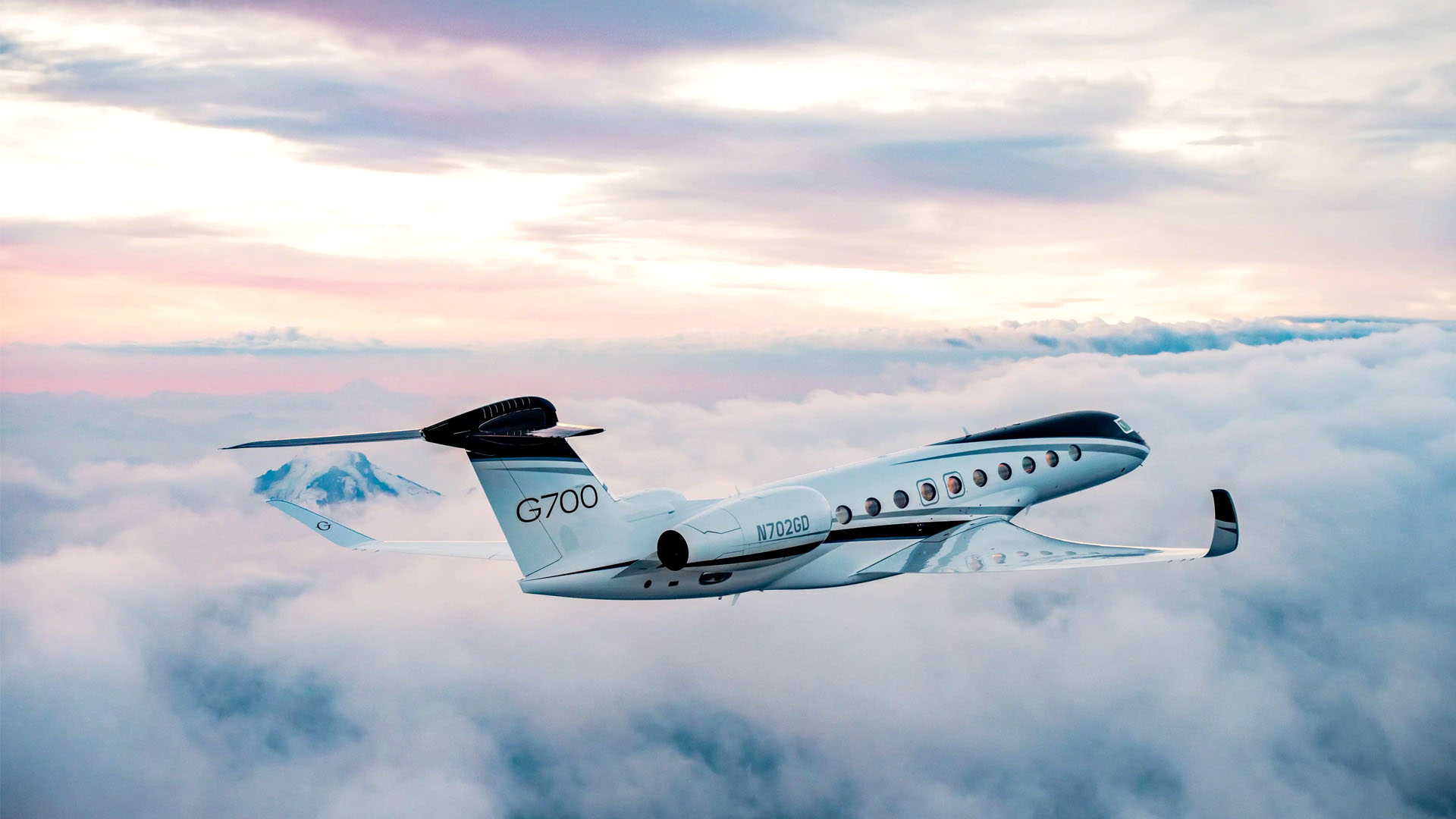
The Gulfstream G700 connects global business hubs through ultra-long-range, non-stop capability.