














India’s Alternative Accommodation Market to Reach ₹415 Billion by FY29
Booking.com and VIDEC Consultants’ latest report highlights the growing role of homestays, vacation rentals and apartments in India’s travel economy, driven by demand for local experiences, flexible stays and emerging destinations.


By SOH Edit Team
India’s alternative accommodation market is projected to reach ₹415 billion in Gross Booking Value (GBV) by FY29, according to How India Travels™ 2026 – The Homes Edit, the latest report by Booking.com and VIDEC Consultants.
Digitally distributed listings grew from 102,200 in FY23 to 215,000 in FY26, with the segment’s GBV expected to expand at a 21.2% CAGR through FY29.
Demand Spreads Beyond Major Cities
While metros and established holiday destinations accounted for 46% of inventory in FY26, supply is expanding across Tier-2 cities, religious centres and emerging leisure destinations. Listings more than doubled between June 2025 and June 2026 in Greater Noida, Ghaziabad, Indore and Ayodhya.
Changing traveller preferences are supporting this growth. The report found that 85% of surveyed leisure travellers chose alternative stays for authentic local experiences, while 83% valued their suitability for families and groups.
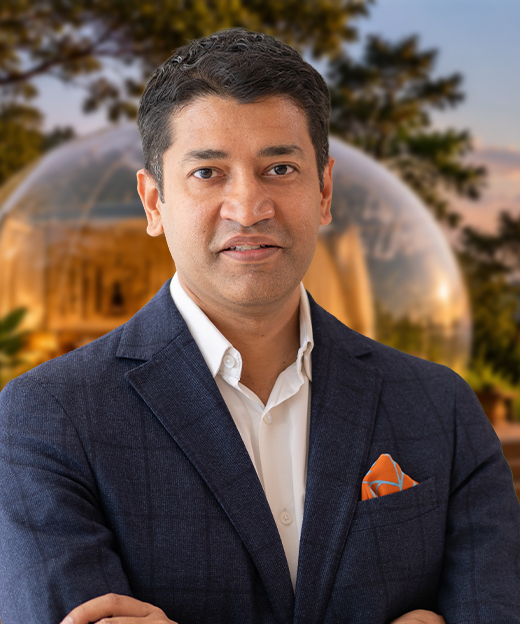
Santosh Kumar, Regional Head, South Asia, Booking.com
Business Travel Adds Momentum
Alternative accommodation is also gaining traction among business travellers, who accounted for 19% of bookings in FY26. This share is projected to reach 21% by FY27, driven by demand for apartments and aparthotels that combine living and working spaces.
Technology is emerging as another growth driver. Across seven Indian markets, properties with high dynamic-pricing scores recorded 108% to 190% higher RevPAR than those using fixed pricing, with Goa registering the largest differential.
Leadership Perspectives
Bhuvnesh Kumar, Secretary, Ministry of Tourism, highlighted access to finance as critical for homestay owners upgrading their properties, with the MUDRA framework and JanSamarth portal helping simplify loan applications. Suman Billa, Additional Secretary and Director General, Ministry of Tourism, emphasised connectivity, infrastructure, skills and quality standards as key to inclusive tourism growth.
Santosh Kumar, Regional Head, South Asia, Booking.com, noted that alternative accommodation is driving tourism growth in non-metro markets, with technology enabling local hosts to build scalable businesses. Virendra Jain, Co-Founder and CEO, VIDEC Consultants, underscored formalisation, technology adoption and consistent quality as priorities for the segment’s next phase of growth.
Building for Long-Term Growth
The report identifies formalisation, digital adoption, access to finance and consistent service standards as priorities for the sector’s next phase. Improved connectivity and tourism infrastructure will also be critical to expanding supply in underserved destinations.
As alternative accommodation becomes a more significant part of India’s travel economy, its long-term competitiveness will depend on combining distinctive local experiences with reliable operations and consistent quality.