




















Will Nobody Fly on Short Haul Routes?
Ashwini Vaishnaw, Union Railways Minister, made a case for high speed trains wiping out short haul routes. Not so fast, ground assessments suggest.


By Suman Tarafdar
“So nobody will fly. These sectors will be out for airlines. I am reminding right away for those who want to invest in airlines. These sectors will be 99% dominated by railways.”
These words by the Union Railways Minister Ashwini Vaishnaw, made earlier this week, set off a chain reaction across the country.
But how much of what he said is true? A closer examination reveals a more complicated picture.

India’s aviation roadmap is focused on transforming the country into a global aviation hub by 2047.
Aviation goals
Most significantly for the aviation sector, which he derided, his statement warning of staying away from investment in the aviation sector seems at odds with his own government. After all, not only has India been the fastest growing market for aviation amongst major markets (6.9%), it has the third-largest civil aviation market (4.2% of global air traffic).
Under Vision 2040 for the Indian aviation sector, announced in 2019, India’s aviation roadmap is focused on transforming the country into a global aviation hub by 2047. Key goals include 1.1 billion passenger trips by 2040, plans to manage 1.1 billion passenger trips and increase the commercial fleet from 400 to roughly 2,359 aircraft, democratise air travel by connecting smaller towns via the UDAN scheme.
According to the government’s own vision, India aims to increase its number of operational airports to over 350 by 2047, more than doubling the current count of approximately 162-164 airports as of early 2026. Even the short-term goal is to construct 50 new airports in the next 5 years. And yes, a significant proportion of this would be covered under short haul routes.

Union Railways Minister Ashwini Vaishnaw.
So nobody will fly. These sectors will be out for airlines. I am reminding right away for those who want to invest in airlines. These sectors will be 99% dominated by railways.
Ashwini Vaishnaw
Union Railways Minister

Railways vs the rest
At the CII summit, Vaishnaw also said that these high-speed rail corridors are likely to see very limited airline presence, with railways expected to account for nearly 99 percent of passenger traffic. He cited the examples of routes that would be impacted by bullet trains. These, he said, will reduce Mumbai-Pune travel time to just 48 minutes. Pune-Hyderabad would take 1 hour and 55 minutes, Hyderabad-Bengaluru 2 hours and 8 minutes, Chennai-Hyderabad 2 hours and 55 minutes, while Bengaluru-Chennai would be covered in only 78 minutes.
Even if these are taken at face value, the only bullet train route in India, announced in 2014, is still not operational 12 years later. India has announced 7 further Mumbai–Pune, Pune–Hyderabad, Hyderabad–Bengaluru, Chennai–Bengaluru, Delhi–Varanasi: Hyderabad–Chennai and Bengaluru–Hyderabad, but not even the detailed action plans have been revealed yet. So realistically, none of these are expected to be operational before the second half of the 2030s, a time frame that is also expected to see a sea change in aviation, with new generations of jets and other aircraft prototypes in the works that have promised to revolutionise air travel.
India’s first bullet train route, being built under Japanese expertise, plans to have a speed of 320 km/h. This is comparable to some of the top routes in the world such as Japan’s Shinkansen E5 & H5 and Europe’s Eurostar e320, both of which travel at 320 km/h. Italy’s Frecciarossa 1000 300 km/h while China’s Fuxing Hao CR400AF/BF has a stated speed of 350 km/h. In practise all of them at lower speeds due to factors such track quality, logistics and even weather conditions.
Currently, the fastest trains in India are the semi-high-speed Vande Bharat Express, with top operational speeds reaching up to 180 km/h, followed by the Gatimaan Express and premium Rajdhani/Shatabdi services operating between 140–160 km/h.
Even the HSR, or high speed routes currently announced such as Mumbai-Pune, or Hyderabad-Bengaluru, which already have some of the country’s fastest trains, the volume of road transport outpaces the total train volume.
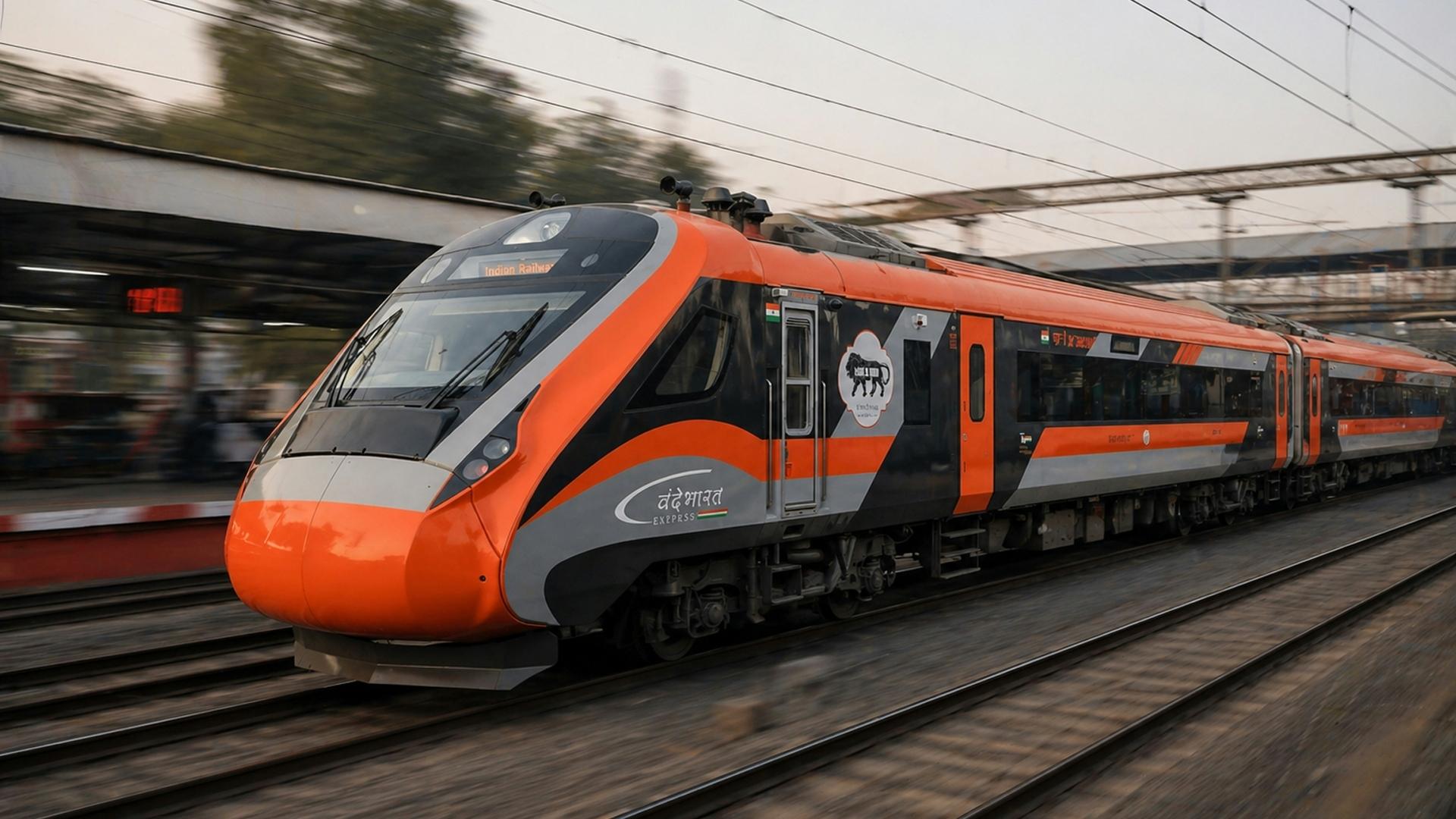
Currently, the semi-high-speed Vande Bharat Express is among the fastest trains in India.
Global outlook
Undoubtedly, under the current technology, surface transport is more eco-friendly than aviation. To date however, France is the only country to have banned short haul flights where HSR trains exist. Even in Japan, where the bullet trains originated nearly five decades ago with Japan’s Tōkaidō Shinkansen, which began service in 1964, the short haul aviation market is just as strong. As is road transport.
What most countries that have bullet trains have done is link airports and railway hubs to provide almost seamless travel. Indeed, several major airlines such as Lufthansa and KLM-Air France offer ‘air-rail’ tickets, partnering with Deutsche Bahn (Germany), SNCF (France), allowing passengers to book train journeys and flights together under one booking.
For travel distances under 500 miles, high-speed rail is often superior, offering city-centre access and lower emissions, while short-haul flights are generally faster over longer distances. Trains reduce carbon emissions by over 80% compared to flying, but flights often win on cost ($14 vs $250 in some EU cases) and total travel time, avoiding long boarding processes.
Both railways and high speed trains have their advantages, not counting road transport, which still takes the largest share of volume on most short haul routes globally. As for the Tokyo-Osaka/ Kyoto/ Nagoya example cited by the minister, Shinkansen are undoubtedly popular, but there are also about 50-60 daily flights serving each couple of cities. Similarly, London and Paris are connected by the Eurostar, but also have about 65 daily flights connecting them. Budget airlines connect them at a fraction of the cost of bullet trains.
To expect Indian routes to be “99% dominated by railways”, seems to be not grounded in reality. To wash off other modes of transport in favour of HSRs alone seems not just bombastic, but even strays from reality in the short and medium term. In a world where technology is so rapidly advancing, long term predictions seem foolhardy. Aviation routes may need tweaking at some distant date, but for now investment in the sector seems capable of high speed trains in its stride.
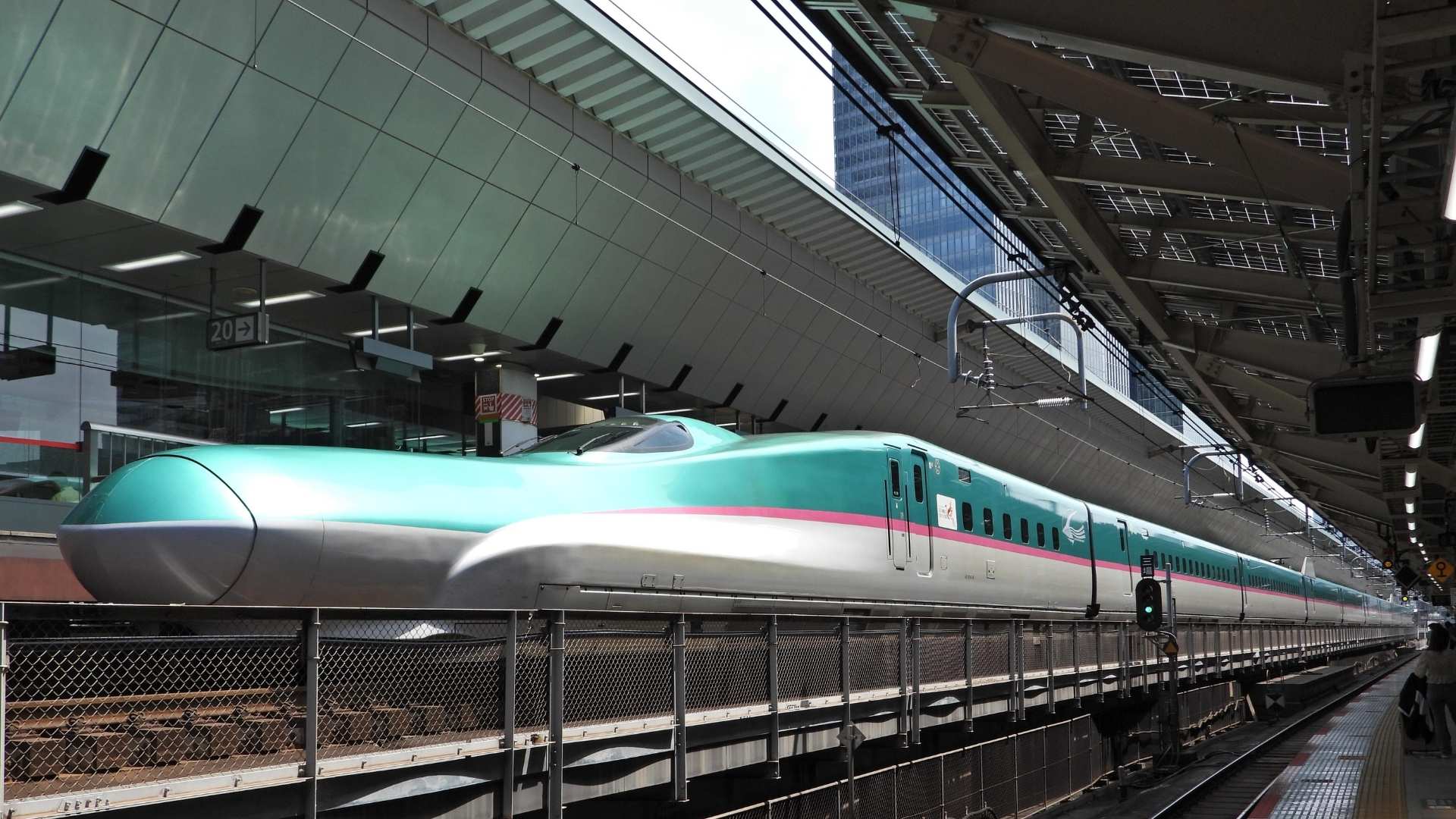
In Japan, where the bullet trains originated five decades ago with Japan’s Tōkaidō Shinkansen, the short haul aviation market is just as strong as the road transport.