












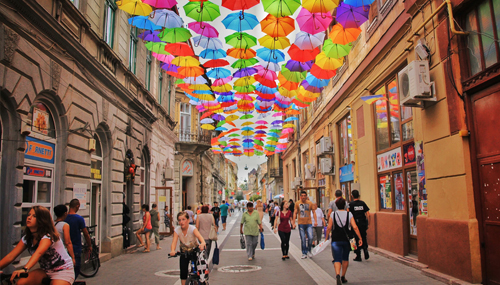

The New Faith Economy
From Dev Deepawali in Varanasi to Theyyam in Kerala, faith for young Indians is evolving into an immersive, festival-led travel experience, driven less by ritual obligation and more by cultural engagement.

By Shweta Dravid
At sunrise, on the ghats of Varanasi, the scene unfolds as it has for centuries: the sacred river Ganga glowing gold in the early light, aarti lamps flickering, and conch shells echoing through the morning mist. But look closer at the crowds gathering along the riverbanks, and something has shifted. Alongside elderly pilgrims and multigenerational families are young Indians in their 20s and 30s. They've come not just to perform rituals, but to experience them, to understand the stories woven into these sacred spaces, and find their own meaning within them.
This shift is being closely observed by those working in the hospitality industry. As Udit Kumar, Co-founder, Brij Hotels, which is now partnering with IHCL, points out. “Spiritual destinations are no longer defined by a single age group or intent. Increasingly, they are drawing a younger, more mindful traveller, often in their late 20s to early 40s, who is not driven by ritual obligation alone but by a deeper search for meaning, context, and connection.”
Today, Millennials and Gen Z are reshaping faith-driven travel, seeking journeys that go beyond prescribed rituals. Destinations like Varanasi, Rishikesh, Bodh Gaya, and Ayodhya are no longer visited only for darshan or prayer, but for the layered experiences they offer—heritage walks, river ceremonies, meditation retreats, and cultural festivals that invite deeper engagement.
Spiritual events, too, are taking on a new energy. Dev Deepawali in Varanasi has evolved from a local religious event into a spectacular cultural extravaganza, drawing over a million visitors, many of them young travellers. The Maha Kumbh Mela, one of the largest human gatherings on earth, is now seeing a growing influx of first-time pilgrims, solo travellers, and international visitors approaching faith with curiosity rather than convention.
What links these journeys is how they are experienced. For young India, spiritual travel is about immersion and reflection. This evolving approach is quietly transforming not just how faith is practised, but how an entire travel ecosystem, from hotels to airlines and OTAs, is responding, positioning spiritual tourism as one of the strongest drivers of India's travel economy. Here's a closer look at how this generational shift is redefining spiritual journeys and the industries built around them.

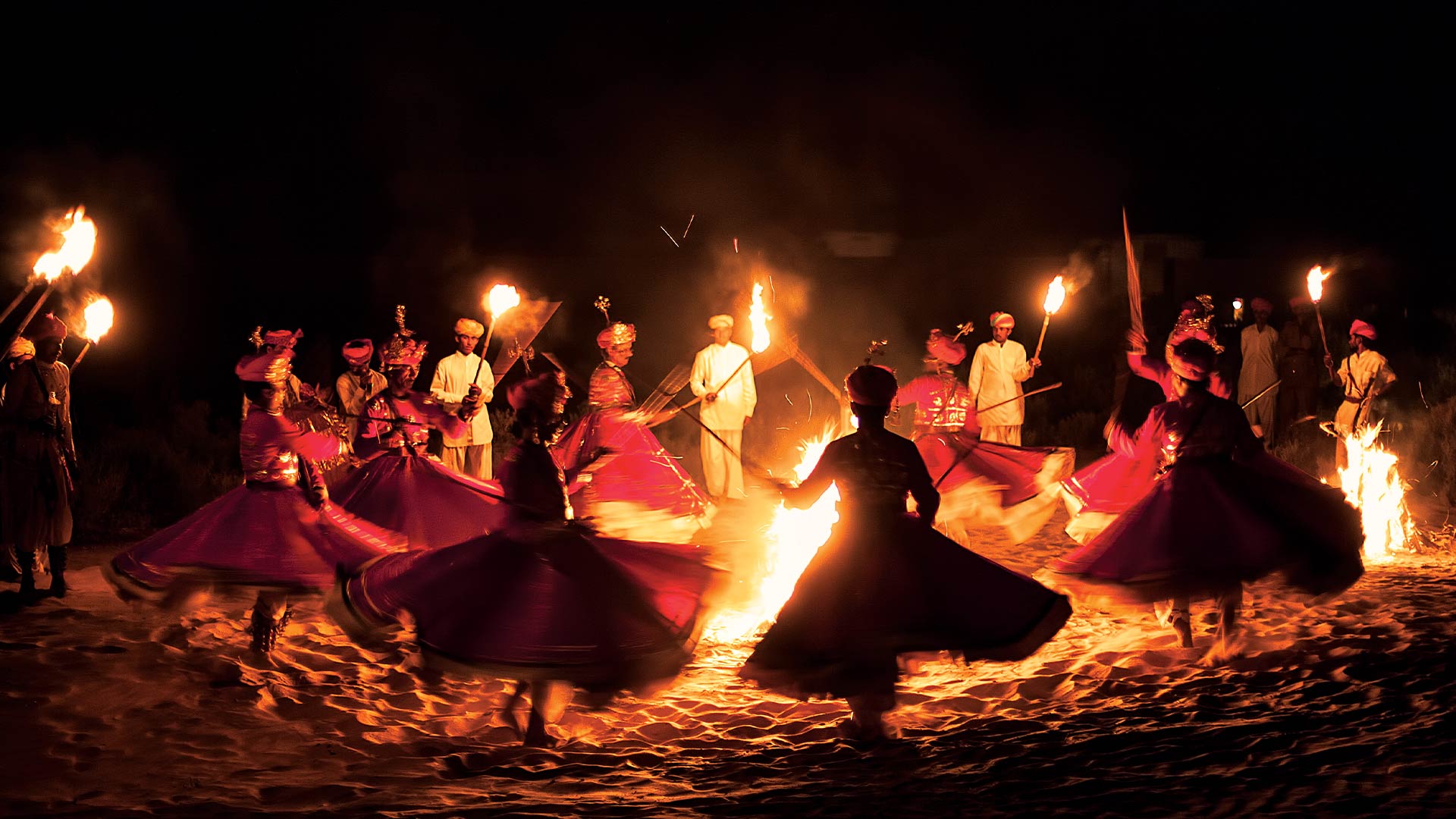
A Theyyam performer, elaborately adorned and in trance embodies the deity; blurring the line between ritual, performance, and belief.
The scale of spiritual festival tourism in India and the youth wave
Spiritual tourism today dominates India’s domestic travel landscape. According to a KPMG report, faith-linked journeys accounted for over 60% of all domestic travel in 2024, underlining how deeply spiritual movement is woven into the country’s travel economy.
What is driving this scale, however, is not tradition alone. Recent travel patterns point to a clear generational shift, with young Indians emerging as a powerful force behind the surge. In destinations such as Varanasi, the transformation is striking. In 2025, the city recorded 72.6 million visitors, with reports indicating that nearly 80% were young travellers, signalling that spiritual travel is no longer the preserve of older generations.
This demographic shift is carrying significant economic weight. Projections from the Ministry of Tourism estimate that India’s spiritual tourism sector could grow into a $59 billion industry by 2028, with the potential to generate millions of jobs across hospitality, transport, events, and allied services by the end of the decade.
This change is being felt across hospitality. Akshay Thusoo, Senior Vice President – Commercial, Sarovar Hotels, says, “At Sarovar Hotels, we are witnessing a decisive shift in the age profile of travellers to spiritual destinations. While traditional pilgrims continue to form a strong and stable base, the last five years have seen a marked increase in younger travellers, particularly Millennials and Gen Z.”
Online travel platforms echo this change, too. “In the past few years, we’ve witnessed a profound transformation in India’s spiritual tourism landscape and at the heart of this shift is young India,” notes Karan Agarwal, Director, Cox & Kings. “What was once seen as a largely age-driven or ritual-centric form of travel has evolved into a more mindful journey rooted in self-reflection, wellness, and emotional reset.”
This sheer scale and youth participation signal a paradigm shift in how India's cultural heritage is being experienced and reimagined by a generation that values engagement over ritualistic observance.

For young India, spiritual travel is about immersion and reflection.
Spiritual tourism today dominates India’s domestic travel landscape.
The last five years has seen spiritual destinations move from being viewed primarily as ‘pilgrimage-only’ to becoming a form of purposeful travel for young India.
Devendra Parulekar
Founder, SaffronStays

Where is young India travelling today?
Spiritual travel among young Indians is not confined to a fixed pilgrimage circuit anymore. What was once a predictable journey centred on temples and rituals is now unfolding across a wider, more dynamic map shaped by festivals, retreats, and heritage-led storytelling. Dr. Abhay Arvind Bedekar, Additional Managing Director, Madhya Pradesh Tourism Board, explains: "On our platform, young travellers are no longer searching only for darshan-led visits—they are increasingly looking for experience-driven, storytelling-led itineraries that allow them to connect with spirituality in a more immersive way." He adds that younger travellers "are drawn to hybrid spiritual journeys, where faith is complemented by engagement and discovery. Experiences such as guided temple walks, curated spiritual circuits, river-based experiences, and adventure add-ons like skydiving in Ujjain reflect how spirituality and experience are coming together for younger travellers".
Kumar observes a similar pattern at BrijRama Palace, Varanasi: "These guests arrive with questions, not checklists. They are curious about the stories behind the rituals, the cadence of life along the ghats, and the philosophy that underpins the city's timeless rhythm."
Increasingly, it is spiritual events rather than just destinations that are shaping how and when young Indians travel. Agarwal observes: "Instead of simply visiting a shrine, they are planning trips around events like Dev Deepawali in Varanasi or immersive experiences such as heritage walks, Ganga aarti, and local storytelling." Dr. Bedekar reinforces this point: "Tourism planning in the state is now closely aligned with a spiritual and cultural calendar, where festivals and sacred occasions themselves become the primary travel triggers."
Dev Deepawali in Varanasi is one of the clearest examples of this shift. Once a largely local religious observance, the festival has evolved into a significant cultural and spiritual spectacle. Held on the full moon of Kartik, the ghats are illuminated with millions of diyas, while synchronised aartis, classical performances, and river rituals unfold across the city. In recent years, Dev Deepawali has drawn an influx of young domestic travellers, photographers, and solo visitors who plan their trips around the event, staying longer to experience the city beyond the main ritual night. For many, the draw lies as much in the atmosphere and visual scale as in the spiritual significance.
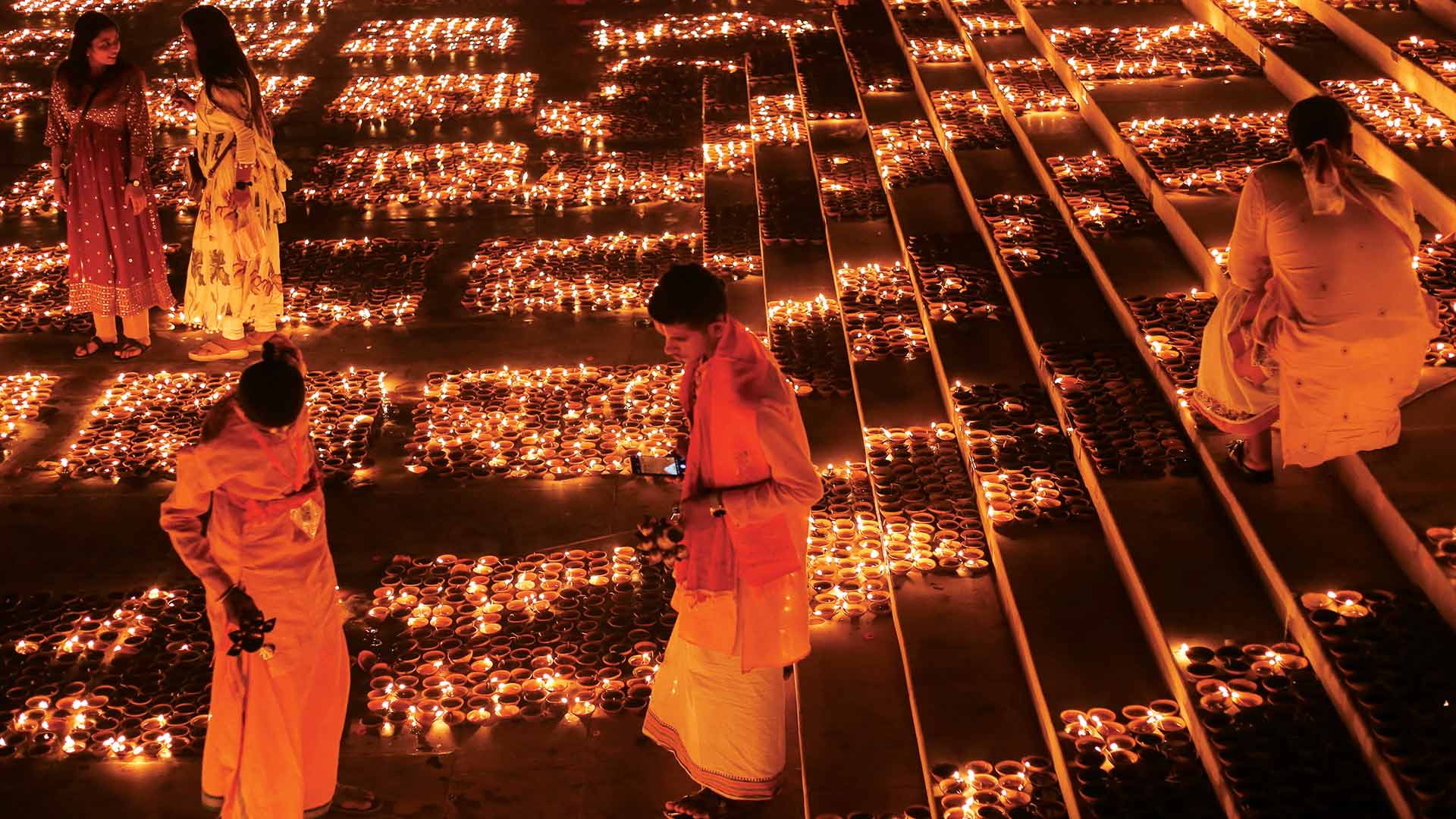
Millions of diyas illuminate the ghats during Dev Deepawali, transforming the riverfront into a shimmering corridor of light, ritual, and collective awe.
Spiritual destinations are drawing a younger, more mindful traveller not driven by ritual obligation alone but by a deeper search for meaning, context, and connection.
Udit Kumar
Co-founder, Brij Hotels
Devendra Parulekar, Founder, SaffronStays, notes how younger guests are engaging differently with these destinations: "In cities like Varanasi and Rishikesh, younger guests are spending more time engaging with the destination, not just visiting a single site and leaving. They want sunrise moments on the ghats, conversations, local walks, yoga and meditation, and a deeper sense of what the place stands for."
The Maha Kumbh Mela represents this transformation on an even larger scale. Traditionally associated with ascetics and lifelong devotees, the Kumbh is now attracting a growing number of first-time pilgrims in their twenties and thirties. Santosh Kumar, Regional Manager, South Asia at Booking.com, notes the scale of interest: "The Maha Kumbh Mela earlier last year captured this shift, with searches for Prayagraj surging 35-fold, while Varanasi saw a 70% year-on-year increase, and nearby cities like Vrindavan and Lucknow experienced similar momentum." These young travellers arrive with curiosity to witness this spectacle. They experience this spiritual extravaganza through guided experiences, cultural walks, photography workshops, and interactions with monks and sadhus.
Ashish Vohra, Founder & CEO, Onora Hospitality Pvt. Ltd., which operates brands such as jüSTa Hotels & Resorts, explains what's driving this shift: "Over the last few years, we have seen a very clear demographic shift at spiritual destinations. Today, a significant proportion of visitors are young—particularly Gen Z and Millennials. What's driving this is curiosity and a deeper urge to explore, rather than ritualistic obligation alone. This generation values experiences over assets." He adds: "Improved infrastructure has also played a huge role—better roads, more comfortable vehicles and overall ease of travel have made destinations like Varanasi or Rishikesh far more accessible. Spiritually inclined travel is no longer seen as slow, austere or intimidating. It has become a natural extension of a modern lifestyle."
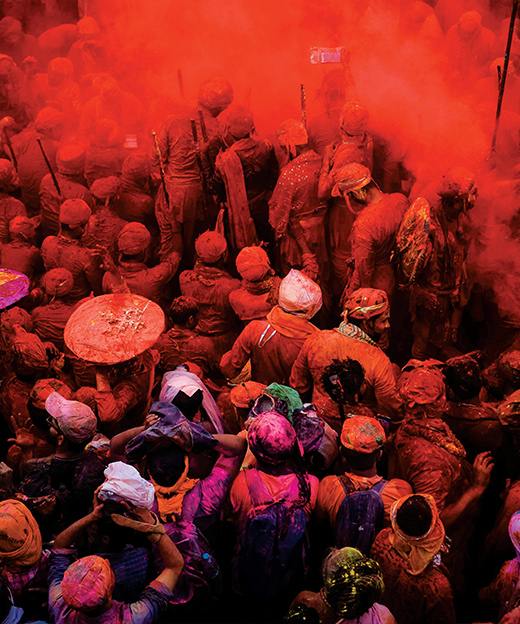
Elsewhere, festivals rooted in regional spirituality are also drawing young travellers. Holi in Vrindavan and Barsana has become a major draw for travellers. Beyond the exuberance of colour and music, young travellers seek out guided temple walks, storytelling sessions that decode Braj folklore, and evenings of devotional music and kirtan that place the festival within its spiritual context. Many extend their trips to include visits to Govardhan, Nandgaon, and Mathura, walking pilgrimage routes and exploring the region's sacred geography.
Durga Puja in Kolkata offers another powerful example of how faith-driven events are being reinterpreted. While worship remains central, the festival has evolved into a city-wide, multi-sensory experience. Young travellers enjoy Durga Puja through guided pandal walks, curated neighbourhood trails, and storytelling sessions that deep dive into the festival's history and symbolism. Food trails exploring festive delicacies, from bhog to street-side specialties, add another layer of cultural immersion, while late-night performances and community gatherings extend the experience well beyond the rituals.
In North Kerala, the ancient ritual of Theyyam is drawing young travellers seeking raw, intimate, and deeply rooted spiritual experiences. Performed in village shrines and sacred groves between October and May, Theyyam is not a festival in the conventional sense but a ritual practice where performers are believed to embody the deity itself. Beyond the spiritual connection, it is a visual spectacle that attracts many young travellers, including photographers and journalists. They plan their trip around specific Theyyam performances, arriving before sunrise to witness rituals that unfold over several hours. They stay in village homestays near the shrines, move between temples with local guides, and spend time observing how the ritual is prepared—from costumes and makeup to music and movement. During this time, photography workshops are also held to capture the grandeur of the Theyyam performers.
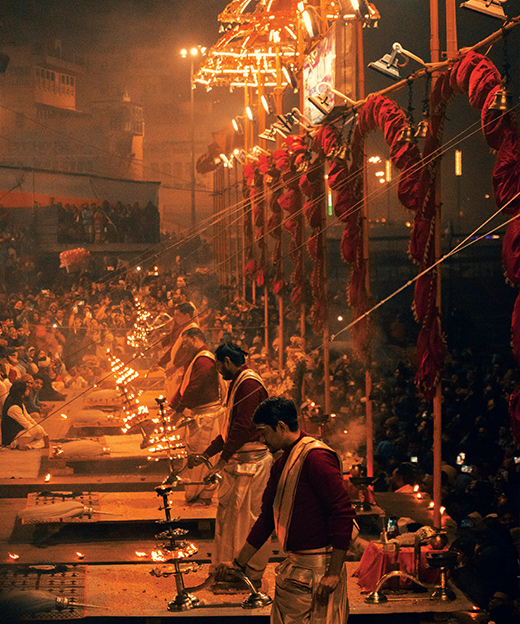
Synchronised rituals create a hypnotic spectacle of fire, chant and reverence during Ganga aarti.
Today, a significant proportion of visitors are young—particularly Gen Z and Millennials… driven by curiosity and a deeper urge to explore, rather than ritualistic obligation alone.
Ashish Vohra
Founder & CEO, Onora Hospitality Pvt. Ltd. (jüSTa Hotels & Resorts)
Redefining how spiritual journeys are experienced
As faith finds new expression through these events, young India is quietly redefining not just where it travels, but how spiritual journeys are experienced. Parulekar captures this shift: "Over the last five years, we have seen spiritual destinations move from being viewed primarily as 'pilgrimage-only' to becoming a form of purposeful travel for young India. Millennials and Gen Z are showing up in far greater numbers, and their intent is noticeably different." He adds, "The mindset is not only devotion, but also being part of a collective cultural moment. What this tells me is simple: young India is not moving away from spirituality. They are redefining how they relate to it. They want authenticity, clarity, and experiences that feel grounded."
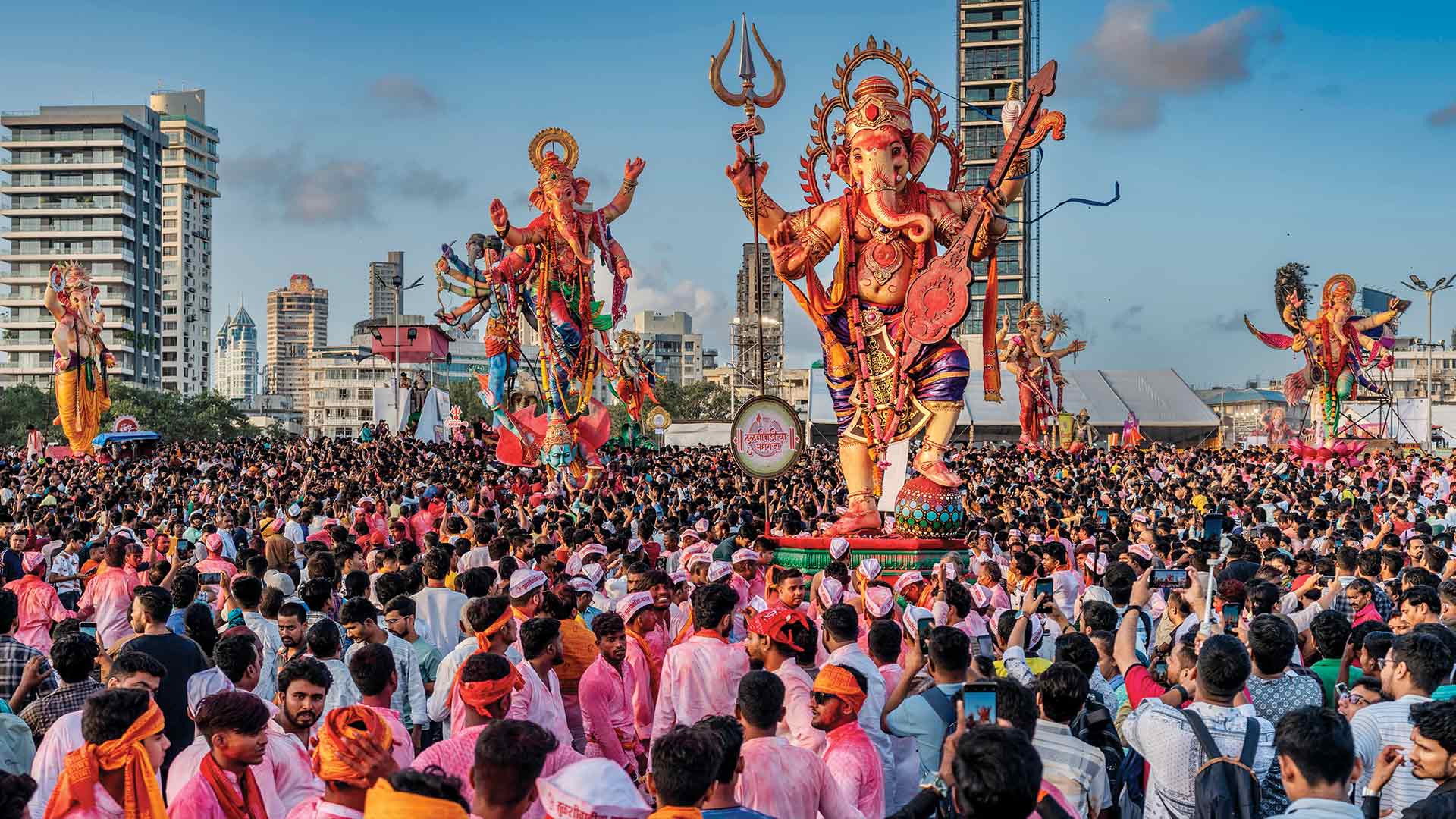
Ganesh Chaturthi merges devotion and spectacle in a city-wide public celebration.
Alongside traditional pilgrims, we are seeing an increase in the number of younger travellers, families and multi-generational groups who combine faith with wellness, culture, and short leisure breaks.
Nikhil Sharma
Managing Director, & COO, South Asia, Radisson Hotel Group
How the industry is responding
As young Indians reshape spiritual travel, the industry is recalibrating in response. Hotels, OTAs, and tourism boards are increasingly aligning their strategies with India's spiritual festival calendar rather than treating pilgrimage travel as a niche segment.
Online Travel Agencies (OTAs) are seeing a clear change in trend. Agarwal notes that "industry data indicates that spiritual and pilgrimage travel has grown close to 18-20% year-on-year, with Millennials and Gen Z emerging as a key growth driver." He adds that "industry data indicates that nearly 80% of Indian Millennials and Gen Z now prioritise experiences, cultural narratives, and festivals over destination-only travel".
This shift is validated by data from Booking.com, with Santosh Kumar of Booking.com revealing that "one-third of Indian travellers were planning a spiritual trip in 2025 and interestingly, this intent cut across younger cohorts, with 32% of Millennials and 34% of Gen Z actively seeking these journeys". He further notes that "spiritual tourism has emerged as one of the country's fastest-growing segments, now representing a $59-billion opportunity, with demand rising across age groups and regions. While 50% of travellers say religious events influence their plans, 62% now demand premium accommodations".
Platforms such as MakeMyTrip have begun treating spiritual and pilgrimage travel as a core growth segment rather than a side category. According to MakeMyTrip's Pilgrimage Travel Trends 2024–25, accommodation bookings across 56 pilgrimage destinations grew by 19%, with 34 destinations recording double-digit growth and 15 above 25%, underscoring broad momentum across the country's spiritual map. In fact, MakeMyTrip is now curating over 600 specialised packages, mapping more than 200 festivals and designing hotel collections tagged ‘Loved by Devotees’. These hotels are located near religious sites and offer travellers modern amenities, signalling a shift to calendar-based promotional planning.
The surge in spiritual travel is also reshaping where and how accommodation is being built and marketed. Hospitality chains are strategically expanding their footprint in pilgrimage hubs. Nikhil Sharma, Managing Director & COO, South Asia, Radisson Hotel Group, states: "Spiritual destinations have emerged as a powerful growth engine for Radisson Hotel Group in India. We were among the first international hotel operators to establish a presence in culturally significant markets, such as Prayagraj and Ayodhya. Now, we are further strengthening our footprint across fast-growing spiritual hubs, including Shirdi, Puri, Indore, and Ujjain." He adds: "Over the past five years, the profile of travellers visiting spiritual destinations has evolved significantly. Alongside traditional pilgrims, we are seeing an increase in the number of younger travellers, families and multi-generational groups who combine faith with wellness, culture, and short leisure breaks."
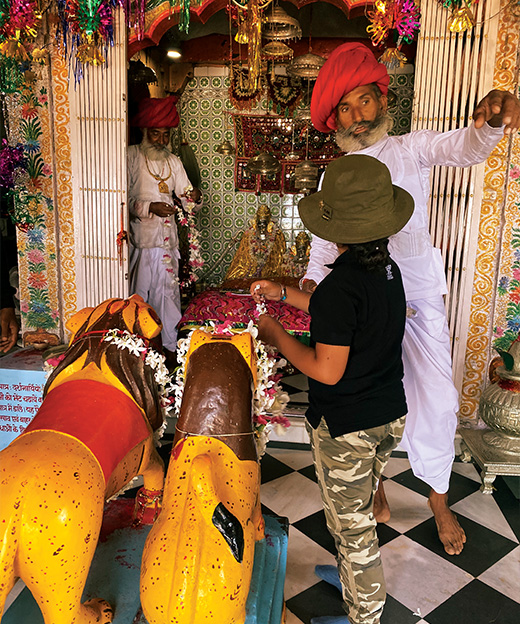
Spiritual travel expands from ritual to experience, interaction and cultural engagement.
Spiritual tourism has emerged as one of the country's fastest-growing segments, now representing a $59 billion opportunity, with demand rising across age groups and regions.
Santosh Kumar
Regional Manager, South Asia, Booking.com
Meanwhile, OYO announced plans to introduce approximately 500 new hotels across India's major religious centres in 2025, with a significant focus on destinations such as Ayodhya, Varanasi, Prayagraj, Haridwar, Puri, Mathura, Vrindavan, Amritsar, Ujjain, Ajmer, Nasik, and Tirupati, all destinations of major spiritual events and festivals. These new properties are often situated within walking distance of key temples and ghats, allowing travellers to maximise time at the festival.
Hotels are evolving from accommodation providers to experience facilitators. Vohra observes: "In spiritual destinations, especially, hotels can no longer function as just places to sleep. Guests are actively looking for well-curated, all-inclusive experiences and they are very comfortable paying a premium for that convenience and quality." He explains that "experiences such as a boat ride on the Ganges, witnessing the Ganga aarti from the ghats, a Kathak dance performance or even a visit to a traditional silk weaving unit allow guests to truly absorb the cultural and spiritual essence of the city."
Thusoo echoes this sentiment: "Today's guests expect hotels to play an enabling role in their spiritual journey, not merely function as accommodation." He notes that "across Sarovar properties in these markets, the focus is on facilitating authentic yet accessible engagement from guided temple visits and ritual support to curated festival access and in-hotel cultural experiences".
Many properties now bundle early check-in/out options, guided tours to ritual sites and the festivals, vegetarian meal plans, and shuttle services to major event venues, effectively positioning themselves as partners in the spiritual journey rather than mere overnight stops. Kumar explains: "At BrijRama Palace, the hotel becomes a threshold between the guest and the sacred landscape of Varanasi. Through curated rituals, guided walks, and unhurried moments overlooking the Ganga, we help guests engage with the destination in a way that feels authentic and respectful."
Large spiritual events have become central to business planning. Parulekar confirms: "Large spiritual events have moved from being occasional spikes to becoming predictable planning cycles for hospitality in India." He notes that "these periods are now a central part of annual business planning. They influence staffing calendars, inventory allocation, partnerships, and service playbooks".

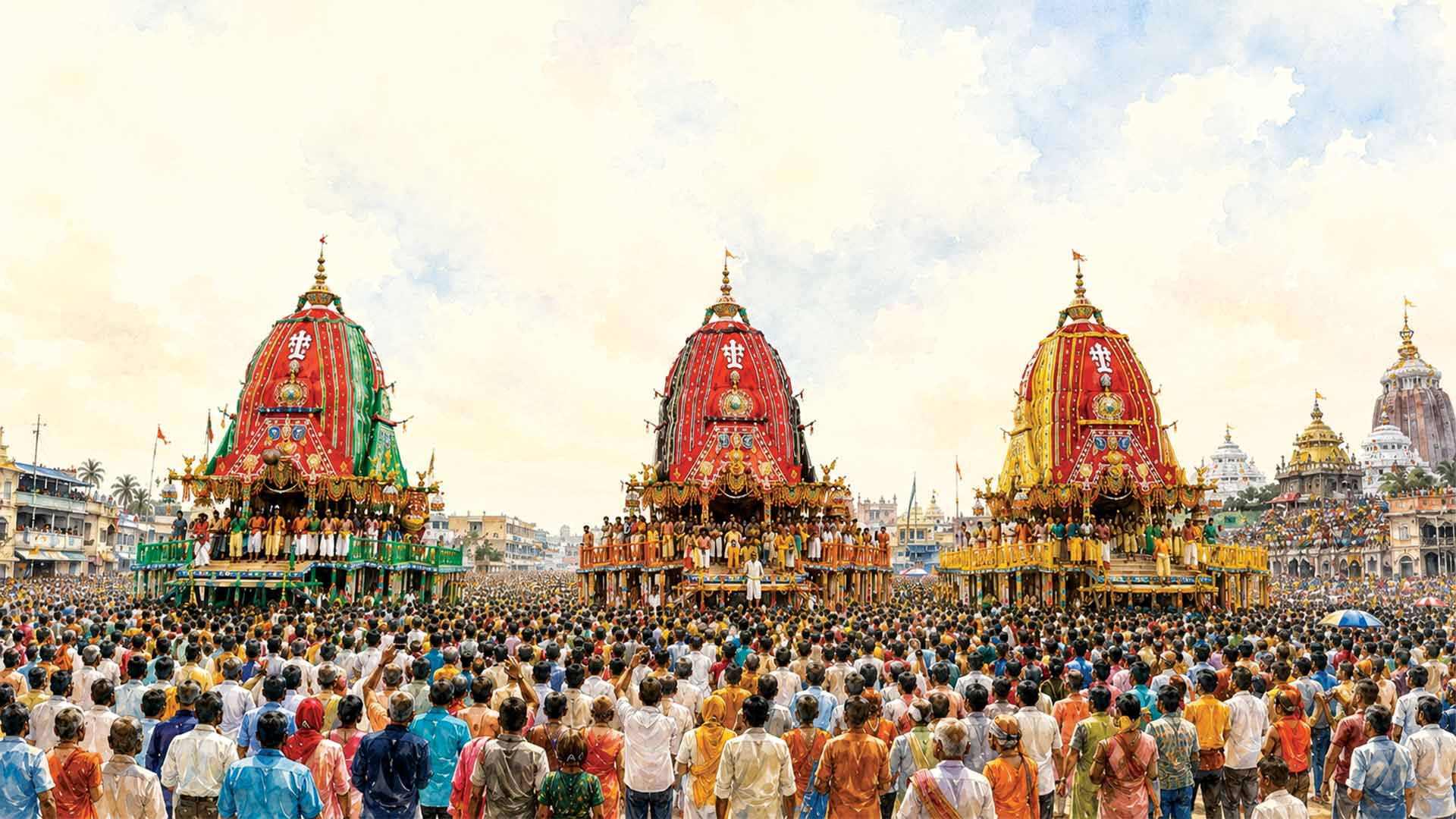
A sea of humanity converges at the Kumbh, where ancient ritual meets modern curiosity.
While traditional pilgrims continue to form a strong and stable base, the last five years have seen a marked increase in younger travellers, particularly Millennials and Gen Z.
Akshay Thusoo
Senior Vice President–Commercial, Sarovar Hotels
Thusoo explains the operational implications: "In destinations such as Badrinath, Haridwar, and Vrindavan, peak religious seasons require enhanced staffing, streamlined yet efficient food and beverage offerings, and disciplined guest-flow management. Commercially, pricing and inventory are calibrated to reflect strong demand while remaining sensitive to the spiritual context."
From a state tourism perspective, Dr. Bedekar explains the infrastructure being built to support this shift: "A major enabler of this shift is the development of 26 thematic spiritual precincts or 'Loks' across Madhya Pradesh. These purpose-built precincts strengthen storytelling, enhance pilgrim infrastructure, and allow visitors to engage with spirituality in a more immersive and organised manner."
If hotels are aligning their offerings around India's spiritual calendar, airlines are doing the same, adding more routes during spiritual events and converting once-seasonal pilgrimage routes into high-priority corridors. For example, Air India launched daily flights between Delhi and Prayagraj for the festival period to meet the surge in demand. Even Akasa Air and SpiceJet had daily flights from major metro cities to Prayagraj for the festival period. These moves illustrate how airlines are increasingly using festival calendars to capitalise on India's growth in spiritual tourism. By integrating these events into their
network strategy, carriers are also enabling travellers to access sacred cities with a level of convenience that was unheard of just a few years ago.
India's spiritual landscape has always been expansive, but how it is being explored is clearly evolving. By travelling for events rather than fixed destinations, young Indians are bringing greater curiosity and choice to faith-led journeys. In response, the travel industry is recalibrating its strategies around this shift—one that is quietly reshaping the contours of India's travel story.
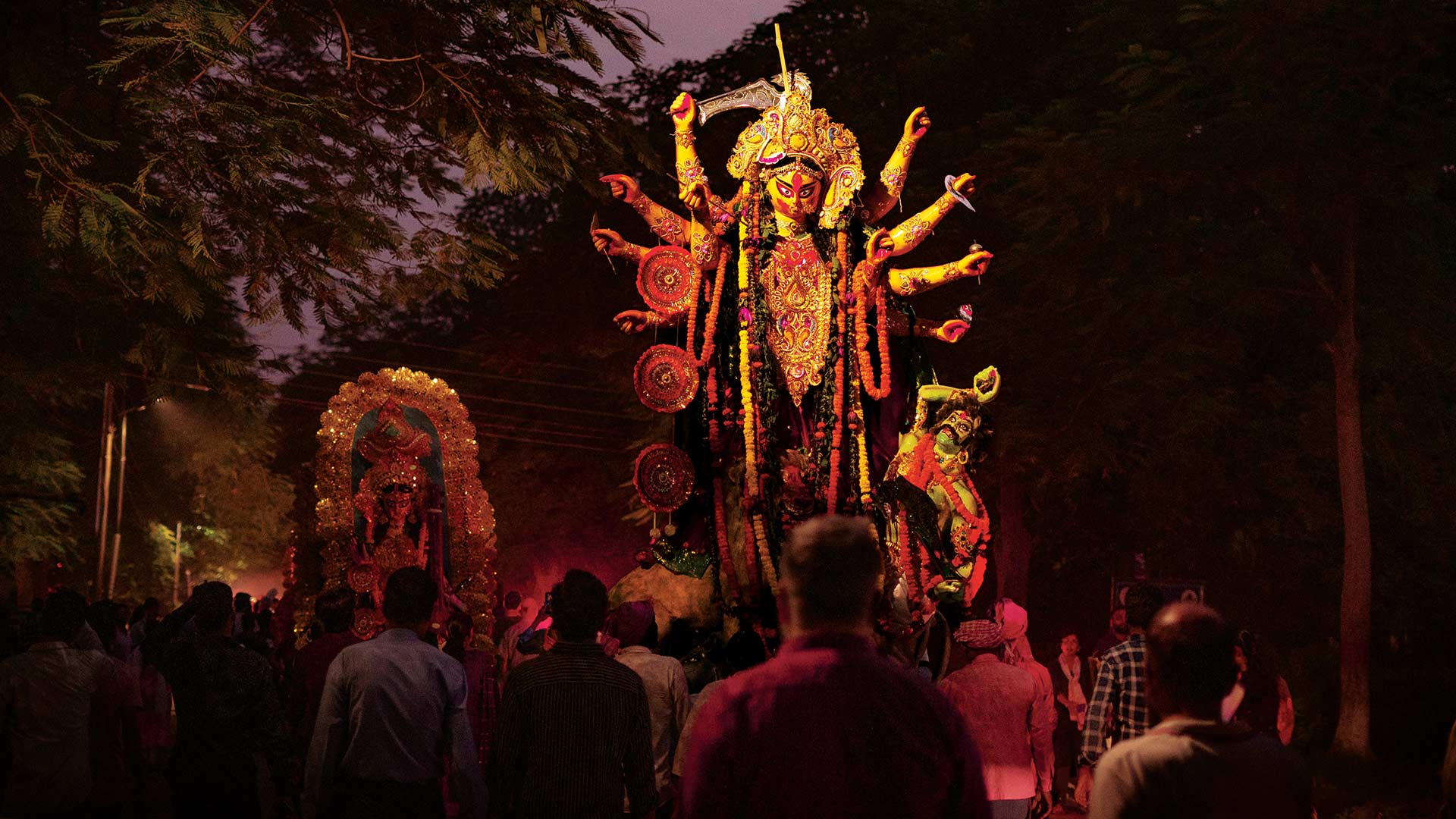
Adorned in vermilion and gold, the idol of Durga captures a moment of poised Shakti.
What was once seen as a largely age-driven or ritual-centric form of travel has evolved into a more mindful journey rooted in self-reflection, wellness, and emotional reset.
Karan Agarwal
Director, Cox & Kings