













At 35,000 Feet, This Contemporary Art Carries India’s Stories Across the World
The Flying Canvas, a collaboration between Air India and Kochi-Muziris Biennale, has transformed an aircraft into a flying celebration of culture and creativity.

By Rachna Virdi
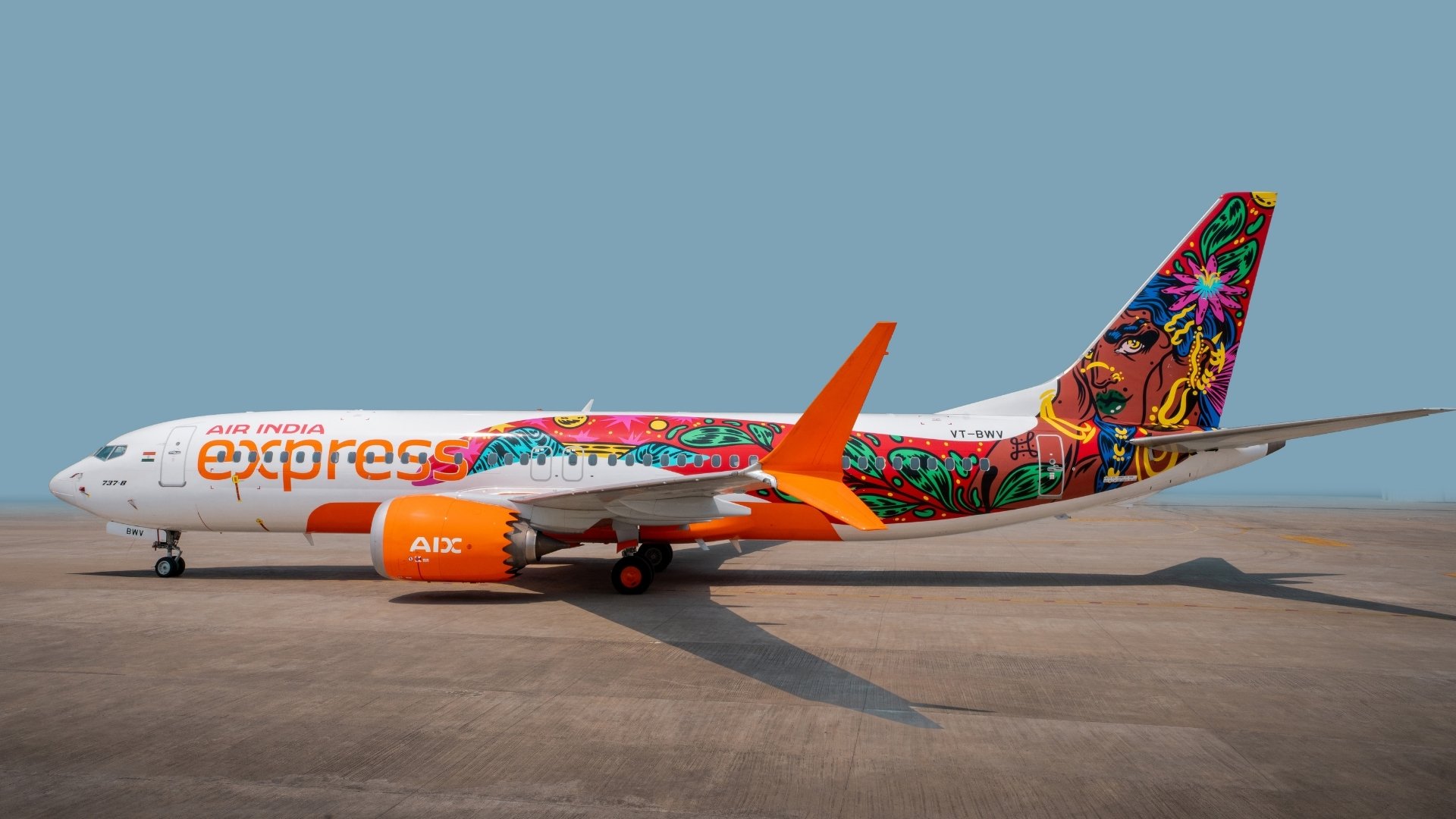
Recently, while boarding an Air India Express flight, I was happily surprised to see that the Boeing 737-8 was covered in striking contemporary Indian art. The artwork showcased a bold female form, representing memory carried through generations and complemented by motifs that speak of identity, heritage, and continuity. Traditional symbols woven through the design reflected identity, resilience, continuity and cultural change. Created in a vibrant speculative-futurist style, the art reimagined heritage as something living and evolving rather than fixed in time.
Intrigued, we probed the airline staff and learned that the artwork was titled The Flying Canvas, a vibrant collaboration between Air India and the Kochi Biennale Foundation. The project transformed an otherwise familiar aeroplane into what the airline describes as a “moving cultural installation”.
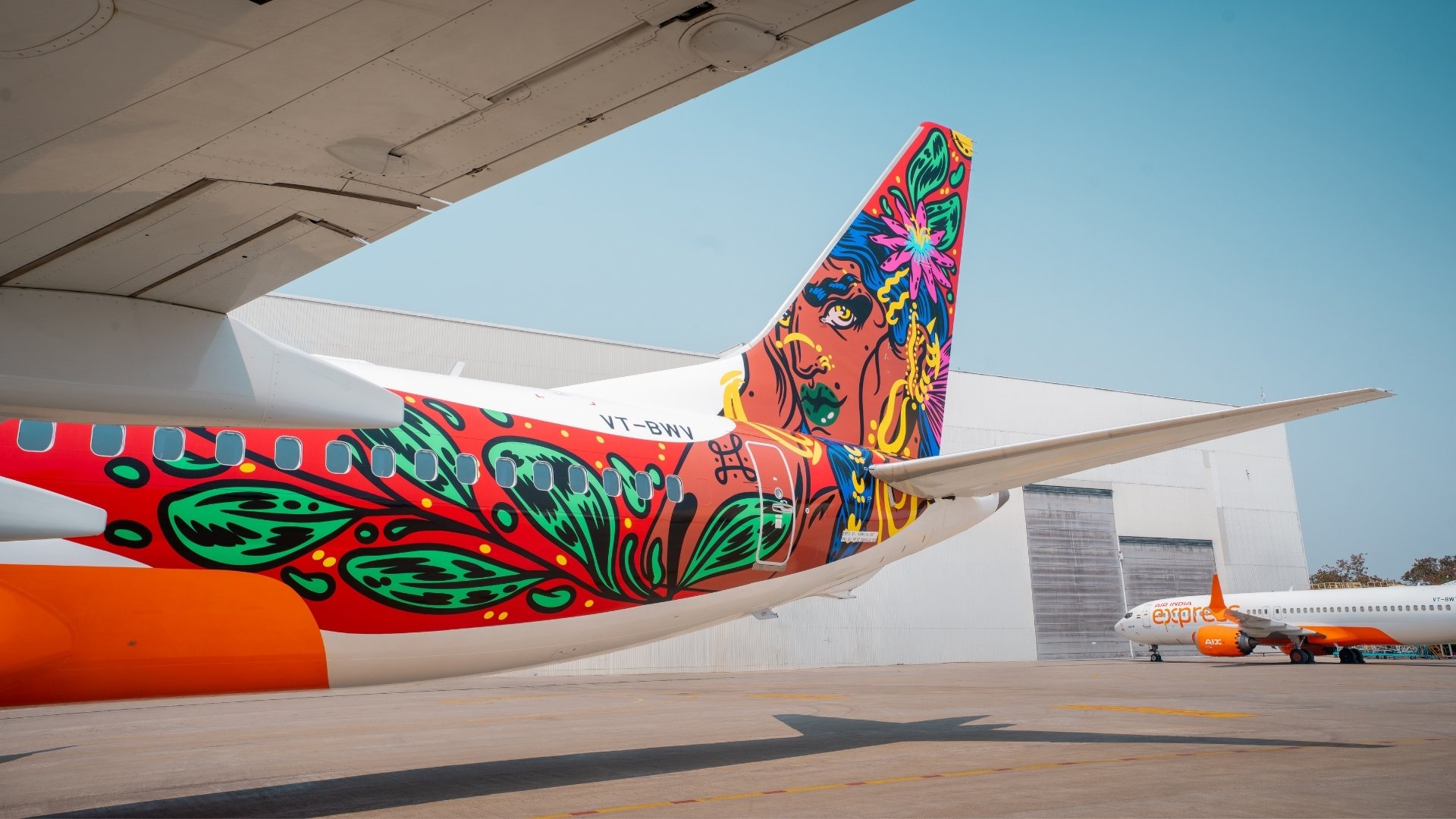
The aircraft’s livery showcases a striking figure carrying memory and heritage into the future, symbolising continuity, resilience, and cultural evolution.
The Collaboration
In October 2023, the airline launched the Tales of India initiative, featuring aircraft tail designs inspired by Indian crafts and traditions like Kalamkari, Bandhani, Kanjivaram, and Banarasi. The Flying Canvas is the newest and most innovative extension of this cultural design philosophy. The initiative is a part of a multi-year partnership between Air India and Kochi Biennale Foundation, aimed at taking art beyond traditional gallery spaces and into everyday life.
Siddhartha Butalia, Chief Marketing Officer, Air India Express, reflects on the vision behind the initiative. “Art is one of the most powerful universal languages — it transcends borders, cultures, and geographies to connect people in ways few things can. With the Tales of India and its extension to The Flying Canvas project, we are literally taking that idea to the skies, transforming an aircraft into a moving expression of living cultural identity,” he notes.
By transforming the fuselage into the fastest-moving cultural installation, Air India aims to use its fleet as a canvas to celebrate India's soft power and indigenous stories.
Butalia adds, “The initiative reflects how we see travel — not just as a journey between destinations, but as an opportunity to experience, interpret, and connect with culture and communities in meaningful ways. As one of the most culturally engaged airlines globally, we are proud and delighted to create spaces where art, travel, and human connection come together.”
Thomas Varghese, CEO, Kochi Biennale Foundation, shares, “The Kochi-Muziris Biennale has always been a celebration of art transcending boundaries, bringing contemporary practice out of galleries and into the everyday lives of people. Through this association with Air India Express, that vision literally takes flight.”
The Biennale approached the collaboration with the same curatorial depth and critical engagement that shapes its wider programming, while Air India Express showed a genuine openness to artistic experimentation and cultural dialogue.
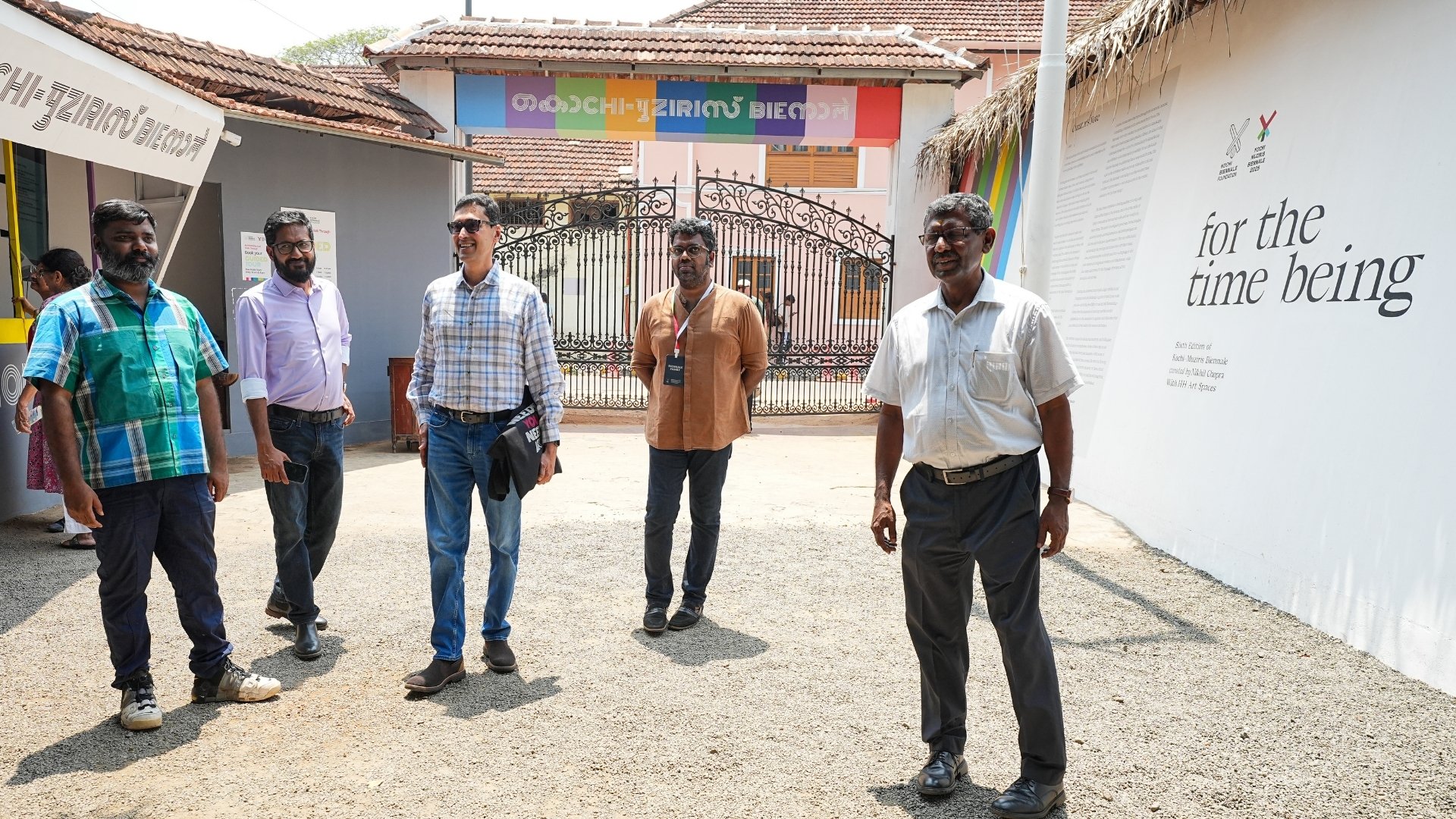
The Kochi-Muziris Biennale has been a celebration of art transcending boundaries, bringing contemporary practice out of galleries and into the everyday lives of people.
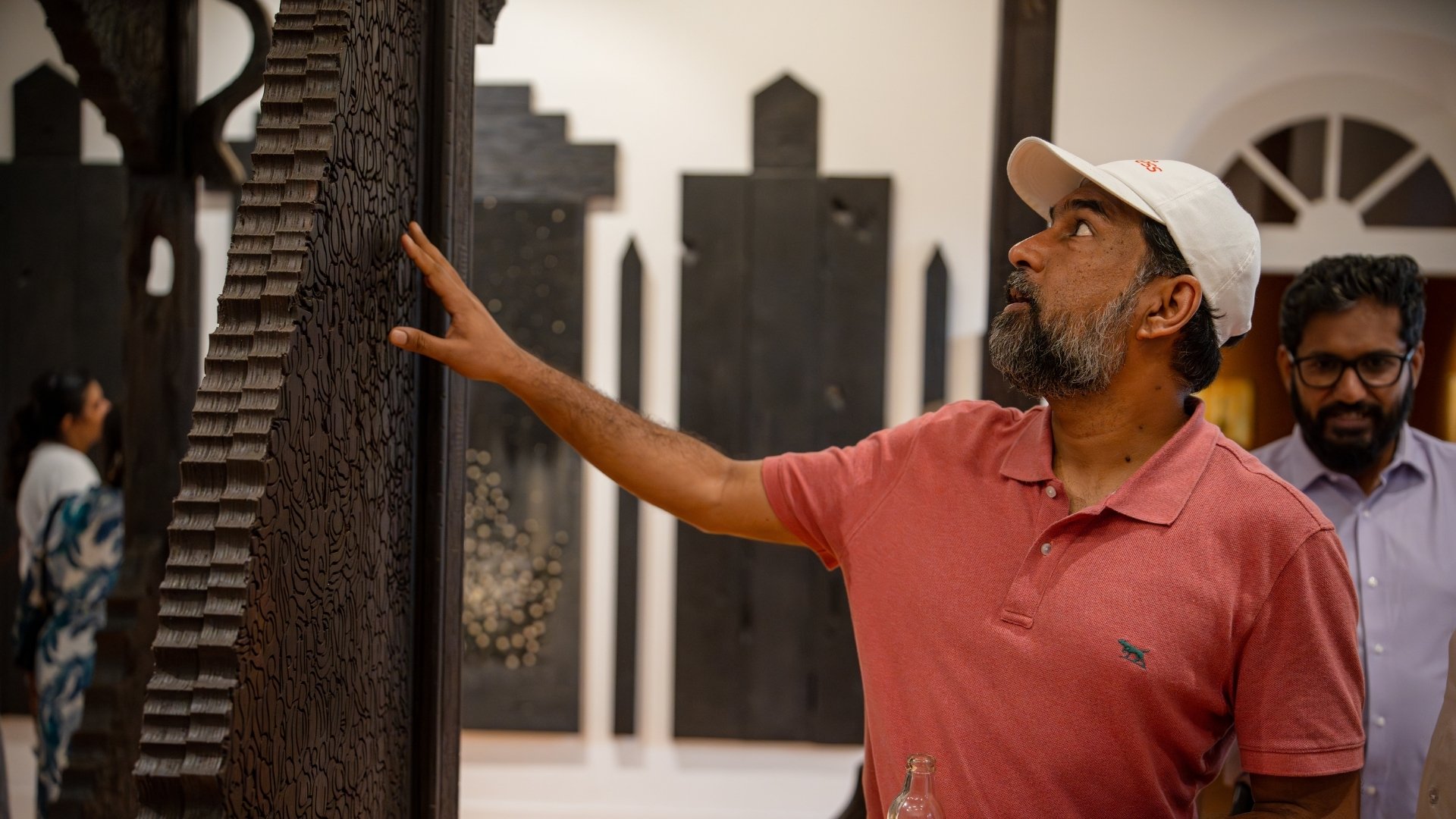
The Biennale approached the collaboration with the same curatorial depth and critical engagement that shapes its wider programming.
The curatorial process
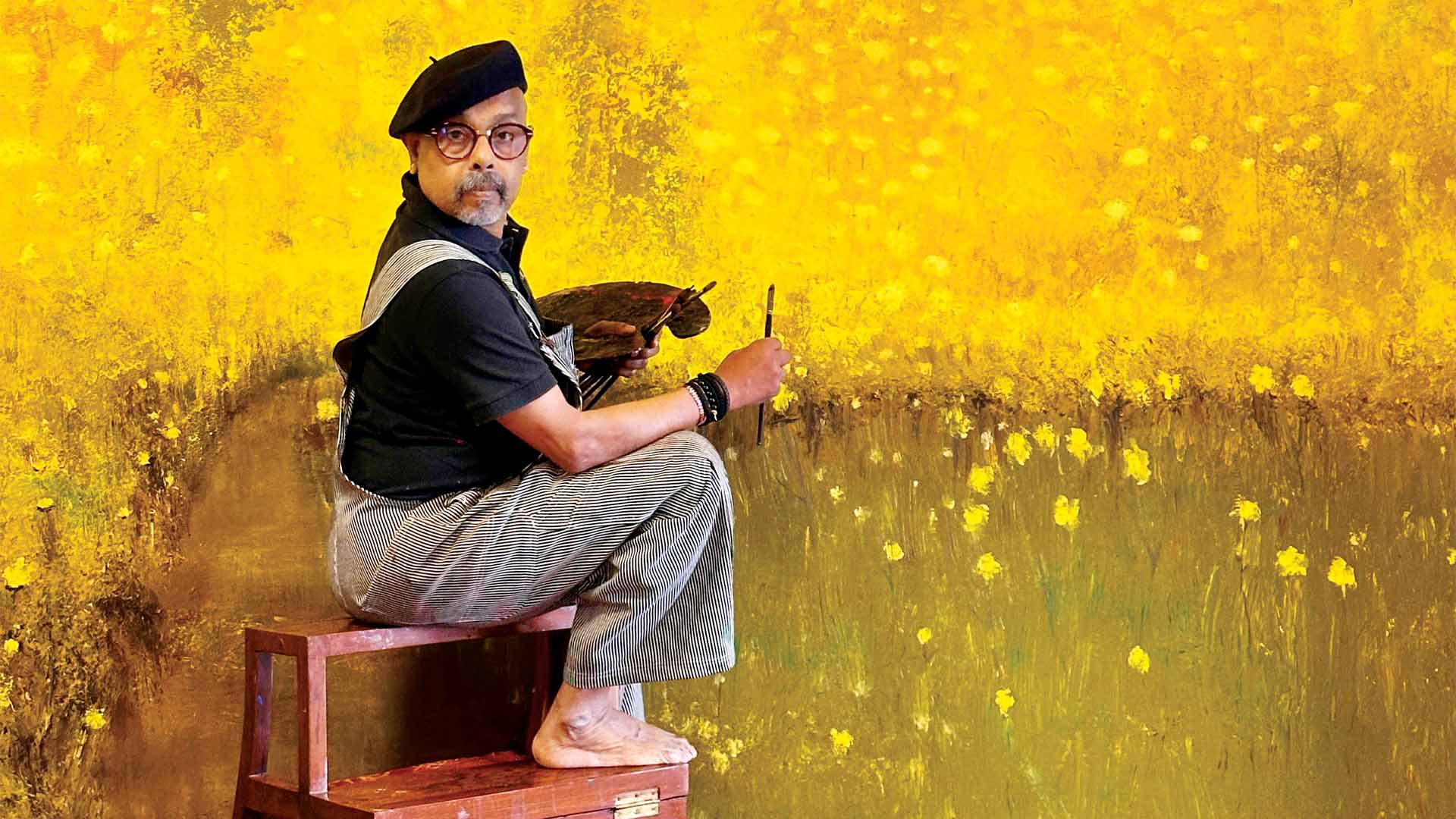
At the heart of this creative milestone is Osheen Siva, the internationally recognised multidisciplinary artist from Tamil Nadu whose work is shaped by themes of heritage, identity and evolving cultural narratives. Siva’s art — also seen in the Island Mural Project across Fort Kochi and Mattancherry — bridges contemporary expression with everyday public spaces.
Varghese explains, “The project is centered on the work of Osheen Siva, who was selected for her distinctive approach to image-making and her compelling visual language, which resonates strongly with themes of movement, imagination and contemporary identity. As a young emerging female artist with a particularly promising career trajectory, she represented an exciting voice through which the collaboration could engage new audiences while also foregrounding the vitality of contemporary Indian art. Rather than simply reproducing artworks within an aircraft environment, the process involved rethinking how art could exist meaningfully within a space of transit and encounter.”
Featuring an artist like Osheen Siva also highlights the importance of giving visibility to younger contemporary voices and creating new platforms for their work to travel internationally.
“The selection of Osheen Siva was very intentional,” says Varghese. “Her distinctive visual language, along with her emergence as one of the most promising young female artists working today, aligned closely with the project’s ambition to present contemporary Indian art in a way that felt dynamic, future-facing and culturally relevant.”
The collaboration, he adds, respected both the artist’s autonomy and the integrity of the work, while thoughtfully adapting it to the technical and experiential realities of an aviation space.

Osheen Siva, a multidisciplinary artist from Tamil Nadu, brings a distinctive voice shaped by heritage, identity, and evolving narratives.
Carrying stories across borders
The project evolved over several months through close collaboration between the curatorial team, the artist, and Air India Express’ design and technical teams. “We had to think about scale, material adaptability, passenger experience and the visual language of the aircraft itself,” says Varghese. “What emerged was not just a branding exercise, but a curated cultural experience that allowed contemporary Indian art to travel across geographies and audiences in an entirely new way.”
The Biennale carefully balanced artistic integrity with curatorial vision while working within the framework of a global brand collaboration. “That balance was fundamental to the partnership from the outset,” he says with pride. “The collaboration succeeded because there was a shared understanding that the project needed to foreground artistic vision, rather than function merely as corporate branding.”
The response from passengers and the wider public has been overwhelming. With the aircraft flying across 60 destinations, both Air India Express and the Biennale hope the initiative will open up new possibilities for how art can move beyond conventional boundaries, reach unexpected audiences, and spark conversations across cultures and borders.
“The aircraft carries the spirit of indigenous culture and the vibrancy of contemporary art far beyond our shores. It is a proud moment for us to see art take to the skies and spark conversations between people and cultures — a reminder that art, much like flight itself, has the power to connect the world,” he highlights.
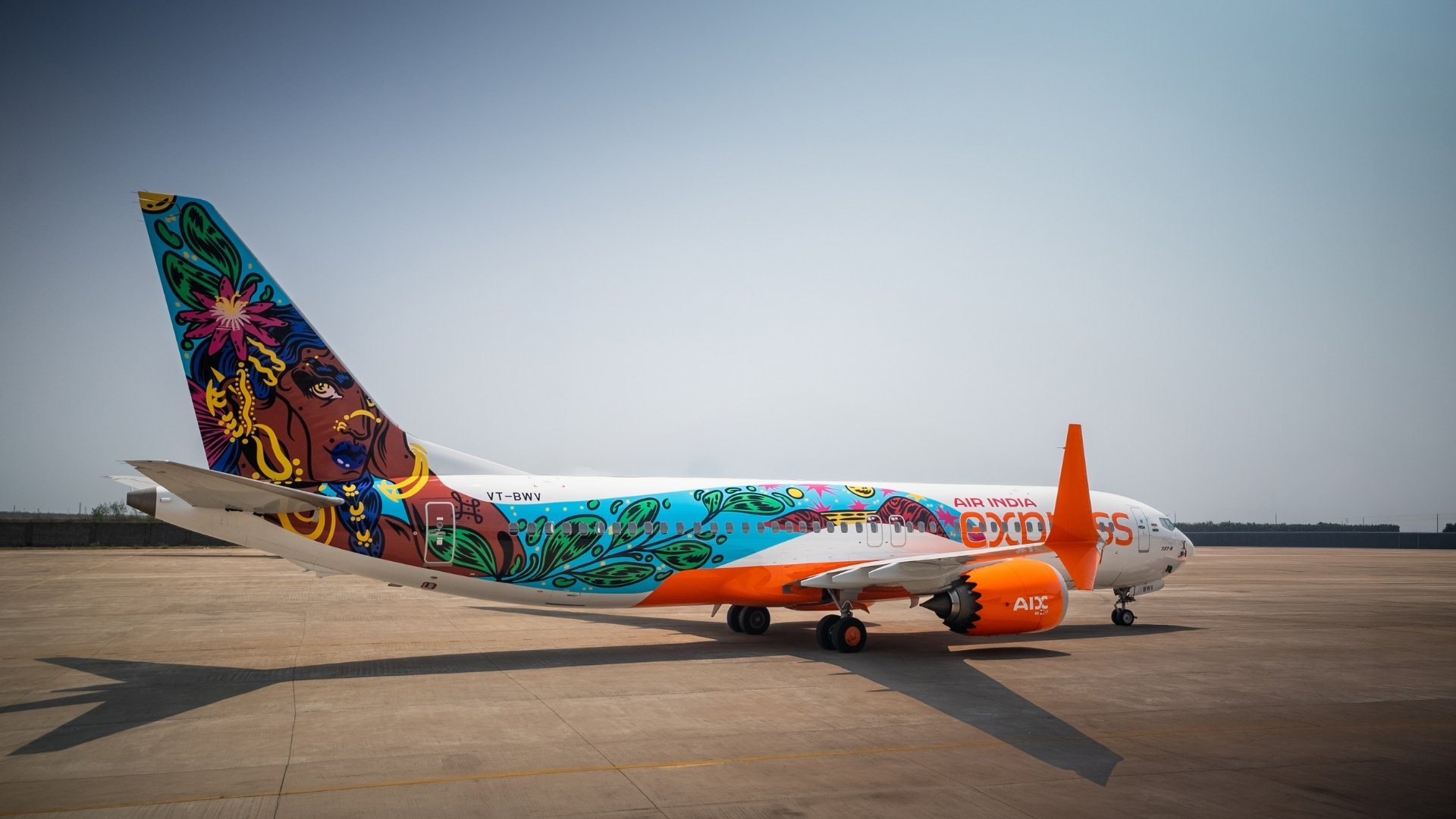
The aircraft carries the spirit of indigenous culture and the vibrancy of contemporary art far beyond our shores, says Thomas Varghese.
Airports and aircrafts as modern public galleries
Aircraft liveries have long evolved beyond mere branding. Over time, they have become visual identities — sometimes even statements in themselves. In this case, the fuselage becomes something more: a story in motion.
Projects like The Flying Canvas prove that contemporary art no longer belongs only within galleries or museums, but can exist dynamically within everyday life, mobility and public infrastructure.
A reminder of how art can be taken out of controlled spaces and placed where people encounter it unexpectedly — and it lingers long after the moment has passed.
A first for Indian aviation, it also signals a broader shift in how airlines can express identity, culture and even the experience of travel itself. “I think it reflects a broader shift in how we understand public space and cultural access today. Airports and aircraft are among the most globally connected shared environments, bringing together people from vastly different backgrounds and experiences. Integrating art into these spaces transforms travel from a purely functional activity into something more reflective and culturally engaging,” sums up Varghese.