














Maity Movements
A student journey through the Himalayas with barely enough money for the next meal, to the canals of Venice and the savannahs of Africa, artist Paresh Maity has spent a lifetime moving through the world with a brush in hand, exploring light, colour, people, and landscape.

By Maria Louis
For Paresh Maity the journey has always been as important as the canvas. Born in Tamluk, a quiet town in West Bengal where the river was his first horizon, he grew up with a restlessness that no single landscape could contain. That hunger to see, absorb and translate the world has since taken him from the ghats of Varanasi to the deserts of Rajasthan, from the backwaters of Kerala to the canals of Venice. And it is this perpetual motion that has shaped one of India's most prolific contemporary artists.
Trained at the Government College of Art & Craft, Kolkata, and later at the College of Art, New Delhi, Maity first made his mark with watercolour, a medium that rewards both speed and sensitivity, and is well suited to an artist who paints on the move. Vibrant colour, delicate brushstrokes and an instinct for capturing fleeting light across shifting landscapes earned him early recognition and a devoted following. Over time, his practice expanded into oil, mixed media and sculpture, each new form absorbing the textures and atmospheres gathered along the way. His sculptures, often monumental in scale and deeply rooted in Indian culture, carry the same sense of accumulated experience that defines his paintings.
Venice has drawn him back repeatedly, a city that seems made for an artist who thinks in water and light. Currently, his sculpture Equilibrium, presented by Art Alive Gallery, is on view at the Marinaressa Gardens as part of Personal Sculptures - Confluences, hosted by the European Cultural Centre Italy and presented in parallel with La Biennale di Venezia, until November 22nd.
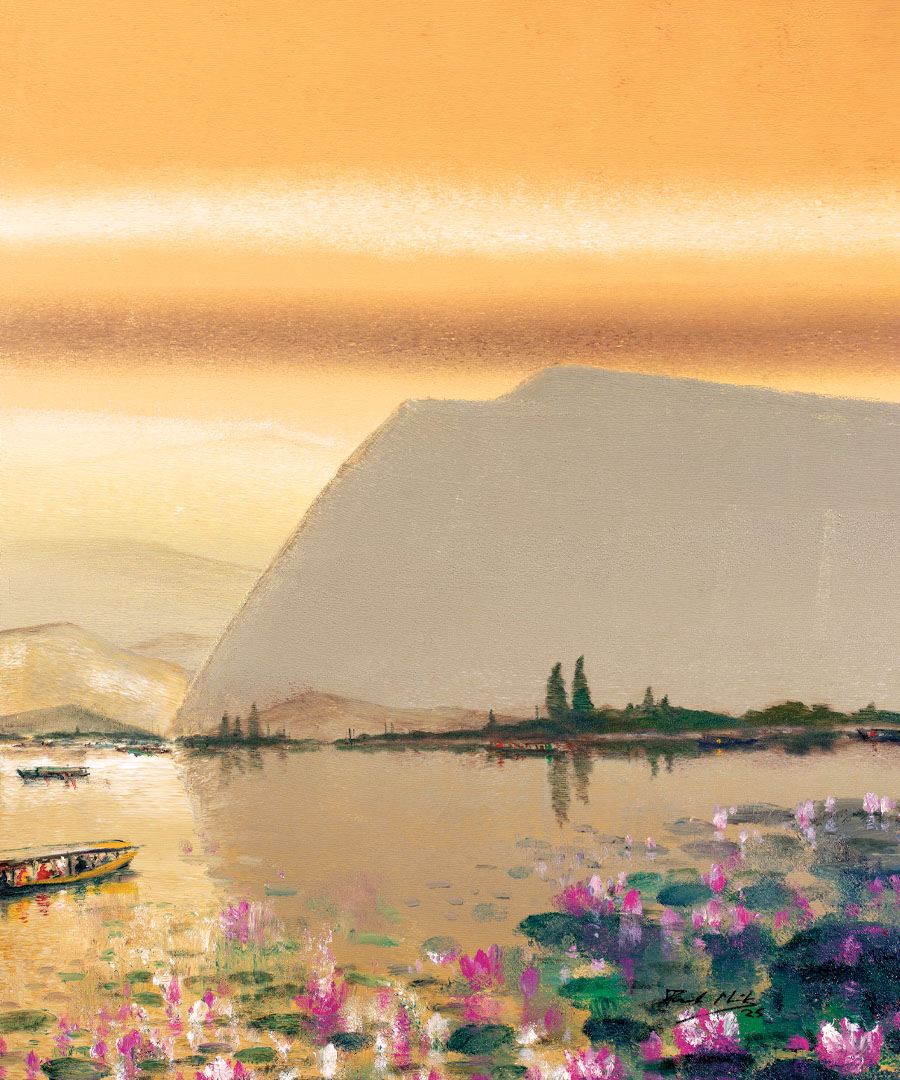
Winter in Dal Lake captures the Kashmir landscape that immediately recalled Monet’s water lilies.
Memories of travel
Travel entered my life very naturally at a young age. Growing up in Tamluk, I was always drawn to the riverside and to unfamiliar landscapes beyond my immediate surroundings. Even as a child, I felt a deep curiosity to explore new places and experiences. To me, travel was never simply about movement, it was about discovery: meeting people, observing nature, and absorbing the interactions and emotions that shape one's understanding of the world.
Travel, today, is a continuous journey of exploration and discovery for me. It is about encountering new places, colours, cultures, people and light. Like a flowing river, it constantly moves and transforms. Every journey brings fresh inspiration that naturally enters my work through colour, atmosphere, and emotion.
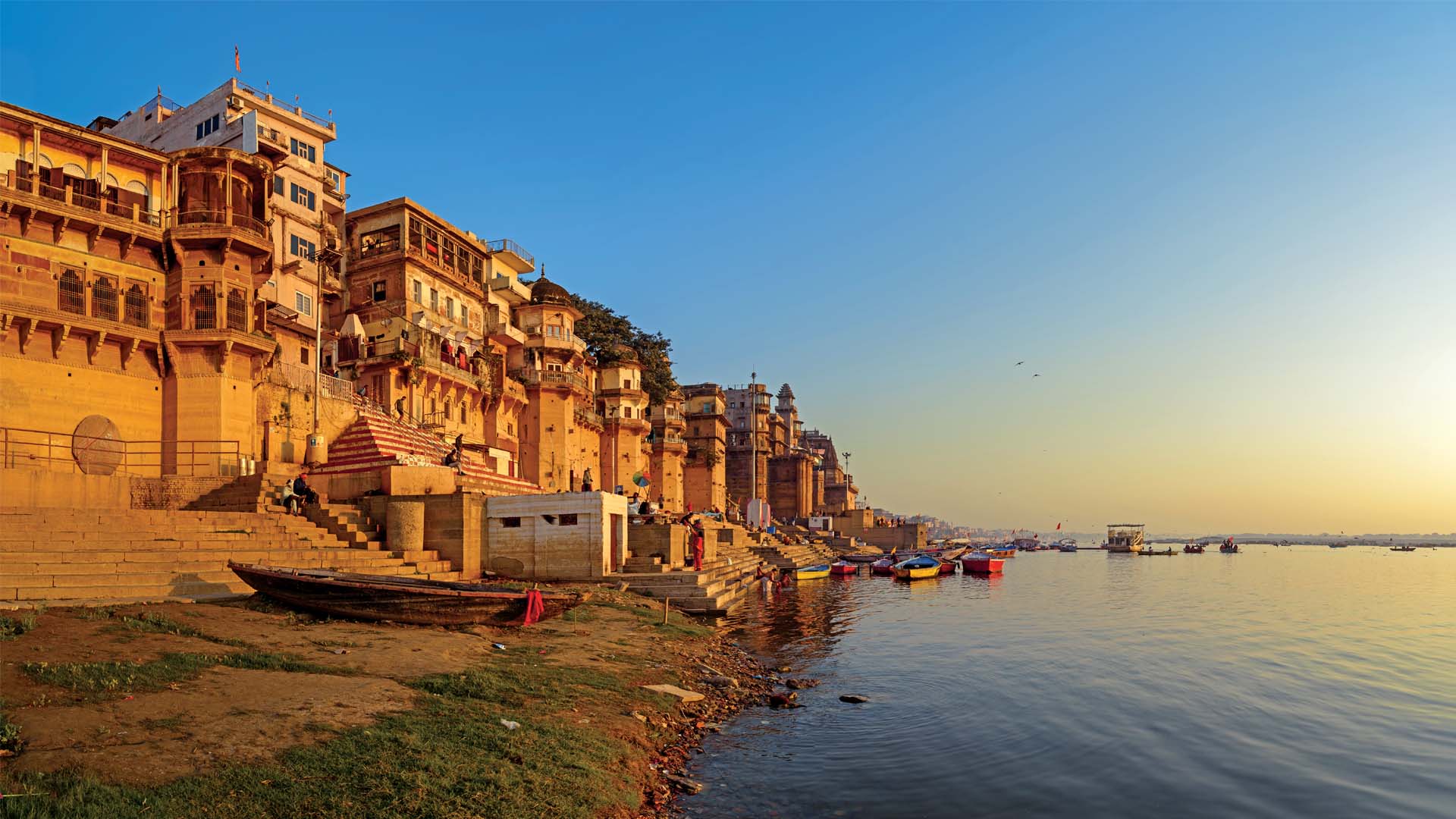
A 1984 visit left the painter captivated by Varanasi's ghats and spiritual atmosphere.
The role of light
Travel has never been an escape for me; it is a way of life and an essential part of my artistic practice. Light, in particular, plays a vital role in my art. I remember arriving in the South of France one winter, surrounded by fog and mist. The following morning, the golden light illuminated the medieval villages so beautifully that I understood why the Impressionist masters were captivated by that landscape. I have experienced similar moments in Venice, Rajasthan, Kerala, the Himalayas, and countless other places.
Every journey introduces me to new light and new atmospheres, which continuously reshape my paintings, drawings and sculptures. My art evolves spontaneously through these experiences, becoming more dynamic and layered with every place I encounter.
Another unforgettable memory is my first visit to Varanasi in 1984 with two friends. Sitting by the ghats, immersed in the beauty of the river, the light, and the spiritual atmosphere, we painted continuously. Experiences like this stay with me and become part of my artistic language.
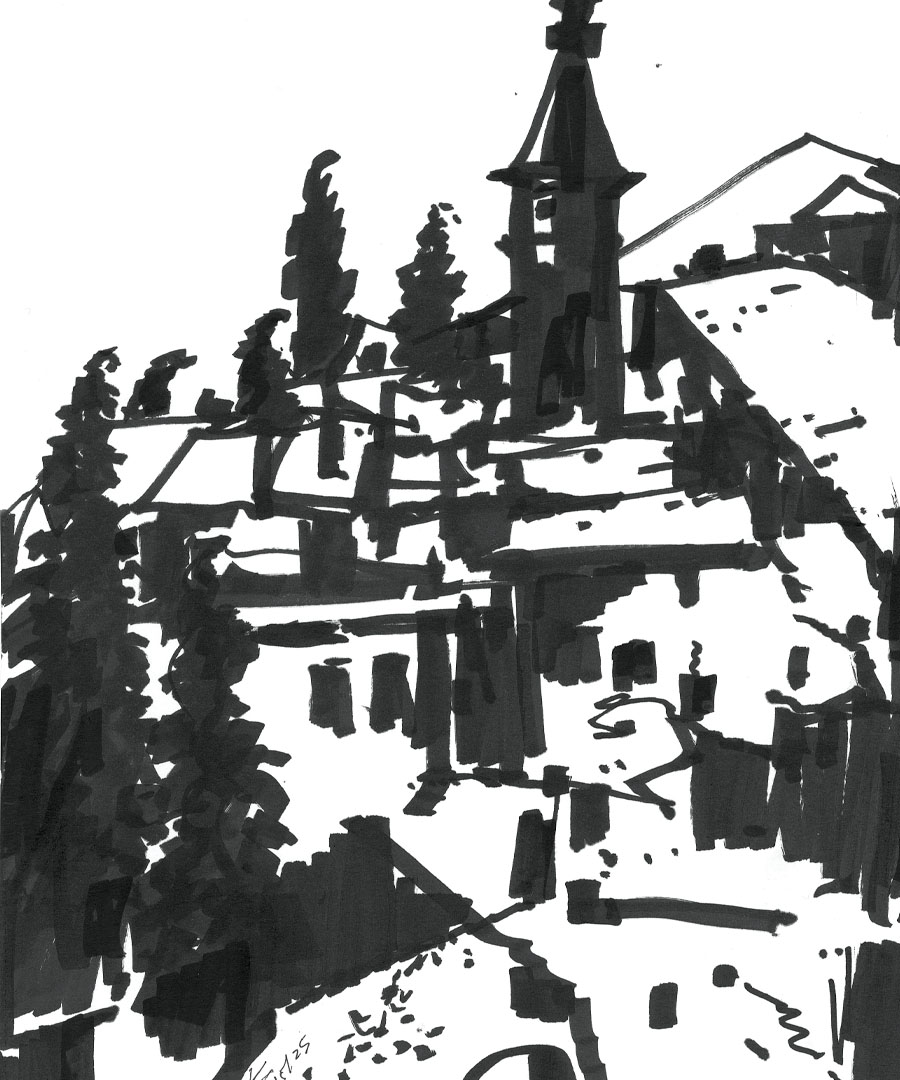
Bengal's rivers were his earliest horizon; Venice remains a recurring presence; South of France recalls a landscape of winter fog, mist and light.
How travel shapes the work
Travel influences my art in a profound and constant way. Wherever I go, from China and Japan to Mexico, North America, and across India, I absorb new visual experiences that transform my work. The landscapes of the Himalayas, the deserts of Rajasthan, the backwaters of Kerala, the ghats of Varanasi, or the villages of Bengal — they all carry their own colours, rhythms and emotions.
When I first visited Kashmir and saw Dal Lake filled with lotus flowers, it immediately reminded me of Monet's water lilies. The experience deeply affected my visual imagination. Similarly, my first trip to Rajasthan in the early 1990s transformed my use of colour entirely. The vibrant yellows, reds, blues, and greens of the region entered my work, shifting it from quieter landscapes towards a more expressive, figurative style. The energy and intensity of Rajasthan changed the visual vocabulary of my paintings. Travelling through villages, fairs, and remote regions across India continues to shape my art even today.
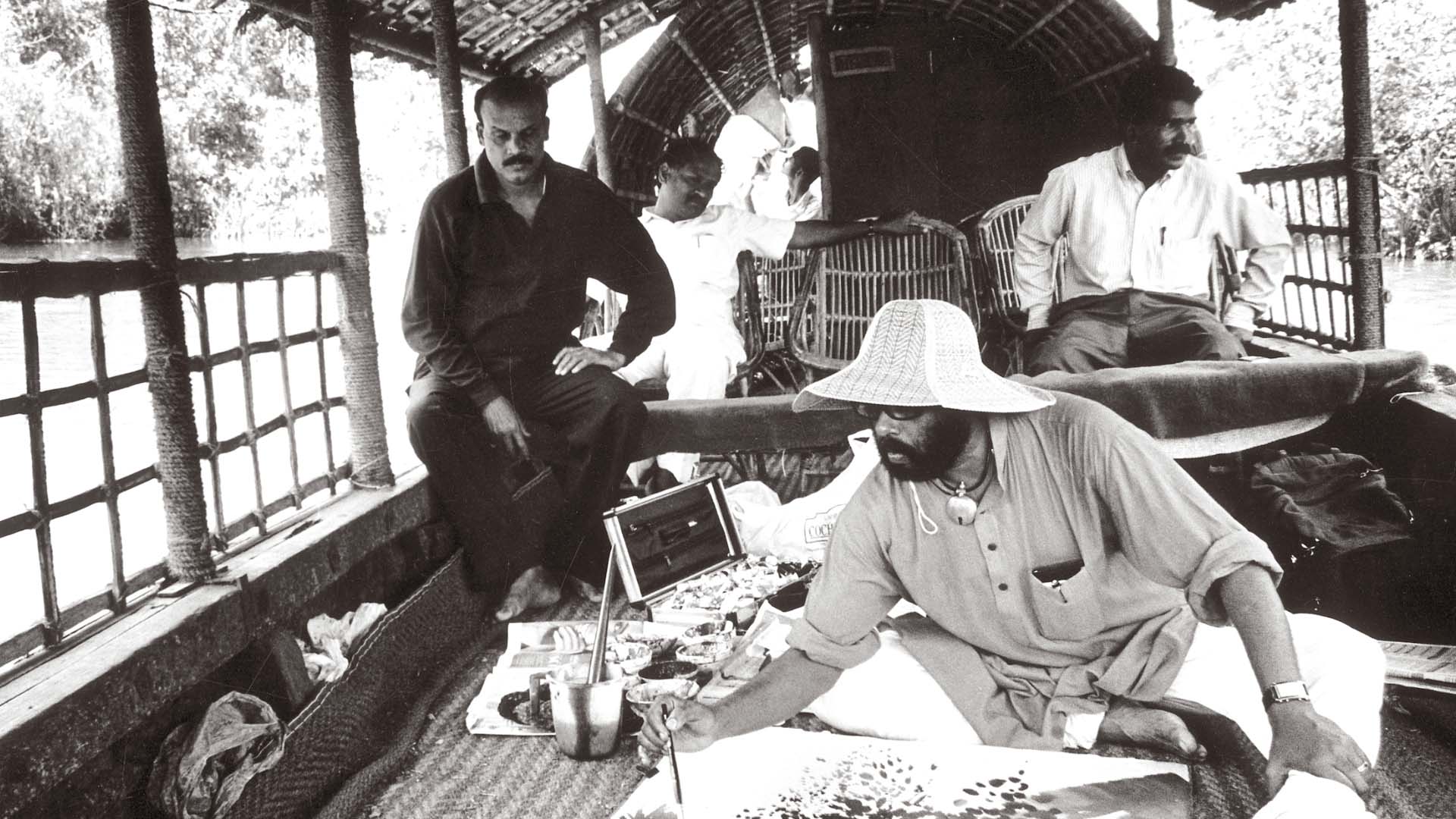
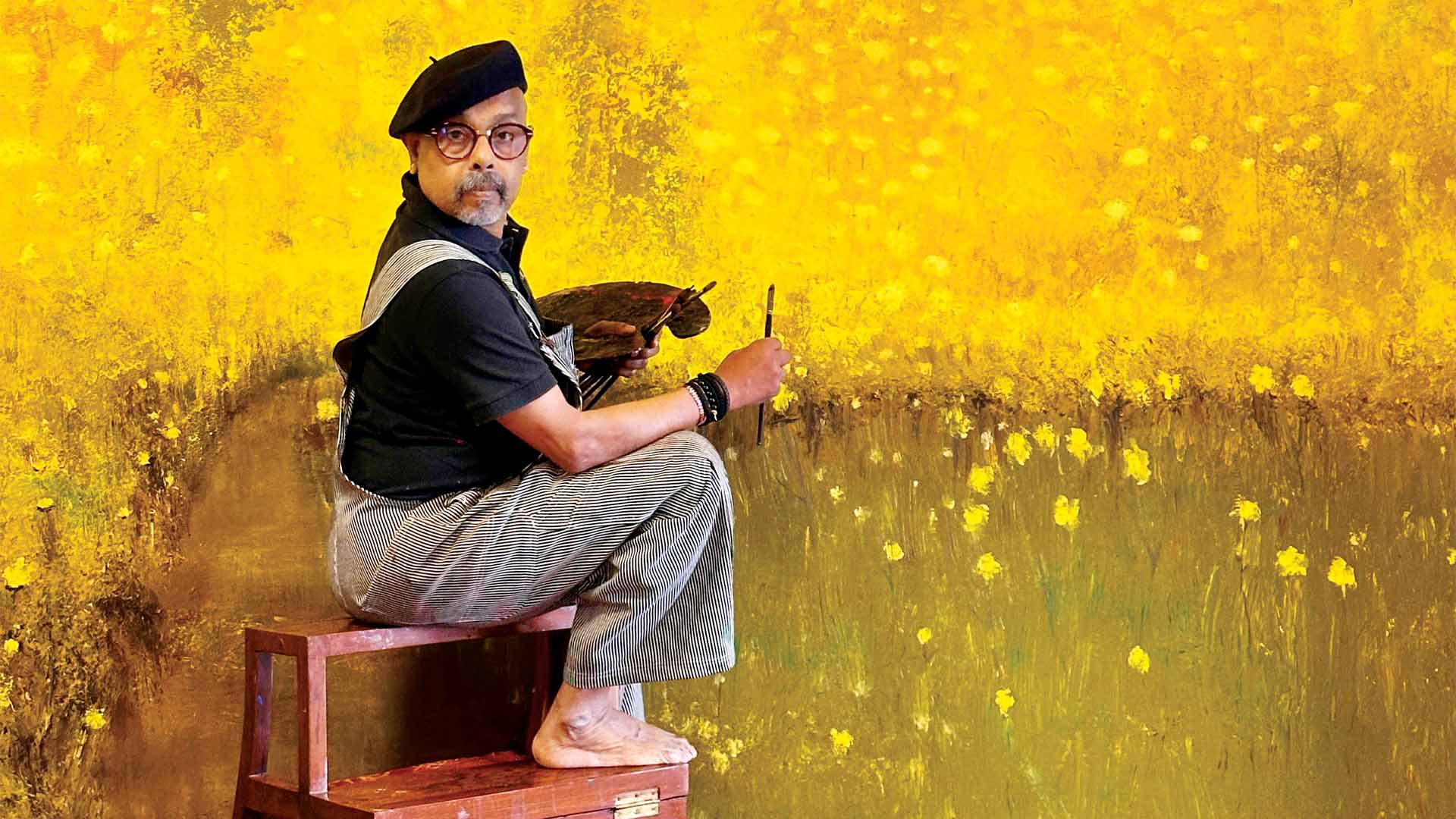
The artist often paints on location, responding directly to place and atmosphere.
The spontaneous traveller
What I enjoy most is the constant sense of discovery. Every journey brings new emotions, new conversations, new forms, and new inspiration. I love meeting people, understanding their perspectives, and experiencing different ways of living. Sometimes it is a fleeting line, a colour, a face, or even a moment of silence that becomes the beginning of a painting or sculpture. Travel keeps my mind and imagination alive.
I never get tired of travelling. In fact, travel energises me. People often joke that I have "wheels on my feet" because I am always moving from one place to another. I am a very spontaneous traveller—I often decide to visit a place suddenly and begin sketching or painting as soon as I arrive. I like responding instinctively to the mood, light and emotion of a place. While my travels are spontaneous, my artistic practice remains very focused and meticulous. I like to keep my brushes, colours and art supplies carefully organised.
I feel that the entire world is my home. Wherever I travel, I feel connected to the place and its people. As an artist, I see myself as part of a larger universe, and every destination contributes something meaningful to my work and understanding of life.
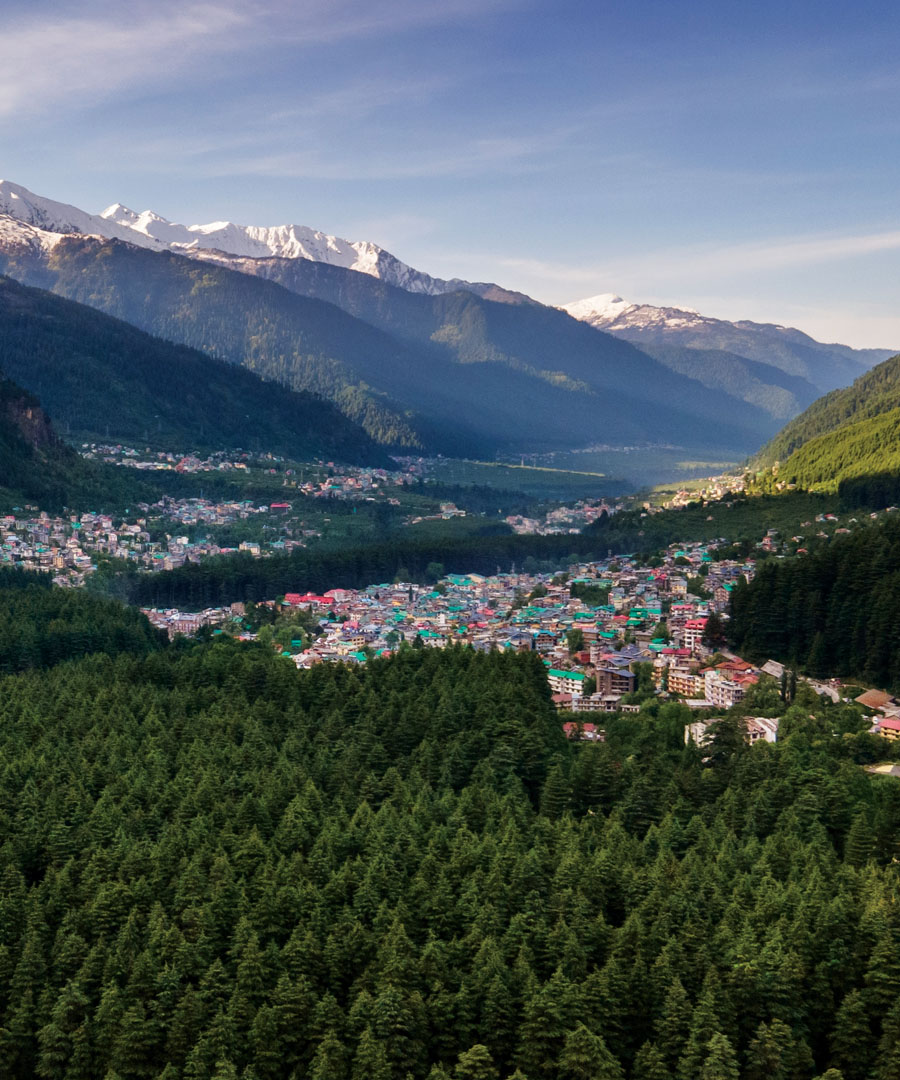
The villages around Manali formed part of a transformative Himalayan journey.
On luxury, food and the ideal journey
I rarely travel purely for leisure. Most of my journeys are connected to my art and the search for inspiration. I often travel alone, though sometimes with family or friends. Even when I am surrounded by people, I tend to remain inwardly solitary, observing, absorbing, and experiencing the world quietly.
In my case, luxury is not defined by star hotels or extravagant resorts. Any place that allows me to paint and create comfortably becomes a luxury. A small guesthouse, a quiet village, or an offbeat location can often feel far more meaningful than a conventional luxury stay. If a journey allows me to create a strong body of work—whether drawings, watercolours, or paintings—that becomes my most luxurious experience. Those are the journeys I always wish to revisit because they leave behind lasting creative fulfilment.
I enjoy simple and authentic food the most. Some of my most memorable meals have been at roadside dhabas, small cafés, or modest local eateries. Freshness and honesty in food matter more to me than fine dining. But food is not the deciding factor in my travels. What draws me to a place is the possibility of discovering new light, landscapes, emotions, and human interactions. Inspiration itself becomes a kind of nourishment.
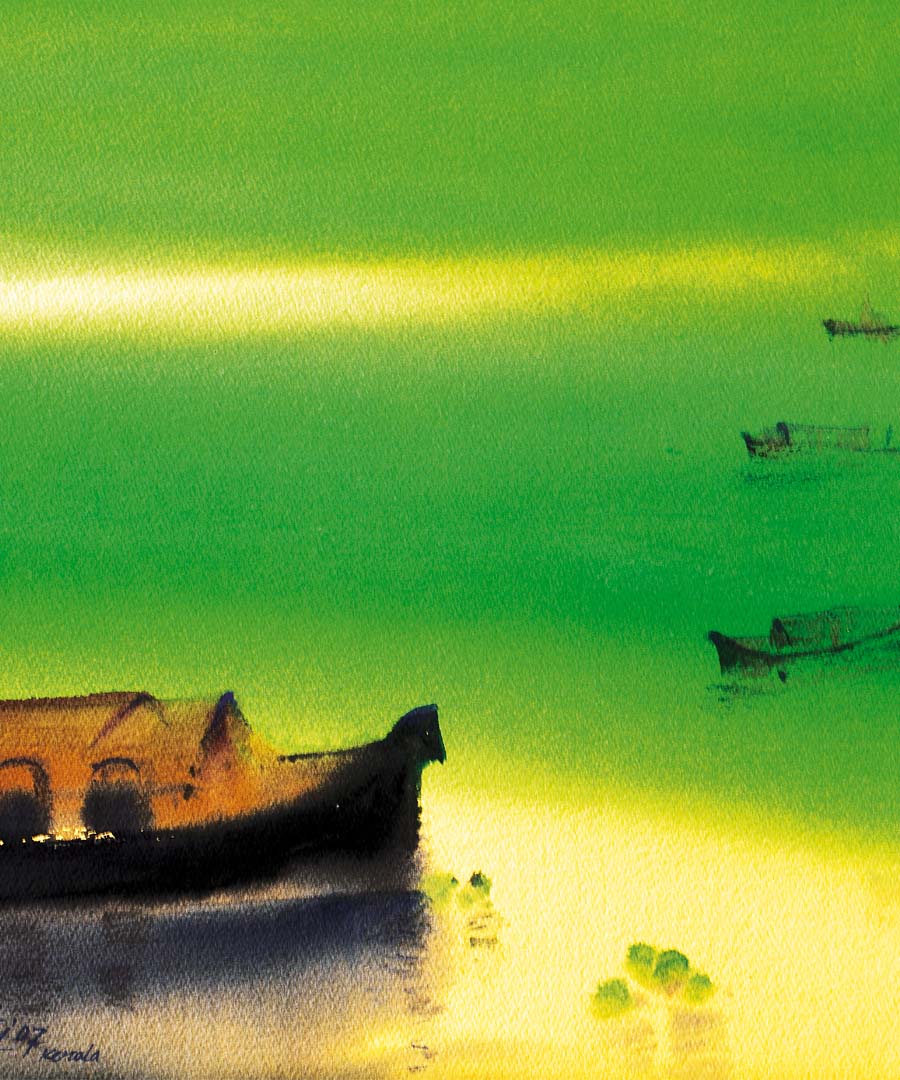
For the watercolourist, waterways have long been a source of both subject and inspiration.
Museums worth the detour
I have always loved museums that allow viewers to experience art intimately and deeply. In Paris, I greatly admire the Musée d'Orsay and the Musée Picasso. The Picasso Museum in Antibes, in the South of France, is especially memorable for its warmth and atmosphere. I also enjoy visiting the Museum of Modern Art and the Metropolitan Museum in New York, the Picasso Museum in Barcelona, and the Van Gogh Museum in Amsterdam. These spaces are deeply inspiring because they preserve the spirit and vision of great artists across generations. I would encourage people to visit France, Spain and Japan for a heightened experience of art—countries with extraordinary museums, artistic traditions, and cultural histories that enrich one's understanding of creativity.
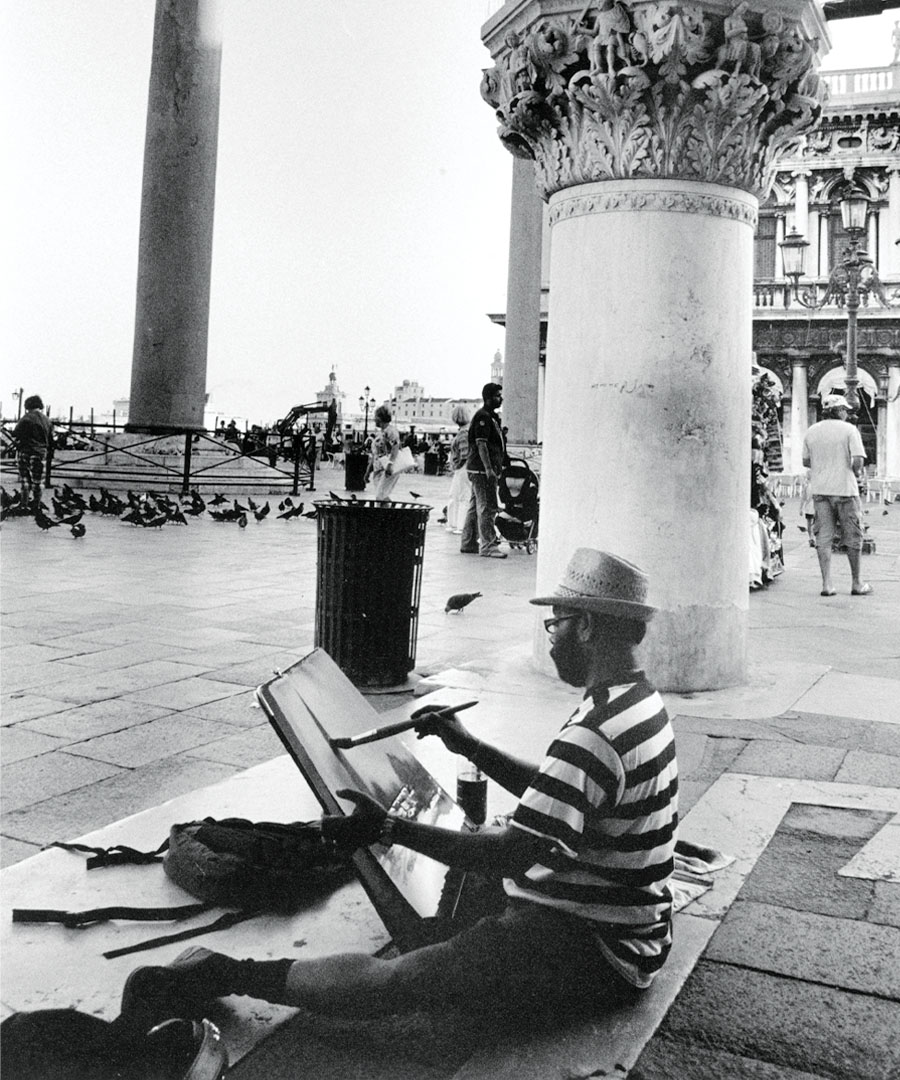
A frequent visitor to Venice, Maity continues to find new perspectives in its canals and piazzas.
The journey that started it all
One of my most unexpected and remarkable journeys began in 1986, when two friends and I travelled from Kolkata to the Himalayas as students of the Government College of Art and Craft. We had almost no money, but an immense sense of adventure. From Howrah, we boarded the Kalka Mail, and from Kalka, somehow managed to squeeze ourselves onto the overcrowded toy train to Shimla. It was my first encounter with the mountains of North India, and I was overwhelmed by their beauty and serenity.
The journey was full of struggle and discovery. We carried our own luggage along with hundreds of sheets of watercolour paper on our shoulders, and people often mistook us for porters. At times, we even helped carry other people's bags to earn a little money for the trip. While painting in Shimla one day, a family noticed my work from their balcony and came down to buy a watercolour for 200 rupees. For us, that felt extraordinary, and it allowed the journey to continue.
We travelled through Shimla, Kullu-Manali, Rohtang Pass, Nagar, and many remote villages, staying in modest government guest houses. At Rohtang Pass, we arrived on the very first day the road had reopened after snowfall. The landscape was breathtaking, but suddenly a snow blizzard trapped us there. Eventually, an army truck rescued us after the soldiers realised we were stranded. That moment of fear and wonder has stayed with me ever since.
What I remember most vividly is the spirit of those mountains—the stone-roofed houses, the quiet villages, cattle resting below while families lived upstairs, and orchards overflowing with apples, cherries, apricots, and plums that we had never seen before. We painted constantly, bathed in freezing water before dawn because the supply would run out later in the day, and survived purely on enthusiasm and curiosity. The trip lasted nearly one and a half months, during which we completed hundreds of watercolours. It remains one of the most beautiful, unexpected, and transformative journeys of my life.
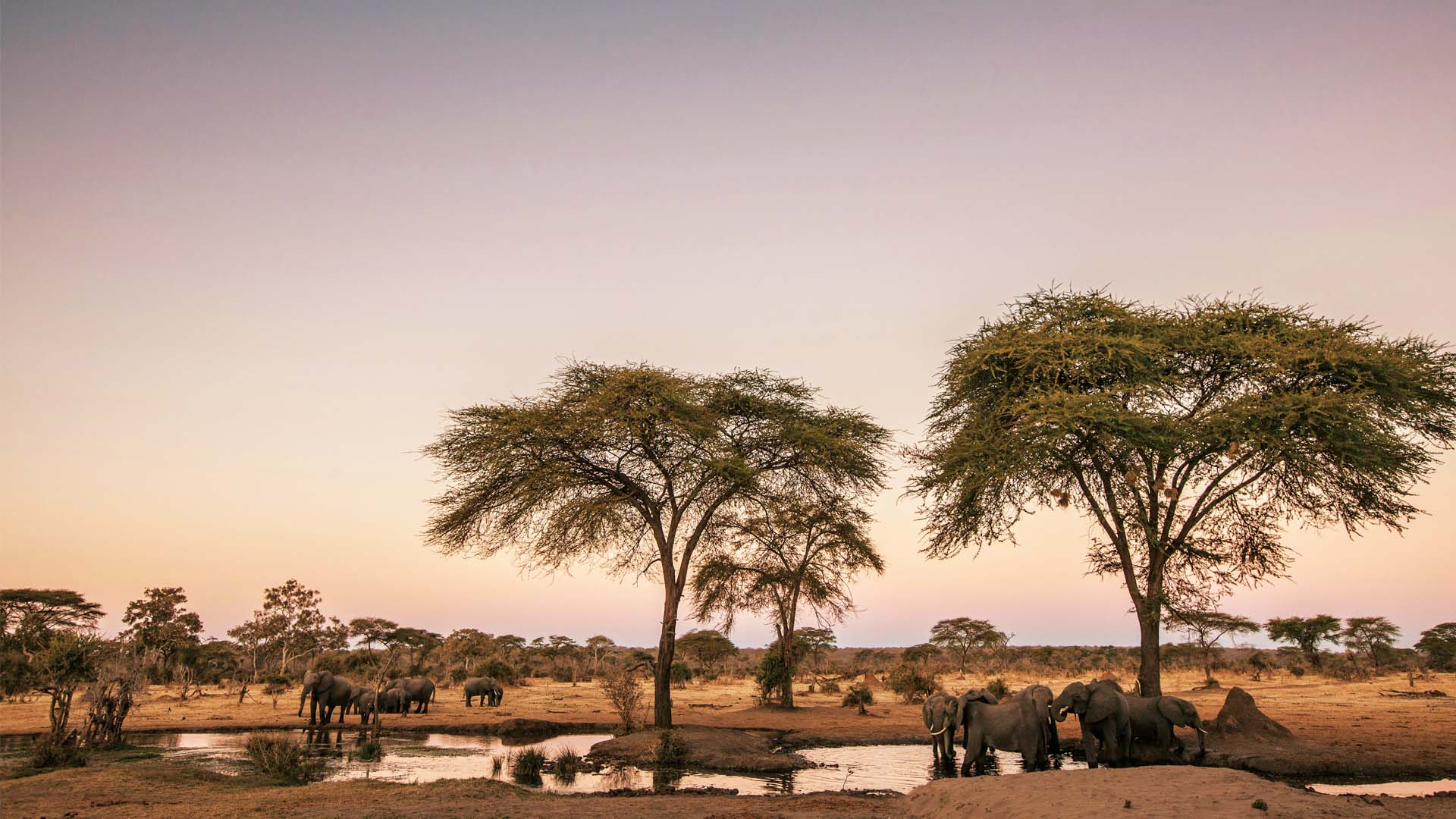
The African savannah offered another landscape defined by scale, atmosphere and discovery.
The journeys yet to be taken
There are still many destinations I would love to explore, especially across South America—Brazil, Argentina and Peru. I am deeply curious about their landscapes, colours and cultures. I would also love to discover the more remote regions of Russia and Scandinavia, where nature and atmosphere offer entirely different visual experiences.
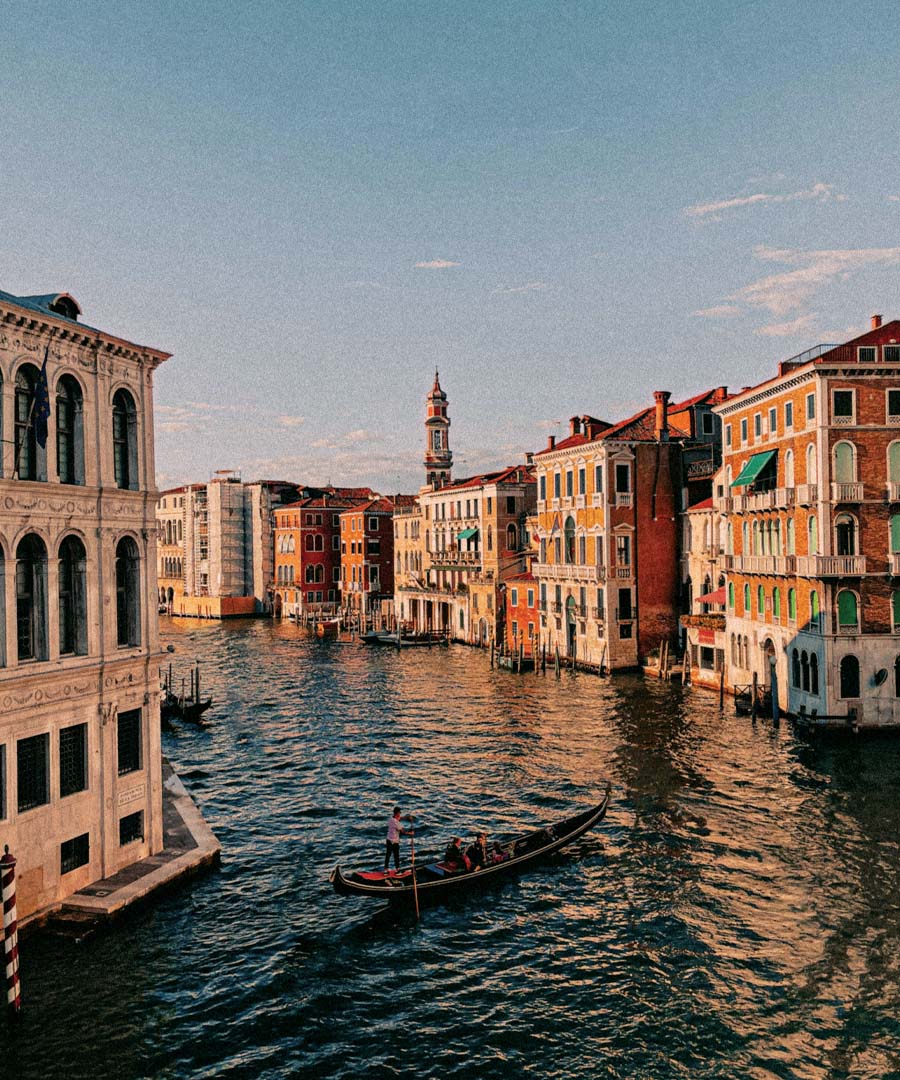
Venice remains a city of water, light and endless rediscovery.
