














The Art Of Arrival
Sabyasachi Mukherjee believes luxury is about emotion, not price. His travels prove it. From the monsoon streets of north Kolkata to a horse carriage arrival at Taj Falaknuma Palace, every destination he loves is an act of remembering.
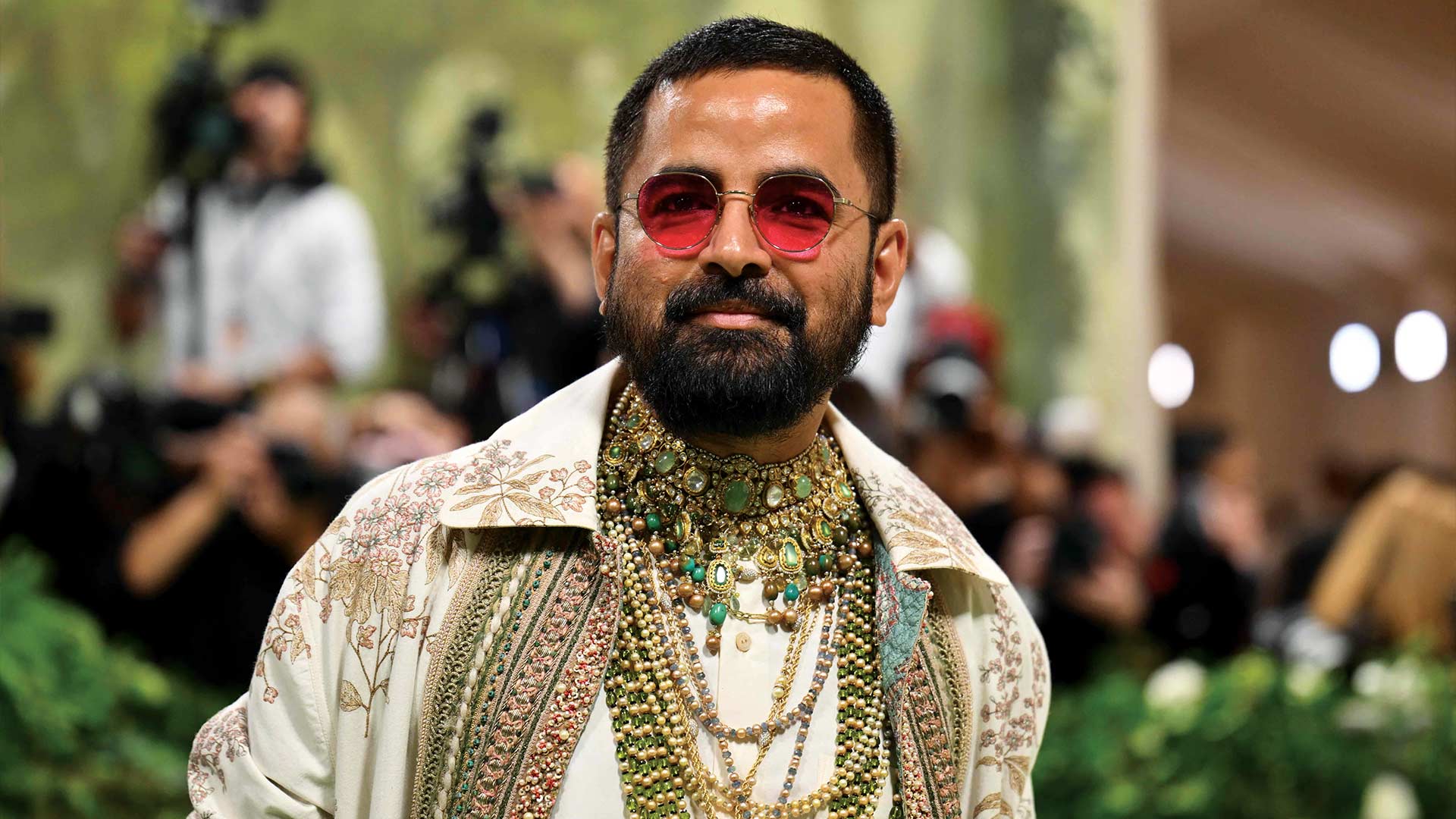

By Madhumita Das
For Sabyasachi Mukherjee, travel has never been about escape but about accumulation. Of fading cities, inherited rituals, tea rooms, bazaars, old hotels and memories. From the intellectual melancholy of Kolkata to the cinematic glamour of Mumbai and the disciplined romance of New York City and Paris, the designer’s journeys reveal a world where memory itself becomes luxury.
Sabyasachi grew up in Kolkata (then Calcutta), and remembers the grandeur of the past: the beautiful heritage houses or baris, the colonial-era homes with Bengali aesthetics; the bustling bazaars; the way men and women dressed in elegant dhotis and saris with blouses that had lace edges; evening tea served in silver cutlery and strolls down Park Street.
The designer has built one of India’s most recognisable luxury brands not merely on fashion, but on memory. His work is layered with echoes of old Kolkata mansions, European flea markets, heirloom textiles, Bengali tea rituals, colonial clubs, fading photographs and cities that wear their history imperfectly.
With a busy schedule, travel for pleasure is rare. “As I am getting older, I can’t really rest or sleep. And you realise it’s become a kind of disease because I complain that I don’t have time to go on holiday, so my holiday pattern is very unusual. I’ll go somewhere very far from India, where I am not going to meet any friends or clients. I’ll pick a 12-hour flight where I am going to sleep throughout; that is how tired my body is. When I go, I plan many things… I’m going to do this, I’m going to do that, but I end up sleeping in my hotel and ordering room service. And after two days, I’m like, ‘I need to go back home to my work’. I can’t enjoy my holiday. So, what happens with creativity is, it’s also a training of your mind, so you train your mind to get wider and wider... You want your mind to stretch to the maximum.”
Sabyasachi does not travel in search of novelty; he travels in search of resonance. The cities that appear to fascinate him tend to be destinations with layers: old New York, Parisian Left Bank cafés, Marrakesh riads, North Calcutta mansions, the art deco glamour of old Bombay, or Europe’s antique markets.
Food enters his universe in similarly intimate ways. Dining, for Sabyasachi, is not performance but inheritance. He has often spoken about the Bengali culture of hospitality and collecting objects associated with entertaining at home. “As Bengalis, we have a culture of collecting dinner sets and tea sets,” he says, a sentence that feels almost like a manifesto for his layered, maximalist idea of luxury. Elsewhere, speaking about entertaining and meals, he once noted, “Food is one of the biggest expressions of love in an Indian home.”
To understand Sabyasachi’s relationship with travel and food is to understand that luxury is never sterile. It is emotional, lived-in and deeply cultural.
Kolkata: The city that’s home
At the centre of Sabyasachi’s universe lies Kolkata, not simply as a hometown but as an emotional archive. “I wouldn’t have thought of settling anywhere but Calcutta because Calcutta gives me the unique edge of being who I am,” he says. Another remark perhaps explains his philosophy of travel even more clearly: “Settle in a place that is local to you; you can travel the world.”
Kolkata appears repeatedly in his work not merely as geography, but as mood: tramlines cutting through monsoon streets, old libraries, colonial clubs, North Kolkata mansions, embroidered upholstery, inherited textiles, silverware and the intellectual melancholy of Bengal. His collections often feel like visual memoirs of the city’s faded grandeur.
Even his childhood memories carry a cinematic softness. “I went to school on a hand-rown boat,” he remembers. “All the children used to sing Rabindra Sangeet, and we would pass Tagore Summer House. We used to have magical Christmas parties where women wore organza sarees and played mahjong while men played bridge. It was magical because it was idyllic. We were secluded and didn’t have much, so all we could depend on was imagination.” That atmosphere continues to shape his visual vocabulary decades later.
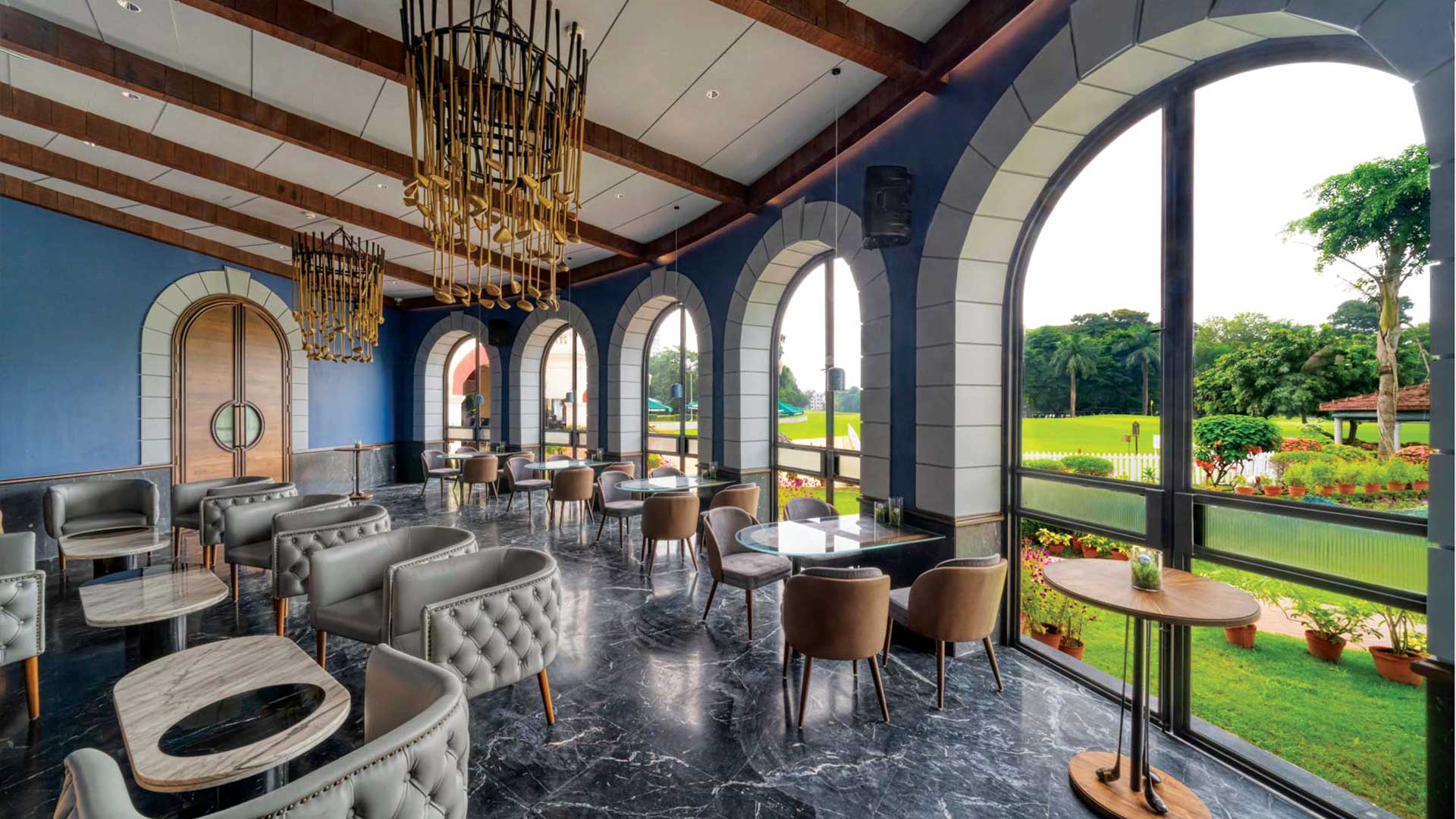
The Royal Calcutta Golf Club is the oldest golf club outside Great Britain, established in 1829, decades before golf spread across much of the world.
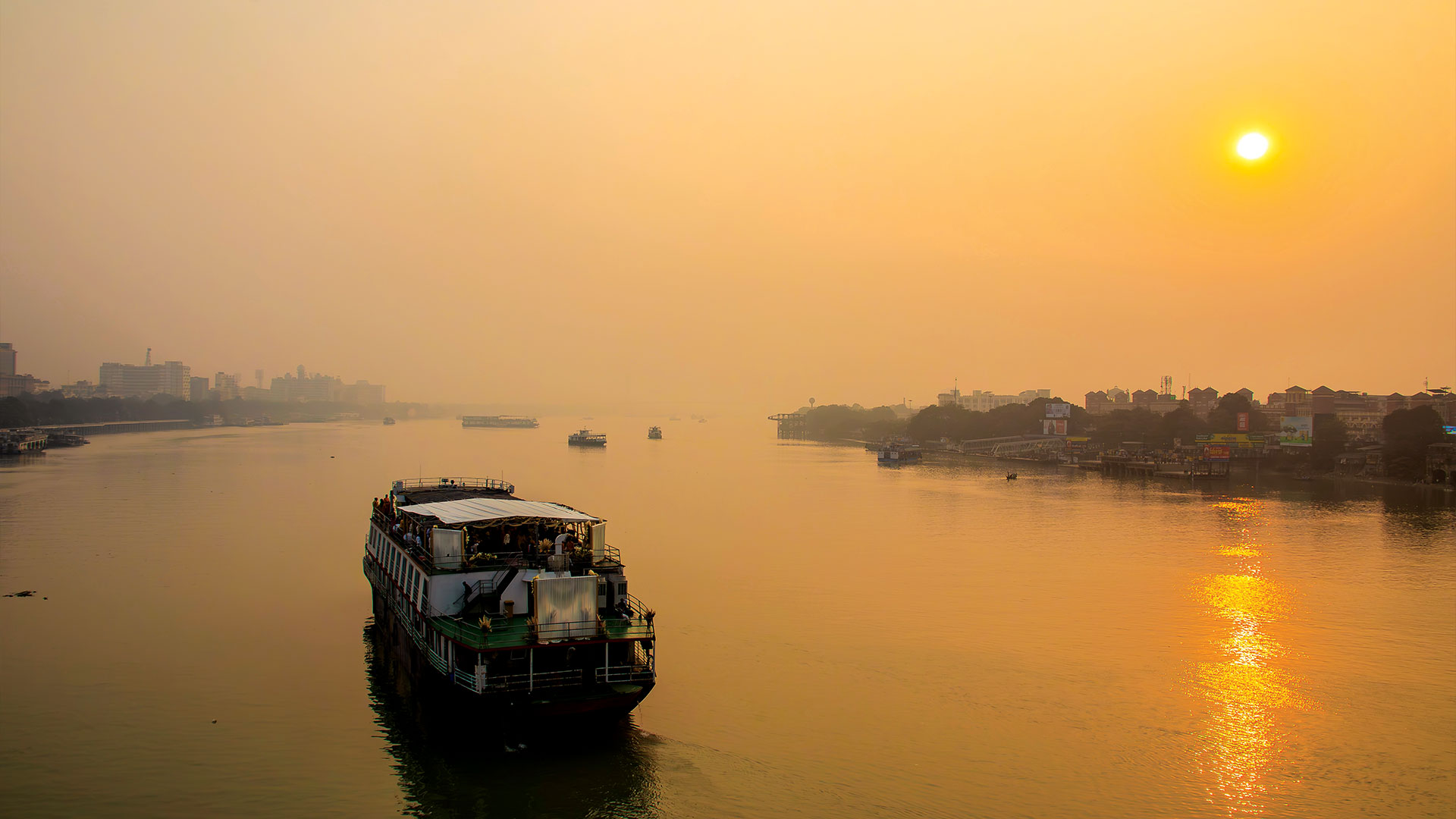
The French-colonial riverside of Chandannagar, home to shuttered mansions and slow-moving boats, echo of Bengal’s forgotten European past.
Food, tea and the Bengali idea of hospitality
Food enters the Sabyasachi world not as spectacle but as inheritance. Dining, in his universe, is deeply tied to memory, family and ritual. “As Bengalis, we have a culture of collecting dinner sets and tea sets,” he muses, while discussing his collaboration with luxury tableware house Thomas Goode. “It’s a part of prestige in Bengali families. I don’t know if we care much for fancy cars, but we do care for a good tea set.”
The collaboration itself reportedly began over dinner at The Oberoi. “All good things happen over food,” he says. “It was how my collaboration with Christian Louboutin began, and now with Thomas Goode as well.”
Within his Mumbai flagship too, hospitality is treated almost ceremonially. “Today it’s the tearoom,” he once said while describing his favourite corner of the store. “It’s in calm blue and green tones and behind silk velvet drapes. And all my favourite teas are on the menu. There’s nothing like sipping on long-leaf Darjeeling tea in this quiet corner of the store.
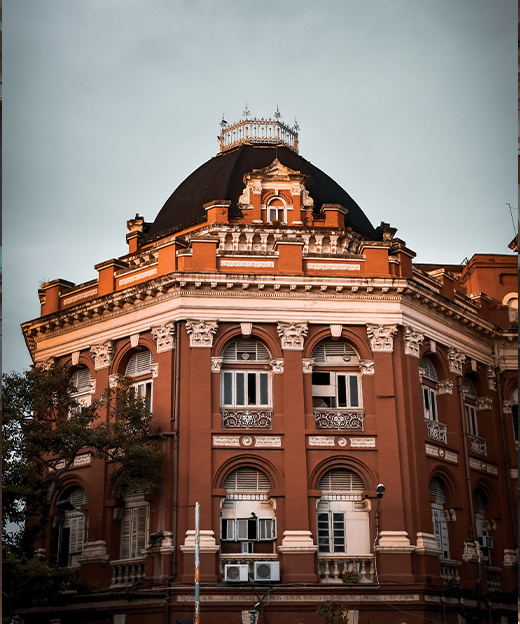
In Kolkata, grand neoclassical facades still tell stories of the British Raj.
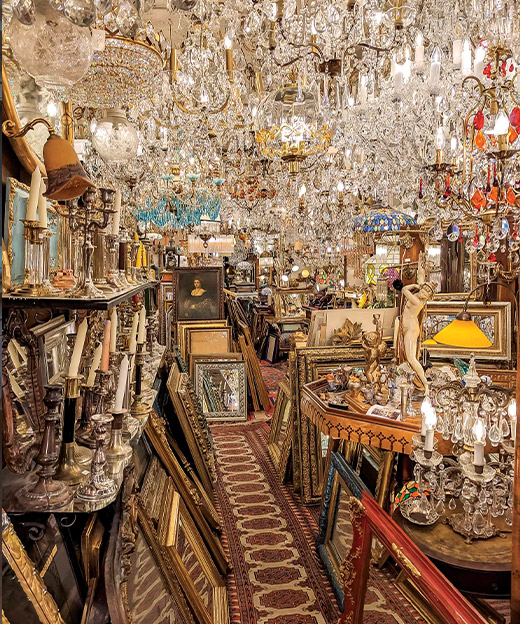
European flea markets are treasure troves of antiquities and curiosities.
Mumbai: The old quarters and bazaars
The Mumbai that fascinates him is not the city of glass towers and relentless speed. It is the layered Bombay of Colaba, Ballard Estate, Irani cafés, sea-facing art deco buildings and old harbour hotels.
“Mumbai is a city very close to my heart,” he says. “It’s my second home in India, and the home to my largest flagship yet. What makes this city a timeless classic is the way the past and present come together. Its beauty lies in its fabled heritage.”
No place embodies that emotional connection more strongly than The Taj Mahal Palace. “They don’t make hotels like this anymore!” he adds. “The 120-year-old harbour landmark is an absolute architectural and historical marvel.”
The hotel, he says, has been his “home away from home” for nearly two decades. “I’ve lived there and worked there, and it was my retreat and makeshift headquarters when setting up my Mumbai store. I have no second hotel in Mumbai; if there’s one place you must stay, it’s the Taj.”
Mumbai itself unfolds like a carefully composed itinerary. There is the Edwardian architecture of Ballard Estate, which he describes as “a beautiful example of preserving the past but keeping it dynamic and functional for today.” There are the seafood meals at Trishna, berry pulao and raspberry soda at Britannia & Co., kebabs at Khyber Restaurant and late afternoons browsing through curiosities at Crawford market and antiques at Chor Bazaar.
“I have always been inspired by bazaars and souks,” he says. “I think they’re an explosion of culture, craft and retail. Walking through South Bombay’s first deliberately planned commercial hub, which was built in the early 1900s, evokes a sense of the country’s rich history and heritage. The roads are named after former jetties, including Goa Street, Cochin Street, and Calicut Street. It’s a beautiful example of preserving the past but keeping it dynamic and functional for today. The pièce-de-résistance is the Edwardian-style architecture along beautiful tree-lined avenues. It has greatly inspired me over the years. Ballard Bunder Gatehouse, now a maritime museum within the estate, is where ‘boat trains’ connected Bombay to the world."
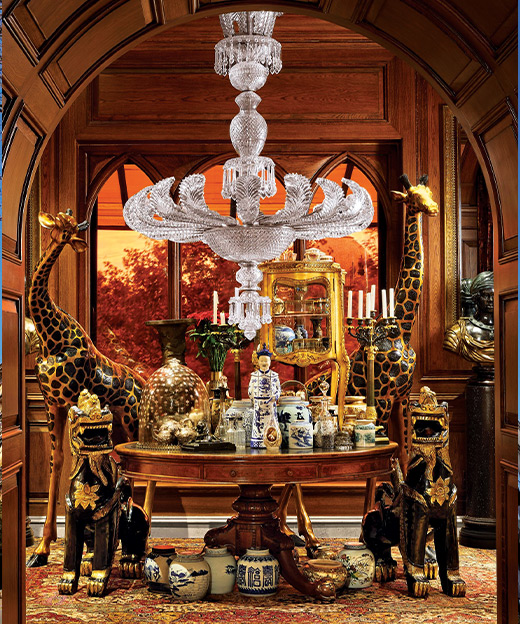
The Sabyasachi flagship store in Mumbai is a microcosm of all his passion for design, art, fashion, and colonial era homes and buildings.
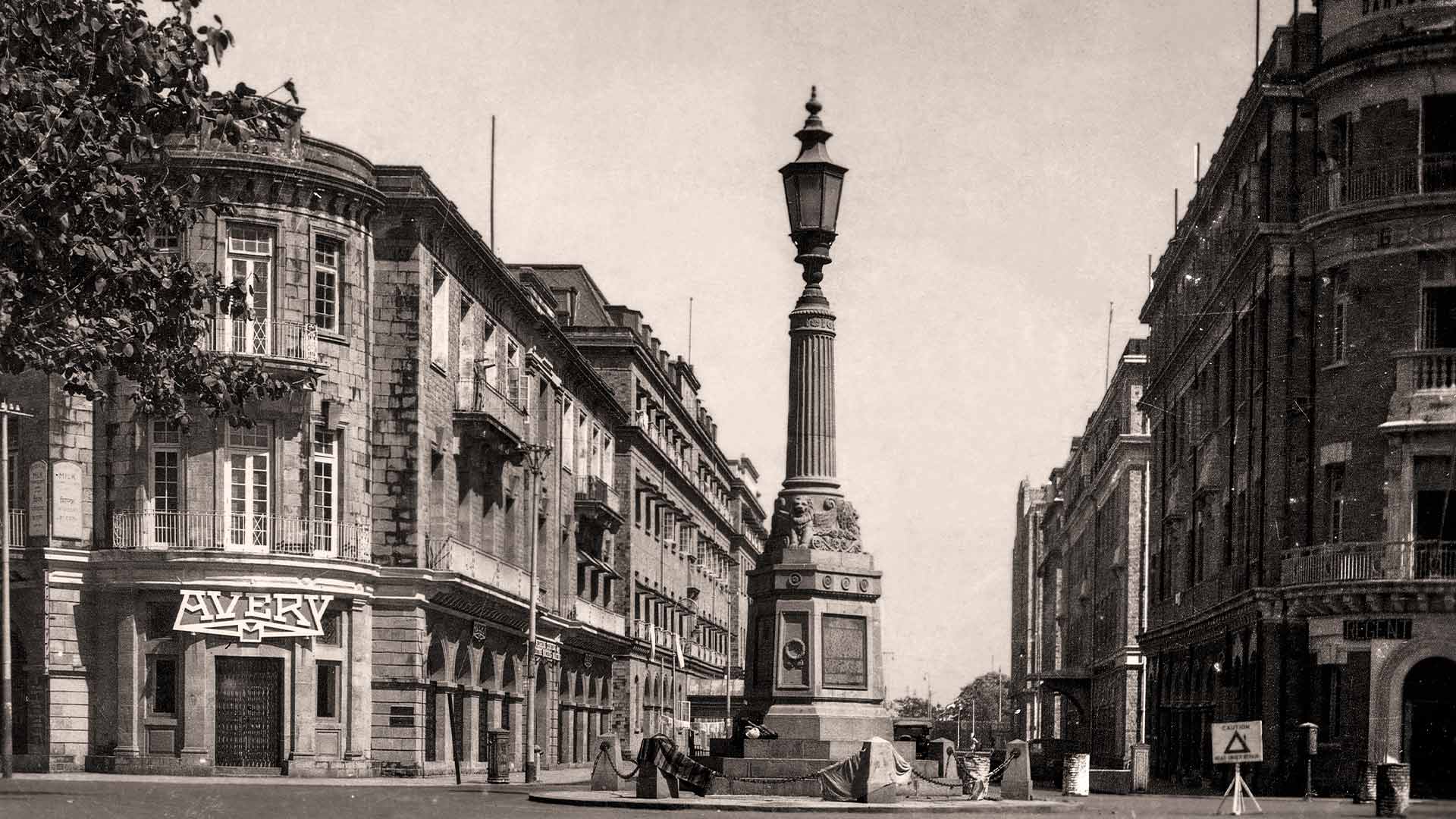
A vintage photograph of Bombay Port Trust's World War I Memorial in Ballard Estate, where Sabyasachi has spent many a evening walking and absorbing the ambience.
Hyderabad: The city of Nizami grandeur
Among the hotels that have left the deepest impression on him is Taj Falaknuma Palace, which he once called his absolute favourite. “The hotel left me speechless,” Sabyasachi recalls. “Its design, its architecture, the amazing food, indeed, the entire experience, transports you to a higher plane.” His arrival there remains vividly etched in memory. “Arriving in true Nizami style, in a horse carriage, being showered with flowers… it was a fabulous welcome and prepared you for what lay in store at the Falaknuma.”
The food, unsurprisingly, became central to the experience. “The food was one of the big highlights,” he says. “I especially loved the patthar ka gosht, Hyderabadi kacchi biriyani and the shikampuri kababs.”
Even now, he says, he would return both “for a holiday and for fashion shoots, because the Falaknuma as a backdrop is quite mind-blowing.”
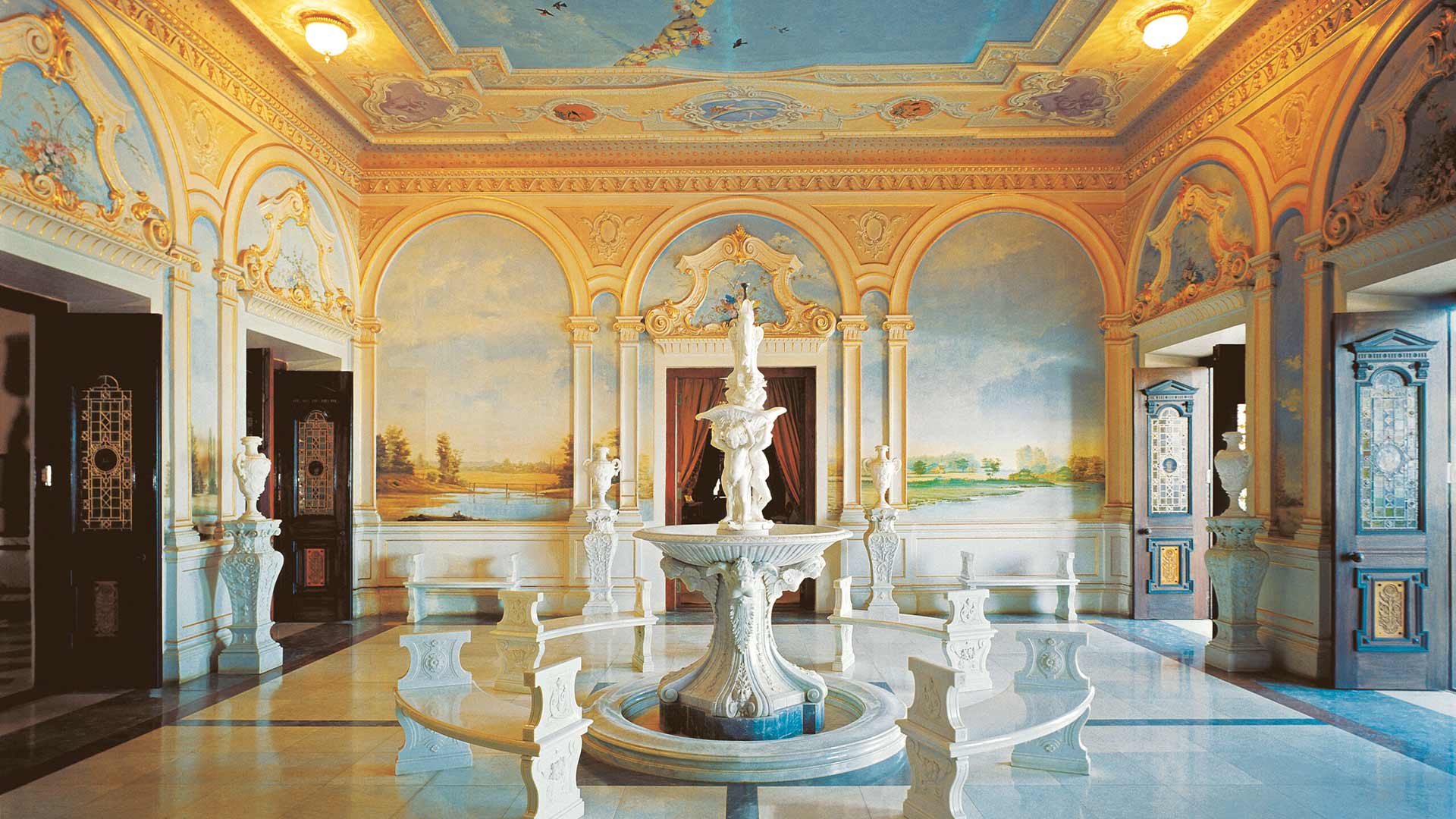
Sabyacahi calls Taj Falaknuma Palace his absolute favourite, for its design, architecture, food, and the entire experience.
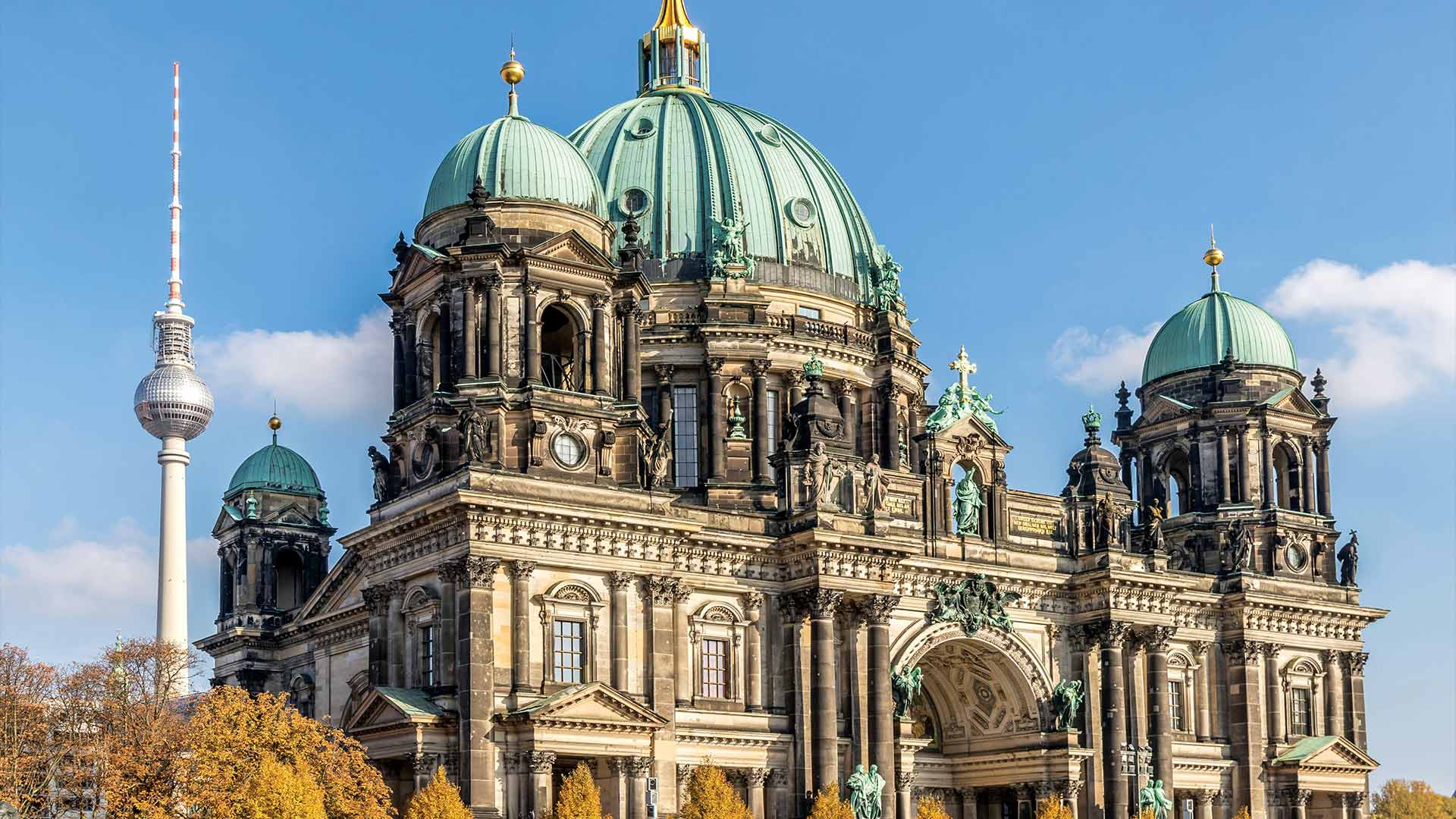
Rising grandly over Museum Island, Berliner Dom is like an imperial statement in stone, its colossal dome reflecting the ambition and theatricality of old Prussia.
Decadence and textures
The cities that fascinate Sabyasachi tend to possess strong personalities and layered histories. Paris appears through references to couture salons, Left Bank romance and architecture. “Paris has romance built into its architecture,” he says.
New York City, especially the West Village, where he opened his flagship store, appeals to him for its individuality and character rather than spectacle. “There is a discipline and sharpness to New York that I admire immensely,” he adds.
The New York store itself became “a metaphor for this journey from Calcutta to New York. I’ve often said I see myself as a ferryman between the past and the future,” he reflects while discussing the store’s interiors filled with Mughal miniatures, Persian artwork and chandeliers.
Sabyasachi is equally inspired by the decadence of Berlin, the bohemian ease of Barcelona and the richly textured romance of Marrakesh. In describing one collection, he famously referenced “the discipline of New York, the nostalgia of Kolkata, the decadence of Berlin, the romanticism of Paris and the bohemian flair of Barcelona.”
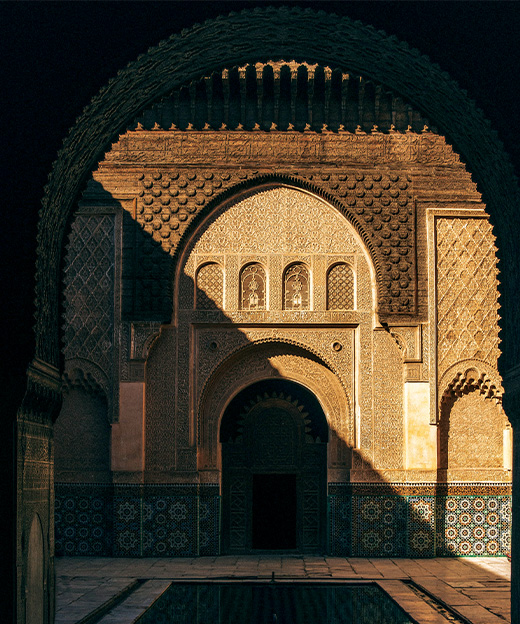
Marrakesh riads are intimate sanctuaries that combine traditional Moroccan architecture with serene, inward-facing courtyards.
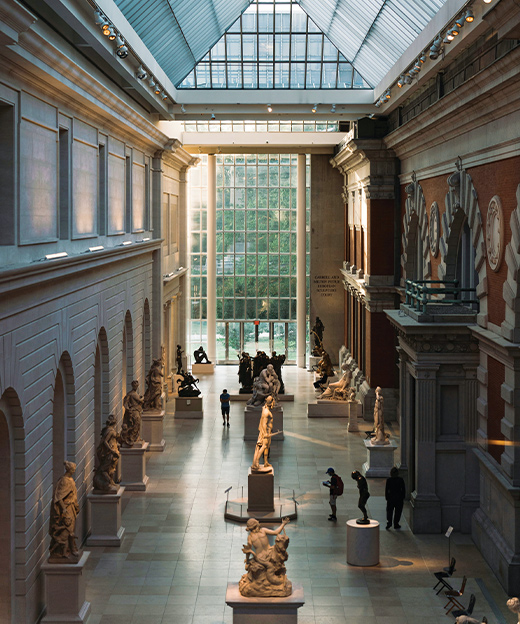
At the MET in New York, you can walk from an ancient Egyptian temple to a Van Gogh masterpiece in a single afternoon.
The traveller who never stops looking
Travel, however, rarely offers him complete rest. “I realise that I have a problem and the problem is that I can’t really rest or sleep,”. Holidays, for him, often involve flying somewhere far away, ordering room service and sleeping through exhaustion before returning to work.
Yet, even in transit, his mind continues scanning the world. “Anywhere that I go, whether I see a product, whether I see a building, whether I see the colour of a wall… my mind keeps talking to me at a furious pace,” he says. “Could this become a new outfit? Could this be packaging? Could this be a location for my next shoot?”
Perhaps that endless observation explains why Sabyasachi’s journeys feel so textured, gathering inspiration from architecture, food, conversations, craft traditions and memory until they form an interior archive. “Luxury,” says, “is about emotion. It is not about price.”
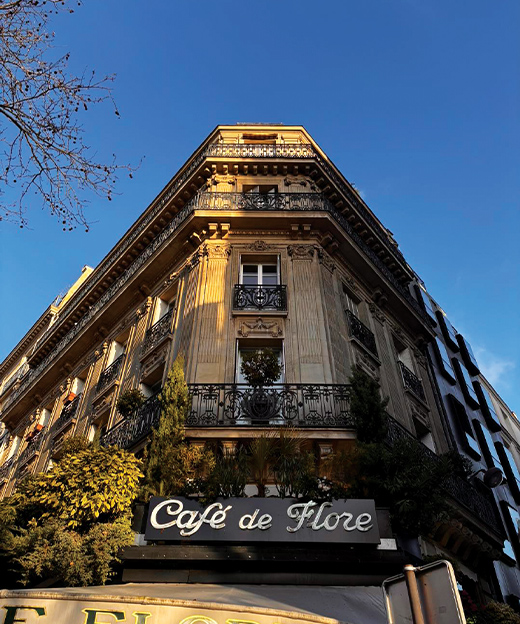
Café de Flore, patronised by philosophers, writers and artists, who gathered under its red awning every evening, is a significant part of Paris's literary history.