


















From Sangam to Seafront
Travel, for Amitabh Bachchan, has never been merely the act of moving across distance, but a gradual accumulation of impressions—riverbanks at dawn in Prayagraj, the contemplative anonymity of Kolkata, and the restless momentum of Mumbai. His journeys suggest that places are first experienced quietly, almost privately, before they reappear as memory.
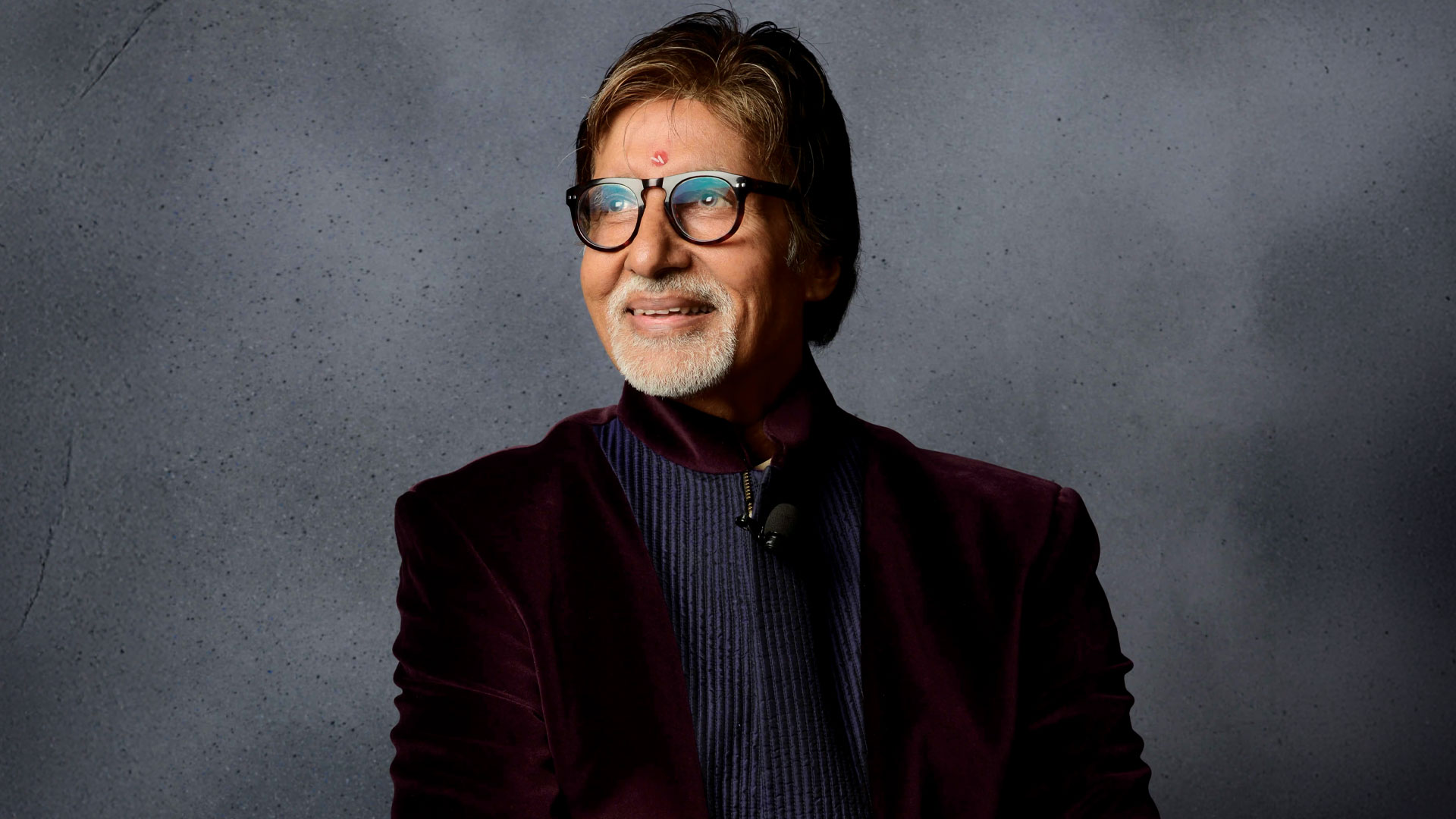

By Radhika Singh
Long before Amitabh Bachchan became the most recognisable voice in Indian cinema, he moved through the country as an observer of quieter geographies: a boy between the riverine calm of Prayagraj and the cloistered discipline of Nainital, a young professional acquiring the grammar of independence in Kolkata, and finally an uncertain migrant arriving in Mumbai with little more than a resonant baritone and an appetite for persistence. His itinerary was not the conspicuous circuit of leisure but a slow mapping of post-Independence India, where movement itself was a form of apprenticeship.
“My entire childhood was spent here… we would leave before dawn, sometimes at four in the morning, to go to the Sangam,” he says of Allahabad, now Prayagraj, a city whose intellectual cadence seems to echo even in the actor’s famously measured speech. The influence of his father, Harivansh Rai Bachchan, endowed the household with a reverence for language that felt almost architectural; words, like rivers, appeared to have currents of their own. “In Allahabad, the gate of our house was always open… one never felt the need to lock doors. There was a trust, a quiet civility.” The recollection carries the gravity of lived experience rather than nostalgia. Bachchan’s reflections often arrive in sentences that feel both intimate and public, as though addressed simultaneously to a confidant and an unseen audience. “Everything becomes still pictures eventually,” he observes, the remark landing with the cadence of a closing monologue.

Nainital is where Bachchan spent some of his educational years, at Sherwood College.

Sangam, Prayagraj is where Bachchan’s earliest journeys began, before they became memory.
Allahabad / Prayagraj: rivers and beginnings
Prayagraj unfolds in his memory as a confluence not merely of the Ganga and Yamuna but of intellectual and spiritual inheritances. The Kumbh, with its ephemeral pontoon bridges and temporary cities, introduced him early to the choreography of mass gatherings long before cinema familiarised him with spectacle. “We would walk across those bridges at first light… they seemed to appear overnight, as if assembled by faith itself.” The imagery anticipates the actor’s lifelong fascination with transient structures—film sets, crowds, public rituals—environments that exist intensely and then dissolve.

Tram bells marked time in Kolkata, in a city the actor remembers as thinking aloud.

Victoria Memorial, Kolkata returns in Bachchan's memory as part of the city's visual grammar.
Kolkata: the professional interlude
Before cinema, there was Kolkata. Employed as a freight broker at Bird & Company, Bachchan inhabited a version of adulthood rarely dramatised in film mythology: salaried routine, modest accommodation, anonymity within a city negotiating intellectual and political change. “When I first arrived in Calcutta by train, I was fascinated by the cabway at Howrah Railway Station—you could step out of the train and almost directly into a waiting car. It seemed improbably efficient, almost theatrical.”
Kolkata, he recalls, was a city that appeared to think aloud. Tram bells marked time; debates unfolded across café tables with the seriousness of parliamentary sessions. Returning years later during the filming of Piku, he revisited places that felt suspended between memory and continuity: the football grounds of Mohun Bagan Super Giant, whose historic 1911 victory once resonated with nationalist symbolism, and the luminous white marble of the Victoria Memorial. “Victoria Memorial, Howrah Bridge, Durga Puja, football and its rivalries, mishti doi, ilish, trams, rickshaws, the yellow Ambassador taxis… all of this is Kolkata,” he says, the list unfolding like a catalogue of sensory impressions.

Along Marine Drive, Mumbai, the superstar recalls a seafront where anonymity and observation quietly coexist.
We would walk across those bridges at first light… they seemed to appear overnight, as if assembled by faith itself.
Amitabh Bachchan
Bollywood Actor

Mumbai: the city of arrival
Mumbai’s mythology as a city of migrants finds one of its most enduring embodiments in Bachchan’s journey. Before public recognition altered the terms of movement, he encountered the city through its shared spaces: suburban trains, pavements, seafronts, environments that permit observation before they demand performance. Stories of travelling pressed against the doors of local trains now read like urban folklore, reminders that aspiration often begins in discomfort.
“I cannot but recommend its seafronts,” he says, referring to the long arc of Marine Drive, where anonymity and observation coexist. The devotional rhythms of Siddhivinayak Temple, the Gothic silhouettes of South Mumbai, and the gradual acquisition of permanence—from rented rooms to the now-iconic residences Prateeksha and Jalsa—compose the geography of arrival. “Struggle is a part of life. Without struggle, there is no progress,” he says, the sentiment delivered not as an aphorism but as recollection. “Mumbai has given me everything.”
Bachchan has also spoken of airports as contemplative environments, neutral territories of transit where strangers briefly coexist. “Airports are places where you encounter many lives in passage… each traveller carries a story, even if one never hears it.” The remark suggests a sensibility attuned less to spectacle than to observation.

The Venetian Macao stays with the actor for its scale, theatricality and ease.

One&Only Reethi Rah marks a family celebration for the actor, set against sea and horizon.
Travelling the globe
Cinema extended Bachchan’s journeys far beyond India, though his preferences reveal a traveller attentive to comfort as much as atmosphere. “London, Switzerland, New York, the Maldives… these have been family destinations,” he notes, mentioning a fondness for St. James' Court, A Taj Hotel, located within walking distance of Buckingham Palace. Another memorable stay was at The Venetian Macao, whose theatrical scale—canals, gondolas, suites expansive enough to resemble apartments—seemed to appeal to his appreciation for grandeur tempered by functionality. “I have reached an age where comfort is a necessity,” he remarks, “and there one finds both style and ease.”
A family celebration took him to One&Only Reethi Rah, an island resort defined by privacy and horizon. “I love the sea,” he says simply, the understatement characteristic of his speaking style. Travels have also carried him to Wrocław, where a square was named after his father, and across Poland’s architectural landscapes—from Wawel Royal Castle to Malbork Castle—sites whose endurance contrasts with the impermanence of film sets.
In India, he often returns to Goa, drawn to its layered architecture, churches, temples, and a tempo of life that appears resistant to haste.
Bachchan returns repeatedly to the idea that travel is less about distance than accumulation. Journeys, in his telling, gather quietly until they form an interior archive: riverbanks at dawn, railway platforms at dusk, studio floors constructed to resemble other worlds. “Everything becomes still pictures eventually,” he says again, the words suggesting that memory, like cinema, edits experience into enduring frames.

A square in Wrocław named after his father turns travel into memory and legacy.