










A Contemporary Retreat Rooted in Memory
Taj Taal Kutir redefines luxury in Kolkata, blending nostalgia with modernity through architecture, craft, and a seamless connection to its waterfront setting.

By Rupali Sebastian
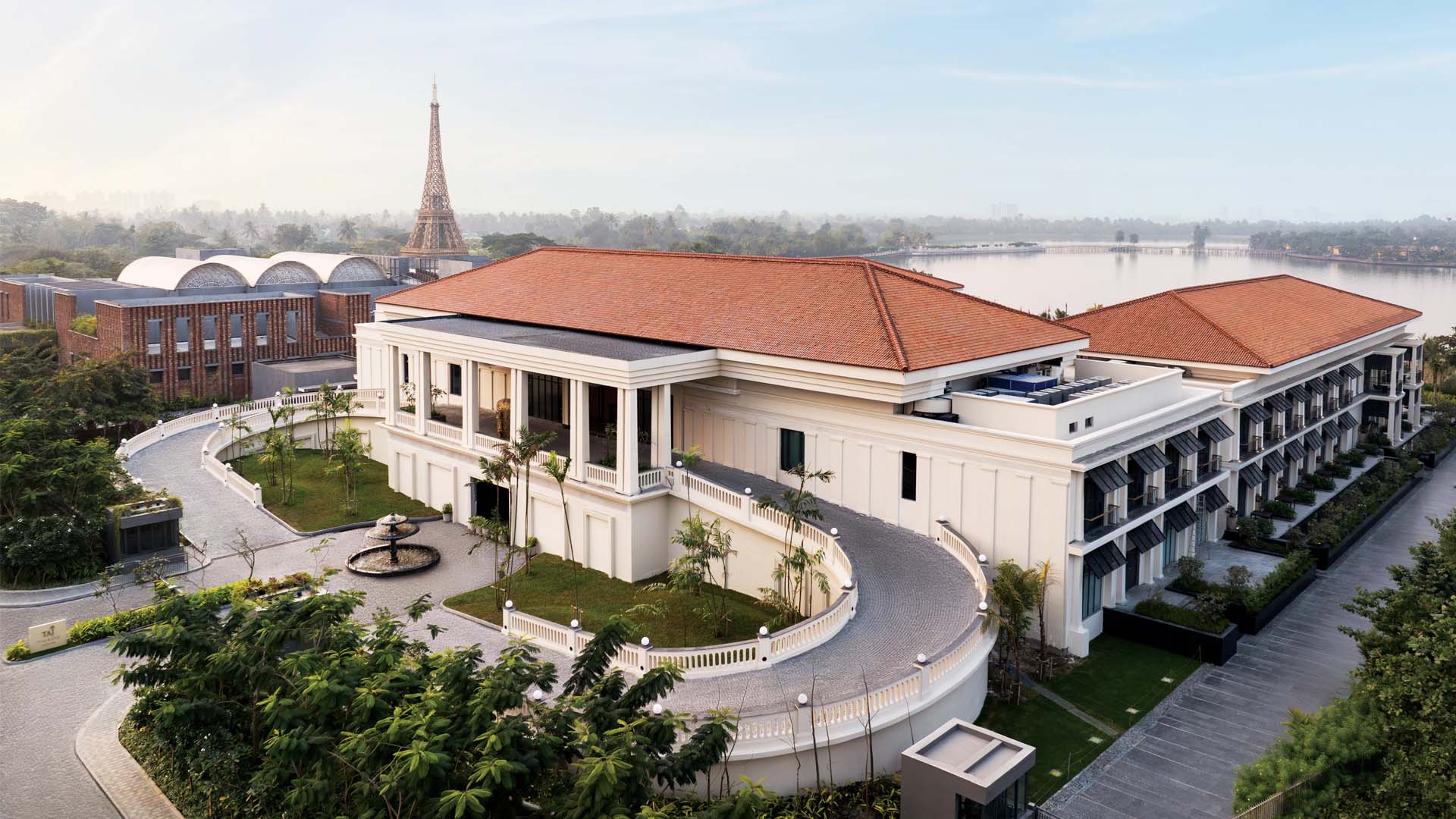
Set on the edge of Eco Park Lake in New Town, Kolkata, Taj Taal Kutir unfolds as a sanctuary amidst the city’s fast-growing urban landscape. Part of the larger 480-acre Eco Park, the hotel enjoys an unparalleled waterfront setting, offering guests a sense of retreat while remaining firmly embedded within the city’s evolving business and cultural district.
Unlike a typical standalone hotel, the 75-key Taj Taal Kutir is a two-block campus, comprising the convention block and the guest block, both designed by Salient Design Studio to function as distinct yet complementary entities. While the convention block, completed first, is designed as a formal, enclosed space suited for events and gatherings, the guest block takes an entirely different approach, prioritising openness, seamless indoor-outdoor connections, and deep engagement with nature. This feature focuses on the guest block, where architecture and landscape work in harmony to craft an immersive hospitality experience.
For Harshvardhan Neotia, Chairman of Ambuja Neotia, the guest block was conceived as an urban sanctuary, distinct from typical business hotels. "The city of Kolkata has a rich cultural heritage, and its colonial-era clubs and gymkhanas were once the hub of social gatherings." Building on this thought, the vision was to create a resort-like retreat that would be deeply connected to its waterfront setting. "The idea was to create a hotel that would revere an expansive lake," he explains.
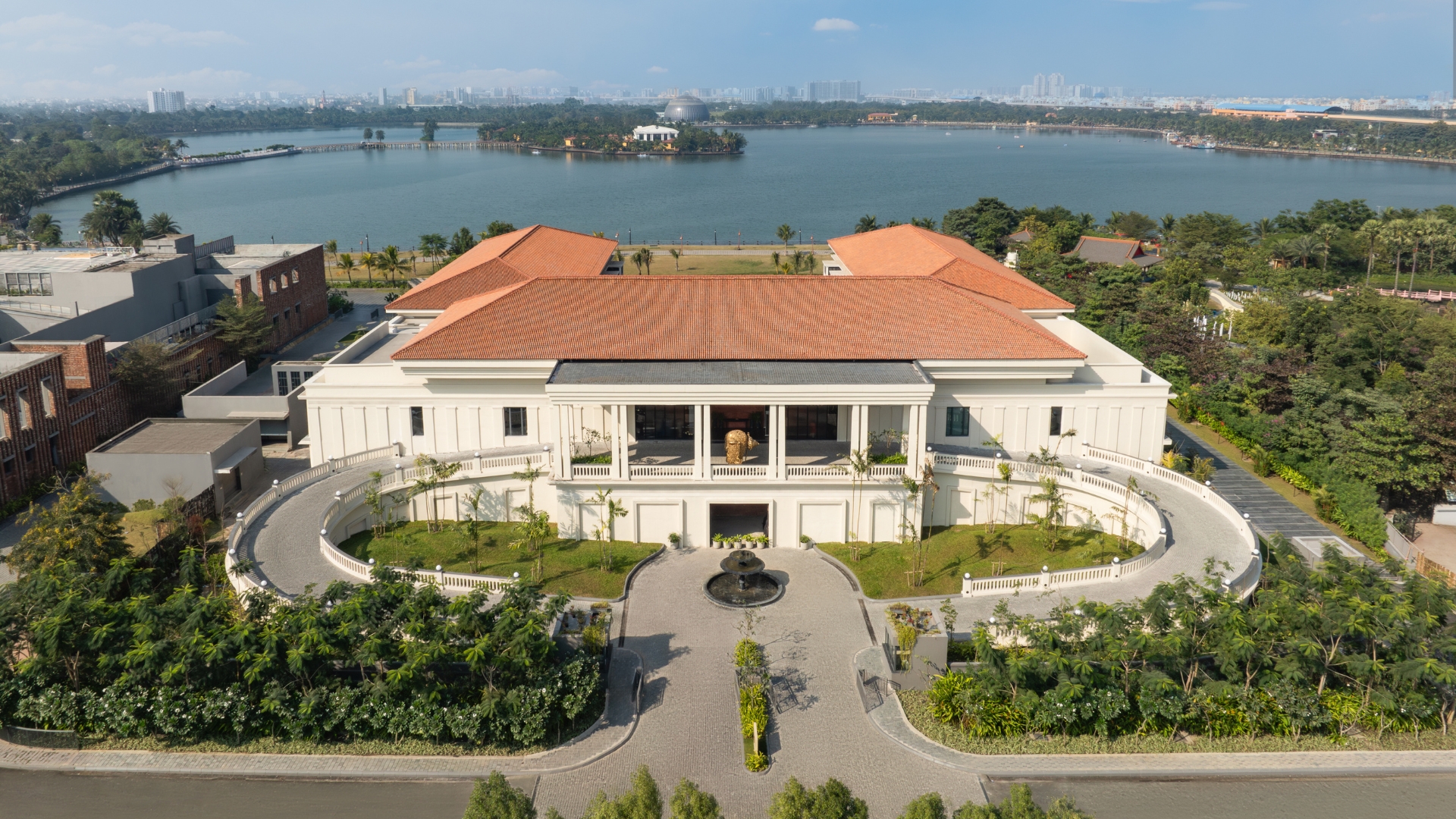
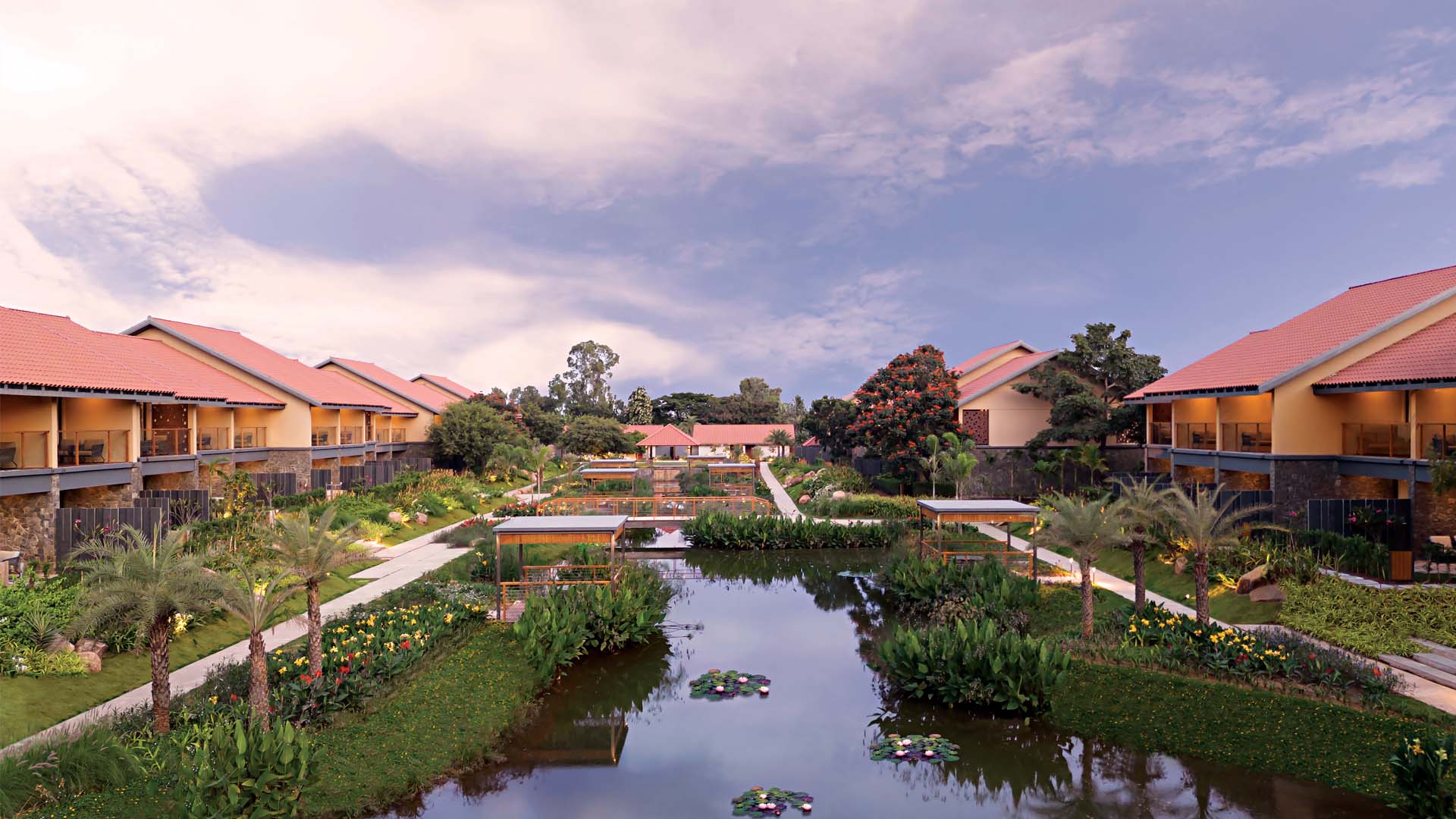
Taj Taal Kutir's scenic waterside location.
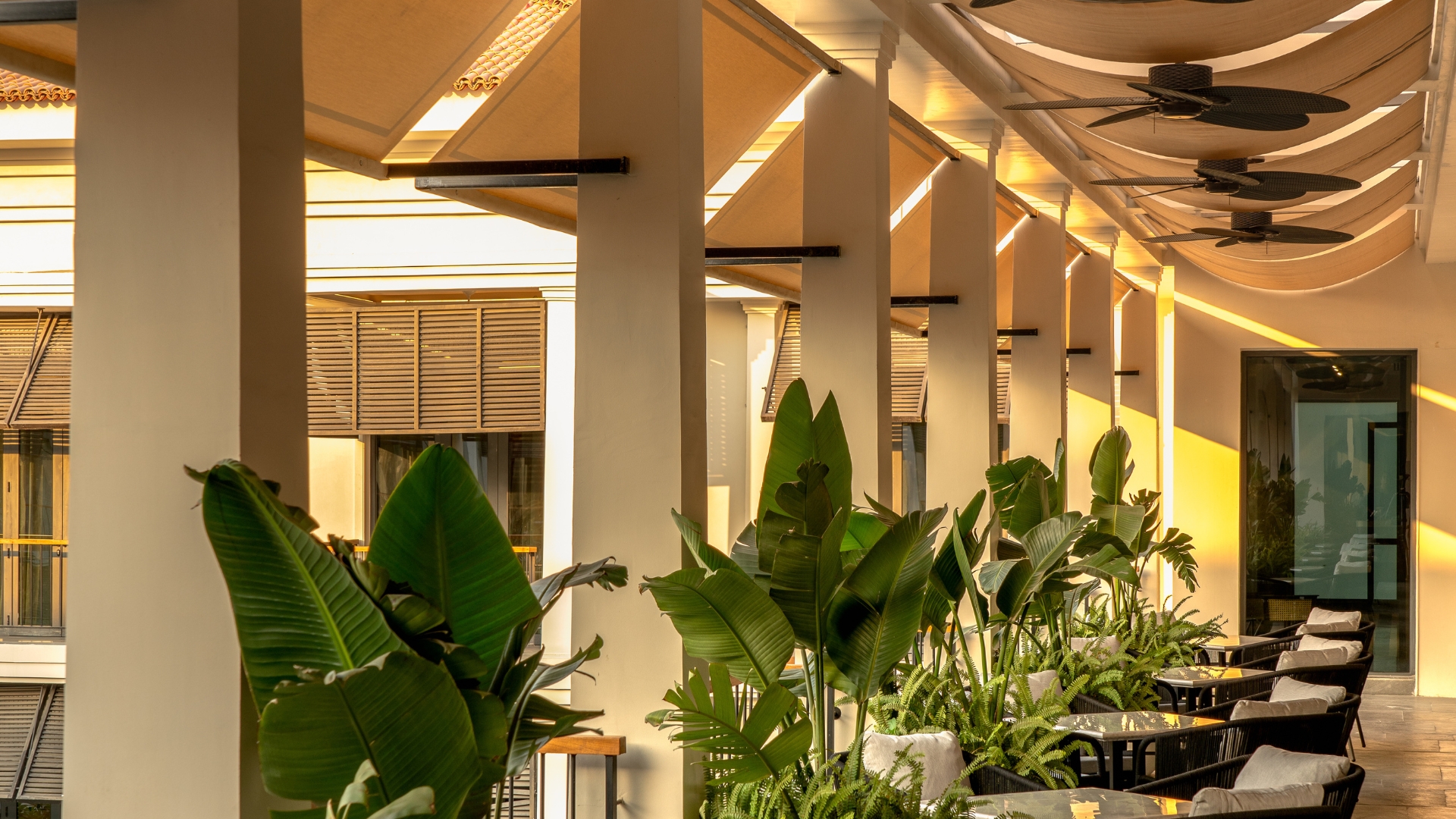
The hotel celebrates indoor-outdoor living.
Architecture: looking forward, looking back
For the guest block, the approach was clear: comfort, sustainability, and an intuitive connection to the outdoors.
"The convention side is a closed courtyard design, but the guest room block is an open court," says Vivek Rathore, Principal Architect, Salient Design Studio. "The idea was to invite guests outdoors, into semi-open and open spaces—something you rarely experience in city hotels, where you’re in a boxy, air-conditioned environment."
The architecture fosters a seamless relationship between indoors and outdoors, maximising views of the lake, natural ventilation, and daylight harvesting. "In the guest block, almost 70% of the spaces have daylight harvesting," says Rathore. The fenestration has been carefully crafted to provide shade, reduce glare, and optimise thermal comfort. "Kharkhari (louvered) windows allow wind to come in while shading from the sun. This is a distinct feature of the zamindar bari," he explains.
The pitched terracotta-tiled roof, another vernacular design element, plays an important role in passive cooling. "From the source, you reduce absorption of heat," Rathore explains. "The terracotta tiles do not allow excessive heat to be absorbed, making the spaces more comfortable."
At the heart of the guest block is a court with a swimming pool, a modern reimagination of the uthan (courtyard) of Bengal’s zamindar homes. "The zamindar bari courtyards used to create a microclimate, which diffused into the rooms," says Rathore. Here, the cooling effect of the lake is complemented by the shaded courtyard, the swimming pool, and the continuous shimmering waterfall along the deck. "There’s a nice microclimate being created by the lake and also by the pool," Rathore adds. "Palms around the courtyard cast a shadow, stopping direct sun, while the waterfall creates white noise that enhances the overall ambience."
Privacy is subtly woven into the guest block’s spatial planning. The ground floor sits five and a half to six feet above the pool level, ensuring that rooms aren’t directly exposed to public spaces. The rooms are layered in two rings—the inner ring overlooks the courtyard, while the outer ring faces landscaped views. "Towards the east, rooms overlook the Japanese garden, which we designed in 2015. On the convention side, the rooms look into private landscaped courts," says Rathore.
While Salient Design Studio led the architectural planning, Studio Lotus, as the interior architects, contributed key refinements to the elevation treatment and select façade elements. Their interventions included the addition of Juliet balconies for a standing experience in guest rooms, the integration of brise soleils to enhance shading, and the detailed articulation of columns and mouldings. They also introduced the greenish hue of the swimming pool, ensuring it blended seamlessly with the surrounding landscape. These thoughtful enhancements reinforced the hotel’s timeless yet contemporary aesthetic, creating a façade that feels both elegant and contextually rooted.
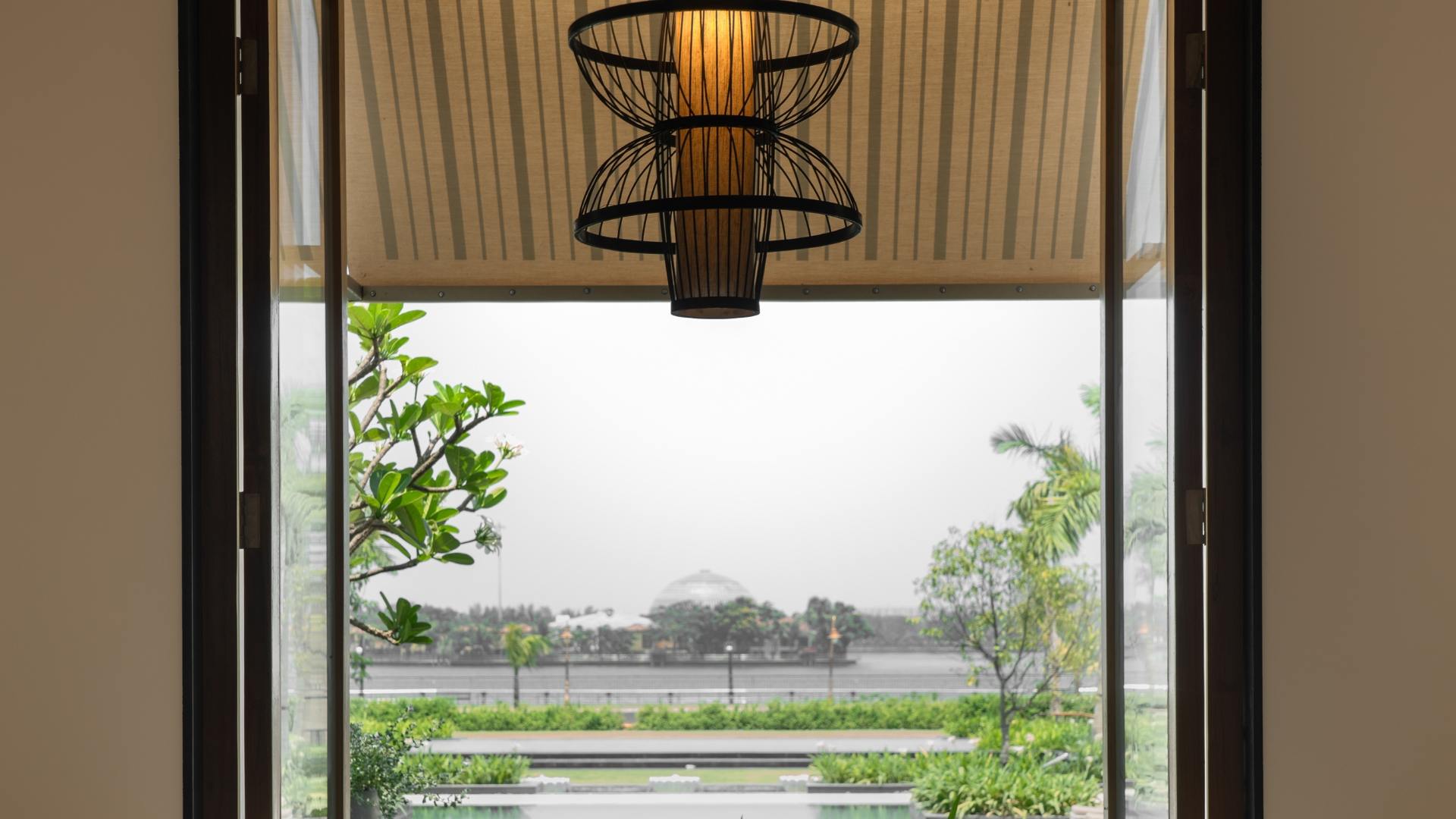
Water becomes central to the spatial experience, whether through the swimming pool, reflective water bodies, or the lake beyond.
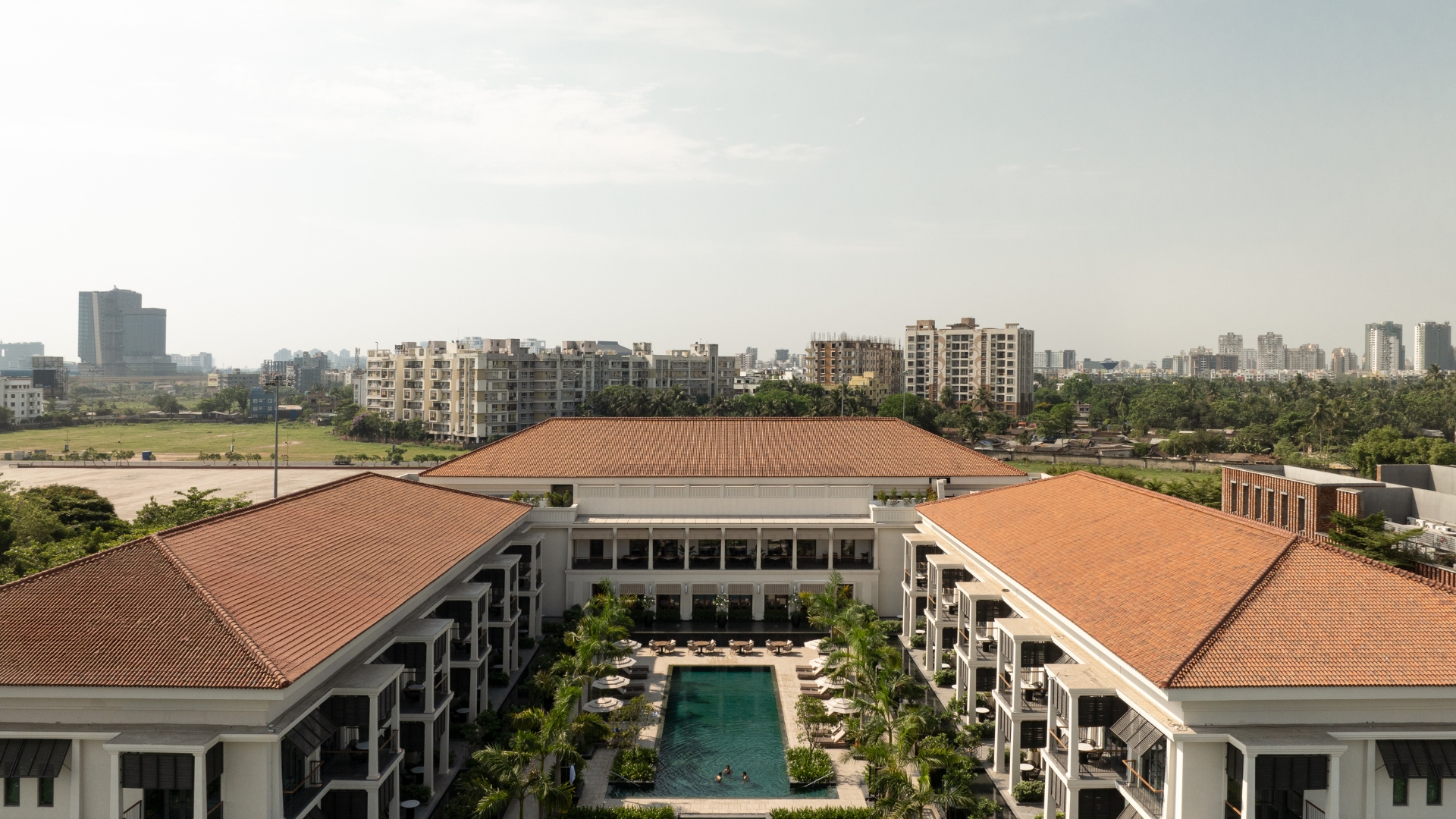
Unlike the closed courtyard planning of the adjacent convention block, the guest block has an open courtyard so that guests can enjoy views of the lake.
It's that fine line of reinterpreting and the notion of what would be nostalgic in the new avataar that we were playing with through the entire design process.
Asha Sairam
Principal, Studio Lotus

Interiors: a contemporary expression of nostalgia
For interiors too, interestingly, the facade is where it all began. "It really set the tone for the restraint of the palette, the importance of form and proportion, the importance of connections between the indoor and the outdoor," reveals Asha Sairam, Principal, Studio Lotus.
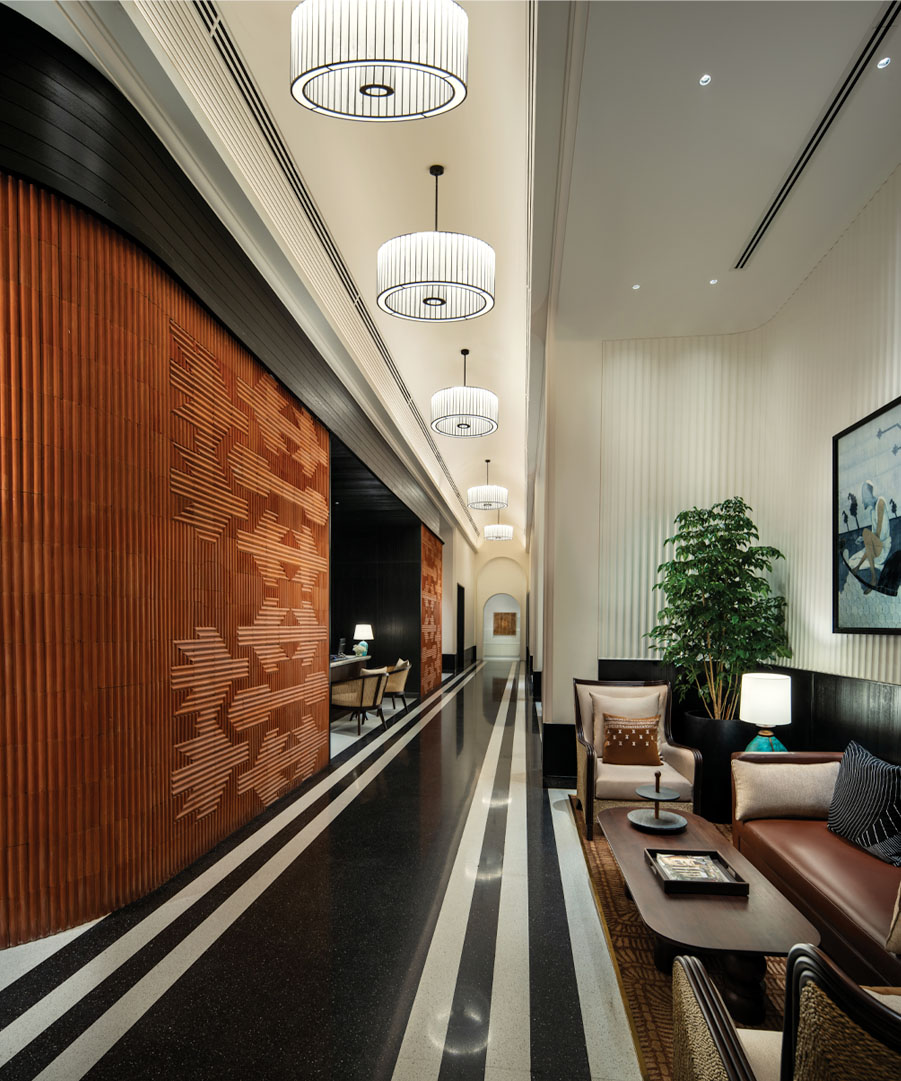
In a culture known for its vibrancy, the design firm’s proposed direction—a crisp black and white—was bold and unexpected. The monochrome palette is punctuated by just one other colour—terracotta—used sparingly yet meaningfully to anchor the interiors in Bengal’s craft traditions. Collectively, they set the stage for a design narrative that was at once familiar and contemporary. "Making a black-and-white hotel in a city like Kolkata, in a country like India, is quite a sharp thing to do," says Sairam. "Very few owners and operators would be willing to take that risk. But Mr Neotia was happy to lead into it."
The idea of nostalgia occupied the core of the design direction. "We wanted the building to give a nod to a certain period in history," says the designer, "but we never wanted it to feel like a historical space. It is very much a modern hotel, designed for the modern traveller." The team carefully threaded memory into the fabric of the hotel—not through literal period references, but through craft, materiality, and proportion. "It's that fine line of reinterpreting and the notion of what would be nostalgic in the new avataar that we were playing with through the entire design process."
Nowhere is this reinterpretation more evident than in the reception, with its terracotta-clad expanse ornamented with patterns inspired by Bengal’s Jamdani weave. "Terracotta is deeply embedded in West Bengal’s craft traditions," says Sairam. "We wanted it as part of our architectural palette, tying it in with the terracotta khapra roof tiles."
The terrazzo flooring, another layer of nostalgia, was reimagined for practicality. "We got Kalinga to customise the scale of the aggregate and pre-engineer large-format terrazzo slabs," says Sairam. These came to the site ready to be cut like stone, laid efficiently, and polished seamlessly, ensuring the longevity and patina of terrazzo without the practical difficulties of traditional craftsmanship.
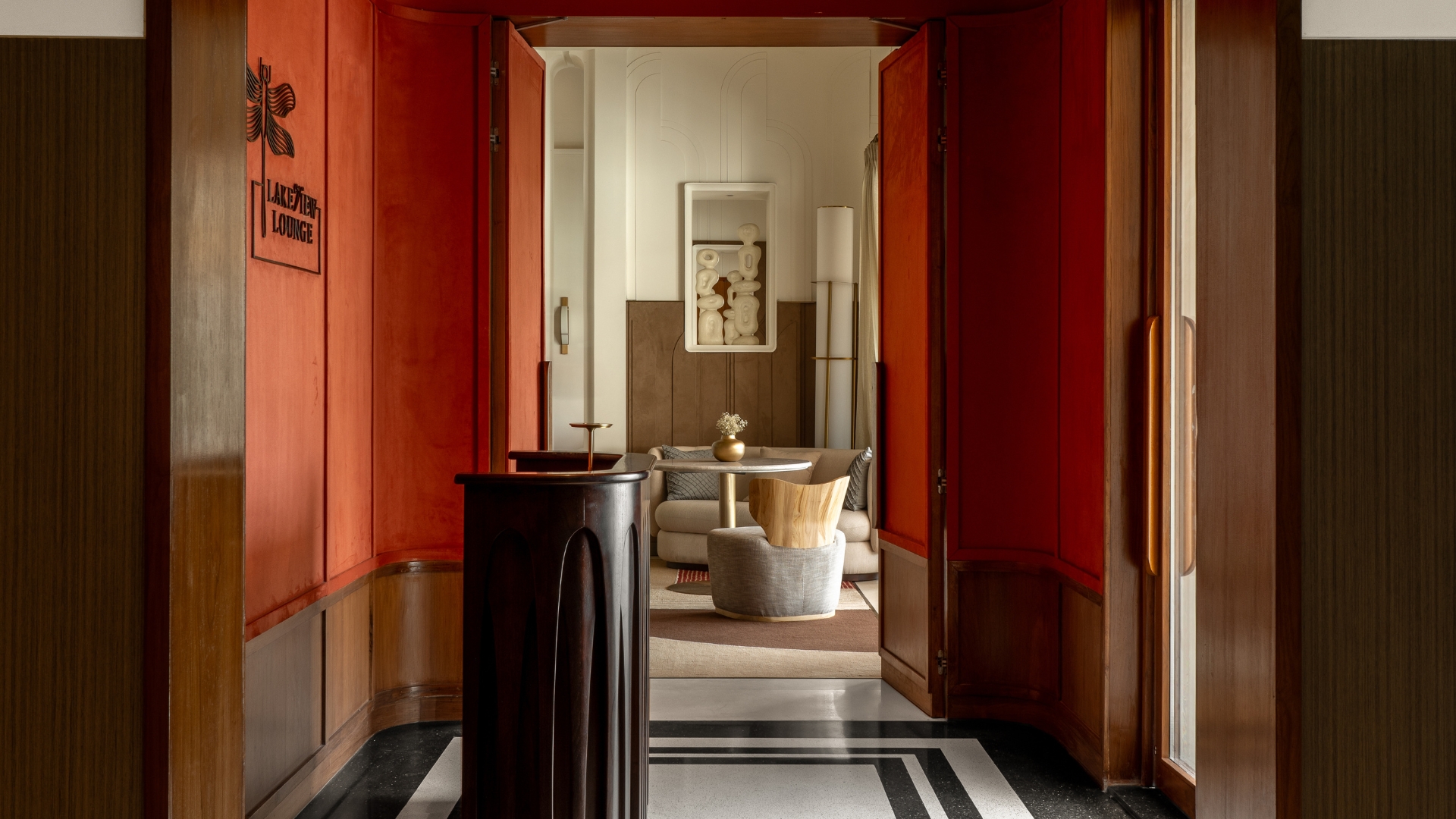
The entry to the Lakeside Lounge exemplifies the hotel's crisp black, white and terracotta scheme.
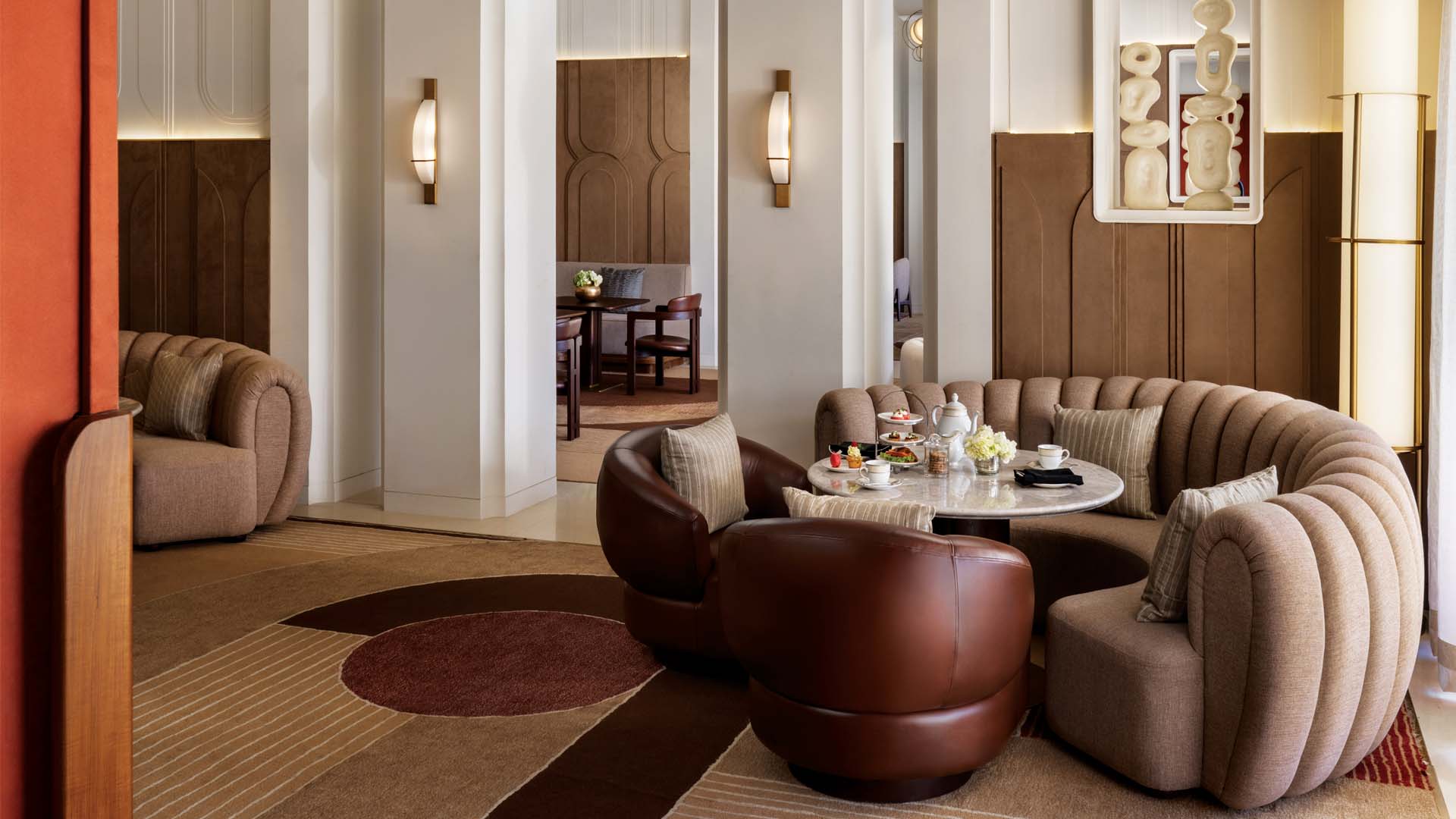
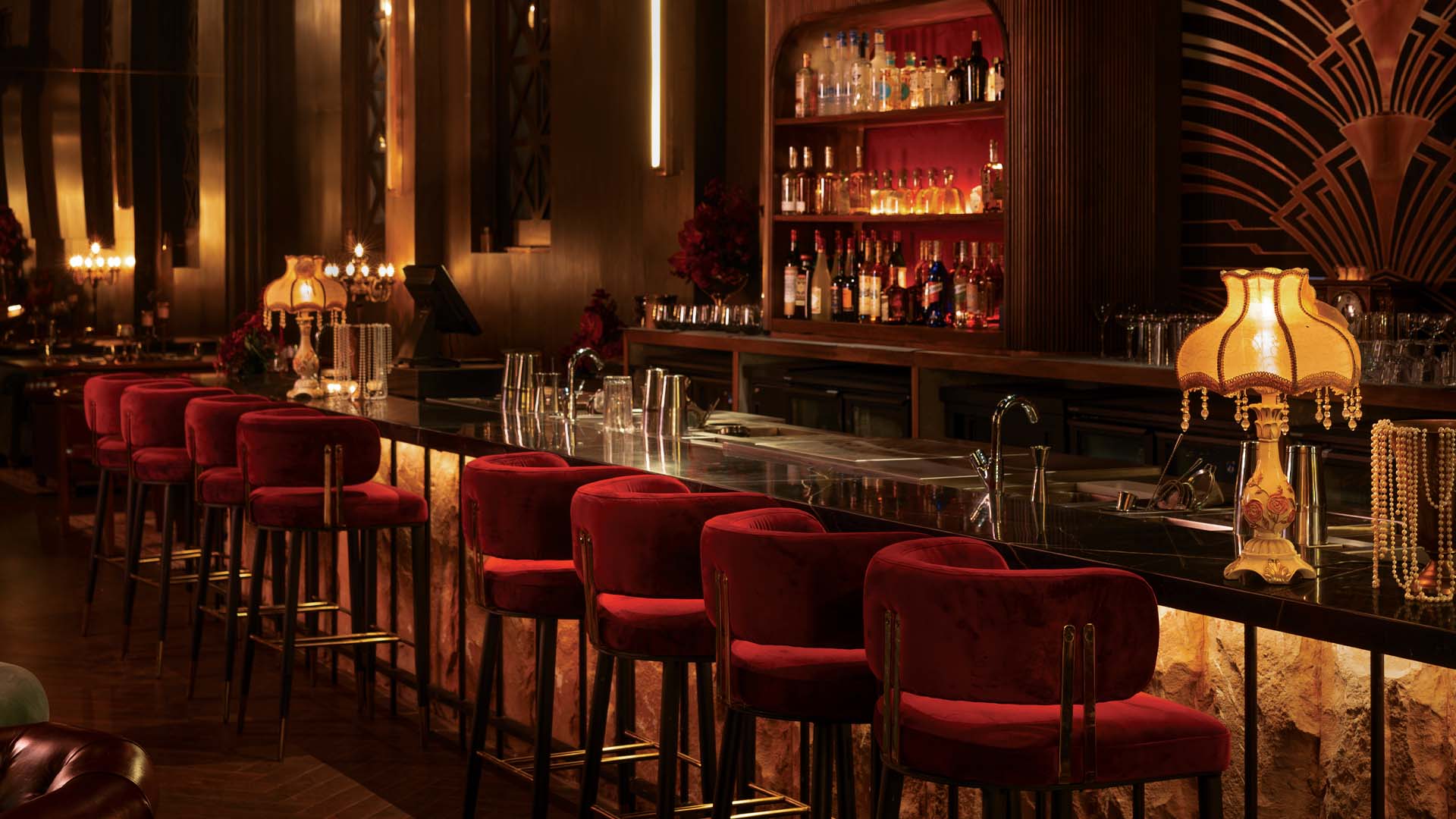
The Lakeside Lounge bears a distinct art deco influence, seen in the articulation of the wall panelleing and the furniture forms.
The hotel interiors
Throughout the interiors, Studio Lotus wove nostalgia into everyday interactions. Tabletops in the standard rooms are screen-printed with patterns inspired by Ganjifa playing cards, their graphic borders reinterpreted for a contemporary setting. In the Executive Suites, headboards feature Kantha embroidery, seamlessly blending craft and comfort. "We wanted to recall elements people would find familiar, but reinterpret them in a way that felt entirely modern," says Sairam.
Bringing all of these influences together required extensive exploration and refinement. "It was a lot of trial and error," says Sairam. "Whether it was making the standard rooms feel intimate yet luxurious, or using vaults to exaggerate the height of the narrow reception area and create a sense of arrival—every decision was tested, reworked, and fine-tuned to balance proportion and atmosphere."
Beyond aesthetics, natural ventilation was a key consideration. Every guest room has operable glazing, allowing fresh air to flow through. "While Kolkata has high humidity, there are months when the weather is beautiful—especially in the evenings," says Sairam. "We wanted guests to have the choice to switch off the AC, open the glazing, and enjoy fresh air." Ceiling fans were installed in all rooms and balconies, ensuring that even semi-outdoor spaces remain comfortable.
The fenestration, designed by Salient Design Studio, added another layer of complexity. With windows framed in a classical rhythm, furniture placement became an exercise in restraint and balance. "There were so many windows, you couldn’t just place furniture against a wall," says Sairam. Instead, the team internalised seating arrangements, creating clusters for dining, lounging, and quiet retreat. The brise soleils, another key architectural element, shaded the interiors while allowing soft light to filter through.
For Studio Lotus, Taj Taal Kutir was an opportunity to create not just a hotel, but an interpretation of Kolkata itself. "Good design has always been alive in Kolkata—in its cafés, boutique stores, and independent creative spaces," says Sairam. "To craft a hospitality space that carries that spirit forward, with a visionary client who understood the importance of restraint and refinement, was an incredibly exciting challenge for us."
Taj Taal Kutir’s guest block doesn’t lean on nostalgia in the obvious way. There are no over-the-top references, no forced gestures. Instead, it achieves something harder to pin down—a sense of familiarity, a quiet indulgence, a feeling of having stepped into a place that has always existed, even if you’re experiencing it for the first time.
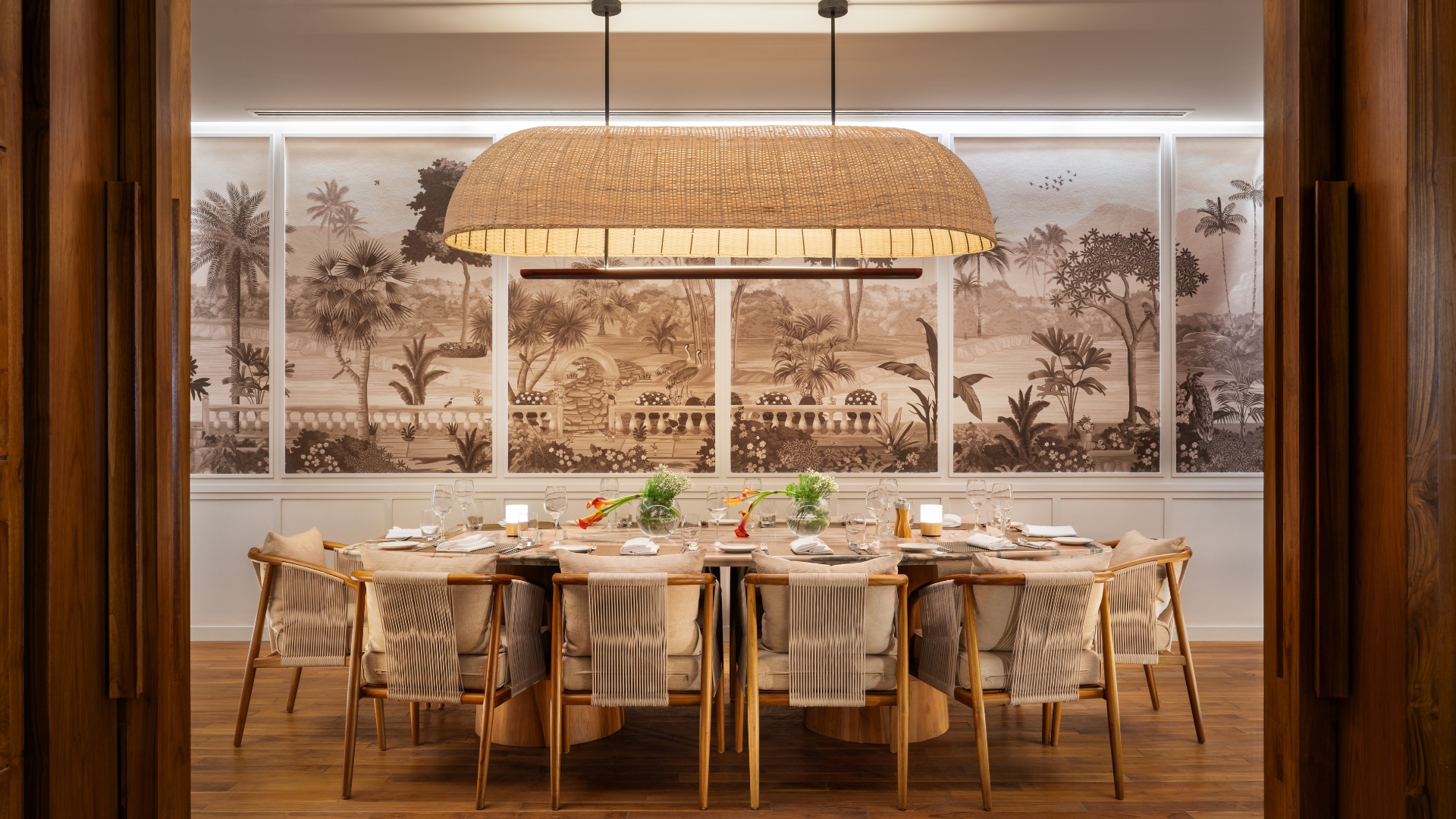
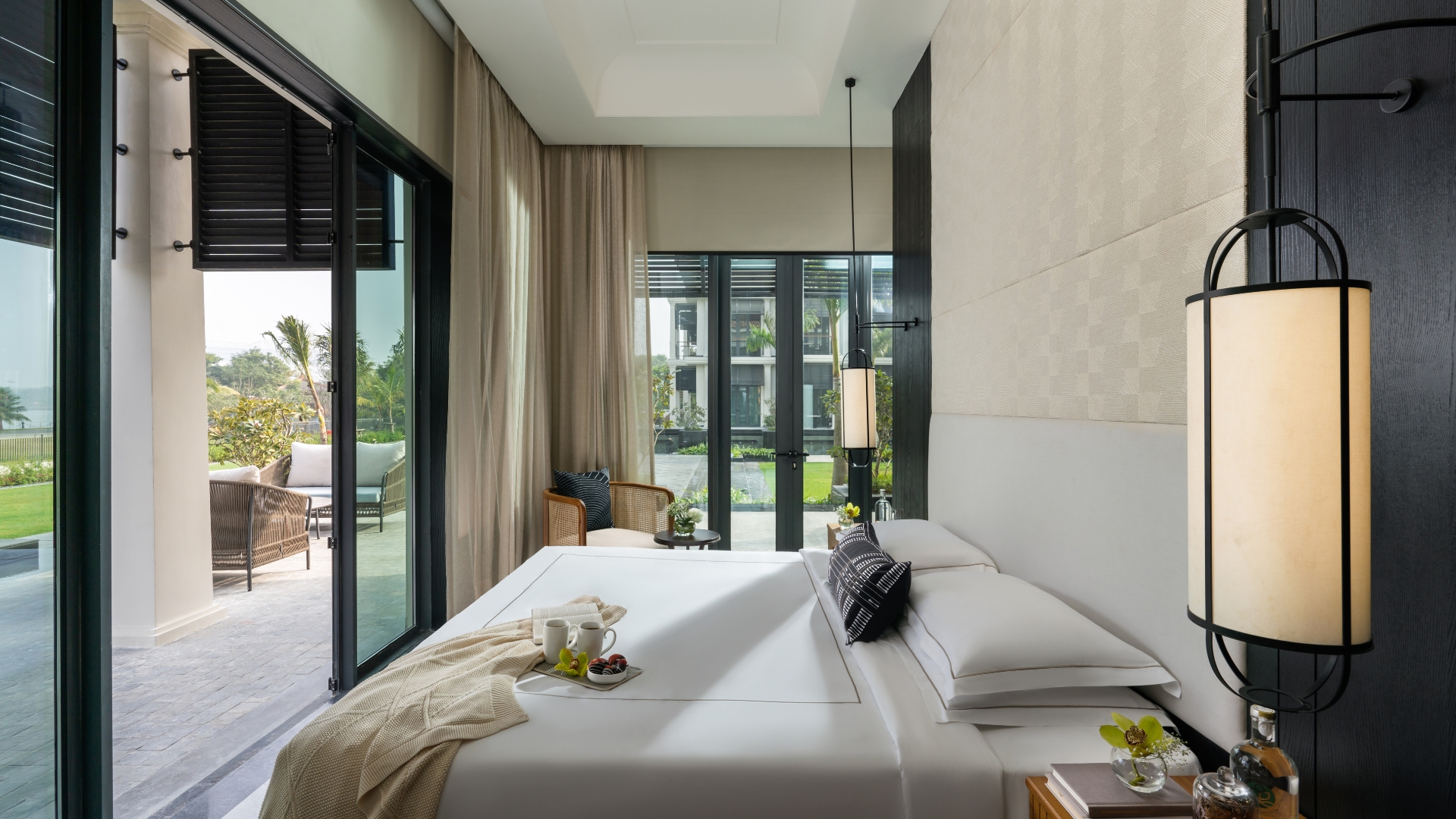
Beyond aesthetics, natural ventilation was a key consideration. Every guest room has operable glazing, allowing fresh air to flow through.
A Landscape woven in water and light
- At Taj Taal Kutir, the landscape is more than just a setting—it is a journey, a quiet unfolding of space, light, and nature. Designed by Anuradha Rathore of Salient Design Studio, the landscape merges seamlessly with Eco Park Lake, transforming the site into an immersive waterfront retreat, where terraces spill into promenades and private decks brush the water’s edge.
- Inspired by Bengal’s timeless connection to water, the design echoes the rhythms of the land. Tall coconut palms stand as silent sentinels, their reflections dancing on the rippling lake. The deep green swimming pool, mirroring the Kolkata sky, blurs into the water beyond, creating a layered canvas of reflections—of clouds, trees, and the shifting light.
- Here, movement is choreographed to heighten awareness of the landscape. Winding pathways weave through fragrant groves of Michelia Champaca, Bauhinia, and Bakul, leading guests from sun-dappled courtyards to intimate, shaded verandahs. Private decks extend into shallow water features, inviting quiet moments of stillness. The drop-off ramps curve through undulating greenscapes, creating a sense of anticipation as guests arrive.
- This is a place where the landscape is not just seen but felt—a sanctuary where water, earth, and memory entwine, inviting guests to slow down, pause, and simply be.
This is a place where the landscape is not just seen but felt—a sanctuary where water, earth, and memory entwine, inviting guests to slow down, pause, and simply be
An Island of Luxurious Darkness
- Lighting at Taj Taal Kutir is not just functional—it is experiential. Designed by Lucent Worldwide, the lighting scheme was crafted to enhance guest comfort, align with the property’s old-world charm, and create an intimate yet inviting atmosphere.
- "The first thing we prioritised was visual comfort," says Sarvdeep Basur, Principal at Lucent Worldwide. "It’s a high-end property—very personalised, very specialised—so we knew the lighting had to feel effortless, warm, and immersive."
- The façade and landscape lighting were designed to blend seamlessly with the architecture, evoking a sense of timeless luxury. But in the courtyard, where the swimming pool sits, the approach was different. "We’ve actually mimicked fire all around the courtyard to give it a little extra cosiness," says Basur. "At night, it looks like there’s fire in water." The effect, created with ultra-warm lighting for the bubblers—almost to a candlelight level, transforms the space into a mesmerising focal point, visible from the guest rooms, restaurant, bar, and all-day dining.
- Being located by a taal (lake), the property contrasts with its surroundings. "On the other side, things are brightly lit and colourful," says Basur. "We took it as an opportunity to downplay the lighting. We set out to create an island of luxurious darkness." The lighting is subtle, warm, and inviting, never overpowering.
- Inside the guest rooms, the lighting approach prioritises simplicity and user control. Rather than complex automation, the rooms feature basic dimmers and switches, allowing guests to adjust brightness to their preference. "We hardly have any controls in the rooms," says Basur. "People can dim the light, add to the intensity they want, or brighten it. Every guest sets it to their taste because it is very friendly."
- All decorative lighting was bespoke, designed to complement the architecture’s colonial elegance. "We wanted that old-world charm with light as well," says Basur. And at Taj Taal Kutir, that vision comes to life beautifully.
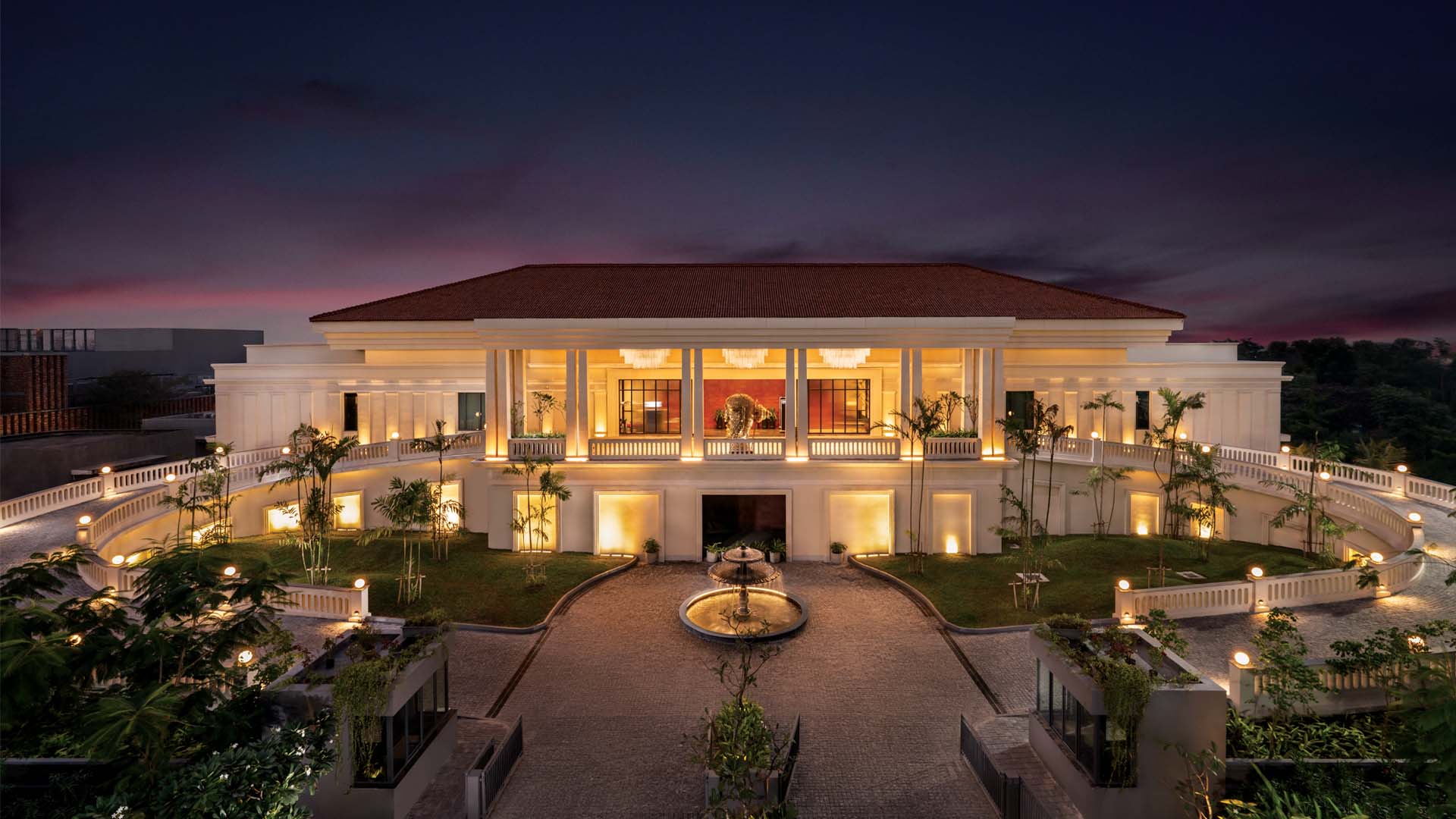
The façade and landscape lighting were designed to blend seamlessly with the architecture, evoking a sense of timeless luxury.
Designing for the younger demographic
"The younger travellers were a thought in our mind when we were designing this hotel," says Asha Sairam, Principal, Studio Lotus. "Most of our team members are millennials transitioning into Gen Z. It was interesting—especially when it came to the façade and the poolside."
With a tight footprint and an open courtyard layout, there was an early concern about sightlines—guests on their balconies could see others by the pool, or even catch glimpses into rooms across the courtyard if the curtains were left open. But conversations with the younger members of the Studio Lotus team led to a shift in perspective.
"We started realising that there is much more excitement and openness in younger travellers today about finding a sense of community," says Sairam. "It wasn’t jarring to them that someone staying in the adjacent room or by the poolside might be able to see them. If anything, it became an opportunity to say hi, to meet people, to have a conversation in a really quiet space."
This insight shaped the final approach—landscape and water features were introduced as subtle buffers for sound and distance, but strong visual barriers were intentionally left out. Instead of enforcing separation, the design allows guests to find solitude when they need it, while still feeling part of a shared, social experience.
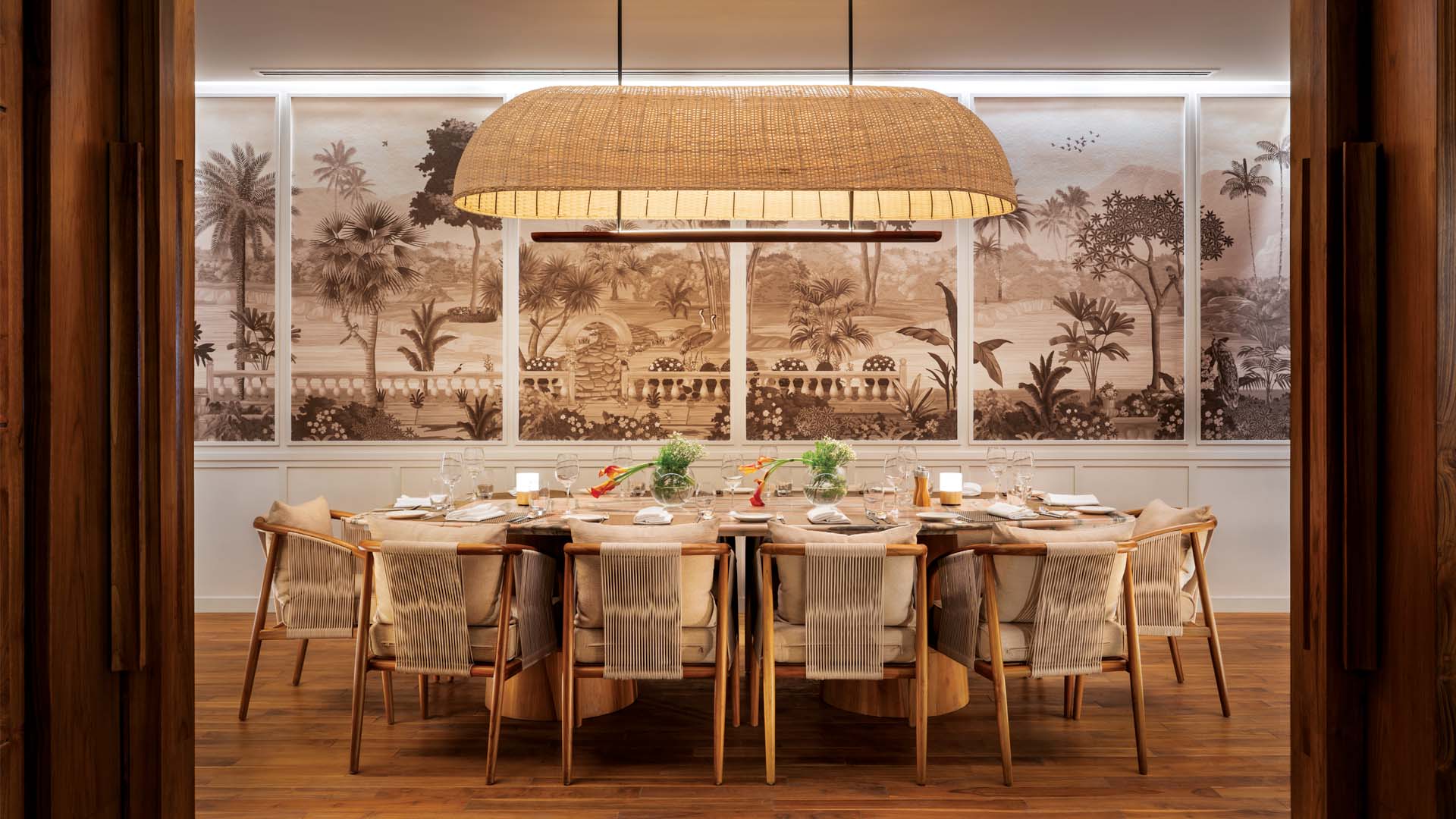
The entry to the Lakeside Lounge exemplifies the hotel's crisp black, white and terracotta scheme.
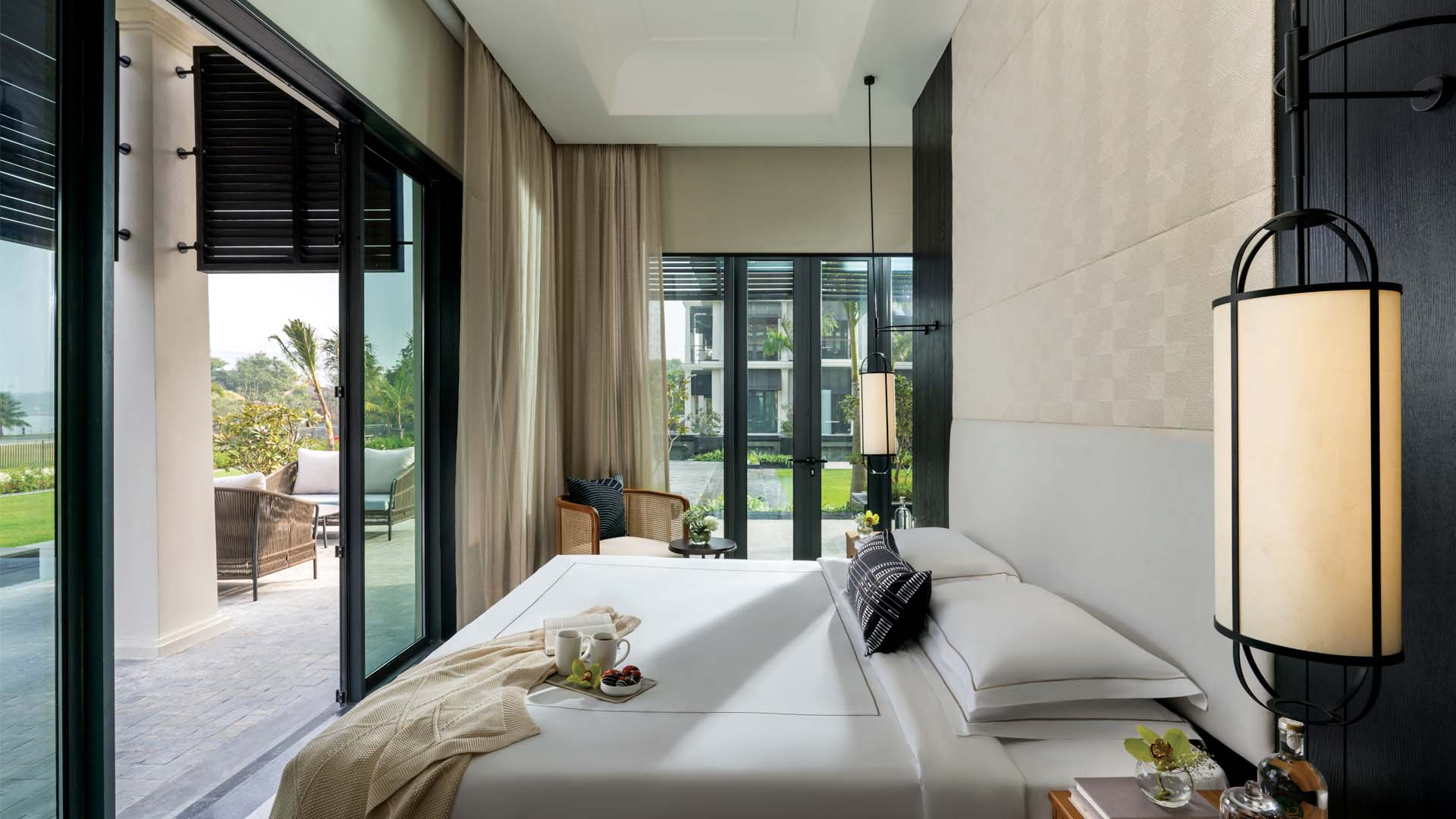
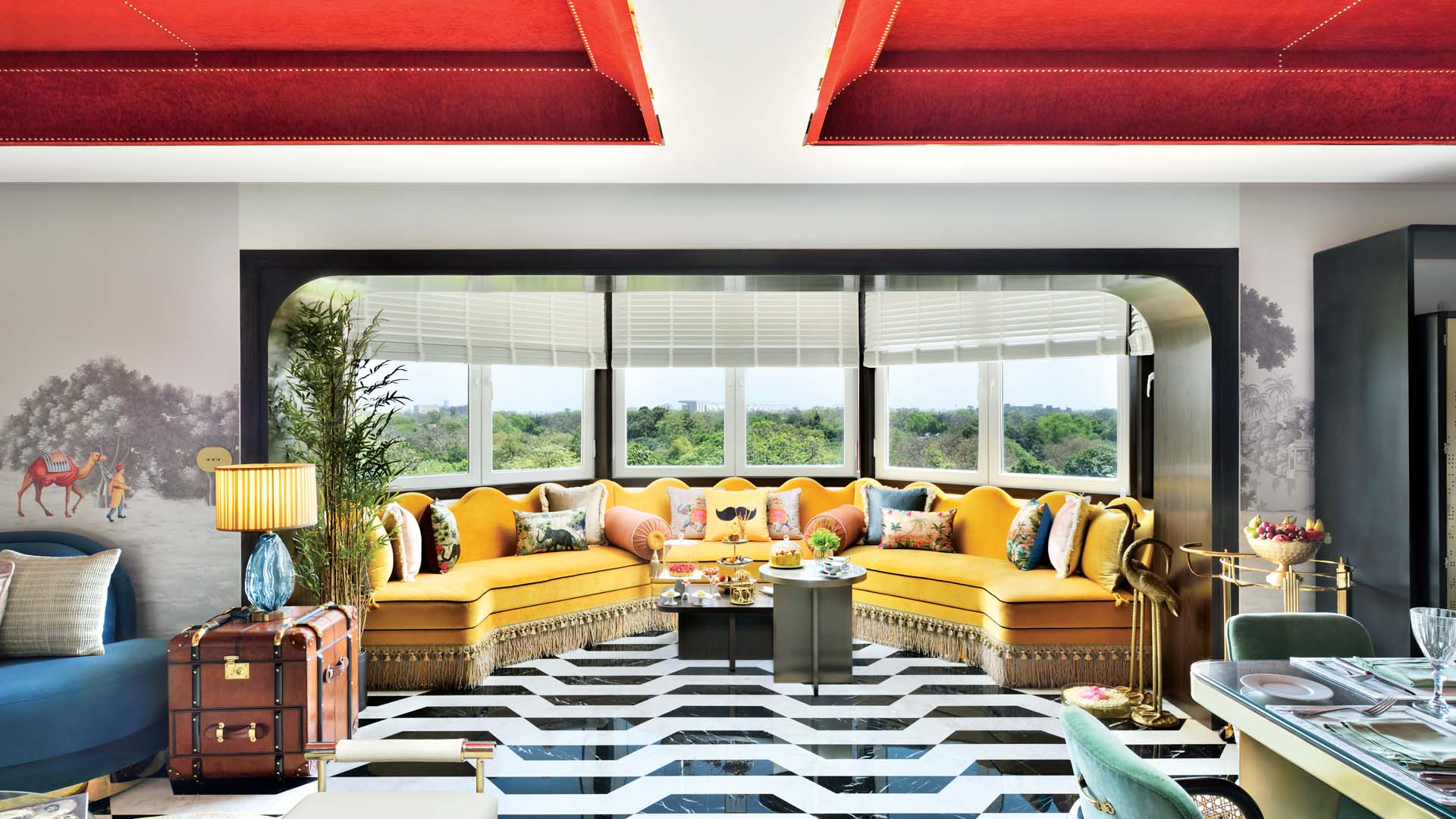
Guest rooms enjoy openness and views.