










The Long-Awaited Solo Act
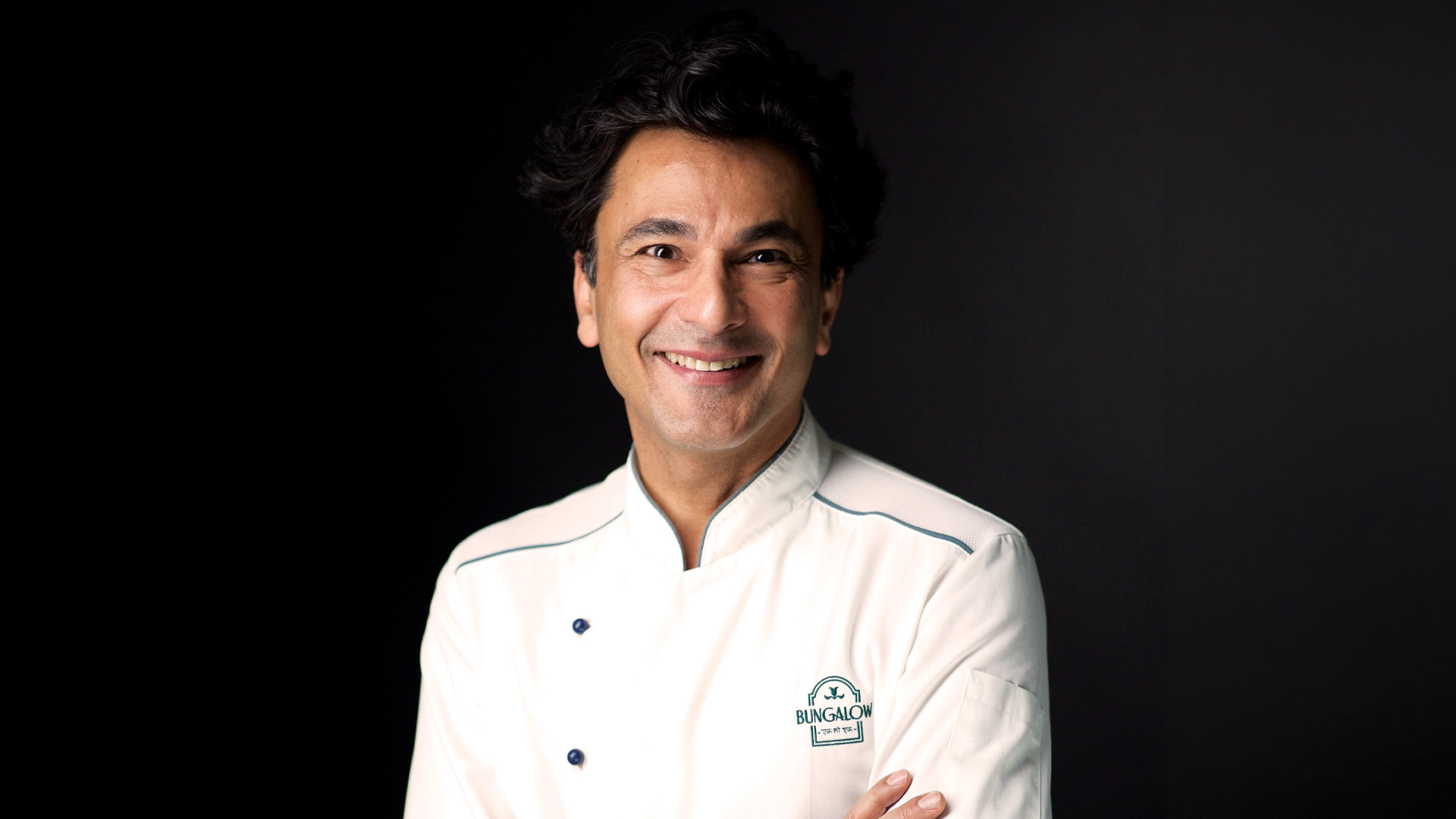
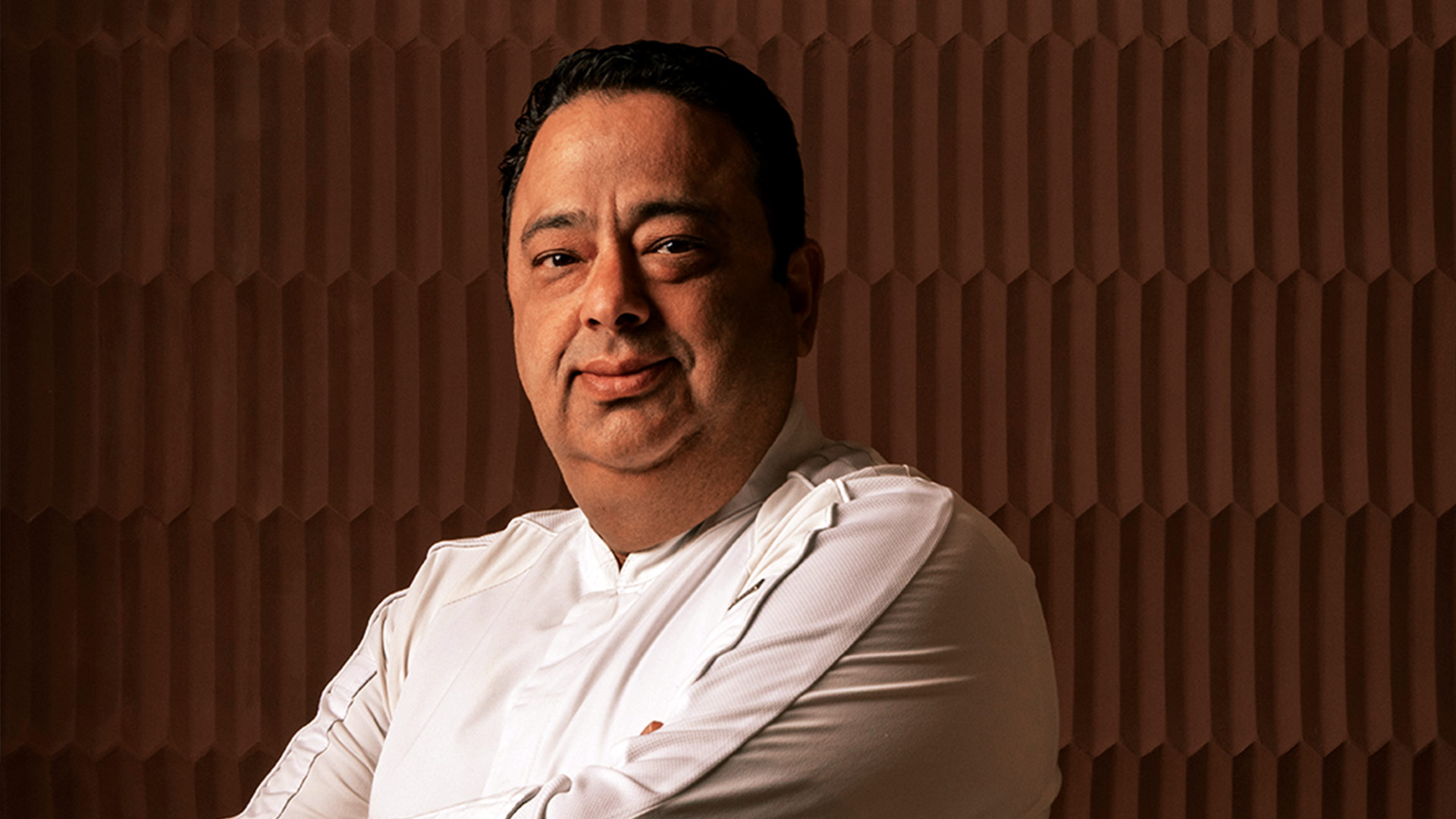
Showcasing ‘Indian food of today’s India’, Chef Manish Mehrotra has finally taken the plunge by launching his own restaurant, Nisaba, which not just offers his signature dishes but also entirely new culinary experiments.

By Suman Tarafdar
Blue Cheese Naan. Dal Moradabadi. Amaranth Laddoo. Doda Barfi Treacle Chaat…
Today, these are a regular part of the Indian gourmand’s vocabulary. Indeed, given that I had Dal Moradabadi thrice in the past month, including once in a buffet, is a testament to just how influential chef Manish Mehrotra has been in the last two odd decades in reshaping Indian cuisine. “When I introduced Dal Moradabadi in 2013, I was asked, ' Who is going to eat moong dal?” he recollects with a chuckle.
Rohit Khattar-led Indian Accent, Chef Mehrotra’s long-term playground, was effectively the magical theatre where all these dishes were unleashed—and then absorbed, devoured, deconstructed, and copied, according to the audience segment. Indeed, outsiders to Delhi who could afford five-figure per head meals, and had headed to Bukhara until then, began paying obeisance to Mehrotra’s miraculous menus. His greatest legacy was transforming what was often seen as Indian ghar ka khana into modern cuisine. While it was the playful, arresting plating that caught immediate attention, the burst of flavour that came with each bite ensured repeated visits to explore the chef's vast repertoire of delicious delights.
Under Mehrotra's stewardship, Indian Accent has won top accolades. It has featured on Asia’s 50 Best Restaurants list since 2015, and recognised as a top destination in the World's 100 Greatest Places by Time Magazine et al. Numerous chefs, who trained under him, have received global acclaim as well—including Chef Himanshu Saini and Trèsind Studio, which became the first Indian cuisine restaurant to be awarded three Michelin stars last year. The Michelin Guide has described the affable chef as being akin to a culinary anthropologist!
Indian Accent would go on to open in New York in 2016 and Mumbai in 2023, by which time Chef Mehrotra's superstardom was at such a peak that he was the chef on call for presidents and celebrities, and the fanciest of weddings to the most premium of events.
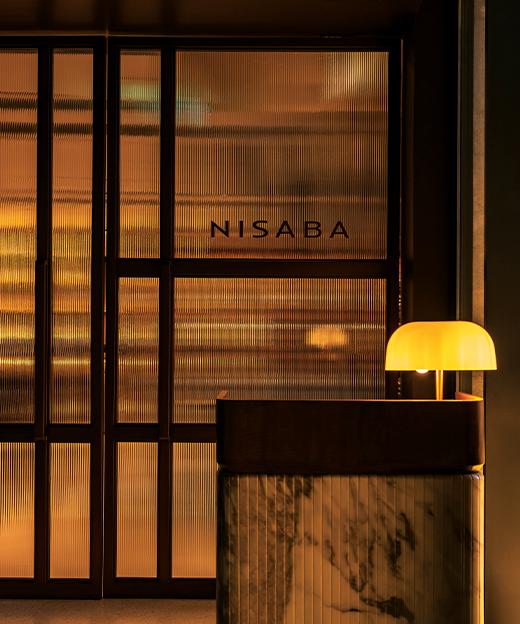
The rather understated entrance to Nisaba.
Patna to global culinary history
The journey from Patna was not easy. 1974-born Mehrotra incidentally did not grow up planning to be a chef. He grew up in a household which was strictly vegetarian, where even onion and garlic were banned. After splitting his school years between Patna and Delhi, he joined the Institute of Hotel Management, Mumbai.
As he recalls, the desire to get into the kitchen rather than management began.
His first job was under legendary Chef Ananda Solomon at the President Hotel in Mumbai, part of the IHCL group. At the hotel’s Thai Pavilion, still a favourite after about five decades, he mastered East Asian techniques, which he later innovated with and was much lauded for across his career.
His proximity to East Asian cuisine continued as he returned to Delhi in the year 2000, joining Oriental Octopus, part of Khattar’s Old World Hospitality at India Habitat Centre. It would be a journey that lasted 23 years, with the most significant moment coming with the opening of Indian Accent. “It was March 9, 2009, at the Manor Hotel (the previous location of the restaurant before its move to The Lodhi),” he recollects, in a noticeably soft tone.
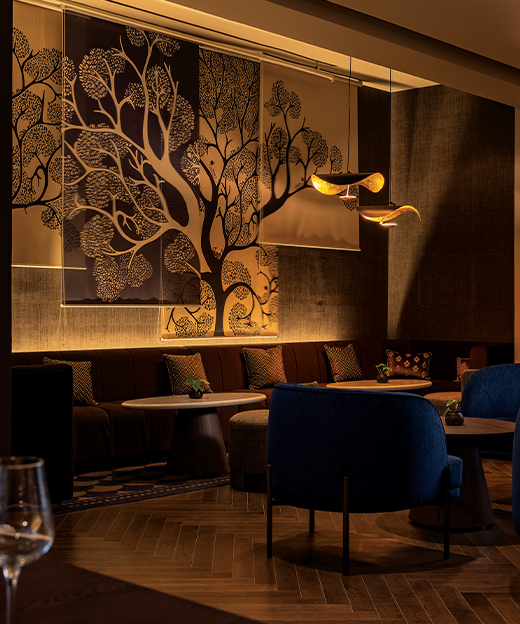
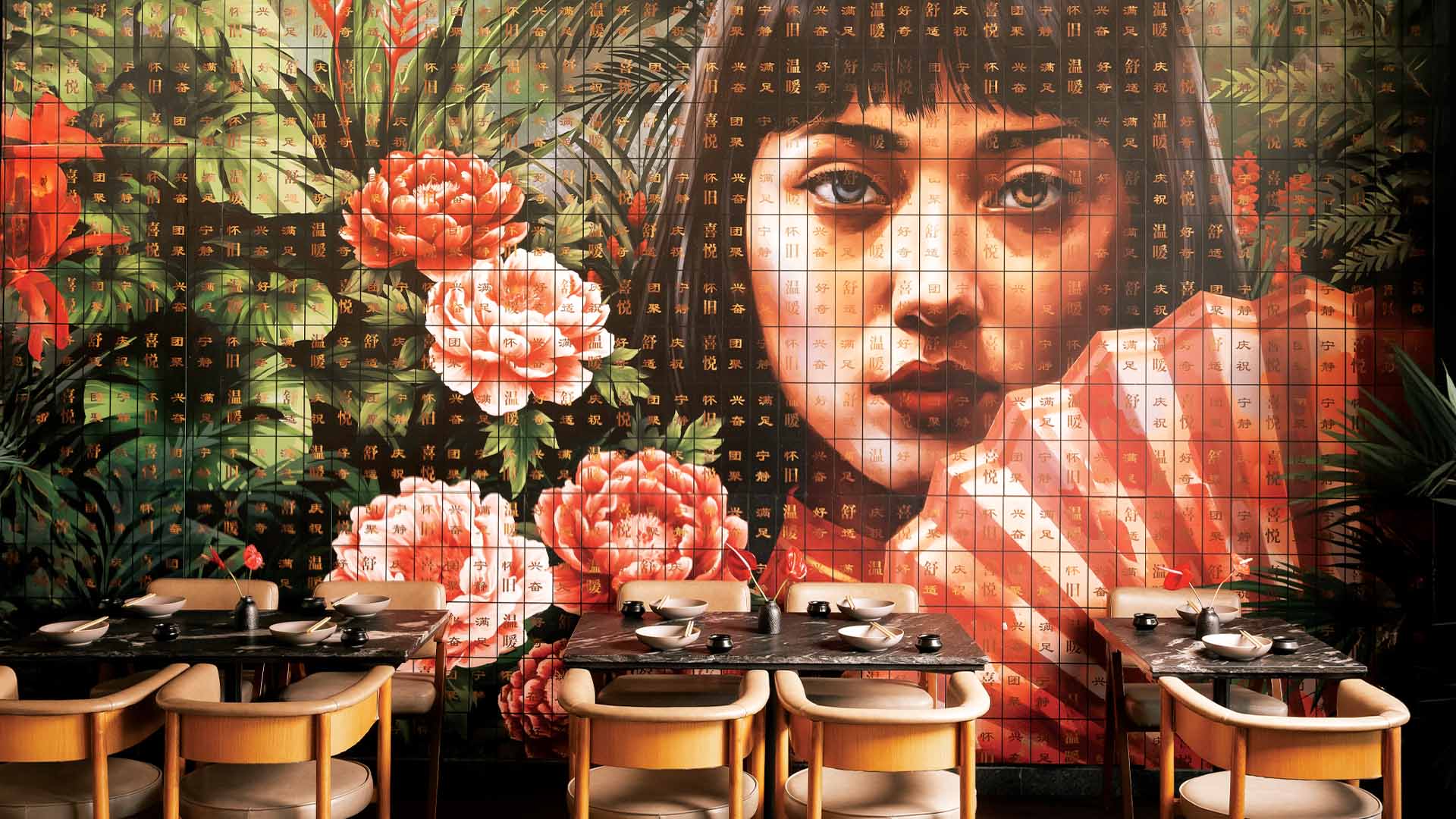
Impressive wall art such as this one in the lounge enhances the atmospherics of the place.
India goes global
Chef Mehrotra has not just revolutionised how Indian food tastes and is presented, his has been the voice that led other chefs to look inwards to examine their paths to culinary nirvana. He has helped redefine how to approach and understand Indian food, almost at a philosophical level.
Chef Mehrotra, for example, is dismissive of the phrase ‘modern Indian food’. “We don’t say ‘modern French food’ or ‘modern Japanese food’. They simply call it French food or Japanese food. Indian food and Indian restaurants have received three Michelin stars! So, no, we don’t need to say ‘modern Indian food’. What I am doing, or what Prateek (Sadhu), Gaggan (Anand), Varun (Totlani), (Hussain) Shahzad are doing…is Indian food.”
While he admits that the term Indian cuisine is a generalisation, he points out that “we are at a stage when globally, people have started accepting that Indian can be an elevated cuisine—it is not only about dosa or paneer. This is the first step; we are presenting India as a nation. The first step towards making Indian food successful has happened. Now people will start saying, ‘I am from southern India’ or ‘I am doing north India’. That will happen now.”
There is no dearth of talent or concepts in India. “Earlier, an Indian restaurant used to be a multi-cuisine type of restaurant jahan sab milta tha (where you'd get everything). Now, Chef Regi Mathew has established a Kerala toddy shop (Chatti). I have eaten there three times. It’s not South Indian as most would imagine. Semma has presented southern Indian cuisines for long. Once, chefs could not imagine opening such a restaurant and being able to sustain themselves.”
For Indian cuisine to be more widely accepted globally, Mehrotra says we do not have to change anything. “The only thing we have to make sure of is the way we present it. Make it more relatable. We have to get over the popular perceptions of Indian food and get beyond spices, beyond oils, beyond Ayurveda… For example, whatever the history of butter chicken as a dish, in terms of flavour profile, it really completes the circle. It’s sweet, tangy, flavourful; the kasuri methi imparts a little bit of bitterness to it; the tandoori chicken is charred, which gives a caramelised flavour. The bite of the chicken and the creaminess of the gravy completes the circle.”
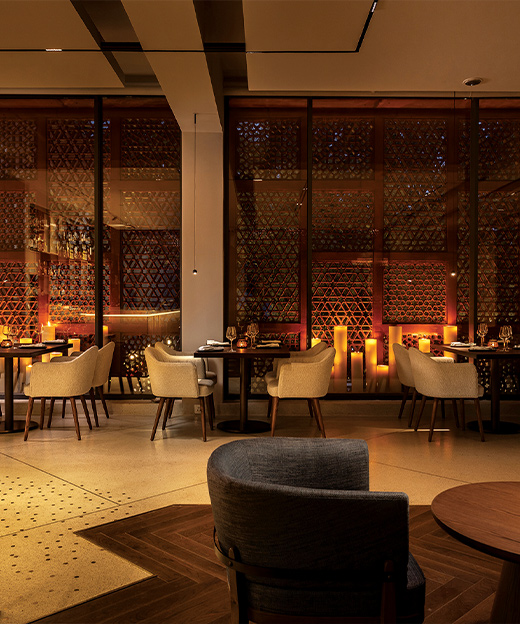
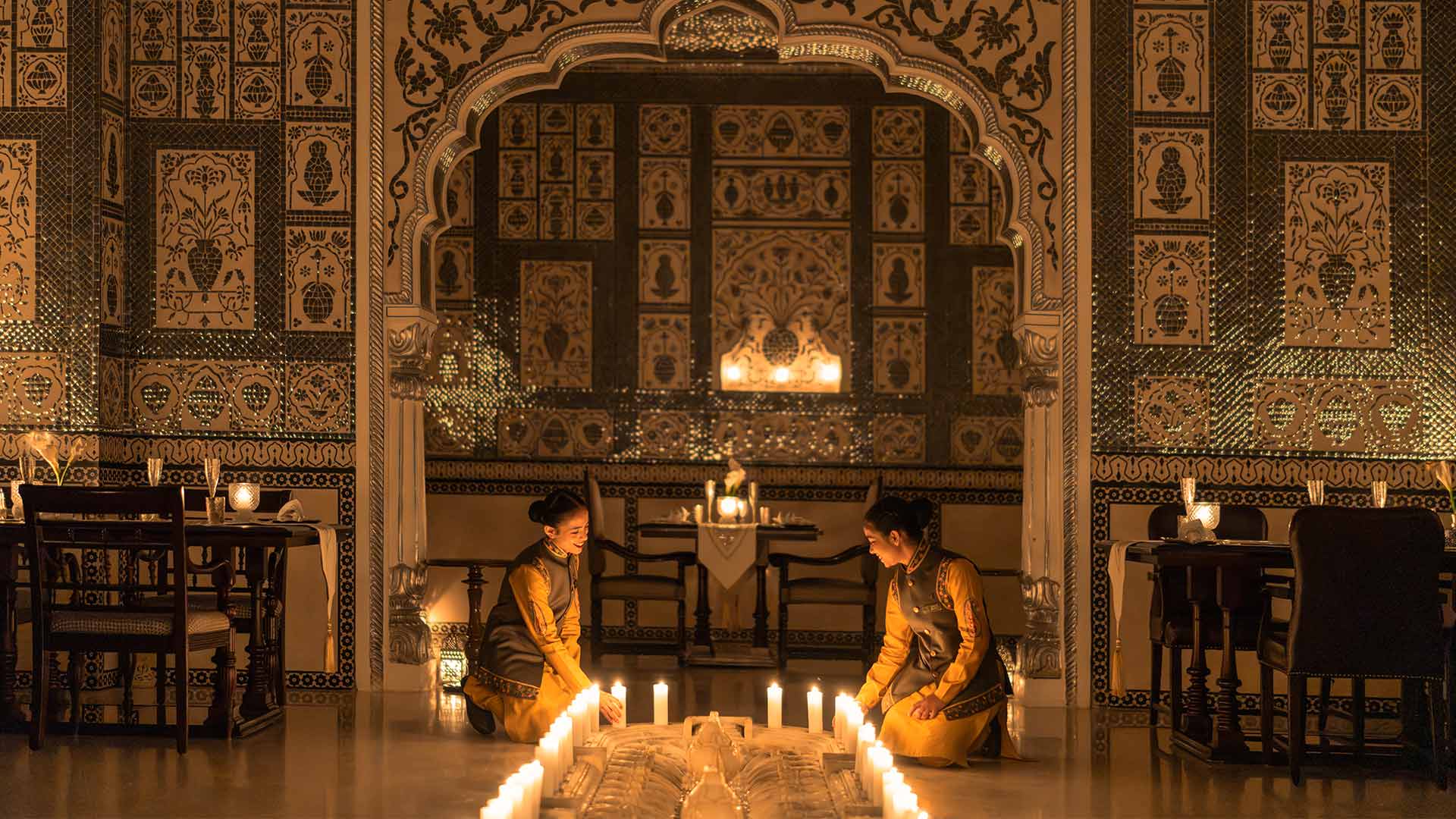
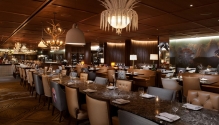
The evening lighting totally transforms the interiors, befitting a sophisticated global dining destination.
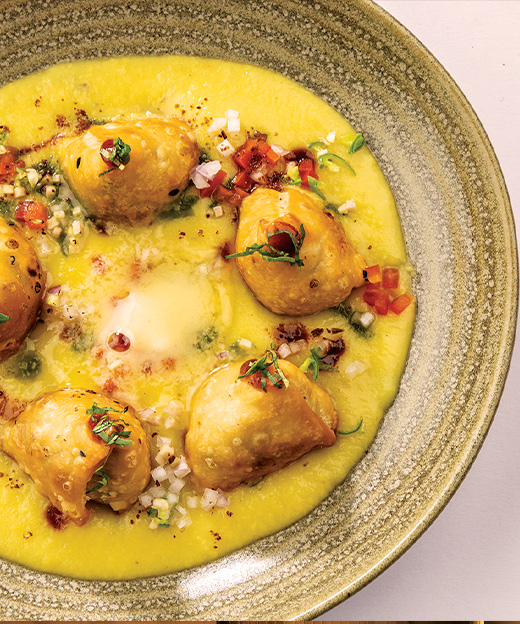
A long time chef signature, Samosa, Moradabadi Dal, Buknu, and Everything Chutney.
Nisaba: Today’s Indian food
Birthing Nisaba has been a roller-coaster ride. Chef Mehrotra heard of the place where the restaurant now stands courtesy Marryam Reshi, arguably India’s best food writer, who urged him to apply for the tender released by the Aga Khan Trust, under whose auspices it lies. “We won the bid in an auction on July 15th. By the second week of August, we started work from scratch.”
The process of conceptualising the restaurant also did not come easy to Mehtrotra. “I was in a dilemma. Should I put my Indian Accent dishes on the menu? I took ideas from several people. One of them said if you are going to a Kishore Kumar or a Michael Jackson concert and they sing only new songs, would you enjoy it? That argument was the deciding factor for me.”
The idea was to create an elegant space serving Indian food, “but my kind of Indian food. It’s Indian food of today’s India.” A lot of food is what he prefers himself, dressed up in techniques he has mastered over the years. Disarmingly, he points out, “I don’t feel like I am an owner here, I feel like a chef. And I am happy about it and always want to feel like I am a chef.”
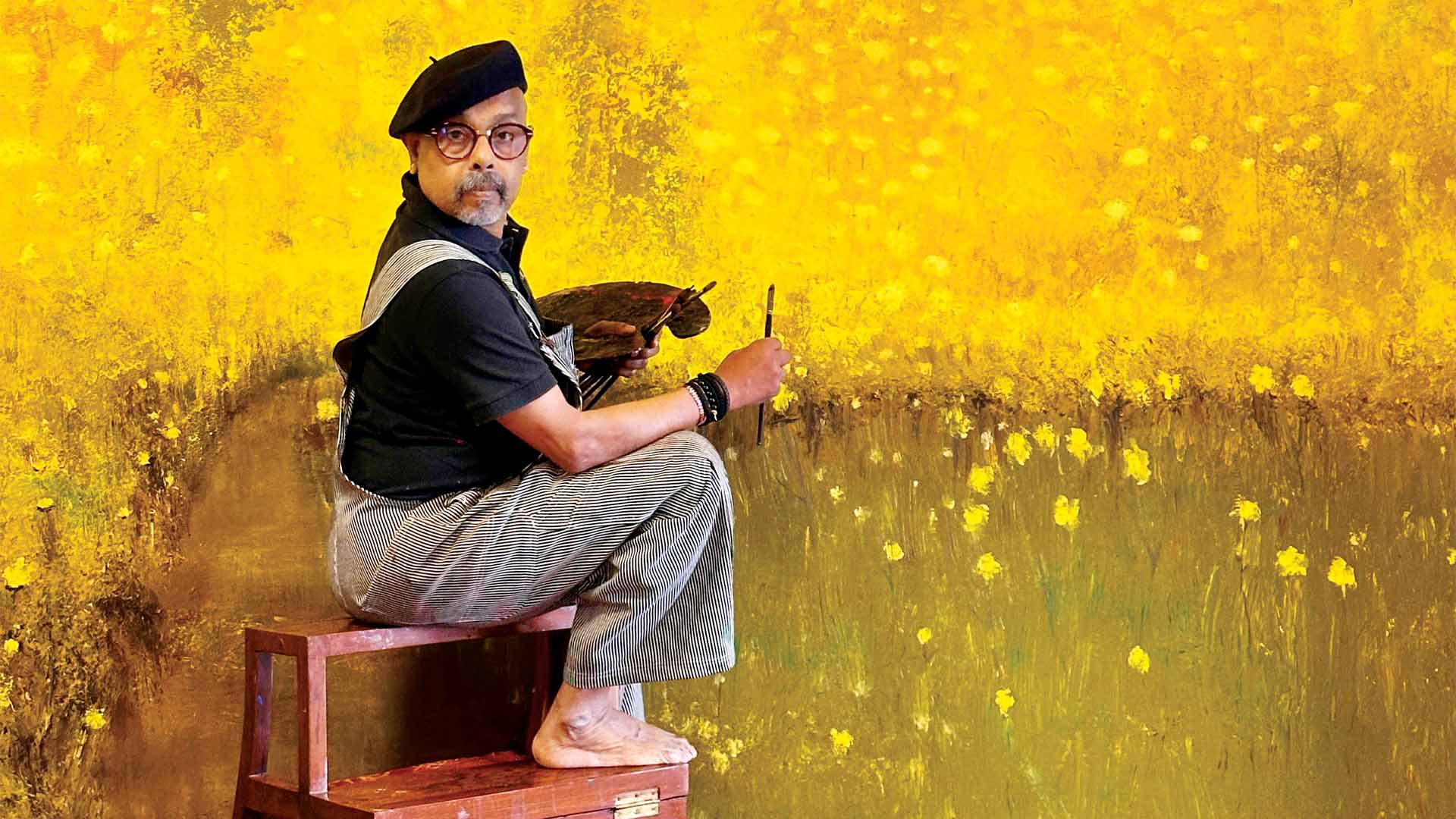
Located adjacent to the Humayun’s Tomb complex, with the spectacular Sundar Nursery next door, Nisaba is effectively cocooned in a verdant landscape. The first floor location provides scenic views during lunch, overlooking a plaza with outdoor seating. The neutral-toned interiors are warm, with natural light permeating every table. Facing the entrance is a bar counter, understated, with the array of colourful liquor bottles adding vibrance. The main dining space extends the pastel narrative, with tables laid out in clean lines, enhancing the minimalist vibe. The evening look is more inward-oriented, intimate, with lighting that transforms the look. Between the two main spaces is an alcove with an installation by artist Dhananjay Singh. It is loaned, says Chef Mehrotra, designed to reinforce his belief that food, space and art are a perfect blend.
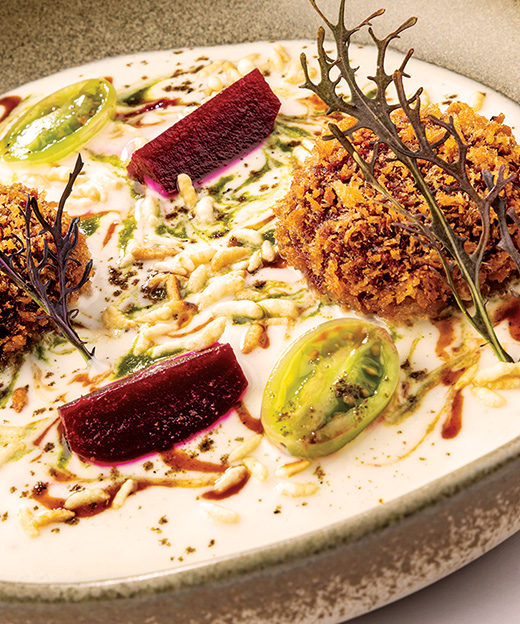
Beetroot Goat Cheese Dahi Vada, Fresh Green Tomatoes, and Nutmeg Miso Rice.
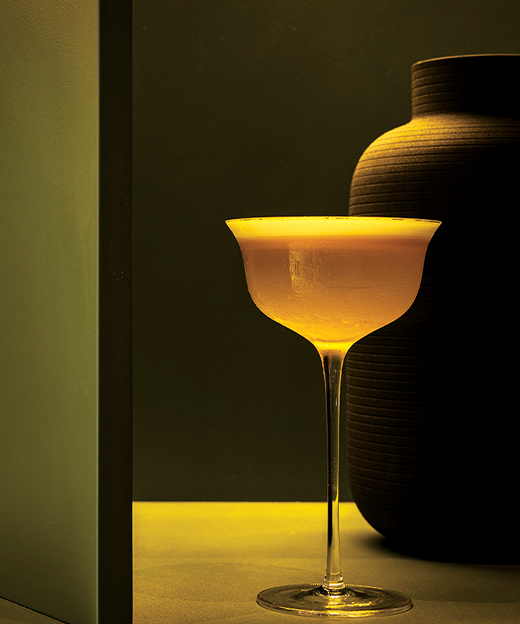
An extensive cocktail section includes Banana Chili Shadow.
Over decades, just about everyone who has interacted with Chef Mehrotra has noted his culinary wizardry, his easy-going demeanour, his kindness, and his patience while explaining dishes to often bewildered, bemused guests. At our impromptu shared lunch, just days before the opening, the seemingly unhurried chef was at pains to explain each course and the reasons for choosing them. “The food is well presented, easy to eat. Indian Accent had become a place for occasions. I did not want to create a place that would become only for occasions.”
While it is no surprise that successive dishes lead one to ever-increasing paroxysms of delight, there are still some that the chef cautions about even as he pecks away at his plate. “The Rasmalai is evil, I keep away from it,” is his emphatic reaction to his own creation. Guests, however, especially those likely to experience the chef’s artistry only occasionally, are advised to make the best of the meals.
And yes, there are no tasting menus at Nisaba. There are 43 dishes, and all the mains come with sides of bread or rice. “Tasting menus have become a kind of theatre across the world. I did not do a tasting menu here because I want people to eat non-intimidating Indian food where the focus is on the food.” Yes, his signature dishes are there, but the pleasure is in discovering the new dishes he has conjured up.
Chef Mehrotra has plans lined up for the future, and the new venture is an indication of his assured voice when it comes to elevating Indian cuisine. Meanwhile, Nisaba is expected to be the favoured culinary destination for Delhi in the foreseeable future. Deservingly.
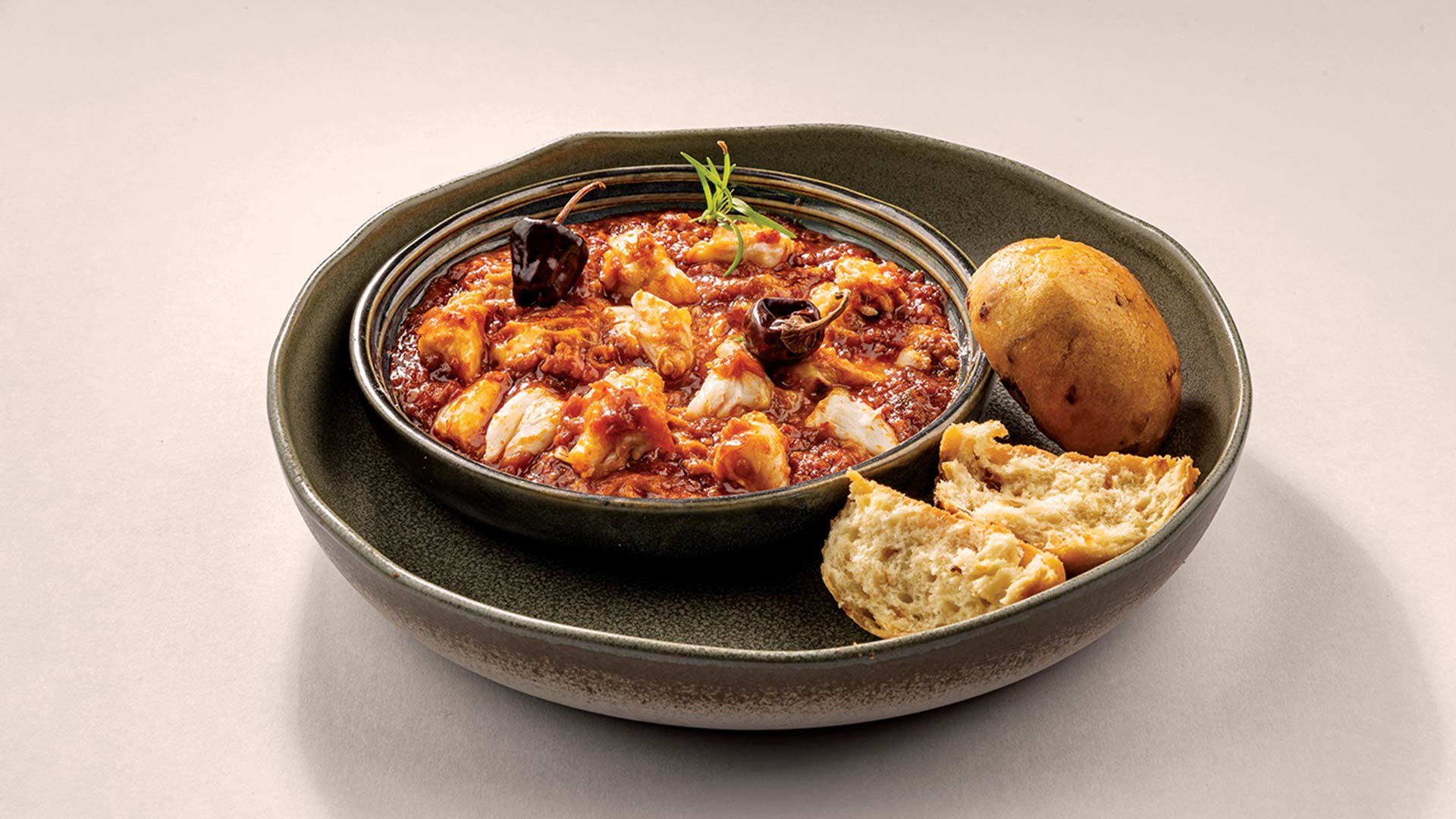
Chilli Tomato Crab Ghotala and Butter Buns.
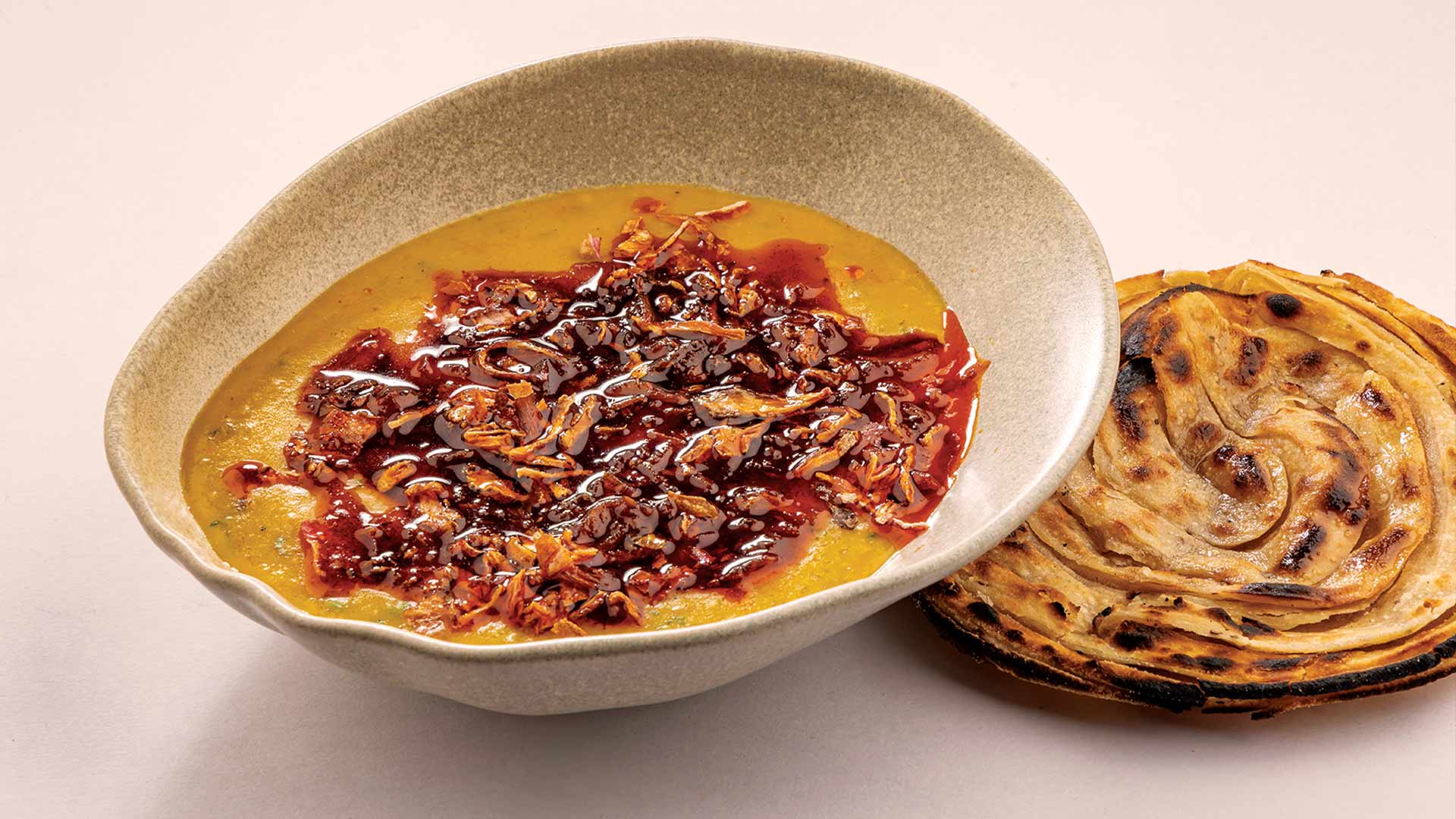
Zaveri Bazaar Dal, Birista, Baby Hing Tadka, and Ajwain Roti.
Beyond The Bio
What is your go-to for leisure time?
Staying in my room and watching a South Indian movie dubbed in Hindi. You know, the kind in which a guy puts his foot down, and two people fly. What else do you need in life? You also visualise a guest or kitchen staff who troubled you in the evening. Then you see these movies and get happy about it and sleep.
What does luxury mean to you?
I think my definition of luxury is my comfort room or my bedroom, in front of a television or something. And I don't have to cook. That is luxury. Cooking-wise, luxury is when I am cooking with my drink in the evenings, with the music playing in the background.
How often do you cook at home?
I don't. Not that much. But sometimes I have to, especially when my daughter Adah comes home.
Without any restrictions of ‘practicality’, what would you want to open?
An Indian-style steakhouse. The best steak house, a mom-and-pop kind of place with a butcher’s shop next to it. I want to do it in New York. We have so much variety in meats there.
What do you look for when hiring?
I think I need people with better attitudes than cooking skills. That is always a challenge in today's world. For Nisaba, I didn't take a single trade test.
Chef’s recommendations
Starters
Samosa, Moradabadi Dal, Buknu, Everything Chutney, Mutton Seekh Kabab, Blue Cheese Butter, Baked Naan, Mushroom Chop, Mushroom Makhani, Mushroom Achar
Mains
Dal Zaveri Bazaar Dal, Birista, Baby Hing Tadka, Ajwain Roti, Clay Pot Motihari Mutton, Stewed Garlic, Hing Sattu Kachori, Chilli Tomato Crab Ghotala, Butter Buns
Desserts
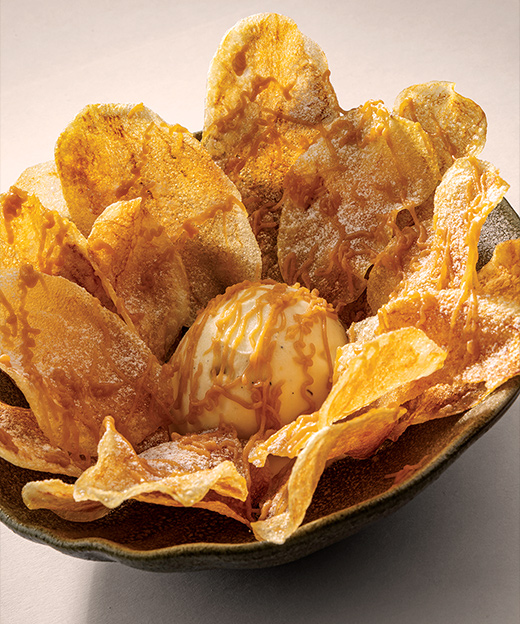
House Potato Chips, Chashni Miso, Vanilla Bean Ice Cream, Baked Rasmalai, Fried Chironji, Nolen Gur Makhana