














Where Evenings Linger
At 1932 Trevi in Jaipur, architecture, ritual and cuisine come together to reimagine dining as an act of memory—unhurried, layered and quietly immersive.

By Rupali Sebastian
In the early evenings of Jaipur when the air cools and the city exhales, gardens begin to reveal their true purpose. This is when peacocks appear without announcement, conversations stretch longer than planned, and leisure—once a royal privilege—feels quietly reclaimed. It is within this rhythm that 1932 Trevi situates itself, not as a restaurant to be visited, but as a setting to linger in.
Trevi is imagined as a picnic hosted by a maharaja in his garden—not a grand feast, but an intimate, unhurried gathering shaped by memory, travel and indulgence. The idea is less about historical accuracy and more about atmosphere: the ease of dining outdoors, the pleasure of shared plates, the layering of cultures brought home from distant journeys.
The restaurant is set within Santha Bagh, a family estate dating back to 1932 subsequently converted into a boutique hotel. Once the garden edge of a heritage haveli, this tract of land had gradually slipped into neglect, its role as a social garden all but forgotten. Yet traces remained—the stillness of the trees, the presence of peacocks, the sense that this was always meant to be a place of pause.
Rather than overwrite this history, 1932 Trevi builds upon it. What unfolds in the newly built space is neither nostalgia nor spectacle, but a contemporary reimagining of how people once gathered—slowly, intentionally, and with pleasure at the heart of it.
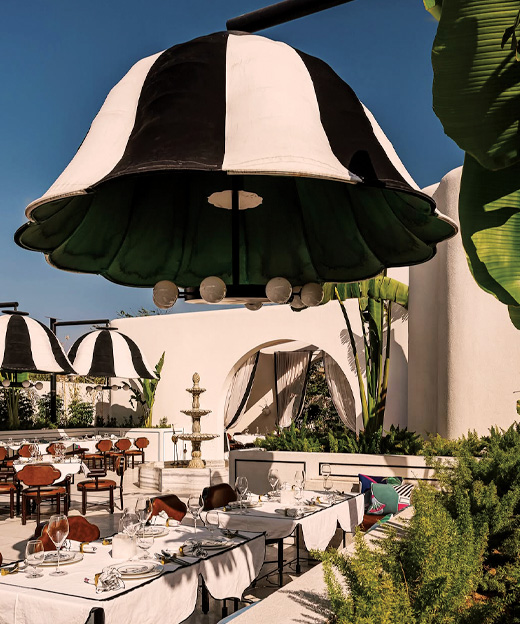
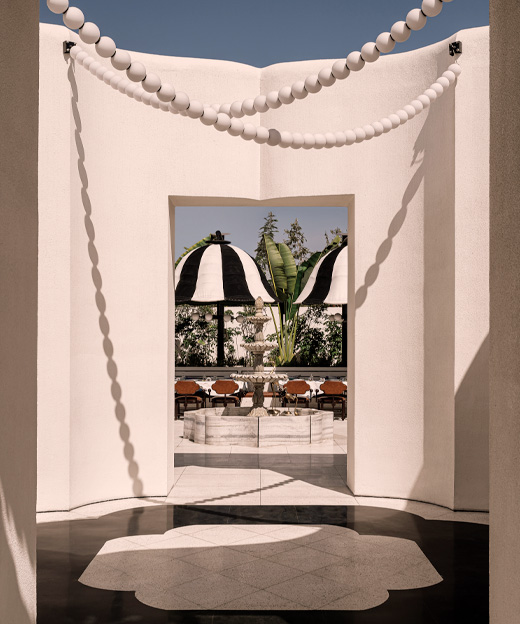
A quintessential Rajasthani bagh is reimagined as a serene white garden, anchored by a central fountain.
A vision rooted in time and place
The founding intent behind 1932 Trevi is shaped by an understanding of hospitality as something experiential rather than transactional. For founder Namokar Jain, the restaurant was never meant to be a surface-level fusion or a stylised homage. Instead, it was conceived as an emotional bridge—between eras, cultures and states of mind.
“From the beginning, the intent was to create a space that feels like stepping into a memory you didn’t know you had,” Jain explains. Italian romance lends the project its timeless elegance, while Indian heritage brings warmth and depth. The relationship between the two is not performative but intuitive—old Jaipur meeting an imagined Rome of the 1930s.
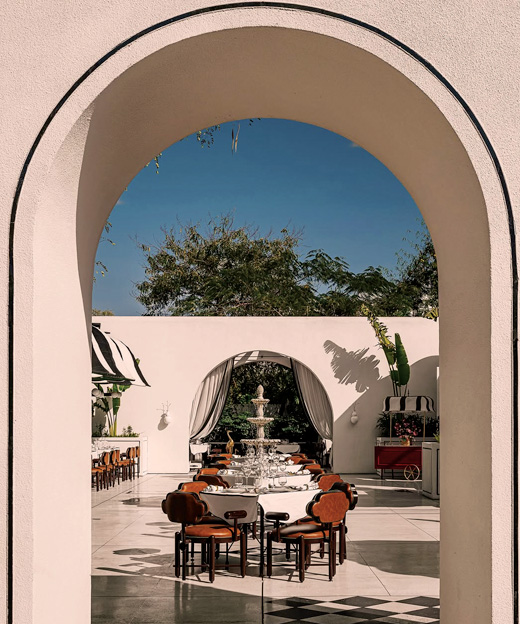
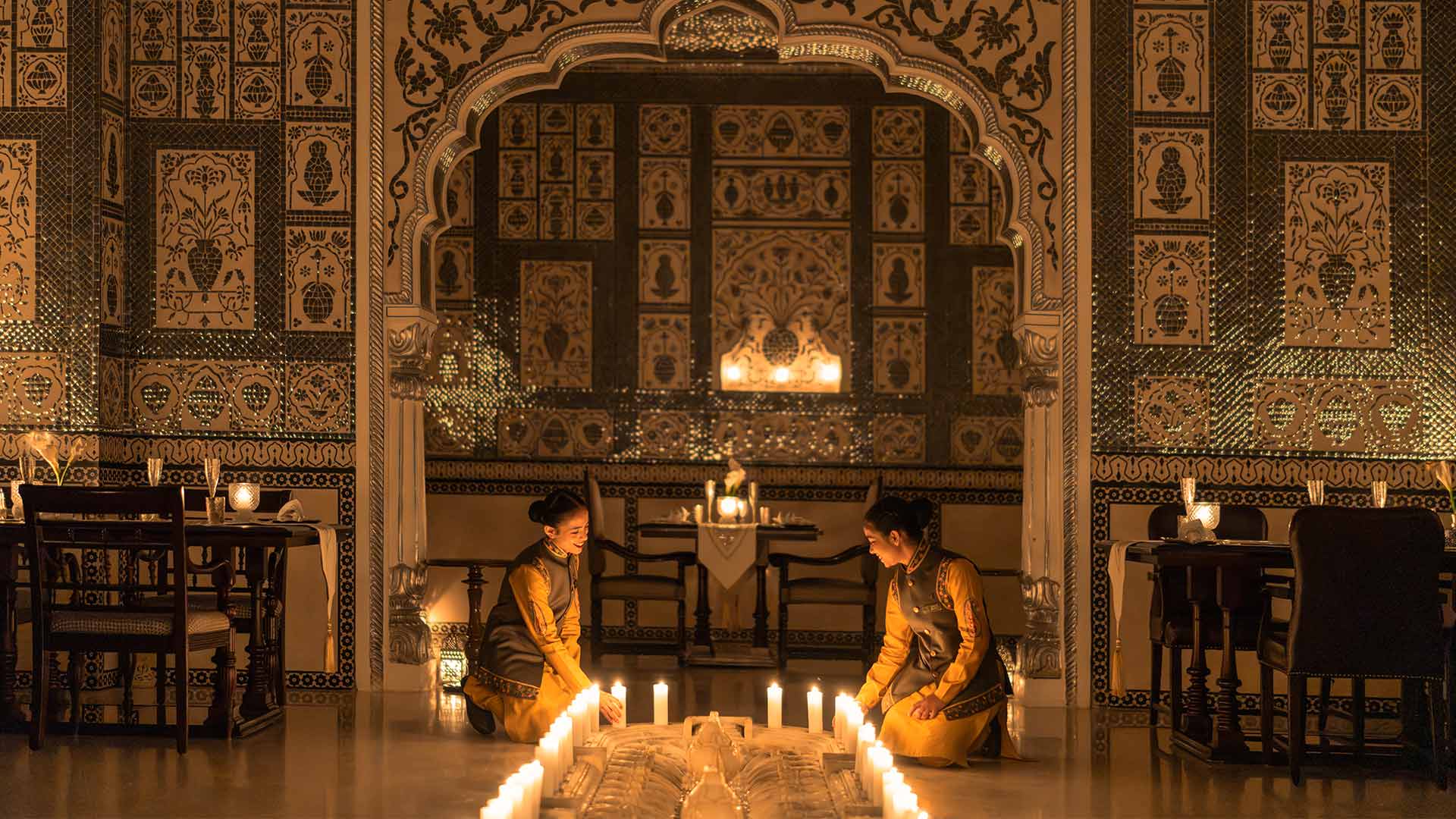
An arched opening sets up Trevi's spatial rhythm, where architecture unfolds in measured sequences.
The meaning of 1932
The number that anchors the restaurant’s name is not a branding device, but a deeply personal reference point. 1932 marks the year the heritage home at Santha Bagh was built—a space layered with family memory and lineage.
For Jain, naming the restaurant became an act of continuity rather than reinvention. “1932 grounds the space in legacy,” he notes, “while Trevi evokes romance, travel and aspiration—together anchoring the restaurant emotionally, not just aesthetically.”
This sense of grounding finds its most tangible expression not in symbolism alone, but in how the space itself is organised, proportioned and revealed.
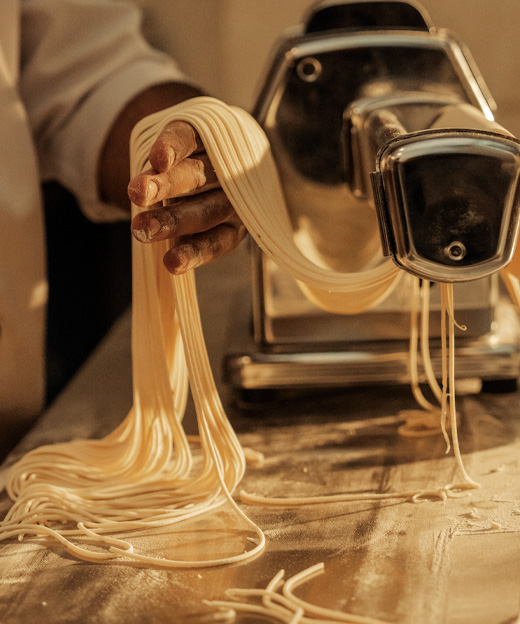
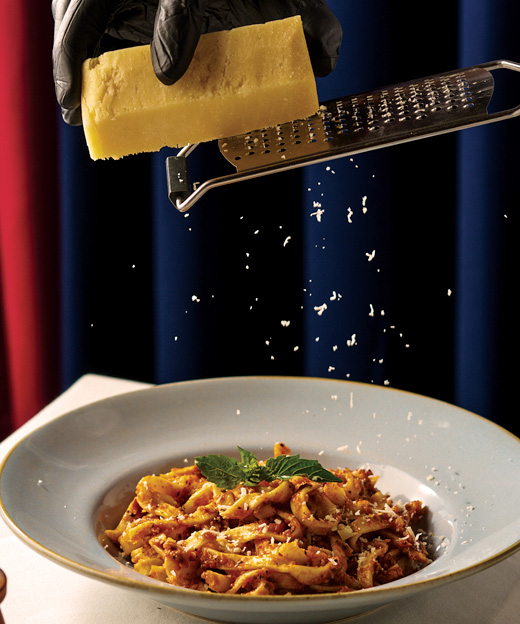
Italian technique surfaces quietly, calibrated for sharing rather than spectacle.
Architecture as a sequence, not a statement
Interior designer Shantanu Garg approached Trevi as a spatial narrative rather than a singular design gesture. Instead of one dominant dining room, the restaurant unfolds across multiple zones arranged around a central garden, each carrying its own emotional register.
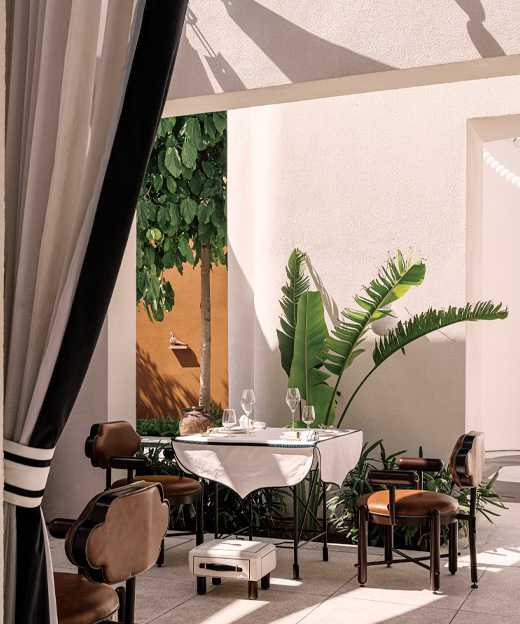
The 'bagh' forms the spatial and emotional anchor of the project. Rendered in whites and soft neutrals, it allows light, greenery and movement to take precedence. The effect is calming rather than dramatic—a space calibrated for lingering rather than display.
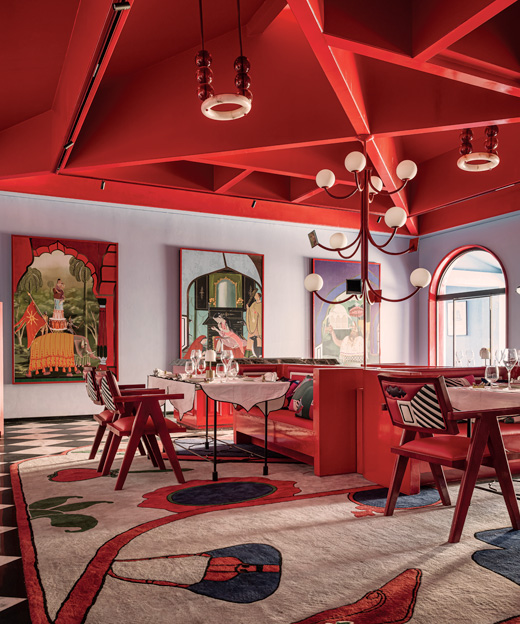
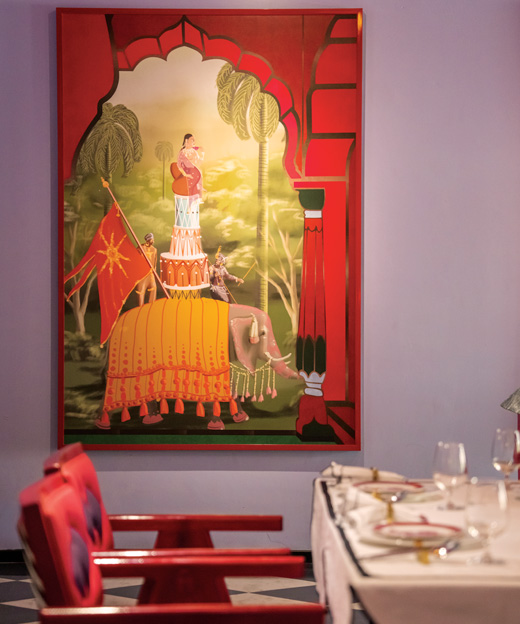
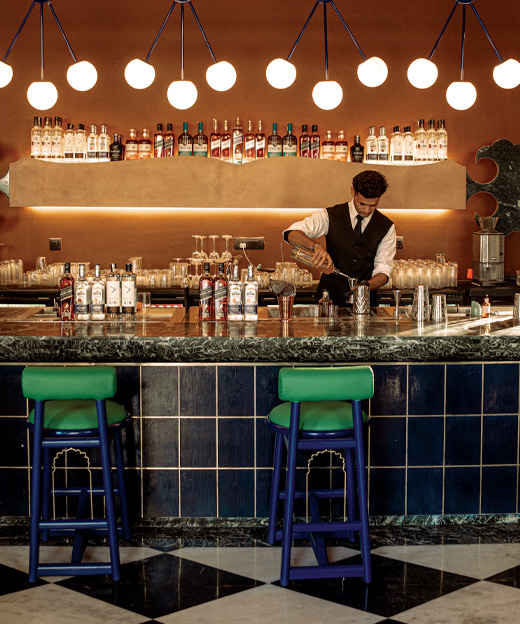
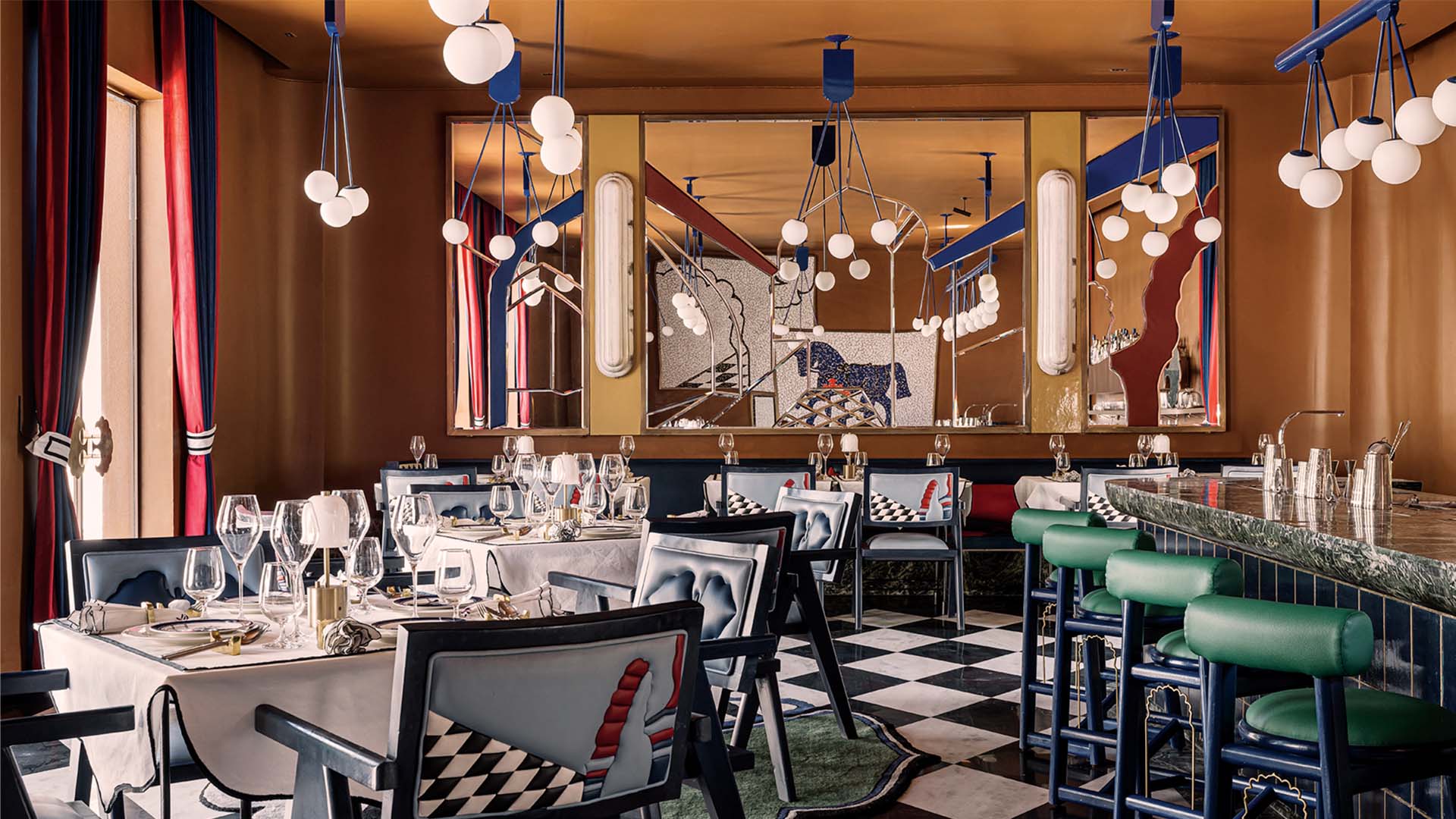
From here, the experience shifts. The Plume Bar introduces deeper tones and a more intimate scale, drawing from the symbolism of the peacock. In contrast, the Vanity Room—washed in scarlet—embraces theatricality, imagined as a private chamber that brings indulgence into the narrative.
The Tuscan Alley, narrower and more kinetic, references Italian street cafés, encouraging movement and informal interaction. Together, these spaces ensure that Trevi is never experienced in a single way.
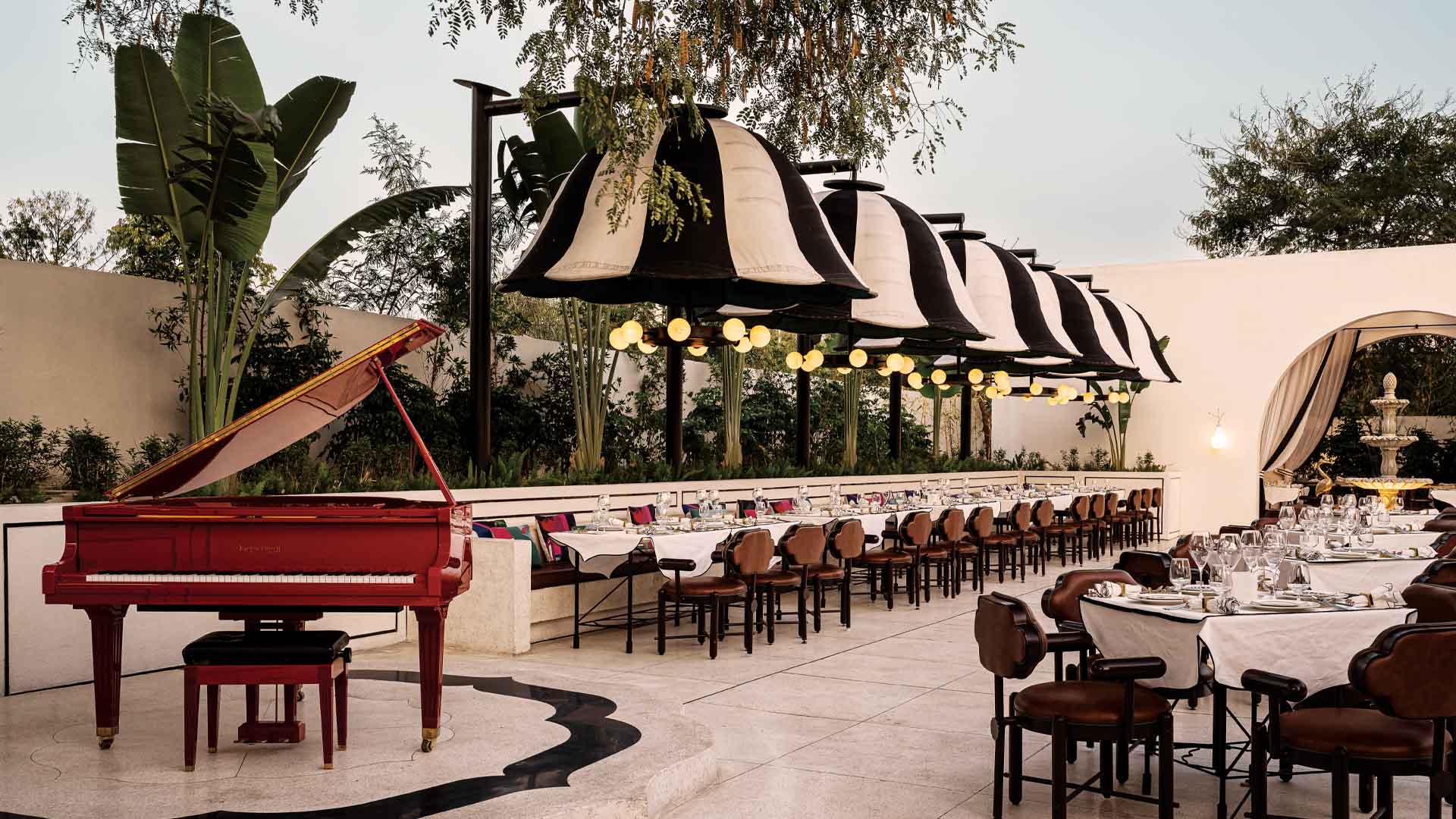
The piano brings sound into the garden, lending evenings a sense of ceremony without formality.
Detail as memory-making
At 1932 Trevi, detail is not decorative—it is mnemonic. Motifs, materials and objects are deployed quietly, designed to lodge themselves in memory rather than announce intent. This is also where the project’s experiential thinking begins to surface.
It was at this layer that experience designer Jai Sharma’s role became particularly pronounced. Working closely with the founder, and eventually coming on board as a partner on the project, Sharma approached Trevi as a permanent experience—one where recall would be shaped as much by the smallest gestures as by the architecture itself.
“When a space has a reason for existing beyond its aesthetics, that’s when it starts telling a story,” Sharma notes. At Trevi, this translates into repetition, symbolism and tactile cues that operate subconsciously.
The padma, or lotus, emerges as a unifying geometry, appearing across architectural details, bespoke tableware and furniture accents. Rather than being applied ornamentally, it is extracted from the space’s underlying geometry, allowing it to function as a cohesive thread.
Material choices follow a similar logic. Brass accents, handcrafted elements and textured surfaces sit alongside cleaner contemporary lines. Italian references—arches, fountains and colour cues—are filtered through an Indian sensibility, resulting in a space that feels layered rather than hybrid.
Among the most emblematic design elements is a custom cake caddy, conceived not as a conventional tiered stand but as a sculptural tree. Branching into lotus-shaped leaves, it brings together the garden setting, the padma motif and the idea of shared indulgence.
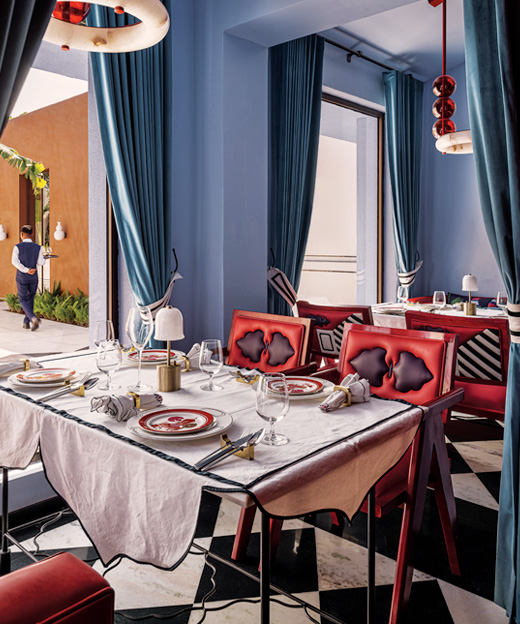
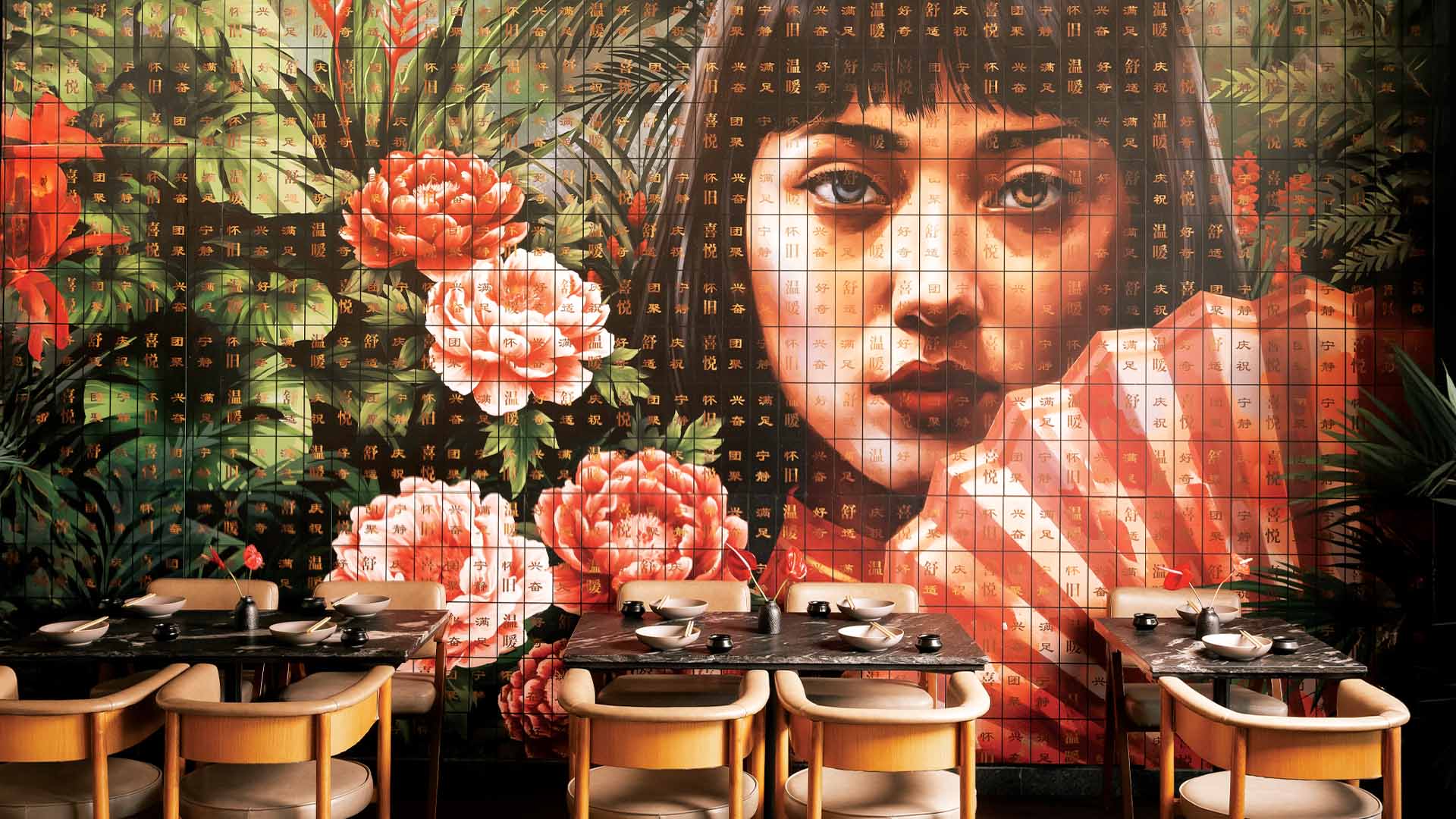
Colour becomes a tool for mood — moving from theatrical intensity to quiet calm across Trevi's spaces.
Experience as an extension of design
While architecture and spatial details establish atmosphere, Trevi’s spirit is animated through experience. Here, experience is not applied after the fact; it is embedded within the design.
A defining ritual concludes each meal: guests receive a custom coin, etched with the year 1932 and a peacock emblem, and are invited to toss it into the fountain at the heart of the garden. The gesture draws from Indian and Roman traditions alike, transforming departure into participation.
“For me, experience can be as simple as the first greeting or the final moment when the bill arrives,” Sharma reflects. “It’s about what memory you take back from the space.”
Sound and performance further animate the garden. A grand red piano beneath a banyan tree introduces live music, lending the outdoor setting ceremony without formality. Golden High Tea and the Pasta Atelier extend this philosophy, turning dining into an unfolding experience rather than a fixed event.
Over time, these gestures revealed something essential. “Our guests showed us how they wanted to inhabit the space,” Jain observes. “Their rhythm shaped ours, allowing Trevi to evolve from a restaurant into a lived experience.”
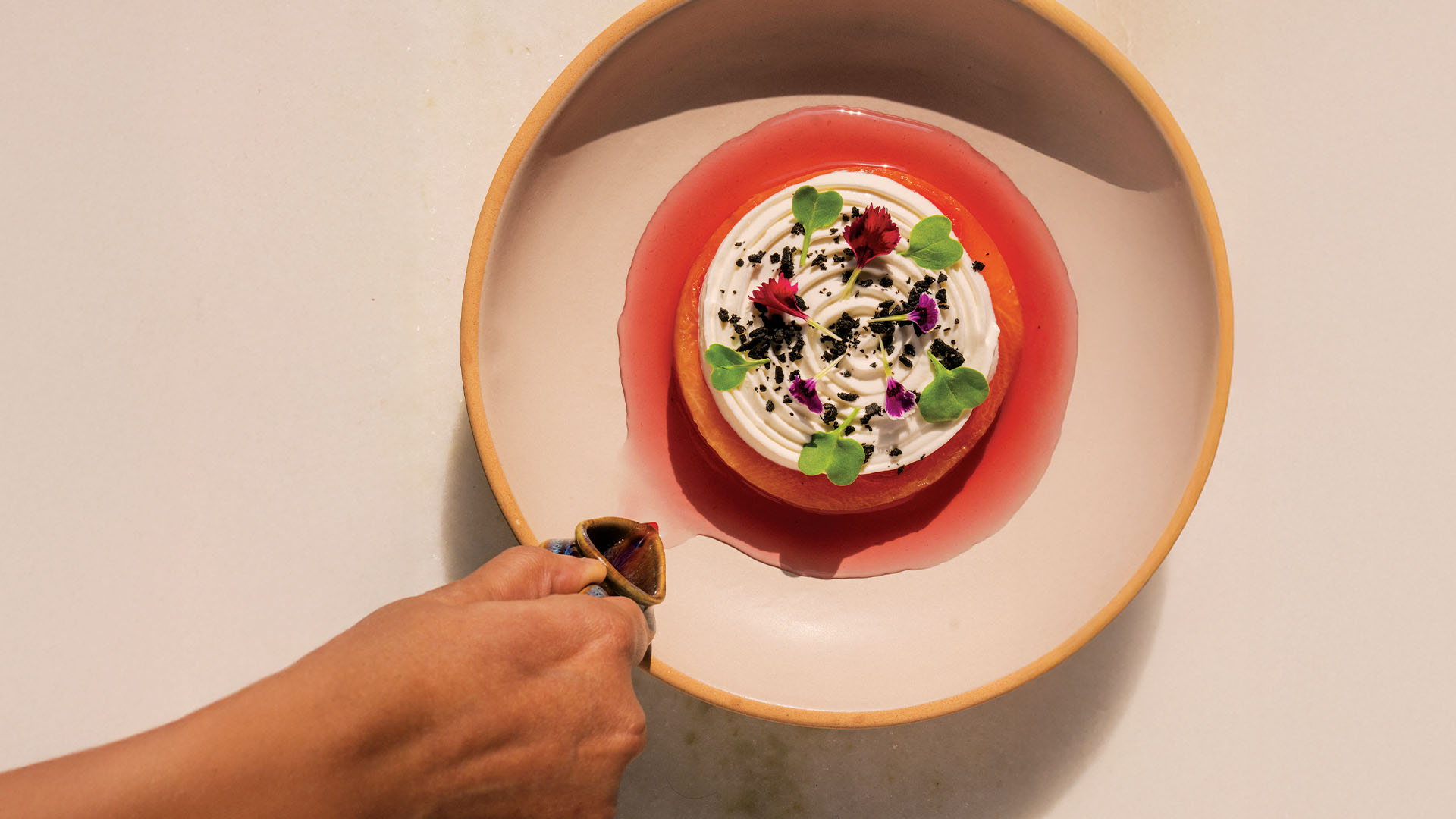
Cuisine mirrors the space — layered, restrained and meant to be lingered over.
Food as cultural conversation
At 1932 Trevi, food mirrors the logic of the space. Rather than announcing itself as a fusion kitchen, the menu operates through restraint, allowing Italian technique and Indian sensibility to sit alongside one another without collapsing into mindless novelty.
Classic Italian preparations anchor the offering, approached with sensitivity to place. Sauces are lighter, textures cleaner, and portions calibrated for sharing rather than formality—echoing the idea of a picnic rather than a coursed meal. Indian ingredients surface not as decorative twists, but as quiet inflections, introduced where they feel instinctive rather than imposed.
There is no urge to over-Indianise dishes or dramatise ingredients for effect. Instead, the conversation unfolds through balance—through warmth, familiarity and food designed to be lingered over.
In Trevi’s ecosystem, cuisine does not perform in isolation. It works in quiet alignment with space and ritual, sustaining conversation and encouraging return rather than demanding attention.
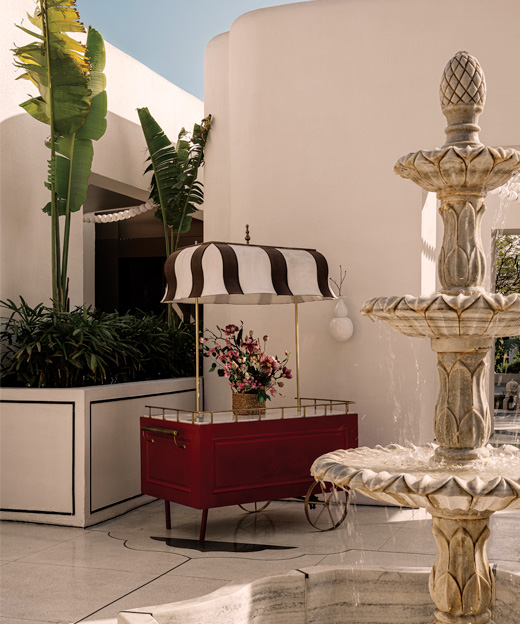
The central fountain in the Rajasthani bagh.
A contemporary expression of legacy
Within Jain’s wider hospitality portfolio, Trevi represents a moment of refinement and maturity. It signals a belief that fine dining can feel warm, and that heritage can remain alive rather than preserved.
By allowing architecture, experience and hospitality to operate in quiet harmony, 1932 Trevi offers a measured interpretation of luxury—one rooted in intimacy rather than excess.
As evening settles over Santha Bagh, the piano softens, the fountain catches the last light, and the garden returns to its rhythm. What lingers is not just the memory of a meal, but the feeling of being hosted—slowly, thoughtfully, and with intent.