















Goma’s Pan-Asian Storytelling
At Radisson Mumbai Goregaon, food and beverage revenue now outpaces rooms. At the heart of this success is Goma, where heritage, seasonal ingredients, and thoughtful storytelling turn every dish into an experience.

By Deepali Nandwani
How many hotels can boast F&B revenues that outstrip those from rooms, even by a fraction? Radisson Mumbai Goregaon does—its F&B formats account for 60% of revenue, against 40% from rooms. At the heart of this success is Goma, a pan-Asian restaurant offering a cross-section of the region’s cuisines.
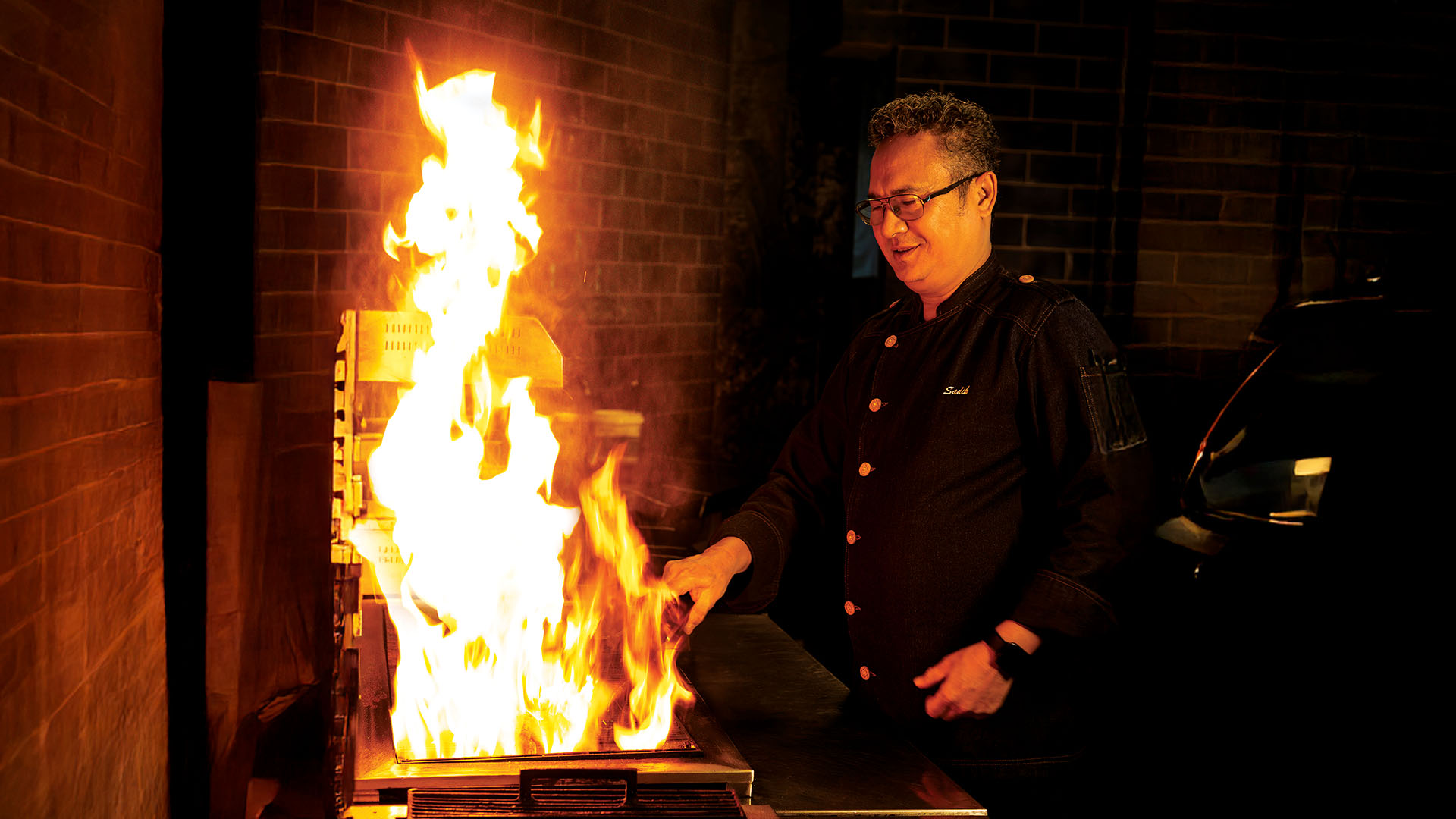
In Japanese, Goma means sesame seeds, a staple in sushi, salads, and dressings. “We make a lot of salads with sesame dressings,” says head chef Sadiq Khan.
The genesis
Goma’s concept took shape in late 2021. “Most good pan-Asian and Japanese restaurants were in South Mumbai or, at best, Bandra. For those living between Bandra and Dahisar, dining at one meant driving all the way to BKC,” says Ajoy Balkrishna, Vice President – Hospitality, Balwa Group.
To fill this gap, the group brought in Chef Sadiq Khan, four decades in pan-Asian cuisine, working at Wasabi at The Taj Mahal Palace, Mumbai, and Golden Dragon. He started a three-month consulting project for Goma and continues three years later, curating the menu and guiding the kitchen.
The interiors
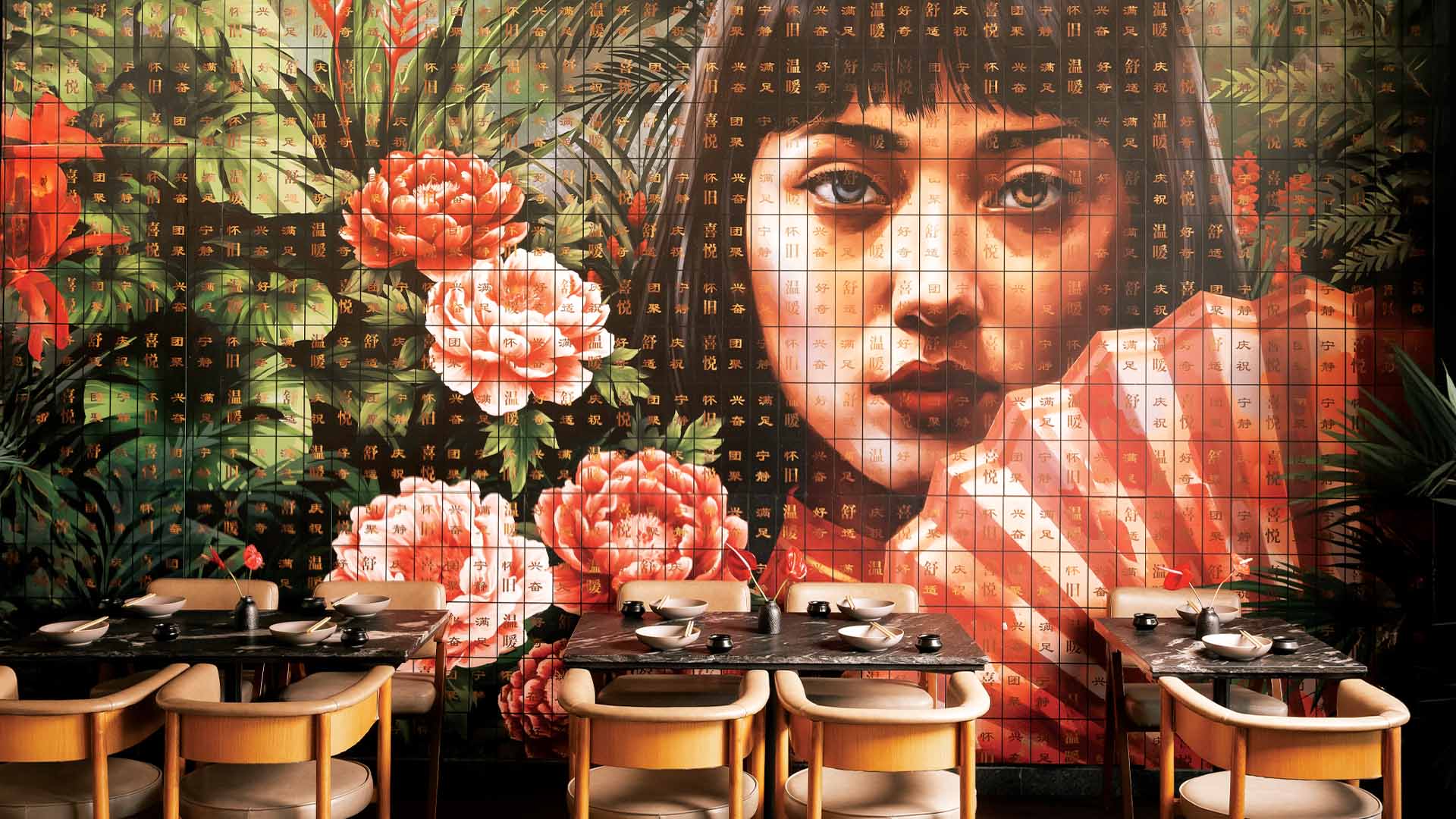
Designed by Grey Matters Studio, the space features a bold, artistic chandelier as a spatial highlight. Warm ambient lighting, accent lights over the sushi bar and grill, and a play of light and shadows create luxury and spaciousness. Modern materials—polished wood, glass, metal—blend with Asian influences: minimalist Japanese lines, earthy Thai textures, and Chinese motifs. The sesame-inspired palette emphasises neutral tones and understated elegance, complemented by carefully tuned music.
Food and its heritage
Quality sourcing is central: imported fish and local produce are chosen for purity, not experimentation. The bar mirrors this ethos—cocktails and mocktails use loose-leaf teas and a farm-to-glass approach. “Nothing is synthetic; syrups and concoctions are freshly prepared daily. The bar complements the food in philosophy and flavour,” says Balkrishna. Menus evolve seasonally while classics remain—sushi, Pol Salad, Lupi Rice, and signature dishes such as blanched spinach with sesame sauce.
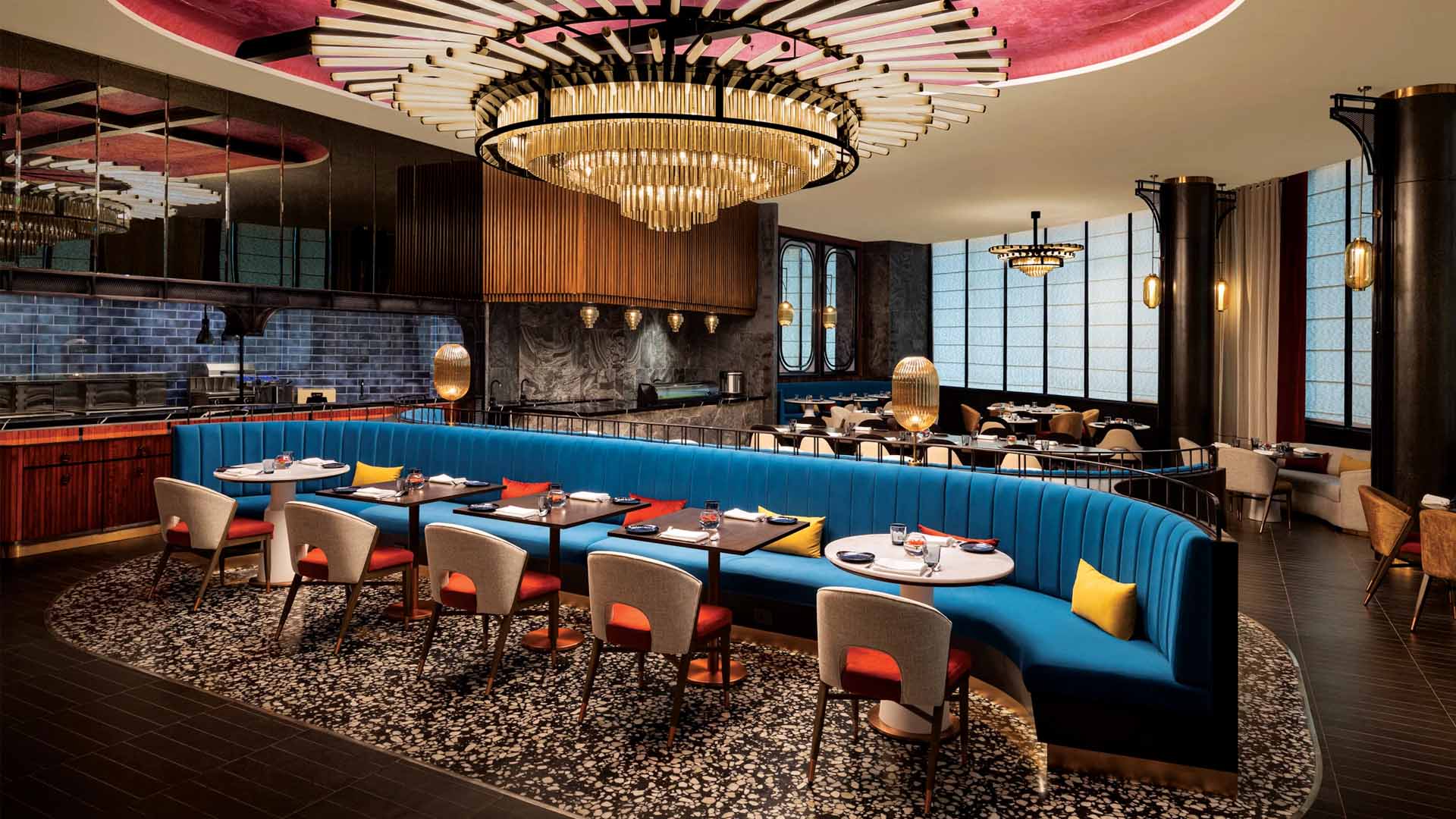
Modern materials join hands with Asian influences in the restaurant interiors.
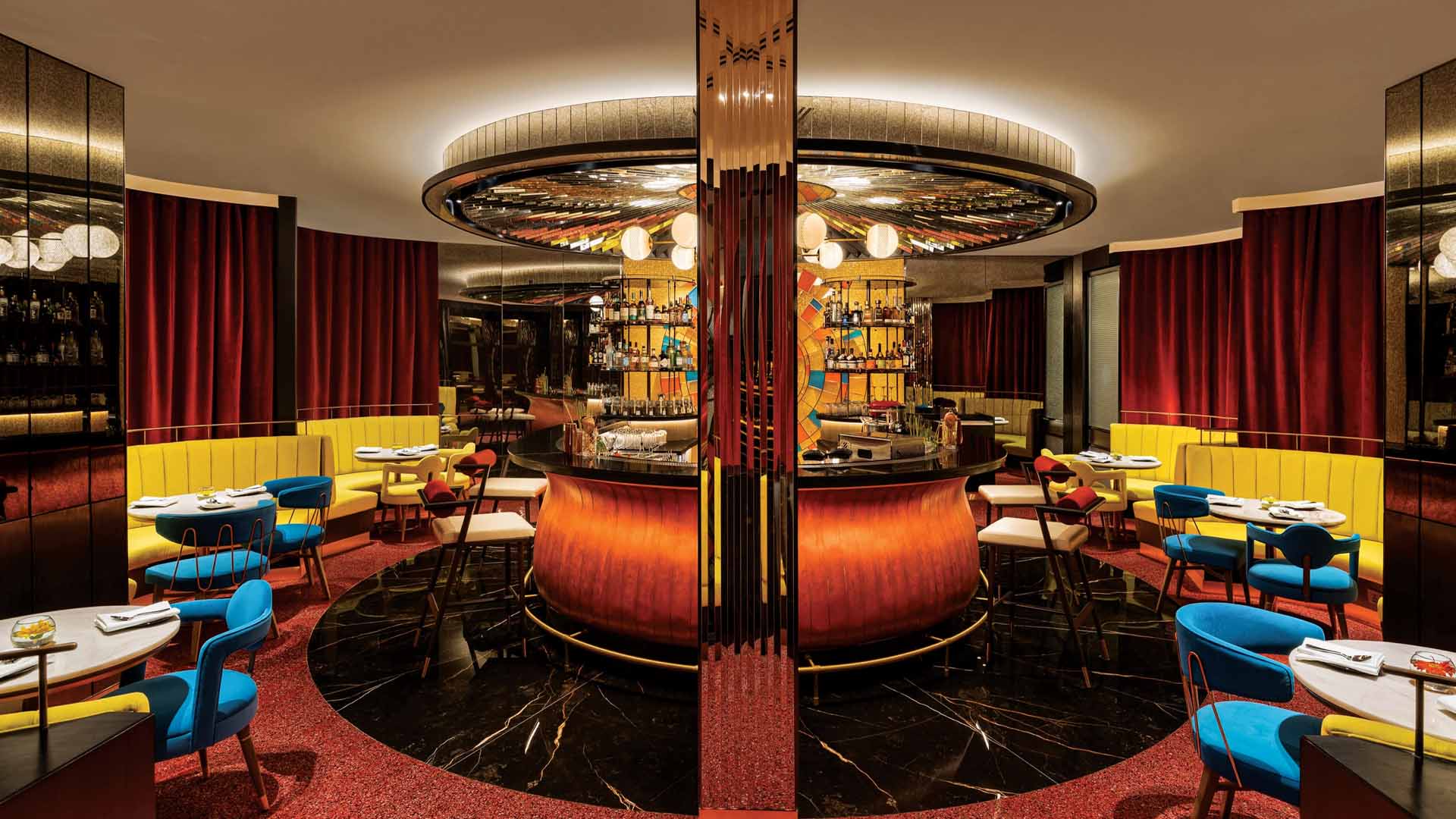
A chandelier, striking and resplendent, anchors the restaurant spatially.
The tasting experience
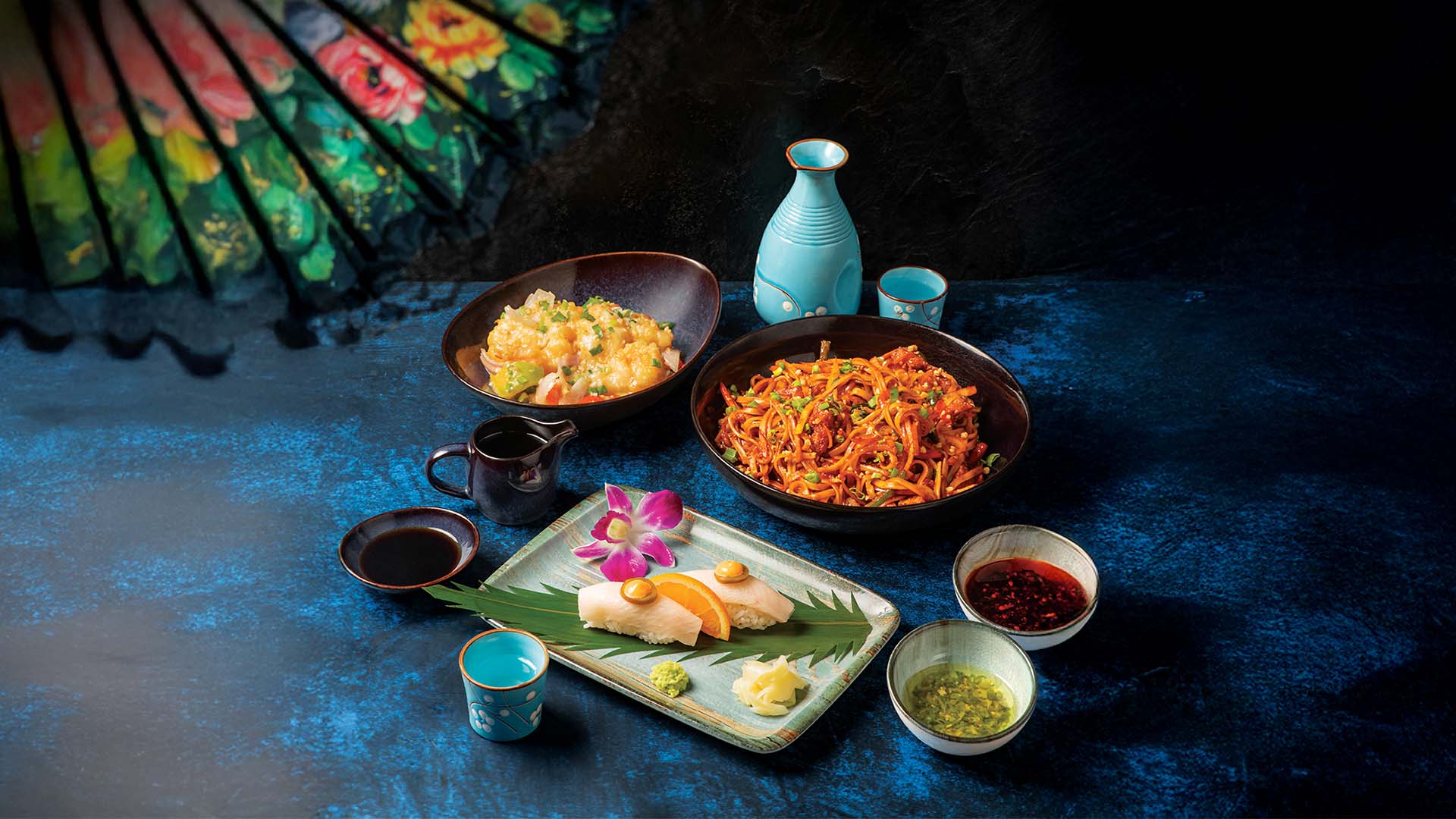
Blanched Spinach with Sesame Seeds, from Japan’s Shikoku island, is lightly seasoned and dressed with roasted sesame, rice vinegar, and a hint of evaporated milk. “It’s an Indian-Asian adaptation balancing sour, spicy, and sweet,” says Chef Sadiq. Seasonality guides the menu, and every dish reflects Japan’s layered culinary influences. “Even tempura came from the Portuguese; the Japanese adapted it with cold-water batter for crisp exteriors and tender interiors,” he explains.
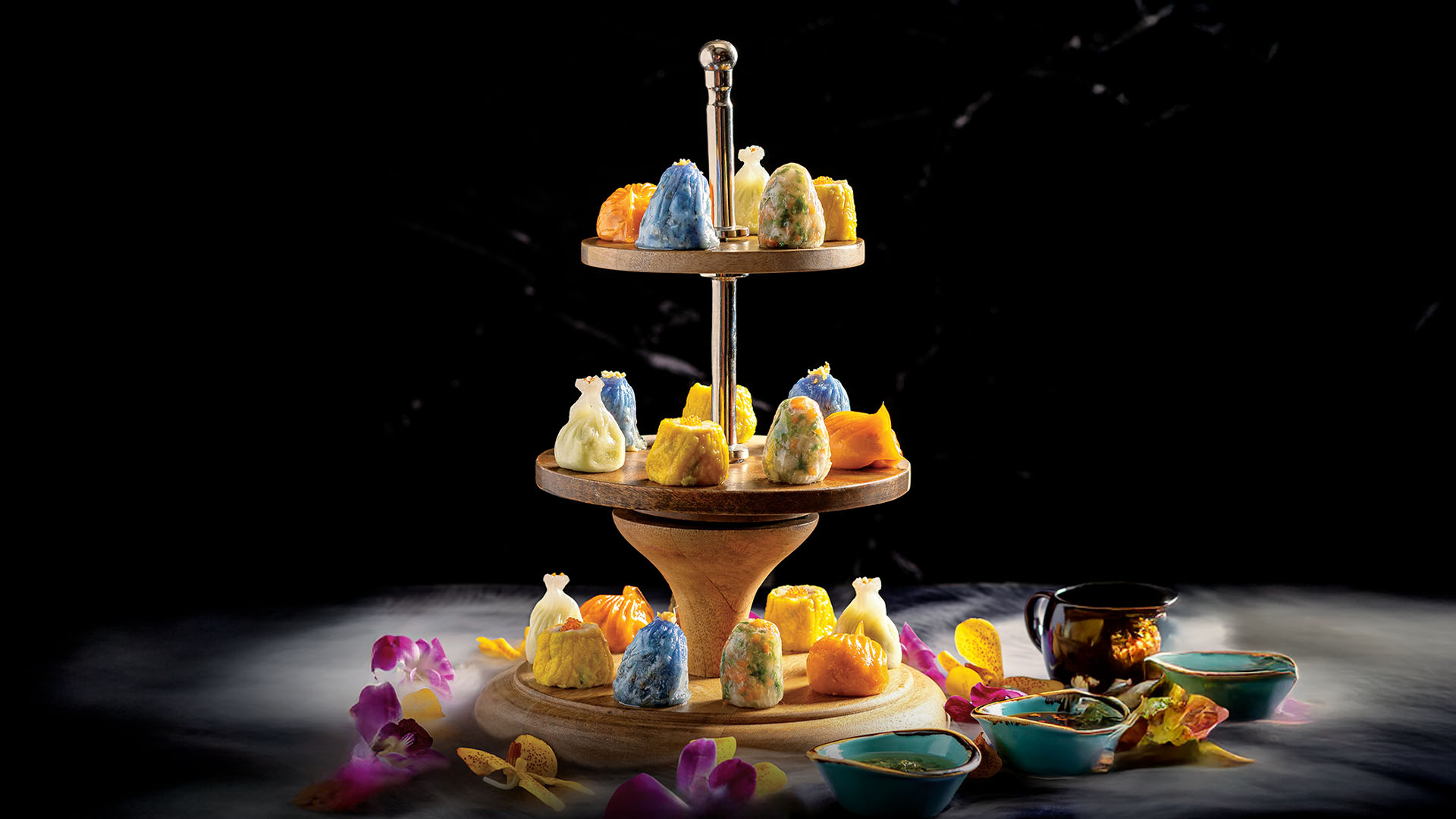
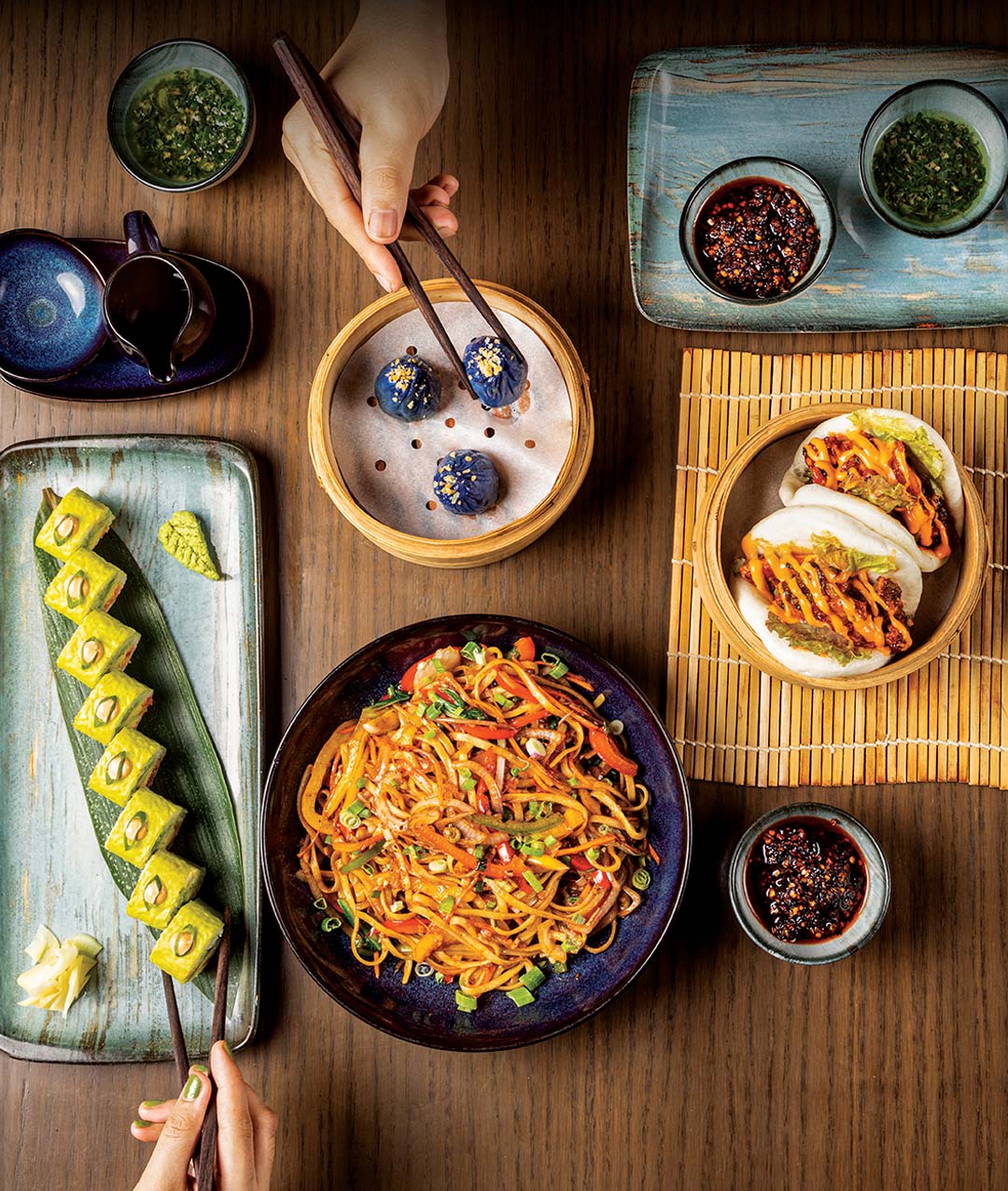
Tom Kha Soup tells another story. “Though Thailand claims it, Tom Kha originated in Laos,” says the chef. At Goma, lemongrass, chili, coconut milk, and vinegar balance tang and sweetness. Vegetarian fare makes up half the menu, with sushi and dim sums as bestsellers. Avocado rolls, cucumber-cream cheese, and tofu-wrapped sushi appeal to those avoiding seaweed. Thai curries and soups also resonate locally.
Black rice and robatayaki
For the black rice, once reserved for Chinese emperors, he uses Manipur’s short-grain variety. Stir-fried with garlic and Korean chili, it’s chewy, slightly sweet, and satisfying. Robatayaki dishes, like charcoal-grilled sweet potato dusted with Togarashi and paired with yuzu cream, showcase starch, spice, and citrus in one bite.
Balancing familiar and new
“When we first opened, 85–90% of the menu was experimental. Guests hesitated. Now it’s fifty-fifty—half familiar, half unusual,” says Chef Sadiq. Misconceptions about Japanese food persist; Kyoto’s vegetarian temple cuisine is overshadowed by sashimi perceptions. White Fish Carpaccio—a dish born in Venice in the 1950s—is prepared at Goma with sashimi-grade red snapper, yuzu soy, sesame-infused olive oil, and soy–yuzu sauce.
Sushi etiquette is carefully taught: vinegared rice can be rolled with vegetables, egg, or seafood—raw, cured, or cooked. Nigiri, rolls, maki—they’re all sushi. Soy should touch lightly; wasabi is tasted separately, and gari cleanses the palate. Sushi can be eaten with fingers, the way it is done in Japan.
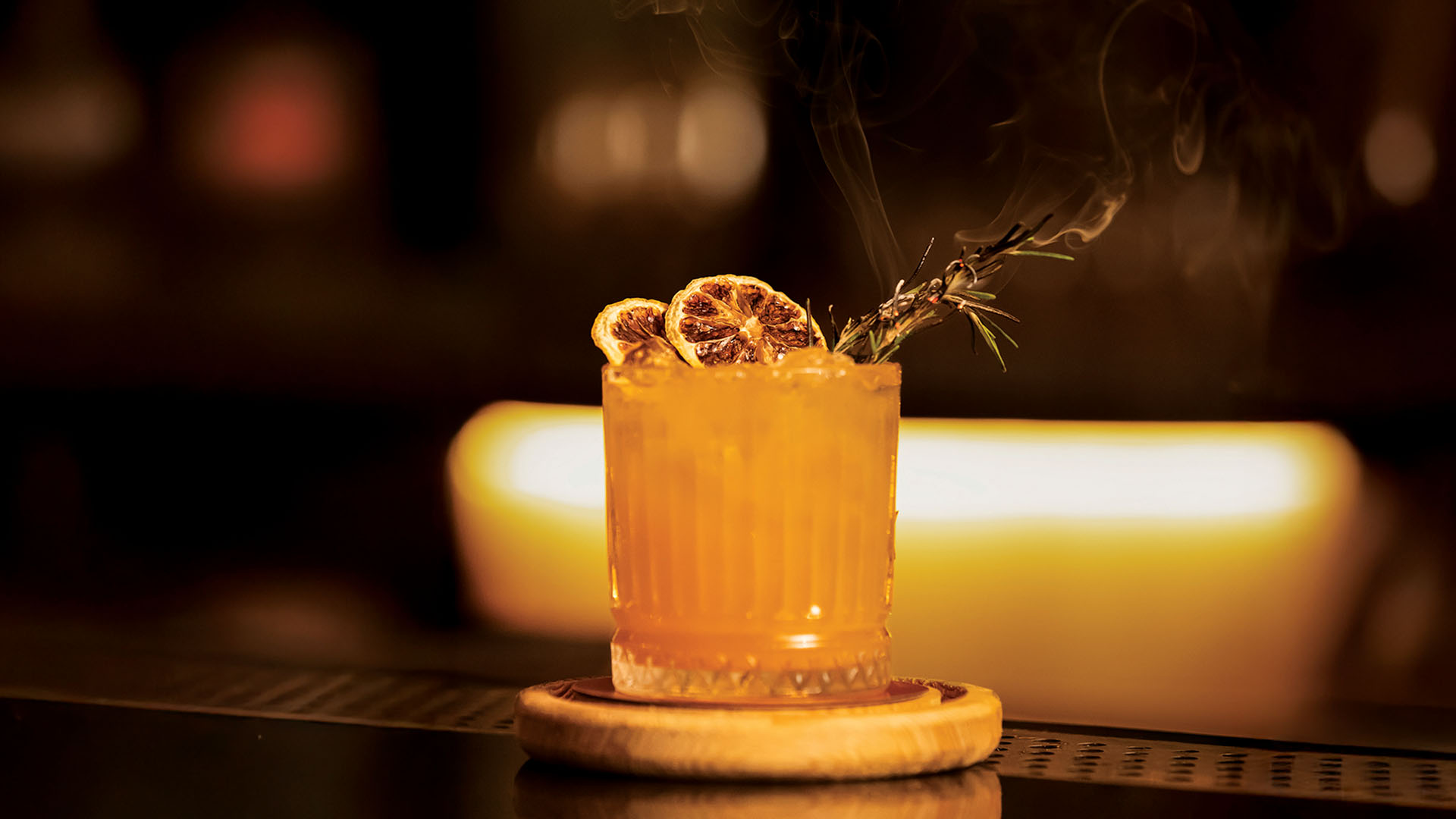
the bar echoes the philosophy of the food.
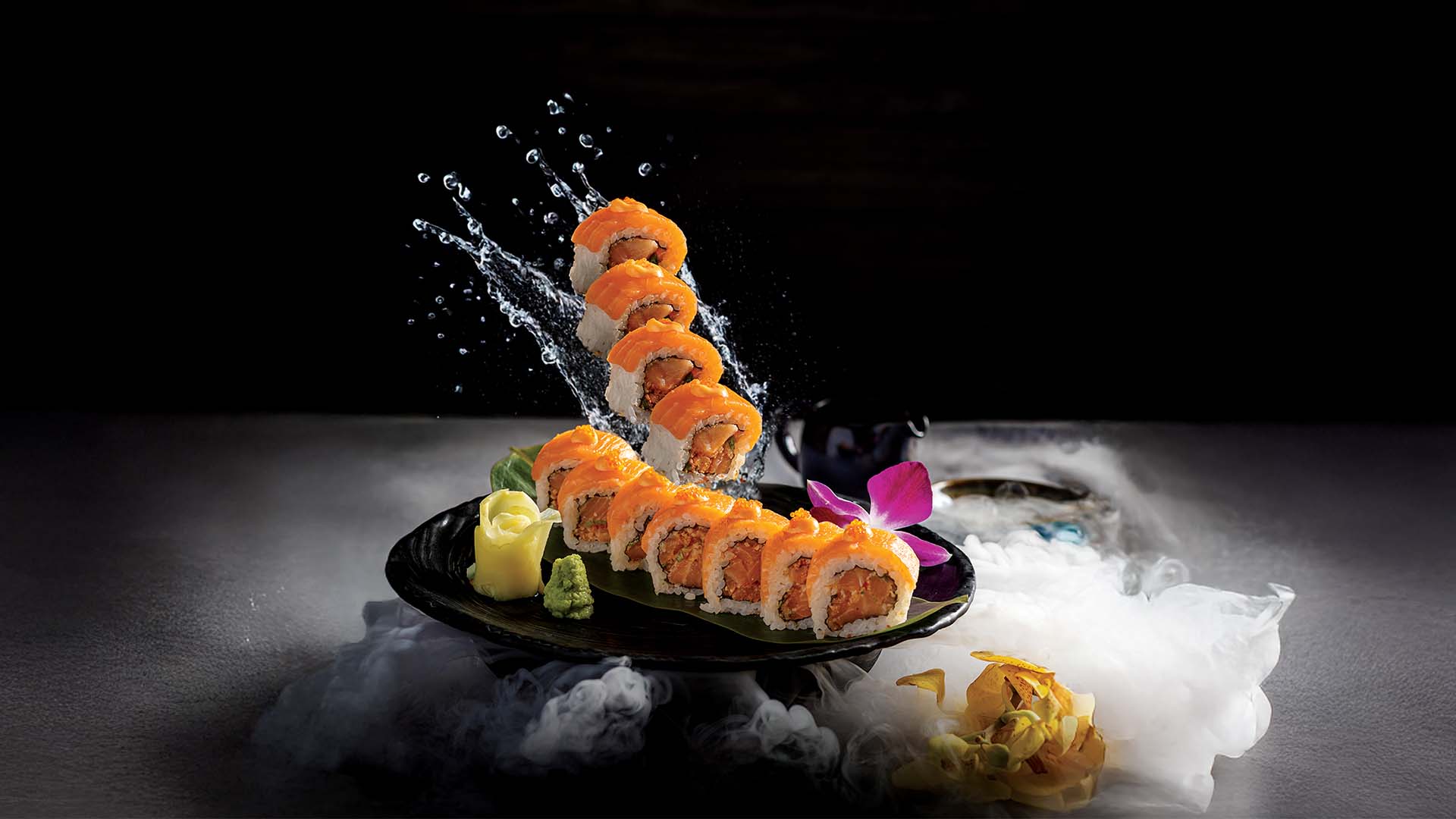
Ingredients are selected for purity and authenticity, not experimentation.
When we first opened, 85–90% of the menu was experimental. Guests hesitated. Now it’s fifty-fifty—half familiar, half unusual.
Chef Sadiq Khan

Dim sums with a twist
Black garlic and poached-water dim sums showcase precision and story. Black garlic, aged under high humidity, turns glossy and sweet, and is paired with ginger–onion sauce. Poached-water dim sums, with mushrooms, cheese, and vegetables, are timed carefully for perfect texture. “Every food has a story,” says the chef, noting that storytelling connects dishes to their history.
The storyteller’s passion
Chef Sadiq’s passion for cooking began in childhood—his Chinese mother, and grandfather taught him how to make steamed bao. “I woke to the smell of yeast and bread mingling with meat. Breakfast began with fresh bao. That’s where it started,” he recalls.