










A Family Vision
What began as a desire to build family homes are now a network of heritage hotels in Udaipur and Kumbhalgarh by the Kelwa-Rathores under the umbrella group, Fateh Collection.

By Chandreyi Bandyopadhyay
The story of the Fateh Collection of hotels began with a house
That Omkar Singh Rathore built on land he purchased on the outskirts of Udaipur. The year was 1968. Outside the old city, in what was then fairly open country, the house was located well on the lakeside with fabulous views.
“We moved into the house in 1975. He named it Rampratap, after our great-grandfather Ram Singh ji, the father of our grandfather Fateh Singh ji. That name, Fateh, meaning victory, is the same name that runs through everything we have built since. It was his choice, and it became the foundation of everything,” says Jitendra Rathore, owner of Fateh Collection.
The transition into hospitality came when six rooms were added to the property, creating Ram Pratap Palace. Built by Raghvendra Rathore, it became the seed of what would grow into a family-led hotel group spread across some of Rajasthan’s most scenic destinations. The family’s hospitality journey was strengthened by Jitendra Rathore, the youngest of three brothers, who entered the industry through a different route. “I worked with Taj Hotels and later joined the HRH Group of Hotels as President Commercial,” he says.
Leaving HRH in November 2000 to focus on the family business, Rathore oversaw a steady expansion. Ram Pratap Palace grew to 35 rooms, followed by Fateh Bagh in Ranakpur (2004), Fateh Garh (2008), Fateh Safari Resort (2015), Fateh Safari Suites (2017), Fateh Vilas (2022), and Khas Mahal Suites (2025). Rebranded as Fateh Collection in 2015, the group now operates seven owner-managed, greenfield properties—five in Udaipur and two in Kumbhalgarh—built entirely from the ground up.
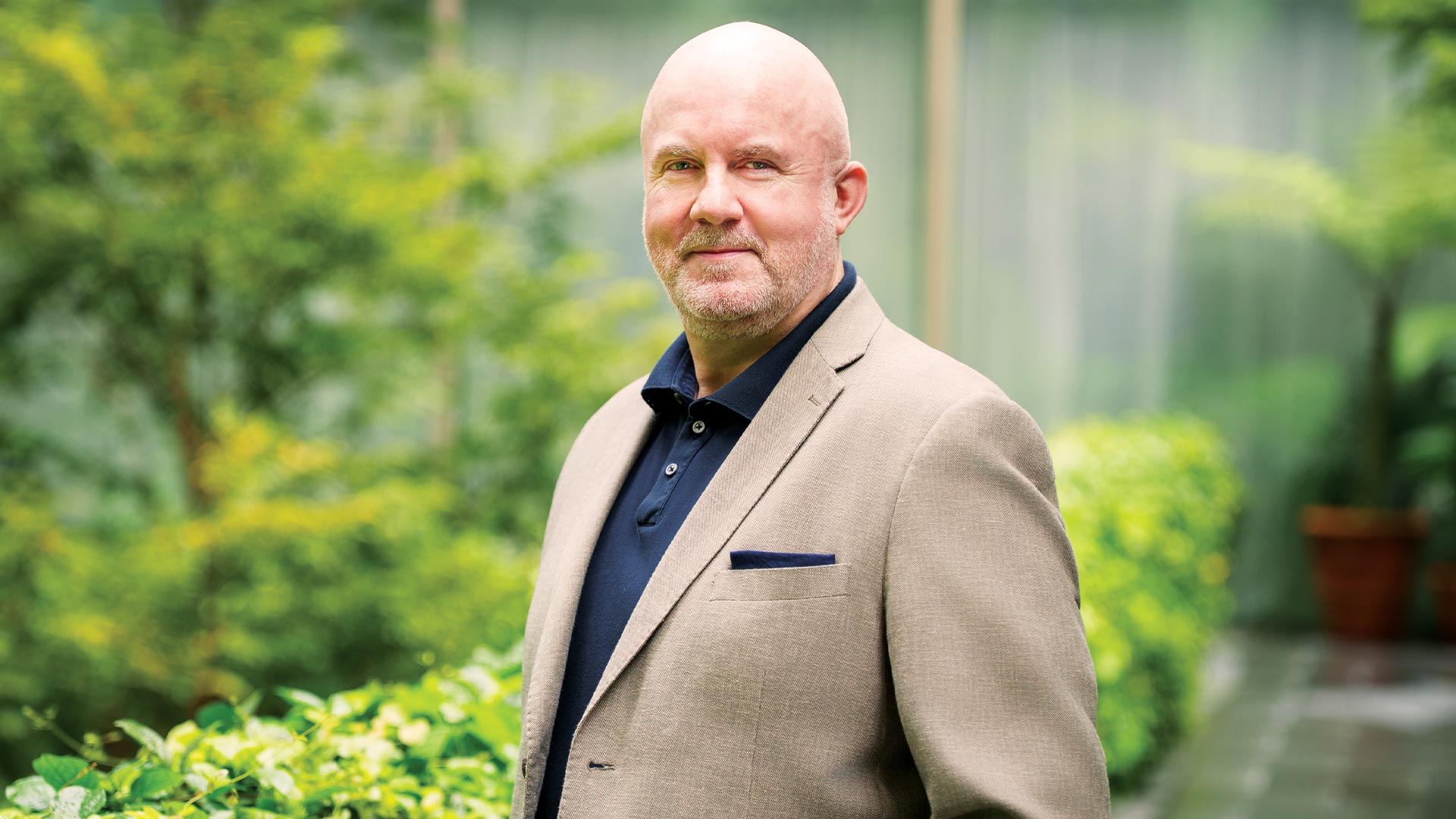
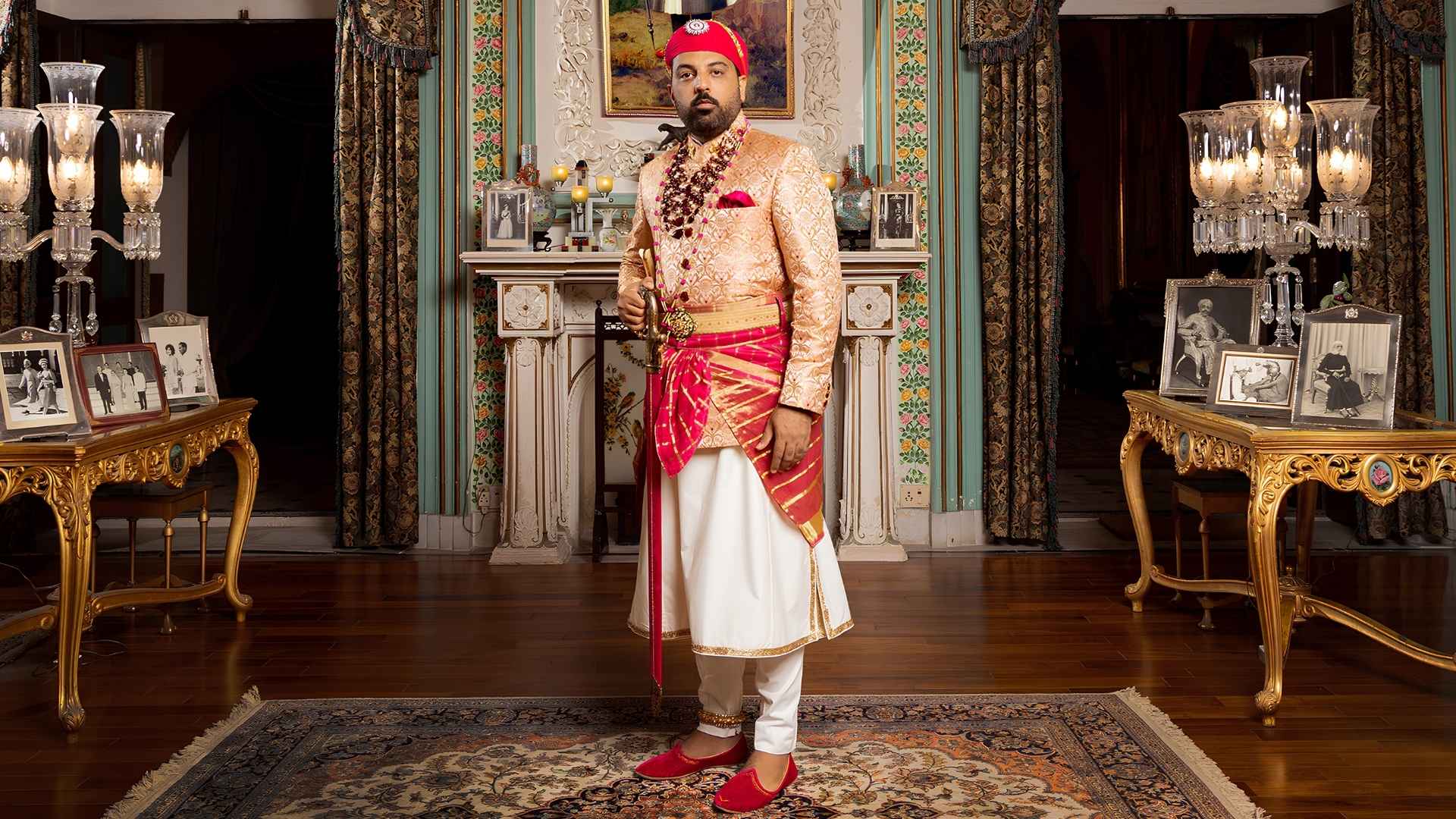
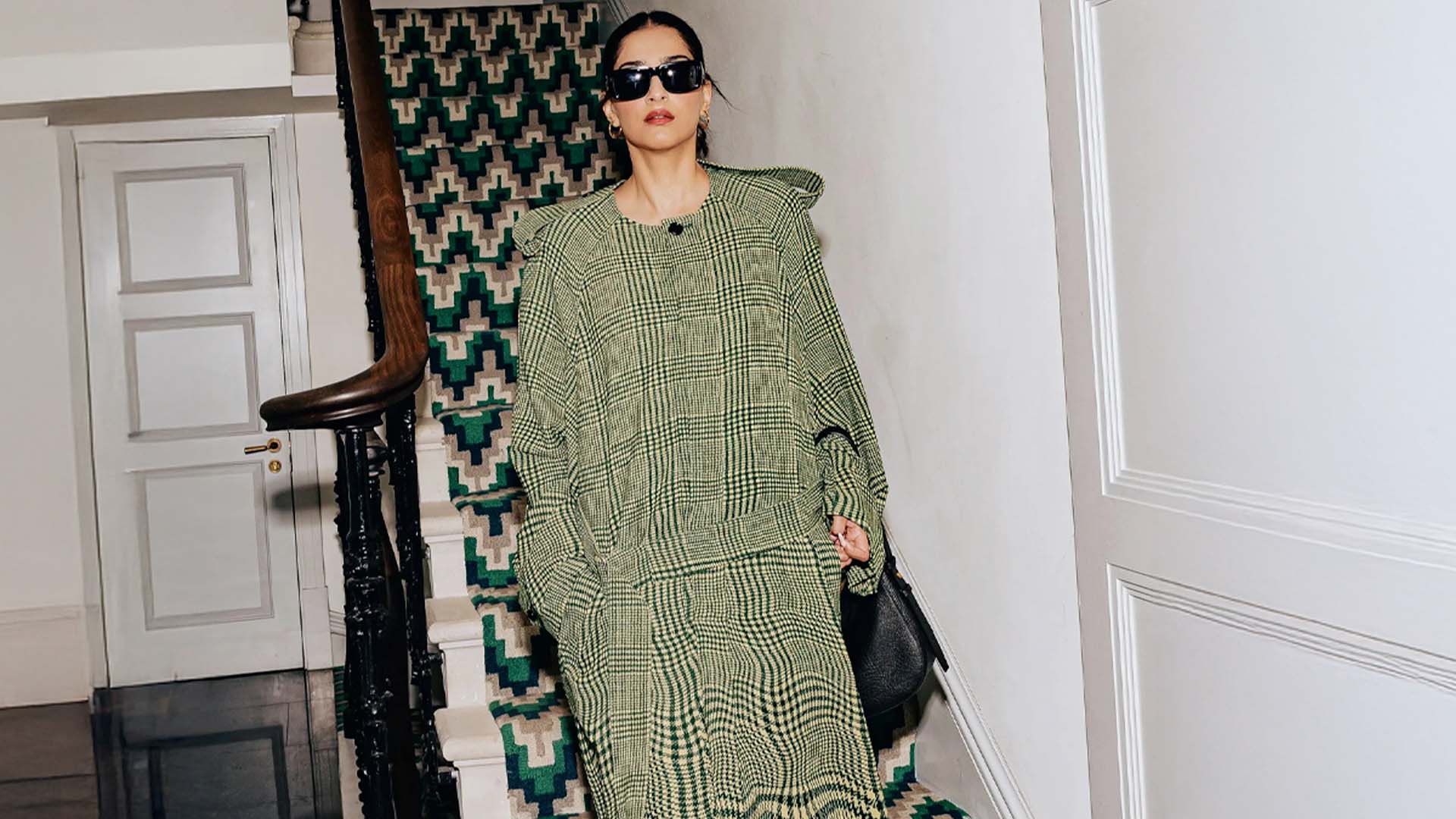
Jitendra Rathore, owner of Fateh Collection.
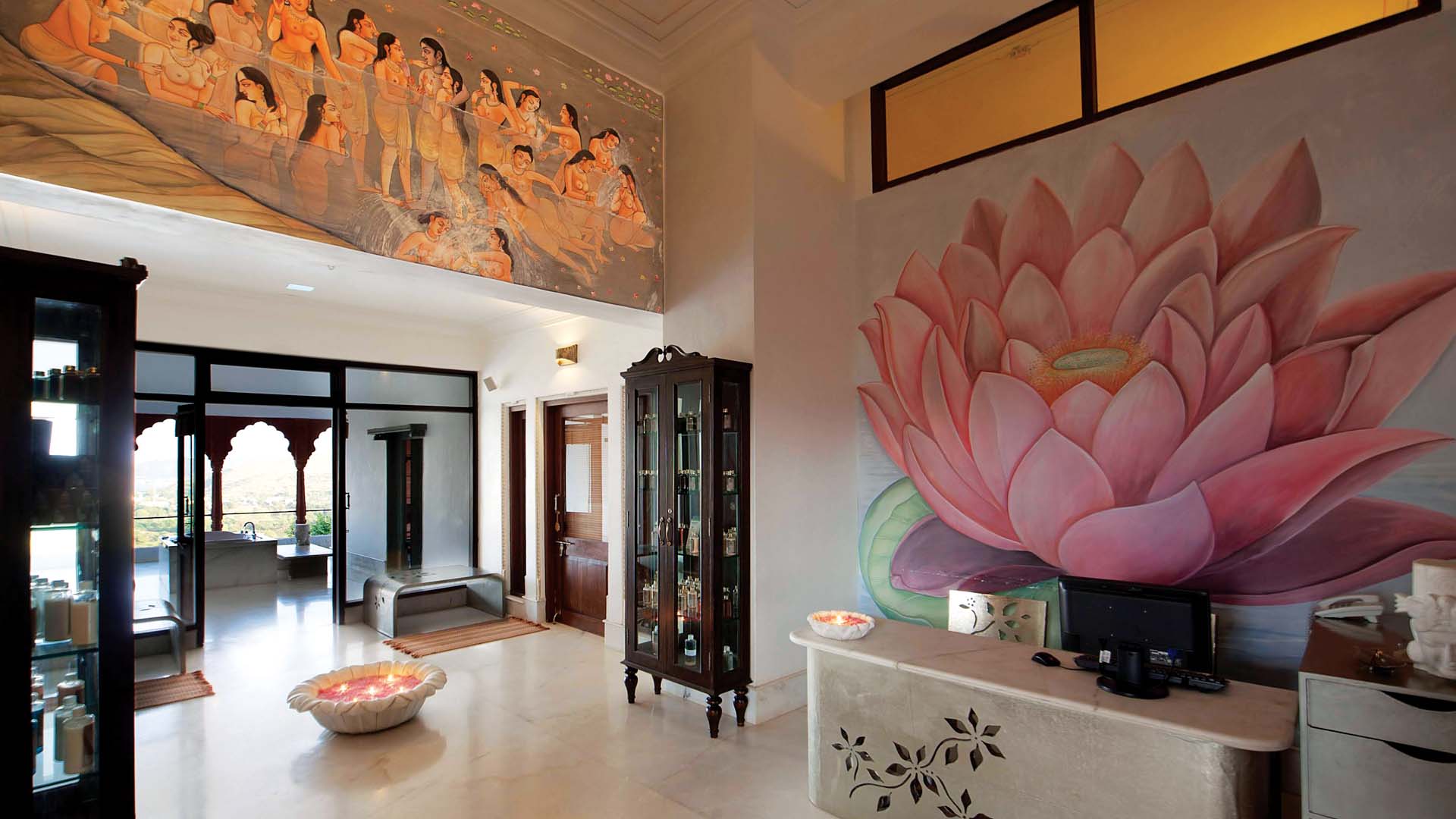
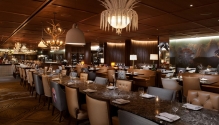
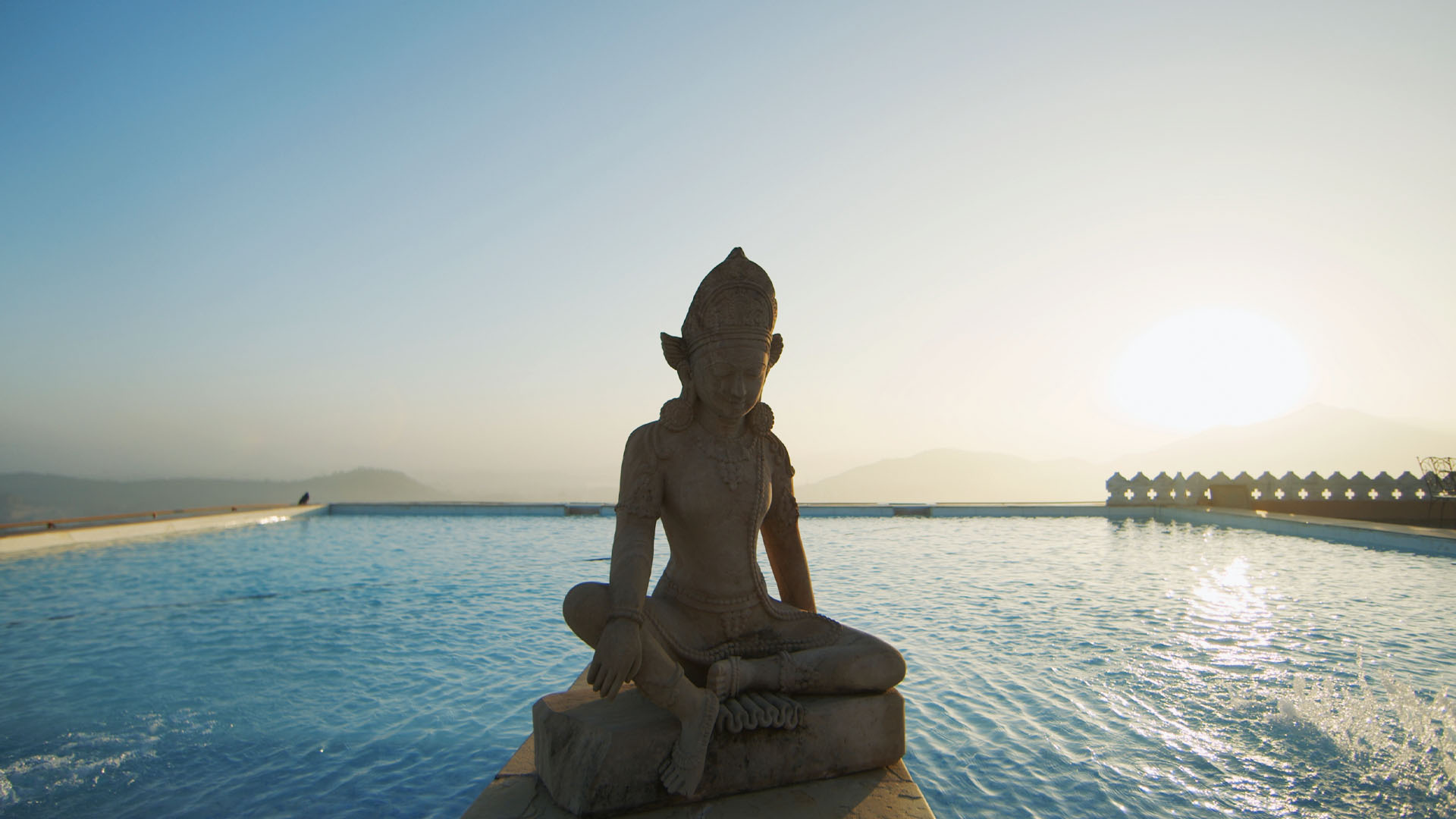
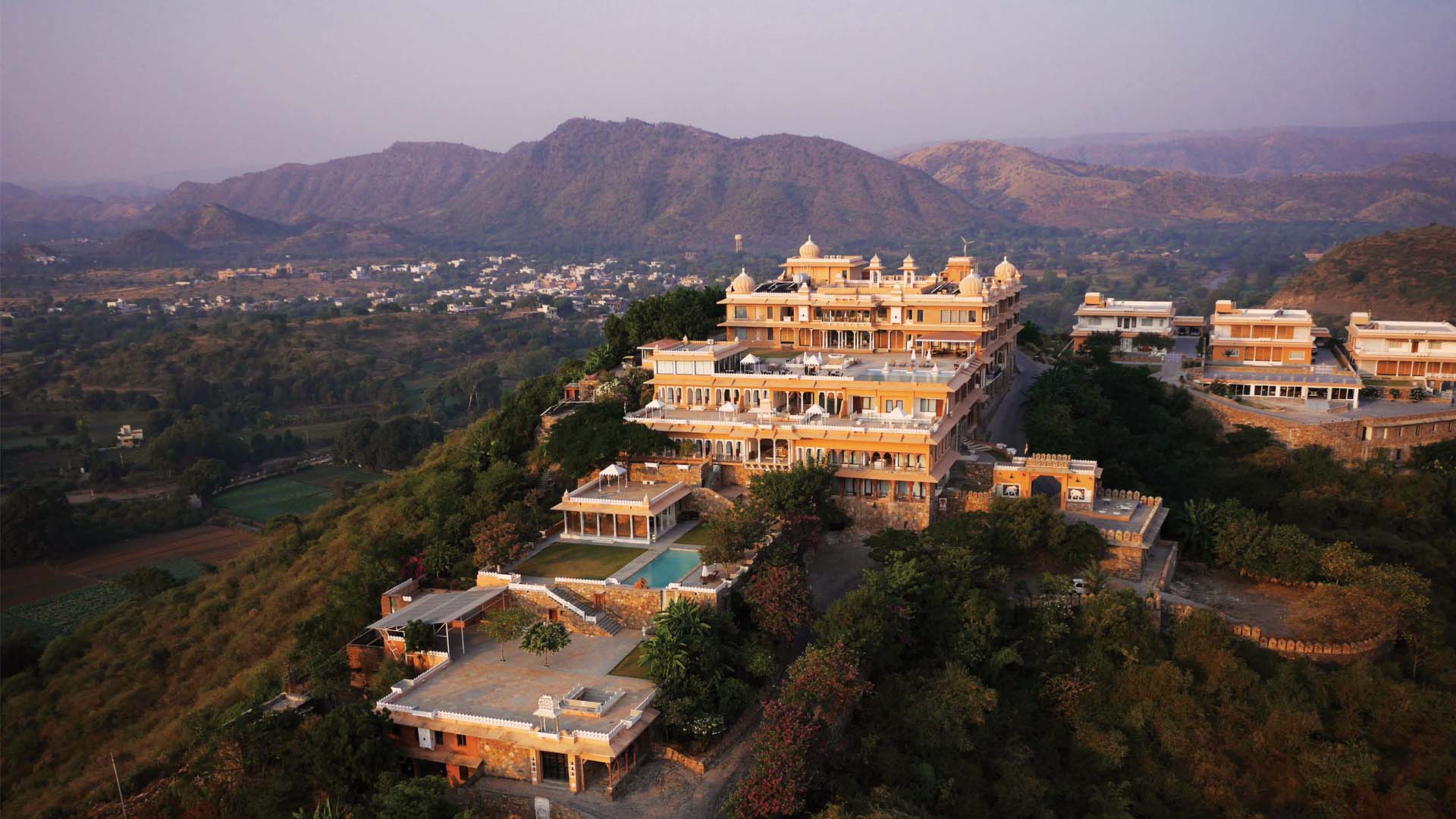
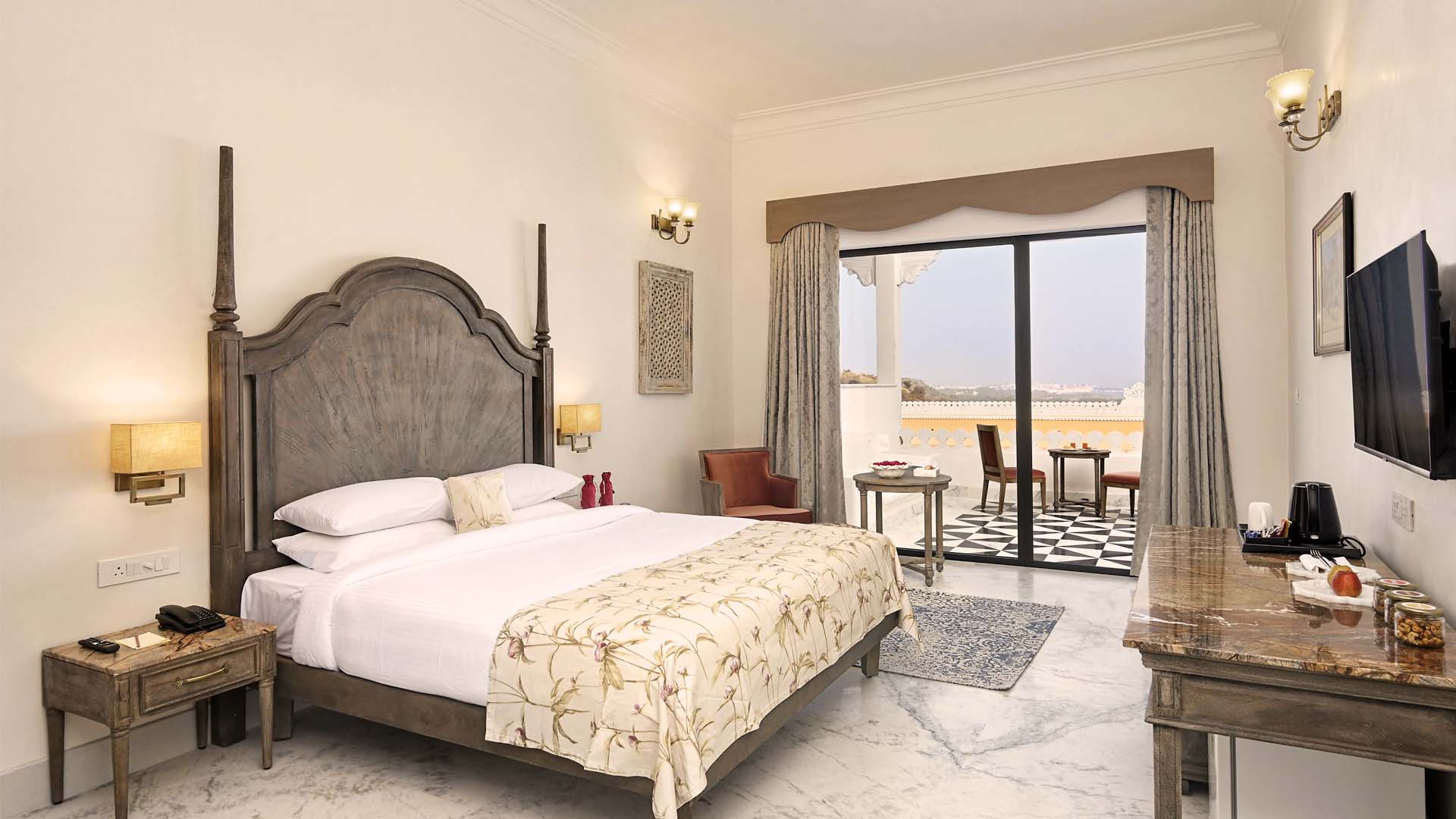
The Fateh Collection properties possess a strong approach to local heritage and legacies.
Q&A With Jitendra Rathore. Owner, Fateh Collection
What is your strategy for building hotels that form part of Fateh Collection?
There is no process, no thesis. Different pieces of land came to us at different times, some bought as investments, some with a vague idea of building family homes. The Ram Pratap land, bought by our father in 1968, was a family home before it became a hotel. Fateh Niwas was acquired so we could build our own houses there. Then government policy changed in a way that made a hotel possible instead.
Between roughly 2000 and 2010, we accumulated most of the land our hotels now stand on. One project worked, and that funded the next. Everything we run is built from scratch, greenfield—no conversions, no takeovers. We are 100% owners and operators. It is slow, but I have genuinely loved every moment of the building process.
What is the USP in a crowded market such as Udaipur, and what do you do that large chains simply do not replicate?
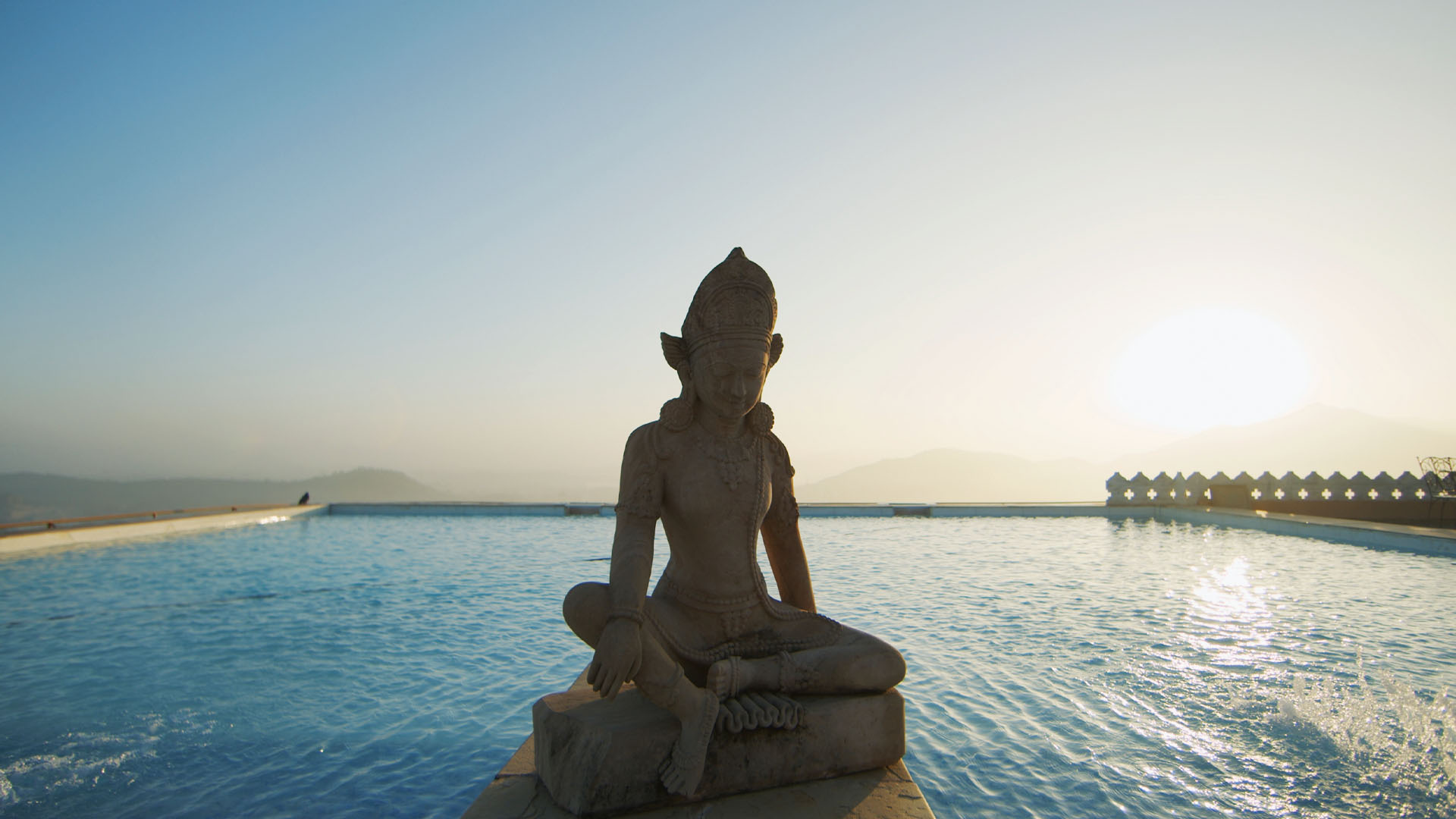
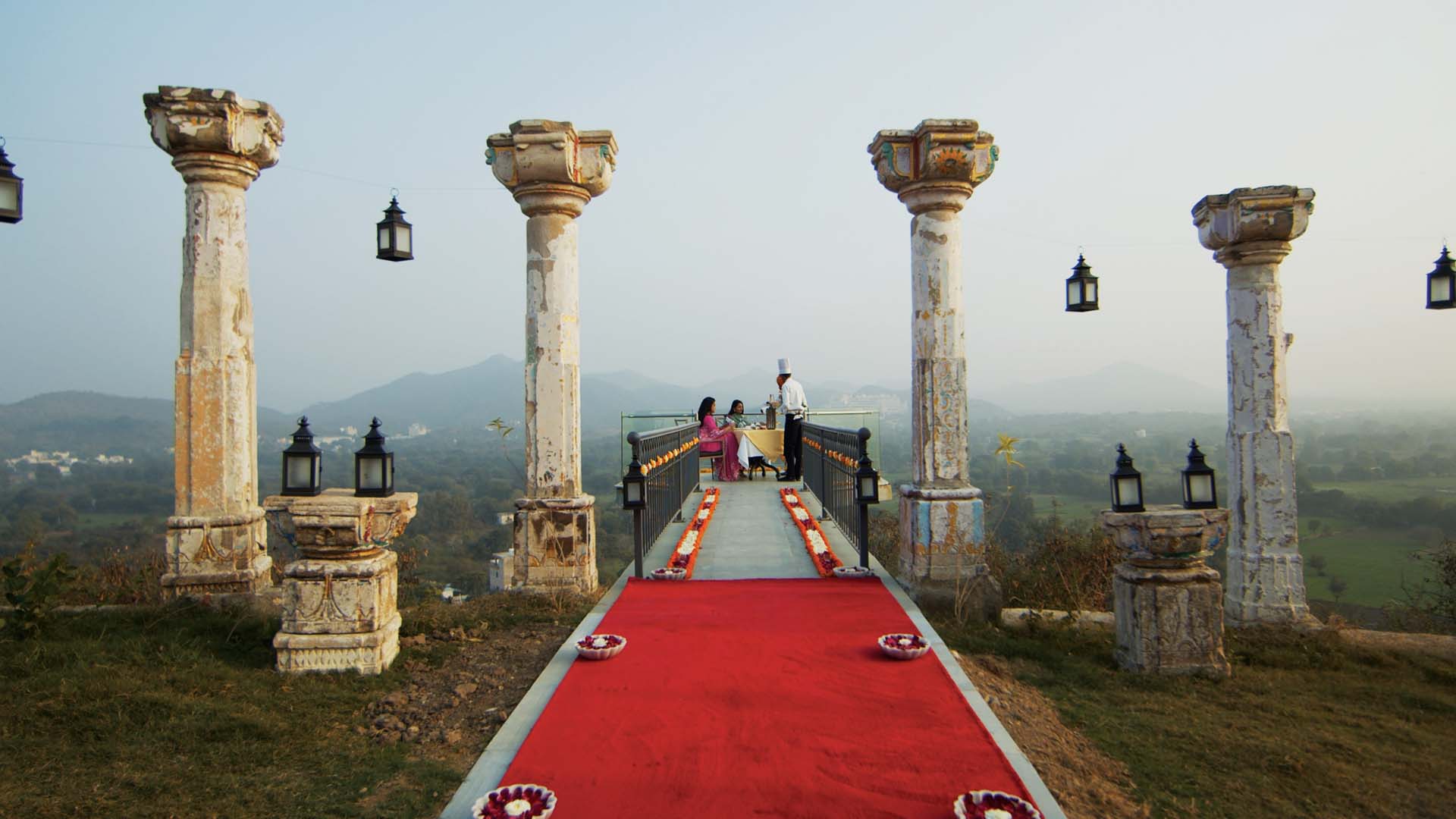
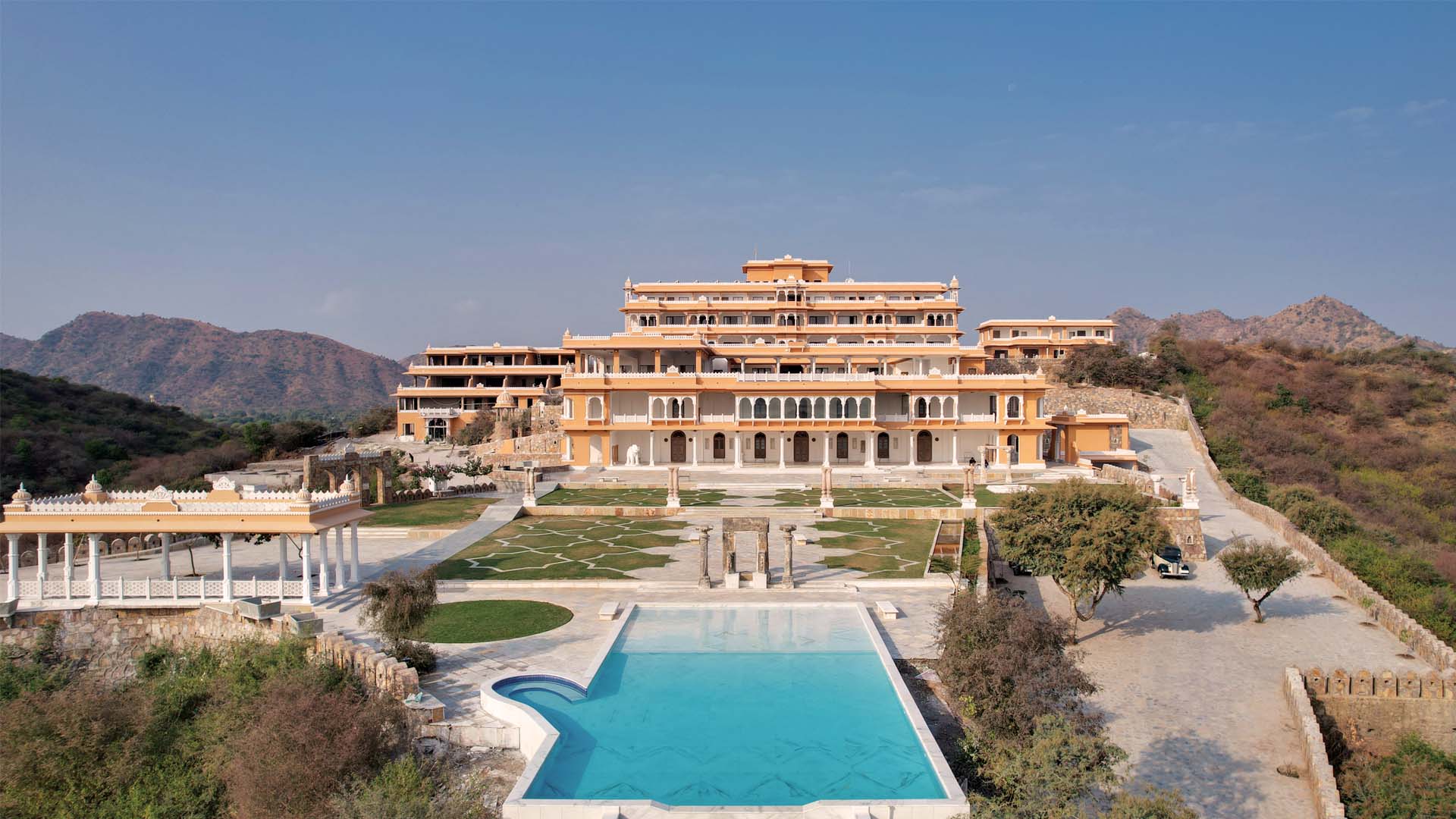
When Fateh Garh opened in 2008 on an Aravalli hillside, it was among the first hotels built at elevation on the outskirts of Udaipur. The established addresses were palace hotels along the shores of Lake Pichola. We approached it differently—hilltop views, open vistas, and a distinct relationship with the landscape.
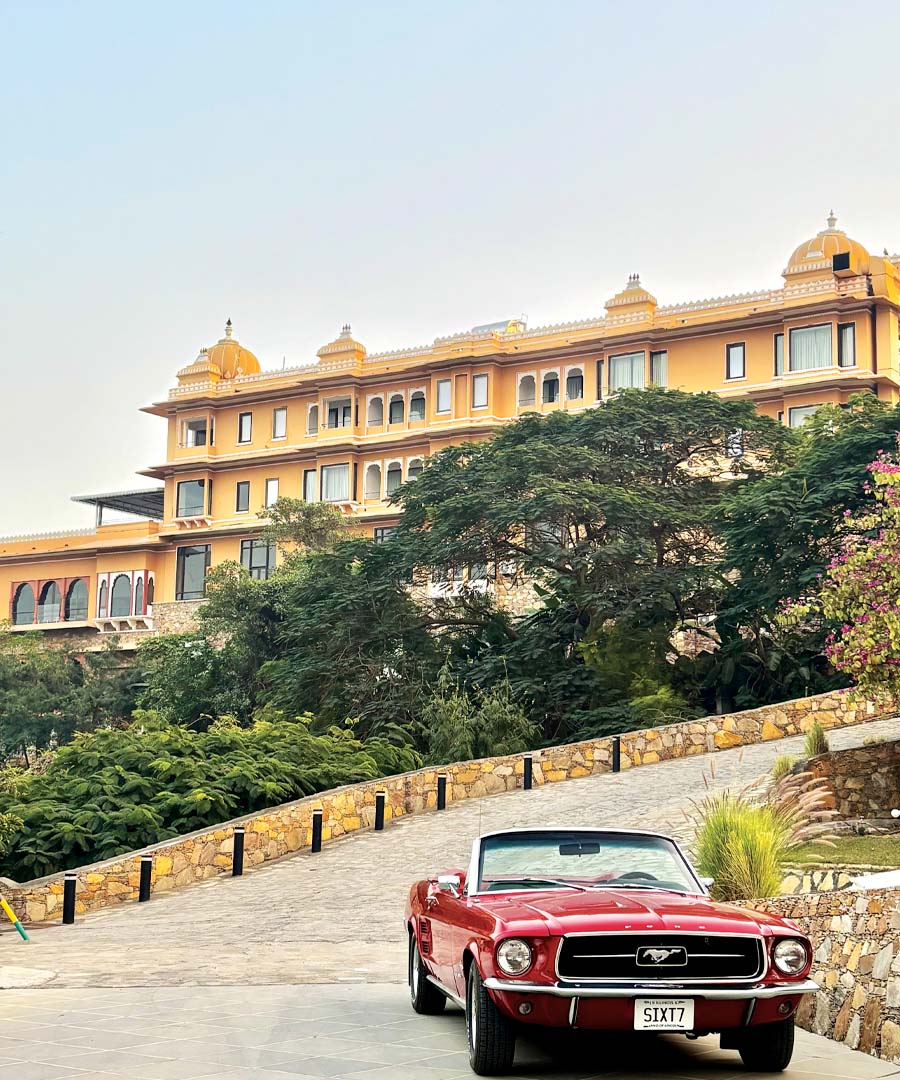
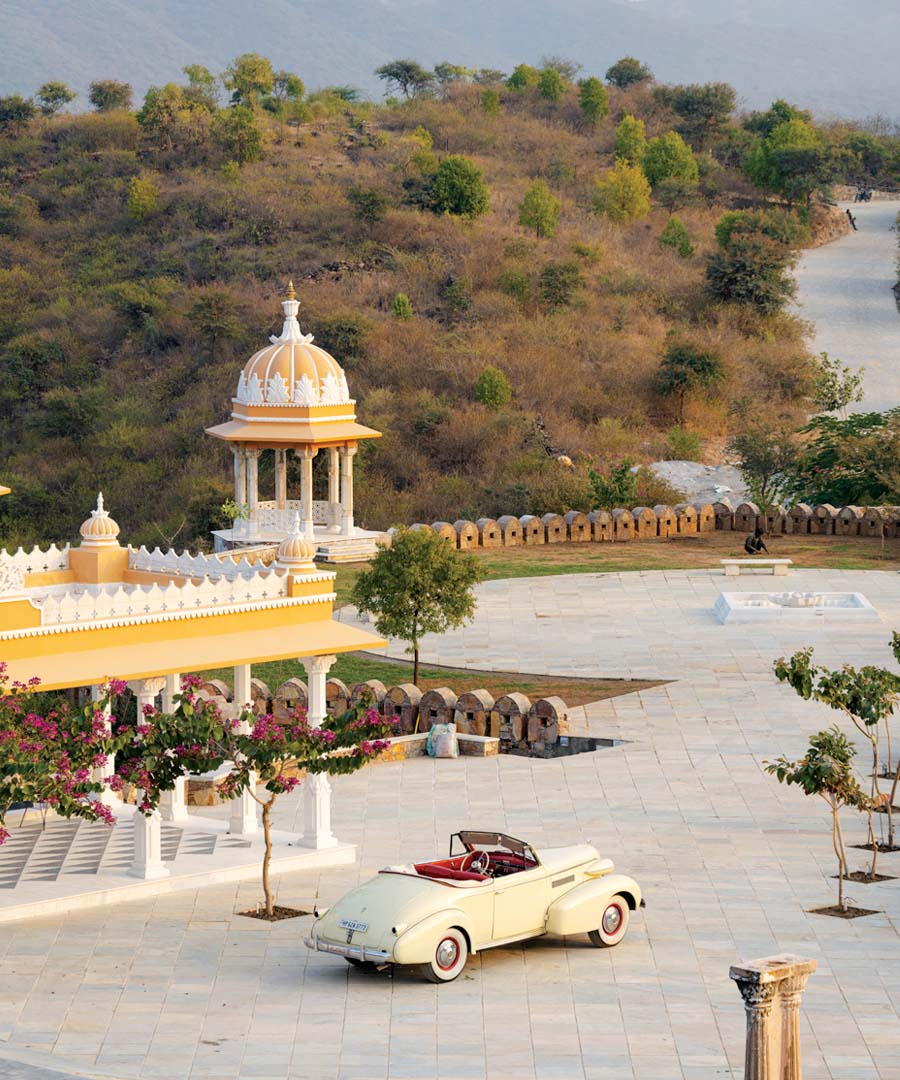
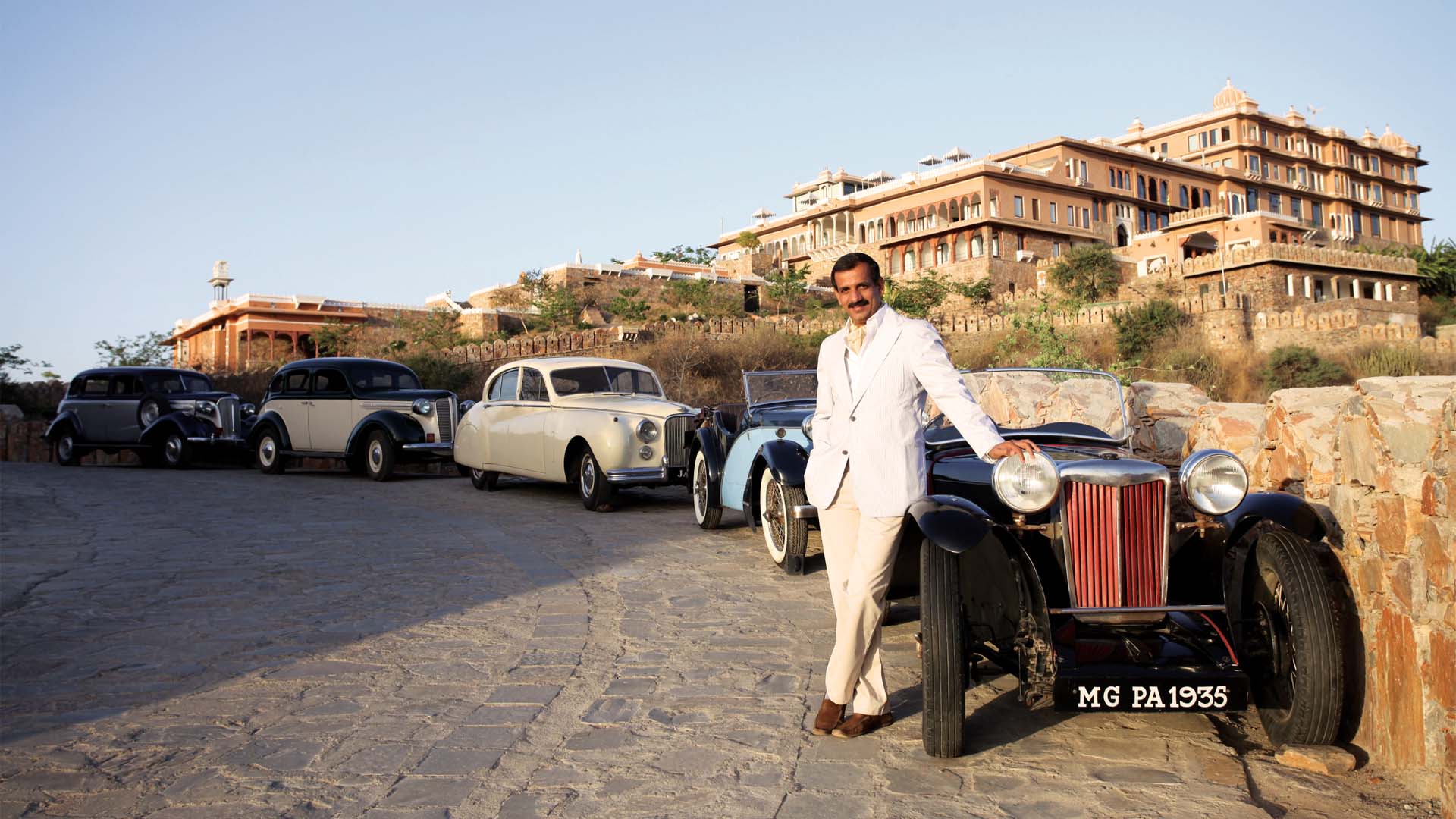
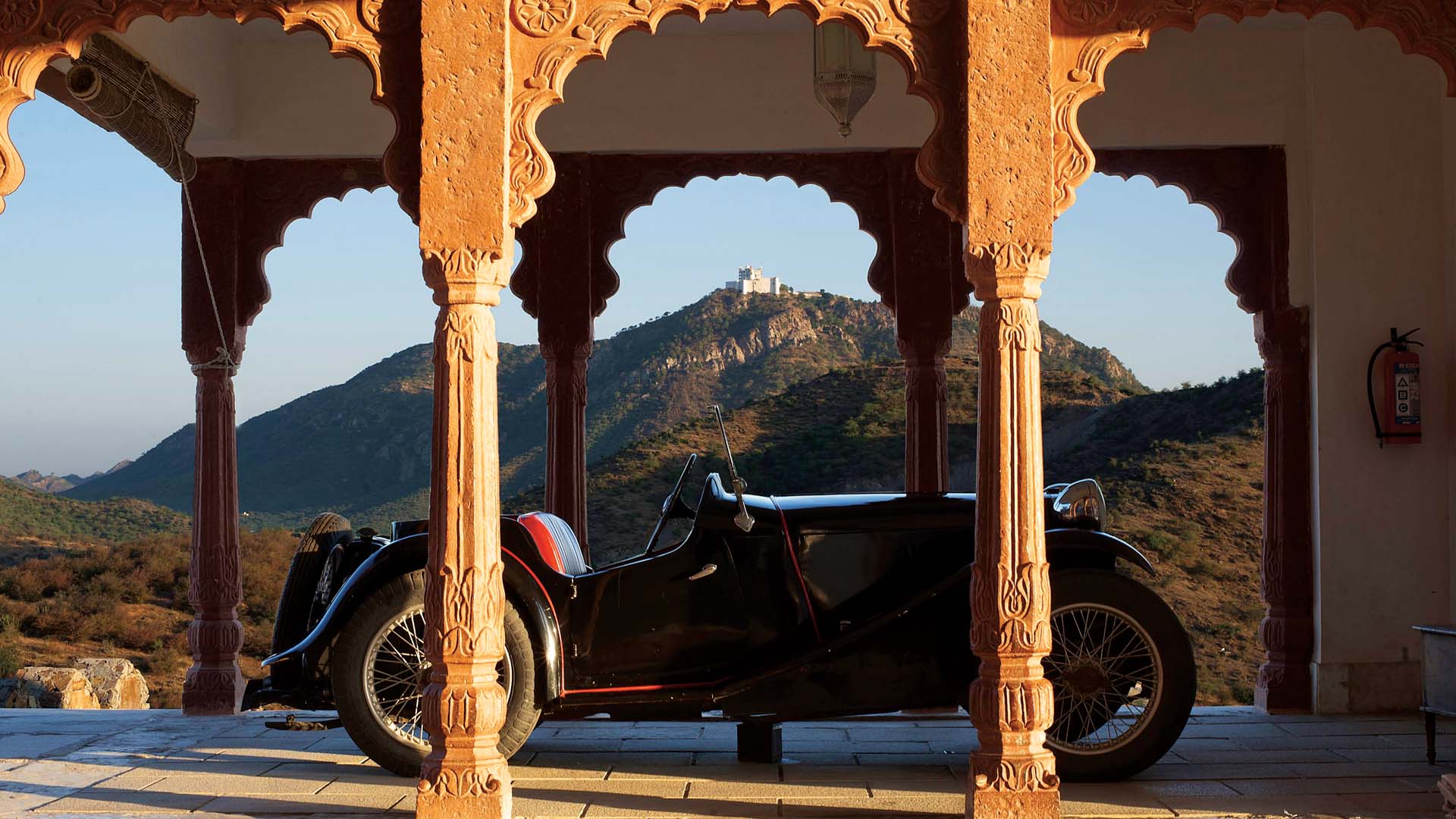
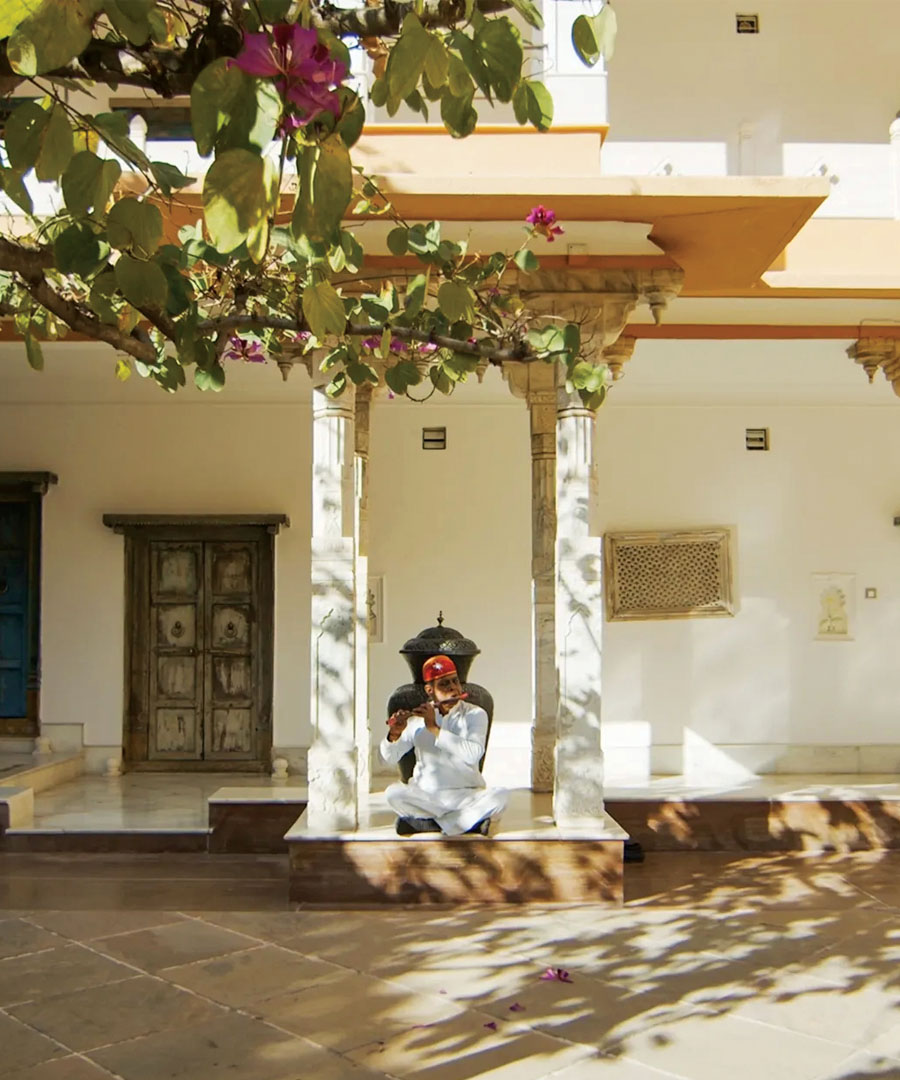
But the real differentiator is not the location or architecture; it is the life that unfolds within. Guests have breakfast accompanied by live classical flute music. A vintage car experience offers a choice of a Chrysler Dodge, Mustang, Mercedes, Land Rover, or Kaiser Jeep. Sundown equestrian encounters at the Fateh Stud Farm are particularly popular. None of this was conceived as a hotel product. It is simply who we are, and that is genuinely difficult to replicate.
Large chains cannot easily institutionalise the mindset that comes from a family running every aspect of the business. The frugality is genuine, reflected in investments in solar energy, rainwater harvesting, food-waste composting, and the use of salvaged materials. Around 60% of our team is local, and some have been with us for more than 30 years. That continuity is something guests can feel. The people looking after them know the land, the culture, and the history intimately.
What is your design philosophy, and how does heritage renaissance work in practice?
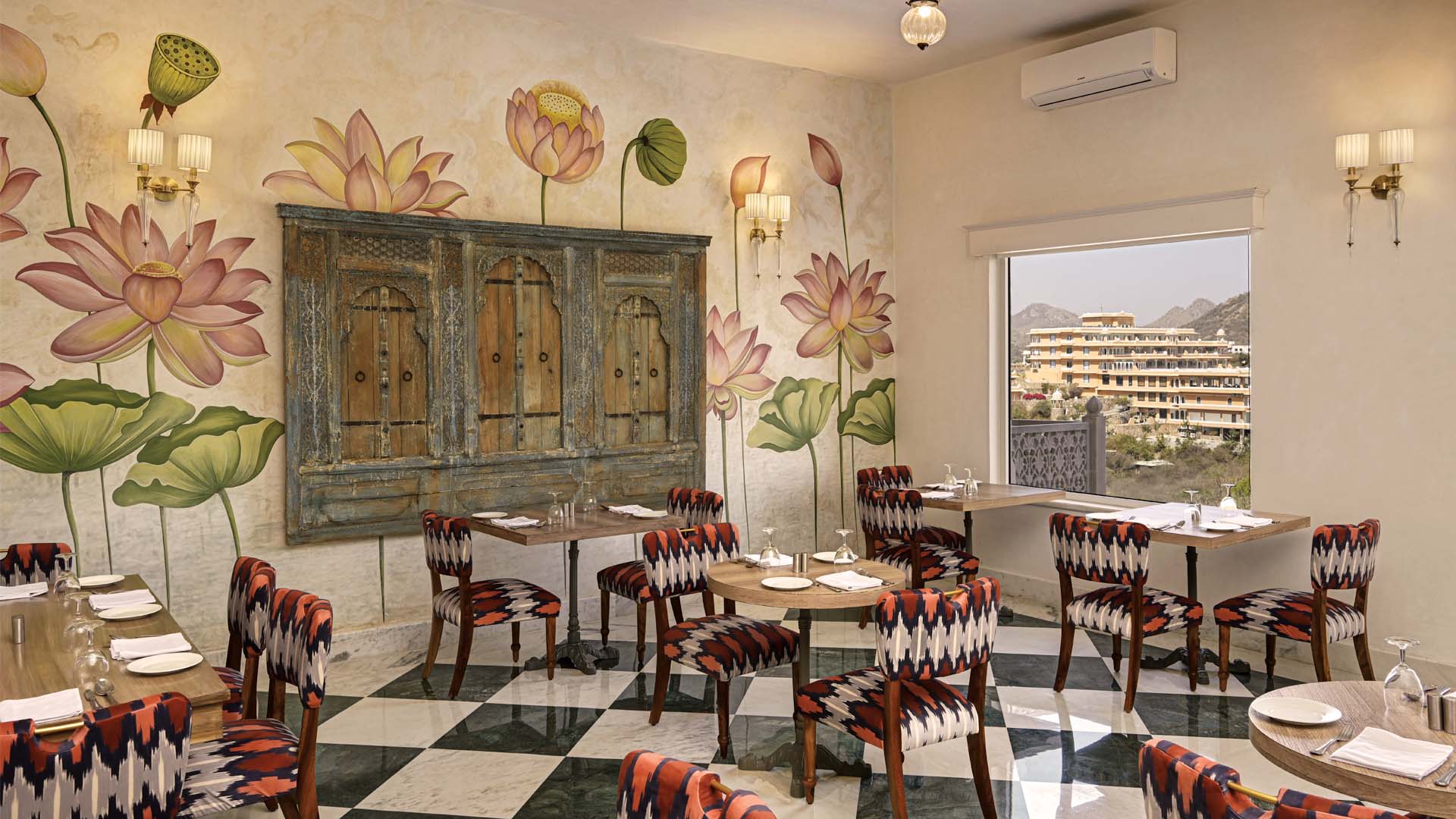
We design all our hotels ourselves. Architects do the structural drawings, but the vision and detail are mine—the proportions, the materials, or how each space connects to the landscape. I draw from traditional Mewari architecture, which is both grand and liveable. The philosophy is always minimal intervention: build on large parcels, cover as little land as possible, and let natural light do the work.
Heritage Renaissance means revival, not replication. We salvage stone, pillars, jaalis, and carved pieces from dilapidated havelis and forts and reassemble them using traditional Vastu principles. The stone pillars and doors throughout Fateh Garh came from a structure near Neemuch in MP, inaugurated by Maharana Sajjan Singh, the 72nd ruler of the Mewar dynasty, the same man who built Sajjangarh. The cornerstone of that structure sits at Fateh Garh's entrance, positioned to face north, pointing directly towards Sajjangarh fort. The stones at your feet and the fort on the horizon share the same history.
People assume this approach is expensive. It actually is the opposite. Salvaged stone, old doors, and carved wood cost a fraction of commissioning new work, and nothing new can match what they bring. What takes effort is not money but time, knowing where to look, and the commitment to see it through.
How is the business funded and what is your ownership model?
We are entirely self-funded. The base came from the marble mining business my brothers Anant and Raghavendra run. Beyond that, operational surpluses were reinvested into the next project, with bank loans whenever needed. We don’t have any outside investors or private equity, which is a deliberate choice. It meant growing slowly, but we answer to nobody but our guests.
We are fully asset-heavy and intend to stay that way. The moment you separate ownership from management, personal accountability goes out the window. Everything we do depends on the family being answerable not to a board or a fee structure, but to our own standards and to our guests.
How does the family identity shape the brand, and does it create limitations at scale?
We never designed as a brand. It is what happens when a family builds hotels around what it genuinely cares about, such as my passion for vintage cars and architecture, Anant's dedication to Marwari horses, Raghavendra's love for shooting. These are not amenities someone put on a brief. They are our lives.
Does it create limitations? Yes, honestly. The model hinges on the family being physically present and engaged. We build within roughly 100kms. of Udaipur, so we can stay involved. Beyond that distance, it starts to become managed remotely, which we do not do. The next generation is now active in the business, which gives us more range. But the moment family presence thins out, something essential goes with it. We know that, and we have made our peace with it.
How have guest expectations changed, and what drives your approach to the regional experience?
There has been a clear shift from checklist tourism to meaningful, slower-paced immersion. Guests now crave authenticity, cultural depth, wellness in natural settings, and stories that resonate with their own heritage. Post-pandemic, there is greater appreciation for mindful luxury—fewer but richer interactions, personalised curation, and properties that feel like sanctuaries.
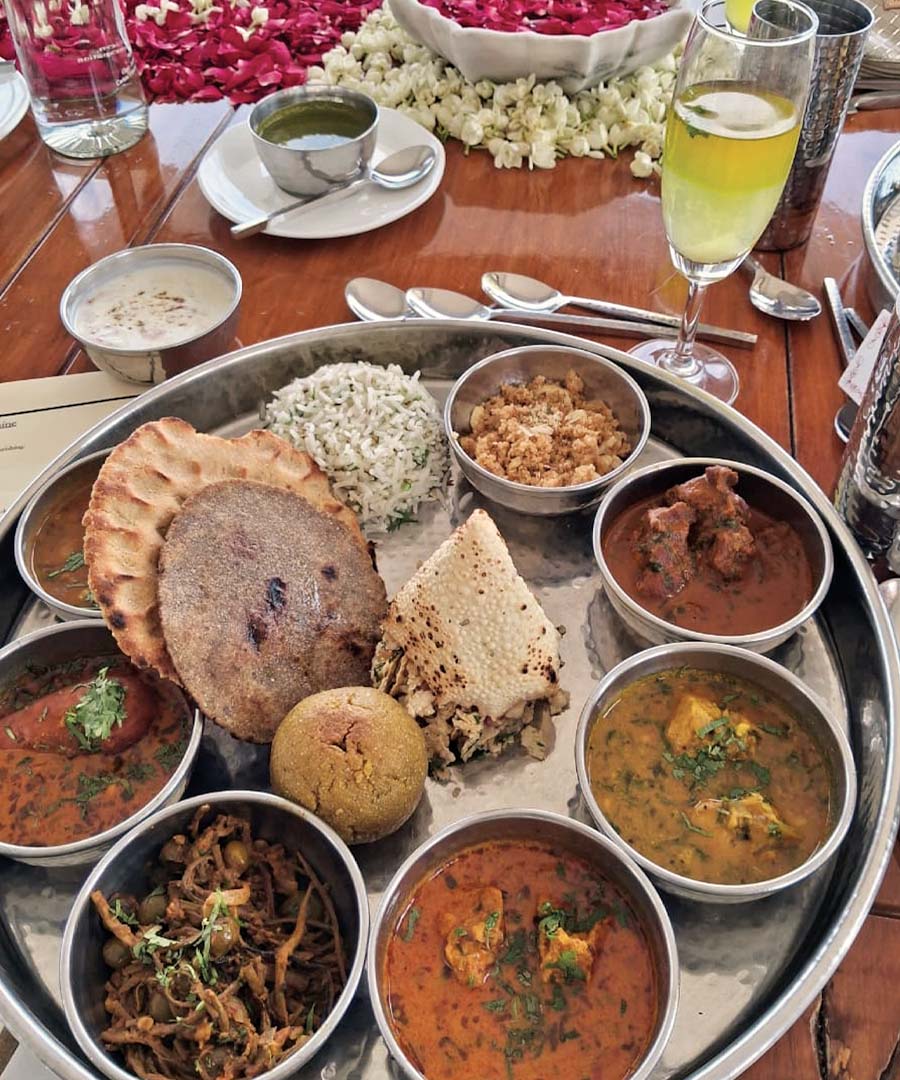
Regional elements are not a curated add-on. Sixty per cent of our team comes from surrounding villages. The food highlights Rajasthan's flavours using local produce. The landscape is a co-host. The craftsmanship tells living stories. It is both a natural extension of our family's historical ethos and a genuine response to what today's travellers are seeking.
What are Udaipur’s strengths and weaknesses as a destination, and what is the case for Kumbhalgarh?
Udaipur rewards patience. The lakes, the old city, the hills, the Mewar culture—it has a layered quality very few Indian cities have. But the old city gets badly overcrowded in peak season, the range of activities beyond the core sights is still limited, and the airport is significantly underdeveloped for a city of Udaipur's tourism standing. Better flight connectivity and rail links would transform the destination.
Kumbhalgarh is underrated and I think deliberately so. The fort is extraordinary and far less crowded than Rajasthan's more famous landmarks. The Aravalli landscape, the wildlife sanctuary, the quiet—it has a rawness that Udaipur, for all its beauty, no longer has. People who go expecting a lesser version of Udaipur come back having found something they were not expecting.
Where does the business stand commercially, and who is the Fateh Collection guest?
We do not share revenue numbers, but the mix across seven properties for the last financial year is instructive. Weddings, events and corporate are roughly 34% of room nights—Fateh Vilas runs at 57%, exactly what it was designed for. Domestic leisure is close to 47% and has grown strongly. Inbound through agents is around 19% and has not recovered to pre-pandemic levels. We stopped waiting for it and focused on the domestic market instead.
The domestic traveller has changed considerably since the pandemic. Indian travellers today are more willing to seek out something real, something with heritage and a story behind it. That works in our favour. Inbound will return, and when it does, we are well-positioned. Until then, we are genuinely proud of the domestic base we have built.
Beyond The Bio. The Vintage Car Collector
Your vintage vehicles collection runs to 51 vehicles—cars, jeeps, military hardware, horse carriages, and a camel cart. When did this become a serious hobby?
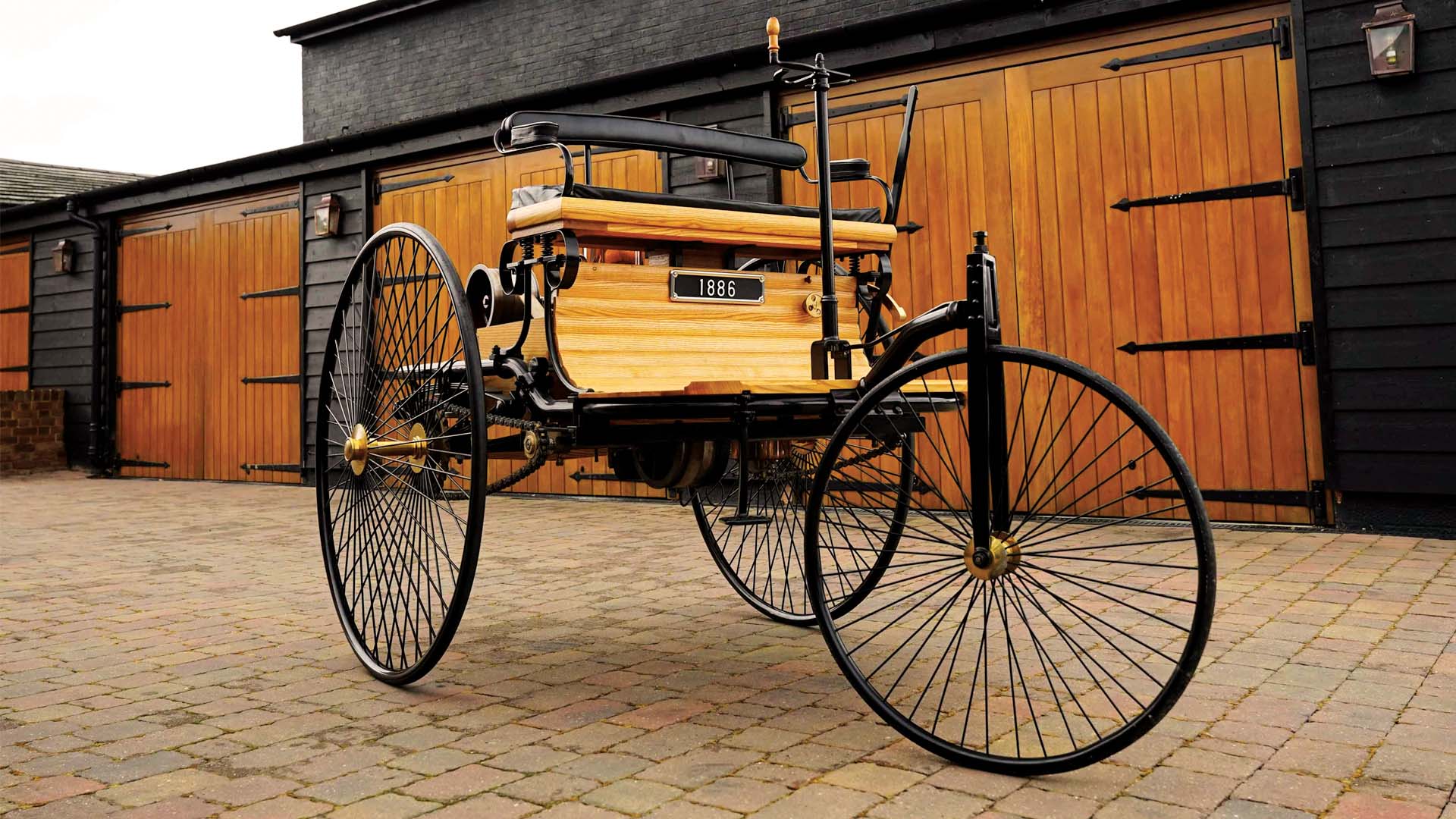
I am not sure it ever stopped being a hobby. The moment you start thinking of it as a collection, something to be catalogued and displayed, you lose the thread of why you started. I did not set out to acquire 51 vehicles, but to find things that moved me. A 1931 Cadillac Roadster in red. The Mercedes-Benz Patent-Motorwagen from 1886, which is effectively the first automobile ever made. A Studebaker Amphibian that crossed water and land during the war. Each one arrived because it had a story that should not disappear. The number is just what happens when you cannot say no to a good story.
The collection spans nearly a century, from an 1886 Mercedes to a 1974 Dodge Charger. Is there a philosophy to what you chase?
Purely instinct, and I would not have it any other way. There is no era preference, no marque loyalty. What I look for is character, a vehicle that carries its age visibly, that has not been over-restored into something generic. The 1932 Standard Avon Special Sports is a good example. Almost nobody knows that car. It is not a trophy name. But the lines on it are extraordinary, and it represents a moment in British motoring that is almost entirely forgotten now. The 1938 Daimler DB 18 is the same. It is a car statesmen rode in, a car with gravitas. The Kaiser Jeep CJ-5 from 1959 spent its life going places no road reached. These things matter to me more than provenance certificates.
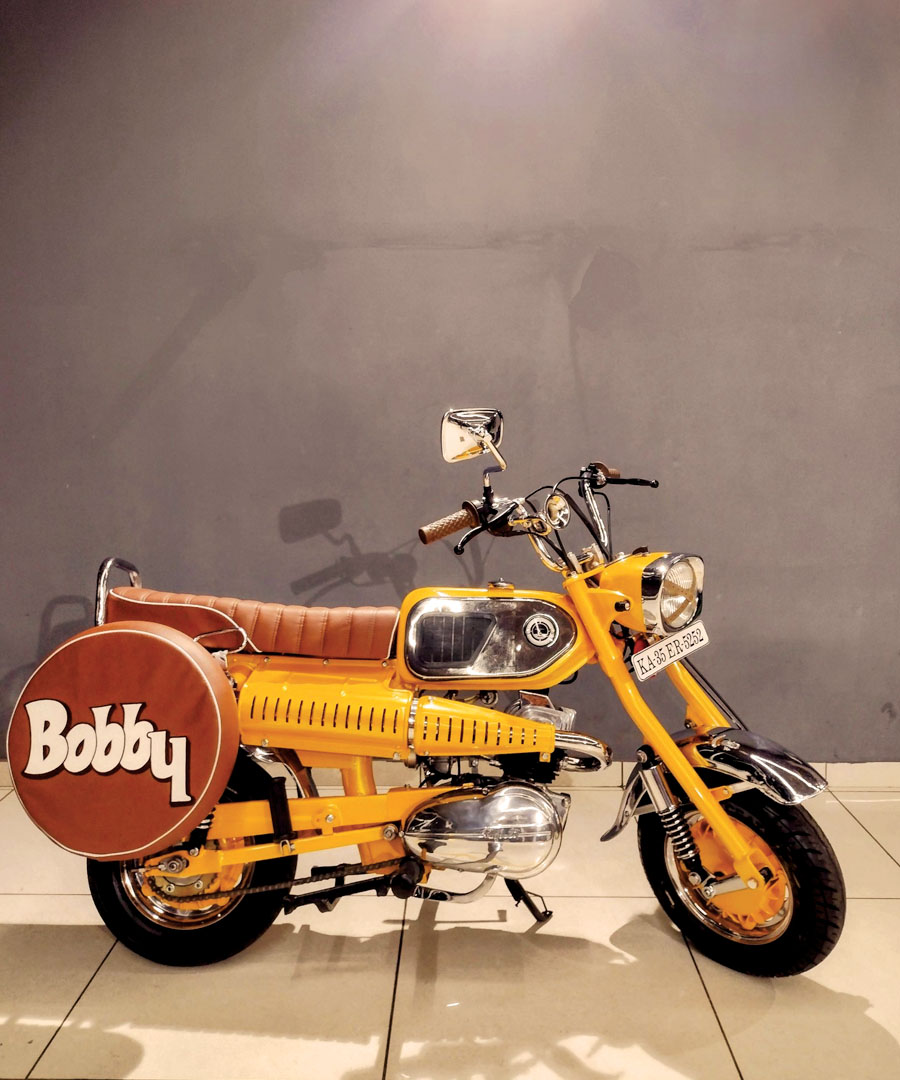
The two-wheelers are an interesting detour. I see a 1942 BSA, a Triumph Tiger Twin, and a Rajdoot GTS 175 from the film Bobby. That last one feels personal.
Everything in this collection is personal, but yes, the Rajdoot is something different. It is not a rare motorcycle by international standards. But it is part of the texture of a certain Indian adolescence, which spans the film, the freedom, and what that machine meant to a generation. I am Rajasthani, and I grew up with those references embedded in me. The AJS from the 1930s and the BSA from the war years are remarkable machines from a remarkable period in engineering. The Triumph Tiger Twin is one of the finest motorcycles ever built. But the Rajdoot makes people smile the moment they recognise it. That matters too.
What does restoration of vehicles mean to you, given that your hotel design philosophy is also rooted in salvage and revival?
I had not consciously connected them until someone pointed it out, but yes, the thinking is identical. In both cases, I am working with something that has aged and carries damage and wear, and I have to decide how much to intervene. The principle is always the same: do not erase the evidence of time but work with it. A fully restored car that looks factory-fresh has lost something. The patina, the small imperfections, are its biography. The Mercedes 300 Adenauer was former Chancellor of Germany, Konrad Adenauer's preferred state car. That car carried the weight of postwar Germany. I am not going to sand that history off it. The Morris Oxford Mark 2 is a humbler machine, but it has the same right to its story. Restoration for me means making something functional and presentable again, not making it anew.
The heritage vehicles sit outside what most collectors would touch. What drew you there?
Those pieces are Rajasthan to me in a way that no automobile can be. A camel cart is not glamorous by any collector's standard. But it is how goods moved across this landscape for centuries. The temple carriage was built for procession, for ceremony, for a public life that has largely vanished. The double-horse convertible carriage is the kind of vehicle a zamindar or a minor royal would have used for travel before the motor car arrived and changed everything. I find it important to hold that continuum—to have the 1886 Patent-Wagen sitting in the same space as a bullock cart, because that span is the actual history of movement in this part of the world. One does not make more sense without the other.