













The Future of Hospitality is Regenerative: Manvendra Singh Shekhawat
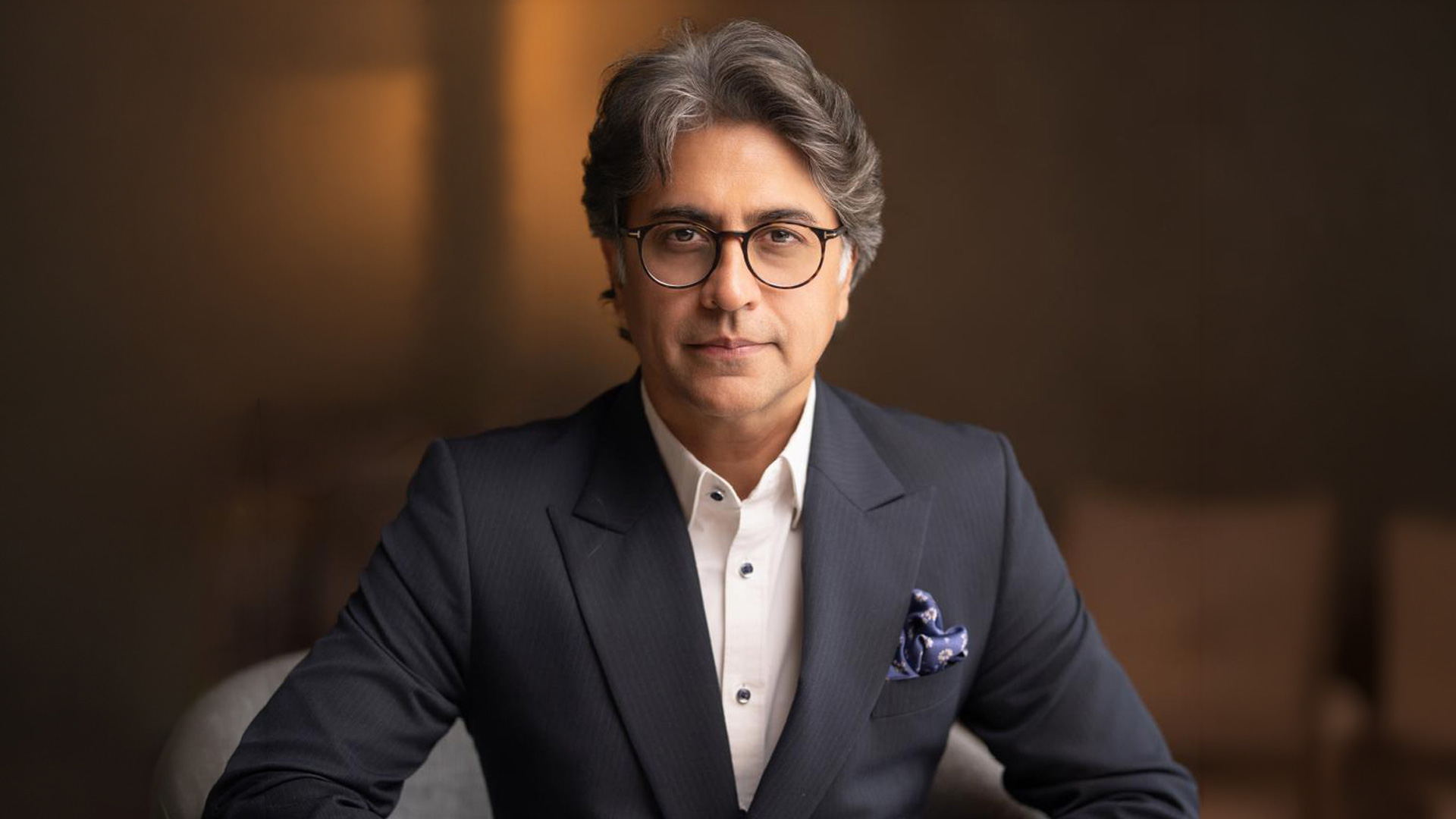
Manvendra Singh Shekhawat, Managing Director of Suryagarh Collection, reflects on the rise of modern boutique hospitality, the role of cultural storytelling in shaping meaningful guest experiences, the evolution of luxury hospitality, and the growing influence of regional markets on the industry’s future.


By Rachna Virdi
It isn’t every day that a second-generation entrepreneur leading a luxury heritage hospitality group also carries a compelling vision for climate action—one shaped by experiential tourism, cultural conservation, social entrepreneurship, and ecological restoration.
Manvendra Singh Shekhawat is the Owner and Managing Director of Suryagarh in Jaisalmer, Rajasthan, and heads the MRS Group, a boutique hospitality company specialising in luxury heritage experiences.
Its flagship property, Suryagarh Jaisalmer—a luxury boutique hotel near the Sam Sand Dunes —has become synonymous with destination weddings and immersive travel in the Thar Desert. Operated by Rajasthan Fort and Palace Private Limited, the company reported a net worth of ₹62.09 crore by March 2024, reflecting a strong and sustainable capital foundation. Its other ventures—Narendra Bhawan Bikaner and Mary Budden Estate, Binsar—are regarded as pioneering properties that helped place these destinations on India’s luxury tourism map.
Shekhawat began his entrepreneurial journey with humble roots, gradually developing a global outlook grounded in grassroots sensitivity. He is known for restoring historic forts and palaces and transforming them into vibrant cultural hubs. A regenerative developer working at the intersection of culture, ecology, and economy, he leads Dhun, a 500-acre regenerative town project in Jaipur, alongside the Suryagarh Collection, which reimagines heritage properties as boutique hotels and cultural districts.
As founder of The I Love Foundation, he has led over 60 community initiatives, including Jaisalmer’s largest cleanliness and conservation drive and India’s first citizen–airline partnership for regional tourism. Today, his larger pursuit is to reimagine the future of livability through regenerative habitats designed to maximise human potential.
In a candid conversation, Manvendra Singh Shekhawat reflects on how modern boutique hotel groups are no longer merely entering destinations, but increasingly helping create them.
Some excerpts:
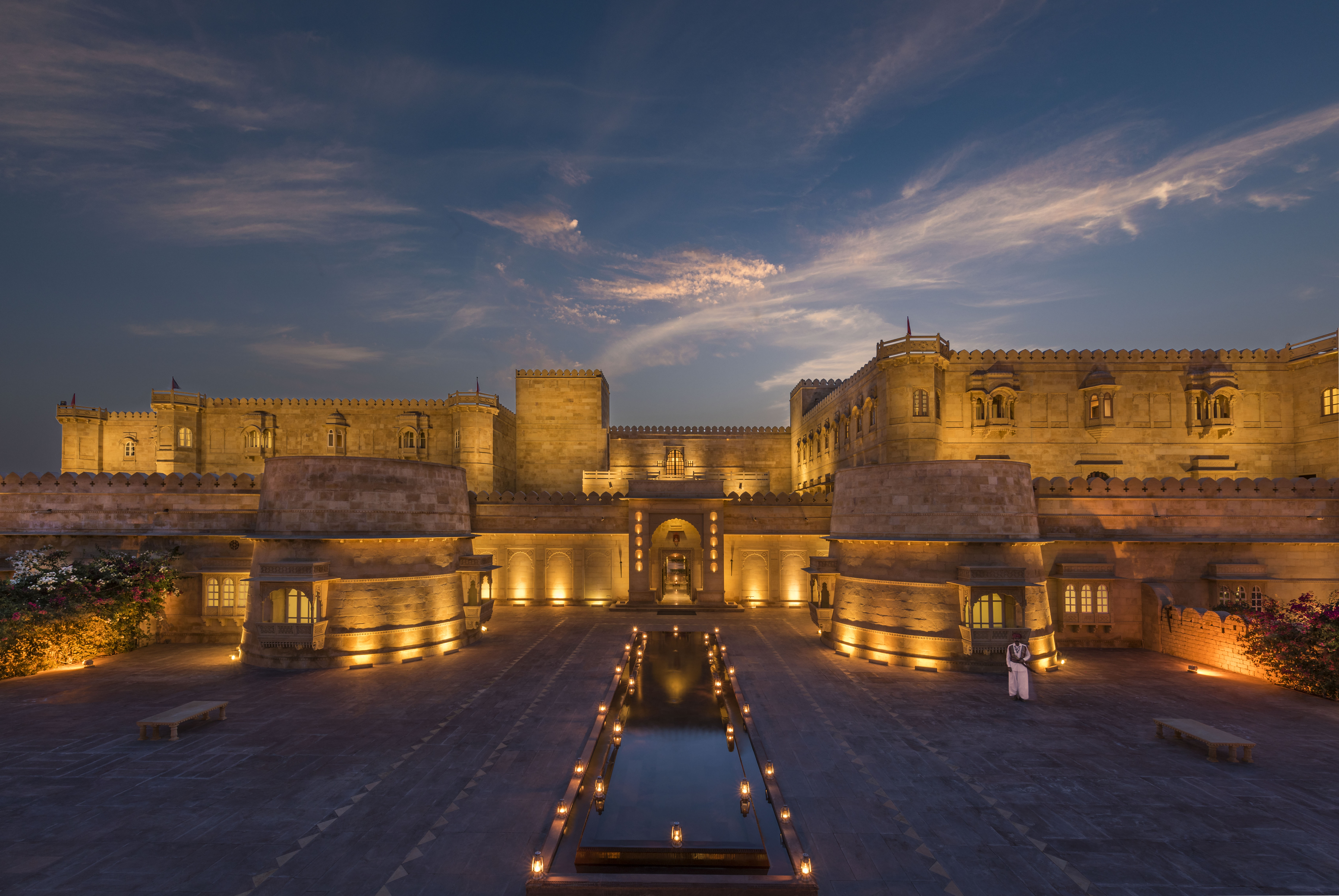
Suryagarh Jaisalmer has become synonymous with destination weddings and immersive travel in the Thar Desert.
You entered the hospitality industry at a very young age. Looking back, what was the most challenging personal transition in that journey?
I’m moving from being an artisan of a product to becoming an architect of a system — and that demands a very different kind of artistry. When your ambition is to scale with specificity and story, rather than through standardisation and sameness, you begin to see your work not merely as products, or even enterprises, but as ecosystems and platforms. That shift requires a fundamental change — mentally and internally — along with more systemic scaffolding to scale without losing the essence of what you started with. Learning to understand things at a systemic level, and to think beyond the mindset of an artisan toward that of a systems architect, has been the most meaningful personal shift for me — and an immensely rewarding one.
Hospitality investment in India has traditionally focused on established markets. What makes regional destinations attractive today, and what signals do you look for before investing in an emerging location?
The closer you are to the context and the story, and the more specific you are in your endeavour to take the very best of a region to the world, the stronger the business case becomes. I don’t see these as opposing forces at all. In fact, specificity is the advantage — because ultimately, what matters to the guest is the emotional resonance you create, the rarity of the experience, and the authenticity of what you offer. When that becomes the North Star — the core focus behind every decision — economic value follows naturally. That is the narrative we continue to build and work towards.
Boutique hotel groups today are helping create destinations, not just enter them. What does it take to turn an unknown location into a compelling travel narrative?
I believe long-termism in the way you approach a project is essential — the patience to endure the gestation period, along with absolute clarity and conviction about the destination and the region you are entering. Beyond that comes storytelling: the ability to uncover and share the unique facets and untold stories of a place with the world. If you can do that authentically and effectively — with a little bit of luck and charm along the way — you can make it work.
As travellers seek individuality over standardisation, do boutique hotel groups have an advantage over larger brands in shaping experience-led travel?
I believe there will always be different markets for different kinds of experiences. Some people are seeking transformative experiences, while others are looking for something entirely different — and there is enough room for both to coexist. Ultimately, it comes down to the kind of game you want to play as operators and builders.
For us, the pursuit has always been a wonder. That is what we want to create — experiences that evoke awe, emotion, and transformation — and our hope is that there will always be people who seek that kind of wonder too.
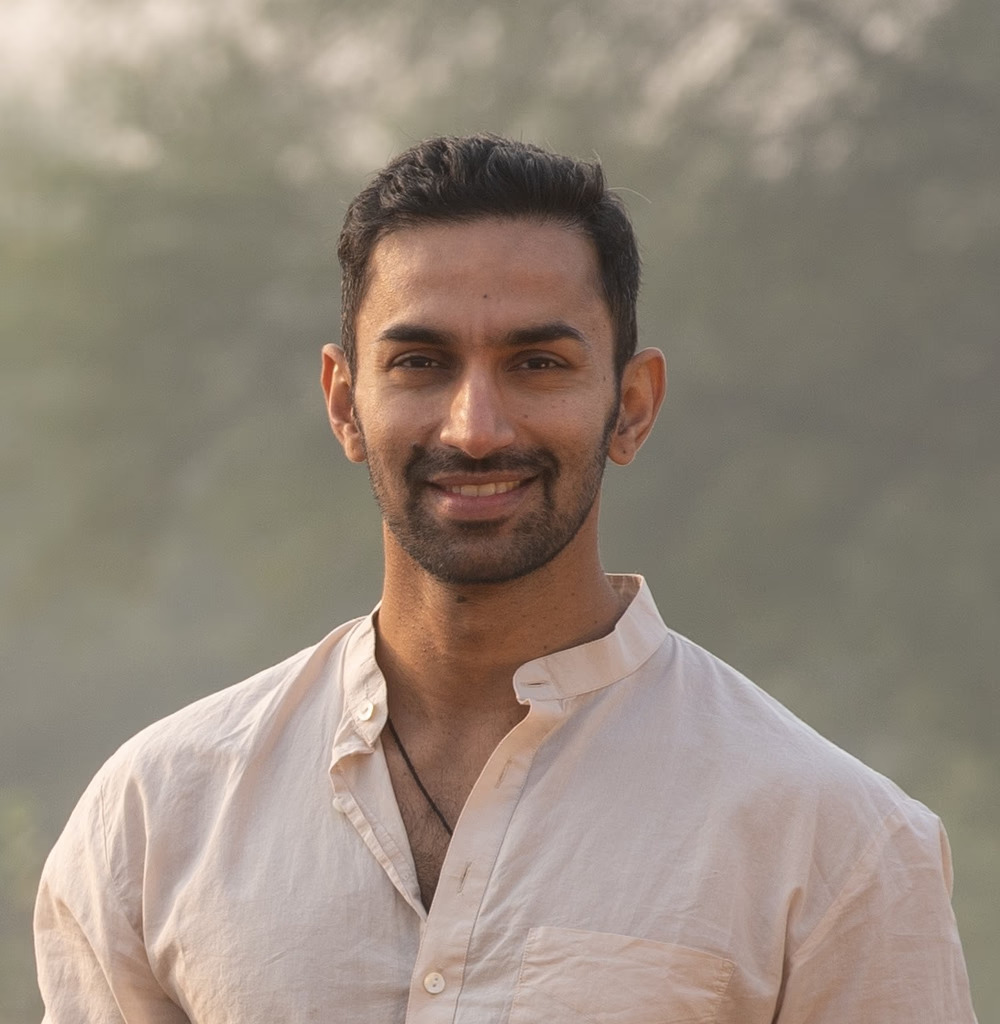
Alongside the Suryagarh Collection, Shekhawat leads Dhun, a 500-acre regenerative town project in Jaipur.
“I believe there will always be different markets for different kinds of experiences. Some people are seeking transformative experiences, while others are looking for something entirely different — and there is enough room for both to coexist. Ultimately, it comes down to the kind of game you want to play as operators and builders.”
Manvendra Singh Shekhawat
Managing Director of Suryagarh Collection

Modern boutique hotels are expected to feel personal and contextual. How do you preserve authenticity without turning local culture into aesthetics?
I believe people are perceptive — they can immediately sense when culture is being put in a zoo, when you don’t truly mean what you say, and when you fail to practise what you preach. For me, authenticity is not an end goal in itself, but a value system that must shape every aspect of the experience you create for the end consumer.
If the central thought is not, “How do I take the very best this region has to offer in its most authentic form, while making it meaningful and accessible for both the guest and the development?”, then the experience will inevitably feel inauthentic. And if you are not creating outsized value for the very ecosystems you are part of — cultural ecosystems, tourism ecosystems, and physical ecosystems — then, sooner or later, the enterprise will cease to be sustainable. Ultimately, it simply will not endure.
Does cultural storytelling need to precede tourism growth for a destination to truly gain traction?
When we speak about heritage, it can take many forms — tangible heritage, intangible heritage, or even natural heritage. It ultimately depends on the location you are in. If you are in a stunning lagoon or a wild forest blessed with extraordinary natural beauty, that alone can be reason enough for people to visit. And if there are traces of an ancient civilisation layered onto that landscape, it only deepens the appeal.
What matters is having clarity about the true raison d’être of why people are drawn to a place. Sometimes it is the natural heritage of the region; other times it is the way people have lived over generations, expressed through architecture, cuisine, customs, craft, or cultural practices. Whatever form it takes, if there is something genuinely unique about a place, that uniqueness becomes the source of its demand. Everything else you build around it is ultimately about enabling and amplifying that demand in a thoughtful and meaningful way.
So will India’s luxury hospitality emerge as a global force through the strength of its cultural depth?
In the long run, nothing that is not deeply true to a place and its people is going to endure. People are ultimately drawn to uniqueness — and true uniqueness cannot be manufactured or imitated. It emerges from the lived history of a place, from the continuum of experiences, traditions, and ways of life shaped over generations. That authenticity cannot be faked. And when you build enterprises that are genuinely rooted in that truth — in the culture, people, and spirit of a place — they will always hold enduring value.
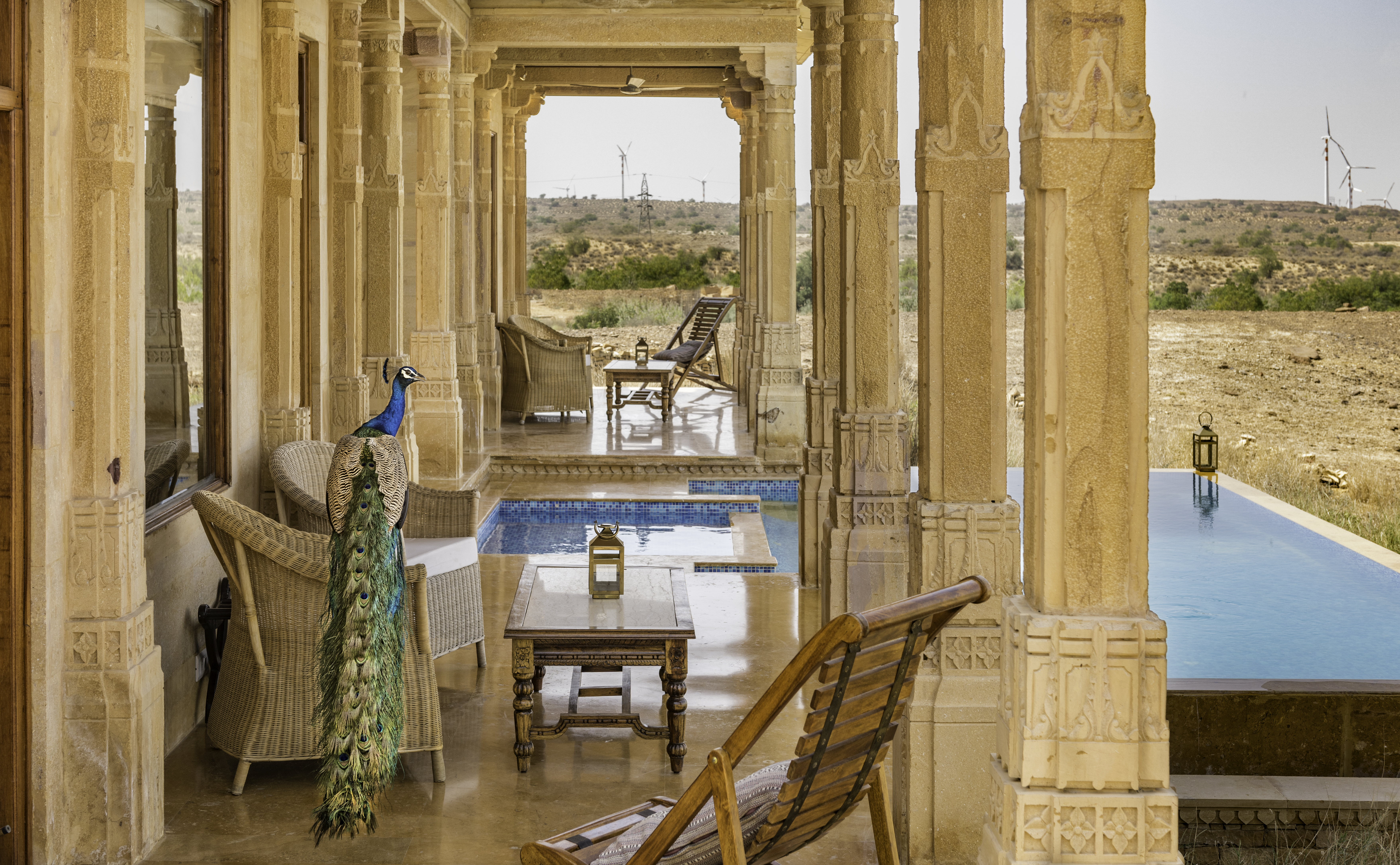
Some people are seeking transformative experiences, while others are looking for something entirely different and there is enough room for both to coexist, believes Shekhawat.
In emerging regional markets, does hospitality infrastructure create demand rather than simply respond to it?
Our approach has always been to work with both tangible and intangible heritage, and to weave them into a narrative that becomes the foundation of experience design. It begins with the physicality of a region or an asset, but equally with the “software” of a place — its culture, its rhythms, and the ways in which its people have lived over centuries. Together, these elements shape how an experience is designed.
Take Jaisalmer, for instance. The intangible aspects of the region are deeply embedded in its physical design — the courtyards, the architecture, and the materiality of the buildings are all responses to the climatic and cultural realities of that landscape. If you were designing a contemporary building there today, studying these inherited principles offers invaluable insight into what has endured and why it has worked for generations.
The same philosophy extends beyond architecture into food, hospitality, and every layer of experience creation. At the places we build, we think of experience design as inviting people into a world they may never have encountered before. And in doing that, it is only wise to learn from the people who have called that region home for centuries. They hold an immense amount of wisdom about how life can be lived meaningfully within that context.
That, to me, is how intangible cultural knowledge can be translated into contemporary practice — whether in designing a building, shaping an experience, or creating a way of living that still feels deeply rooted in place.
Within the larger ecosystem, do you see hospitality evolving beyond sustainability towards regeneration?
My belief is that cultural regeneration is the only true antidote to the commodification of society. It is a far more expansive idea than sustainability alone, because regeneration cannot be treated as an end goal or a box to tick. It has to be embedded into the very DNA of how you operate, how you build, and how you approach business itself.
What I have come to understand is that only through the process of cultural and environmental regeneration can you create economic opportunity for a region and its people without costing them their identity or their environment. Any other approach, in the long run, fails to create meaningful or lasting value.
There exists an immense amount of unknown, undervalued, and underappreciated cultural IP and civilisational infrastructure across regions. When you regenerate and recontextualise these assets thoughtfully, you are able to create outsized value — not by competing over a limited pie, but by expanding the pie itself.
With the rise of AI, do you see it as a gamechanger for hospitality and travel?
Absolutely. I think AI will be a complete game changer. At the end of the day, it is a tool — and an exceptional one at that. Used thoughtfully, it can create more opportunity, freedom, and resources for people to focus on what truly matters: deep, authentic human experiences. I see AI as an ally, not a threat. Personally, I don’t subscribe to the fearmongering around it.
Lastly, if Suryagarh is remembered 100 years from now, what would you want it to stand for beyond hospitality?
If it were to become a lighthouse for the region — creating economic opportunity rooted in the place itself and in the ways of life of its people, without erasing their identity or damaging the environment — I would consider that a meaningful outcome.
And if, a hundred years from now, someone were to walk into Suryagarh and say that it was built and nurtured by people who did it with love, care, and devotion, that would be an extraordinary legacy to leave behind.
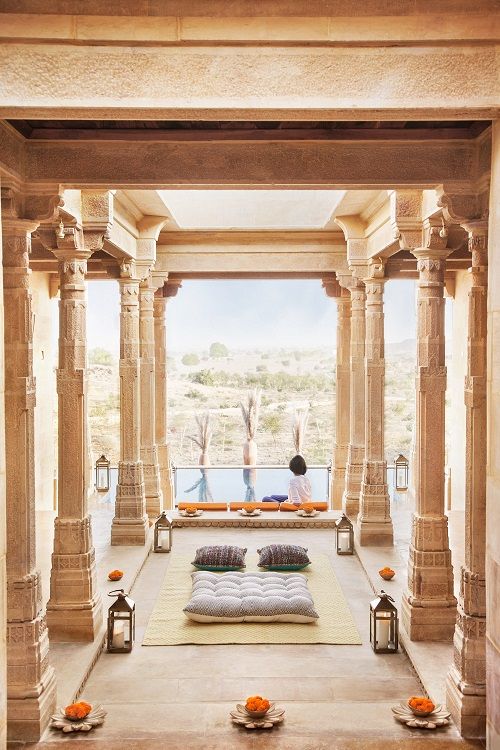
Thar Haveli at Suryagarh Collection.