















Rails of Wonder
From the Venice Simplon-Orient-Express to new carriages by Wes Anderson and Baz Luhrmann, Belmond treats its train interiors with the care a hotel gives its rooms.

By Chandreyi Bandyopadhyay
In February 1929, the Orient Express sat marooned in a snowdrift about 60 miles from Istanbul for 10 days. According to Belmond, this episode inspired Agatha Christie’s Murder on the Orient Express. Carriage number 3309 still carries passengers, and has now been redesigned as a Grand Suite.
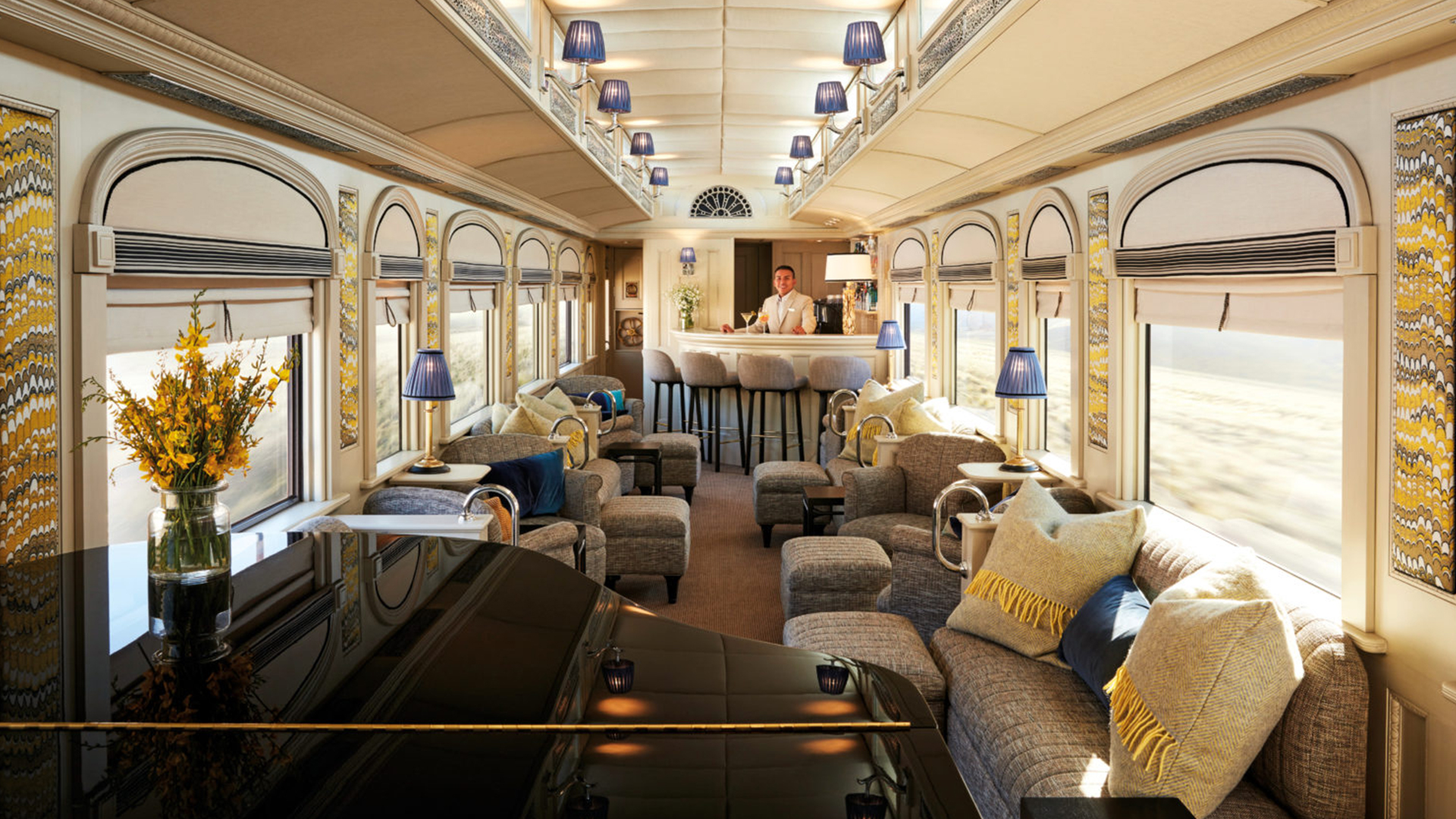
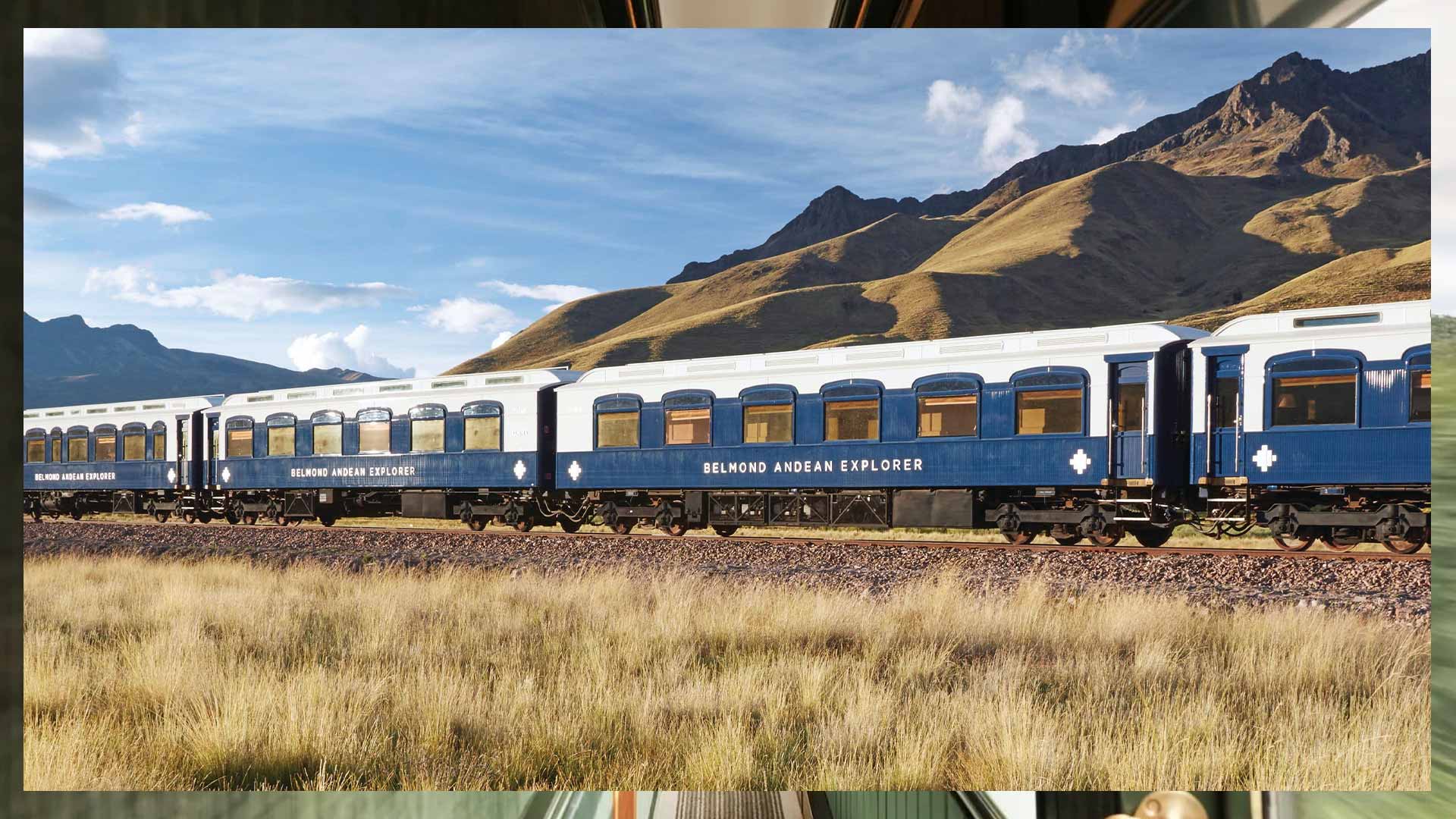
The Belmond Andean Explorer and its finely crafted interiors.
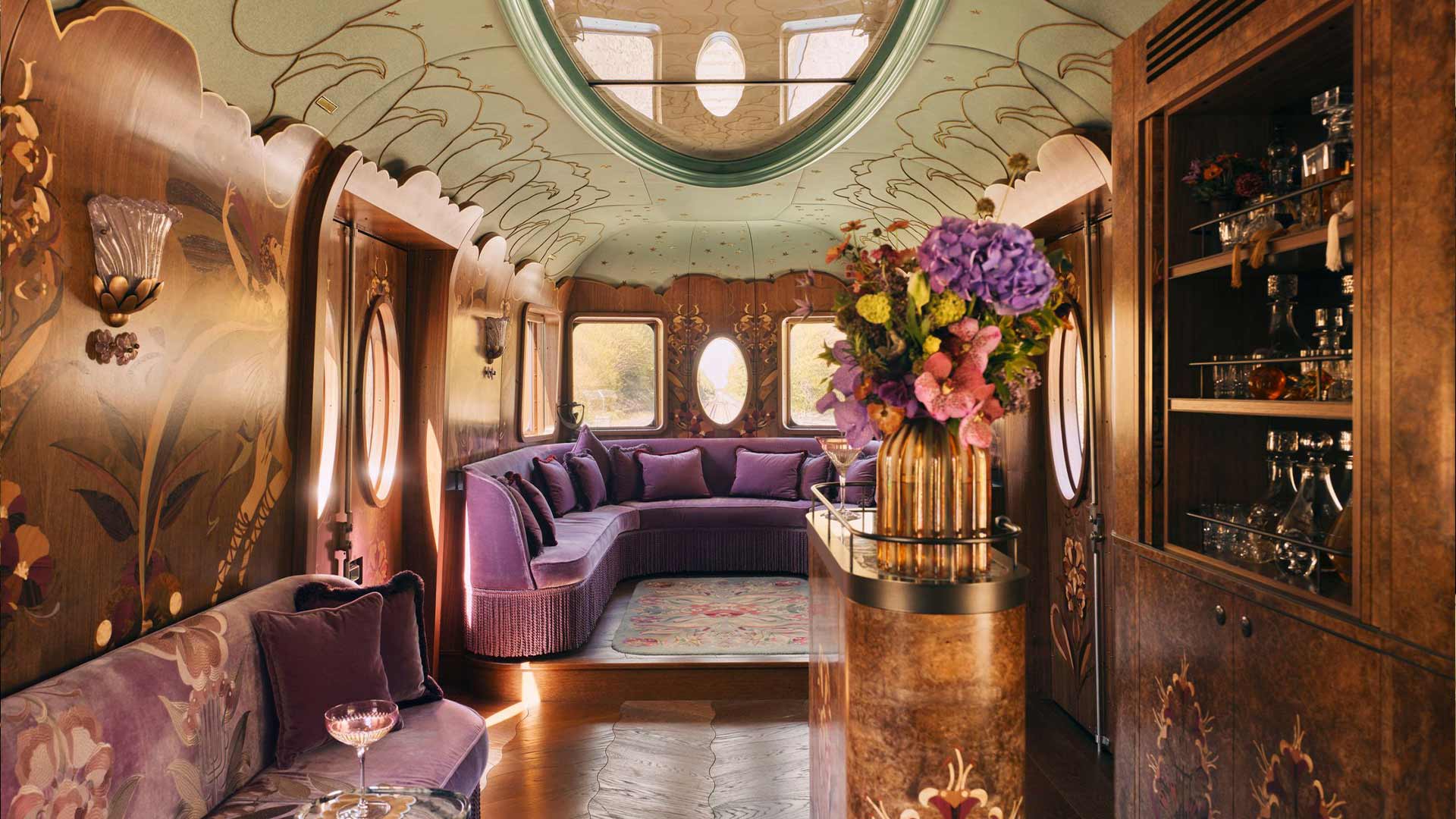
British Pullman's Celia features rich detailing, including marquetry and parquetry.
Opulent design
Today operated by luxury travel company Belmond, the Venice Simplon-Orient-Express comprises carriages dating from 1926 to 1949, styled after the Pullman cars introduced in America by George Mortimer Pullman. In 1977, American entrepreneur James Sherwood bought two carriages at auction in Monte Carlo and spent years tracking down the rest. The train relaunched in 1982 after being restored by craftspeople with family links to the original makers, including marquetry specialist Bob Dunn, whose grandfather had worked on the carriages.
Each of the train’s three dining cars has its own look: black lacquer in L’Oriental, marquetry in Étoile du Nord, and glass panels by René Lalique in Côte d’Azur. Every winter, when the train is out of service, the carriages are transported to workshops in France or Italy, where everything, from the Chinese lacquerwork to the mechanical parts, is inspected and repaired.
A railway carriage has to work as a bedroom, a dining room or a bar while moving at speed, within narrow confines and through decades of wear. Filmmakers have always liked that constraint. Wes Anderson's The Darjeeling Limited put three brothers on a train across India, with the cabins playing as important a role as the actors. Belmond now operates seven trains across Europe, Peru, Scotland and Southeast Asia, and it believes that the room matters as much as the route.
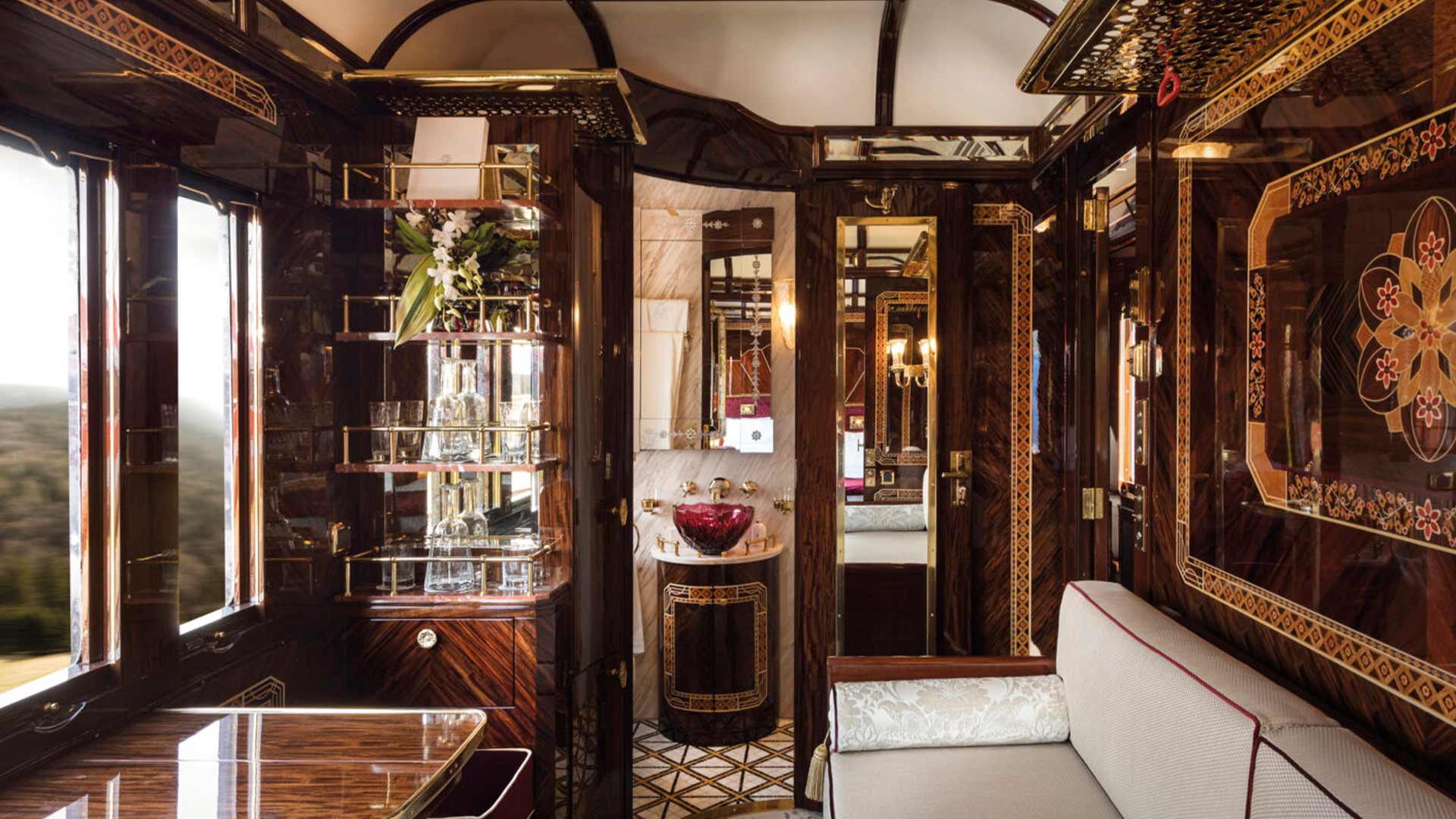
Prague Grand Suite brings architectural inspirations from the city to the train.
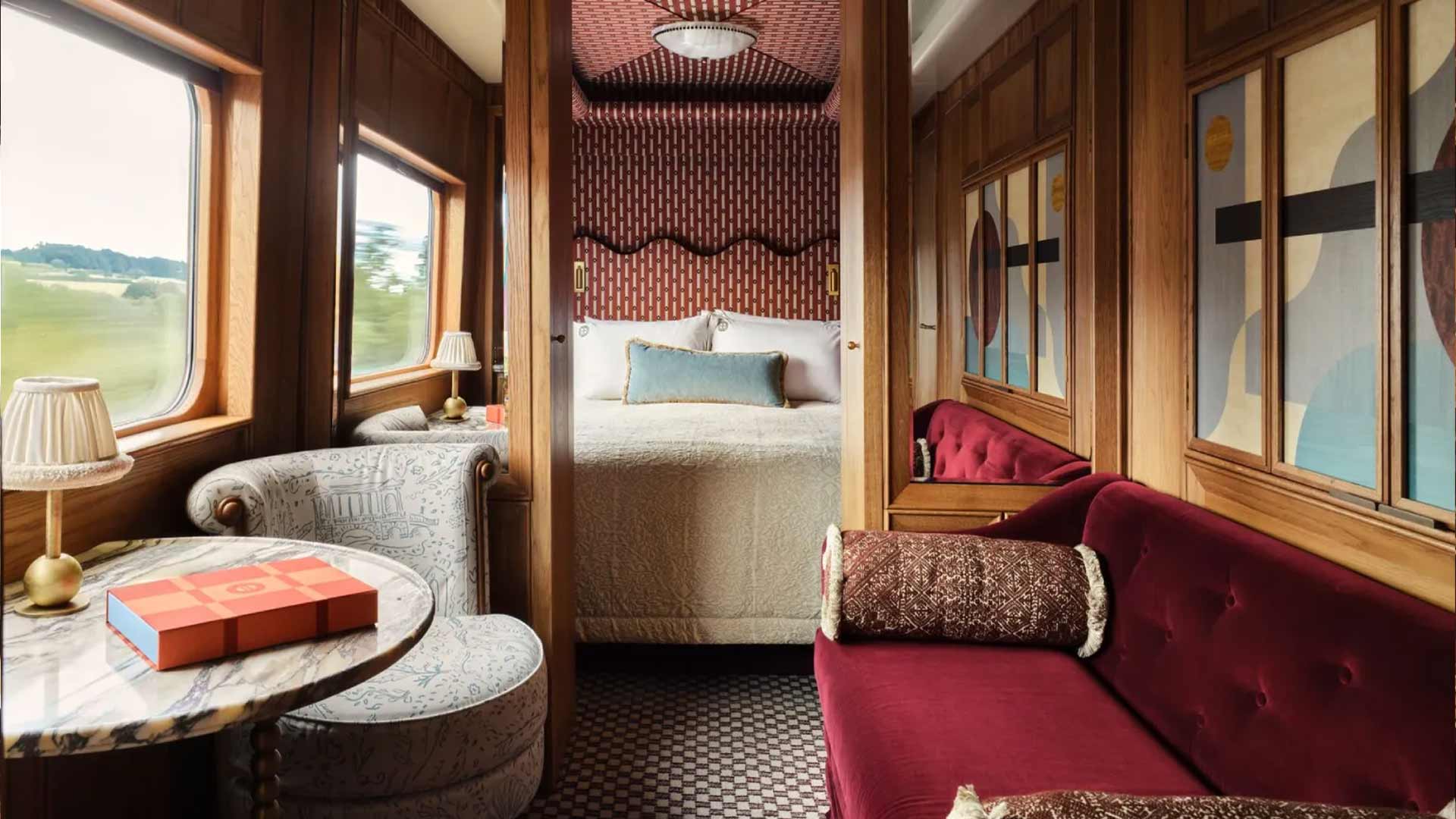
Pattern, texture and bespoke detailng of a Britannic Explorer suite.
A filmmaker’s view
Belmond has reintroduced the British Pullman, a day train of 11 carriages that has hosted royalty, carried statesmen, and survived the bombing of the Second World War. Two of its carriages now carry the signatures of filmmakers: one by Wes Anderson, the other by Baz Luhrmann and Oscar-winning designer Catherine Martin.
Cygnus, built in the 1950s and seen in the 1972 film Agatha, was redesigned by Anderson. He used symmetrical marquetry panels showing sunbeams, clouds, stars and waves, with pastel-pink ceiling details, several shades of green across the interior and sharp-edged chairs and mirrors. Swans recur throughout as a motif and reference the carriage’s name. “I have often had the chance to invent train compartments and carriages in my movies,” Anderson said. “So, I was very eager to make something new while also participating in the process of preservation which accompanies all the classic Belmond train projects. They are keeping something special alive.
An endangered species of travel which is nevertheless very suited to our time.”
Celia, a private dining carriage added to the British Pullman in 2026, leans further into theatre. Luhrmann and Martin built it around an invented West End actress who was gifted her own Pullman car in 1932 after playing Titania in A Midsummer Night’s Dream. A fabric ceiling sits above floral oak marquetry and timber parquetry, and heavy theatre-style curtains divide the space. The powder room is hand-painted and finished in mosaic.
Martin turned to British makers for nearly everything. Dunn & Son made the marquetry, Bill Cleyndert the furniture, Tony Sandles Bespoke Glass the glasswork, and Hand and Lock the embroidery. Duchess China made the tableware, David Mellor the cutlery and Tom Dixon the glassware.
Celia seats up to 12, has its own lounge, bar and kitchen, and costs from £15,000 for exclusive use. Luhrmann calls the experience a “magical mystery tour”.
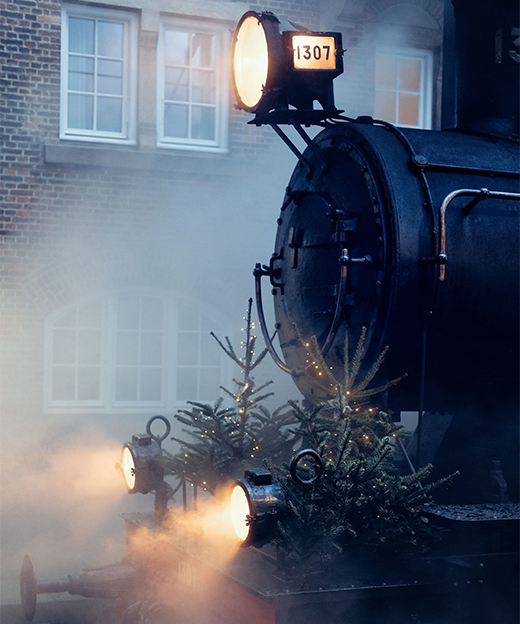
Early steam engines remain a subject of awe even today.
Belmond’s future vision
The Britannic Explorer, launched in 2025 as the first luxury sleeper train in England and Wales, was designed by the London studio Albion Nord, and featured patterns by Luke Edward Hall on the walls and upholstery. It travels from London to Cornwall, the Lake District and Wales, and its observation bar serves as the social centre for the passengers.
Belmond also runs the Royal Scotsman, the Andean Explorer, the Hiram Bingham to Machu Picchu and the Eastern & Oriental Express from Singapore. Across the fleet, carriages are restored, commissioned or designed with the attention a hotel gives its rooms. The idea behind the original Orient Express—that you might spend a few days in a beautifully made space while a country passes outside—is still what Belmond stands for.
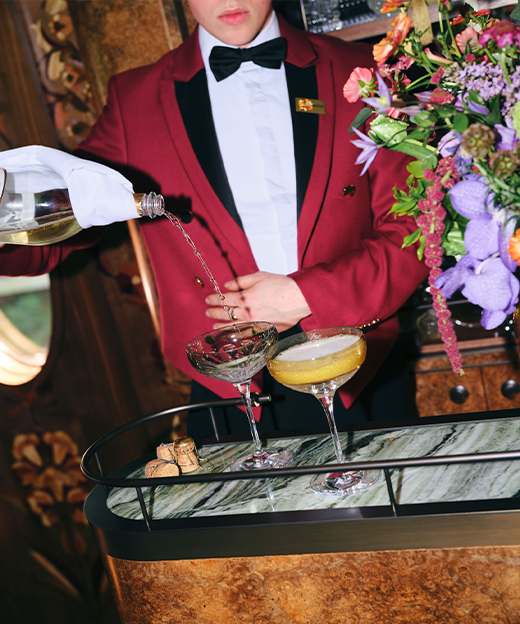
The private bar aboard Celia.
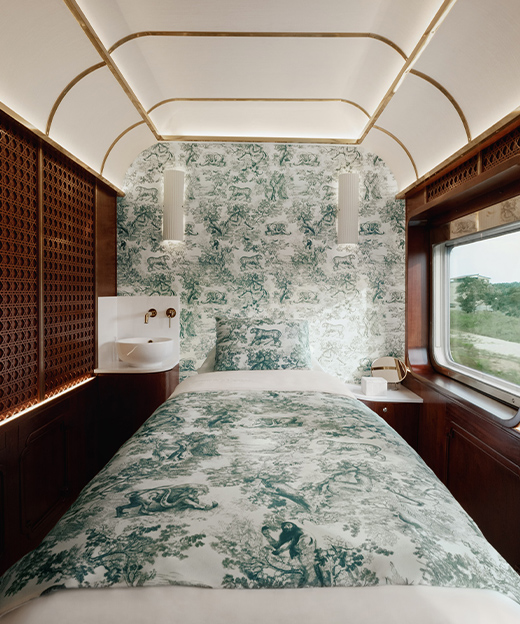
Dior's first spa in Southeast Asia finds an unusual home on the Eastern & Oriental Express.