










The Art of the Un-Hotel
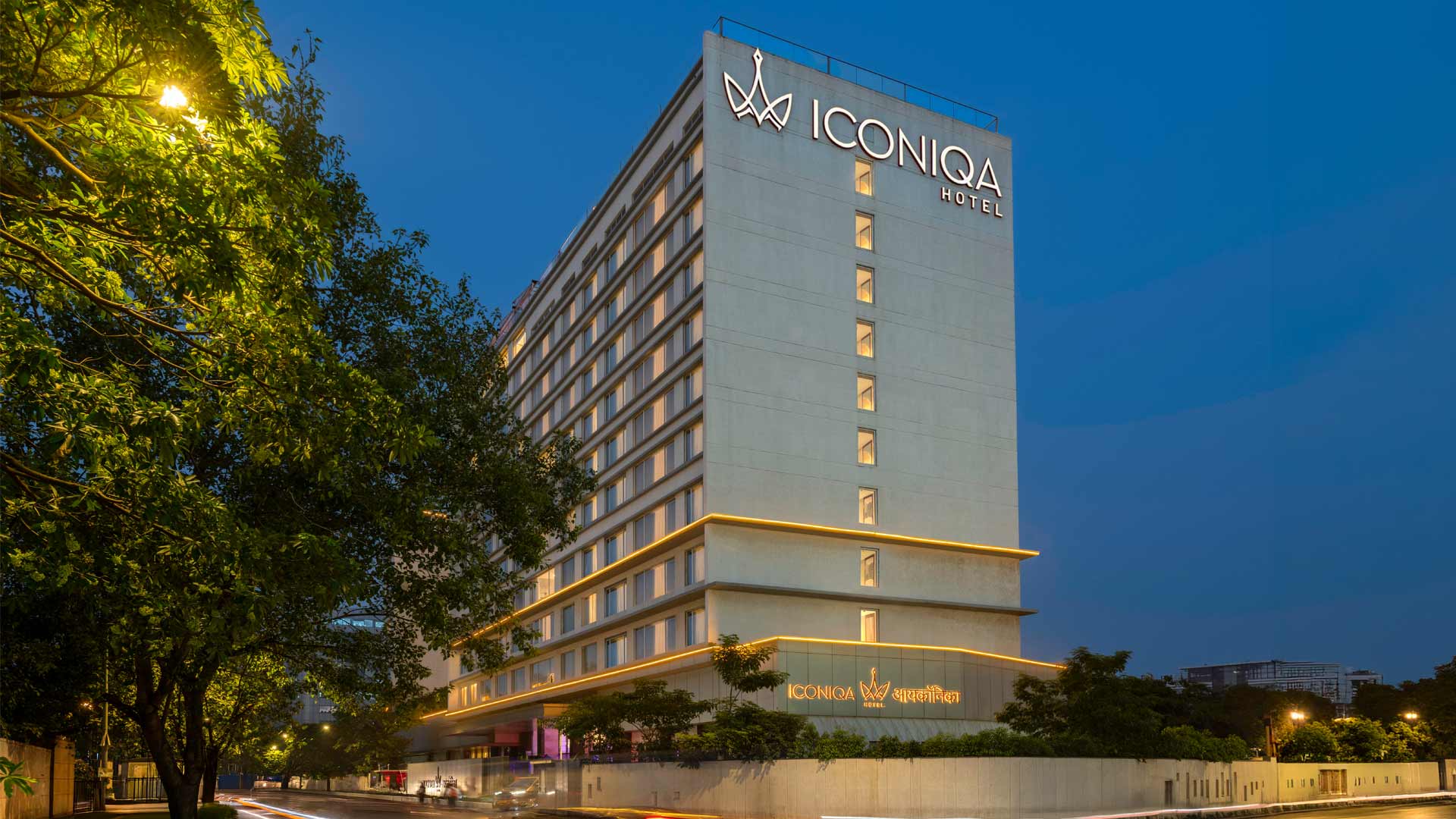
ICONIQA Hotel Mumbai International Airport marries Bombay Deco nostalgia, intuitive technology and a guest-first layout to make every interaction feel personal and effortless.

By Deepali Nandwani
Why be a hotel when you can be an un-hotel?
A hotel stay usually comes with a reception desk, a breakfast buffet, a laundry bag that returns your shirt hours later, and a minibar of overpriced crisps. At ICONIQA Hotel Mumbai International Airport, each has been taken apart and put back together differently.
This is what Arjun Baljee, President, Royal Orchid Hotels and Founder, ICONIQA Hotels & Resorts, means when he calls his new upscale brand an 'un-hotel'. Guests may check in at a lounge that is part coffee shop, part bar, refresh clothes in their wardrobe, and find emerging Indian brands in a free minibar. Weekdays bring business travellers, weekends bring Mumbaikars on staycations; both encounter a deliberately rethought stay.
Few stretches in India pack in as many premium and luxury hotels as the short run from Mumbai's Terminal 2 to the Western Express Highway. Rivals sit almost wall to wall, competing on positioning and ARR, and a hotel that cannot set itself apart is quickly lost. ICONIQA holds its own by stepping away from the business hotel template.
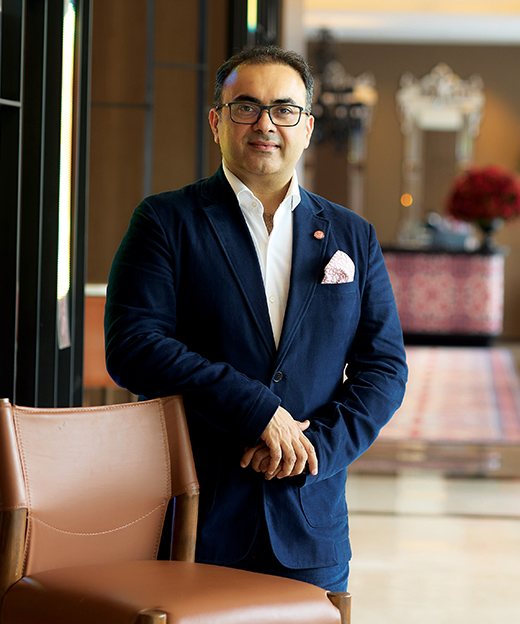
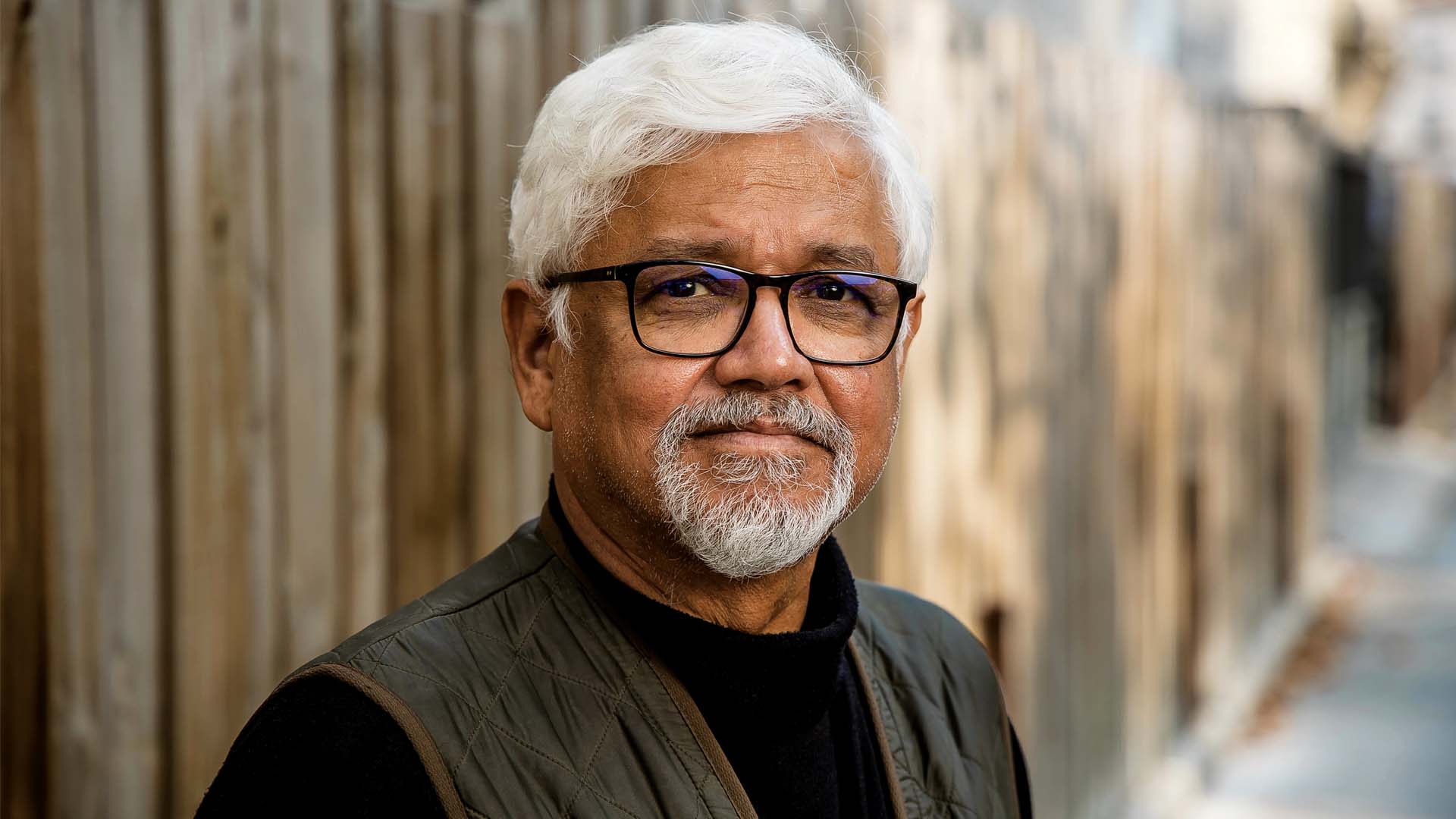
Arjun Baljee, President, Royal Orchid Hotels and Founder, ICONIQA Hotels & Resorts.
Designing for the guest
Baljee explains the brand's guest-first philosophy: "Hoteliers and architects often design hotels the way they think they should be. But you're not designing for yourself; you're designing for the guest. You have to go deep into understanding how the guest actually uses the product, because that's what creates memory." That thinking shapes public areas and restaurants, which aim to be memorable first and conventionally luxurious second.
Mumbai's Art Deco story is usually told through Marine Drive and the precinct around Oval Maidan, with their 1930s curved balconies, porthole windows and sunburst motifs. It is rarer near the runways of Sahar, where ICONIQA has carried Bombay Deco north for a new kind of traveller.
The 291-key property is technologically forward, with its Smart Laundry Closet and AI-led yoga, yet visually anchored in the Art Deco of 1920s Paris, adapted locally as Bombay Deco in the 1930s and 40s.
Baljee describes how he approached the design: "I've always been fascinated by good design. There is the physicality of design, and then there is experience design. When you begin a project, you start thinking like a hotelier because of cost and return considerations. However, once the budget is defined, you have to stop thinking like a hotelier and start thinking like a guest, so you design a hotel that functions well for guests. Once the math side is done, you are asking yourself, 'What are the 10 things a guest really wants in a hotel?'
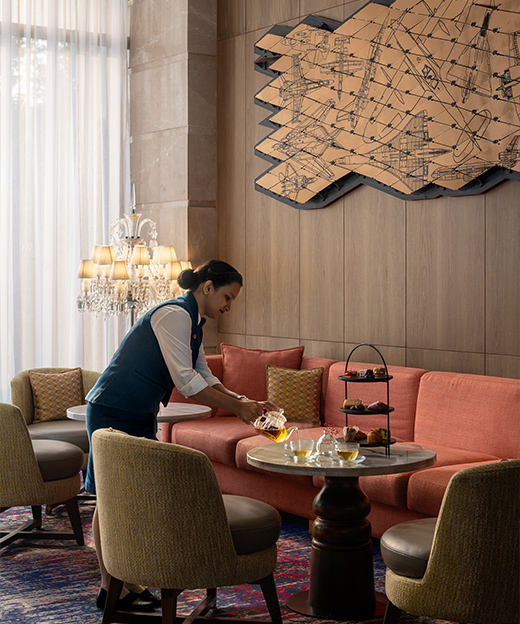
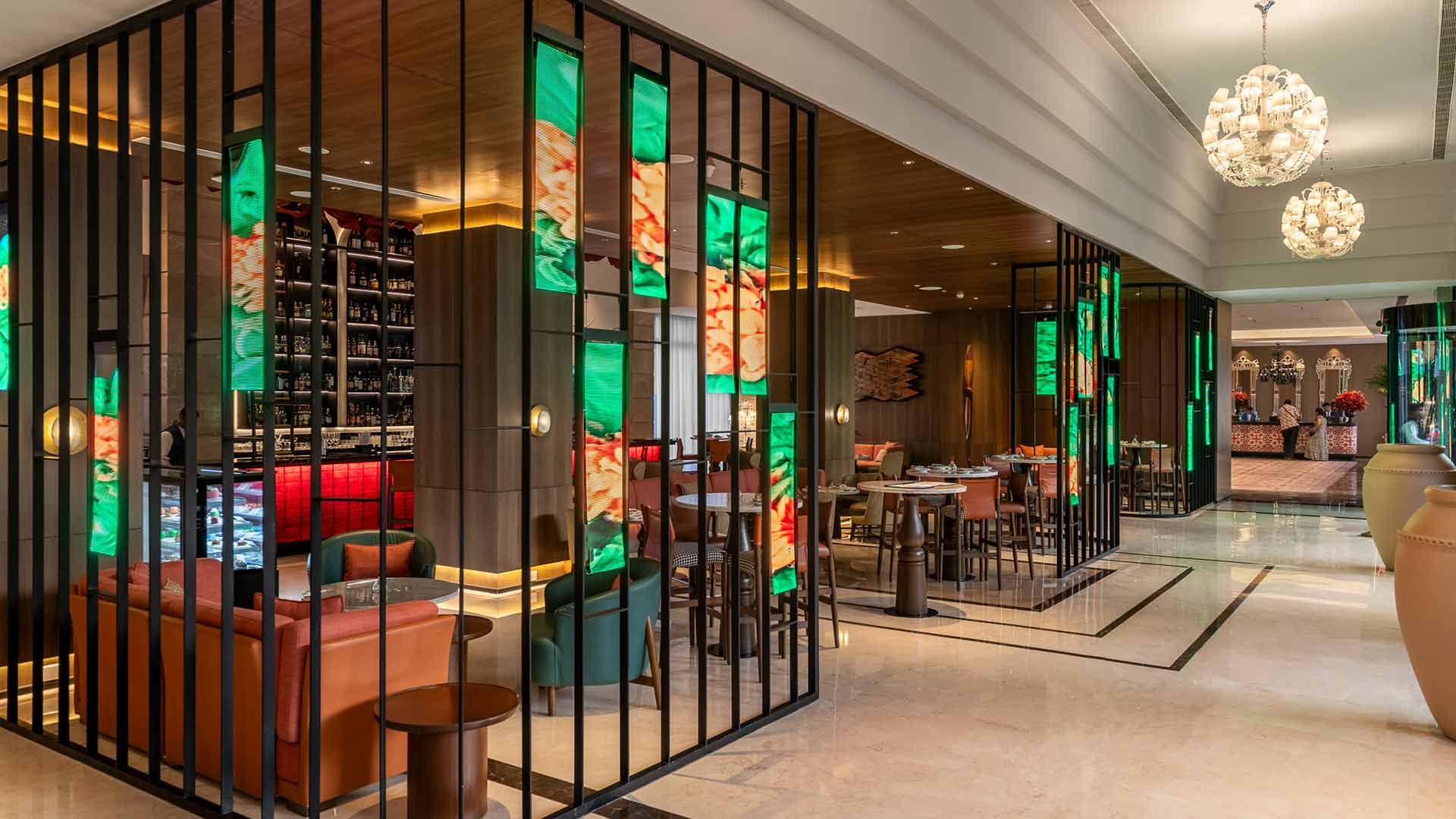
Interiors favour curved lines, geometric detail and tactile surfaces, a calm counterpoint to the restless city outside. At the Aviator Lounge, AI-generated art plays on transparent LED screens separating the bar from adjoining spaces, shifting as day turns to night. An oversized, wave-like Japanese paper sculpture floats above the counter beside whimsical Baccarat-inspired chandeliers.
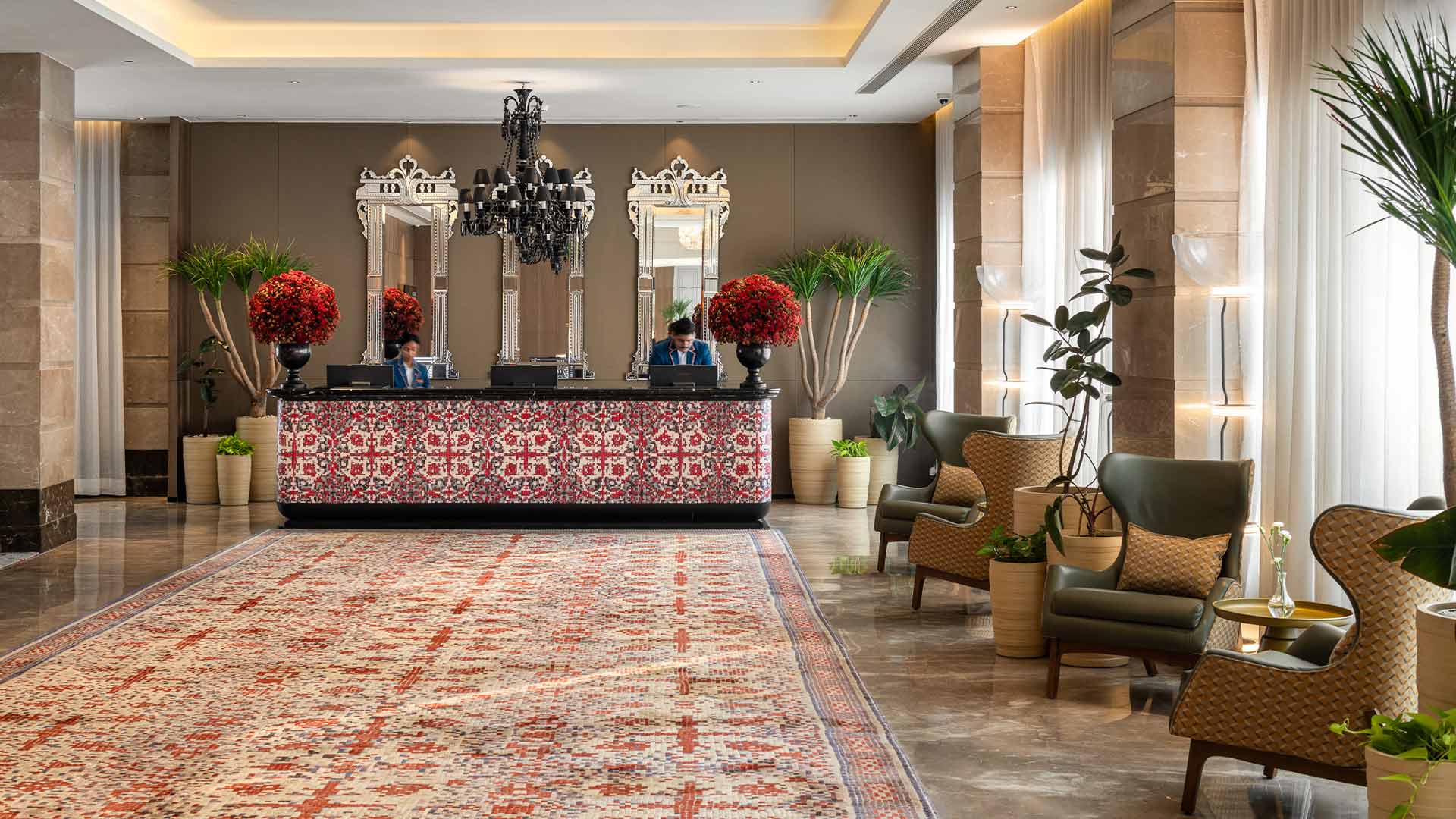
At reception, an antique carpet is reimagined in Bisazza tiles, its pixelated pattern echoed underfoot.
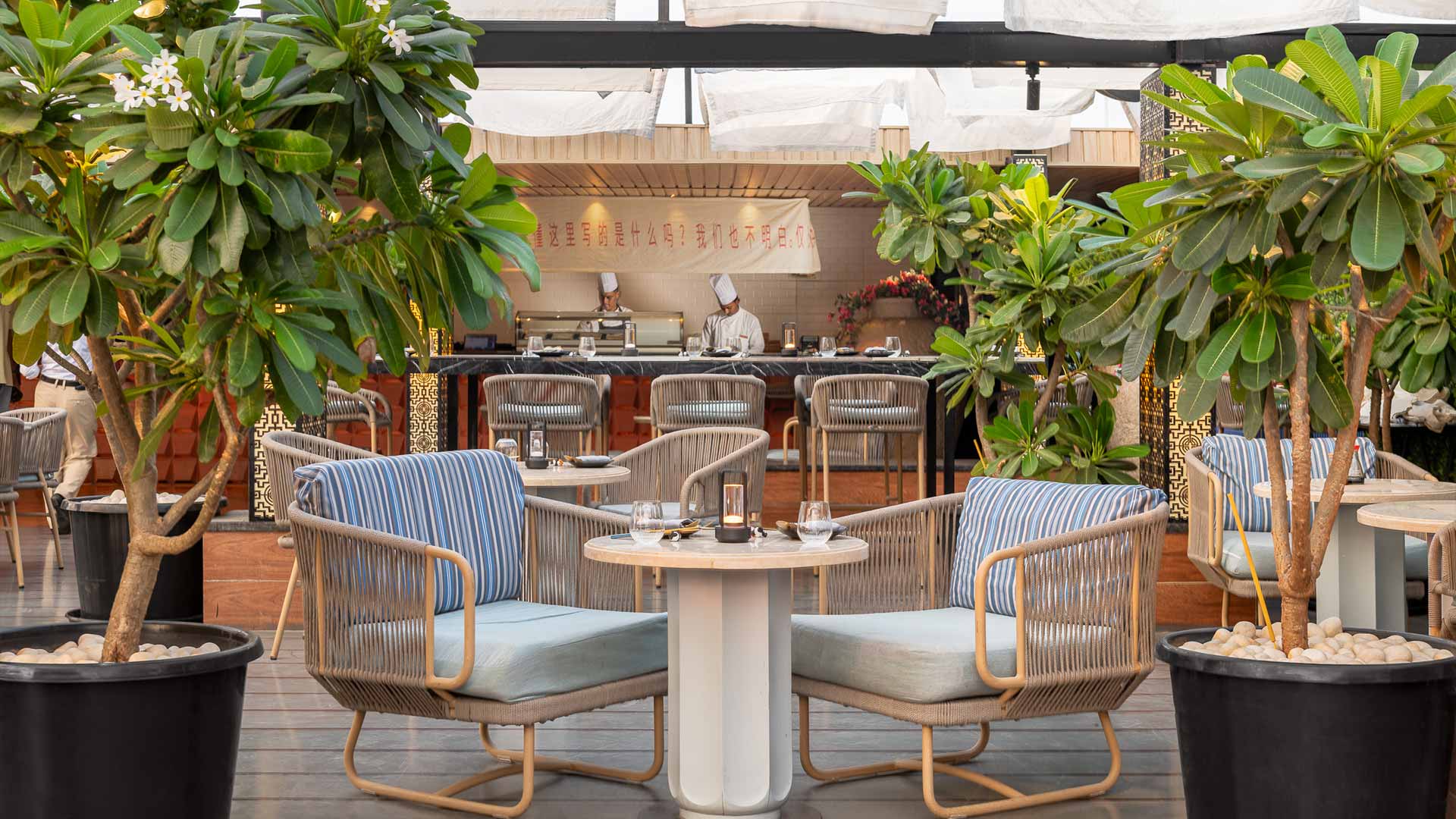
Bombay Swim Club is billed as Mumbai's first rooftop day club, a swim-and-lunch venue by day and a social setting by night.
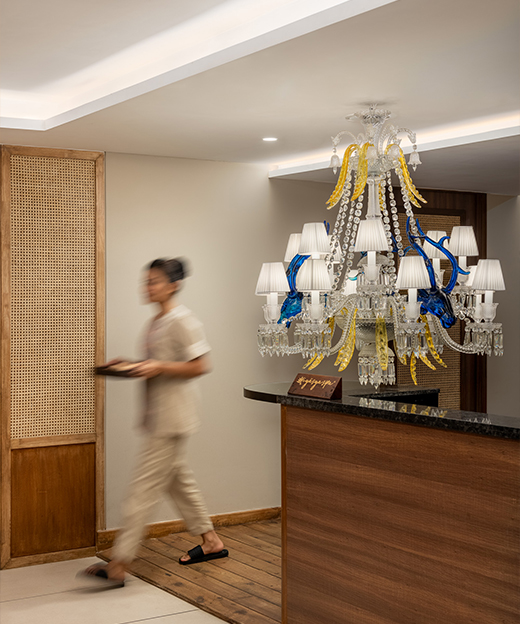
At reception, technology and nostalgia meet again: an antique carpet rendered in Bisazza tiles drapes the counter, its pixelated forms recreated as textile patterns. Paris-inspired ornate mirrors and oversized wine-red topiaries frame the desk, Roche Bobois lighting accents the walkway, and sheer curtains filter Mumbai's strong daylight.
The ground-floor banquet space continues the Art Deco narrative in pastel blue, with French doors and alabaster chandeliers. Kadak, the multi-sensory Pan-Indian restaurant, reinterprets the modern coffee shop, while its outdoor extension, Kadak Garden, is tropical. The art ranges across Gemini-AI interpretations of Warli motifs, punk-graffiti Mona Lisas, street art inspired by Mumbai's hoarding painters, a Dior-esque wallpaper, antique brass dabbas etched with former owners' names, and clay sculptures.
Scarletta, the hidden speakeasy, shifts to old-world intimacy: dark veneer, maroon velvet, curios from Portobello Market, camel leather bar stools, wine-toned seating for 16, and rare spirits.
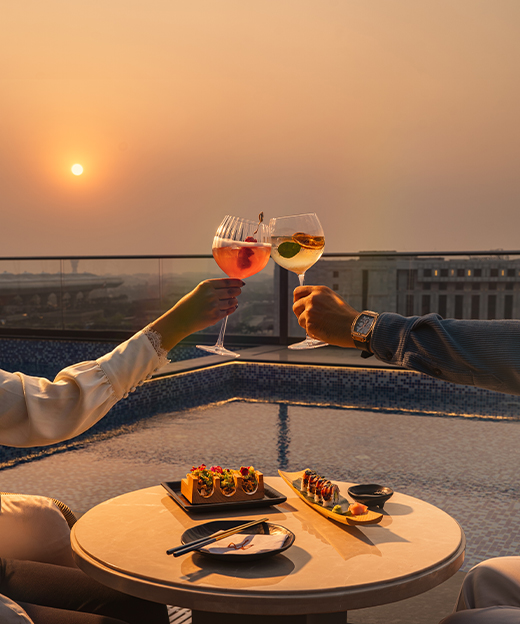
One flight up, the Bombay Swim Club, billed as Mumbai's first rooftop day club, is a swim-and-lunch venue by day and a social setting by night. Part day club, part izakaya, it pairs Japanese shoji screens with Mexican wall coverings, terracotta and green walls, and a Japanese-Mexican menu to match. The infinity pool overlooks the runways, with splash zones for play and an outdoor jacuzzi for quiet. Between speakeasy, day club and restaurants, ICONIQA works as much as a social club and dining address as a place to sleep.
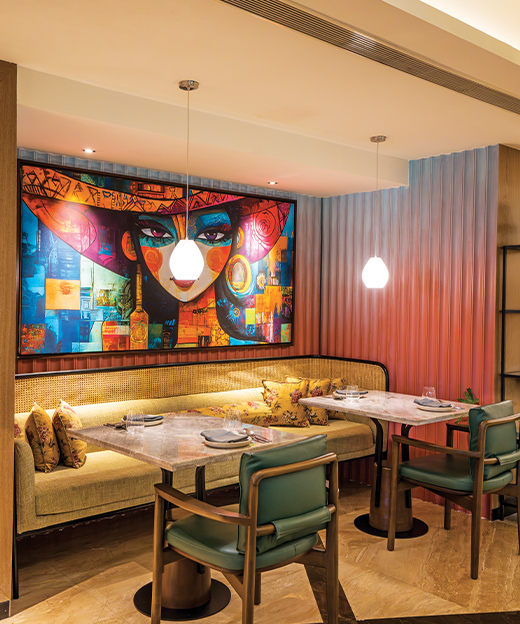
Punk-graffiti Mona Lisas enliven Kadak’s interiors
Check-in, your way
Operations, too, start with how guests use the hotel. As General Manager Shibani Malhotra puts it, "Every building is brick-and-mortar, so the real differentiator is the experience. At the end of the day, we are in the business of curating experiences. People make people, people break people."
The welcome begins at the Aviator Lounge, with reception discreetly to the left. "You've travelled, you're tired, why not settle down first? Guests can choose an in-bar check-in, an in-room check-in, or a traditional desk experience depending on what they prefer," says Malhotra.
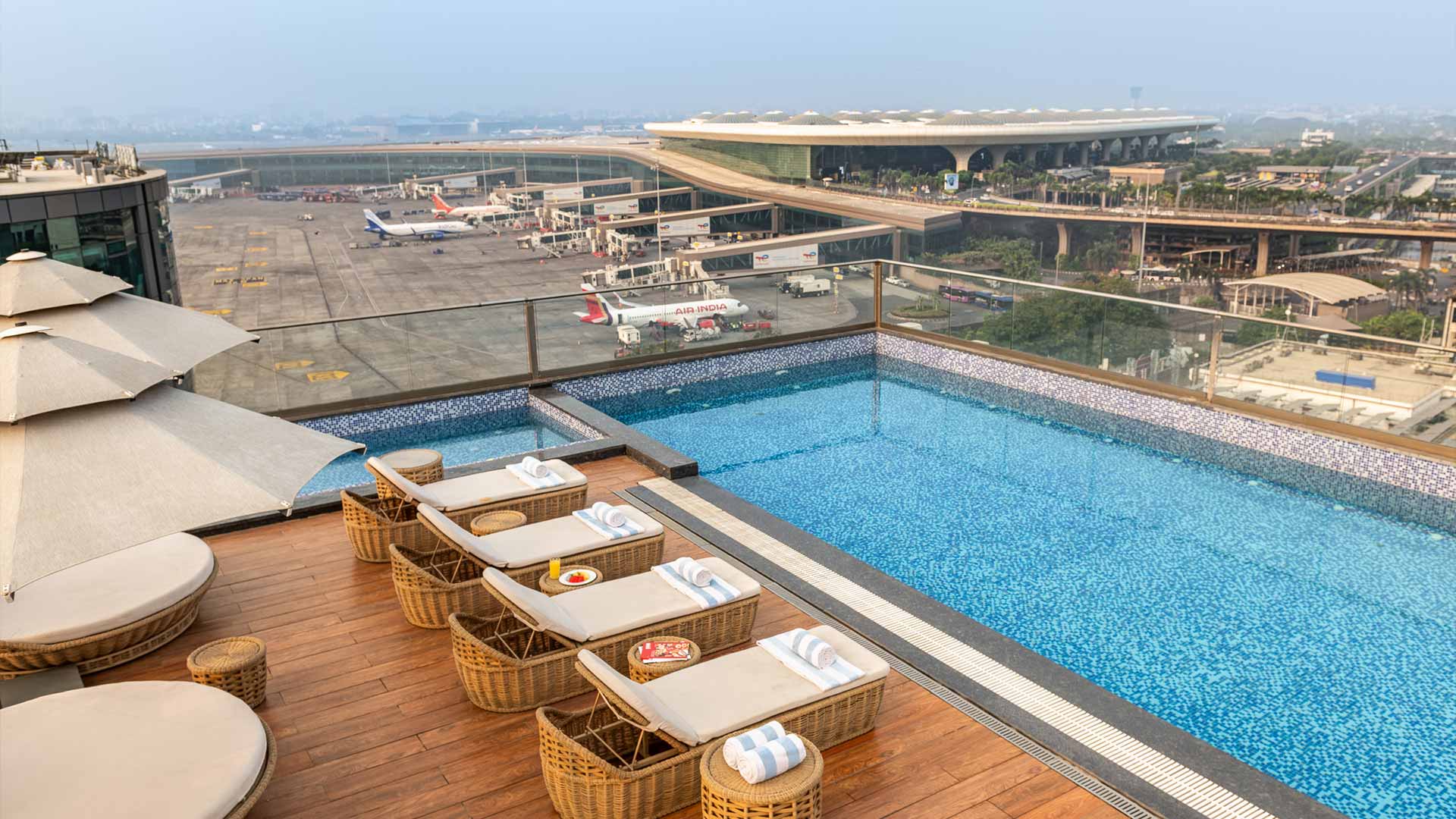
The rooftop pool overlooks the airport apron and parked aircraft.
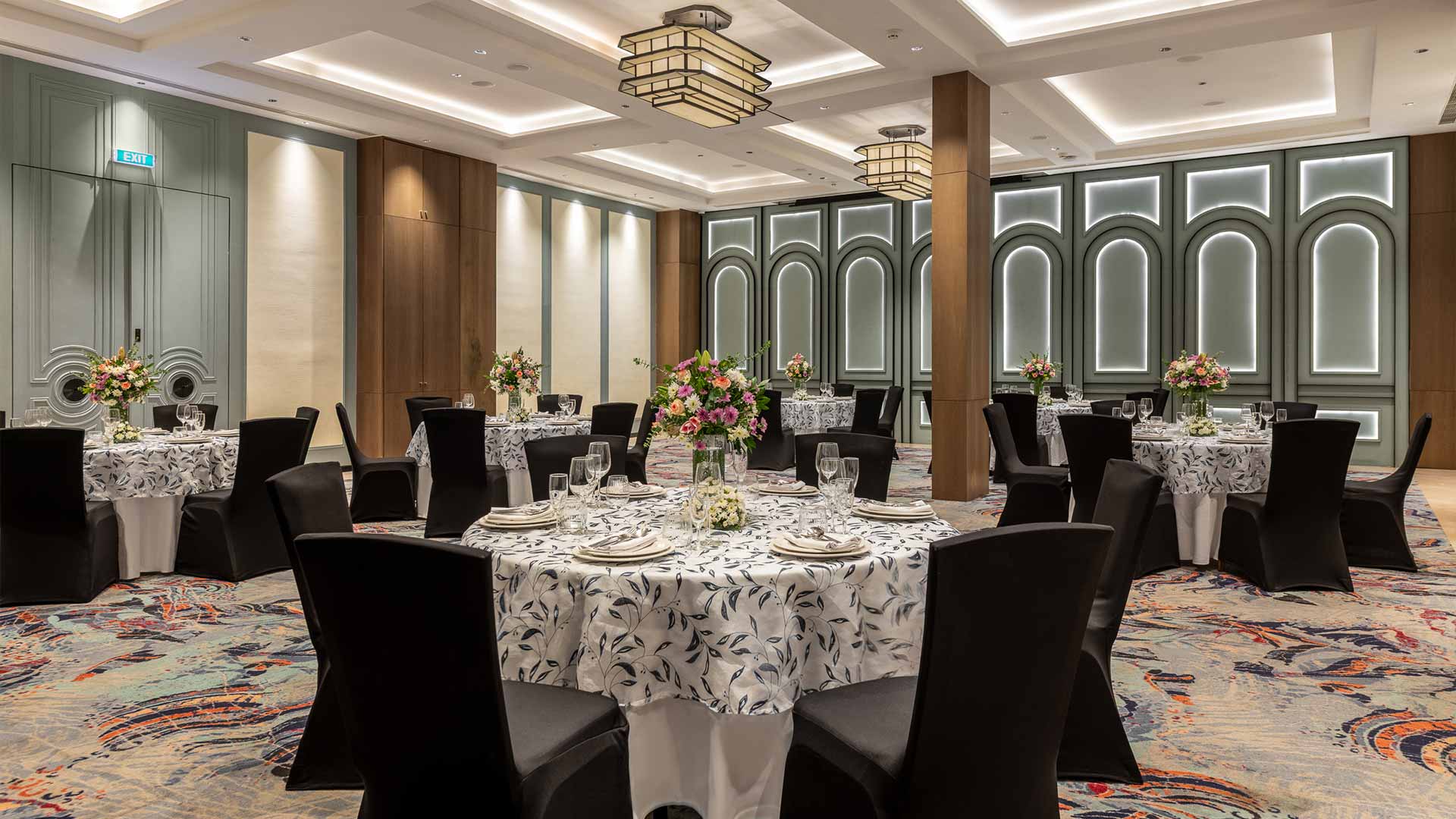
The pastel-blue banquet space continues the Art Deco narrative.
Removing the irritants
Suites feature the Smart Laundry Closet, billed as Asia's first in-room version, which revives crumpled clothes in 30 minutes or less. Baljee recalls initial scepticism about the idea. "We looked at everyday irritants from a guest perspective. For instance, why should ironing a shirt take two hours through hotel processes when it takes five minutes? These small convenience-led solutions shape the overall experience."
Malhotra adds: "Guests often tell us their clothes aren't dirty; they just need refreshing. So how do we help them travel light without worrying about laundry timelines or costs? It is these nuances that shape convenience."
WhatsApp concierge makes communication immediate, while backend systems track preferences to sharpen personalisation. "We try to understand who our guests are and what they may need even before they ask. We don't intend to intrude, but we do try to prepare ourselves better so the experience feels intuitive," says Malhotra.
The complimentary minibar showcases emerging Indian brands, from functional beverages to lifestyle products. Poolside sunscreen, work-friendly seating and charging points serve guests who switch between work and leisure. The goal, Malhotra notes, is to "remove small stress points before the guest even notices them".
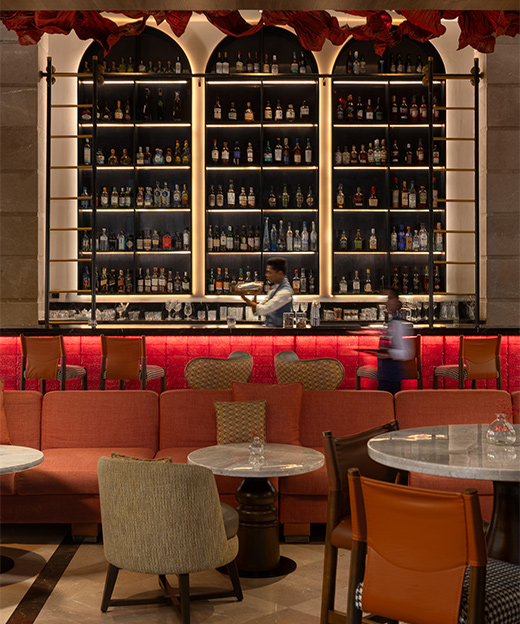
Aviator Lounge, where an oversized handmade Japanese paper sculpture floats above the bar.
From stimulation to repose
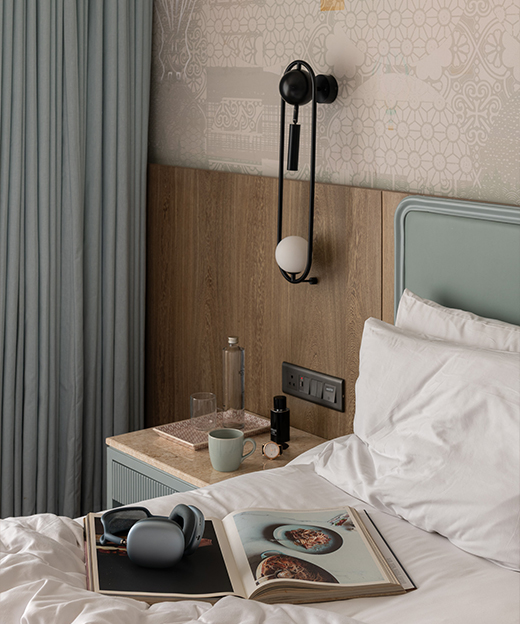
Rooms and suites, by contrast, adopt calming pastel blues and deep peaches. Sheer linen drapes diffuse daylight and curved forms soften angles. King-sized beds wear hypoallergenic ivory linens. Bedside lamps with frosted porthole-segmented shades, a nod to Lalique, cast an amber glow over textured wallpaper and photographs of Mumbai's streetscapes in muted teals and creams.
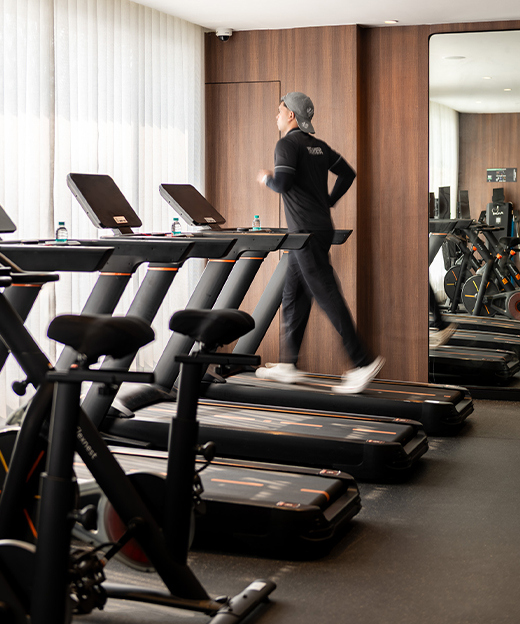
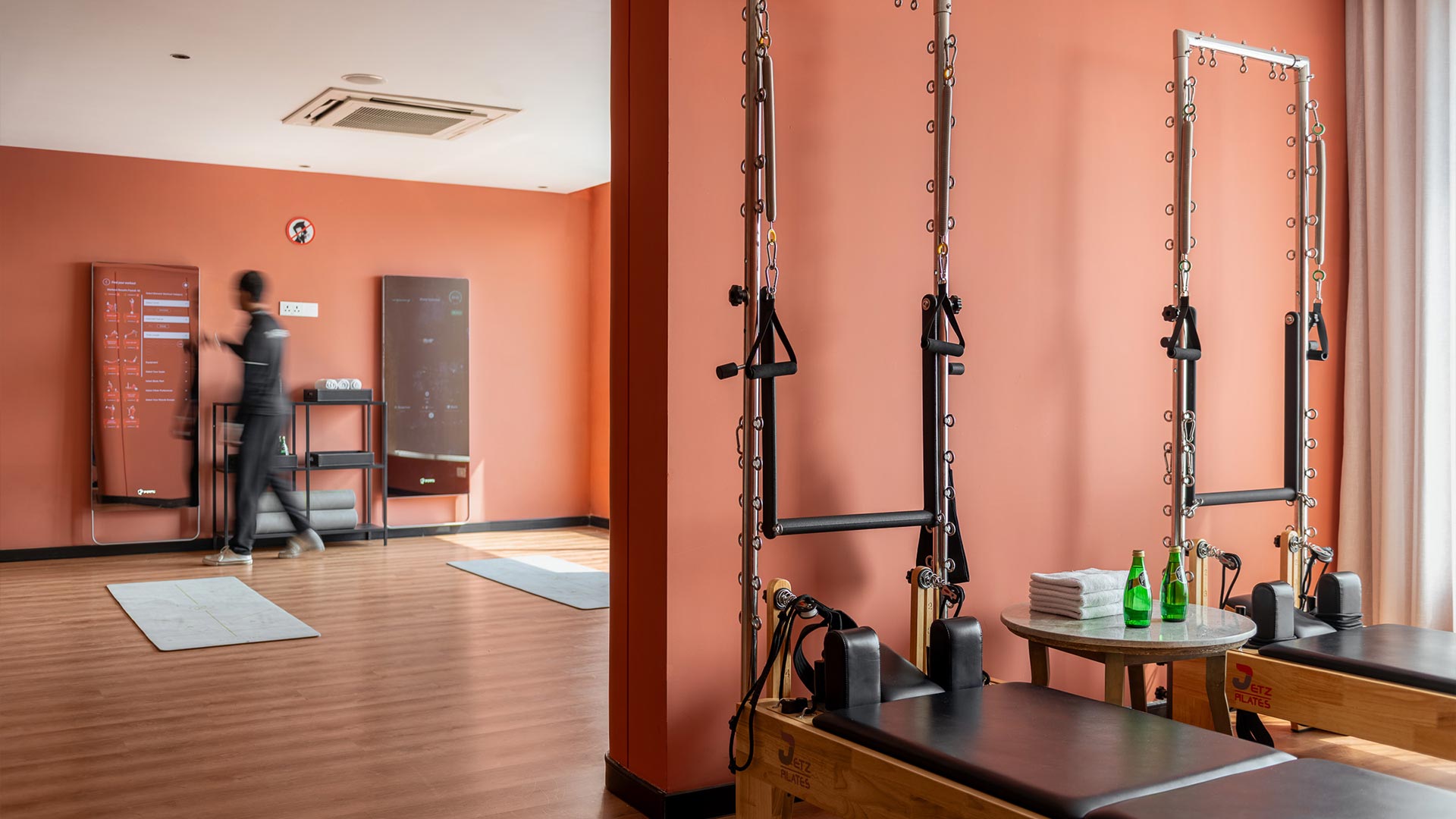
Wellness is part of ICONIQA's urban resort positioning, extending beyond treatment rooms to movement studios, grooming spaces and the rooftop pool, with an emphasis on recovering from travel and the city's pace.
After a late-night flight, I chose an early-morning ICONIQA Signature Therapy, among the spa's most sought-after treatments. Blending Eastern and Western techniques, it melds targeted pressure with slow grounding strokes to ease travel fatigue and improve circulation. Guests are encouraged to pair therapies with yoga, the gym and the open-air jacuzzi.
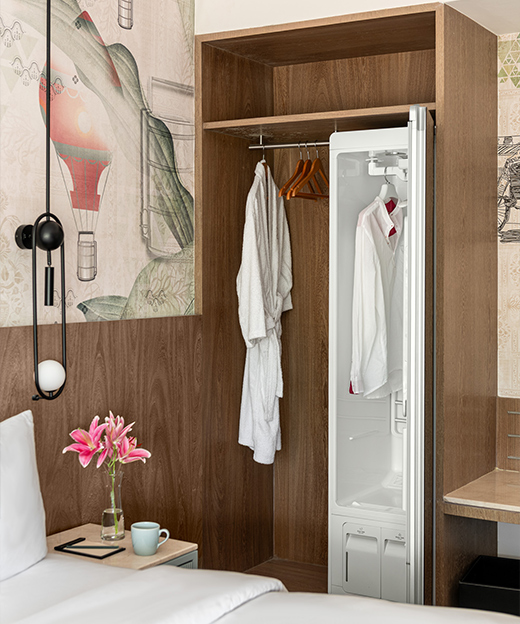
The Smart Laundry Closet in the room refreshes clothes in 30 minutes or less.
F&B off the hotel playbook
Kadak serves à la carte lunch and dinner instead of the buffets typical of business hotels. Breakfast pairs flavour with India's growing focus on health: millet khichdi, peach-jalapeño guacamole, ragi idlis.
Lunch and dinner present recognisable Indian flavours with contemporary nuance. The warm Black Chickpea Rassam comforts, the Cream Cheese Tikki reveals a soft centre, the Kadhi Chawal Risotto balances richness with nostalgia, and Lemon Ginger Prawn with kasundi offers sharp pungency. When I wanted whiskey, but not in the usual format, the bartender created an entirely new drink. The team is clearly encouraged to improvise.
The F&B programme is built to compete with the city's independent restaurants, which has meant hiring beyond the usual hotel talent pool. "We wanted people who were not necessarily traditional hoteliers. For example, our head of beverages has a chemistry bent of mind and comes from small, experimental speakeasies rather than large hotels," says Baljee. "When he first showed me the equipment budget, the hotelier in me nearly fell off the chair. But then you ask—is this what the guest wants? That is the balance." A 24x7 Dessert Lab, Scarletta, a whiskey and cigar lounge, and members-only spaces are each designed as destinations.
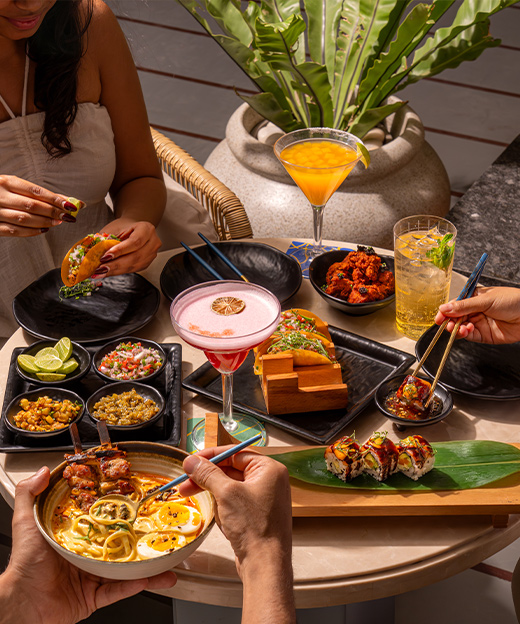
Tropical Kadak Garden offers alfresco dining.
One brand, many cities
With ICONIQA, Royal Orchid is trying to redefine the upscale business hotel for travellers who expect good design and intuitive service.
Baljee is clear the ambition extends beyond one address. "We didn't create a new brand to build just one hotel. The idea is to create a brand that travellers seek out across cities," he says. "ICONIQA has no legacy hangover, which is a huge benefit. We have the freedom to shape the brand for the future."
Growth will be measured, with location as important to brand equity as experience design. "We will grow deliberately. The next locations have to enhance our brand value, just as being at Terminal 2 in Mumbai sets a very high benchmark."
The first choice has been made. ICONIQA is growing into a collection of upscale hotels, each picked for its own character, including heritage landmarks and palace-inspired retreats, with no common design template. Its newest addition is Laxminarayan Palace Resort - Iconiqa Collection in Vadodara, signed through Royal Orchid's subsidiary Royal Orchid Goa Private Limited under a revenue-sharing agreement, in keeping with the group's asset-light strategy.
Whatever the next addresses look like, the yardstick is the one Baljee applied in Mumbai: start with how guests actually use a hotel.
Mindspace over ARR
ICONIQA marks Royal Orchid’s move from mid-market hospitality into the premium lifestyle segment, at a time when travellers increasingly value experience over formal luxury. The hotel pairs technology and design with independent-minded F&B and flexible spaces that suit business and leisure guests.
Arjun Baljee, President, Royal Orchid Hotels and Founder, ICONIQA Hotels & Resorts, is relaxed about labels: “It sits between upscale and upper upscale. But it’s not ARR-driven, it’s mindspace-driven.”
Several industry trends meet here: the rise of lifestyle hotels, mid-market brands premiumising their portfolios, tech-enabled journeys built on WhatsApp concierges and smart in-room amenities, and hotels reinventing themselves as social destinations in their own right. General Manager Shibani Malhotra sees spatial flexibility as central: “Different people come in with different expectations. We have attempted to create multiple environments within one umbrella so guests can match the space to their mood.”
The Mumbai airport zone houses 3,340 hotel rooms, from transit to ultra-luxury. Just 0.2km. from Terminal 2, ICONIQA is among the closest upscale options for international arrivals, and occupancy stands at 70%.
Baljee explains the consumer lens behind the brand: “We designed the hotel with a very specific persona in mind, a 35- to 55-year-old consumer. I asked myself: what sort of hotel would I want to stay in? There are millions of people like me around the world. From a price point, you compete with many players depending on the market. But from a mindspace perspective, if a customer has three options, they will choose the hotel that resonates most with them from a brand style perspective.”
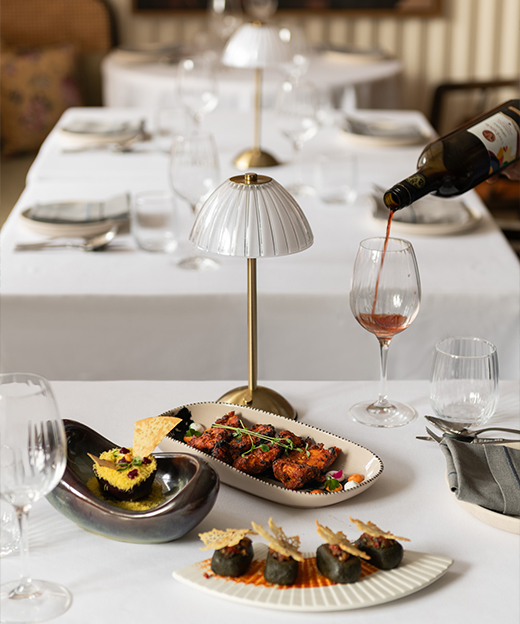
Indian flavours, freshly presented.