










The Fabric Of Hospitality
How luxury hotels use associate uniforms to weave together heritage, identity, and the art of hospitality.

By Nivi Shrivastava
Luxury is often defined by what a guest sees, feels and remembers. Yet one of the first impressions of a luxury hotel is often shaped by something far less discussed—the uniform. Long before a guest experiences a property's finer details, the people who welcome, guide, and serve become its most visible ambassadors. Increasingly, luxury hotels are recognising that uniforms are not simply functional workwear but an extension of their design philosophy, cultural identity and hospitality ethos. Drawing from regional textiles, traditional silhouettes, indigenous crafts and architectural references, these ensembles are becoming an integral part of the guest experience.
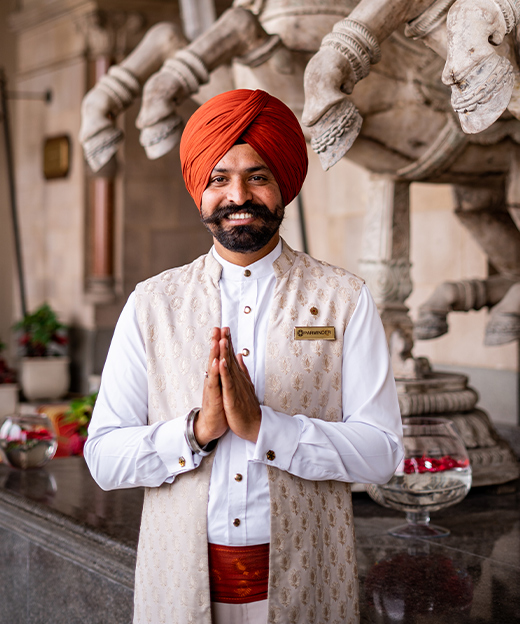
The doorman at The Taj Mahal Palace, Mumbai, in the hotel’s distinctive ceremonial uniform.
Dressed in the spirit of the destination
At ITC Hotels, uniforms are considered part of a larger design ecosystem that brings together the architecture, interiors, art and cultural heritage of a destination. The approach is visible across properties and dining experiences, from the formal, traditional attire at Dum Pukht, ITC Maurya, New Delhi, which reflects the restaurant's heritage and the city's royal roots, to the Parsi Gara-inspired embroidery incorporated into uniforms at ITC Grand Central, Mumbai, celebrating the city's cosmopolitan character and historic craft traditions.
Gunjan Chadha, Head-Housekeeping, ITC Hotels Limited, believes that the uniform is an important part of how a property communicates its identity. The process includes collaboration of the hotel’s internal teams and specialist designers, who combine local textiles, colours, patterns, embroidery and traditional silhouettes. Chadha adds, “The uniform is not merely a dress code but the first presentation that guests come across as they enter the hotel. This is where perceptions form. For ITC Hotels, luxury lies in the details like the fabric, fit, cut, quality of tailoring, detailing and accessories. When the uniform is comfortable for the associate and relevant to the destination and beautifully finished, it creates a very natural sense of luxury.”
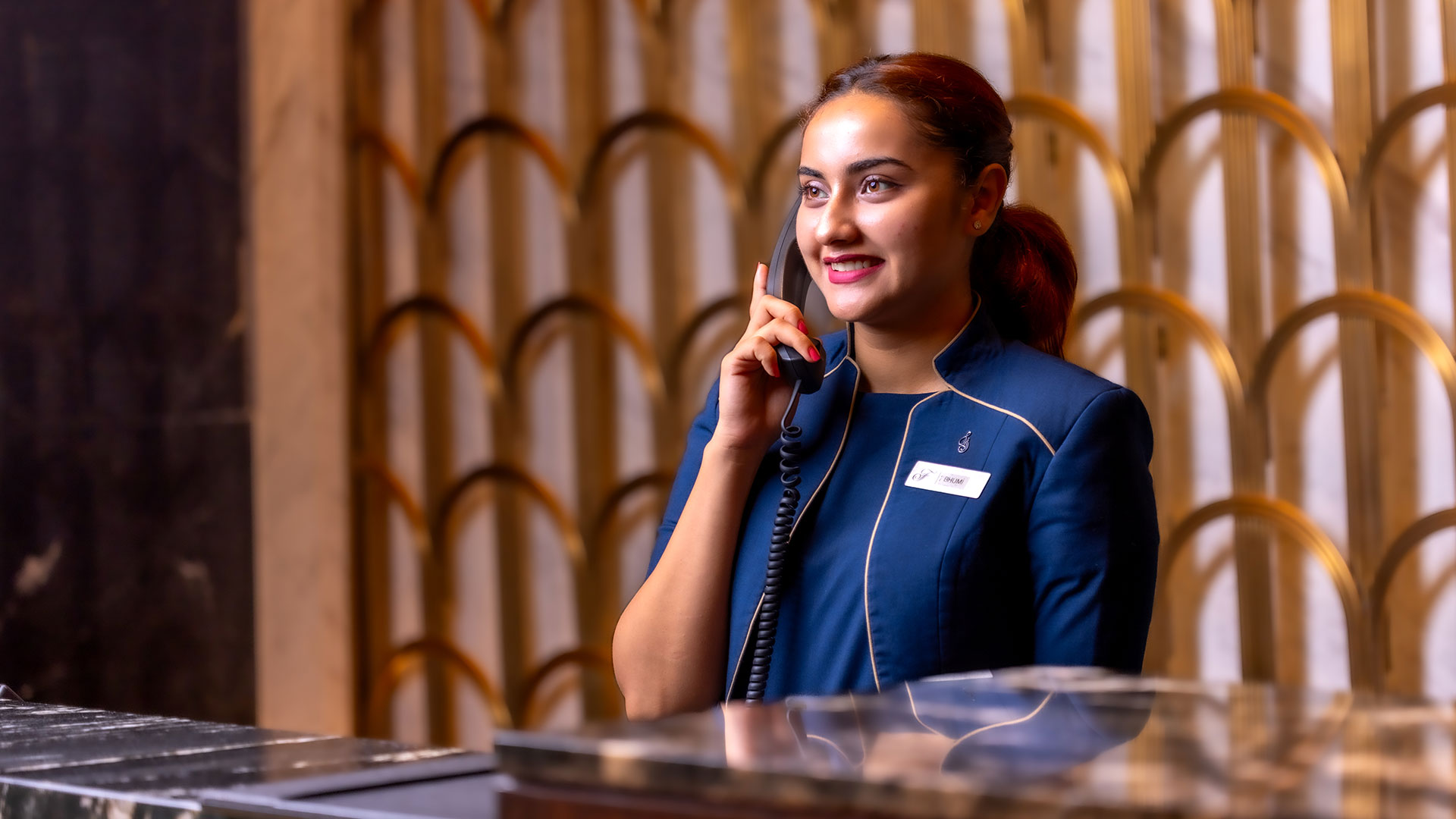
Fairmont Mumbai’s lobby service uniform.
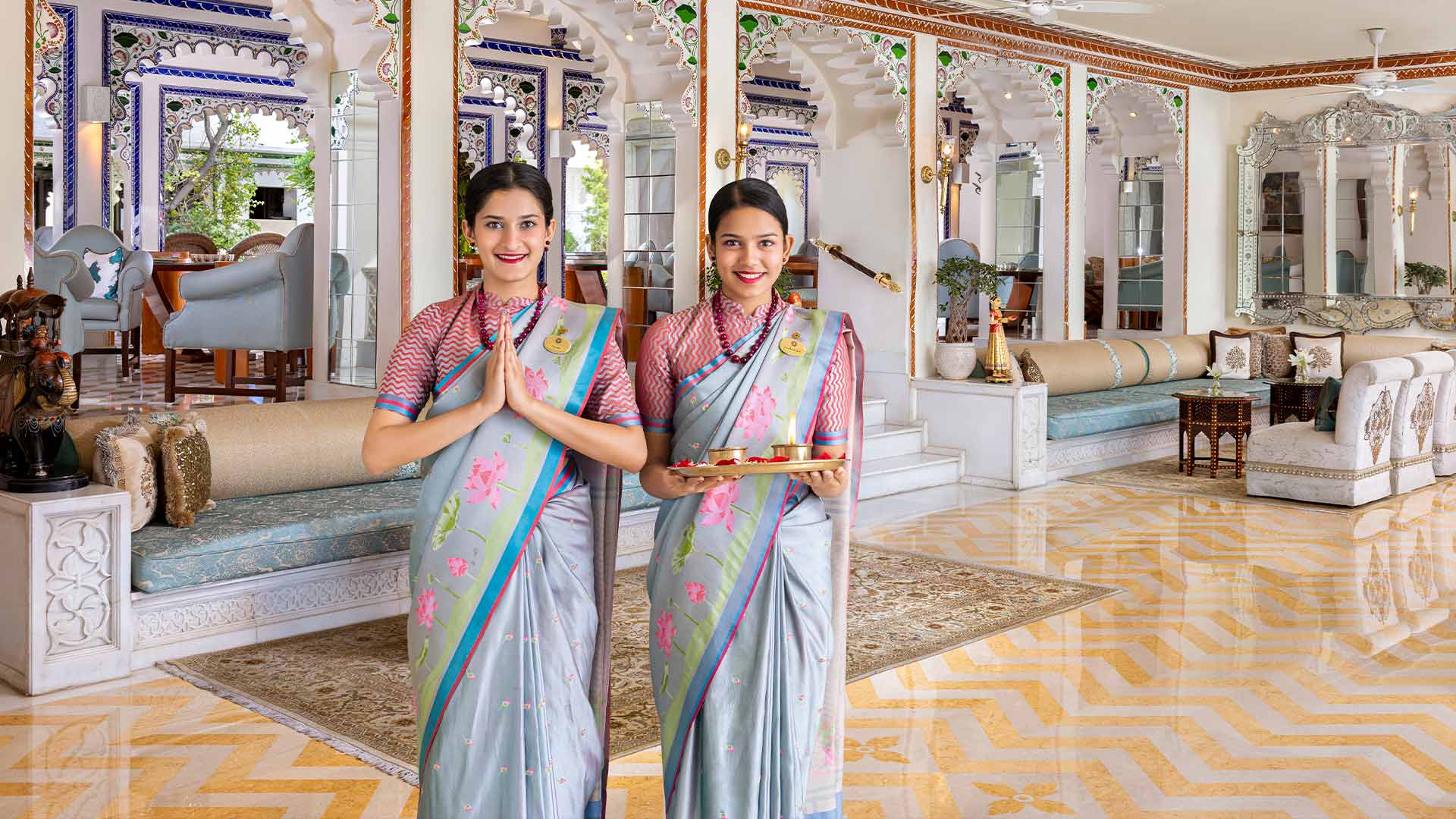
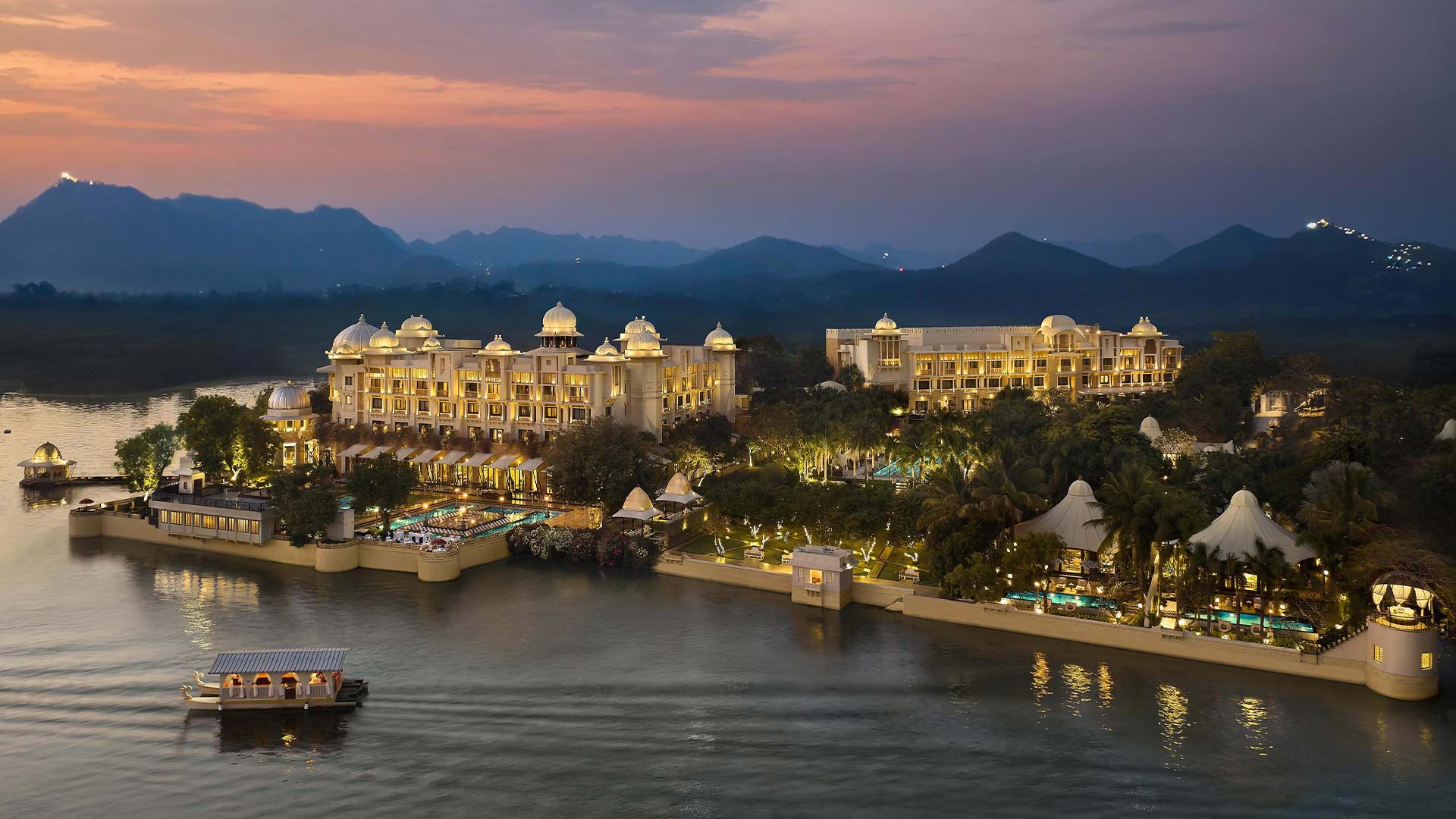
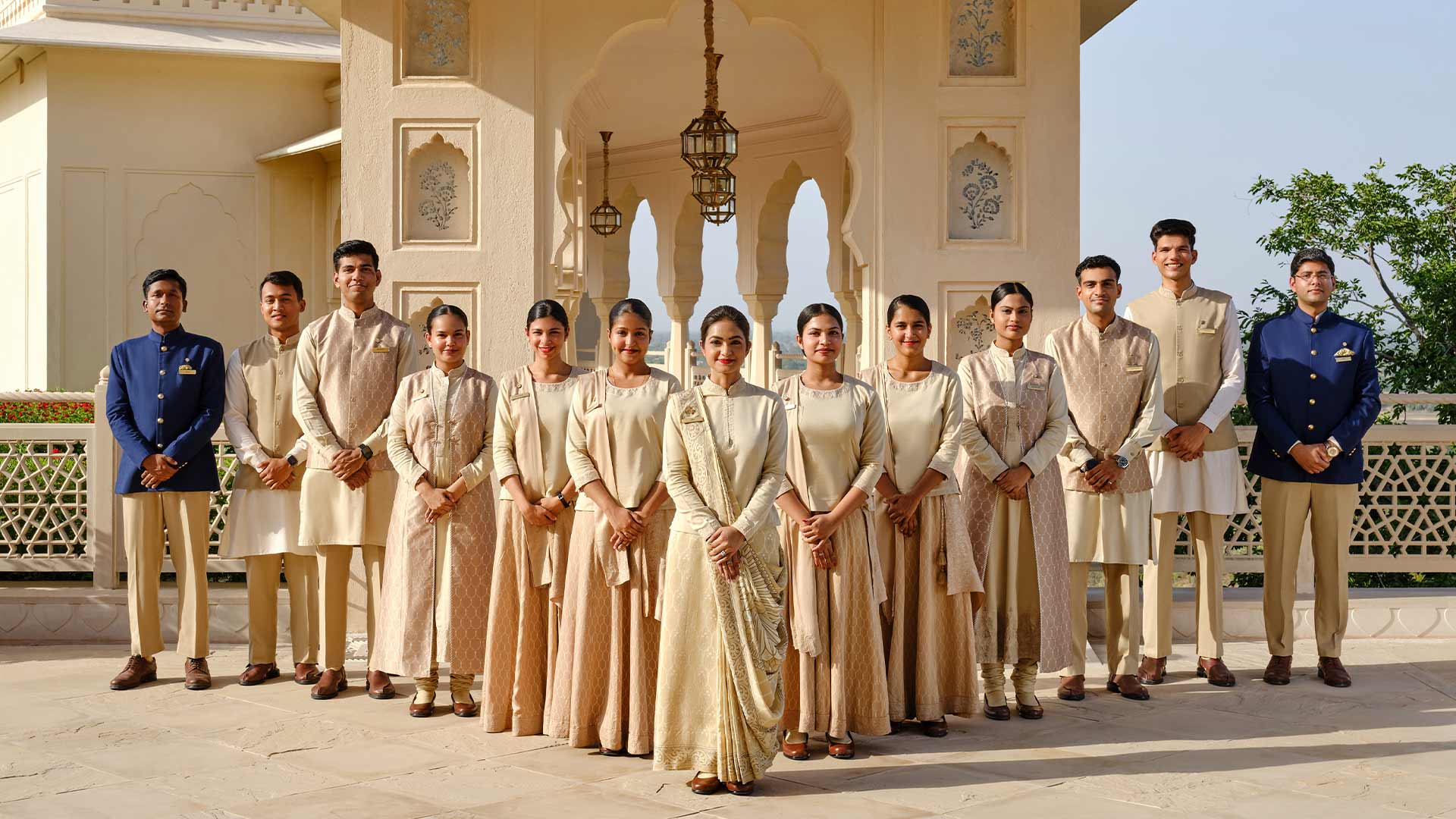
The welcome team at Taj Lake Palace, Udaipur.
The art of wearing a culinary identity
At Taj West End, Bengaluru, uniforms are also an important part of guests' first impression of its dining experiences. At Loya, the design draws from northern India's historic bazaars and trading routes, where the exchange of ingredients, textiles and artisanal traditions shaped the region's cultural identity. The visual language complements the restaurant's culinary philosophy, which explores the food traditions of the Himalayan foothills, Punjab, Kashmir, and the wider northern belt.
Taljinder Singh, Senior Vice-President and Brand Custodian, IHCL, mentions, “The hostesses’ Phulkari-inspired kurtas and sarees bring this regional influence into the restaurant’s visual identity. Phulkari provides a specific textile reference, while the relaxed silhouettes and earthy palette keep the overall look contemporary. The uniforms also complement Loya’s interiors at Taj West End, which draw inspiration from traditional caravanserais and old marketplaces. The objective was to translate these historical and cultural references into modern hospitality attire without making the garments feel like period costumes.”
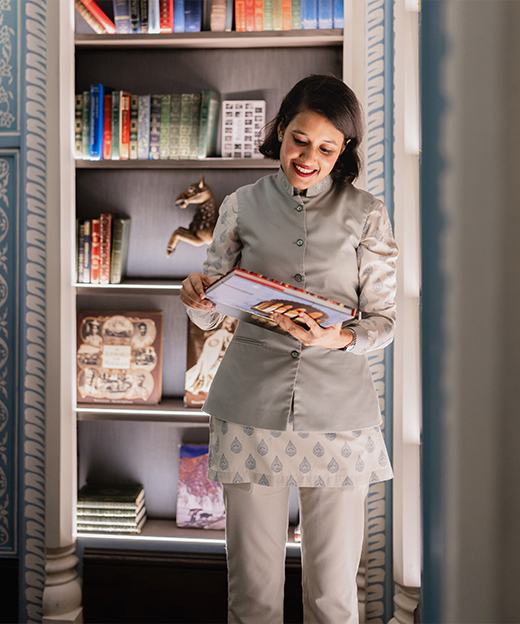
Raffles’ signature butler service uniform.
A royal legacy, reimagined
Few settings offer as rich a design vocabulary as a restored palace. At The Oberoi Rajgarh Palace in Khajuraho, Madhya Pradesh, the uniforms take their cues from the property's 350-year-old architectural legacy and the artistic traditions of Bundelkhand. Perched atop the Maniyagarh Hills, the palace retains frescoed walls, hand-painted details and architectural elements that recall the era of the Bundela rulers, who were celebrated patrons of art and craftsmanship.
Designer Payal Jain translated these references into a bespoke collection that connects the palace's history with the contemporary demands of luxury hospitality. For women, flowing Anarkali kurtas, layered jackets, kurtis, lehengas and georgette stoles reinterpret the romance of royal dressing. Men's ensembles include tailored kurtas, bundi jackets, elongated vests and classic bandhgala silhouettes.
The collection draws on royal court dress, with intricate embroideries, woven textures, delicate trimmings and handcrafted details. Speaking about the designs, Jain informs, “The Oberoi Rajgarh Palace is a hotel with tremendous soul and history. The collection was inspired by its architecture, landscape, and cultural heritage. Every detail was designed to reflect the spirit of Bundelkhand while creating garments that are elegant, comfortable, and timeless for the teams who bring the luxury experience to life every day.”
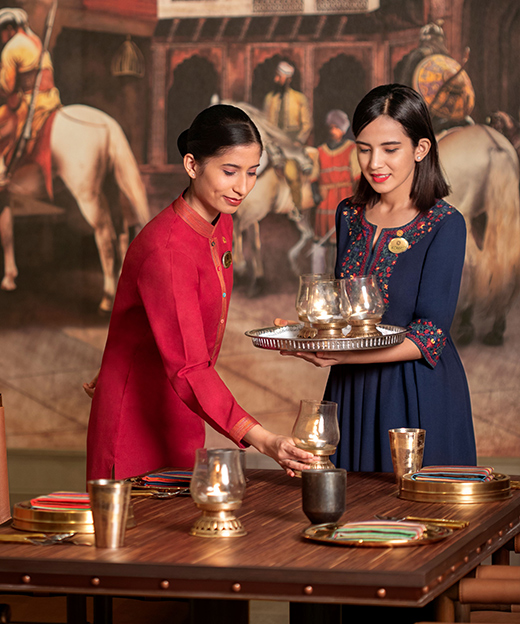
Loya at Taj West End, Bengaluru, pairs jewel-toned uniforms with Phulkari motifs inspired by northern trade routes.
When the uniform becomes part of the welcome
At Fort Jadhavgadh, Maharashtra's only fort hotel, the uniform is closely tied to the property's Maratha history. Surrounded by basalt ramparts, carved stone arches and heavy timber doors, the fort offers an unmistakable sense of place. The most distinctive expression is the Mavala security team, inspired by the loyal infantry from the Maval region of the Sahyadris who served Chhatrapati Shivaji Maharaj and guarded the forts of the Maratha Empire. Their attire includes a long, flared jama with side-tie detailing, churidar trousers, a wrapped waist sash and a hand-tied Puneri pagdi. Traditional bhala (spear), dhal (studded round shield) and leather sandals complete the ensemble.
Lalit Mundkar, General Manager, Fort Jadhavgadh, informs, “Our uniforms draw on traditional Maratha-era dress, interpreted with clean, contemporary tailoring. The most distinctive expression of this idea is our security team, who are dressed as Mavala. Our women colleagues wear traditional Maharashtrian sarees with rich woven borders, draped in the regional Nauvari style. The weave and border work carry the craftsmanship, and the drape reflects regional identity. Our team members move through courtyards, restaurants and fort walks all day, so the fabrics are chosen to be breathable and durable, and the cuts allow easy movement. The Mavala ensemble marks the fort’s gate and ceremonial moments, while service teams wear the lighter Nehru jacket version for daily work.”
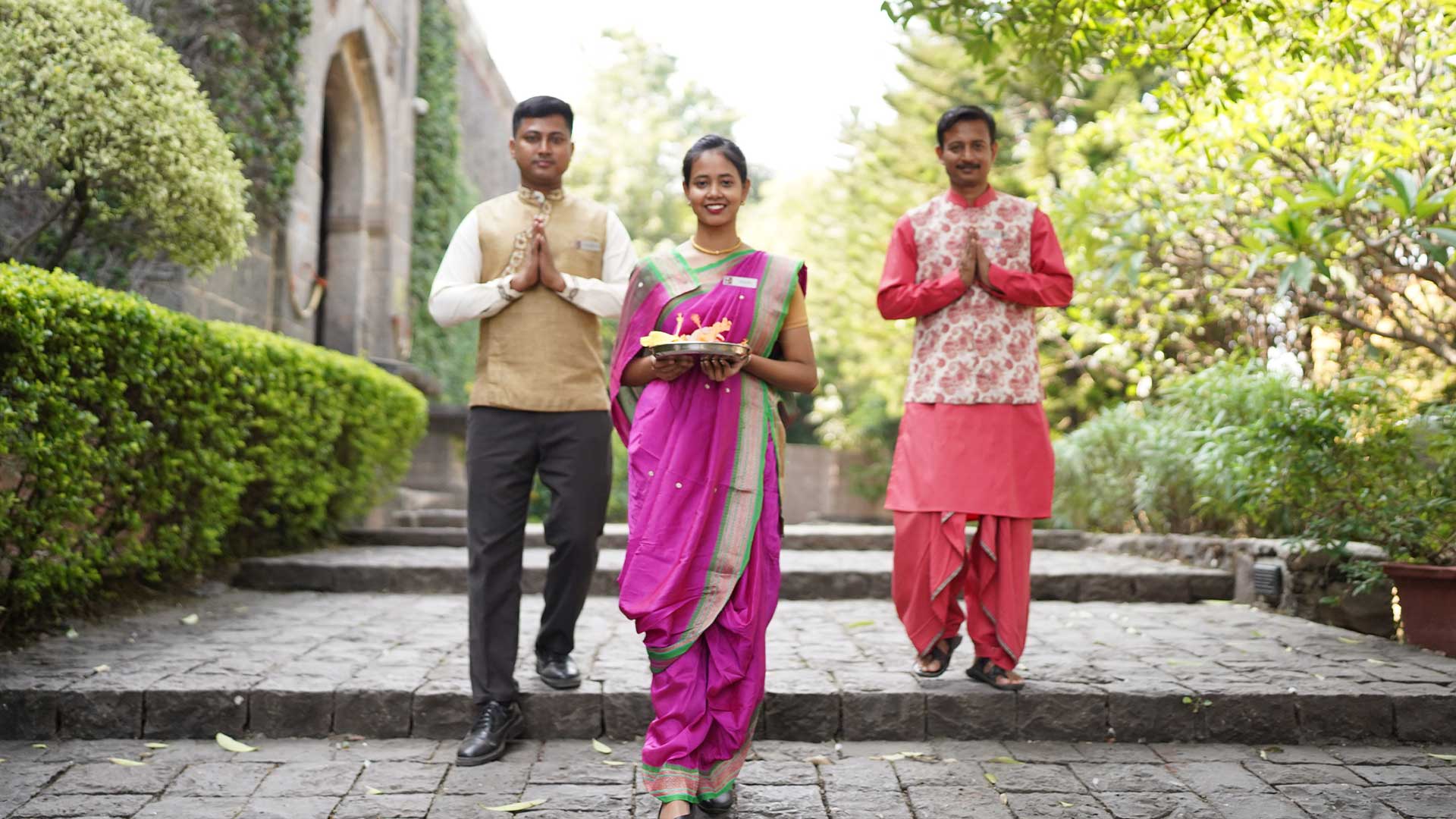
Fort Jadhavgadh uniforms draw on Maratha heritage.
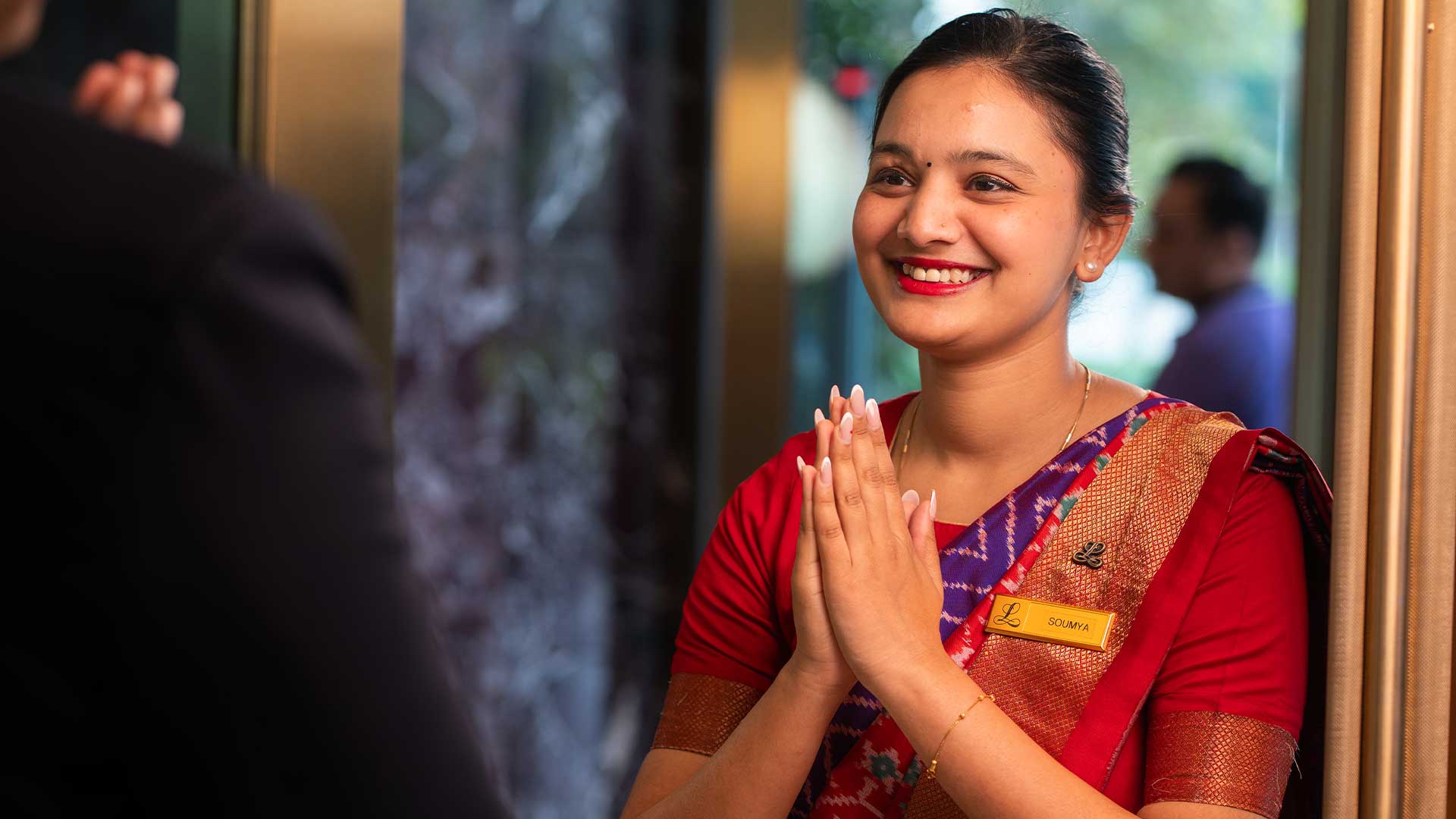
The Leela Hyderabad’s Pochampally Ikat sari reflects Telangana’s textile heritage.
At Ran Baas, The Palace, part of the Relais & Châteaux collection, Aseem Kapoor’s uniforms draw on Patiala’s royal and textile traditions. Bhagalpuri silk, Kantha accents, piping, pintucks and mother-of-pearl buttons bring texture and detail to the collection.
Vaneeta Arora, Corporate Director-Housekeeping, Apeejay Surrendra Park Hotels, mentions, “The design began with the property’s royal identity and Patiala’s cultural heritage, then moved into a storyline that brought together the region’s grandeur, its textiles and the warmth of Punjabi culture. Phulkari, with its vivid colours and patterns and its artisanal legacy, shaped the palette and the detailing. The kurti with salwar pants and a koti brings Punjabi character, while the structured bandhgala adds regal polish.” Fabric selection is equally important, with drape and Patiala’s climate informing the choices to ensure associates remain comfortable through long working hours.
Across these hotels, the uniform is doing more than identifying the people who serve the guest. Whether through Phulkari, Pochampally Ikat, Maratha dress or the tailoring of a royal court, it carries a nuance of the destination into everyday interactions. Worn through long shifts rather than simply admired, these references must also work. Perhaps that balance between cultural expression, contemporary design and comfort is what turns
a uniform into part of the hospitality itself.
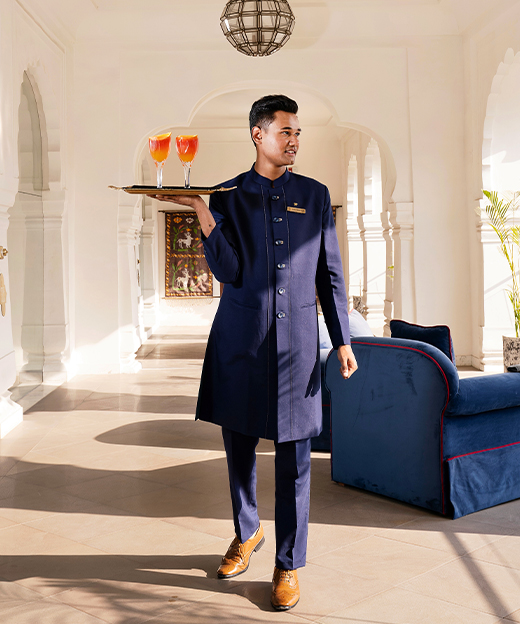
An associate at Ran Baas, The Palace.