
















A Different Kind of Casual Dining
Studio Camarada introduces a more deliberate spatial experience in MISU’s latest Bengaluru address, where restraint and drama coexist without tipping the balance.

By Rupali Sebastian
It takes a moment before the room settles. And then you begin to notice what’s holding it together.
Designed by Andre Camara and Shravya Shetty of Studio Camarada, MISU’s St. Marks Road location marks a quiet shift in the brand’s spatial language. MISU has typically operated within a register of restraint. Here, that restraint hasn’t been pushed aside, it’s been adjusted, just enough, to hold something more charged.
That shift is intentional. As founder Amit Ahuja sees it, this move signals a more design-forward, experience-led version of the brand.
For Camara, the brief was unusually direct—“bold, sexy, and impactful.” The response, though, is surprisingly disciplined. “We consciously limited ourselves to just two or three strong elements,” he says, “and allowed them to define the interior.” That decision—to do less, but with greater clarity—sits quietly beneath everything that follows.
Holding the space together
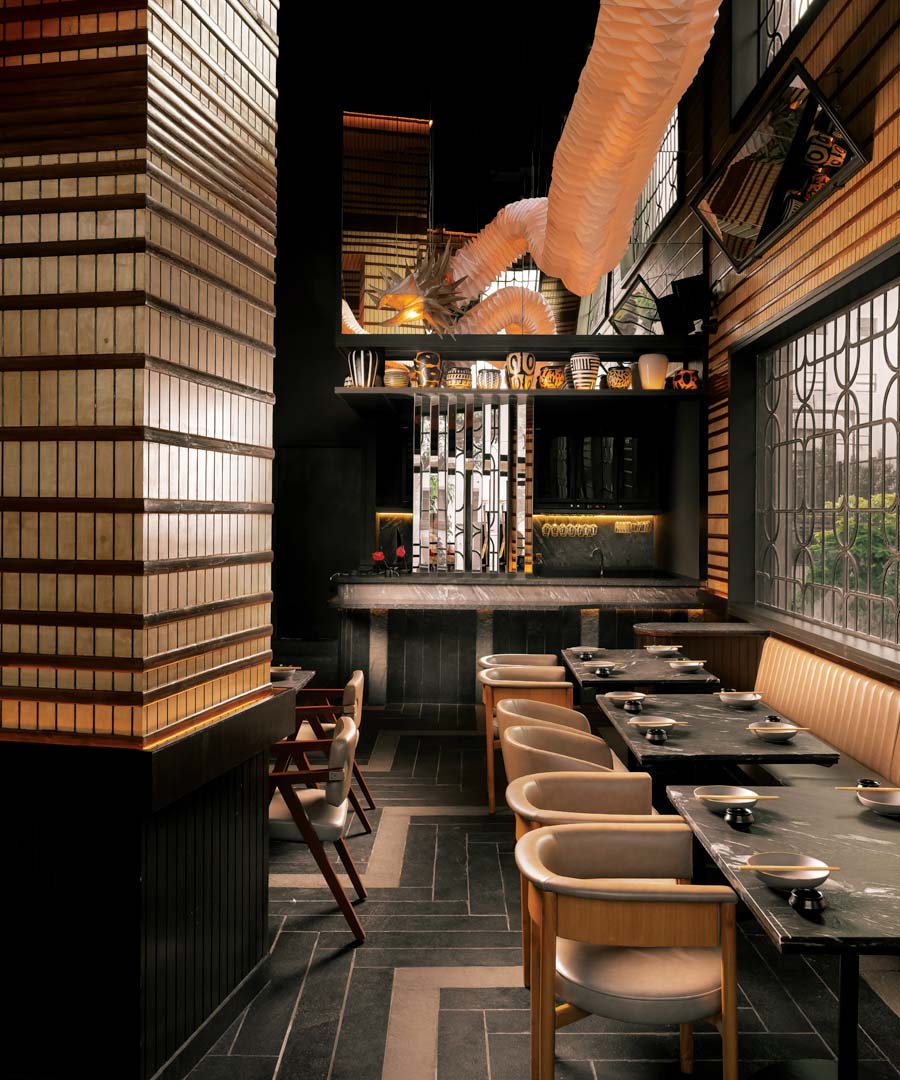
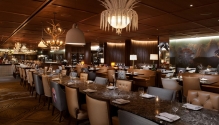
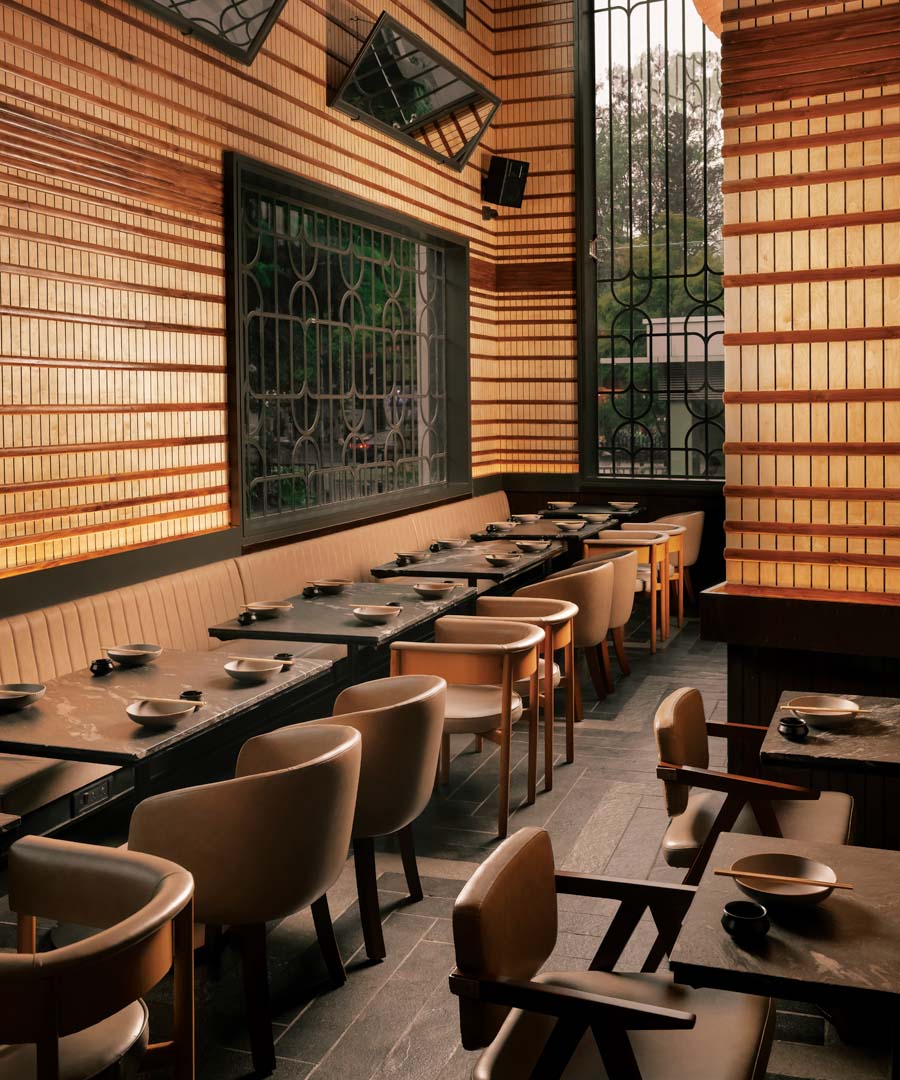
The plan is linear, almost insistently so. It could easily have felt narrow, even restrictive. Instead, it reads as continuous, and much of that comes down to how the surfaces are handled.
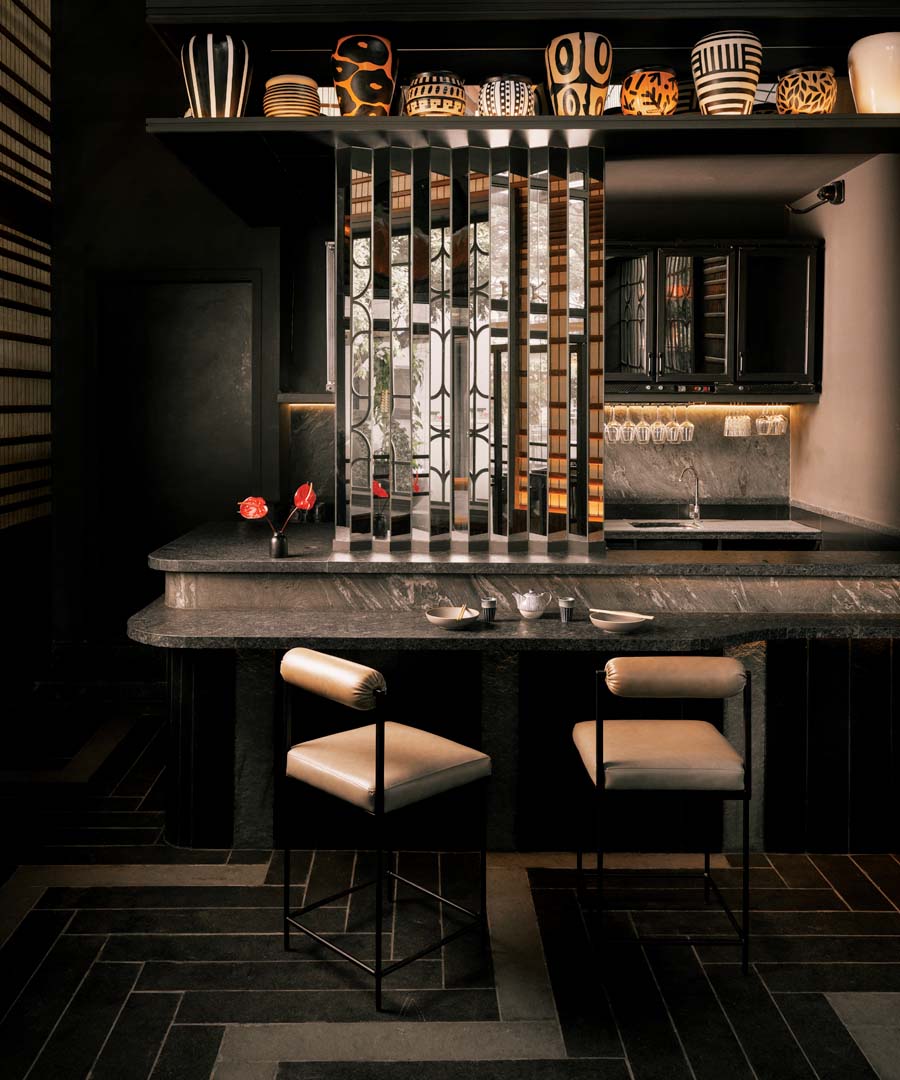
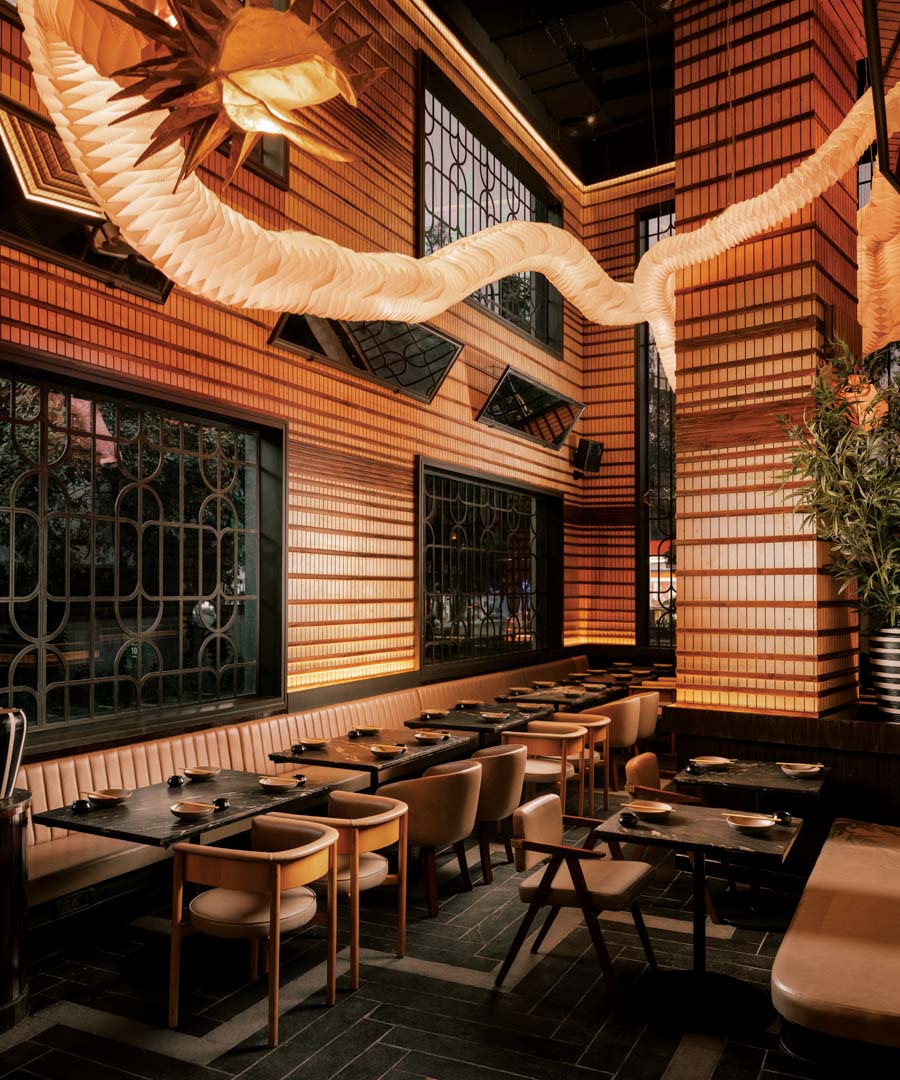
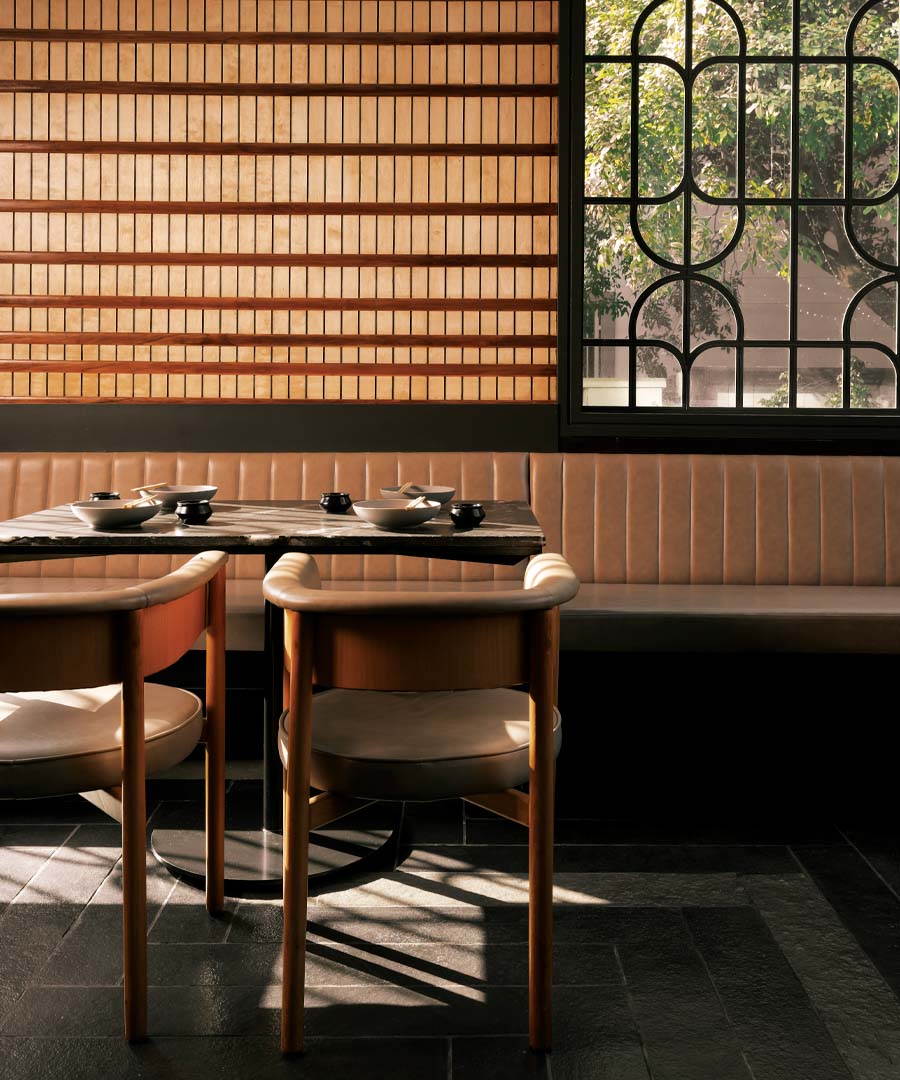
The wall panelling establishes a rhythm early on—distinct, but not attention-seeking. Alongside it, the black-and-grey herringbone flooring in natural stone introduces a quieter kind of movement, something you register more as you move through the room than when you first enter it. As Shetty points out, these elements were never meant to operate independently; they are part of a single visual field. The flooring carries through onto the bar fascia, the panels repeat with restraint, and nothing breaks abruptly or calls undue attention to itself. The room begins to feel larger than it is. Not dramatically, but enough to shift how you move through it, setting up how the rest of the interior is experienced.
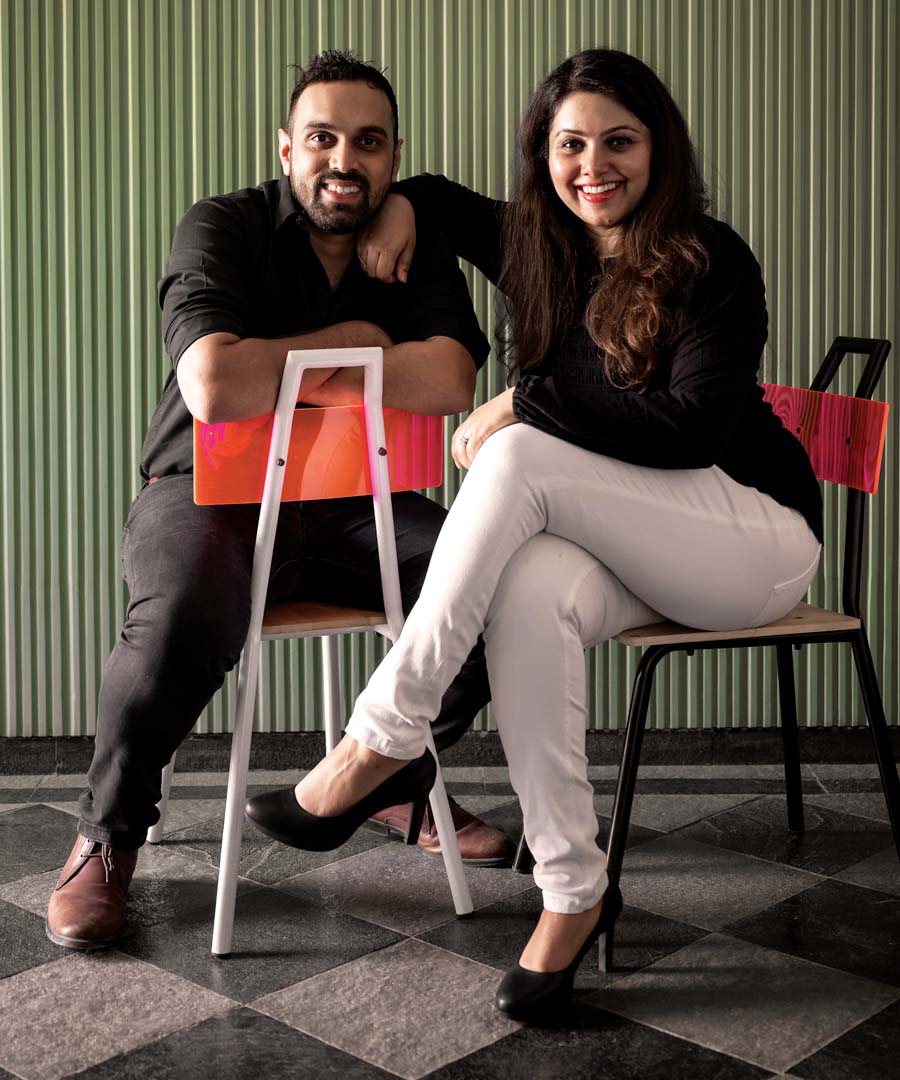
Andre Camara and Shravya Shetty of Studio Camarada.
Layering without clutter
Within that continuity, layering becomes the way depth is introduced. Rather than relying on partitions or clearly defined zones, the design builds variation through overlap of materials, reflections, and light.
“The flooring, wall panels, and lighting come together to create these layers,” Shetty explains, “giving the space depth without overwhelming it.” The bar sits at the centre of this, both literally and socially, but it doesn’t behave like a focal point in the conventional sense. There’s no attempt to elevate it as an object; instead, it is absorbed into the same material language, its presence felt without being overstated. It also anchors the programme—built around soju and soju-based cocktails—giving the room a distinctly evening-led rhythm. Behind it, a mirror stretches the room outwards, extending sightlines and gently altering perception—doing a lot without making a show of it, and carrying that calibration forward.
An edited reading of culture
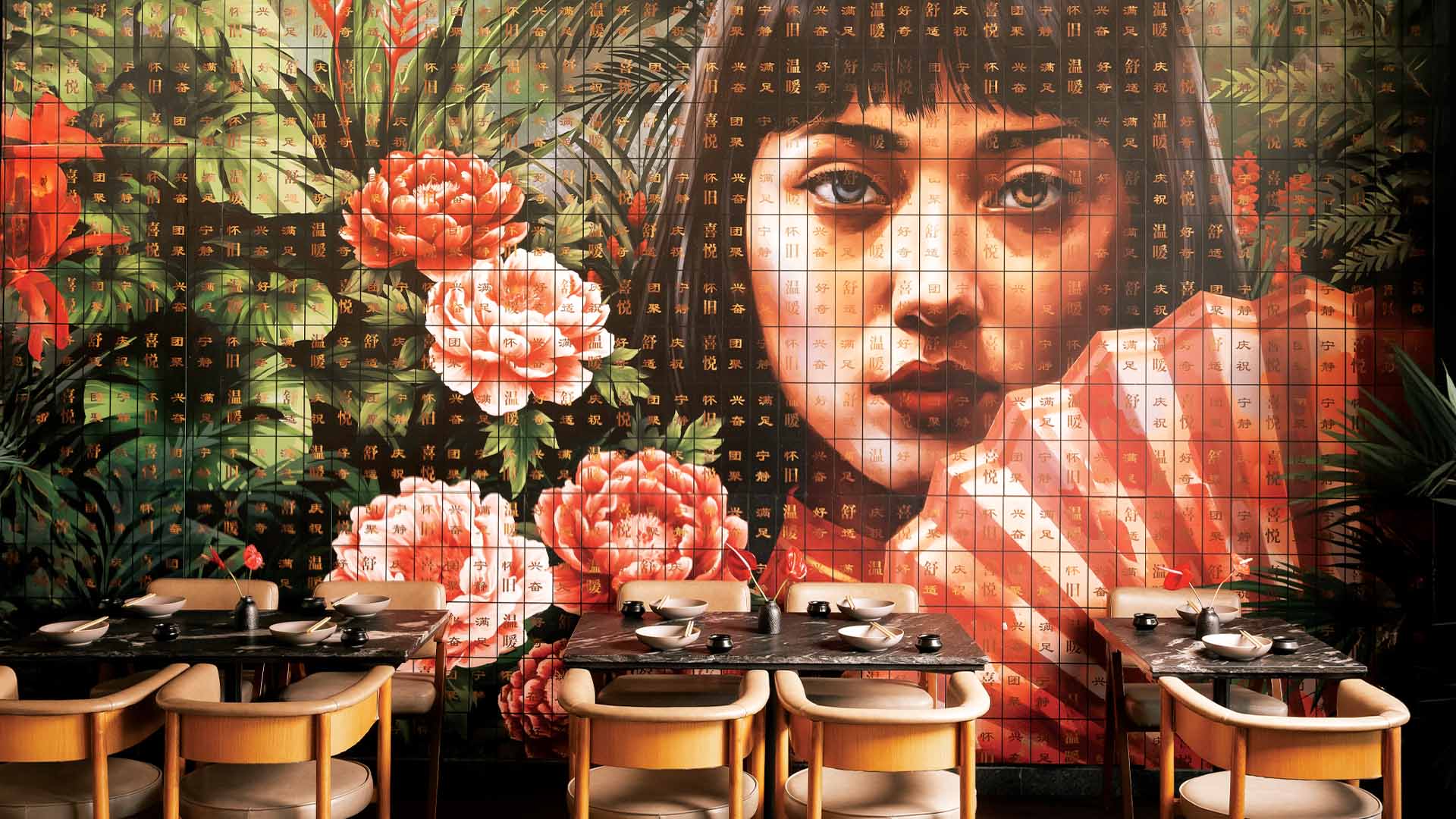
Given MISU’s pan-Asian positioning, the risk of slipping into the familiar is always present, but here the references feel filtered, almost edited. “If you look closely,” Camara notes, “the elements are inspired by the kind of menu peg systems seen in parts of Asia—where individual dishes are displayed as small tiles, slotted or hung across a wall.” It’s not something that announces itself immediately, and that restraint begins to shape how the interior is read—less as a themed setting, and more as something that reveals itself in fragments. That approach keeps it from tipping into stylisation, while also holding the project within the realm of casual dining, just with a sharper edge than what we’re used to seeing.
Working with what’s given
The volume is unusual—long, narrow, and significantly tall—a combination that could easily have been corrected through standard interventions. “Scale was perhaps the biggest challenge,” Shetty notes. The instinct in such settings is often to compress, to break, to contain. Here, the decision was to leave the volume intact and work with it, allowing its proportions to remain visible. That choice carries through the project, quietly shaping what follows.
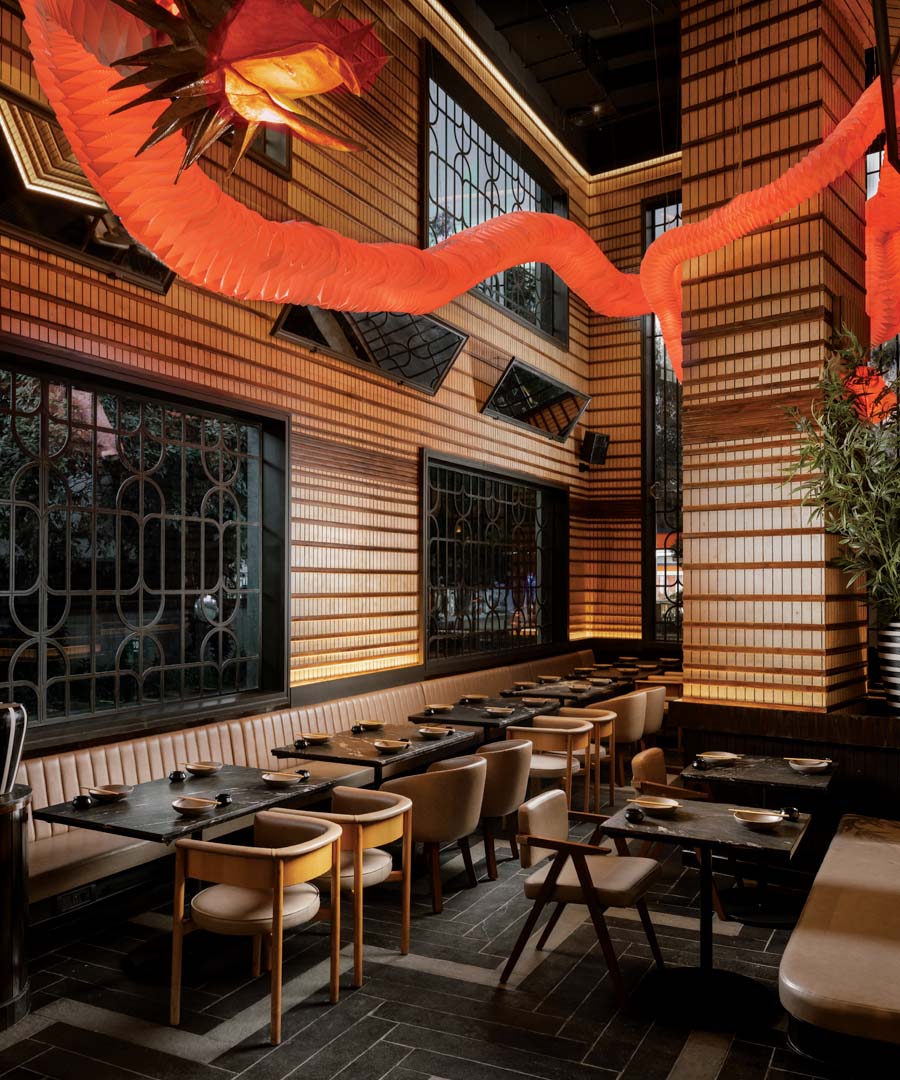
For most of its length, the setting remains grounded—material, tactile, measured—and then, almost unexpectedly, it lifts. Suspended overhead, an origami-inspired installation takes over the ceiling plane, drawing the eye upward and altering how the room is read. It’s the most dramatic move in the project, but it doesn’t arrive as a rupture.
“From day one, we were clear about not wanting a false ceiling,” Camara says. “The idea was to have a single element that could take over the volume.” What began as an intention gradually found form—eventually evolving into a dragon-like installation that responds directly to the proportions of the space. It’s a dramatic move, yes, but it never quite takes over, and that balance holds as the experience continues.
A quieter gesture outward
If the interior works through layering and control, the facade takes on a more graphic role, though it, too, resists obviousness.
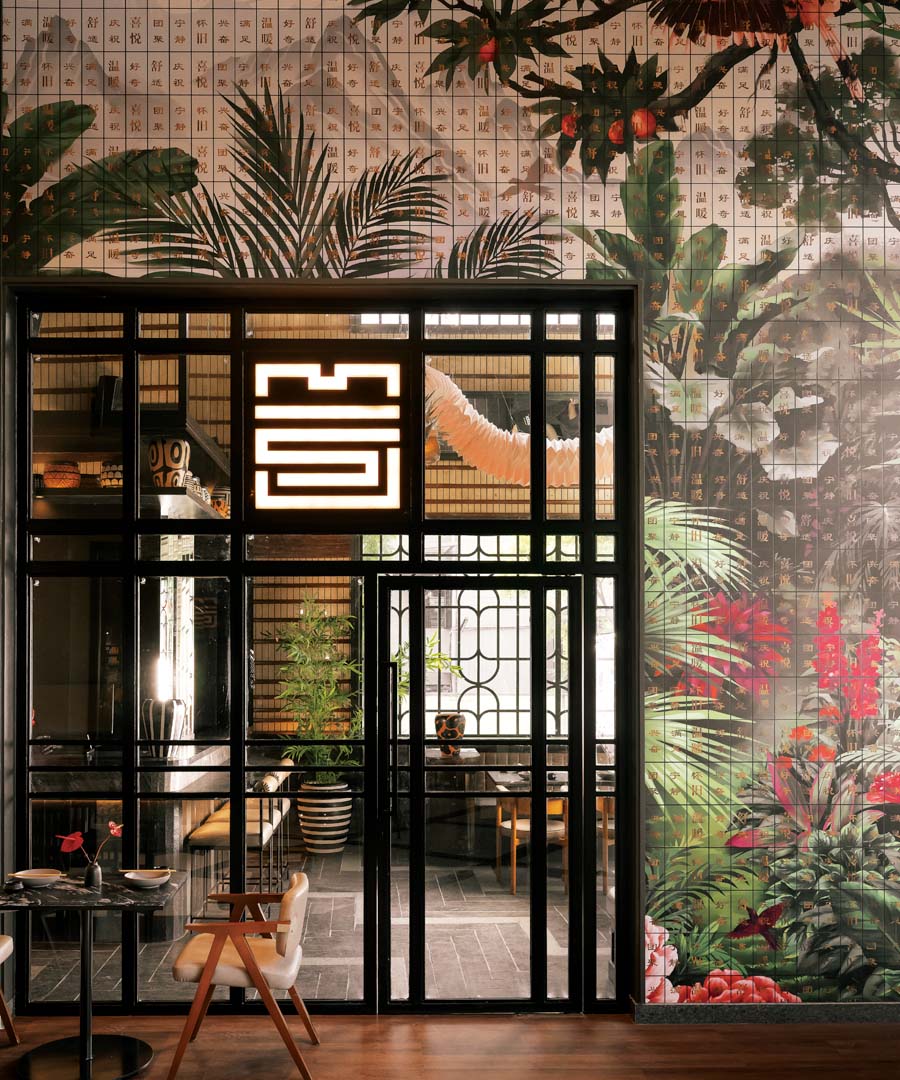
Constructed from a field of wooden tiles that reference menu peg systems, the facade reads as a 20ft.-tall portrait—graphic, almost urban in its presence, and hard to miss from the street. The reference draws from Asian street culture, but it avoids directness, holding back just enough.
As Shetty notes, it may not be immediately legible—and that seems to be the point. It isn’t designed for instant recognition, but for gradual discovery—for the moment when something clicks, often after you’ve already encountered it from the outside.
For Studio Camarada, MISU Bengaluru doesn’t stand apart so much as it extends an ongoing line of inquiry. “It becomes part of the larger fragments of the body of work that we do,” Camara reflects. With a multidisciplinary approach, variety is expected. But what this project introduces is a slight shift in tone. “This falls in that space of bold meets casual,” Shetty adds.
What MISU proposes sits slightly differently within the casual dining landscape. A space that holds onto ease, but allows for a degree of drama. One that doesn’t rush to declare itself, and in doing so, stays with you a little longer.
A Ceiling That Holds the Room
The suspended installation at MISU Bengaluru is less a fixture and more a spatial intervention. Developed in collaboration with Aditi Anuj of Adigami, along with co-founder Neelam Nagrani, the piece takes the form of an origami-inspired dragon: abstracted, fluid, and deliberately unresolved in its reading.
It wasn’t conceived as the centrepiece from the outset. It “took centre stage” only once the decision to leave the ceiling untreated was firmly in place. From there, the installation evolved in response to the room—its height, its narrowness, its need for a single unifying gesture. What it does is subtle, despite its scale. It shifts attention, introduces a sense of movement without literal motion, and changes how the volume holds together.