











How India Is Celebrating Navratri Through Food
This Navratri, chefs are looking beyond the festive thali to reinterpret the season’s vegetarian traditions with restraint, regional character and a contemporary point of view. We decode the fasting food platter.

By Rachna Virdi
Navratri brings with it a distinct culinary rhythm, one rooted in simplicity, seasonality and the rich traditions of Indian vegetarian cooking. Across restaurants, chefs are translating these traditions into festive menus that balance familiarity with a contemporary sensibility.
From regional favourites to inventive interpretations, the Navratri thali and festive menu offer a journey through textures, spices and comforting flavours while staying connected to the rituals and food traditions that define the season.
For the hospitality industry, these seasonal menus also represent a broader shift towards occasion-led dining. Festivals provide restaurants with an opportunity to build relevance around cultural moments, introduce limited-period experiences and engage diners through food that carries a strong sense of familiarity and identity.
Here are some of the festive menus to explore this Navratri.
Regional Indian cooking
At Comorin, the Navratri menu illustrates how regional Indian cooking can remain rooted in tradition while adapting to the modern restaurant table. Rather than treating the festival menu as a departure from its culinary identity, the restaurant uses the occasion to explore the breadth of India’s vegetarian food traditions.
Chef Dhiraj Dargan, Brand Chef, Comorin explains, “The traditional Satvik fare is designed to nourish the body while keeping the food light, clean and uncomplicated, with ingredients such as fruits, dairy, nuts, makhana, millets and tubers taking centre stage. We wanted to respect this ethos while interpreting these familiar ingredients and flavours in our own contemporary way.”
Every year, the thali brings together regional flavours from all across the country, while keeping familiar dishes. This year, dishes like Kashmiri Dum Aloo, Awadhi Kathal & Makhana Korma and Suran Pepper Fry are adding playful flavors. These are accompanied with Papadams and dips, Shikampuri Kebab and Khatte Meethe Kaddu. Paneer Khurchan with chilli and tomato adds another layer of texture and spice. The savoury selection is rounded out with Quinoa & Cashew Pulao and Kuttu Poori, bringing a more contemporary element to the traditional spread. Dessert takes a similarly layered approach, pairing Kesar Badam Milk Cake with Pear Murabba, balancing the richness of almond and saffron with the fruit’s gentle acidity.
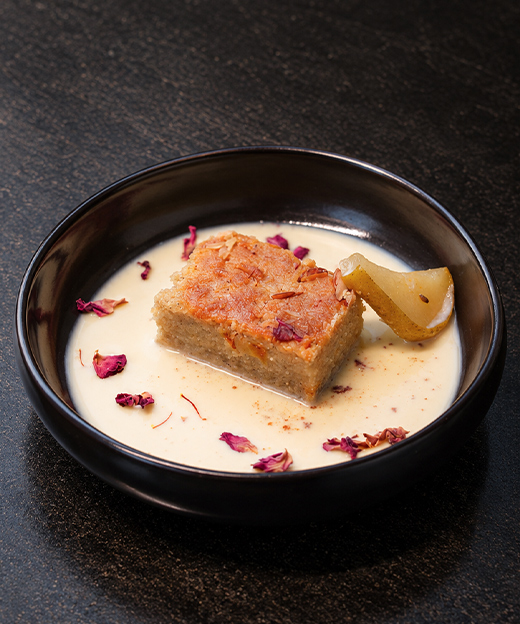
Kesar Badam Milk Cake with Pear Murabba.
Traditional flavours on the table
At The Kitchen by Chef Deepa, Navratri is approached through the comfort of familiar, home-style cooking. Known for its Punjabi and Amritsari-inspired vegetarian food, the kitchen’s special fasting menu brings traditional vrat preparations into a more accessible restaurant format, with an emphasis on wholesome ingredients and uncomplicated flavours.
The menu includes Vrat Wale Aloo Moongphali, Shakarkandi Ki Subzi, Sabudana Khichdi, Sabudana Wada, Singhare Ke Atte Ke Pakode and Singhare Ki Puri. Lighter choices such as Shakarkandi Chaat, Fruit Chaat and fresh fruit salad provide an alternative to the richer festive preparations.
The beverage selection stays equally rooted in familiar Indian flavours, spanning Amritsari Lassi, Masala Chaach, Shikanji, Thandhai and Ambi Kiwi Panna, alongside milkshakes with nuts and fruit. Desserts bring the menu back to traditional comfort, with Phoolmakhane Ki Kheer, Sabudana Ki Kheer and Jamun Rabri.
For Chef Deepa Arora, Founder, The Kitchen by Chef Deepa, the idea is to make fasting food feel just as enjoyable and comforting as any festive meal. “Navratri is a time when families come together and food remains an important part of the celebration. We wanted to bring together familiar vrat favourites while keeping the food wholesome, flavourful and homemade.”
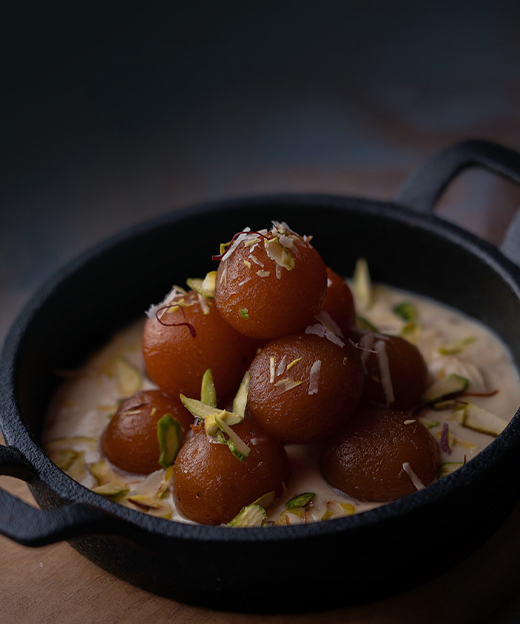
Jamun Rabri.
A tale of two celebrations
For JW Marriott Mumbai Sahar, navratri food is deeply rooted in authenticity and tradition. It brings A Tale of Two Celebrations, a seasonal showcase that explores the contrasting yet equally rich food cultures associated with Navratri and Durga Pujo.
Chef Prakash Chettiyar, Director of Culinary, explains, “This year, we have taken the offering beyond familiar Navratri classics to create a more expansive festive experience. The idea was to give a wider exploration of festive food, while staying true to the essence and authenticity of Navratri cuisine. It is about celebrating the season through a spread that feels both familiar and abundant, with something different to discover throughout the experience.”
The spread moves between the simplicity of vrat-friendly fare and the comforting flavours of Bengali festive cooking. Navratri staples include Sabudana Khichdi with roasted peanuts, Kuttu Ki Puri with Aloo Jeera, Singhara Atta Cheela, Samak Rice Pulao and Makhana Curry. Lighter favourites such as Sabudana Vada, Arbi Tikki, Aloo Tamatar Ki Sabzi and Roasted Makhana Chaat add further variety to the selection. The Bengali-inspired offerings bring another dimension to the table, with dishes such as Aloo Posto, Chholar Dal, Luchi with Aloo Dum and Begun Bhaja reflecting flavours closely associated with the festive season.
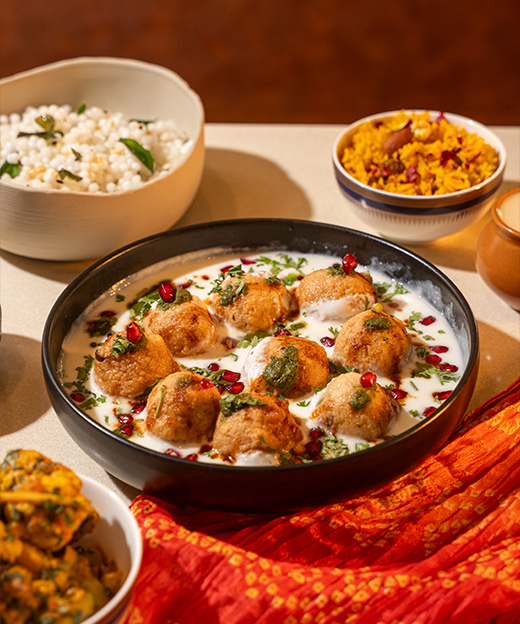
Navratri Thali.
Celebrating festive flavours
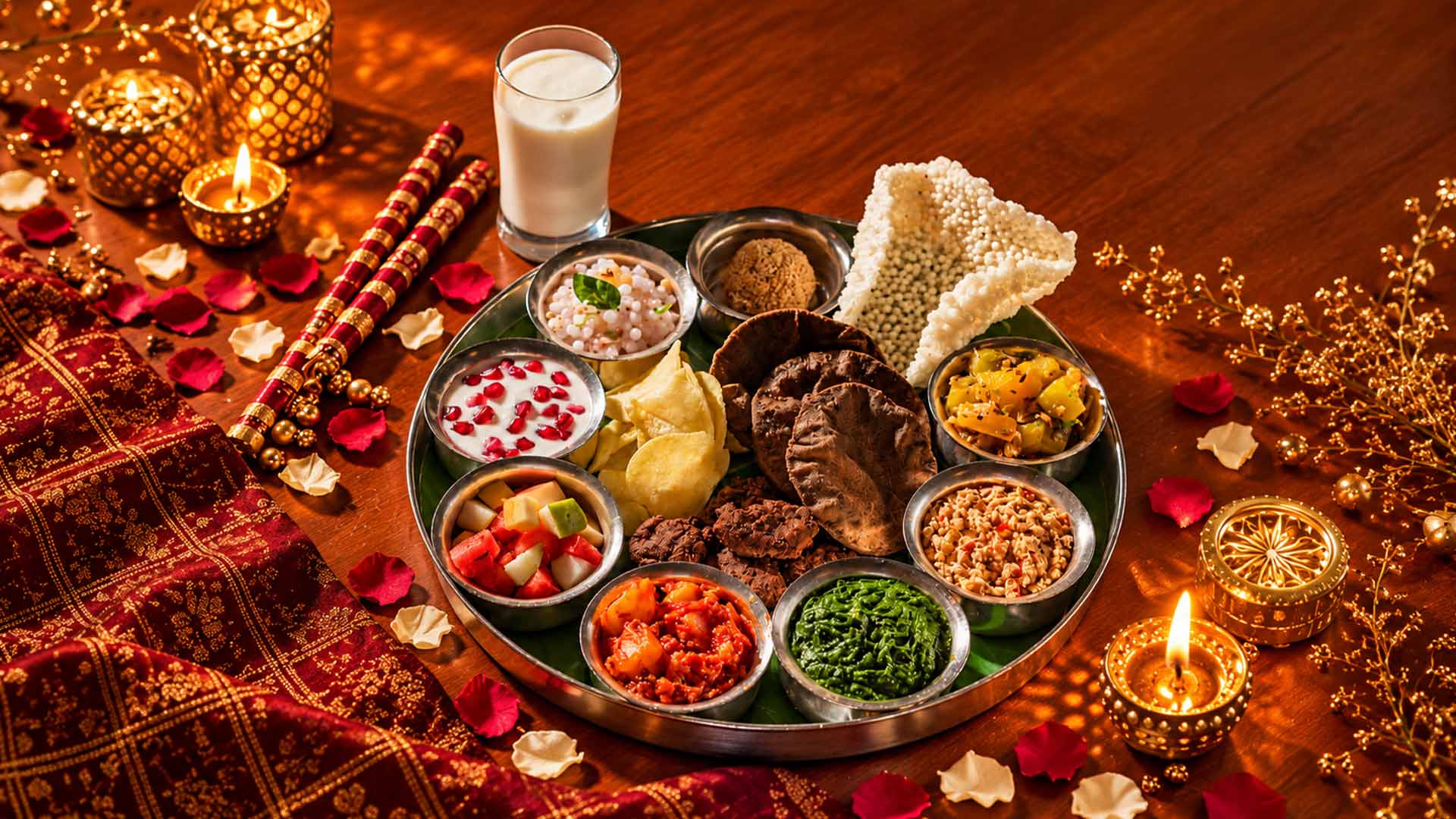
At ITC Grand Central, Mumbai, Navratri takes shape as a vegetarian thali at Hornby’s Pavilion, rooted in traditional sattvik cooking and prepared without onion and garlic. The menu brings together Sweet Lassi, Sabudana Khichadi, Khatte Meethe Kaddu Ki Sabzi, Kuttu Ki Poori, Cucumber Raita and Rice Kheer.
The combination stays close to the familiar flavours of the season, using contrast in texture and taste to create a balanced meal. The sweet and tangy pumpkin, crisp kuttu pooris and cooling raita provide variation, while rice kheer brings the meal to a restrained finish.
For ITC Grand Central, the offering reflects a wider hospitality approach of using India's cultural calendar to shape relevant, time-bound dining experiences. Executive Chef Anshul Dhyani says, “the menu draws on the simplicity and purity of traditional festive cuisine, using authentic ingredients and time-honoured flavours with a contemporary touch."
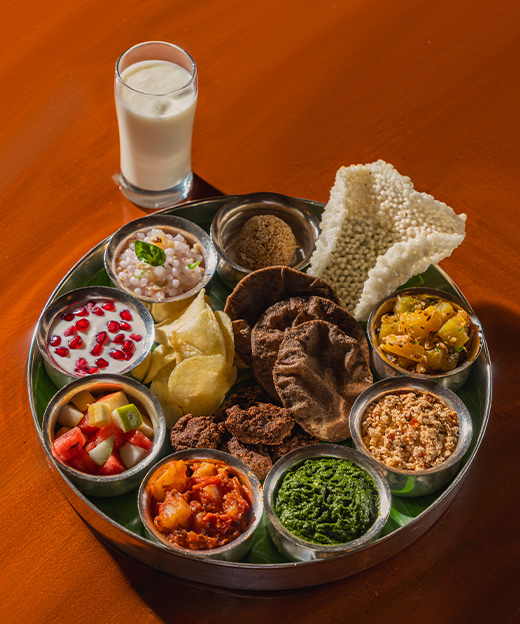
Sattvik Thali.