












The Journey's That Made Me
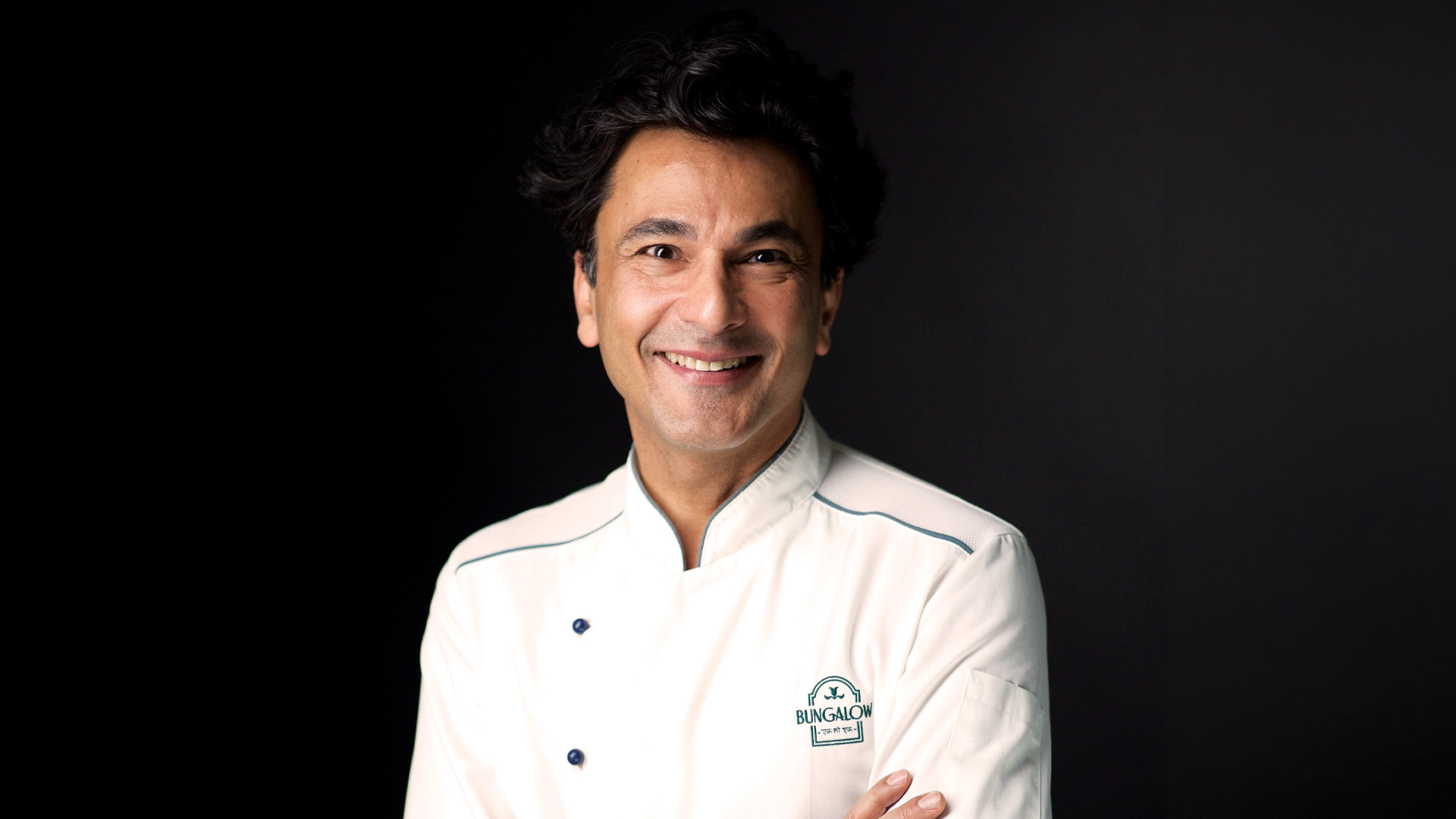
Celebrated chef Vikas Khanna, who won a Michelin for Junoon, NYC, talks about the cities that shaped his life, the challenges of reinventing tradition, and why being content always mattered more than ambition.

By Nainaa Rajpaal
For Vikas Khanna, a life in food has also been a life in motion. From the atta roasting in his childhood kitchen in Amritsar to the sweet shops of Kolkata, the monasteries of Kathmandu and Tibet, and the unforgiving kitchens of New York, each city and destination has left an impression: a flavour, a technique, a way of seeing. His memories of these places are deeply personal, shaped by the people he met, the food he discovered and the lessons he carried with him. Some taught him about cooking, others about faith, resilience and what success means. Travel, in many ways, became another kind of training. Looking back, Chef Khanna recalls the moments that have stayed with him.
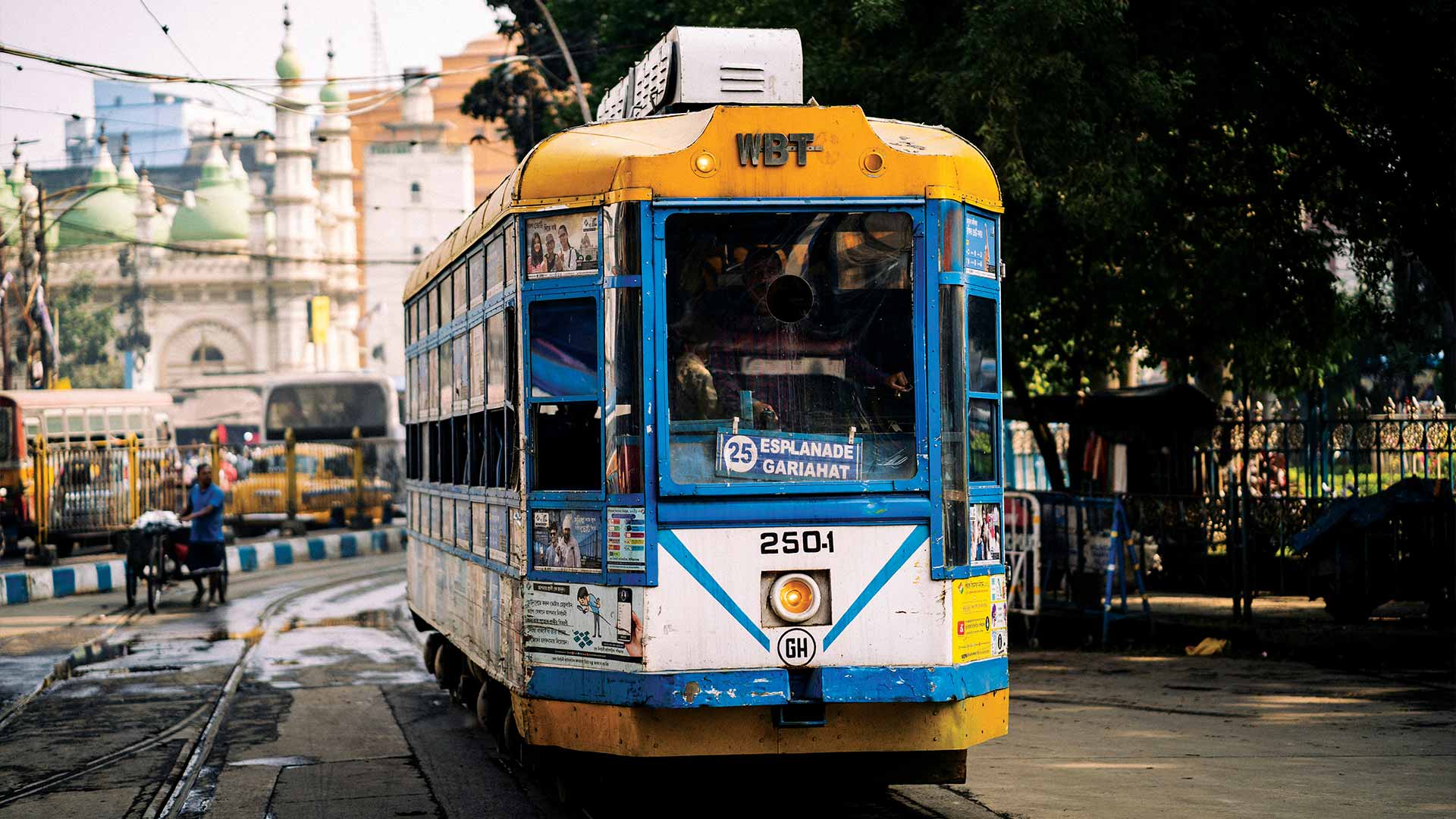
Kolkata’s old-world charm stands strong even today.
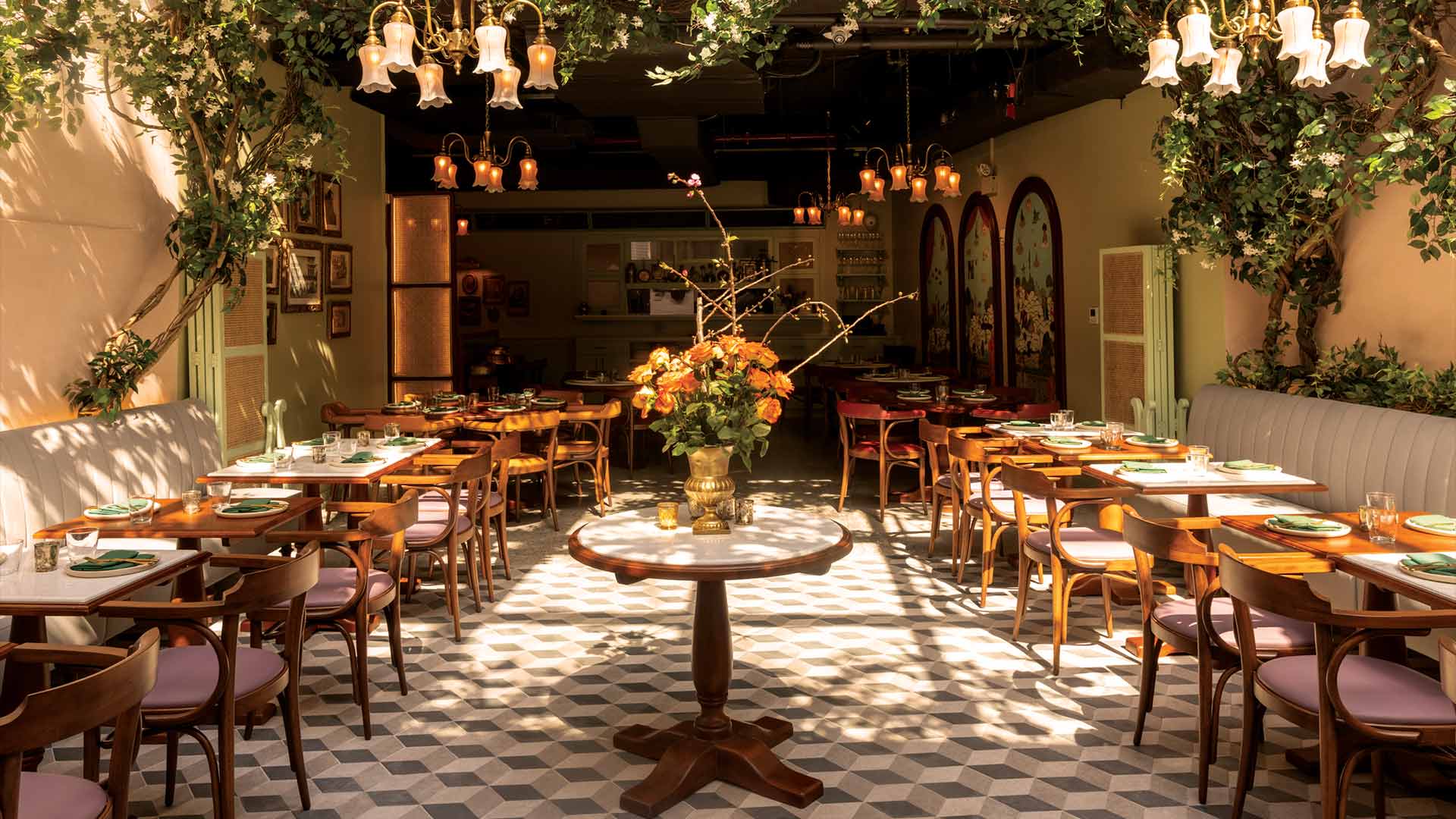
Bungalow NYC: Chef Vikas’s flagship Indian restaurant in NYC’s East Village.
The destinations that are magical to me
Punjab: For me, it’s a state of extreme nostalgia, poetry, energy and romance. Nothing transcends energy like Punjabi culture. Can you imagine the entire country dancing to Punjabi music even though they don’t understand the lyrics? Forget country, now I hear Punjabi music across the world too.
Kathmandu: I’ve always been obsessed with Buddhism and its temples and monasteries in Nepal, especially Swayambhunath. The love of Nepal hasn’t left me. I always am grateful to the people of Nepal for everything they’ve done for me and how they’ve inspired me.
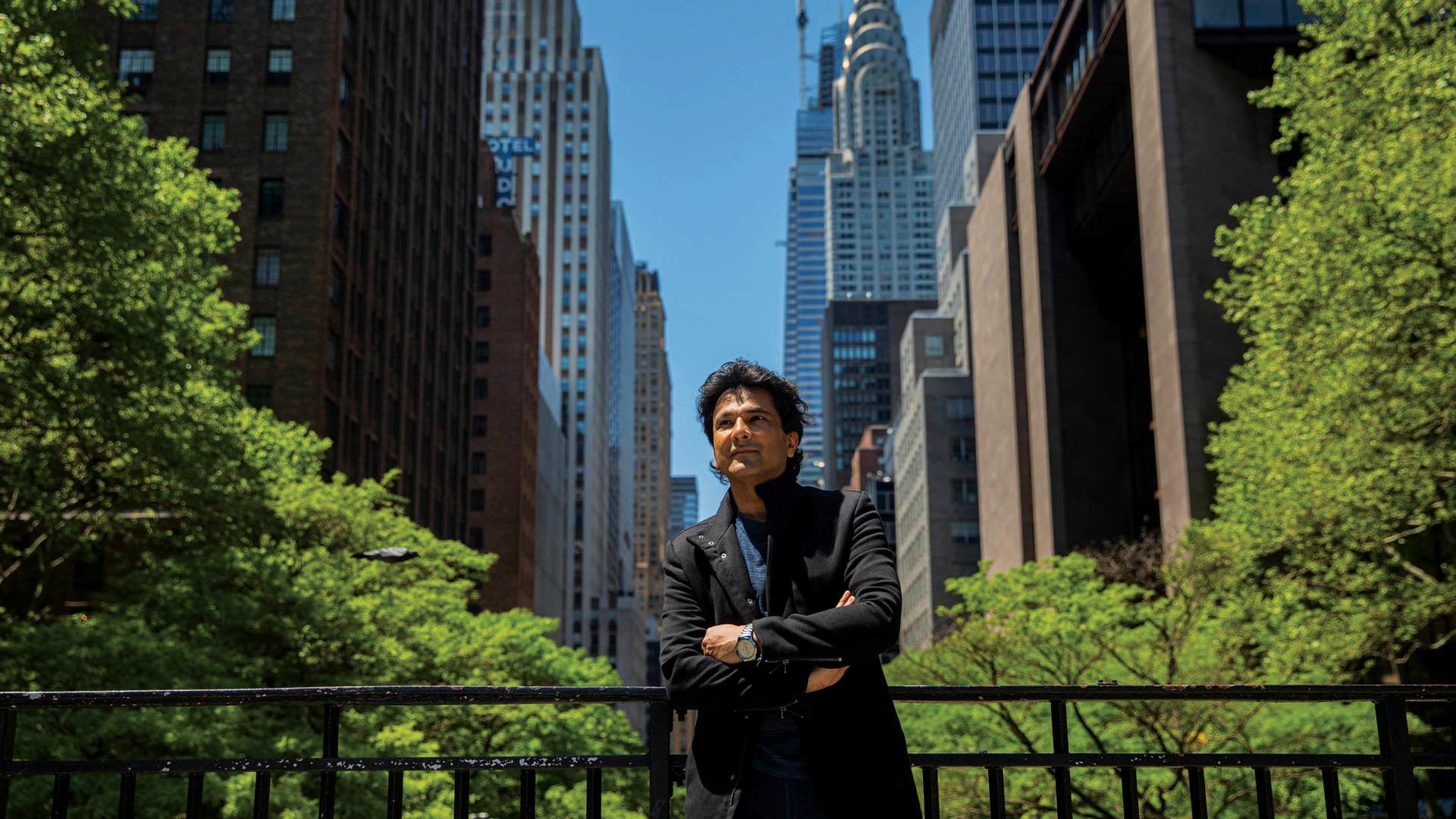
New York: It is one of the greatest cities because it soaks in the energy of so many people around the world. After World War II, this was the city that came to define human civilisation. This is a city one can give their whole life to. Gladly!
Bhutan: It literally changed my entire perspective of life. Bhutan seems like the perfect yardstick for most countries, though impossible to replicate because the people of Bhutan have a different DNA.
Dubai: I am always inspired by this city because it has a strong vision of what it wants to be: the architecture, the colours of Dubai Marina, its old souks which stand so proudly against the modern landscape.
One travel tip for anyone: Always say yes to an invitation to a local home. You’ll learn the true flavour of the culture.
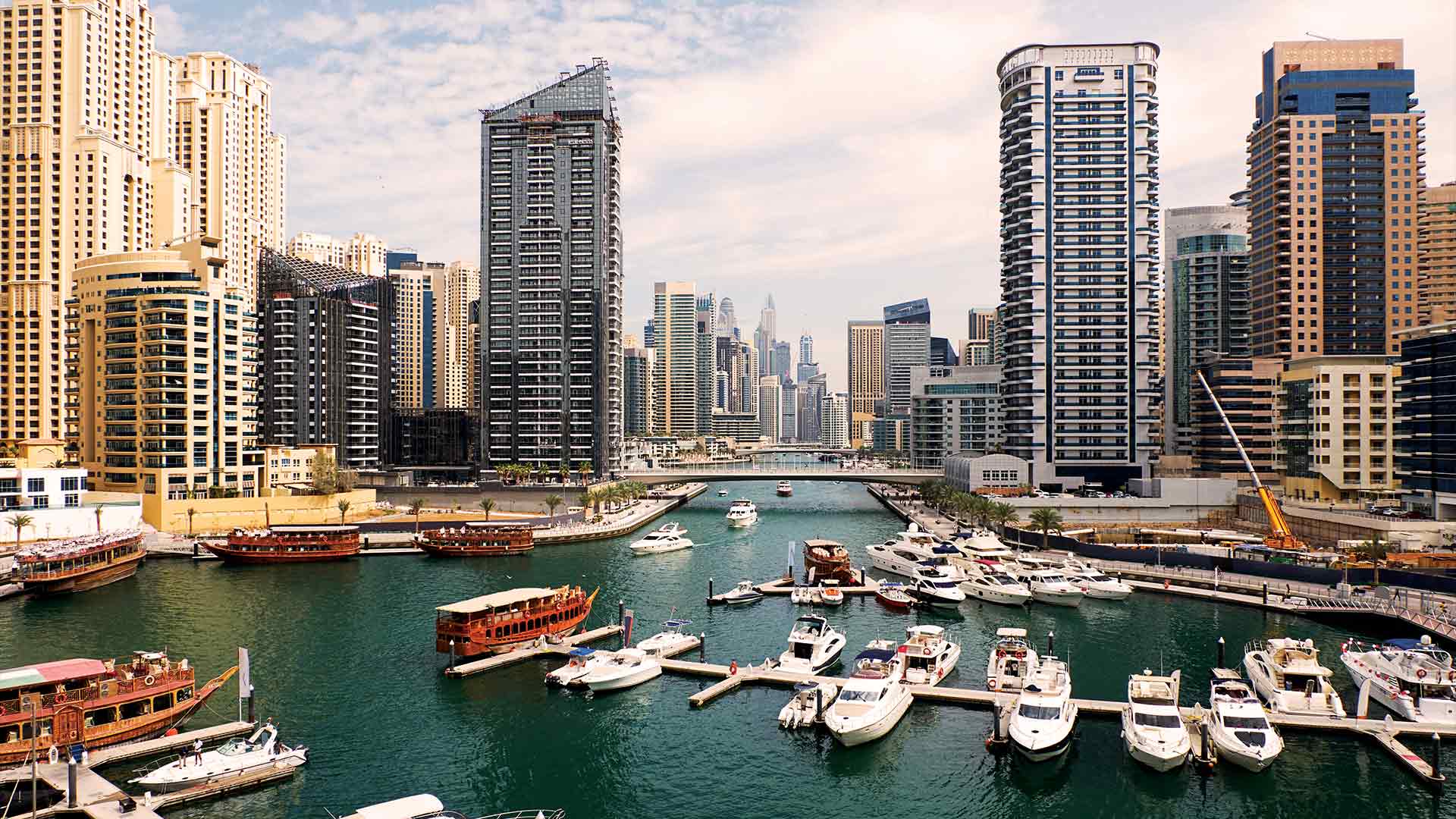
Dubai, another city that helped shape the Chef's journey.
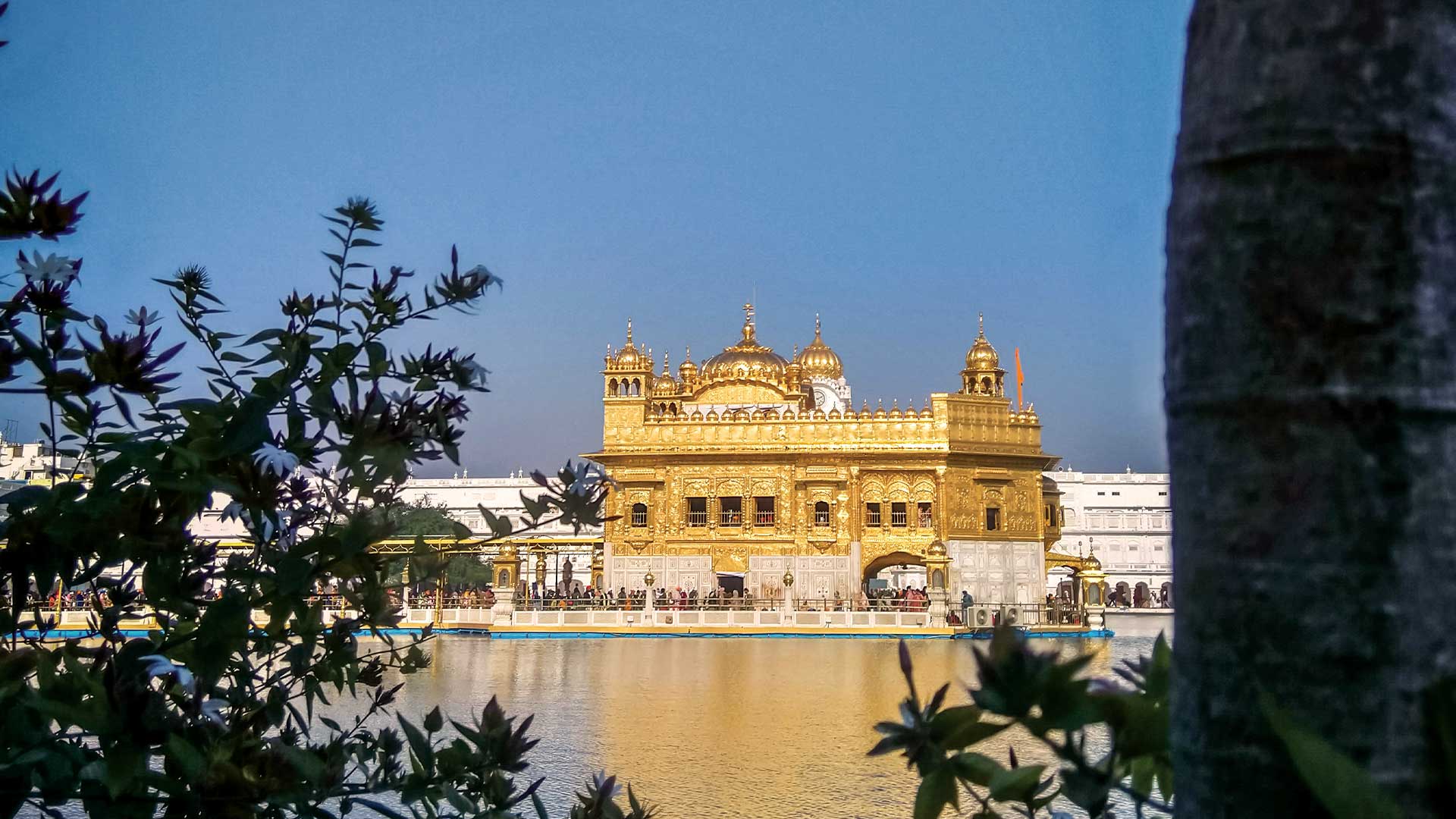
The Golden Temple, Amritsar is a centre for culture and spirituality.
Travelling for food
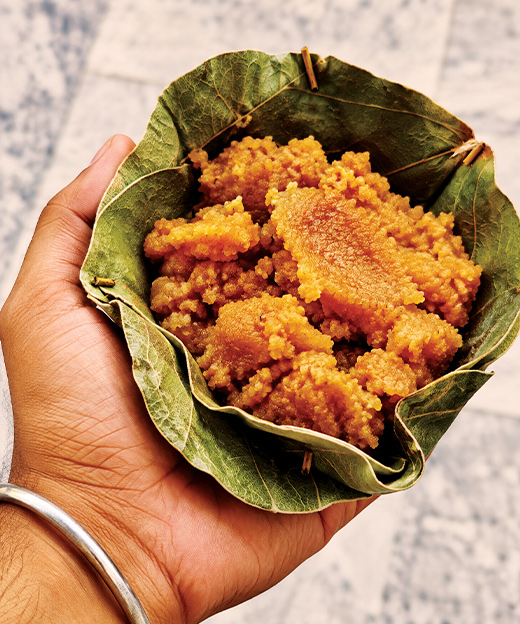
My fondest memory of food is actually the roasting of atta in Amritsar when I was a child. The smell of ‘aata bhunna’ on hands still triggers something very emotional in me. The bhuna aata forms the base of karah prasad, and I think every Punjabi’s earliest food memory will be the same.
As a Punjabi, food is inseparable from emotions—love, loss, festivities; everything begins and ends with food. And it’s no surprise that Punjabi food has become the gateway to Indian food for the world. It’s almost as if the food carries the energy, the chivalry, the music and the colours of the whole state. Punjabis were among the first few immigrants to the West, setting up lives in America, England, Canada, and Australia. It’s no wonder they have become a stereotype of what India really stands for.
Food should always be evolving, just like one’s mind. But there’s a lot of responsibility and pressure on my shoulders to do it right. Modernising dishes is okay, but I am watched by three generations, so even if there are modifications, they must be done carefully and respectfully.
Sometimes when I try to experiment, my own team feels betrayed. They ask, "How come you're becoming a white chef?" They feel you're their grandmother's representation; you're their community's representation. It is a tightrope walk, but I love it.
My best training actually came from my travels. I was born in Punjab and trained in hotel management in Karnataka. My first job was with Taj Delhi, then came Mughal Sheraton in Agra and then Sea Rock Sheraton in Mumbai. Every city added another layer to my understanding of food.
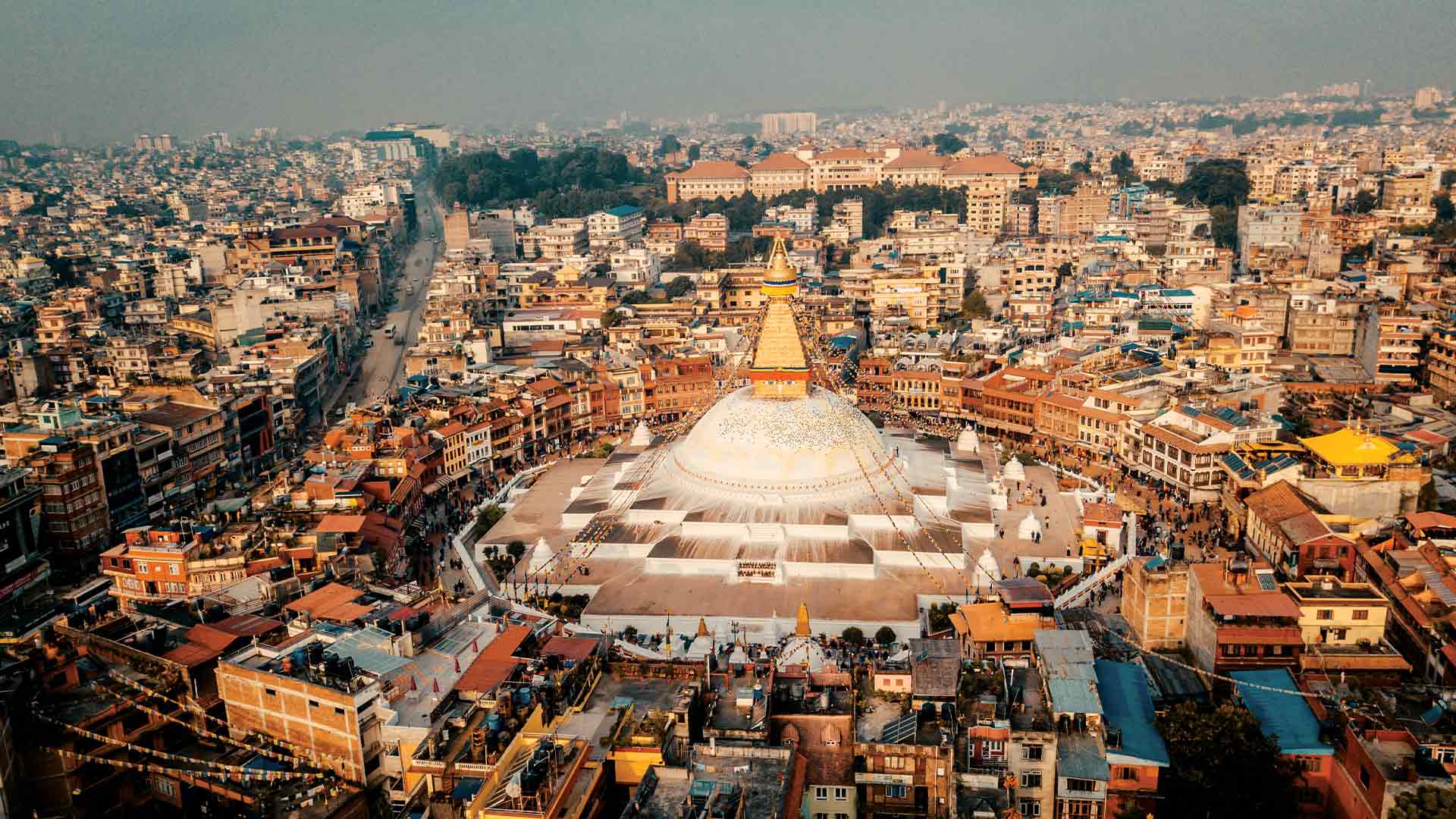
Swayambhunath represents a lifelong fascination with Buddhism and Nepal.
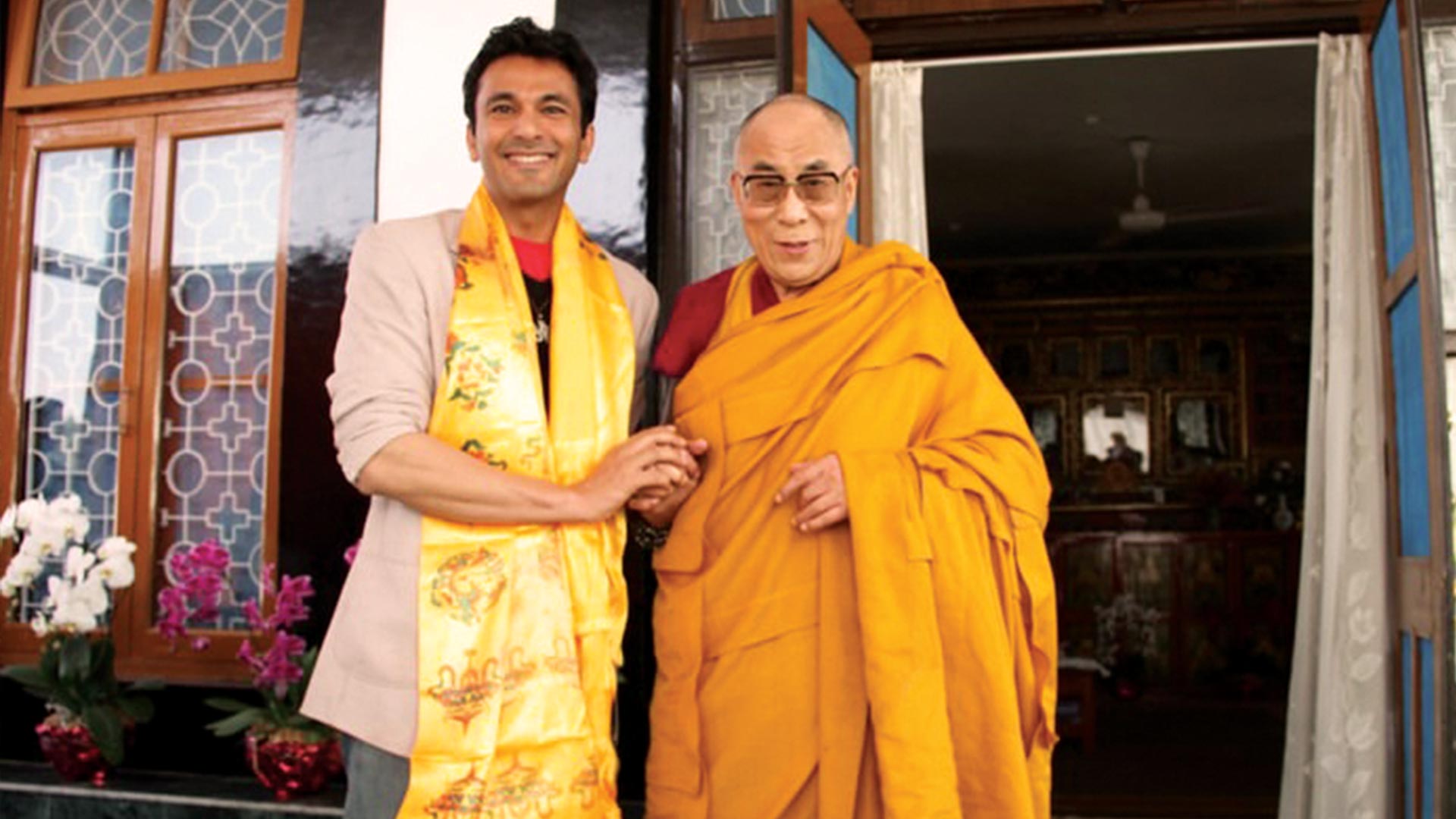
The chef with His Holiness the Dalai Lama for the Holy Kitchens.
Kolkata, however, has my heart. I fell in love with kasundi, that sharp, pungent fermented mustard sauce that forms the backbone of Bengali cuisine. But my biggest takeaway, of course, was learning to make sandesh. It’s honestly the best invention in sweets. All it takes is chhena (cottage cheese), sugar and heat.
Many of my Bengali friends tell me I make the best sandesh after their grandmothers. But most don’t know that it was the grandmothers in Kolkata who trained me. There was a place, Mishti Bhandar, run entirely by women. It was there that I realised that the ingredients may be simple, but making sandesh involves a lot of strength. You have to use the pressure of your palm to make the sweets soft and tender.
At my restaurant, Bungalow NYC, we serve desserts every night, complimentary—all thanks to my love for the sweets of Kolkata.
Kathmandu introduced me to another world altogether. There was a restaurant called Al Fresco where I learnt some of the best Italian cooking of my life. Then there were the Buddhist temples, especially Swayambhunath, where I spent hours absorbing the city's spirituality.
I travelled to Tibet for the Losar celebrations around Potala Palace. And one food I never expected to like was tsampa. It is made by kneading roasted barley flour, yak butter and salted butter tea. I remember eating it surrounded by Tibetan monks, mountains and warm people, and it became one of my favourite dishes ever.
It was in New York that I understood how much everything I had learnt along the way would be tested. I am in New York because people pushed me hard. My sister, mostly. When I first arrived, it felt like my life was starting to crumble totally. At the same time, I was watching the city rebuild itself after 9/11. And that gave me hope. There is no other city like it. The creativity, the resilience to keep going on. When I received a Michelin star in New York, it was still extremely rare for an Indian chef, and I went through so much scrutiny from everyone.
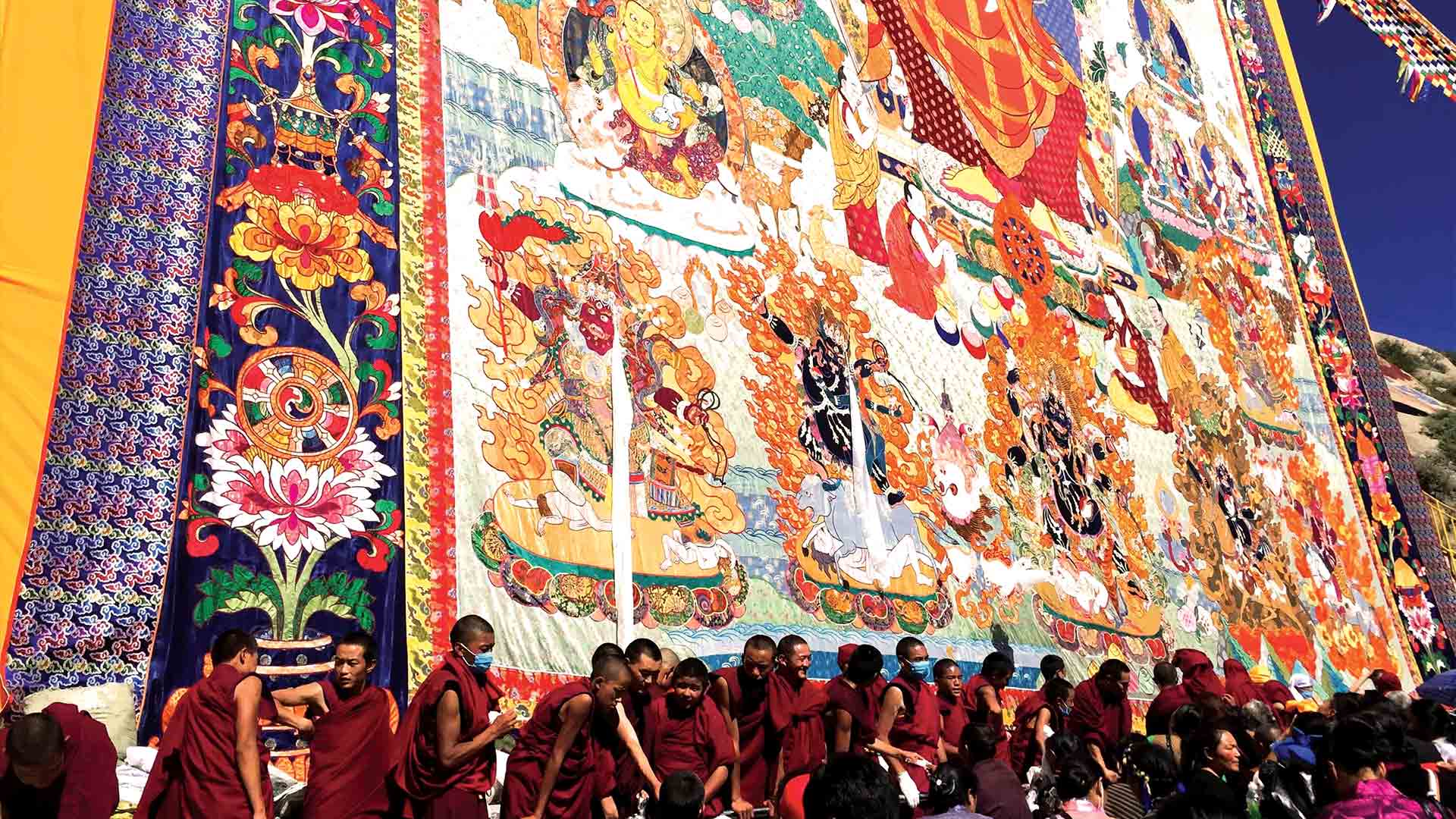
Losar celebrations around Potala Palace, Tibet.
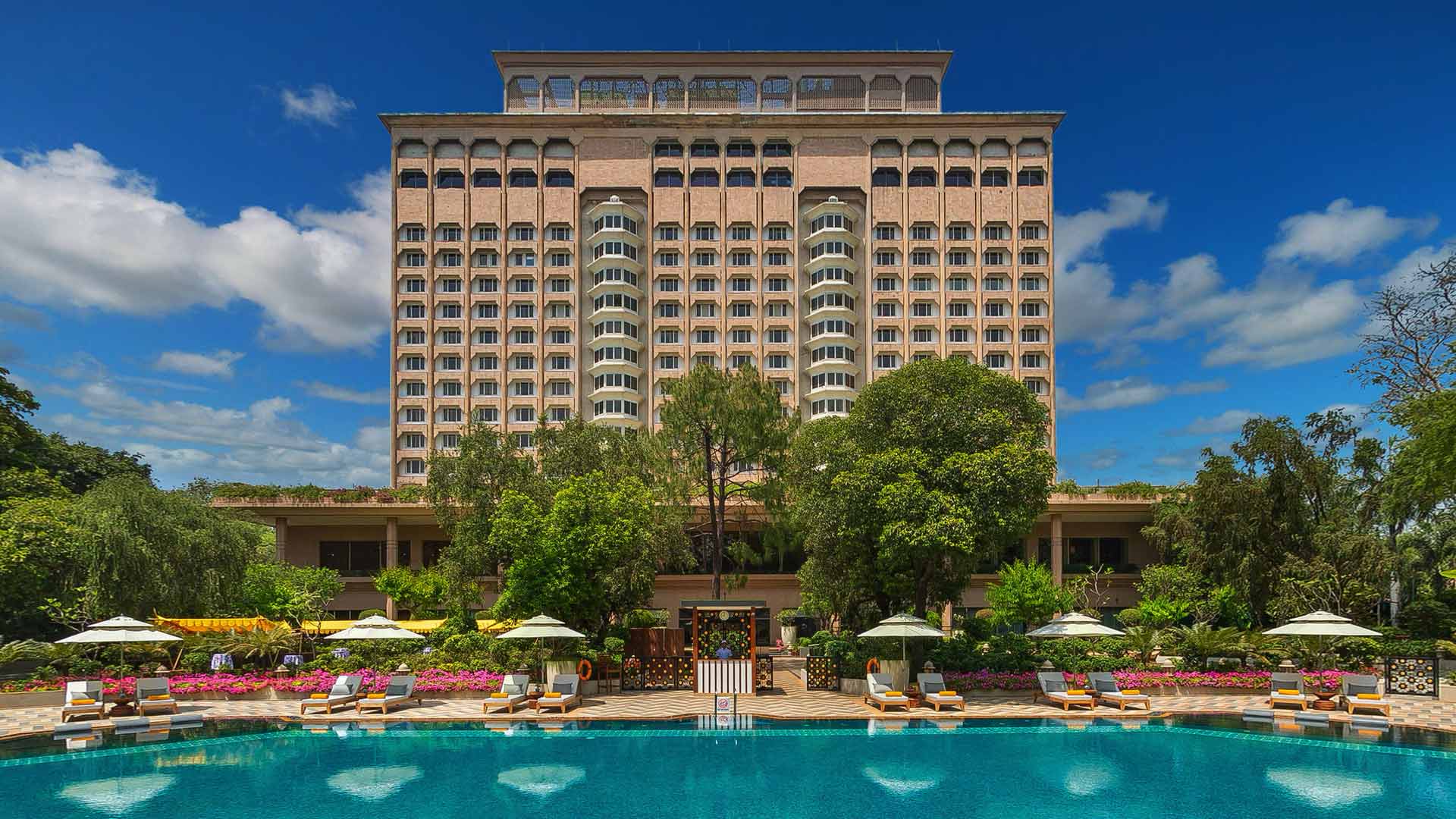
Taj Mahal New Delhi, one of his earliest training grounds.
Which is why I’m grateful to be here every day. There is a single-minded focus in me that God has given me this opportunity, and I am going to make the best use of it.
My travels around the world have brought me closer to my faith. After the Wisconsin Gurdwara shooting in 2012, where members of the Sikh community were killed, President Obama's cultural team reached out to me. They reached out only because they knew I was very well-travelled and that I would be able to tell the story without prejudice. By then, I had already created Holy Kitchens, a documentary series exploring the connection between food and faith.
One thing travel taught me is the power of plurality. To understand that there is not a single best culture, food, or community. You become empathetic to people.
I went to Bhutan after the 2008 financial crisis. Everyone around me in the United States was consumed by what had been lost. Then I reached Bhutan and began to understand what wealth really meant. True wealth is contentment.
That’s why I’m not an ambitious person. I speak to so many chefs, and they talk about wanting to open 900 restaurants that are worth $6 trillion. And when they ask me what my ambition is, it’s just surviving today’s dinner service. And truly enjoying opening the doors of my restaurant at sharp 4:45pm! But I’ve been blessed. It’s like when a person is standing motionless, the butterflies begin to sit on their shoulders.
One place I’d love to serve a meal is on the shores of the Pacific Ocean, for my favourite characters, Andy and Red from The Shawshank Redemption. I would cook them seafood and have a heart-to-heart. It was a movie and a scene that helped me understand my emotions more than anything else.
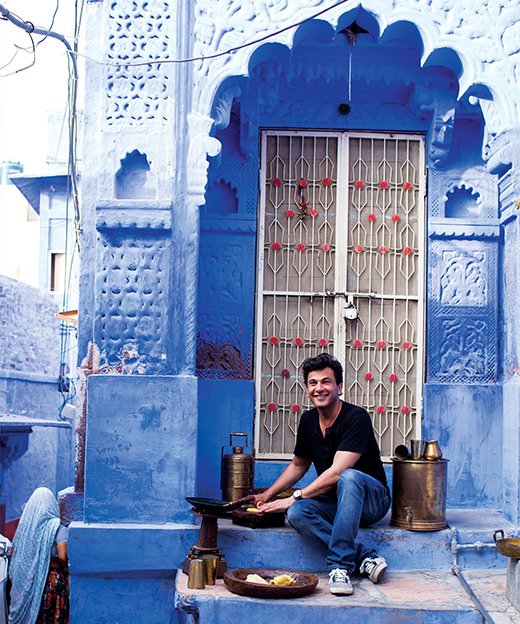
Jodhpur blue stole the chef’s heart during his travels.