












India’s Hospitality Paradox
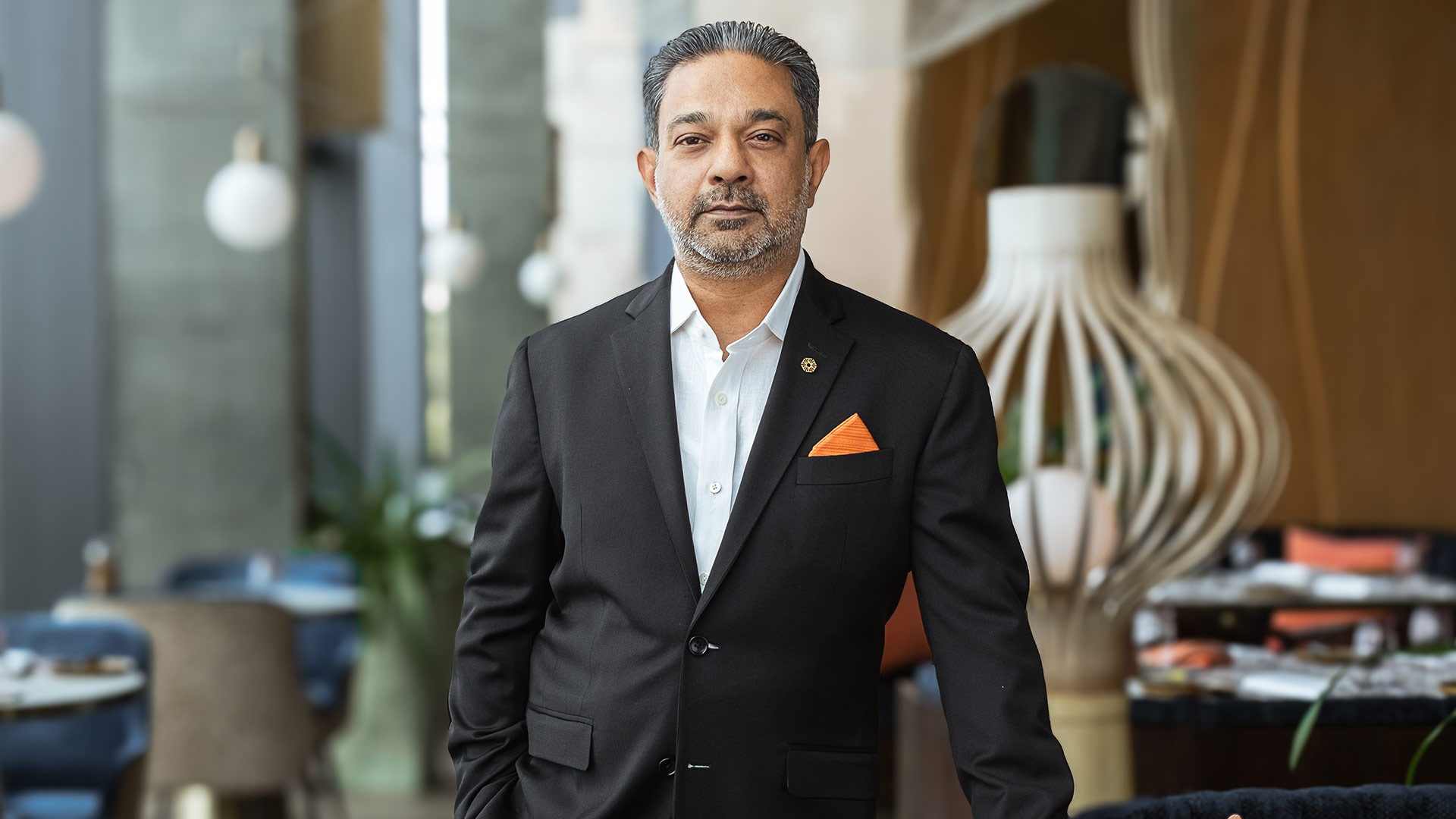
Dimitris Manikis, President–EMEA, WYNDHAM Hotels & Resorts on talent, tourism and the untapped opportunity.


By Deepali Nandwani
SOH interviewed Dimitris Manikis, President – EMEA, Wyndham Hotels & Resorts, to discuss the paradoxes of India’s hospitality sector. From the striking ‘35 million vs. 10 million’ tourist gap to the unexpected stagnation of local talent in a nation renowned for exporting general managers globally, Manikis offers a candid, agenda-free perspective on building a lasting brand in one of the world’s most dynamic economies.
At an Inflection Point
What is your impression of the hospitality industry in India today?
I visit India about six times a year, and every visit fascinates me. The pace, perspective, and potential of this market are extraordinary. Each time I present India to my board, I realise that what I thought was happening three months earlier has already changed. That simply does not happen anywhere else in the world—and when it does, the change is often negative. Here, the changes are almost always positive.
At HOPE 2026, a presentation by Bain & Company’s Karan Singh highlighted the sheer scale of India’s economic transformation. Hospitality is only a small part of a much larger story. The scale of opportunity in India is staggering.
However, while the outlook is extremely positive, I always remind people that when the sun is shining in London, you still carry an umbrella because it may rain later. In other words, even in a booming market you must always think about the ʻwhat ifʼ and prepare alternative strategies for how things might evolve.
How does India compare to the West in terms of technology and the spirit of hospitality?
India is far ahead of the West in adopting technology within hospitality. At the same time, I believe the West has gradually lost touch with what hospitality truly means.
Asia, including India, has not only caught up, but in many ways, surpassed the West in delivering genuine hospitality. In the West, hospitality has increasingly become an industry people do not necessarily want to work in, and the returns are not what they once were.
In Asia, hospitality is understood at a deeper cultural level. It is not only about luxury—it exists everywhere: in the smiles, the warmth of the welcome, the friendliness of people. That spirit comes naturally.
I am Greek, and hospitality runs in our culture as well. When I come to India, I recognise the same instinct. It is one of the reasons India has been such a rewarding market for Wyndham.
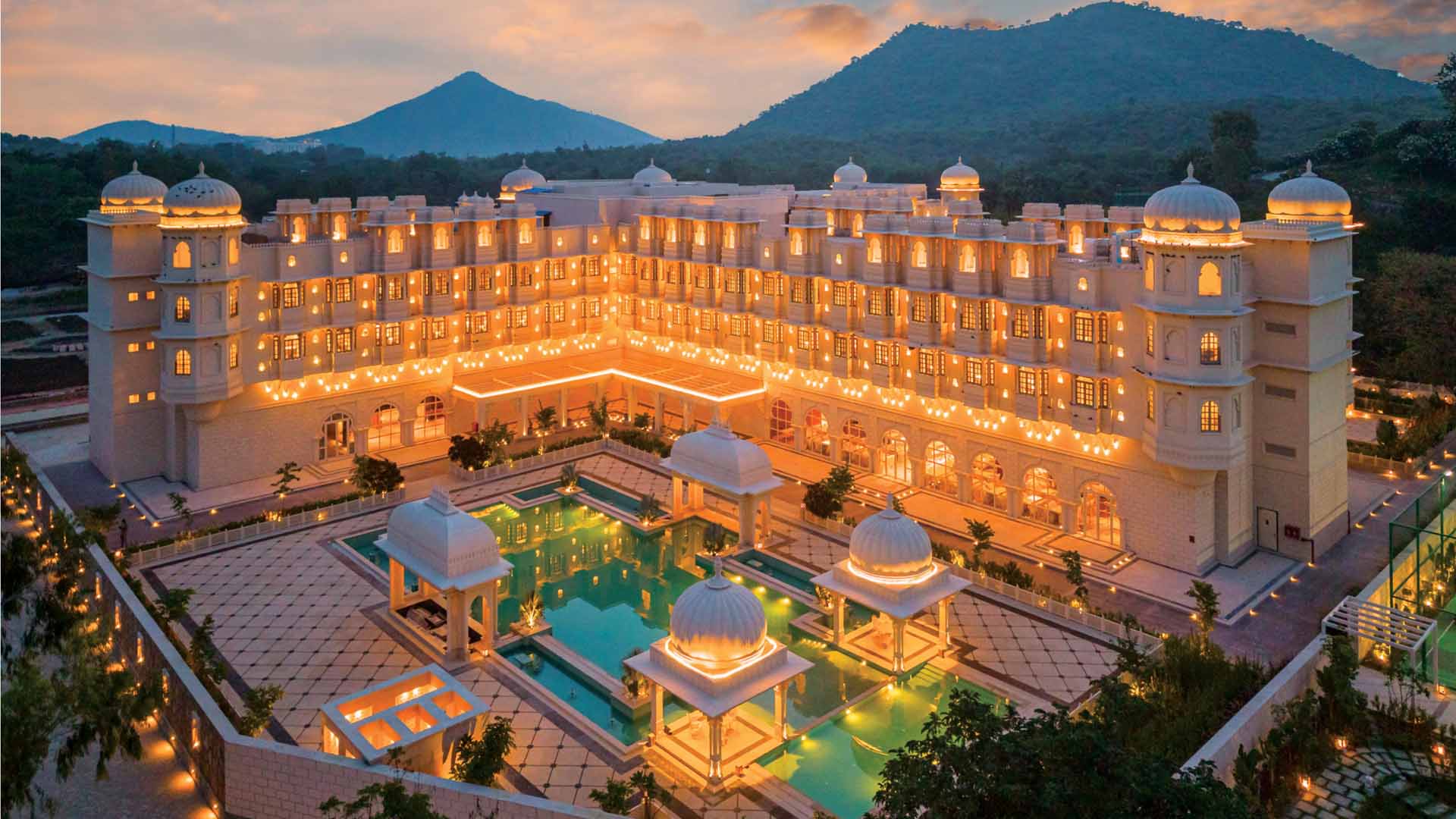
Wyndham Grand Udaipur Fateh Sagar Lake marks the brand’s entry into luxury in India—less a departure, more a calibrated expansion into a segment defined by scale and growing demand.
The Luxury Experiment
Wyndham has traditionally dominated the mid-scale franchise space. What led to the decision to enter luxury with Wyndham Grand in Udaipur?
There is an old Irish saying: “When everyone fishes in your water, you fish in theirs.” The Indian hospitality market is evolving. About 75% of brands operating here are managed rather than franchised, and there is strong demand in the upper upscale segment.
However, we are not trying to enter traditional ultra-luxury in a rigid sense. Our philosophy with Wyndham Grand is to offer premium experiences at accessible prices. Think of it in retail terms. Why does Zara have Massimo Dutti? Why does Apple experiment with different types of devices? These may not be part of their core DNA, but they experiment because certain segments of the market want those experiences.
Our Wyndham Grand in Udaipur is essentially a test. We want to see how we can deliver premium hospitality while staying true to our roots of accessibility.
Wyndham has focused heavily on Tier 2 and Tier 3 cities. What do global investors still misunderstand about these markets?
Many global investors simply do not understand Tier 2 and Tier 3 India. A Tier 2 city here may have five million people. In most countries, that would already qualify as a Tier 1 city. We had an early realisation that these markets were fertile ground. We found entrepreneurial hoteliers in places that many competitors had not even considered. Infrastructure development has since caught up with that early intuition.
Take the Statue of Unity near Baroda. We were among the first hotel groups to establish a presence there. Today, it has become a global tourist destination. What was Tier 3 yesterday is Tier 2 today. Interestingly, we are now moving ‘backwards’ into Tier 1 markets such as Delhi and Mumbai because we built our foundation from the ground up.
Many of your owners are family businesses rather than large conglomerates. How does that shape your partnerships?
About 80% of our ownership base consists of family businesses—often entrepreneurs building something that they hope will become a legacy for their children. We understand this culture well because in the United States, nearly 70% of our 6,500 hotels are owned by the Indian diaspora who built their businesses while pursuing the American dream.
We treat owners as partners and family members, not simply as entries in a spreadsheet. That approach has helped us maintain a 96% retention rate among owners.
We also structure agreements in a way that recognises the realities of early-stage hotel operations. We do not impose extremely high royalty fees because we understand that profitability in new destinations can be fragile in the initial years.
What do Wyndham’s numbers look like in India after more than a decade?
We have been operating in India for about 12 years. Today we have 95 operational hotels and 55 more in the pipeline. That translates to roughly 7,000 operational rooms and another 6,500 under development.
But beyond the numbers, India has become an important learning ground for us. The work ethic and adaptability of Indian talent are extraordinary. At a conference in Europe, someone once suggested we were hiring more people in India simply because labour costs were lower. That assumption was completely wrong. We hire here because the talent pool is exceptional and because the workforce demonstrates an impressive ability to adapt to new ideas and technologies.
What unique characteristics of the Indian market have surprised you?
India represents growth, talent and opportunity. One area where India is very different from Europe is food and beverage. In India, F&B contributes roughly 40% of total hotel revenues.
In Europe, many hotels barely discuss their restaurants or banquet halls. In India, the conversation revolves around ballrooms, weddings and social events. When I first started coming here, I had to learn what ʻwedding seasonʼ meant. In Greece we do not have such defined seasons, and we do not always get married with the same scale of celebration.
I actually lived in Bangalore in 1993 when I was quite young. Coming back decades later and seeing the transformation of India has been extraordinary.
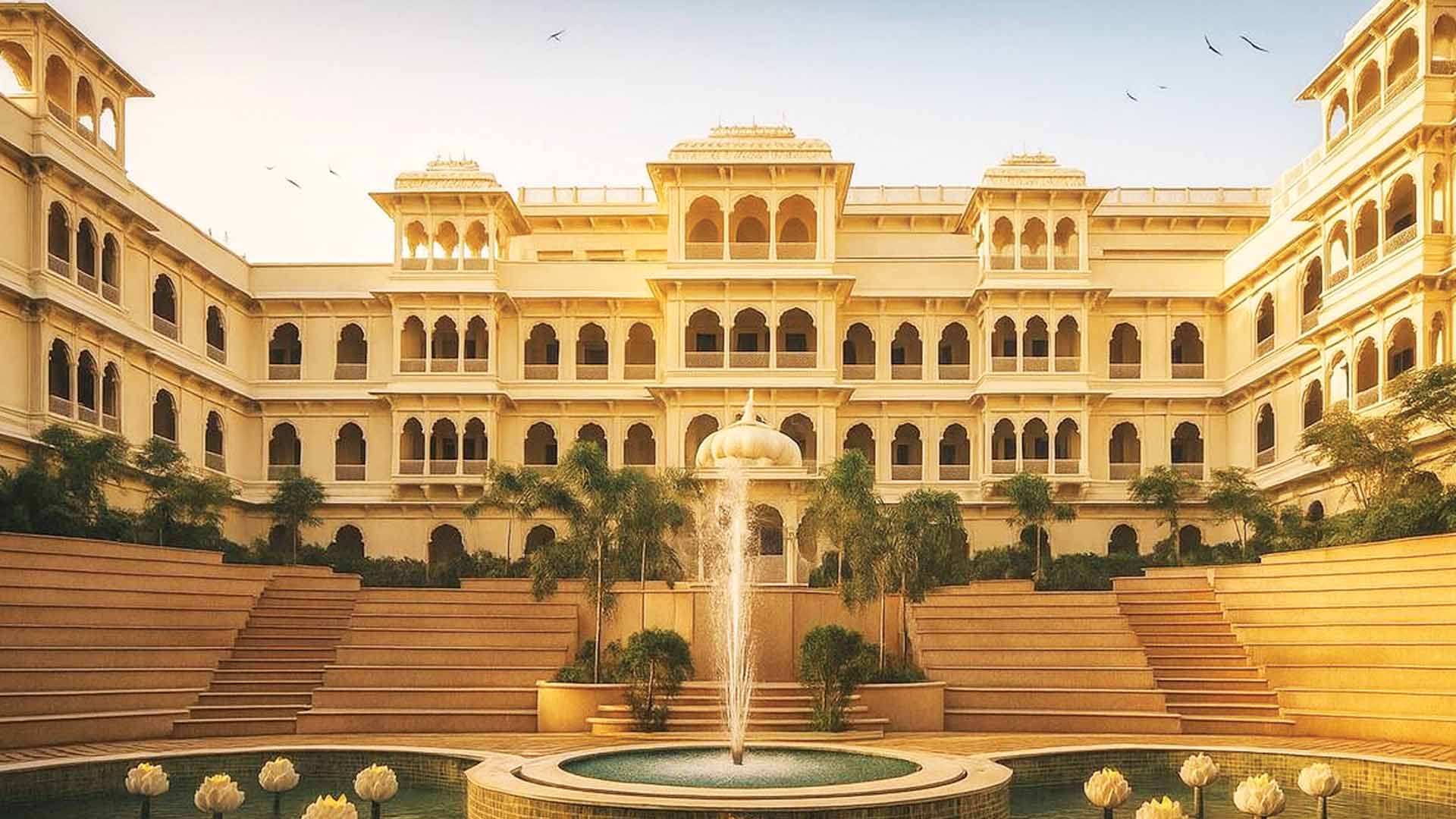
At Wyndham Garden Udaipur Bhuwana, palace-derived planning is reinterpreted as experience, pointing to how heritage cues are being adapted for a wider, more contemporary audience.
The India Tourism Story
Domestic tourism is booming in India, but inbound tourism remains relatively low. How would you assess the situation?
There is a fundamental paradox in Indian tourism. Greece, with a population of nine million, receives around 35 million tourists each year. India, with a population of 1.4 billion, receives roughly 10 million. That comparison highlights the challenge clearly.
India does not spend enough on international tourism promotion relative to its potential. Recently, I spoke with several Indian hoteliers and we all agreed that the industry cannot simply wait for government action. The private sector must take initiative.
For example, IndiGo has launched direct flights between Greece and India, and Aegean Airlines will follow soon. To support that, we are sending Indian chefs to Greek hotels during the winter months to introduce Indian cuisine and hospitality. This ensures that when Indian travellers arrive, hotels are already prepared to serve them properly.
Additionally, after the Greek Prime Minister’s recent visit with Prime Minister Modi, three new consulates are opening in major cities to streamline visa processing. These are the kinds of collaborative steps needed to grow tourism.
Beyond promotion, what structural barriers exist for inbound tourism?
One of the biggest surprises for me is the complexity of the entry process. India is a global technology leader. Even street food vendors accept mobile payments. Yet when I arrive at the airport at 4am, I still spend hours navigating biometrics and documentation checks.
In destinations like Dubai, ‘Smart Gates’ allow travellers to pass through immigration almost instantly. India has introduced DigiYatra, but the experience is still fragmented. Travellers often face multiple checkpoints, even shortly before boarding.
For international visitors in particular, the process can be frustrating. There is also an interesting policy dimension. In a country with 1.4 billion people, job creation is a constant priority. If airports become fully automated overnight, that could eliminate thousands of jobs. In some cases, maintaining manual checkpoints may be a deliberate choice to preserve employment.
Given these challenges, how should the industry move forward?
The government has suggested closer collaboration between the public and private sectors, which is certainly important. However, the private sector must also take responsibility. We cannot expect governments to do everything for us. If the industry wants to promote India globally, we must invest in doing so ourselves.
How can global hotel groups contribute to this effort?
There is also an image challenge. Often, the international narrative around India does not reflect the pride that Indians feel about their country. Negative incidents quickly become global headlines.
The industry must proactively shape its own narrative. I still remember the ‘Incredible India’ campaign on London buses many years ago. It was powerful, but today ‘incredible’ alone is not enough. When people think of Italy, they think of romance. When they think of Thailand, they think of beaches.
When many people think of India, there is still no single, clear narrative. India should not try to compare destinations like Kashmir to Switzerland. Kashmir is unique and should be marketed as such. State governments also need to take greater ownership of tourism development because tourism creates jobs, which in turn drives economic growth.
Why has Indian hospitality not yet become a global reference point despite its strengths?
India possesses incredible assets: Ayurveda, spirituality, historic palaces and extraordinary culture. One reason the industry is not pushing harder internationally is that domestic tourism is already extremely strong. Many hotels enjoy healthy occupancies driven by domestic travellers. In Greece, tourism contributes about 27% of GDP. If tourists stop coming, the economy suffers immediately. In India, the dependence on international tourism is much lower. As long as hotels are full, there is less urgency to distinguish between domestic and international guests.
How can large hotel chains use their global networks to attract more visitors to India?
Major international hotel groups collectively have access to nearly 500 million loyalty members. That is an enormous database of potential travellers. Our industry has the ability to connect people from all over the world. Cultural exchange is one of the most powerful tools for promoting destinations.
My wife recently visited Rajasthan and Agra. She tried street food and returned home talking endlessly about the experience. That kind of authentic storytelling is what inspires people to travel.
Social media often amplifies negative images of India. How can the industry counter that?
By telling better stories. India has some of the most vibrant cultural experiences in the world—Holi, Diwali, spiritual journeys, ancient temples. If influencers only show the worst aspects of a country, the industry should respond by inviting storytellers who genuinely appreciate the culture. One well-known influencer visiting museums in Cairo helped Egypt attract millions of visitors. India can do the same.
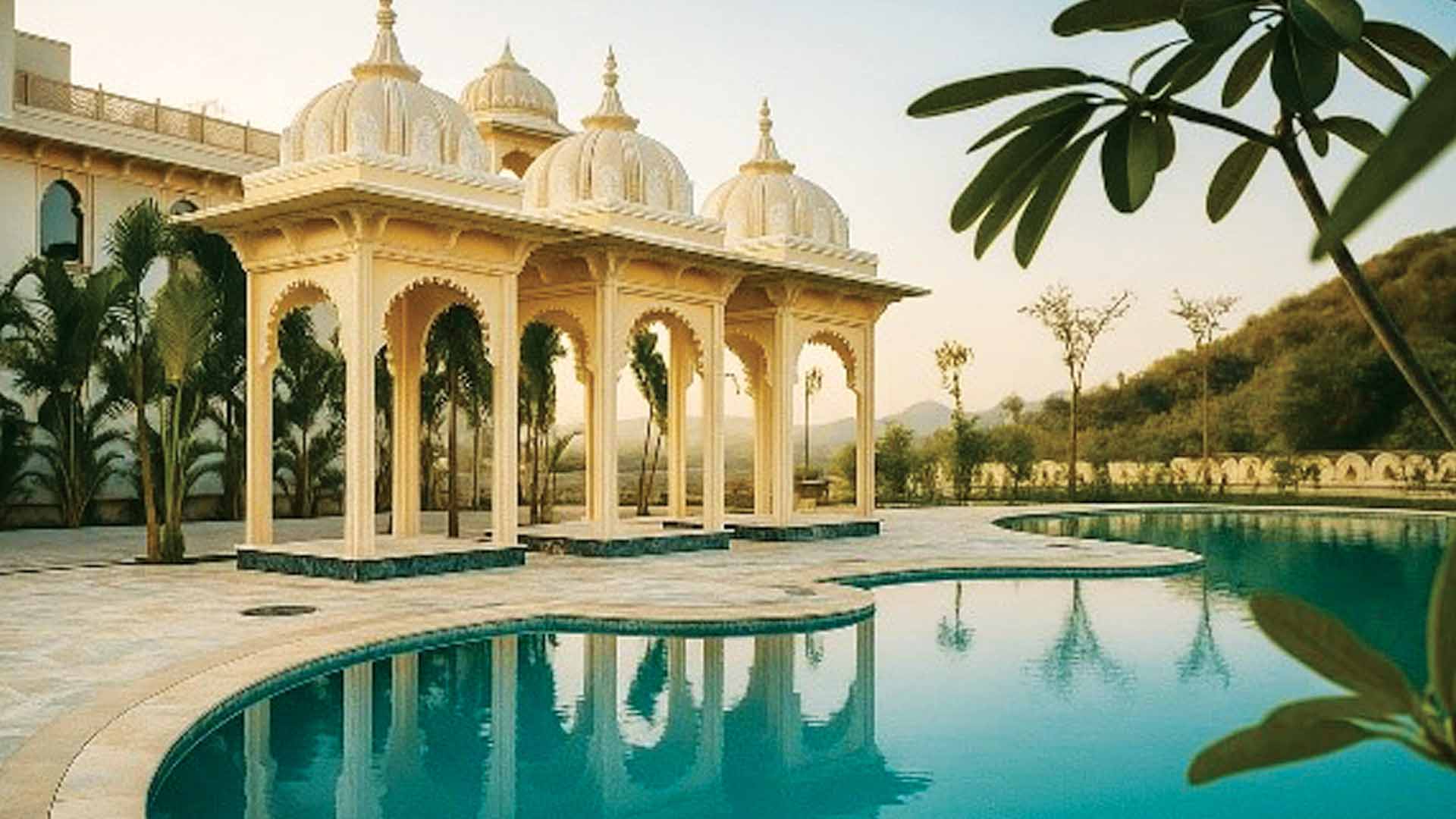
Grand in expression, but strategic in intent, Wyndham frames luxury within reach, aligning with a market where aspiration is outpacing definition.
I believe the West has gradually lost touch with what hospitality truly means. Asia, including India, has not only caught up but, in many ways, surpassed the West in delivering genuine hospitality.
Dimitris Manikis
President–EMEA, WYNDHAM Hotels & Resorts

The Talent Challenge
You mentioned that India’s talent situation surprised you. What are you observing?
For many years, I believed India had an unlimited supply of hospitality talent. But we are beginning to see stagnation. India has become a major exporter of hospitality professionals. Today there are probably more Indian general managers working abroad—in the Middle East, Europe and on cruise lines, than within India itself.
At the same time, the pace of hotel development in India is accelerating rapidly. Traditional institutions like the Taj and Oberoi schools are not producing enough graduates to keep up with the demand. The shortage is not only at entry-level positions but increasingly at leadership levels as well.
What other factors contribute to the talent challenge?
There are three major issues. First, hospitality education is not expanding quickly enough. Second, the industry does not pay competitively compared to other sectors. Third, younger professionals are less willing to wait for traditional career progression.
In the past, someone might work 20 years before becoming a general manager. Today’s generation wants faster growth. If they cannot see a clear path, they leave the industry.
What changes would you like to see in leadership development?
We need to recognise younger leaders. I have attended hospitality conferences in India for seven years and often see the same people on panels. Where is the next generation?
There is sometimes a cultural tendency for established leaders to hold onto the spotlight rather than create space for emerging voices. We need more examples like Deepika Rao at IHCL—leaders who rose through the ranks and now represent the next generation.
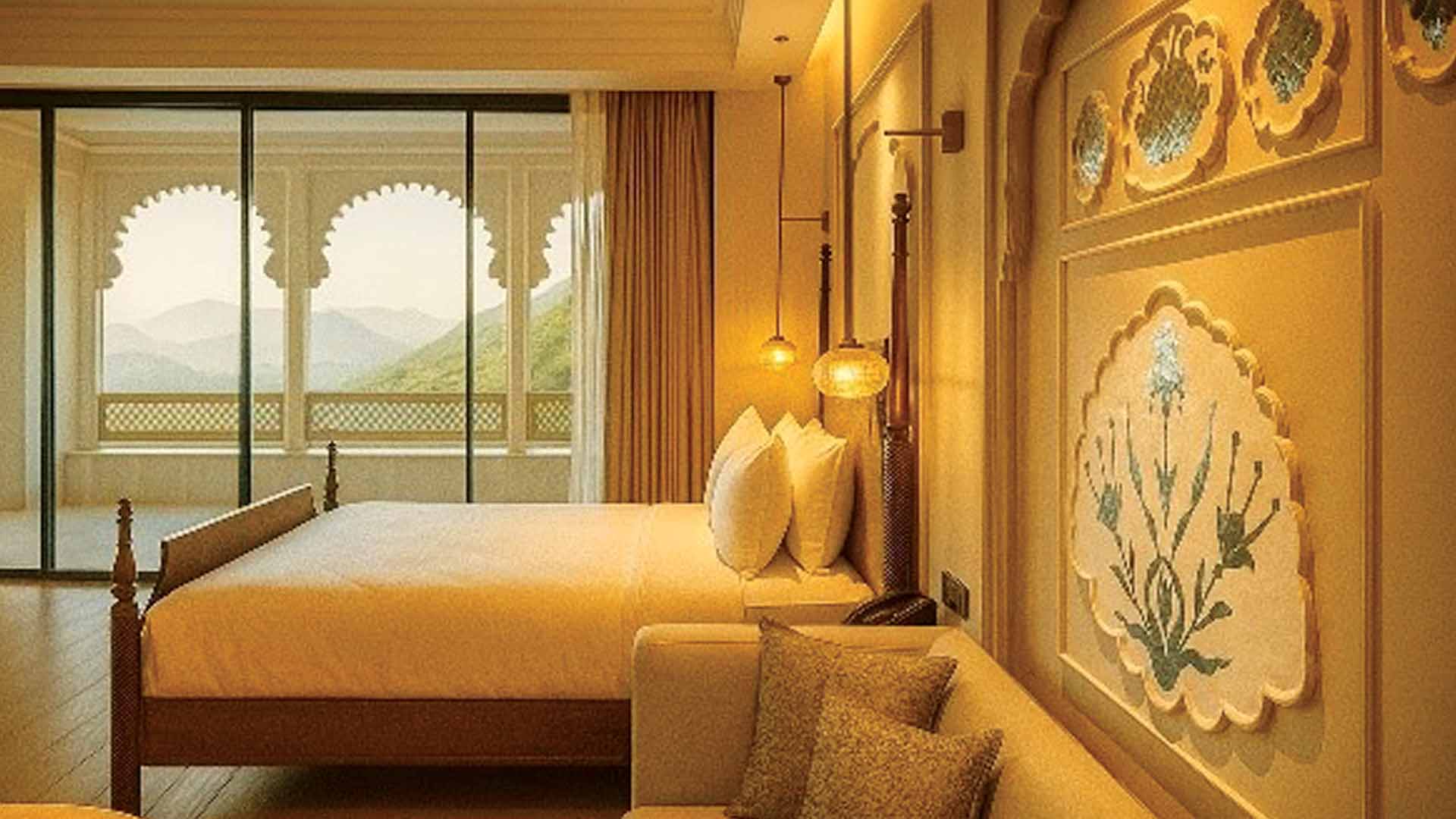
A measured language marked by restraint and rhythm shape the experience at Wyndham Garden Udaipur Bhuwana.
Hotels v/s Restaurants
You have said that the restaurant sector in India appears more dynamic than hotels. Why?
The restaurant industry is currently one of the most dynamic sectors in India. Unlike hotels, restaurants do not operate under a rigid “one brand, one face” structure. Multiple personalities can shine. Chefs often become the stars, and in many cases they are also partners in the business.
Young talent receives immediate recognition, better financial incentives and creative freedom. Hotels, by contrast, often operate within strict corporate hierarchies that limit individual visibility.
Has the hotel industry’s focus on room revenue contributed to this?
Rooms generate the highest margins, so many hotels focus almost entirely on room revenue. Some operators think there is little point investing heavily in restaurants because guests may choose to dine elsewhere.
That approach may work in mid-market properties, but it is a mistake in luxury hospitality. When guests stay at a luxury resort, they want to immerse themselves fully in the experience. Exceptional dining is an essential part of that experience.
When many people think of India, there is still no single, clear narrative. India should not compare destinations like Kashmir to Switzerland. Kashmir is unique and should be marketed as such.
Dimitris Manikis
President–EMEA, WYNDHAM Hotels & Resorts
Technology and Personalisation
How will technology reshape the guest experience?
We have invested around $350 million in technology, but technology should function as an enabler rather than replacing human interaction. My goal is to transform the role of the receptionist into what I call an ʻExperience Officer.ʼ
Today, during check-in, staff often focus on entering information into systems instead of engaging with guests. Technology should handle tasks such as credit card verification and passport scanning. That allows staff to look guests in the eye and say, “There’s a great concert tonight—would you like tickets?”
How will AI reshape loyalty programs?
For years, the industry has collected enormous amounts of data but rarely used it effectively. AI will allow us to mine that data meaningfully. If a guest dislikes rooms near elevators or travels with pets, those preferences should automatically inform their future stays. When technology removes small frictions in the guest experience, hospitality moves from being a transaction to becoming a relationship.
What does success in India ultimately look like for Wyndham?
Success is not only about scale. Of course, it is encouraging that other companies are now adopting the franchise model we pioneered here. That tells us we are doing something right.
But for me, success is also about people. Last year, 92% of our team members said they were proud to work for Wyndham. That statistic means more to me than signing another hundred hotels.
I also think about the long-term potential. Around 150 million Indians are expected to travel internationally in the coming years. When those travellers visit places like Tbilisi—where Wyndham is currently the leading hotel group—I want them to stay with us because they recognise our brand from India.
What initiatives are you undertaking to showcase Indian culture abroad?
We are focusing heavily on cultural exchange. We recently sent Indian chefs to Greece to introduce Indian cuisine and hospitality there. We have also launched promotional campaigns in markets such as Tbilisi, where travel links with India are growing rapidly. International hotel groups should act as ambassadors for Indian culture, creating small touchpoints abroad that inspire travellers to eventually visit the country itself.
How do you balance catering to Indian travellers abroad while preserving local authenticity?
It is important not to turn every international hotel into a replica of India. People travel because they want to experience something different. Instead, we provide small touches that make Indian travellers comfortable. The goal is to deliver an authentic local experience while ensuring guests feel welcome.
What role should the private sector play in shaping the future of Indian hospitality?
The industry must take greater ownership of its future. We often talk about bureaucracy and expect the government to solve these problems. But the private sector should develop its own roadmap—a kind of Magna Carta for Indian hospitality. We can learn a great deal from the restaurant sector, which recognises talent quickly and rewards creativity. The hotel industry needs to become more flexible and dynamic if it wants to attract the next generation of professionals.
If you could leave the Indian hospitality industry with one message, what would it be?
India must move from being a good storyteller to being a great storyteller. The country has extraordinary culture, history and hospitality traditions. But to fully realise its tourism potential, the industry must take leadership in shaping its narrative. Travel today is no longer a luxury—it is becoming a universal aspiration. Our responsibility as hospitality professionals is to make travel accessible, human-centred and meaningful. And while the sun may be shining brightly on India’s economy today, it is always wise to keep an umbrella ready—just in case.